×

France🇫🇷 | townsAntibesyacht harbor, Picasso museum, sandy coves | things to do and best time to go

Explore Saint-MaloExplore Biarritz

Backpacking in Antibes
🌟 Highlighttown ranked #7
By Johan Kruseman 🇳🇱 | Updated September 4, 2026

Ten years ago Antibes felt like a slightly scruffy port town with artists, yacht crews, and a few in-the-know backpackers drinking cheap rosé on the ramparts; now the old streets are polished, prices are higher, and day-trippers pour in from cruise ships and Nice. You’re on the Côte d’Azur, between Nice and Cannes, but Antibes still feels smaller and softer than both. For backpackers it works best as a mellow base: easy train links, fully walkable old town, sandy beaches you can reach in flip-flops, and quick day trips along the coast. Nights are social in bars and small hostels rather than wild. It’s safe, not cheap, and more relaxed and lived-in than glossy Cannes, less urban and hectic than Nice.

Discover everything you want to know in the 📖 France Travel Guide.


Get your France guide
142 ranked highlights, routes & tips, works offline (461 pages)
Loading the map 🌍
CLICK TO FILTER
cities
towns
villages
landmarks
national parks
hikes
beaches
attractions
festivals
regions
SHOW COUNTRY’S BESTSHOW ALL

✨ Why go?
Ranked #7 town in France
What sets this place apart

Antibes draws backpackers for its strategic location along the French Riviera, making it a perfect base for hikes in the nearby hills or lazy days on its sandy beaches. The walkable streets invite exploration, where you can stumble upon local markets bursting with the scent of fresh herbs and baked goods. Small-scale hostels and guesthouses offer cozy, affordable stays, fostering a friendly atmosphere that encourages social connections among travelers. Expect a mix of slow travelers and solo adventurers who appreciate the town’s laid-back vibe, often lingering for a few days to soak in the local culture and cuisine. While it’s not a nightlife hub, the evenings can be lively with shared meals and stories among fellow backpackers. Antibes serves as a gateway to both relaxation and adventure, … read more 👉
Antibes draws backpackers for its strategic location along the French Riviera, making it a perfect base for hikes in the nearby hills or lazy days on its sandy beaches. The walkable streets invite exploration, where you can stumble upon local markets bursting with the scent of fresh herbs and baked goods. Small-scale hostels and guesthouses offer cozy, affordable stays, fostering a friendly atmosphere that encourages social connections among travelers. Expect a mix of slow travelers and solo adventurers who appreciate the town’s laid-back vibe, often lingering for a few days to soak in the local culture and cuisine. While it’s not a nightlife hub, the evenings can be lively with shared meals and stories among fellow backpackers. Antibes serves as a gateway to both relaxation and adventure, making it an ideal stop for those seeking a balance of exploration and community.
Want to include Antibes in your France route?
Create a personalized France itinerary that includes Antibes and the places that fit your trip — based on your travel style, budget, and available time. Get your route in seconds.

Generate my trip

💡 HighlightsMust-see experiences and standout moments

  1. Musée Picasso (Château Grimaldi) — A 14th-century castle turned Picasso museum: the upstairs rooms hold original prints and ceramics and the rooftop terrace serves some of the best Mediterranean views you’ll get while standing next to 20th-century art.
  2. Fort Carré — A 16th-century star fort perched on a rocky outcrop; climb the ramparts for dramatic panoramas of the port and coastline and to get a real feel for Antibes’ military past.
  3. Port Vauban & Quai des Milliardaires — Europe’s huge yachting harbour where you can gawp at superyachts, watch the comings and goings of local fishing boats, and sense how Antibes has long been both commercial port and luxury playground.
  4. Vieil Antibes (Old Town) & Marché Provençal — Narrow cobbled streets, independent shops and the bustling covered market
read more 👉
  1. Musée Picasso (Château Grimaldi) — A 14th-century castle turned Picasso museum: the upstairs rooms hold original prints and ceramics and the rooftop terrace serves some of the best Mediterranean views you’ll get while standing next to 20th-century art.
  2. Fort Carré — A 16th-century star fort perched on a rocky outcrop; climb the ramparts for dramatic panoramas of the port and coastline and to get a real feel for Antibes’ military past.
  3. Port Vauban & Quai des Milliardaires — Europe’s huge yachting harbour where you can gawp at superyachts, watch the comings and goings of local fishing boats, and sense how Antibes has long been both commercial port and luxury playground.
  4. Vieil Antibes (Old Town) & Marché Provençal — Narrow cobbled streets, independent shops and the bustling covered market on Cours Masséna selling olives, charcuterie, cheeses and Provençal produce — perfect for wandering, snacking and people-watching.
  5. Sentier du Littoral & Plage de la Garoupe (Cap d’Antibes) — The coastal path around Cap d’Antibes links little coves, rocky viewpoints and the Garoupe lighthouse; it’s one of the best short coastal walks for wild sea air without leaving the city limits.
  6. Jardin Thuret — A quiet 19th-century botanical garden on the cap with exotic plants, shaded paths and sea breezes — a surprising green refuge that’s great for a picnic and slow discovery.
  7. Cathédrale Notre-Dame de l’Immaculée-Conception — The cathedral in the heart of the old town contains notable altarpieces and frescoes (including work by the Bréa family) and rewards a quick visit for history and local religious art.
  8. Les Remparts and bastions — Walk the old ramparts encircling the medieval town to spot old cannon emplacements, get sweeping views over Port Vauban, and appreciate Antibes’ layered defensive architecture up close.
  9. Plage de la Salis — A favorite local beach just outside the ramparts with sandy stretches, shallow swimming and a skyline view back to Nice — handy, relaxed and less touristy than some Riviera beaches.
  10. Musée Peynet et du Dessin Humoristique — A tiny, charming museum dedicated to illustrator Raymond Peynet and cartoon art; it’s offbeat, local and gives a neat cultural counterpoint to the palaces and beaches.
For easy day trips from Antibes, you can hop to Nice (Vieux Nice and the Promenade des Anglais), Cannes (La Croisette and the Îles de Lérins), Grasse (the perfume museums), and the hilltop villages of Èze or Saint-Paul-de-Vence.
Spotted a mistake or missing something? Contact us.

Things to do around Antibes

Ratings based on Tripadvisor reviews. When you book through this link, you support our work at no extra cost to you.

🏘️ NeighborhoodsNeighborhood guide to Antibes

Antibes offers a delightful blend of history, beaches, and vibrant culture, making it a prime spot for backpackers looking to soak in the French Riviera.

Old Town (Vieil Antibes): This is the heart of Antibes, where cobblestone streets meet charming cafés and local markets. The vibe is lively yet intimate, perfect for wandering. Costs here can be higher, especially for dining, but the experience is worth it. Walkability is excellent; everything is within reach. Ideal for short stays, you’ll find plenty of nightlife options, from bars to live music.

Port Vauban: Known for its stunning yachts and waterfront views, this area is a feast for the senses. The salty sea air and bustling marina create a vibrant atmosphere. It’s a bit pricier, but you can find budget-friendly eateries nearby. Great … read more 👉
Antibes offers a delightful blend of history, beaches, and vibrant culture, making it a prime spot for backpackers looking to soak in the French Riviera.

Old Town (Vieil Antibes): This is the heart of Antibes, where cobblestone streets meet charming cafés and local markets. The vibe is lively yet intimate, perfect for wandering. Costs here can be higher, especially for dining, but the experience is worth it. Walkability is excellent; everything is within reach. Ideal for short stays, you’ll find plenty of nightlife options, from bars to live music.

Port Vauban: Known for its stunning yachts and waterfront views, this area is a feast for the senses. The salty sea air and bustling marina create a vibrant atmosphere. It’s a bit pricier, but you can find budget-friendly eateries nearby. Great for longer stays, with easy access to public transport, making day trips to nearby towns a breeze.

Juan-les-Pins: Just a short walk from Antibes, this area is famous for its beaches and nightlife. The scent of sunscreen and the sound of laughter fill the air. It’s more touristy and can be crowded, especially in summer. Costs can vary, but you can find affordable hostels. Perfect for those wanting a mix of relaxation and party vibes, especially for short visits.

⌛️ 1 dayHow to make the most of one day

Antibes, with its sun-drenched beaches and charming old town, is a slice of the French Riviera that feels both timeless and alive. The air carries a hint of salt and lavender, and the vibrant colors of the market make you want to dive right in.

Start your morning at the Marché Provençal, where the scent of fresh herbs mingles with the sweetness of ripe fruits. Grab a flaky croissant from a local boulangerie and sip a café au lait while people-watching. The market buzzes with locals, and you’ll feel the town’s heartbeat here. Afterward, wander through the narrow streets of the old town, where the sun casts playful shadows on the ancient stone walls. Don’t miss the Picasso Museum, tucked away in the Château Grimaldi; it’s a treasure trove of creativity that often gets overshadowed by the coastline. … read more 👉
Antibes, with its sun-drenched beaches and charming old town, is a slice of the French Riviera that feels both timeless and alive. The air carries a hint of salt and lavender, and the vibrant colors of the market make you want to dive right in.

Start your morning at the Marché Provençal, where the scent of fresh herbs mingles with the sweetness of ripe fruits. Grab a flaky croissant from a local boulangerie and sip a café au lait while people-watching. The market buzzes with locals, and you’ll feel the town’s heartbeat here. Afterward, wander through the narrow streets of the old town, where the sun casts playful shadows on the ancient stone walls. Don’t miss the Picasso Museum, tucked away in the Château Grimaldi; it’s a treasure trove of creativity that often gets overshadowed by the coastline.

As the afternoon unfolds, head to the Cap d’Antibes. The coastal path offers stunning views of the Mediterranean, and the scent of pine trees adds a refreshing touch. Take a leisurely stroll to the lesser-known Plage de la Garoupe, where you can dip your toes in the clear water without the crowds. Bring a book or simply soak in the sun; this spot feels like a well-kept secret.

As evening approaches, return to the old town for dinner. Try a local bistro like Le Figuier de Saint-Esprit, where the flavors of Provençal cuisine come alive. The atmosphere is warm, and the dishes are crafted with care. After dinner, stroll along the ramparts, where the sunset paints the sky in hues of orange and pink, wrapping up your day in this enchanting town.
Turn your Antibes visit into an France adventure
Build a complete France route with Antibes, hidden gems, must-see destinations, and realistic travel times included.

Generate my trip

🌤️ When to go?When to go for the best experience


  • Weather: Antibes basks in a Mediterranean climate. Summers (June to August) hit highs around 28-30°C (82-86°F), perfect for beach days but sticky with humidity. Spring and fall offer milder temps, 15-22°C (59-72°F), ideal for hiking and wandering without overheating.

  • Daylight Hours: Long summer days stretch up to 15 hours, giving you plenty of time to explore the old town and coastline. Winters shrink daylight to about 9 hours, making afternoons feel rushed but quieter.

  • Crowds: July and August pack the town with tourists, inflating prices and filling beaches. Late spring (May-June) and early fall (September) strike a balance—fewer crowds but still lively, with open shops and restaurants.

  • Seasonal Activities: Summer hosts festivals and open-air markets, but spring brings blooming gardens
read more 👉

  • Weather: Antibes basks in a Mediterranean climate. Summers (June to August) hit highs around 28-30°C (82-86°F), perfect for beach days but sticky with humidity. Spring and fall offer milder temps, 15-22°C (59-72°F), ideal for hiking and wandering without overheating.

  • Daylight Hours: Long summer days stretch up to 15 hours, giving you plenty of time to explore the old town and coastline. Winters shrink daylight to about 9 hours, making afternoons feel rushed but quieter.

  • Crowds: July and August pack the town with tourists, inflating prices and filling beaches. Late spring (May-June) and early fall (September) strike a balance—fewer crowds but still lively, with open shops and restaurants.

  • Seasonal Activities: Summer hosts festivals and open-air markets, but spring brings blooming gardens and calmer waters for kayaking. Winter is quiet, with some local events but limited tourist services.

  • Price Fluctuations: Accommodation and dining costs spike in peak summer. Booking in shoulder seasons can save you 20-40%, plus you get a more authentic vibe without the tourist rush.


Pro-tip: Aim for late May or early September—warm enough to swim, long days to roam, and the town feels like it’s breathing easy, not holding its breath for the next wave of tourists.


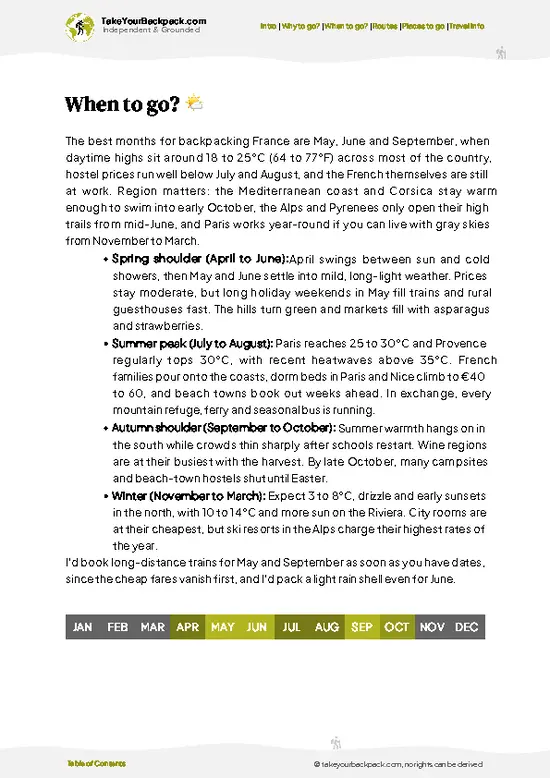
source: climatestotravel.comJANJanuary: fair for travelingFEBFebruary: fair for travelingMARMarch: good for travelingAPRApril: highly recommended for travelingMAYMay: excellent for travelingJUNJune: highly recommended for travelingJULJuly: good for travelingAUGAugust: good for travelingSEPSeptember: excellent for travelingOCTOctober: highly recommended for travelingNOVNovember: fair for travelingDECDecember: fair for traveling
when-to-go

✈️ The backpacker research shortcutFrance Travel Guide

An offline-friendly backpacking guide with optimized travel routes, ranked highlights, transport advice, and the best areas to stay.
example page 0 from our offline Travel Guide for France
example page 1 from our offline Travel Guide for France
example page 2 from our offline Travel Guide for France
example page 3 from our offline Travel Guide for France
example page 4 from our offline Travel Guide for France
example page 5 from our offline Travel Guide for France
example page 6 from our offline Travel Guide for France
example page 7 from our offline Travel Guide for France
The digital guide (461 pages) contains:
142 highlights, ranked by travel appeal
Optimized 7, 14 & 21-day travel routes
Cities, national parks, landmarks, beaches
How to get around
Offline-friendly for travel without Wi-Fi
👉 Click to see all 30+ guide features

📅 Plan smarter in minutes, not weeks
Month by month travel advice
Festivals & national holidays
Budget expectations

🗺️ Go to the right places, skip the overrated ones
Honest pros & cons of destinations
Top hikes, parks & viewpoints
Lesser-known places most travelers miss
Clear “worth it vs skip it” guidance

🛏️ Travel smoothly without rookie mistakes
Best areas to stay
Transport systems explained simply
Common scams & safety advice
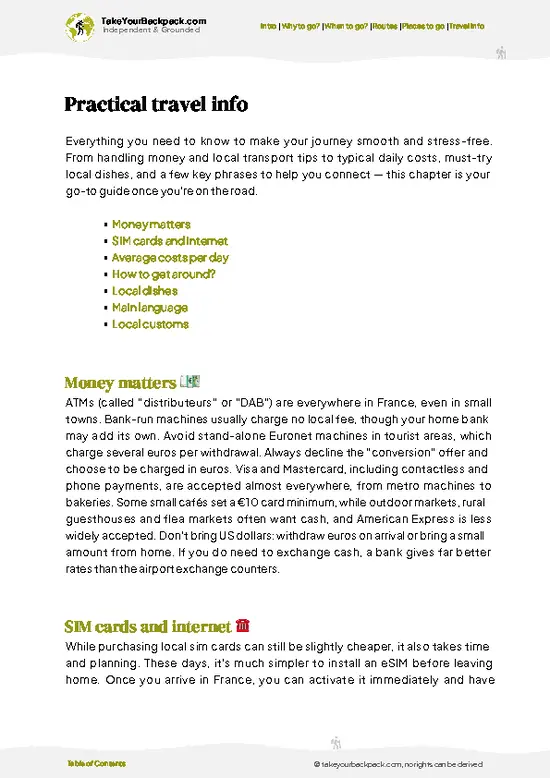
SIM cards, money & practical tips

🌍 Understand the country, not just visit it
Culture & traditions
52 Essential phrases & customs
Festivals worth planning around
Traveler-friendly historical context
Insights that make places more meaningful

📱 Built for real travel conditions
Fully downloadable PDF
Works completely offline
Optimized for phone use
Useful in remote areas & buses
Everything in one place
Save weeks of stressful planning
Get instant access to your full guide. 30‑day money-back guarantee.
+ Add another guide for just US$7.80

By proceeding you agree to our terms.
Sent to your inbox immediately after payment • 100% Secure Checkout
Best Backpacking Travel Advisor 2025 tourism awardBest Backpacking
Travel Advisor
2025
What others say about Take Your Backpack Guides:
⭐⭐⭐⭐⭐
Fantastic, amazing amount of information!
⭐⭐⭐⭐⭐
My goodness this is amazing, it's what I've been looking for hats off too you!
⭐⭐⭐⭐⭐
I think this is absolutely BRILLIANT
⭐⭐⭐⭐
Very complete and informative. It's still missing places, but I gotta to commend you
⭐⭐⭐⭐⭐
This is truly amazing, thank you, can't wait to explore it with my kids!
⭐⭐⭐⭐⭐
Awesome resource, thank you!
⭐⭐⭐⭐⭐
This is amazing! Can't wait to explore the ones I haven't seen
⭐⭐⭐⭐
I love this! Well done, great idea.
⭐⭐⭐⭐⭐
Thanks for taking the time to make this gem!
⭐⭐⭐⭐⭐
This might be the best website I've ever seen.
⭐⭐⭐⭐⭐
Congratulations, and thank you so much for your work; it's incredibly valuable.
⭐⭐⭐⭐
In all seriousness I think you did a great job pointing out the important spots
⭐⭐⭐⭐⭐
10/10 very good
⭐⭐⭐⭐⭐
As someone who's only just starting to visit regularly this is awesome, thank you.
⭐⭐⭐⭐
Thank you very much! I'm going to visit my dad, it's going to be very useful!
⭐⭐⭐⭐⭐
This is really cool! We'll be travelling for the first time and this definitely come in handy.
⭐⭐⭐⭐⭐
You are now our minister of culture, congratulations 👨‍💼
⭐⭐⭐⭐⭐
Just wanted to tell you that this is a pearl! Going to follow your recommendations.
⭐⭐⭐⭐⭐
This is so cool. I'll definitely be using the resource for my travels soon.
⭐⭐⭐⭐⭐
This is very impressive! Good work.
⭐⭐⭐⭐⭐
This is an amazing and informative site. Very well done!

🛏️ Where to stay?Choosing the right base

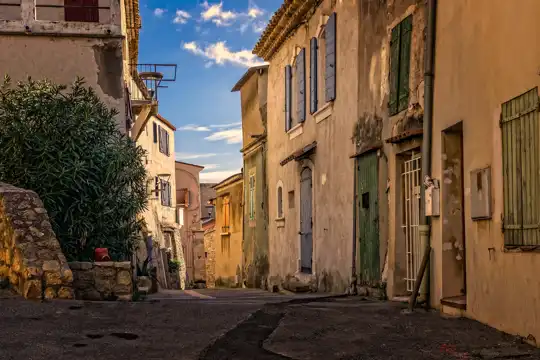
Antibes’ Old Town is the heartbeat for backpackers craving a mix of history and social buzz without blowing the budget. Narrow cobblestone streets wind between pastel buildings, their shutters flung open to catch the salty sea breeze. Here, hostels cluster near the lively Marché Provençal, where the scent of fresh olives and herbs drifts through the morning air. This area feels safe, thanks to its pedestrian-friendly layout and steady flow of locals and tourists mingling in cafés and small bars.

Step outside the Old Town, and Juan-les-Pins offers a different rhythm—more beach-party vibe with … read more 👉
Antibes’ Old Town is the heartbeat for backpackers craving a mix of history and social buzz without blowing the budget. Narrow cobblestone streets wind between pastel buildings, their shutters flung open to catch the salty sea breeze. Here, hostels cluster near the lively Marché Provençal, where the scent of fresh olives and herbs drifts through the morning air. This area feels safe, thanks to its pedestrian-friendly layout and steady flow of locals and tourists mingling in cafés and small bars.

Step outside the Old Town, and Juan-les-Pins offers a different rhythm—more beach-party vibe with a youthful crowd drawn to its sandy shores and nightlife. It’s a bit pricier but still has budget options if you book smart. The key is that both neighborhoods keep you close to public transport, making day trips along the Côte d’Azur easy without the hassle of taxis or long walks. Staying here means you’re not just passing through Antibes—you’re living it, with the sea’s salt tang always in the air.

🚌 Getting aroundHow to get around Antibes

Antibes moves at the pace of the Mediterranean itself—sunlight dappling through olive trees, the salty breeze carrying the distant chatter of markets and seagulls. It’s not a place where you’ll find rigid timetables etched in stone; instead, the rhythm here is a blend of laid-back intuition and bursts of local hustle. The town’s charm is in its flow: mornings start slow with the scent of fresh bread from boulangeries, afternoons hum with the shuffle of feet along cobbled streets, and evenings settle into a gentle lull by the harbor. Navigating Antibes means syncing with this pulse—knowing when to stroll, when to catch a ride, and when to simply pause and soak it all in.


  • Walking: Antibes is compact and pedestrian-friendly, with most key sights within a 20-minute walk of each other. Walking
read more 👉
Antibes moves at the pace of the Mediterranean itself—sunlight dappling through olive trees, the salty breeze carrying the distant chatter of markets and seagulls. It’s not a place where you’ll find rigid timetables etched in stone; instead, the rhythm here is a blend of laid-back intuition and bursts of local hustle. The town’s charm is in its flow: mornings start slow with the scent of fresh bread from boulangeries, afternoons hum with the shuffle of feet along cobbled streets, and evenings settle into a gentle lull by the harbor. Navigating Antibes means syncing with this pulse—knowing when to stroll, when to catch a ride, and when to simply pause and soak it all in.


  • Walking: Antibes is compact and pedestrian-friendly, with most key sights within a 20-minute walk of each other. Walking lets you absorb the scent of jasmine and sea salt, and stumble upon local cafés and markets that buses miss. It’s free, flexible, and the best way to feel the town’s heartbeat.


  • Local Bus (Lignes d’Azur): The bus network is reliable but not hyper-frequent—expect buses roughly every 20-30 minutes from early morning (around 6:30 AM) until about 9:30 PM. A single ticket costs about €1.50, making it a budget-friendly way to reach neighborhoods beyond the center or hop to nearby Juan-les-Pins. The ride offers glimpses of the coastline and residential streets, but be ready for occasional crowding during peak hours.


  • Train (TER Provence-Alpes-Côte d’Azur): Antibes’ train station is a gateway to the French Riviera. Trains run frequently from early morning until late evening, connecting you swiftly to Nice (about 20 minutes) and Cannes (around 10 minutes). Tickets start at roughly €4.50 one-way. The train is your best bet for day trips or quick escapes, offering comfort and scenic views without the hassle of traffic.


  • Bicycle Rentals: For a bit more speed and freedom, bike rentals are widely available and affordable (around €10-15 per day). The town’s mostly flat terrain and dedicated bike lanes along the coast make cycling a refreshing way to cover more ground while feeling the breeze and spotting hidden beaches or quiet parks.


  • Taxi and Ride-Sharing: Taxis are available but pricey compared to other options, with fares starting around €7 for short trips within town. Ride-sharing apps operate but can be less reliable in quieter hours. Use these sparingly—best for late nights or when you’re hauling heavy gear.

👛 Costs (as of 4 September 2026)Money, prices, and spending tips

Backpacking in Antibes, France, means balancing the charm of the Côte d’Azur with the reality of its tourist-driven prices. Here’s what you can expect to spend daily, broken down to keep your trip smooth and your wallet intact.
  • Dorm accommodation: Hostels in Antibes hover around €25 to €40 per night for a bed in a shared dorm. It’s not the cheapest on the French Riviera, but you get clean, basic rooms often within walking distance of the old town and beaches. Booking early can snag you the lower end of this range.
  • Meals: Eating out leans toward casual bistros and markets. Budget about €10 to €15 for a simple lunch—think a baguette sandwich or a salad with local olives and cheese. Dinner at a modest restaurant will push you closer to €20 to €30 if you want something more filling, like seafood
read more 👉
Backpacking in Antibes, France, means balancing the charm of the Côte d’Azur with the reality of its tourist-driven prices. Here’s what you can expect to spend daily, broken down to keep your trip smooth and your wallet intact.
  • Dorm accommodation: Hostels in Antibes hover around €25 to €40 per night for a bed in a shared dorm. It’s not the cheapest on the French Riviera, but you get clean, basic rooms often within walking distance of the old town and beaches. Booking early can snag you the lower end of this range.
  • Meals: Eating out leans toward casual bistros and markets. Budget about €10 to €15 for a simple lunch—think a baguette sandwich or a salad with local olives and cheese. Dinner at a modest restaurant will push you closer to €20 to €30 if you want something more filling, like seafood or ratatouille. Markets and bakeries are your best friends for saving money and tasting local flavors.
  • Local transport: Antibes is compact, so walking is often the best way to soak in the atmosphere. If you need a bus, a single ticket costs around €1.50, and a day pass is about €4.50. Renting a bike is another affordable option, roughly €10 to €15 per day, letting you explore the coastline at your own pace.
  • Basic activities/entry fees: Many of Antibes’ charms are free—strolling the old town, wandering the harbor, or lounging on the public beaches. Museums like the Picasso Museum charge around €6 to €8. If you want to visit the Fort Carré or take a boat trip, budget €10 to €20 depending on the activity.
  • Miscellaneous expenses: Factor in small extras like a coffee (€2 to €3), a bottle of water (€1 to €2), or a gelato (€3 to €4). These add up but are part of the sensory experience—sipping espresso while watching the Mediterranean light shift over the marina is worth every cent.

All told, a daily budget in Antibes for a backpacker aiming to keep things lean but enjoyable falls between €50 and €80. This range covers the essentials without cutting corners on the experience. Antibes rewards those who take their time—walking its sunlit streets, savoring local bites, and letting the sea breeze set the pace.


source: antibesjuanlespins.com
⚠️ Prices can change and everyone travels differently, so take this as a rough guide. Hope it helps you plan your adventure!

🚌 Day tripsShort trips worth adding

Antibes is a fantastic launchpad for exploring the French Riviera, blending vibrant culture with stunning coastal views. Here are some day trips that will elevate your experience.

Cannes
Just a 30-minute train ride from Antibes, Cannes is more than just a film festival hotspot. Stroll along the Boulevard de la Croisette, where the salty breeze mingles with the scent of fresh pastries from nearby cafés. Grab a coffee and people-watch, soaking in the glamour. The best time to visit is during the shoulder seasons of spring and fall when the crowds thin out, and you can enjoy the beach without the summer rush. A round-trip ticket will set you back about €10. Avoid the mistake of sticking to the tourist traps; instead, venture into Le Suquet, the old town, for authentic local charm.


Niceread more 👉
Antibes is a fantastic launchpad for exploring the French Riviera, blending vibrant culture with stunning coastal views. Here are some day trips that will elevate your experience.

Cannes
Just a 30-minute train ride from Antibes, Cannes is more than just a film festival hotspot. Stroll along the Boulevard de la Croisette, where the salty breeze mingles with the scent of fresh pastries from nearby cafés. Grab a coffee and people-watch, soaking in the glamour. The best time to visit is during the shoulder seasons of spring and fall when the crowds thin out, and you can enjoy the beach without the summer rush. A round-trip ticket will set you back about €10. Avoid the mistake of sticking to the tourist traps; instead, venture into Le Suquet, the old town, for authentic local charm.


Nice
A mere 20 minutes by train, Nice offers a vibrant mix of art, history, and stunning seaside views. The Promenade des Anglais is a must, where the turquoise waves crash against the pebbled shore. Visit the Cours Saleya market for fresh produce and local delicacies—don’t miss the socca, a chickpea pancake that’s a local favorite. The best time to go is early morning when the market is bustling. Expect to spend around €15 for a round trip. Many first-timers miss the hilltop views from Castle Hill; take the stairs for a rewarding panorama of the city.
👉 Explore Nice

Saint-Paul-de-Vence
This picturesque village, about 30 minutes by bus, is a haven for art lovers. The cobblestone streets are lined with galleries and artisan shops, and the scent of lavender wafts through the air. Spend a leisurely afternoon exploring the Fondation Maeght, a modern art museum that feels like a hidden treasure. The best time to visit is in spring when the flowers bloom, adding color to the landscape. A bus ticket costs around €1.50, but don’t rush; take your time to soak in the atmosphere. Many backpackers overlook the local eateries; try a small bistro for a taste of authentic Provençal cuisine.


Antibes’ Beaches
While not a day trip in the traditional sense, don’t overlook the stunning beaches right at your doorstep. Spend a day lounging at Plage de la Gravette, where the soft sand meets crystal-clear waters. Bring your own picnic to save money—local bakeries offer delicious sandwiches and pastries. The best time to hit the beach is early morning or late afternoon to avoid the midday sun. Parking can be a hassle, so opt for public transport if you’re coming from further away. Many first-timers miss the sunset here; it’s a breathtaking way to end your day.
Want to know what more France offers?
The France Travel Guide describes 142 highlights, from cities to national parks, from beaches to hikes

Get the Travel Guide -

🛡️ SafetyScams, Hazards, and Annoyances

Antibes is generally safe, but like any popular spot, a little awareness goes a long way. The bustling markets and narrow streets can be disorienting, especially at night. Stick to well-lit areas and keep your belongings close—pickpockets can be sneaky in crowded places like the Marché Provençal.

If you’re solo, embrace the charm of a café terrace but stay alert. Enjoying a glass of rosé is lovely, but don’t let your guard down. Common scams, like overly friendly strangers offering unsolicited help, can pop up. Politely decline and move on.

The real annoyance? Tourists who don’t respect local customs. A simple “bonjour” goes a long way in building rapport. By blending in and staying aware, you’ll unlock the true essence of Antibes without unnecessary hiccups.

FAQTraveler FAQ

Yes, Antibes is worth visiting for its charming old town, sandy beaches, and the Picasso Museum. It offers a more relaxed atmosphere compared to nearby Nice and Cannes, making it a worthwhile destination rather than just a stopover.
Two days are sufficient to explore Antibes thoroughly. This allows time to visit the Fort Carré, stroll through the Provençal market, and enjoy the beaches without rushing.
Yes, Antibes can be visited as a day trip from Nice, which is about 20 kilometers away. Frequent trains connect the two cities, making it easy to explore Antibes in a single day.
⚠️ Things can change over time, so always validate details locally before you go.

Other French towns near Antibes

Explore more nearby:

  • Menton—citrus gardens, pastel facades, Italian border| 37 km away
  • Avignon—Papal palace, festival venues, Rhône riverbank| 191 km away
  • Arles—Roman amphitheater, Van Gogh sites, Provençal markets| 201 km away

💡 Not sure where to go next?
Create a personalized itinerary for France including Antibes and the places that fit your trip.

Generate my itinerary

👉 Discover all towns

Or checkout all France has to offer (think cities, towns, villages, national parks, hikes, beaches, festivals)
Country photo of France

We 💚 feedbackFinal thoughts on visiting Antibes

Antibes is a slice of coastal magic, where the salty breeze carries the scent of lavender and fresh seafood. Strolling through the old town, you’ll feel the pulse of history in every cobblestone. But be ready for crowds, especially in summer; it can feel like a bustling market at times. Embrace the chaos, though—it’s part of the charm, and the views from the ramparts make it all worthwhile.

✈️ When did I visit France?
Being close to The Netherlands, my home base, I visited France many times.

✍️ Help improve this page!
The information on this page is based on my own backpacking experience in France, supplemented with up-to-date research and feedback from other travelers. Travel details can change, so if you notice anything outdated or incomplete, feel free to let me know.


🙋‍♂️ Give feedback

👋 Meet the founderWho’s Behind Take Your Backpack?

Johan, backpacker and founder of TakeYourBackpackHi, I’m Johan (Netherlands 🇳🇱), the creator of TakeYourBackpack. Over the past decade, I’ve backpacked through 80+ countries across six continents, gaining extensive experience with independent travel, long-term trips, and overland routes.

This site is built on a combination of firsthand travel experience and carefully curated insights from other backpackers. Many guides are based on places I’ve personally visited, while others bring together tips, observations, and practical advice shared by trusted travelers I’ve met along the way.

The goal is to provide realistic, experience-driven guidance — not generic itineraries — so you can explore destinations with better context, clearer expectations, and more confidence.

Get full France guide •
Instant download • 142 highlights • Full Offline guide