×

France🇫🇷 | best townsThe 10 Top towns in France

In France, towns are the heartbeat of the country, each pulsating with its own unique charm and local culture. From the sun-soaked streets of Provence to the historic alleys of Normandy, the right town can transform your backpacking experience. Seasonal nuances play a significant role; summer crowds can overwhelm popular spots like Nice, while winter brings a serene quiet to the Alps.

Choosing wisely affects your vibe, budget, and even safety. Smaller towns often offer a more authentic glimpse into daily life, while larger cities can be more expensive and chaotic. Walkability varies, too; some towns are best explored on foot, allowing you to soak in the atmosphere, while others may require public transport to navigate.

Understanding these regional differences is crucial for independent travelers seeking genuine cultural immersion. The right town choice shapes not just your itinerary, but the very essence of your journey through France.

By Johan Kruseman 🇳🇱 | Updated September 5, 2026
Explore the best villages in France

Why go?What Makes Them Special

France’s towns are a tapestry of local charm and cultural depth that set them apart from other countries. Each town offers a unique slice of life, shaped by centuries of history, regional traditions, and culinary excellence. The pace of life here is often slower, allowing travelers to savor the moment rather than rush through it. This is where you can find a café serving the best croissant you’ve ever tasted, or a market bustling with locals trading fresh produce, all while surrounded by architecture that tells stories of the past.

Geographically, France’s diverse landscapes—from the rolling vineyards of Bordeaux to the rugged coastlines of Brittany—create distinct regional identities. This variety means that clustering towns can significantly enhance your itinerary. For instance, exploring … read more 👉
France’s towns are a tapestry of local charm and cultural depth that set them apart from other countries. Each town offers a unique slice of life, shaped by centuries of history, regional traditions, and culinary excellence. The pace of life here is often slower, allowing travelers to savor the moment rather than rush through it. This is where you can find a café serving the best croissant you’ve ever tasted, or a market bustling with locals trading fresh produce, all while surrounded by architecture that tells stories of the past.

Geographically, France’s diverse landscapes—from the rolling vineyards of Bordeaux to the rugged coastlines of Brittany—create distinct regional identities. This variety means that clustering towns can significantly enhance your itinerary. For instance, exploring the Provence region allows you to experience lavender fields, Roman ruins, and vibrant local festivals, all within a short drive. However, this also means weighing travel time against depth of exploration. The more you try to see, the less you may truly experience.

Culturally, France is well-suited for immersive travel, but it comes with its own set of challenges. Smaller towns may lack the infrastructure of larger cities, making them less accessible. Public transport can be limited, and navigating rural areas often requires a car. This can be a trade-off between accessibility and a deeper connection to the local way of life.

In essence, France’s towns are not just places to visit; they are experiences to be lived. Understanding these nuances is crucial for any traveler looking to dive into the heart of French culture. The rewards are rich, but so are the considerations.
Evaluating the Top Choices
The list of best towns in France is created based on charm, local culture, atmosphere, hidden gems, and visitor appeal. If you feel a town is missing in this list, please let us know.

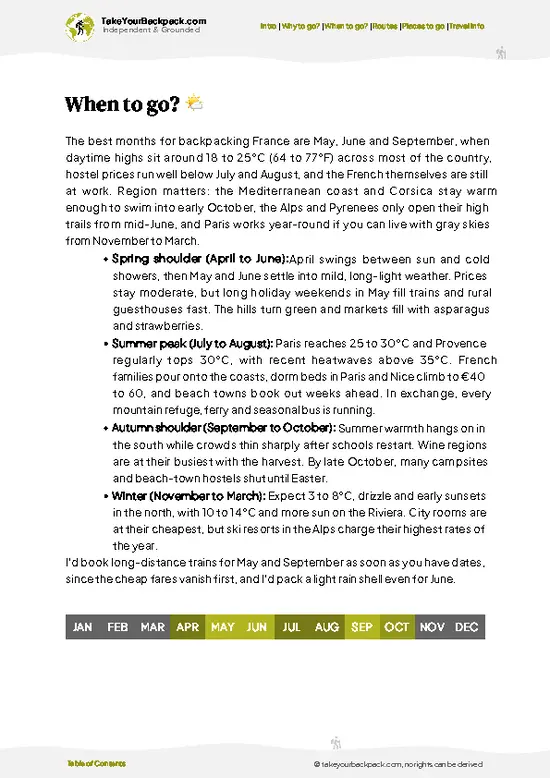
When to go?Optimal Periods for Travel

Seasonality plays a crucial role in experiencing the charm of France’s towns. Each season brings its own rhythm, shaping local life and events.

Spring is a vibrant time. As the chill of winter fades, towns come alive with blooming flowers and outdoor markets. Weather is generally mild, but rain can be frequent. This season is ideal for those seeking a lively atmosphere without the summer crowds. However, be prepared for occasional showers.

Summer is peak tourist season. The weather is warm, often hot, and towns buzz with festivals and events. This is when local culture shines, but expect larger crowds and higher prices. Accommodations fill quickly, and some towns may feel overwhelmed by tourists. If you thrive in a bustling environment, summer is your time, but be ready for the trade-offs. … read more 👉
Seasonality plays a crucial role in experiencing the charm of France’s towns. Each season brings its own rhythm, shaping local life and events.

Spring is a vibrant time. As the chill of winter fades, towns come alive with blooming flowers and outdoor markets. Weather is generally mild, but rain can be frequent. This season is ideal for those seeking a lively atmosphere without the summer crowds. However, be prepared for occasional showers.

Summer is peak tourist season. The weather is warm, often hot, and towns buzz with festivals and events. This is when local culture shines, but expect larger crowds and higher prices. Accommodations fill quickly, and some towns may feel overwhelmed by tourists. If you thrive in a bustling environment, summer is your time, but be ready for the trade-offs.

Autumn offers a different kind of beauty. The foliage transforms landscapes, and harvest festivals celebrate local produce. Temperatures are comfortable, making it a great time for exploration. Crowds thin out compared to summer, providing a more relaxed experience. However, as the season progresses, some attractions may begin to close for the winter.

Winter brings a quieter charm. Many towns embrace the holiday spirit, with markets and decorations. However, weather can be cold, and some attractions may be closed. This is a time for those who appreciate solitude and a slower pace.

Shoulder seasons—spring and autumn—often provide the best balance of pleasant weather, fewer crowds, and reasonable prices. Planning around these periods can enhance the experience, allowing for deeper connections with local culture.

town hoppingOptimizing Your Multi-Stop Itinerary

Regional Clustering
To make the most of a trip through France, focus on regional clusters. The country is divided into distinct areas, each with its own flavor. Start in the north with towns like Rouen and Honfleur, then head south to the Loire Valley for a taste of châteaux and charming villages. This approach minimizes travel time and maximizes local immersion.

Direction of Travel
Traveling in a logical direction is key. Move from one region to the next without backtracking. For instance, after exploring Provence, continue to the French Riviera. This not only saves time but also keeps the energy high.

Optimal Sequencing
Sequence your stops based on proximity and interest. Spend a couple of nights in each town to soak in the local culture. Aim for three to four towns in a week, allowing … read more 👉
Regional Clustering
To make the most of a trip through France, focus on regional clusters. The country is divided into distinct areas, each with its own flavor. Start in the north with towns like Rouen and Honfleur, then head south to the Loire Valley for a taste of châteaux and charming villages. This approach minimizes travel time and maximizes local immersion.

Direction of Travel
Traveling in a logical direction is key. Move from one region to the next without backtracking. For instance, after exploring Provence, continue to the French Riviera. This not only saves time but also keeps the energy high.

Optimal Sequencing
Sequence your stops based on proximity and interest. Spend a couple of nights in each town to soak in the local culture. Aim for three to four towns in a week, allowing for two nights in each. This pacing strikes a balance between exploration and relaxation.

Common Planning Mistakes
Avoid cramming too many towns into a short timeframe. This leads to travel fatigue and superficial experiences. Many travelers underestimate the time needed to truly enjoy a place. Each town deserves attention; rushing through them dilutes the experience.

Trade-offs and Constraints
Consider the trade-offs between speed and depth. A fast-paced itinerary might seem appealing, but it often sacrifices the richness of local experiences. Budget constraints can also affect comfort levels; prioritize accommodations that enhance the experience rather than just serve as a place to sleep.

Flexibility and Strategic Planning
Stay flexible. Allow for spontaneous detours or extended stays in towns that captivate you. The beauty of France lies in its unpredictability. Embrace it, and let the journey unfold naturally.

The ListMust-Visit towns in France

1 Chamonix

Mont Blanc massif, alpine cable cars, glacier hikes

Ride lifts to high-altitude trails, join climbers in mountain huts, and experience a town built around outdoor adventure.

france-city-chamonix
© Google | Josep Sabata

2 Saint-Malo

walled city, tidal beaches, granite ramparts

Circle ancient defenses, time your visit with the tides, and watch the Atlantic shape daily life inside the old walls.

3 Avignon

Papal palace, festival venues, Rhône riverbank

Visit monumental halls, time your stay for performances, and cross the river for a wide view of the city’s skyline.

4 Arles

Roman amphitheater, Van Gogh sites, Provençal markets

Sit in ancient arenas, trace the painter’s footsteps, and browse stalls filled with regional produce and crafts.

france-city-arles
© Google | Henning Gieseke

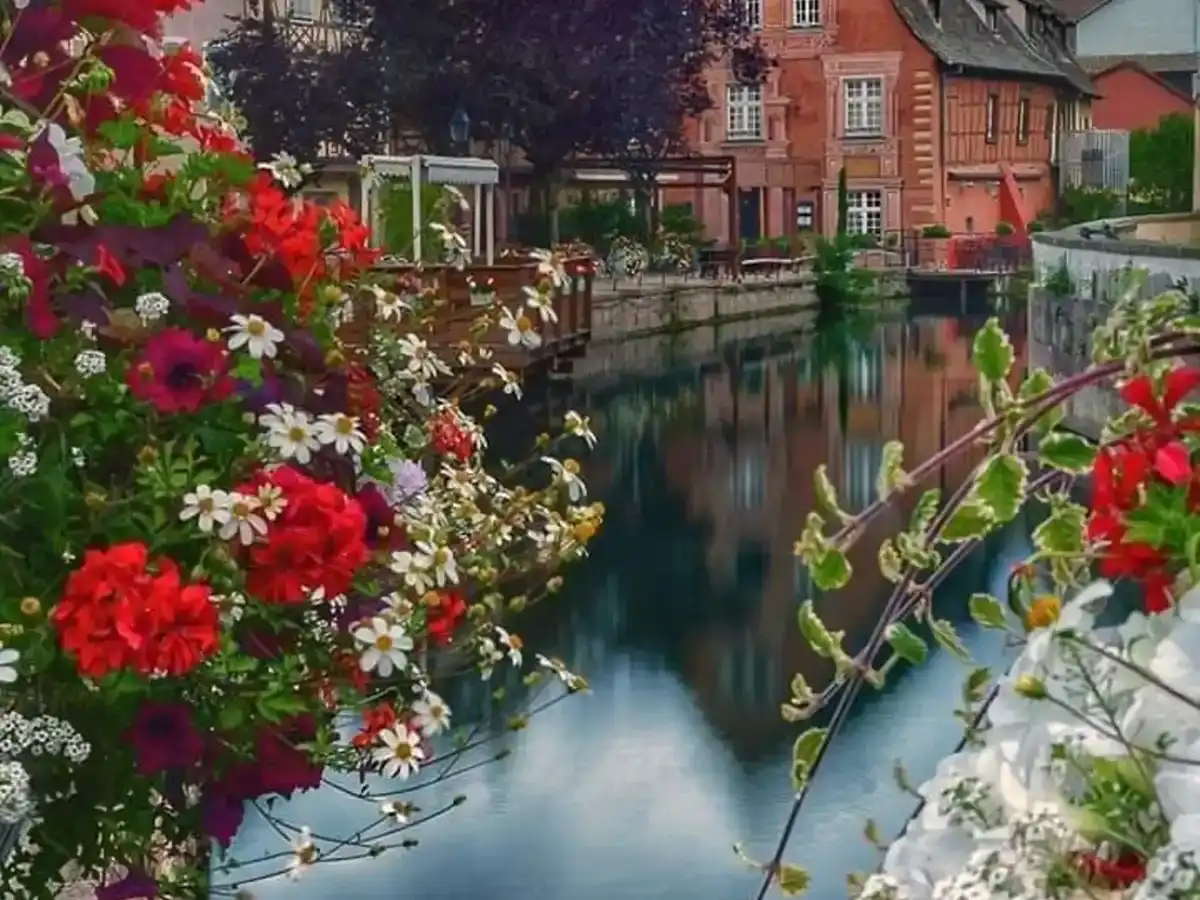
5 Colmar

canals, timbered houses, Alsatian wine route

Wander along flower-lined waterways, taste regional wines, and see how Germanic and French influences meet in daily life.

france-city-colmar
© Google | Ibrahim

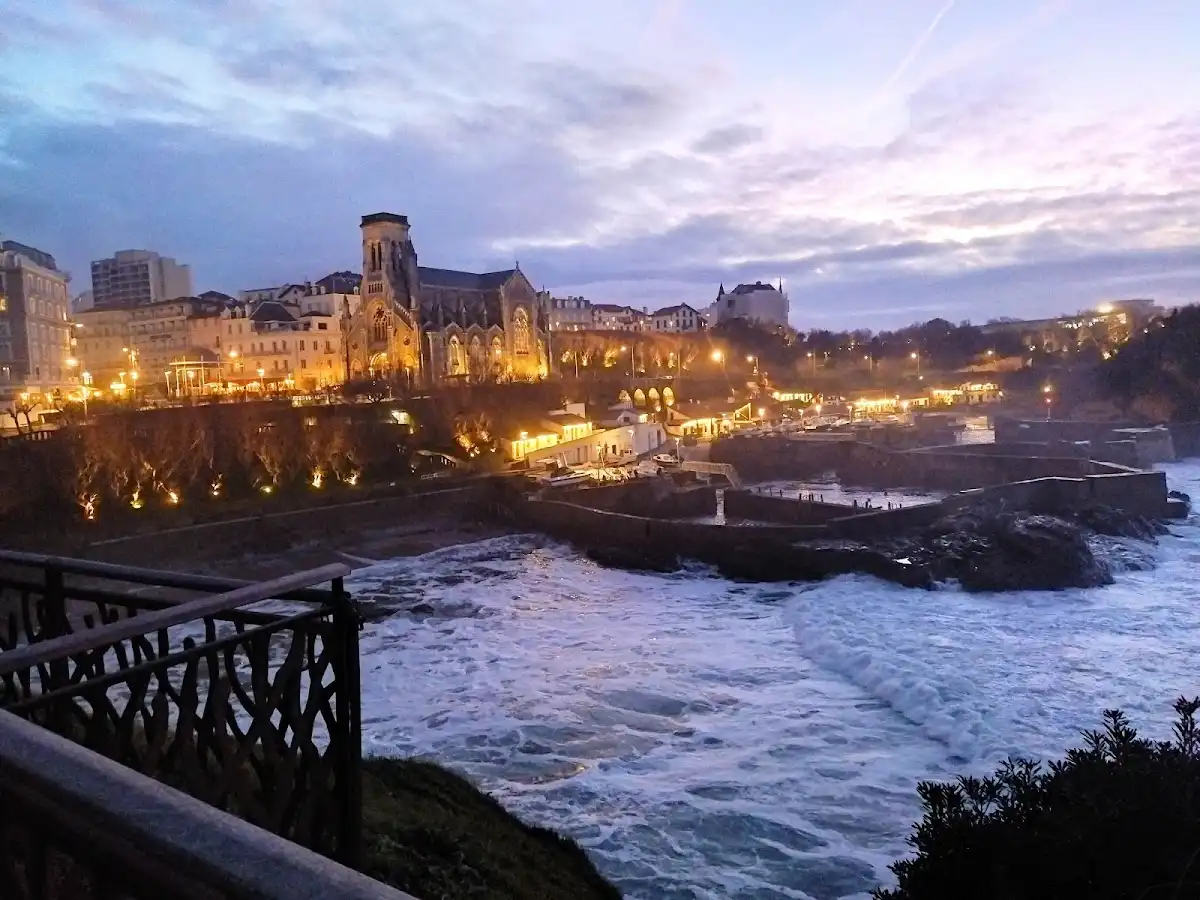
6 Biarritz

surf beaches, Belle Époque villas, oceanfront promenades

Watch Atlantic waves crash below cliffside walks, explore elegant neighborhoods, and join surfers on the town’s broad sands.

france-city-biarritz
© Google |

7 Antibes

yacht harbor, Picasso museum, sandy coves

Balance time between art collections, Mediterranean swims, and the bustle of a port that draws both locals and travelers.

8 La Rochelle

Atlantic port, arcaded streets, old towers

Walk the harbor’s edge, explore covered walkways, and climb medieval towers that once guarded the city from the sea.

france-city-la-rochelle
© Google | Santiago Chacón

9 Honfleur

old harbor, slate-roofed houses, art galleries

Sit by the Vieux Bassin, browse small galleries, and see how changing light inspired generations of painters and travelers.

10 Aigues-Mortes

salt marshes, fortified walls, grid street plan

Circle the intact ramparts, watch flamingos in nearby wetlands, and navigate a town laid out with medieval precision.

france-city-aigues-mortes
© Google | Alain Laubreton

11 Ajaccio

Napoleon heritage, Mediterranean port, Corsican markets

Experience daily life where mountain views meet the sea, with local produce, maritime history, and a distinct Corsican identity.

12 Albi

brick cathedral, Toulouse-Lautrec museum, Tarn riverbank

Stand beneath a fortress-like cathedral, view art collections, and follow riverside paths that reveal the town’s red-brick character.

france-city-albi
© Google | Nelly Peyre

13 Bayonne

Basque culture, riverside quarters, chocolate shops

Absorb the blend of French and Basque influences, stroll along the Nive, and discover a city known for its food traditions.

14 Menton

citrus gardens, pastel facades, Italian border

Stroll through terraced groves, admire colorful architecture, and notice the subtle blend of French and Ligurian influences.

15 Épernay

Champagne houses, Avenue de Champagne, vineyard views

Tour cellars beneath grand mansions, taste sparkling wines at source, and watch the landscape shift from town to rolling vines.

france-city-epernay
© Google | Wojciech Nowak

16 Dinan

stone ramparts, medieval towers, riverside port

Descend steep streets from fortified walls to the riverbank, passing workshops and timbered houses that reveal the town’s past.

france-city-dinan
© Google |

17 Sarlat-la-Canéda

stone lanes, market squares, medieval facades

Wander narrow alleys lined with golden buildings, sample local produce, and experience a town shaped by centuries of rural life.

france-city-sarlat-la-caneda
© Google | Patrick Fuseau

18 Blois

Loire château, hillside streets, river views

Climb winding roads to a Renaissance palace, watch the Loire from terraced gardens, and explore a town shaped by royalty.

19 Troyes

half-timbered houses, narrow lanes, stained glass

Step into a maze of timbered buildings, discover artisan workshops, and admire windows that color the city’s historic churches.

20 Bastia

Corsican port, Genoese citadel, Mediterranean market

Navigate narrow lanes between sea-facing fortifications, sample regional produce, and observe daily life shaped by maritime traditions.

21 Cahors

arched bridge, Malbec vineyards, limestone cliffs

Cross the medieval Pont Valentré, sample robust wines, and follow the Lot River as it carves through dramatic scenery.

22 Narbonne

Roman ruins, canal-side cafés, Gothic cathedral

Trace Roman roads through the city, pause at shaded terraces, and climb cathedral towers for a view over the Aude plain.

23 Pau

Pyrenees views, château, leafy boulevards

Gaze south to mountain peaks, visit a royal residence, and walk shaded avenues that reveal the town’s 19th-century growth.

24 Périgueux

Roman amphitheater, domed cathedral, market streets

Move from ancient ruins to bustling food markets, and climb to the cathedral’s domes for a view over the Dordogne rooftops.

25 Poitiers

Romanesque churches, student quarter, hilltop setting

Move between ancient religious sites and lively squares, then climb to panoramic points overlooking the Vienne valley.

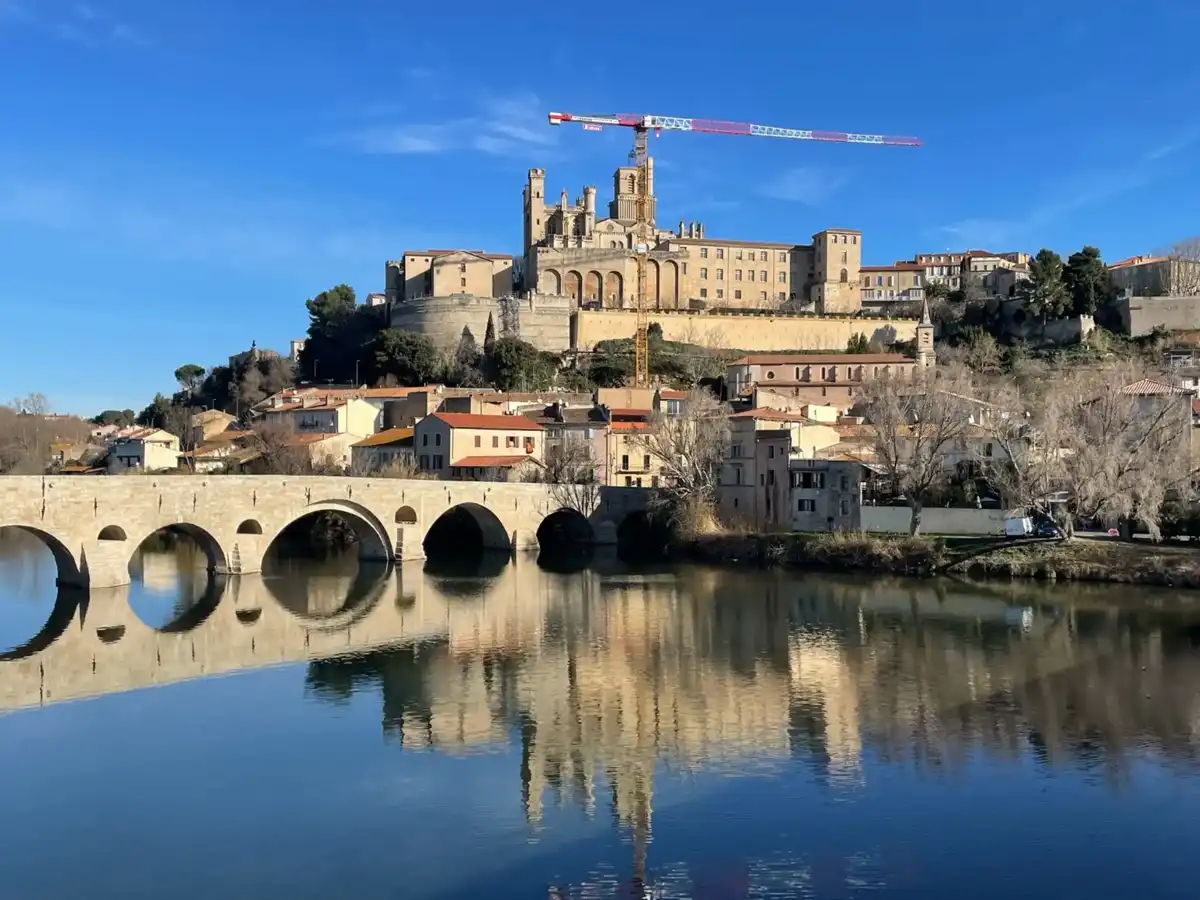
26 Béziers

canal locks, bullring, hilltop cathedral

Watch boats navigate the Fonserannes locks, explore a city shaped by Occitan culture, and climb to panoramic viewpoints.

france-city-beziers
© Google | Jaime T . Lecuona

27 Arbois

Jura vineyards, wine cellars, river Cuisance

Sample local vintages in small producers’ caves, walk along the river, and see how wine shapes daily rhythms and menus.

Think you know France?

Prove you’re a true local — uncover 17 lesser-known towns in France that locals tend to keep to themselves.
Loading the map 🌍

Expert viewTips and Advice from Travelers

Essential Towns
France is a patchwork of towns, each with its own flavor. Aim for a mix of about five to seven towns to get a real taste of the country. Start in the north with the charming coastal towns, where the sea air invigorates your spirit. Then, drift southward to the sun-soaked villages that embody the essence of Provence. Each region has its own rhythm, and understanding that is key to maximizing your experience.

In the north, towns like those along the Normandy coast offer a rich history and stunning landscapes. You’ll find the remnants of World War II, but also a vibrant local culture that thrives on fresh seafood and artisanal cheeses. The pace here is slower, allowing you to soak in the atmosphere. However, be prepared for the weather; it can be unpredictable. A raincoat is … read more 👉
Essential Towns
France is a patchwork of towns, each with its own flavor. Aim for a mix of about five to seven towns to get a real taste of the country. Start in the north with the charming coastal towns, where the sea air invigorates your spirit. Then, drift southward to the sun-soaked villages that embody the essence of Provence. Each region has its own rhythm, and understanding that is key to maximizing your experience.

In the north, towns like those along the Normandy coast offer a rich history and stunning landscapes. You’ll find the remnants of World War II, but also a vibrant local culture that thrives on fresh seafood and artisanal cheeses. The pace here is slower, allowing you to soak in the atmosphere. However, be prepared for the weather; it can be unpredictable. A raincoat is your best friend, and you might want to plan for indoor activities, like visiting local museums or cozy cafés.

As you move south, the towns transform. The lavender fields and vineyards of Provence are not just picturesque; they’re a sensory overload. The local markets burst with colors and aromas that make you want to linger. But here’s the catch: summer can be sweltering, and the tourist crowds can be overwhelming. If you’re not a fan of heat and hustle, consider visiting in the shoulder seasons of late spring or early fall. You’ll enjoy milder weather and a more authentic experience, as locals are more likely to engage with you.

Overrated Towns
Now, let’s talk about the towns that often get hyped but may not live up to the expectations. Some of the more famous spots can feel like tourist traps, where the charm is overshadowed by souvenir shops and overpriced meals. You might find yourself in a beautiful setting, but if the experience feels manufactured, it’s not worth your time.

Take a step back and consider the logistics. Some towns are more accessible than others, and that can impact your travel rhythm. If you’re spending too much time commuting, you’ll miss out on the local charm. For instance, towns that are heavily marketed often come with inflated prices and limited authentic experiences. Instead, seek out lesser-known spots that still offer rich history and culture without the crowds.

Travel Rhythm
Understanding the travel rhythm in France is crucial. The country is vast, and while it’s tempting to try to see everything, a more focused approach yields better results. Plan for a mix of urban and rural experiences. Spend a couple of days in a bustling city, then retreat to a quieter town to recharge. This balance allows you to appreciate both the vibrancy of urban life and the tranquility of the countryside.

Consider your mode of transport. Trains are efficient, but they can limit your flexibility. If you’re comfortable driving, renting a car opens up a world of possibilities. You can explore off-the-beaten-path towns that aren’t easily accessible by public transport. Just be mindful of parking regulations, especially in smaller towns where space is limited.

Local Charm
Local culture is what makes each town unique. Engage with the community; attend a local festival or market. These experiences are often the highlight of a trip. However, be aware of cultural norms. In smaller towns, a simple “bonjour” can go a long way. Respect local customs, and you’ll find that people are more welcoming.

Safety is generally not a concern in most towns, but it’s always wise to stay aware of your surroundings, especially in crowded areas. Petty theft can happen, so keep your belongings secure.

Logistical Considerations
When planning your itinerary, think about the time you have available. A week is a good starting point for a focused exploration of a few towns. Allocate a couple of days for each, allowing for travel time and downtime. Budget-wise, you can find a range of accommodations, from budget hostels to charming bed-and-breakfasts. Expect to spend a bit more in tourist-heavy areas, but don’t shy away from splurging on a memorable meal or experience.

Ultimately, the key is to prioritize quality over quantity. Choose towns that resonate with you, whether it’s the food, the history, or the scenery. Listen to your instincts; if a place feels right, dive in. The journey through France is as much about the people you meet and the stories you gather as it is about the sights you see. Embrace the adventure, and you’ll find that the heart of France beats strongest in its towns.

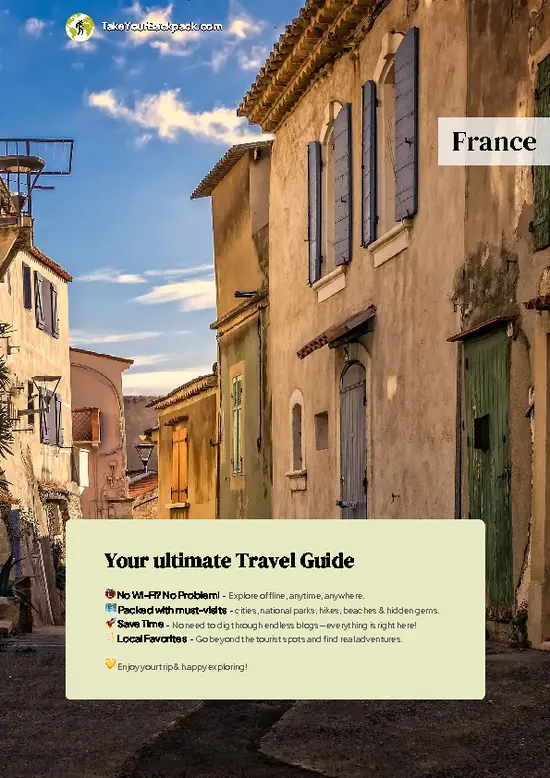
✈️ The backpacker research shortcutFrance Travel Guide

An offline-friendly backpacking guide with optimized travel routes, ranked highlights, transport advice, and the best areas to stay.
example page 0 from our offline Travel Guide for France
example page 1 from our offline Travel Guide for France
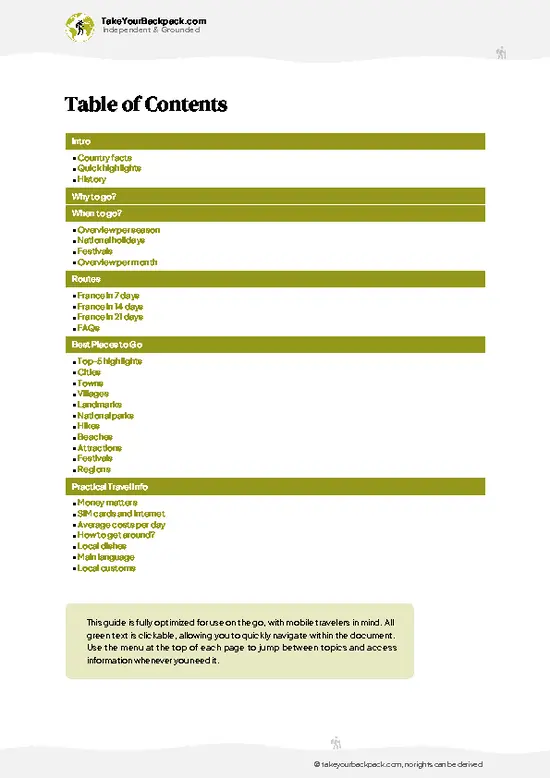
example page 2 from our offline Travel Guide for France
example page 3 from our offline Travel Guide for France
example page 4 from our offline Travel Guide for France
example page 5 from our offline Travel Guide for France
example page 6 from our offline Travel Guide for France
example page 7 from our offline Travel Guide for France
The digital guide (461 pages) contains:
142 highlights, ranked by travel appeal
Optimized 7, 14 & 21-day travel routes
Cities, national parks, landmarks, beaches
How to get around
Offline-friendly for travel without Wi-Fi
👉 Click to see all 30+ guide features

📅 Plan smarter in minutes, not weeks
Month by month travel advice
Festivals & national holidays
Budget expectations

🗺️ Go to the right places, skip the overrated ones
Honest pros & cons of destinations
Top hikes, parks & viewpoints
Lesser-known places most travelers miss
Clear “worth it vs skip it” guidance

🛏️ Travel smoothly without rookie mistakes
Best areas to stay
Transport systems explained simply
Common scams & safety advice
SIM cards, money & practical tips

🌍 Understand the country, not just visit it
Culture & traditions
52 Essential phrases & customs
Festivals worth planning around
Traveler-friendly historical context
Insights that make places more meaningful

📱 Built for real travel conditions
Fully downloadable PDF
Works completely offline
Optimized for phone use
Useful in remote areas & buses
Everything in one place
Save weeks of stressful planning
Get instant access to your full guide. 30‑day money-back guarantee.
+ Add another guide for just US$7.80

By proceeding you agree to our terms.
Sent to your inbox immediately after payment • 100% Secure Checkout
Best Backpacking Travel Advisor 2025 tourism awardBest Backpacking
Travel Advisor
2025
What others say about Take Your Backpack Guides:
⭐⭐⭐⭐⭐
Fantastic, amazing amount of information!
⭐⭐⭐⭐⭐
My goodness this is amazing, it's what I've been looking for hats off too you!
⭐⭐⭐⭐⭐
I think this is absolutely BRILLIANT
⭐⭐⭐⭐
Very complete and informative. It's still missing places, but I gotta to commend you
⭐⭐⭐⭐⭐
This is truly amazing, thank you, can't wait to explore it with my kids!
⭐⭐⭐⭐⭐
Awesome resource, thank you!
⭐⭐⭐⭐⭐
This is amazing! Can't wait to explore the ones I haven't seen
⭐⭐⭐⭐
I love this! Well done, great idea.
⭐⭐⭐⭐⭐
Thanks for taking the time to make this gem!
⭐⭐⭐⭐⭐
This might be the best website I've ever seen.
⭐⭐⭐⭐⭐
Congratulations, and thank you so much for your work; it's incredibly valuable.
⭐⭐⭐⭐
In all seriousness I think you did a great job pointing out the important spots
⭐⭐⭐⭐⭐
10/10 very good
⭐⭐⭐⭐⭐
As someone who's only just starting to visit regularly this is awesome, thank you.
⭐⭐⭐⭐
Thank you very much! I'm going to visit my dad, it's going to be very useful!
⭐⭐⭐⭐⭐
This is really cool! We'll be travelling for the first time and this definitely come in handy.
⭐⭐⭐⭐⭐
You are now our minister of culture, congratulations 👨‍💼
⭐⭐⭐⭐⭐
Just wanted to tell you that this is a pearl! Going to follow your recommendations.
⭐⭐⭐⭐⭐
This is so cool. I'll definitely be using the resource for my travels soon.
⭐⭐⭐⭐⭐
This is very impressive! Good work.
⭐⭐⭐⭐⭐
This is an amazing and informative site. Very well done!

🛏️ Where to stay?Top Places to Consider Staying

Yes — hostels and budget accommodation are common across France, with the strongest concentrations in Paris (Latin Quarter and Montmartre), Lyon (Presqu’île and Croix-Rousse), Marseille (Old Port and Le Panier), Nice (Old Town/Promenade), and Bordeaux (historic center).

Paris areas offer excellent transport and immediate access to landmarks but come with higher prices and street noise; Montmartre is touristy and hilly while the Latin Quarter is lively with nightlife but crowded and pickpocket-prone; Lyon’s Presqu’île is central for restaurants and transit but busy and more expensive than peripheral neighborhoods while Croix-Rousse is bohemian and calmer at night but hillier; Marseille’s Old … read more 👉
Yes — hostels and budget accommodation are common across France, with the strongest concentrations in Paris (Latin Quarter and Montmartre), Lyon (Presqu’île and Croix-Rousse), Marseille (Old Port and Le Panier), Nice (Old Town/Promenade), and Bordeaux (historic center).

Paris areas offer excellent transport and immediate access to landmarks but come with higher prices and street noise; Montmartre is touristy and hilly while the Latin Quarter is lively with nightlife but crowded and pickpocket-prone; Lyon’s Presqu’île is central for restaurants and transit but busy and more expensive than peripheral neighborhoods while Croix-Rousse is bohemian and calmer at night but hillier; Marseille’s Old Port offers ferries and nightlife but has nearby rough pockets and Le Panier is scenic yet warrants awareness of petty crime; Nice’s Old Town sits steps from the beach and bars, packed in summer but generally safe; Bordeaux’s historic center is walkable with wine bars and quieter nights, though hostel options are scarcer so book ahead.

If you enjoy meeting fellow travelers, consider choosing hostels with high ratings for atmosphere. On the other hand, if you prefer having your own space, a hotel might be a better option.

FranceMore Places Across France

👋 Meet the founderWho’s Behind Take Your Backpack?

Johan, backpacker and founder of TakeYourBackpackHi, I’m Johan (Netherlands 🇳🇱), the creator of TakeYourBackpack. Over the past decade, I’ve backpacked through 80+ countries across six continents, gaining extensive experience with independent travel, long-term trips, and overland routes.

This site is built on a combination of firsthand travel experience and carefully curated insights from other backpackers. Many guides are based on places I’ve personally visited, while others bring together tips, observations, and practical advice shared by trusted travelers I’ve met along the way.

The goal is to provide realistic, experience-driven guidance — not generic itineraries — so you can explore destinations with better context, clearer expectations, and more confidence.

Get full France guide •
Instant download • 142 highlights • Full Offline guide