
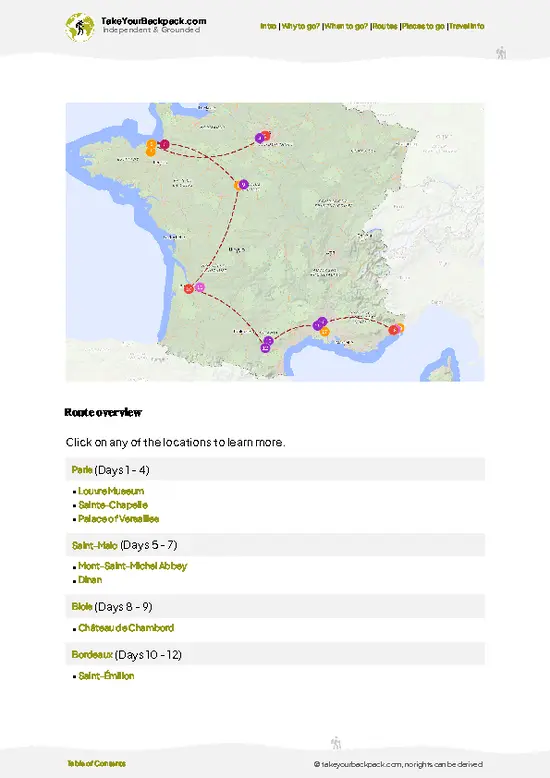
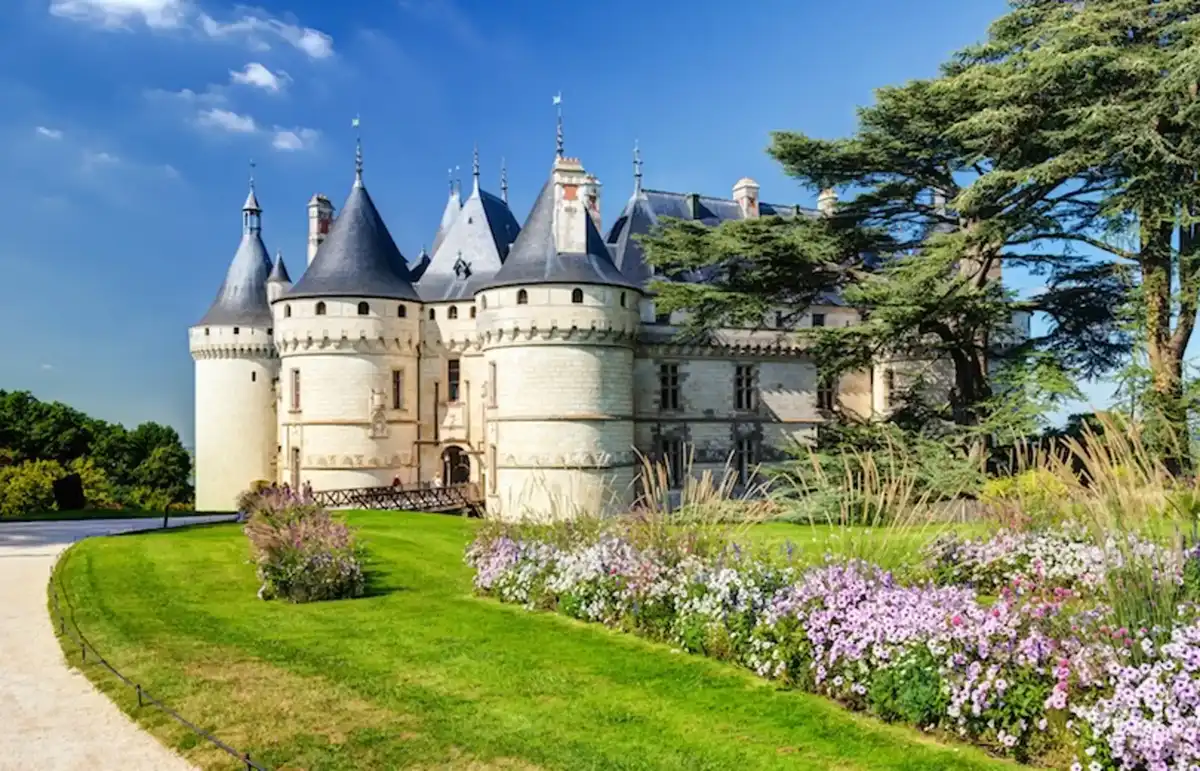
- Château de Chambord — The giant Loire Renaissance show-piece: an impossible roofline of towers and chimneys, the famous double-helix staircase (Leonardo-inspired), and 5,000 hectares of hunting forest that make the place feel part palace, part playground. It’s architecture and scale are uniquely Loire — you won’t find that combination of French flamboyance and wild riverside landscape elsewhere.
- Château de Chenonceau — Built across the Cher, with long galleries over water and gardens planted by powerful women (Diane de Poitiers, Catherine de’ Medici). The light on the river, the intimate rooms and the story-heavy gardens give a different, human-sized drama than the bigger inland fortresses.
- Villandry Gardens — One of the few places where vegetable patches are laid out like tapestries:
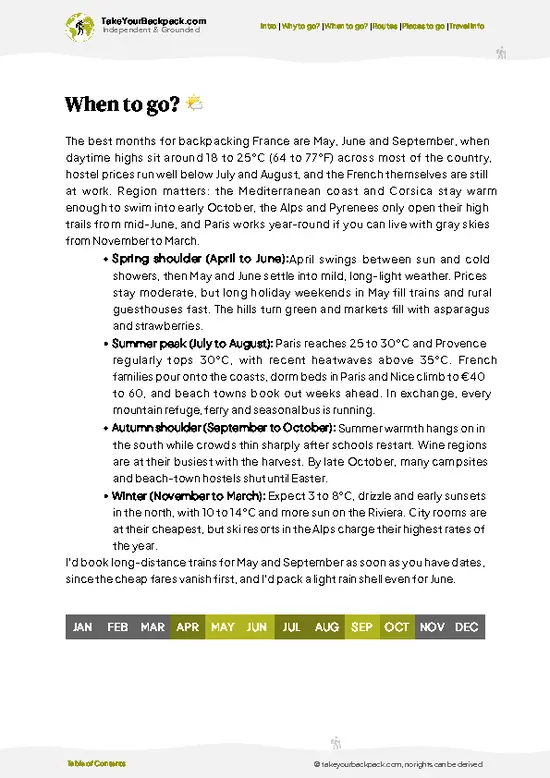
- Château de Chambord — The giant Loire Renaissance show-piece: an impossible roofline of towers and chimneys, the famous double-helix staircase (Leonardo-inspired), and 5,000 hectares of hunting forest that make the place feel part palace, part playground. It’s architecture and scale are uniquely Loire — you won’t find that combination of French flamboyance and wild riverside landscape elsewhere.
- Château de Chenonceau — Built across the Cher, with long galleries over water and gardens planted by powerful women (Diane de Poitiers, Catherine de’ Medici). The light on the river, the intimate rooms and the story-heavy gardens give a different, human-sized drama than the bigger inland fortresses.
- Villandry Gardens — One of the few places where vegetable patches are laid out like tapestries: immaculately clipped parterres, water features, ornamental vegetable beds and a quiet rhythm that’s pure Loire Renaissance garden design. It’s the region’s garden textbook — and visually unlike most French château grounds.
- Abbaye Royale de Fontevraud — A massive, austere monastic complex that’s also Plantagenet royal necropolis. Wandering cloisters, echoing refectory spaces and the royal tombs give a real sense of medieval power and decline — atmospheric and less crowded than a handful of châteaux.
- Chinon old town and the Forteresse Royale — A compact medieval town clinging to the Vienne, with a ruined fortress where Joan of Arc met Charles VII. Add the dugout wine cellars and local cabernet franc producers on the slopes, and you get history, architecture and wine in one walkable loop.
- Saumur and its troglodyte cellars — Saumur’s château overlooks the Loire, but the real Loire-special thing is the tuffeau stone under the town: caves turned into wineries, mushroom farms and quirky cellars that age sparkling Chenin and Saumur-Champigny. It’s an underground wine-scene you won’t replicate outside the tuffeau belt.
- Montsoreau and the Loire quays — A tiny, photogenic riverside village where the château sits right on the Loire’s bank — rare for its village-château relationship. The riverside promenade, stone quays and small boat traffic show the Loire as a living river, not just a backdrop for a postcard.
- Le Village Troglodytique de Rochemenier — Hidden gem: an inhabited troglodyte village carved into tuffeau with authentic rural dwellings, barns and chapels. It’s intimate, oddly domestic and deeply Loire — the human side of living in the rock, far from big-ticket tourism.
- Turquant’s troglodyte lanes and winemakers — Hidden gem: a tiny riverside cluster of troglodyte houses and family-owned cellars around the Loire and Vienne confluence. Walk the lanes, peek into cellar doors and you’ll meet producers who still sell by the bottle at the door — genuine, small-scale Loire wine culture.
- Savennières vineyards (Anjou) — Hidden gem: a tiny appellation on steep, schist and volcanic-tinged slopes producing bold, ageworthy Chenin Blancs. Tastings here are intimate and terroir-driven — very different from the big, polished wine tours and unmistakably Loire in flavor and style.
Spotted a mistake or missing something? Contact us.

Hot Air Balloon Flight over the castle of Chenonceau / France

Tour of a Vineyard, Winery & Cellar with Wine Tasting in Vouvray, Loire Valley

English Speaking Loire Winery Tours originating from Chinon

Discovering Medieval Wonder of Chartres Cathedral

Day Trip to the Sancerre and Pouilly Vineyards

English Speaking Loire Winery Tours pickup from Amboise or Tours

Vineyard cycle tours in and around Chinon, in the Loire Valley

Wine Tasting with the Winemaker at Domaine Beaumont Distré-Saumur

Private tour discovery of Tours

 Best Backpacking
 Hi, I’m Johan (Netherlands 🇳🇱), the creator of TakeYourBackpack. Over the past 3 decades, I’ve backpacked through 90+ countries across six continents, gaining extensive experience with independent travel, long-term trips, and overland routes.