×
Musée d’Orsay

France🇫🇷 | attractionsMusée d’OrsayBeaux-Arts station, Impressionist paintings, grand clock, riverfront setting | things to do and best time to go

Explore Louvre MuseumExplore Centre Pompidou

Backpacking in Musée d’Orsay
🌟 Highlightattraction ranked #5
By Johan Kruseman 🇳🇱 | Updated September 4, 2026

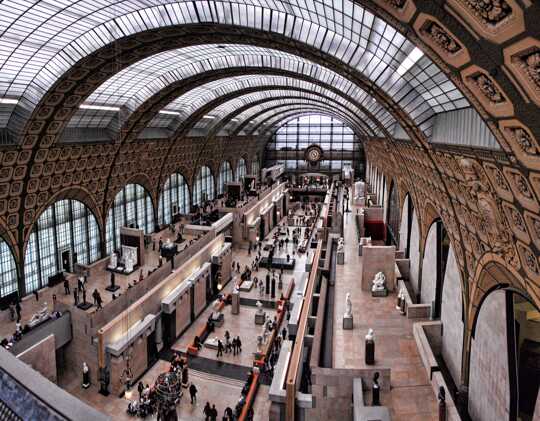
Here’s what nobody tells you: the Musée d’Orsay, Paris’s famous temple of Impressionism, is actually a former train station—and if you’re a backpacker, the best view isn’t of the art, but from behind the giant clock face, where you can watch the city tick by for free. Smack in the 7th arrondissement, right on the Seine, the Orsay is wedged between the Louvre’s grandeur and the Eiffel Tower’s selfie-mob. The art is world-class—Monet, Van Gogh, Degas—but so are the crowds and ticket prices. You’ll pay more than you want, and you’ll queue longer than you should, especially in high season. But here’s the kicker: unlike the Louvre’s endless halls, the Orsay is compact, walkable, and weirdly intimate for a blockbuster museum. The vibe is less “school field trip,” more “art lover’s pilgrimage.” If you’re chasing the real magic, skip the Instagrammed main hall and hunt for the quiet side galleries—where the brushstrokes feel personal, and the city outside feels miles away.

Discover everything you want to know in the 📖 France Travel Guide.


Get your France guide
142 ranked highlights, routes & tips, works offline (461 pages)
Loading the map 🌍
CLICK TO FILTER
cities
towns
villages
landmarks
national parks
hikes
beaches
attractions
festivals
regions
SHOW COUNTRY’S BESTSHOW ALL

✨ Why go?
Ranked #5 attraction in France
What makes it a must-see attraction

The Musée d’Orsay is not just another museum on the Paris itinerary—it’s a checkpoint for anyone serious about understanding modern art’s heartbeat. Yes, it’s crowded. Yes, the entry fee isn’t pocket change for a backpacker. But here’s the kicker: this place houses the world’s largest collection of Impressionist and Post-Impressionist masterpieces, and that’s not hype. Walking through its vast halls, you’re tracing the footsteps of Monet, Van Gogh, and Degas—artists who rewrote the rules of art and perception. The building itself, a converted Beaux-Arts railway station, adds a layer of historical depth that’s rare in art museums. It’s a perfect storm of culture and architecture that demands your attention.

For backpackers trekking through France, the Musée d’Orsay is a milestone that connects … read more 👉
The Musée d’Orsay is not just another museum on the Paris itinerary—it’s a checkpoint for anyone serious about understanding modern art’s heartbeat. Yes, it’s crowded. Yes, the entry fee isn’t pocket change for a backpacker. But here’s the kicker: this place houses the world’s largest collection of Impressionist and Post-Impressionist masterpieces, and that’s not hype. Walking through its vast halls, you’re tracing the footsteps of Monet, Van Gogh, and Degas—artists who rewrote the rules of art and perception. The building itself, a converted Beaux-Arts railway station, adds a layer of historical depth that’s rare in art museums. It’s a perfect storm of culture and architecture that demands your attention.

For backpackers trekking through France, the Musée d’Orsay is a milestone that connects the dots between the classical Louvre and the contemporary Centre Pompidou. It’s a cultural pivot point that sharpens your understanding of French art’s evolution. The adrenaline rush here isn’t from adrenaline itself but from the sheer weight of creative genius concentrated in one place. If you’re willing to brave the crowds and the price, you’ll walk away with a richer, more textured view of France’s artistic soul—something no Instagram snapshot can capture.
Want to include Musée d’Orsay in your France route?
Create a personalized France itinerary that includes Musée d’Orsay and the places that fit your trip — based on your travel style, budget, and available time. Get your route in seconds.

Generate my trip

💡 HighlightsMust-see experiences and standout moments

The Clock Face View
Let’s get real: most people come for the art, but the Musée d’Orsay’s giant clock face is the unsung hero. Skip the selfie stampede at the Mona Lisa and stand inside this old train station’s clock. You’ll get a panoramic sweep of Paris, framed by iron and glass, with the Sacré-Cœur perched in the distance. It’s cinematic, it’s free with admission, and it’s the kind of view that makes you forget about the crowds below. This is my personal favorite—because it’s pure, unfiltered Paris, and you don’t need an art degree to enjoy it.


The Impressionist Gallery
This is the main event. If you’ve ever seen a Monet water lily or a Van Gogh self-portrait on a mug, here’s where the originals live. The Orsay’s Impressionist collection is the best on earth, period. The rooms are bright, … read more 👉
The Clock Face View
Let’s get real: most people come for the art, but the Musée d’Orsay’s giant clock face is the unsung hero. Skip the selfie stampede at the Mona Lisa and stand inside this old train station’s clock. You’ll get a panoramic sweep of Paris, framed by iron and glass, with the Sacré-Cœur perched in the distance. It’s cinematic, it’s free with admission, and it’s the kind of view that makes you forget about the crowds below. This is my personal favorite—because it’s pure, unfiltered Paris, and you don’t need an art degree to enjoy it.


The Impressionist Gallery
This is the main event. If you’ve ever seen a Monet water lily or a Van Gogh self-portrait on a mug, here’s where the originals live. The Orsay’s Impressionist collection is the best on earth, period. The rooms are bright, the paintings are hung low, and you can get nose-to-canvas with works that changed art forever. Yes, it’s busy. But the energy is electric—everyone is here for the same reason: to see the brushstrokes up close and realize that, yes, Monet really did paint like that.


Van Gogh’s Starry Night Over the Rhône
Not to be confused with the MoMA’s “Starry Night,” this Van Gogh is a different beast. The colors are wilder, the brushwork is feverish, and you can stand inches away and see the paint piled up like frosting. It’s one of those rare paintings that actually looks better in person. If you want to feel the pulse of genius and madness, this is the spot.


The Art Nouveau Furniture Rooms
Most people blow past this section, but if you want to see what “living in a painting” actually looks like, duck into the Art Nouveau rooms. The furniture is all curves and whiplash lines—think Gaudí meets Belle Époque Paris. It’s a crash course in how design can be both functional and wildly imaginative. Plus, it’s usually quiet, so you get a breather from the main galleries.


The Sculpture Hall
The Orsay’s central nave is a former train platform, and it’s now lined with sculptures that look like they’re waiting for a train to the afterlife. The light is natural, the space is grand, and you can walk 360 degrees around Rodin’s “The Age of Bronze” or Carpeaux’s “Ugolino.” It’s a reminder that art isn’t just for walls—and that sometimes, the best seat in the house is on the floor, looking up.


The Temporary Exhibitions
Don’t sleep on the rotating shows. The Orsay’s curators have a knack for pulling together exhibitions that are both scholarly and genuinely entertaining. Whether it’s a deep dive into Symbolism or a wild survey of 19th-century photography, these shows often steal the spotlight from the permanent collection. If you want to see something you can’t find in any guidebook, check what’s on before you go.

Spotted a mistake or missing something? Contact us.

Things to do around Musée d’Orsay

Ratings based on Tripadvisor reviews. When you book through this link, you support our work at no extra cost to you.

🌤️ When to go?Best time to visit Musée d’Orsay


  • Weather & Temperature: The Musée d’Orsay is indoors, so weather outside doesn’t dictate your visit comfort. Still, Paris winters (December to February) hover around 3-7°C (37-45°F), often gray and damp, while summers (June to August) warm up to 20-25°C (68-77°F), making walking to and from the museum more pleasant.

  • Daylight Hours: Longer days from May to August mean you can combine your visit with a stroll along the Seine or a café stop afterward. Short winter days (December-January) limit your sightseeing window but offer a cozy, less rushed museum experience.

  • Crowds: Peak tourist season is June through August, with long lines and packed galleries. Late autumn (October-November) and early spring (March-April) see fewer tourists, giving you more breathing room to savor masterpieces
read more 👉

  • Weather & Temperature: The Musée d’Orsay is indoors, so weather outside doesn’t dictate your visit comfort. Still, Paris winters (December to February) hover around 3-7°C (37-45°F), often gray and damp, while summers (June to August) warm up to 20-25°C (68-77°F), making walking to and from the museum more pleasant.

  • Daylight Hours: Longer days from May to August mean you can combine your visit with a stroll along the Seine or a café stop afterward. Short winter days (December-January) limit your sightseeing window but offer a cozy, less rushed museum experience.

  • Crowds: Peak tourist season is June through August, with long lines and packed galleries. Late autumn (October-November) and early spring (March-April) see fewer tourists, giving you more breathing room to savor masterpieces without elbowing your way through.

  • Seasonal Activities: The museum occasionally hosts special exhibitions and evening openings, mostly in spring and fall. These can add value but also attract more visitors, so plan accordingly if you want a quieter visit.

  • Price Fluctuations: Ticket prices remain stable year-round, but booking online in advance can save you time and sometimes a small fee. Off-peak months rarely offer discounts but do reward you with less crowd stress.


Pro-tip: Aim for a weekday morning visit in late March or October—cool but not freezing, manageable crowds, and enough daylight to soak in Paris without the tourist crush.


source: climatestotravel.comJANJanuary: good for travelingFEBFebruary: good for travelingMARMarch: highly recommended for travelingAPRApril: highly recommended for travelingMAYMay: highly recommended for travelingJUNJune: fair for travelingJULJuly: fair for travelingAUGAugust: fair for travelingSEPSeptember: good for travelingOCTOctober: highly recommended for travelingNOVNovember: highly recommended for travelingDECDecember: good for traveling
France - Musée d’Orsay

✈️ The backpacker research shortcutFrance Travel Guide

An offline-friendly backpacking guide with optimized travel routes, ranked highlights, transport advice, and the best areas to stay.
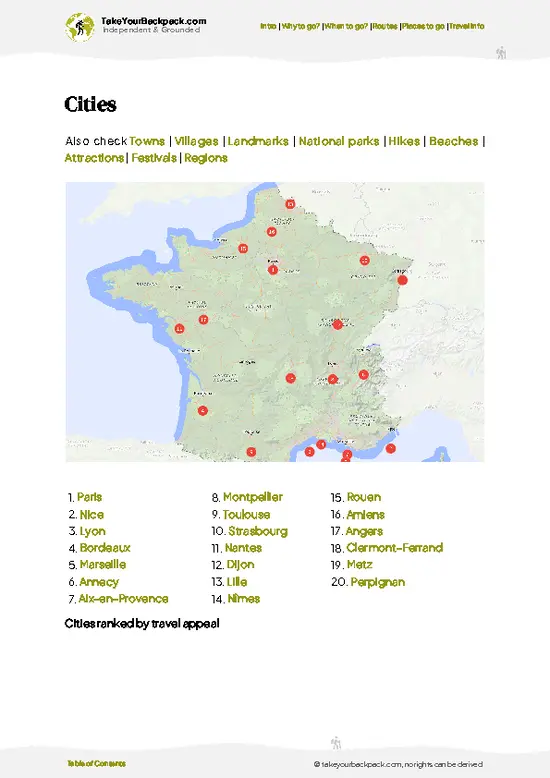
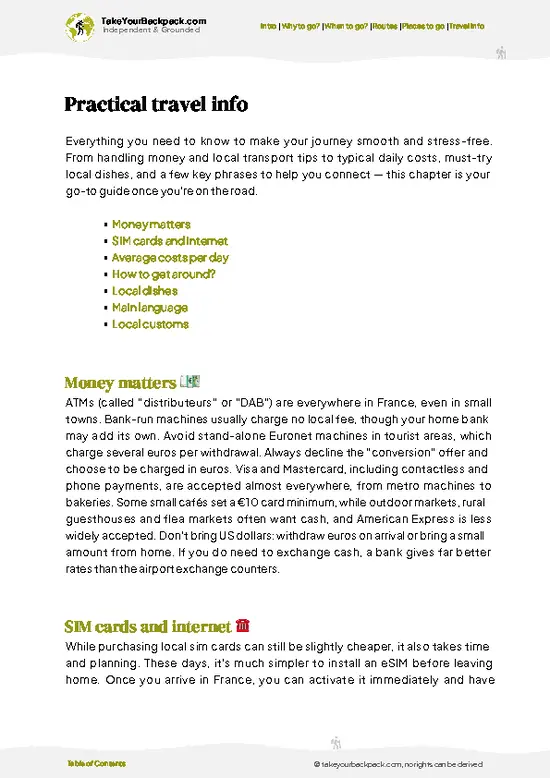
example page 0 from our offline Travel Guide for France
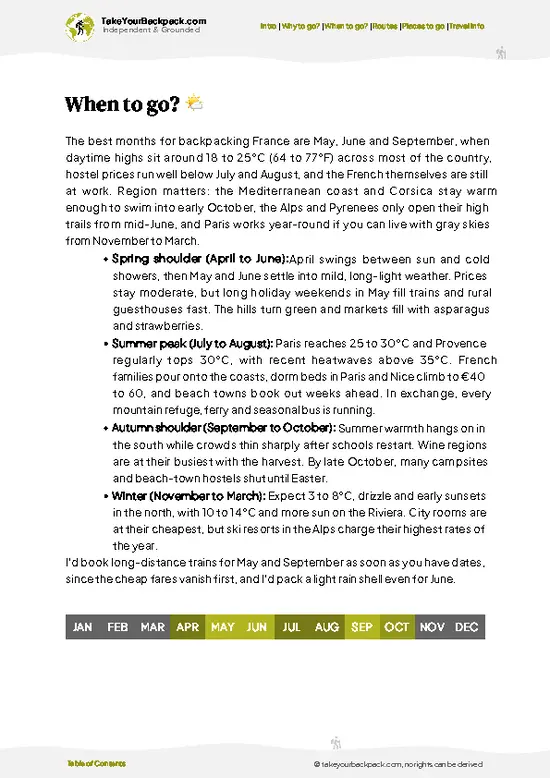
example page 1 from our offline Travel Guide for France
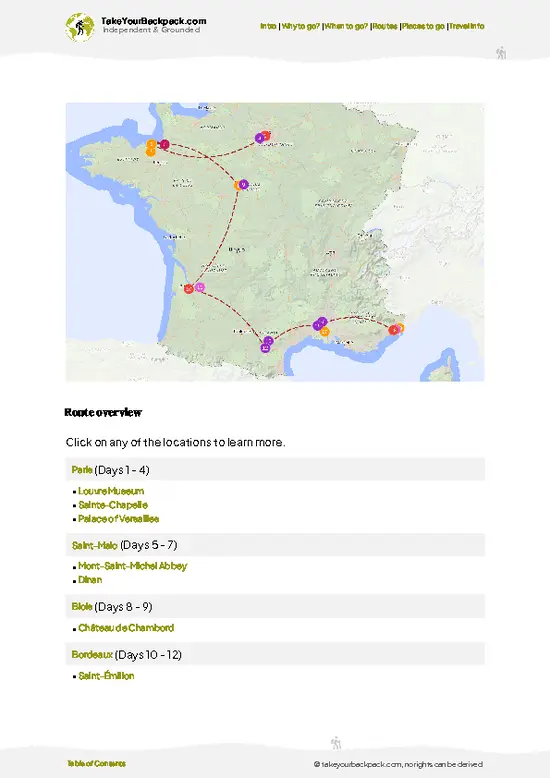
example page 2 from our offline Travel Guide for France
example page 3 from our offline Travel Guide for France
example page 4 from our offline Travel Guide for France
example page 5 from our offline Travel Guide for France
example page 6 from our offline Travel Guide for France
example page 7 from our offline Travel Guide for France
The digital guide (461 pages) contains:
142 highlights, ranked by travel appeal
Optimized 7, 14 & 21-day travel routes
Cities, national parks, landmarks, beaches
How to get around
Offline-friendly for travel without Wi-Fi
👉 Click to see all 30+ guide features

📅 Plan smarter in minutes, not weeks
Month by month travel advice
Festivals & national holidays
Budget expectations

🗺️ Go to the right places, skip the overrated ones
Honest pros & cons of destinations
Top hikes, parks & viewpoints
Lesser-known places most travelers miss
Clear “worth it vs skip it” guidance

🛏️ Travel smoothly without rookie mistakes
Best areas to stay
Transport systems explained simply
Common scams & safety advice
SIM cards, money & practical tips

🌍 Understand the country, not just visit it
Culture & traditions
52 Essential phrases & customs
Festivals worth planning around
Traveler-friendly historical context
Insights that make places more meaningful

📱 Built for real travel conditions
Fully downloadable PDF
Works completely offline
Optimized for phone use
Useful in remote areas & buses
Everything in one place
Save weeks of stressful planning
Get instant access to your full guide. 30‑day money-back guarantee.
+ Add another guide for just US$7.80

By proceeding you agree to our terms.
Sent to your inbox immediately after payment • 100% Secure Checkout
Best Backpacking Travel Advisor 2025 tourism awardBest Backpacking
Travel Advisor
2025
What others say about Take Your Backpack Guides:
⭐⭐⭐⭐⭐
Fantastic, amazing amount of information!
⭐⭐⭐⭐⭐
My goodness this is amazing, it's what I've been looking for hats off too you!
⭐⭐⭐⭐⭐
I think this is absolutely BRILLIANT
⭐⭐⭐⭐
Very complete and informative. It's still missing places, but I gotta to commend you
⭐⭐⭐⭐⭐
This is truly amazing, thank you, can't wait to explore it with my kids!
⭐⭐⭐⭐⭐
Awesome resource, thank you!
⭐⭐⭐⭐⭐
This is amazing! Can't wait to explore the ones I haven't seen
⭐⭐⭐⭐
I love this! Well done, great idea.
⭐⭐⭐⭐⭐
Thanks for taking the time to make this gem!
⭐⭐⭐⭐⭐
This might be the best website I've ever seen.
⭐⭐⭐⭐⭐
Congratulations, and thank you so much for your work; it's incredibly valuable.
⭐⭐⭐⭐
In all seriousness I think you did a great job pointing out the important spots
⭐⭐⭐⭐⭐
10/10 very good
⭐⭐⭐⭐⭐
As someone who's only just starting to visit regularly this is awesome, thank you.
⭐⭐⭐⭐
Thank you very much! I'm going to visit my dad, it's going to be very useful!
⭐⭐⭐⭐⭐
This is really cool! We'll be travelling for the first time and this definitely come in handy.
⭐⭐⭐⭐⭐
You are now our minister of culture, congratulations 👨‍💼
⭐⭐⭐⭐⭐
Just wanted to tell you that this is a pearl! Going to follow your recommendations.
⭐⭐⭐⭐⭐
This is so cool. I'll definitely be using the resource for my travels soon.
⭐⭐⭐⭐⭐
This is very impressive! Good work.
⭐⭐⭐⭐⭐
This is an amazing and informative site. Very well done!

🛏️ Where to stay?How to pick the right area

If you’re backpacking near the Musée d’Orsay, forget the glossy tourist traps that promise charm but deliver inflated prices and cramped quarters. The real win is staying in the 7th arrondissement or the nearby Saint-Germain-des-Prés area. These neighborhoods aren’t just about proximity—they offer a vibe that’s safe, walkable, and surprisingly social for solo travelers.

The 7th arrondissement, where the Musée d’Orsay sits, is quieter than the tourist-heavy Louvre side but still buzzing with locals grabbing coffee or heading to the market. It’s a solid choice if you want to crash somewhere peaceful … read more 👉
If you’re backpacking near the Musée d’Orsay, forget the glossy tourist traps that promise charm but deliver inflated prices and cramped quarters. The real win is staying in the 7th arrondissement or the nearby Saint-Germain-des-Prés area. These neighborhoods aren’t just about proximity—they offer a vibe that’s safe, walkable, and surprisingly social for solo travelers.

The 7th arrondissement, where the Musée d’Orsay sits, is quieter than the tourist-heavy Louvre side but still buzzing with locals grabbing coffee or heading to the market. It’s a solid choice if you want to crash somewhere peaceful after a day of art overload. You’ll find plenty of budget-friendly spots tucked away on side streets, and the security here is top-notch, which is a relief when you’re carrying your life on your back.

Cross the Seine into Saint-Germain-des-Prés, and you hit a sweet spot for meeting other travelers. This area has a laid-back café culture that’s perfect for striking up conversations without the pressure of tourist crowds. It’s a bit livelier, with bookshops, bars, and small parks where solo backpackers can recharge and connect. Both neighborhoods give you a genuine Parisian rhythm without the touristy chaos, making your stay near Musée d’Orsay not just convenient but authentically enjoyable.

👛 Costs (as of 4 September 2026)What things cost and how to budget

The standard ticket price for Musée d’Orsay is around €16. Reduced tickets for EU residents aged 18-25 cost about €13. Admission is free for visitors under 18 and for EU residents under 26 on Friday evenings. Additional costs may include audio guides, typically around €5.

source: musee-orsay.fr
⚠️ Prices can change and everyone travels differently, so take this as a rough guide. Hope it helps you plan your adventure!

FAQTraveler FAQ

3 hours is a typical visit duration to see the main highlights of Musée d’Orsay. This allows time to explore key Impressionist and Post-Impressionist works without rushing. Longer visits may be needed for in-depth exploration or special exhibitions.
Yes, Musée d’Orsay is worth the entrance fee of around 16 euros for adults. It houses one of the world's finest collections of 19th and early 20th-century art, including masterpieces by Monet, Van Gogh, and Degas. The quality and uniqueness of the collection justify the cost for most art lovers.
Musée d’Orsay is best reached by taking the RER C train to the 'Musée d’Orsay' station, which is right next to the museum. Alternatively, metro lines 12 (Solferino station) and several bus lines serve the area. The museum is located on the left bank of the Seine, near the Louvre and the Seine riverbanks.
⚠️ Things can change over time, so always validate details locally before you go.

Other French attractions near Musée d’Orsay

Explore more nearby:

  • Musée de l’Orangerie—water lily murals, natural light, compact galleries, Tuileries Garden| 1 km away
  • Comédie-Française—classical theater, repertory troupe, ornate auditorium, French drama| 1 km away
  • Louvre Museum—glass pyramid, world art collections, grand galleries, iconic masterpieces| 1 km away

💡 Not sure where to go next?
Create a personalized itinerary for France including Musée d’Orsay and the places that fit your trip.

Generate my itinerary

👉 Discover all attractions

Or checkout all France has to offer (think cities, towns, villages, national parks, hikes, beaches, festivals)
Country photo of France

We 💚 feedbackKey takeaways before you go

The Musée d’Orsay isn’t just another art museum—it’s a powerhouse of Impressionist and post-Impressionist masterpieces housed in a former train station that somehow still feels alive. But brace yourself: it’s crowded, especially midday, and the ticket lines can test your patience. Still, if you want to see Monet, Van Gogh, and Degas all in one spot without the Louvre’s chaos, this place delivers a raw, emotional punch that’s worth the hassle.

✈️ When did I visit France?
Being close to The Netherlands, my home base, I visited France many times.

✍️ Help improve this page!
The information on this page is based on my own backpacking experience in France, supplemented with up-to-date research and feedback from other travelers. Travel details can change, so if you notice anything outdated or incomplete, feel free to let me know.


🙋‍♂️ Give feedback

👋 Meet the founderWho’s Behind Take Your Backpack?

Johan, backpacker and founder of TakeYourBackpackHi, I’m Johan (Netherlands 🇳🇱), the creator of TakeYourBackpack. Over the past decade, I’ve backpacked through 80+ countries across six continents, gaining extensive experience with independent travel, long-term trips, and overland routes.

This site is built on a combination of firsthand travel experience and carefully curated insights from other backpackers. Many guides are based on places I’ve personally visited, while others bring together tips, observations, and practical advice shared by trusted travelers I’ve met along the way.

The goal is to provide realistic, experience-driven guidance — not generic itineraries — so you can explore destinations with better context, clearer expectations, and more confidence.

Get full France guide •
Instant download • 142 highlights • Full Offline guide