×

French Guiana🇬🇫 | villagesCamopiOyapock River, Wayãpi villages, rainforest edge | things to do and best time to go

Explore Bourg de Montsinéry-TonnegrandeExplore Saul

Backpacking in Camopi
👍 Recommendedvillage ranked #3
By Johan Kruseman 🇳🇱 | Updated September 4, 2026

Your paddle knocks softly against the pirogue, fireflies blink over black water, and somewhere in the dark a howler monkey starts up like a broken engine. The air is thick with woodsmoke and river mud; you can smell cassava roasting long before you see the first stilt houses of Camopi. This tiny village sits where the Camopi River meets the Oyapock, on the remote eastern edge of French Guiana, facing Brazil across the water. For backpackers, Camopi is less “destination” and more frontier outpost: raw, quiet, and very far from everything. People come for the river journeys, the forest, and a glimpse of Indigenous life, then move on. Evenings are dim, generator-hummed, mostly family courtyards and early nights, not bars or hostel patios, so meeting other travelers is rare. Compared to Saint-Georges or Régina, Camopi feels wilder, more intimate, and also more logistically stubborn.

Discover everything you want to know in the 📖 French Guiana Travel Guide.
Loading the map 🌍
CLICK TO FILTER
towns
villages
landmarks
national parks
hikes
beaches
attractions
festivals
SHOW COUNTRY’S BESTSHOW ALL

✨ Why go?
Ranked #3 village in French Guiana
Why visitors keep coming back

Camopi is a breath of fresh air in the heart of French Guiana, perfect for backpackers looking to slow down and soak in the local vibe. Nestled near the Tumuc-Humac mountains, it offers a unique blend of natural beauty and cultural richness. The atmosphere here is laid-back, with the gentle sounds of the river and the rustle of leaves creating a soothing backdrop.

This village is a gateway to adventure; you can easily access hikes that lead to stunning waterfalls or explore the nearby beaches along the Maroni River. Many travelers find it a refreshing pause between busier spots like Cayenne or Saint-Laurent-du-Maroni.

Backpackers who thrive here are often slow travelers, hikers, or solo adventurers seeking a moment of calm. You might stay just a night or linger longer, enjoying the local read more 👉
Camopi is a breath of fresh air in the heart of French Guiana, perfect for backpackers looking to slow down and soak in the local vibe. Nestled near the Tumuc-Humac mountains, it offers a unique blend of natural beauty and cultural richness. The atmosphere here is laid-back, with the gentle sounds of the river and the rustle of leaves creating a soothing backdrop.

This village is a gateway to adventure; you can easily access hikes that lead to stunning waterfalls or explore the nearby beaches along the Maroni River. Many travelers find it a refreshing pause between busier spots like Cayenne or Saint-Laurent-du-Maroni.

Backpackers who thrive here are often slow travelers, hikers, or solo adventurers seeking a moment of calm. You might stay just a night or linger longer, enjoying the local character and perhaps sharing stories with the friendly residents. The slower pace allows for deeper connections, making it a worthwhile stop for those who appreciate the journey as much as the destination.
Want to include Camopi in your French Guiana route?
Create a personalized French Guiana itinerary that includes Camopi and the places that fit your trip — based on your travel style, budget, and available time. Get your route in seconds.

Generate my trip

💡 HighlightsThe experiences that define the visit

  1. Oyapock riverfront and boat landing — The village’s lifeline: pirogues and motorboats come and go, fishermen bring in fresh fish, and the riverbank is the best place to watch daily life, catch a sunrise, or arrange a boat trip upriver.
  2. Camopi airstrip (aérodrome) — A very small, functional runway where regional flights arrive and depart. It’s worth a walk for the unusual sight of tiny planes against the forest canopy and for the view back over the village and river.
  3. Village carbets and communal houses — Open-sided timber shelters (carbets) are where people meet, cook, dance and hold ceremonies. Visiting one—always with permission—gives a direct look at everyday communal life and traditional architecture.
  4. Traditional craft workshops — Small, informal artisan spaces where locals make baskets,
read more 👉
  1. Oyapock riverfront and boat landing — The village’s lifeline: pirogues and motorboats come and go, fishermen bring in fresh fish, and the riverbank is the best place to watch daily life, catch a sunrise, or arrange a boat trip upriver.
  2. Camopi airstrip (aérodrome) — A very small, functional runway where regional flights arrive and depart. It’s worth a walk for the unusual sight of tiny planes against the forest canopy and for the view back over the village and river.
  3. Village carbets and communal houses — Open-sided timber shelters (carbets) are where people meet, cook, dance and hold ceremonies. Visiting one—always with permission—gives a direct look at everyday communal life and traditional architecture.
  4. Traditional craft workshops — Small, informal artisan spaces where locals make baskets, beadwork and other items from local materials. Watching or buying directly supports families and gives insight into techniques passed down generations.
  5. Riverfront market / landing exchanges — Not a big commercial market, but the landing turns into a trade spot on market days: fish, cassava products, hammocks and other goods are exchanged, making it a great place to taste local food and meet residents.
  6. The mairie (town hall) and administrative hub — More than an office: it’s where you can get practical info, ask about local events, hire guides or obtain necessary permissions. Good place to understand how the village interfaces with French administration.
  7. School and cultural gatherings — The local school often hosts language and cultural programs; when allowed, attending a community event or a school performance is one of the best ways to experience living culture and meet families.
  8. Canoe- and boat-building spots — Look for artisans shaping dugout canoes and maintaining motorboats. Seeing craft and repair work on the riverside connects you to the material culture that keeps river life moving.
  9. Community meeting places and associations — Local associations (cultural, hunting/fishing cooperatives, women’s groups) sometimes run workshops, exhibitions or small sales—valuable for learning about language revival, land issues and daily subsistence practices.
  10. Riverbank viewpoints and nearby forest trails that start from the village — Short walks out of the clustered houses lead to quiet river viewpoints and immediate forest edges where you can spot birds, learn about useful plants, or simply soak in the remoteness without needing a full expedition.
A few real, visitable highlights a short boat ride away that make good day trips from Camopi include the famous Trois Sauts waterfalls upriver, other small Amerindian hamlets and rainforest trails deeper into the Oyapock basin.
Spotted a mistake or missing something? Contact us.
🌤️ When to go?Choosing the right time of year


  • Weather: Camopi sits deep in the Amazon basin, so expect a tropical rainforest climate. The dry season from August to November offers less rain and muddier trails, making trekking and river crossings more manageable. The wet season, December to July, floods paths and swells rivers, turning the jungle into a challenging, soggy maze.

  • Temperature: Temperatures hover around 24-31°C (75-88°F) year-round. The dry season feels slightly cooler and less humid, which means more comfortable days and nights. The wet season’s humidity can make even 28°C feel sticky and draining.

  • Daylight Hours: Near the equator, daylight stays steady—about 12 hours daily. This consistency means you can plan hikes and river trips without worrying about early sunsets, but the dense canopy can make mornings feel dim
read more 👉

  • Weather: Camopi sits deep in the Amazon basin, so expect a tropical rainforest climate. The dry season from August to November offers less rain and muddier trails, making trekking and river crossings more manageable. The wet season, December to July, floods paths and swells rivers, turning the jungle into a challenging, soggy maze.

  • Temperature: Temperatures hover around 24-31°C (75-88°F) year-round. The dry season feels slightly cooler and less humid, which means more comfortable days and nights. The wet season’s humidity can make even 28°C feel sticky and draining.

  • Daylight Hours: Near the equator, daylight stays steady—about 12 hours daily. This consistency means you can plan hikes and river trips without worrying about early sunsets, but the dense canopy can make mornings feel dim and evenings close in fast.

  • Crowds: Camopi is remote, so crowds are rare anytime. However, the dry season attracts more adventurous travelers and researchers, so you’ll find a few more faces and better local services then.

  • Seasonal Activities: The dry months are prime for fishing, canoeing, and exploring indigenous villages on foot. The wet season floods the rivers, opening up boat routes but limiting land access—perfect if you want to focus on river travel and birdwatching.

  • Price Fluctuations: Expect slightly higher prices during the dry season due to increased demand and easier access. The wet season can bring discounts but at the cost of tougher logistics and fewer activity options.


Pro-tip: Aim for late August to early November—when the jungle breathes easier, the trails dry out, and the river calms—so you can savor Camopi’s wild pulse without battling the elements.


source: climatestotravel.comJANJanuary: fair for travelingFEBFebruary: fair for travelingMARMarch: fair for travelingAPRApril: fair for travelingMAYMay: fair for travelingJUNJune: fair for travelingJULJuly: fair for travelingAUGAugust: highly recommended for travelingSEPSeptember: excellent for travelingOCTOctober: excellent for travelingNOVNovember: highly recommended for travelingDECDecember: fair for traveling
when-to-go

✈️ The backpacker research shortcutFrench Guiana Travel Guide

An offline-friendly backpacking guide with optimized travel routes, ranked highlights, transport advice, and the best areas to stay.
example page 0 from our offline Travel Guide for French Guiana
example page 1 from our offline Travel Guide for French Guiana
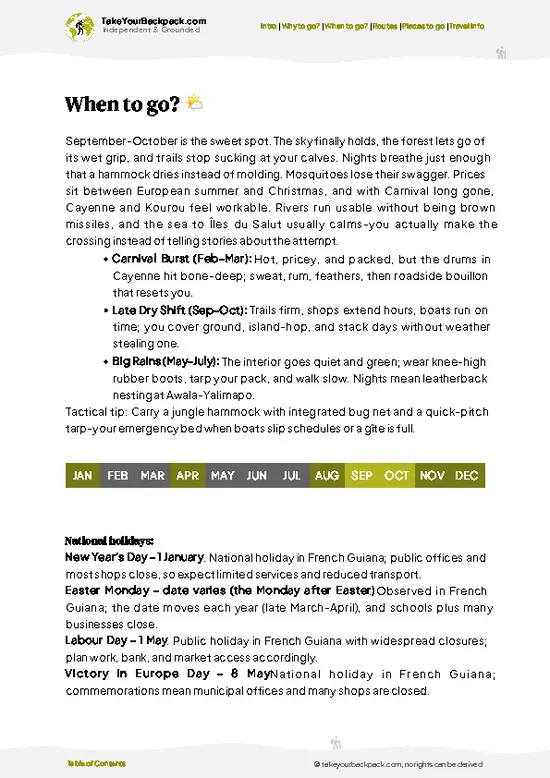
example page 2 from our offline Travel Guide for French Guiana
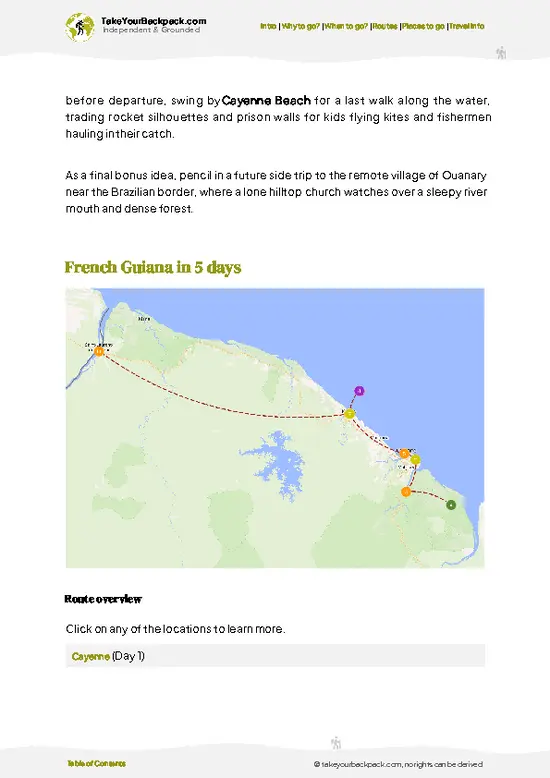
example page 3 from our offline Travel Guide for French Guiana
example page 4 from our offline Travel Guide for French Guiana
example page 5 from our offline Travel Guide for French Guiana
example page 6 from our offline Travel Guide for French Guiana
example page 7 from our offline Travel Guide for French Guiana
The digital guide (180 pages) contains:
42 highlights, ranked by travel appeal
Optimized 2, 3 & 5-day travel routes
Cities, national parks, landmarks, beaches
How to get around
Offline-friendly for travel without Wi-Fi
👉 Click to see all 30+ guide features

📅 Plan smarter in minutes, not weeks
Month by month travel advice
Festivals & national holidays
Budget expectations

🗺️ Go to the right places, skip the overrated ones
Honest pros & cons of destinations
Top hikes, parks & viewpoints
Lesser-known places most travelers miss
Clear “worth it vs skip it” guidance

🛏️ Travel smoothly without rookie mistakes
Best areas to stay
Transport systems explained simply
Common scams & safety advice
SIM cards, money & practical tips

🌍 Understand the country, not just visit it
Culture & traditions
52 Essential phrases & customs
Festivals worth planning around
Traveler-friendly historical context
Insights that make places more meaningful

📱 Built for real travel conditions
Fully downloadable PDF
Works completely offline
Optimized for phone use
Useful in remote areas & buses
Everything in one place
Save weeks of stressful planning
Get instant access to your full guide. 30‑day money-back guarantee.
+ Add another guide for just US$7.80

By proceeding you agree to our terms.
Sent to your inbox immediately after payment • 100% Secure Checkout
Best Backpacking Travel Advisor 2025 tourism awardBest Backpacking
Travel Advisor
2025
What others say about Take Your Backpack Guides:
⭐⭐⭐⭐⭐
Fantastic, amazing amount of information!
⭐⭐⭐⭐⭐
My goodness this is amazing, it's what I've been looking for hats off too you!
⭐⭐⭐⭐⭐
I think this is absolutely BRILLIANT
⭐⭐⭐⭐
Very complete and informative. It's still missing places, but I gotta to commend you
⭐⭐⭐⭐⭐
This is truly amazing, thank you, can't wait to explore it with my kids!
⭐⭐⭐⭐⭐
Awesome resource, thank you!
⭐⭐⭐⭐⭐
This is amazing! Can't wait to explore the ones I haven't seen
⭐⭐⭐⭐
I love this! Well done, great idea.
⭐⭐⭐⭐⭐
Thanks for taking the time to make this gem!
⭐⭐⭐⭐⭐
This might be the best website I've ever seen.
⭐⭐⭐⭐⭐
Congratulations, and thank you so much for your work; it's incredibly valuable.
⭐⭐⭐⭐
In all seriousness I think you did a great job pointing out the important spots
⭐⭐⭐⭐⭐
10/10 very good
⭐⭐⭐⭐⭐
As someone who's only just starting to visit regularly this is awesome, thank you.
⭐⭐⭐⭐
Thank you very much! I'm going to visit my dad, it's going to be very useful!
⭐⭐⭐⭐⭐
This is really cool! We'll be travelling for the first time and this definitely come in handy.
⭐⭐⭐⭐⭐
You are now our minister of culture, congratulations 👨‍💼
⭐⭐⭐⭐⭐
Just wanted to tell you that this is a pearl! Going to follow your recommendations.
⭐⭐⭐⭐⭐
This is so cool. I'll definitely be using the resource for my travels soon.
⭐⭐⭐⭐⭐
This is very impressive! Good work.
⭐⭐⭐⭐⭐
This is an amazing and informative site. Very well done!

🛏️ Where to stay?Best areas and accommodation options

Camopi is not your typical backpacker hub. It’s deep in the rainforest, where the air is thick with humidity and the scent of wet earth and wildflowers. The village itself is small, with limited infrastructure, so your choice of stay is less about luxury and more about connection and practicality.

The best spots to stay are local guesthouses or eco-lodges run by the Wayãpi community. These places aren’t polished hotels; they’re simple, often wooden structures with mosquito nets and basic amenities. Why choose them? Because they offer direct access to the culture and environment. Staying here … read more 👉
Camopi is not your typical backpacker hub. It’s deep in the rainforest, where the air is thick with humidity and the scent of wet earth and wildflowers. The village itself is small, with limited infrastructure, so your choice of stay is less about luxury and more about connection and practicality.

The best spots to stay are local guesthouses or eco-lodges run by the Wayãpi community. These places aren’t polished hotels; they’re simple, often wooden structures with mosquito nets and basic amenities. Why choose them? Because they offer direct access to the culture and environment. Staying here means waking up to the chorus of birds and the distant splash of the Oyapock River, not the hum of air conditioning.

Booking with a local guesthouse also means your money supports the community, which is crucial in a place where tourism is minimal and fragile. Plus, these hosts know the forest trails and can arrange guided hikes or river trips, turning your stay into an immersive experience rather than just a pit stop.

Avoid the temptation to look for “comfort” in the conventional sense. The real reward here is the raw, unfiltered atmosphere—the warm, damp air, the crackle of a fire at night, and the chance to see the rainforest through the eyes of its guardians. That’s the kind of stay that turns a trip into a story worth telling.

🚌 Day tripsEasy escapes and nearby places

Camopi is a vibrant launchpad for exploring the lush wonders of French Guiana. Nestled along the Maroni River, this village offers a unique blend of indigenous culture and stunning natural landscapes. Here are some day trips that will elevate your experience.

1. Tumuc-Humac Mountains
A trek into the Tumuc-Humac Mountains is like stepping into a living postcard. The journey takes about two hours by boat, and the cost is around €20 for a round trip. As you navigate the winding rivers, the scent of damp earth and wild orchids fills the air. Once you arrive, the mountains rise dramatically, offering trails that lead to breathtaking viewpoints. The best time to go is during the dry season, from July to December, when the trails are more manageable. A common mistake? Underestimating the humidity; … read more 👉
Camopi is a vibrant launchpad for exploring the lush wonders of French Guiana. Nestled along the Maroni River, this village offers a unique blend of indigenous culture and stunning natural landscapes. Here are some day trips that will elevate your experience.

1. Tumuc-Humac Mountains
A trek into the Tumuc-Humac Mountains is like stepping into a living postcard. The journey takes about two hours by boat, and the cost is around €20 for a round trip. As you navigate the winding rivers, the scent of damp earth and wild orchids fills the air. Once you arrive, the mountains rise dramatically, offering trails that lead to breathtaking viewpoints. The best time to go is during the dry season, from July to December, when the trails are more manageable. A common mistake? Underestimating the humidity; pack plenty of water and snacks to keep your energy up. 👉 Explore Camopi

2. Maroni River Canoeing
Canoeing down the Maroni River is an immersive experience. Rent a canoe for about €15 for the day and paddle through tranquil waters surrounded by dense rainforest. The trip can take anywhere from four to six hours, depending on how often you stop to soak in the scenery. Look out for wildlife—monkeys and colorful birds are often spotted. Early mornings are ideal, as the light filters through the trees, creating a magical atmosphere. Many first-timers miss the chance to explore the smaller tributaries, which offer a more intimate connection with nature. 👉 Explore Camopi

3. Saint-Laurent-du-Maroni
A visit to Saint-Laurent-du-Maroni is a cultural deep dive. It’s about an hour’s drive from Camopi, costing around €10 for a shared taxi. This town is rich in history, with remnants of its colonial past and the infamous penal colony. Spend the day wandering through the old prison, where the echoes of history linger. The best time to visit is during the local market on Saturdays, where you can taste local delicacies and pick up handmade crafts. A common pitfall? Skipping the guided tours; they provide invaluable context that enhances your understanding of the area. 👉 Explore Camopi

4. Kaw Marshlands
Exploring the Kaw Marshlands is a sensory feast. It’s a bit of a trek—about two hours by car—but the €15 entry fee is worth every cent. The marshes are alive with the sounds of frogs and the rustle of reeds. You can spot caimans and exotic birds, making it a photographer’s paradise. Aim for a visit in the early morning or late afternoon for the best light and wildlife activity. Many backpackers overlook the guided boat tours, which offer deeper insights into this unique ecosystem. 👉 Explore Camopi

Each of these trips offers a unique slice of what makes this region special, turning your base in Camopi into a gateway for adventure.
Want to know what more French Guiana offers?
The French Guiana Travel Guide describes 42 highlights, from cities to national parks, from beaches to hikes

Get the Travel Guide -

FAQCommon questions from travelers

You get to Camopi primarily by boat from Saint-Georges, which takes about 6 to 8 hours along the Oyapock River. There are no roads connecting Camopi to the rest of French Guiana, so river transport is the only practical option. Flights are rare and expensive, usually reserved for emergencies or special arrangements.
Camopi is worth the trip if you are interested in indigenous culture and remote rainforest environments. It offers a unique experience with the Wayampi and Teko Amerindian communities and pristine nature. However, it is very isolated and basic, so it suits travelers prepared for rustic conditions and limited amenities.
No, Camopi cannot be visited as a day trip due to the long travel time by boat, which takes most of a day each way. Visitors typically stay at least 2 to 3 days to explore the village and surrounding rainforest. Planning for multiple days is essential to make the journey worthwhile.
⚠️ Things can change over time, so always validate details locally before you go.

Other French Guianese villages near Camopi

Explore more nearby:

  • Saul—isolated forest village, hiking base, airstrip access| 141 km away
  • Bourg de Montsinéry-Tonnegrande—creekside hamlets, colonial ruins, rural tranquility| 193 km away
  • Awala-Yalimapo—coastal Amerindian village, leatherback turtle nesting, savannah landscape| 335 km away

💡 Not sure where to go next?
Create a personalized itinerary for French Guiana including Camopi and the places that fit your trip.

Generate my itinerary

👉 Discover all villages

Or checkout all French Guiana has to offer (think cities, towns, villages, national parks, hikes, beaches, festivals)
Country photo of French Guiana

We 💚 feedbackIs it worth it?

Camopi is a world apart, where the air hums with the sounds of the forest and the scent of damp earth fills your lungs. The best surprise? The warmth of the local Wayanas, who share their stories over a simple meal. But don’t underestimate the humidity; it’s relentless. Pack light, breathable clothing and be ready for the unexpected. Embrace the slow pace. It’s not just a destination; it’s a lesson in savoring every moment. Trust me, you’ll leave with more than just memories.

✍️ Help improve this page!
The information on this page is based on in-depth research, insights shared by experienced travelers, and feedback from the local travel community in French Guiana. While every effort is made to keep the information accurate and current, conditions can change — so if you spot anything incorrect or outdated, please get in touch.


🙋‍♂️ Give feedback

👋 Meet the founderWho’s Behind Take Your Backpack?

Johan, backpacker and founder of TakeYourBackpackHi, I’m Johan (Netherlands 🇳🇱), the creator of TakeYourBackpack. Over the past decade, I’ve backpacked through 80+ countries across six continents, gaining extensive experience with independent travel, long-term trips, and overland routes.

This site is built on a combination of firsthand travel experience and carefully curated insights from other backpackers. Many guides are based on places I’ve personally visited, while others bring together tips, observations, and practical advice shared by trusted travelers I’ve met along the way.

The goal is to provide realistic, experience-driven guidance — not generic itineraries — so you can explore destinations with better context, clearer expectations, and more confidence.

Get full country guide •
Instant download • 42 highlights • Full Offline guide