×

French Guiana🇬🇫 | villagesAwala-Yalimapocoastal Amerindian village, leatherback turtle nesting, savannah landscape | things to do and best time to go

Explore Îles du SalutExplore Bourg de Montsinéry-Tonnegrande

Backpacking in Awala-Yalimapo
🏆 Top pickvillage ranked #1
By Johan Kruseman 🇳🇱 | Updated September 4, 2026

Ten years ago Awala-Yalimapo felt like the end of the road in every sense: a sandy track, a few wooden houses, Amerindian families gutting fish in the heat, and almost no one who wasn’t local. Today it’s still remote, but the road is better, there are a couple of simple guesthouses, and turtle-season visitors actually show up. You’re in the far northwest of French Guiana, right on the Atlantic and the Maroni River, almost staring across to Suriname.

For backpackers, it’s a slow, edges-of-the-map stop: long, empty beaches, red-gold light at sunset, sea air mixed with woodsmoke, and a strong Kali’na Amerindian presence. People come for leatherback nesting, river views, and to feel how small a village can be without feeling abandoned; others skip it because it’s quiet, spread out, and not cheap for what you get. Evenings are low-key—kids playing football, families talking on verandas, you and maybe three other travelers sharing rice and fish. Compared to Saint-Laurent-du-Maroni it’s far more scenic and traditional, less practical, and much less social unless you’re willing to start the conversation yourself.

Discover everything you want to know in the 📖 French Guiana Travel Guide.
Loading the map 🌍
CLICK TO FILTER
towns
villages
landmarks
national parks
hikes
beaches
attractions
festivals
SHOW COUNTRY’S BESTSHOW ALL

✨ Why go?
Ranked #1 village in French Guiana
What makes it a must-see village

In the heart of French Guiana, the village of Awala-Yalimapo offers a unique blend of tranquility and local character that draws backpackers seeking a slower pace. Nestled near the Maroni River, the atmosphere is infused with the scent of tropical flora and the sounds of nature, creating a perfect backdrop for those looking to unwind. This village serves as a strategic pause between busier destinations like Cayenne and Saint-Laurent-du-Maroni, making it ideal for slow travelers and hikers who appreciate the journey as much as the destination.

The proximity to hiking trails and pristine beaches allows for easy exploration, while the local community welcomes visitors with open arms, offering a glimpse into their daily lives. Here, you can sip on fresh coconut water while watching the sunset … read more 👉
In the heart of French Guiana, the village of Awala-Yalimapo offers a unique blend of tranquility and local character that draws backpackers seeking a slower pace. Nestled near the Maroni River, the atmosphere is infused with the scent of tropical flora and the sounds of nature, creating a perfect backdrop for those looking to unwind. This village serves as a strategic pause between busier destinations like Cayenne and Saint-Laurent-du-Maroni, making it ideal for slow travelers and hikers who appreciate the journey as much as the destination.

The proximity to hiking trails and pristine beaches allows for easy exploration, while the local community welcomes visitors with open arms, offering a glimpse into their daily lives. Here, you can sip on fresh coconut water while watching the sunset paint the sky in hues of orange and pink. Most travelers stay for a couple of nights, soaking in the calm before heading to more bustling spots. Whether you’re a solo traveler seeking peace or a couple looking for a romantic escape, Awala-Yalimapo’s charm lies in its ability to make you feel at home, even if just for a moment.
Want to include Awala-Yalimapo in your French Guiana route?
Create a personalized French Guiana itinerary that includes Awala-Yalimapo and the places that fit your trip — based on your travel style, budget, and available time. Get your route in seconds.

Generate my trip

💡 HighlightsKey sights and experiences for travelers

  • Plage des Hattes (Les Hattes) — The place everyone comes for: vast sandy beach and the world-famous leatherback turtle nesting grounds. Night walks with local guides in season are one of those wildlife experiences you actually remember.
  • Amana Nature Reserve access at Les Hattes — The coastal protection zone starts right at the village beaches; short walks here give you dunes, nesting habitat and a real sense of why this stretch is legally protected.
  • Community turtle monitoring huts and observation posts — Seasonal but real: locally run monitoring teams and simple observation shelters where you can learn how the community protects turtles and sometimes join guided patrols.
  • Village center and market strip — Where daily life happens: fresh catch, small craft stalls, mini-shops and the slow
read more 👉
  • Plage des Hattes (Les Hattes) — The place everyone comes for: vast sandy beach and the world-famous leatherback turtle nesting grounds. Night walks with local guides in season are one of those wildlife experiences you actually remember.
  • Amana Nature Reserve access at Les Hattes — The coastal protection zone starts right at the village beaches; short walks here give you dunes, nesting habitat and a real sense of why this stretch is legally protected.
  • Community turtle monitoring huts and observation posts — Seasonal but real: locally run monitoring teams and simple observation shelters where you can learn how the community protects turtles and sometimes join guided patrols.
  • Village center and market strip — Where daily life happens: fresh catch, small craft stalls, mini-shops and the slow rhythm of Kali’na village life. Great for people-watching and buying handmade souvenirs straight from makers.
  • Pirogue landing and mangrove boat trips — Little wooden boats launch from the village into creeks and mangroves; short guided trips are perfect for birding, seeing tidal channels and feeling how the coast works.
  • Traditional Kali’na carbets (community meeting houses) — Open-air communal structures still used for gatherings and ceremonies. Visiting one gives a direct look at living cultural traditions and local handicraft demonstrations when available.
  • Mairie (town hall) and communal hall — Small but important: local announcements, occasional cultural events or exhibitions, and a place to ask about guided walks, homestays and village life from the people who run things.
  • Awala-Yalimapo airstrip — A tiny, functional airstrip that’s worth seeing if you arrive by plane; it’s also a reminder of how remote places are connected in French Guiana and makes for dramatic coastal arrival/departure views.
  • Coastal dune walks and viewpoints — Low, wind-blown dunes give short hikes with wide ocean views and easy solitude; perfect for sunrise, turtle-track spotting on the sand and a basic nature fix without leaving the village limits.
  • Pirogue dock and local landing sites — Not a fancy harbor, but the working docks where fishermen, boatmen and traders load and unload. They’re the heartbeat of the village’s coastal economy and great for candid photos and talking to locals about daily life.
A few good day trips just outside Awala-Yalimapo: the neighboring town of Mana, longer stretches of the Amana Reserve coastline, and short river trips to nearby Kali’na villages upriver for more cultural contact and riverine scenery.
Spotted a mistake or missing something? Contact us.

🌤️ When to go?Seasonal considerations and timing


  • Weather: Awala-Yalimapo sits near the equator, so expect a hot, humid climate year-round. The dry season, from August to November, offers less rain and muddier trails, making trekking and wildlife spotting easier and more enjoyable.

  • Temperature: Temperatures hover between 24°C and 32°C (75°F to 90°F). The dry season feels slightly cooler and less oppressive, which means you can explore without constantly battling sweat and exhaustion.

  • Daylight Hours: Near the equator, daylight stays steady around 12 hours daily. This consistency means you can plan hikes and activities without worrying about early sunsets cutting your day short.

  • Crowds: Awala-Yalimapo is off the beaten path, so crowds are minimal year-round. However, the dry season sees a slight uptick in eco-tourists and researchers,
read more 👉

  • Weather: Awala-Yalimapo sits near the equator, so expect a hot, humid climate year-round. The dry season, from August to November, offers less rain and muddier trails, making trekking and wildlife spotting easier and more enjoyable.

  • Temperature: Temperatures hover between 24°C and 32°C (75°F to 90°F). The dry season feels slightly cooler and less oppressive, which means you can explore without constantly battling sweat and exhaustion.

  • Daylight Hours: Near the equator, daylight stays steady around 12 hours daily. This consistency means you can plan hikes and activities without worrying about early sunsets cutting your day short.

  • Crowds: Awala-Yalimapo is off the beaten path, so crowds are minimal year-round. However, the dry season sees a slight uptick in eco-tourists and researchers, offering a chance to connect with like-minded travelers without feeling overwhelmed.

  • Seasonal Activities: Turtle nesting peaks between March and July. Visiting outside this window means missing the magical sight of leatherbacks laying eggs, but the dry season’s easier trails and clearer skies compensate with better hiking conditions.

  • Price Fluctuations: Prices for local guides and accommodations remain stable, but the dry season can see a modest increase due to demand. Booking ahead during this time ensures you lock in the best rates and avoid last-minute stress.


Pro-tip: Aim for the dry season to balance comfort and access—less mud, steady light, and a quieter vibe make your trek feel like a well-earned reward, not a slog through the jungle.


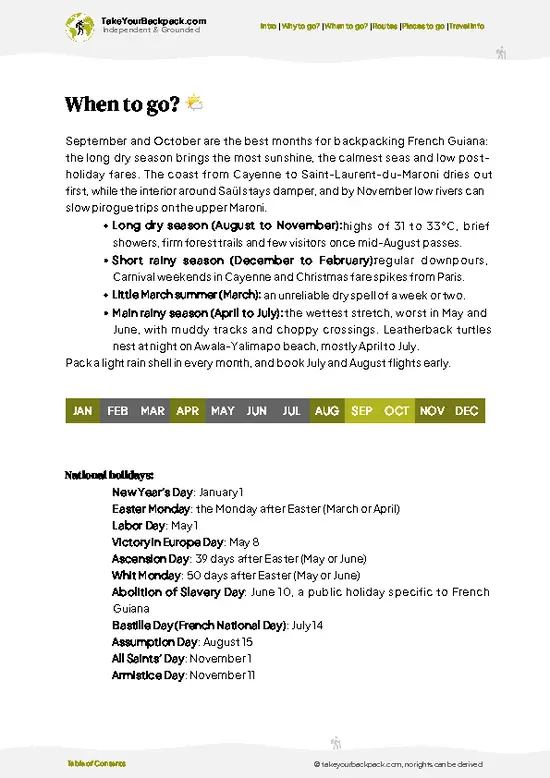
source: climatestotravel.comJANJanuary: fair for travelingFEBFebruary: fair for travelingMARMarch: highly recommended for travelingAPRApril: highly recommended for travelingMAYMay: highly recommended for travelingJUNJune: good for travelingJULJuly: good for travelingAUGAugust: excellent for travelingSEPSeptember: excellent for travelingOCTOctober: excellent for travelingNOVNovember: excellent for travelingDECDecember: fair for traveling
when-to-go

✈️ The backpacker research shortcutFrench Guiana Travel Guide

An offline-friendly backpacking guide with optimized travel routes, ranked highlights, transport advice, and the best areas to stay.
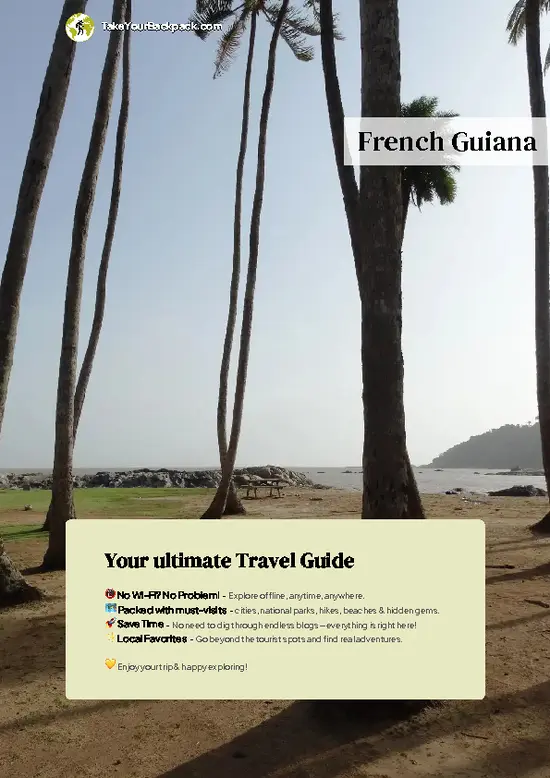
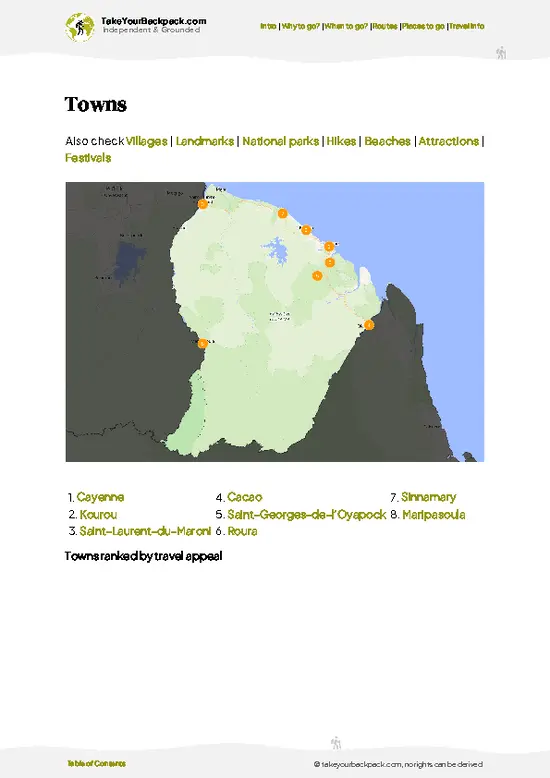
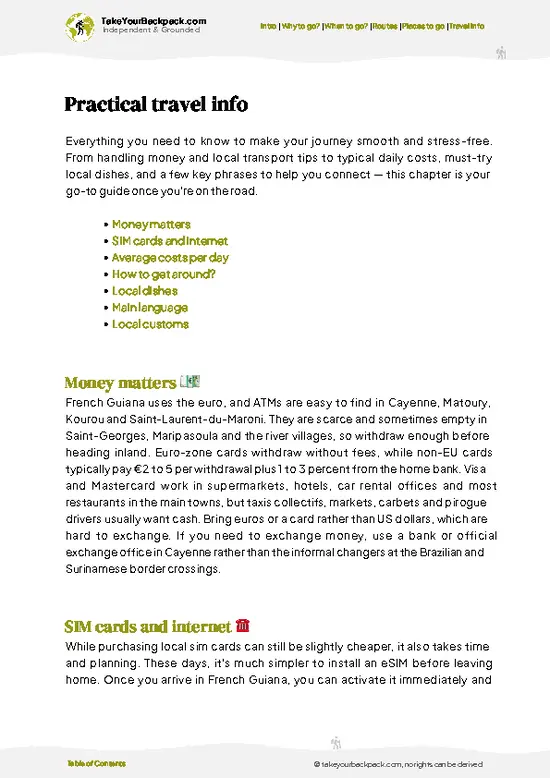
example page 0 from our offline Travel Guide for French Guiana
example page 1 from our offline Travel Guide for French Guiana
example page 2 from our offline Travel Guide for French Guiana
example page 3 from our offline Travel Guide for French Guiana
example page 4 from our offline Travel Guide for French Guiana
example page 5 from our offline Travel Guide for French Guiana
example page 6 from our offline Travel Guide for French Guiana
example page 7 from our offline Travel Guide for French Guiana
The digital guide (180 pages) contains:
42 highlights, ranked by travel appeal
Optimized 2, 3 & 5-day travel routes
Cities, national parks, landmarks, beaches
How to get around
Offline-friendly for travel without Wi-Fi
👉 Click to see all 30+ guide features

📅 Plan smarter in minutes, not weeks
Month by month travel advice
Festivals & national holidays
Budget expectations

🗺️ Go to the right places, skip the overrated ones
Honest pros & cons of destinations
Top hikes, parks & viewpoints
Lesser-known places most travelers miss
Clear “worth it vs skip it” guidance

🛏️ Travel smoothly without rookie mistakes
Best areas to stay
Transport systems explained simply
Common scams & safety advice
SIM cards, money & practical tips

🌍 Understand the country, not just visit it
Culture & traditions
52 Essential phrases & customs
Festivals worth planning around
Traveler-friendly historical context
Insights that make places more meaningful

📱 Built for real travel conditions
Fully downloadable PDF
Works completely offline
Optimized for phone use
Useful in remote areas & buses
Everything in one place
Save weeks of stressful planning
Get instant access to your full guide. 30‑day money-back guarantee.
+ Add another guide for just US$7.80

By proceeding you agree to our terms.
Sent to your inbox immediately after payment • 100% Secure Checkout
Best Backpacking Travel Advisor 2025 tourism awardBest Backpacking
Travel Advisor
2025
What others say about Take Your Backpack Guides:
⭐⭐⭐⭐⭐
Fantastic, amazing amount of information!
⭐⭐⭐⭐⭐
My goodness this is amazing, it's what I've been looking for hats off too you!
⭐⭐⭐⭐⭐
I think this is absolutely BRILLIANT
⭐⭐⭐⭐
Very complete and informative. It's still missing places, but I gotta to commend you
⭐⭐⭐⭐⭐
This is truly amazing, thank you, can't wait to explore it with my kids!
⭐⭐⭐⭐⭐
Awesome resource, thank you!
⭐⭐⭐⭐⭐
This is amazing! Can't wait to explore the ones I haven't seen
⭐⭐⭐⭐
I love this! Well done, great idea.
⭐⭐⭐⭐⭐
Thanks for taking the time to make this gem!
⭐⭐⭐⭐⭐
This might be the best website I've ever seen.
⭐⭐⭐⭐⭐
Congratulations, and thank you so much for your work; it's incredibly valuable.
⭐⭐⭐⭐
In all seriousness I think you did a great job pointing out the important spots
⭐⭐⭐⭐⭐
10/10 very good
⭐⭐⭐⭐⭐
As someone who's only just starting to visit regularly this is awesome, thank you.
⭐⭐⭐⭐
Thank you very much! I'm going to visit my dad, it's going to be very useful!
⭐⭐⭐⭐⭐
This is really cool! We'll be travelling for the first time and this definitely come in handy.
⭐⭐⭐⭐⭐
You are now our minister of culture, congratulations 👨‍💼
⭐⭐⭐⭐⭐
Just wanted to tell you that this is a pearl! Going to follow your recommendations.
⭐⭐⭐⭐⭐
This is so cool. I'll definitely be using the resource for my travels soon.
⭐⭐⭐⭐⭐
This is very impressive! Good work.
⭐⭐⭐⭐⭐
This is an amazing and informative site. Very well done!

🛏️ Where to stay?How to pick the right area

In ’Awala-Yalimapo’, French Guiana, the backpacker scene is intimate and deeply tied to the village’s raw coastal vibe. You won’t find sprawling hostels or flashy hotels here—this is about simplicity and connection. The best places to stay are small guesthouses and eco-lodges run by locals, where the air carries the salt tang of the nearby Atlantic and the hum of cicadas fills the evening.

Why choose a local guesthouse? Because it’s your direct line to the community’s rhythm. These spots often offer basic but clean rooms, sometimes with hammocks strung on shaded porches where you can watch the … read more 👉
In ’Awala-Yalimapo’, French Guiana, the backpacker scene is intimate and deeply tied to the village’s raw coastal vibe. You won’t find sprawling hostels or flashy hotels here—this is about simplicity and connection. The best places to stay are small guesthouses and eco-lodges run by locals, where the air carries the salt tang of the nearby Atlantic and the hum of cicadas fills the evening.

Why choose a local guesthouse? Because it’s your direct line to the community’s rhythm. These spots often offer basic but clean rooms, sometimes with hammocks strung on shaded porches where you can watch the sun dip behind mangroves. The scent of wet earth after a rain and the distant crash of waves become part of your daily soundtrack. Staying here means waking up to the smell of fresh cassava bread or grilled fish, not sterile hotel breakfasts.

Eco-lodges, while a bit pricier, provide a smoother experience if you want a touch more comfort without losing authenticity. They often include guided tours to the nearby beaches, turtle nesting sites, or the savanna, making your stay a seamless blend of rest and adventure. Booking directly with hosts or through trusted local contacts is key—this avoids tourist markups and ensures you’re supporting the village economy.

In ’Awala-Yalimapo’, the best stay isn’t about luxury; it’s about stepping into a slower, richer pace where every detail—the salty breeze, the creak of wooden shutters—grounds you in place. That’s the real reward.

🚌 Day tripsBest day trips from Awala-Yalimapo

Awala-Yalimapo is a fantastic base for exploring the wild heart of French Guiana. With its vibrant culture and lush surroundings, you can dive into unforgettable day trips that reveal the region’s true essence.

Trip to Tumuc-Humac Mountains
This adventure takes you deep into the Tumuc-Humac range, where the air is thick with the scent of damp earth and the calls of exotic birds echo through the trees. A guided hike typically takes about 6-8 hours round trip, and while it can be a workout, the payoff is worth every bead of sweat. Expect to spend around €50 for a guided tour, which includes lunch. The best time to go is during the dry season from July to December, when trails are more accessible. A common mistake? Underestimating the humidity; pack plenty of water and a good pair of hiking … read more 👉
Awala-Yalimapo is a fantastic base for exploring the wild heart of French Guiana. With its vibrant culture and lush surroundings, you can dive into unforgettable day trips that reveal the region’s true essence.

Trip to Tumuc-Humac Mountains
This adventure takes you deep into the Tumuc-Humac range, where the air is thick with the scent of damp earth and the calls of exotic birds echo through the trees. A guided hike typically takes about 6-8 hours round trip, and while it can be a workout, the payoff is worth every bead of sweat. Expect to spend around €50 for a guided tour, which includes lunch. The best time to go is during the dry season from July to December, when trails are more accessible. A common mistake? Underestimating the humidity; pack plenty of water and a good pair of hiking boots. 👉 Explore Awala-Yalimapo

Visit to the Maroni River
A boat trip on the Maroni River is an absolute must. The journey takes about 30 minutes, and you’ll glide past lush banks dotted with wildlife. For around €30, you can rent a canoe or join a guided tour. The river is best explored in the early morning when the mist rises and the world feels untouched. Many first-timers miss the chance to bring binoculars; you’ll want to catch sight of the river dolphins and colorful birds. 👉 Explore Awala-Yalimapo

Exploration of the Kaw Mountain
Kaw Mountain offers a unique blend of adventure and tranquility. The trip takes about an hour by car, followed by a short hike. For about €40, you can join a local guide who knows the best spots for wildlife viewing. The best time to visit is during the dry season, when the trails are less muddy. A common rookie mistake is not checking the weather; sudden rain can turn paths into slippery challenges. 👉 Explore Awala-Yalimapo

Day at the Beach in Awala
Don’t overlook the local beaches! Just a short walk from the village, you can spend a day soaking in the sun and enjoying the sound of waves crashing against the shore. Bring your own snacks, as there are limited facilities. This trip is free, making it perfect for budget travelers. The best time? Late afternoon, when the sun dips low and paints the sky in hues of orange and pink. First-timers often forget sunscreen; the tropical sun can be relentless. 👉 Explore Awala-Yalimapo
Want to know what more French Guiana offers?
The French Guiana Travel Guide describes 42 highlights, from cities to national parks, from beaches to hikes

Get the Travel Guide -

FAQTraveler FAQ

Awala-Yalimapo is accessible mainly by road from Cayenne, about 150 kilometers away, typically a 3 to 4-hour drive. There are no direct flights or public transport, so renting a car or arranging a private transfer is necessary. The route involves traveling along the RN1 highway towards the northwest coast of French Guiana.
Yes, Awala-Yalimapo is worth the trip for its unique cultural experience and natural beauty. It is known for its indigenous Kalina community and the nearby beaches where leatherback turtles nest from March to July. The village offers a rare glimpse into traditional life and pristine coastal environments.
No, Awala-Yalimapo is not ideal for a day trip due to its remote location and travel time. A visit typically requires at least one overnight stay to fully experience the village and surrounding nature. Staying overnight also increases the chance to witness turtle nesting activities during the season.
⚠️ Things can change over time, so always validate details locally before you go.

Other French Guianese villages near Awala-Yalimapo

Explore more nearby:

  • Bourg de Montsinéry-Tonnegrande—creekside hamlets, colonial ruins, rural tranquility| 183 km away
  • Saul—isolated forest village, hiking base, airstrip access| 216 km away
  • Camopi—Oyapock River, Wayãpi villages, rainforest edge| 335 km away

💡 Not sure where to go next?
Create a personalized itinerary for French Guiana including Awala-Yalimapo and the places that fit your trip.

Generate my itinerary

👉 Discover all villages

Or checkout all French Guiana has to offer (think cities, towns, villages, national parks, hikes, beaches, festivals)
Country photo of French Guiana

We 💚 feedbackSumming up the experience

Awala-Yalimapo is a slice of raw beauty, where the air hums with the sounds of the rainforest and the scent of damp earth fills your lungs. The best surprise? Watching the turtles nest on the beach at night; it’s a surreal experience that feels like nature’s secret. Just be prepared for the humidity—it’s intense. Embrace it. The sweat is part of the journey, and it makes the cool breeze by the river feel like pure bliss.

✍️ Help improve this page!
The information on this page is based on in-depth research, insights shared by experienced travelers, and feedback from the local travel community in French Guiana. While every effort is made to keep the information accurate and current, conditions can change — so if you spot anything incorrect or outdated, please get in touch.


🙋‍♂️ Give feedback

👋 Meet the founderWho’s Behind Take Your Backpack?

Johan, backpacker and founder of TakeYourBackpackHi, I’m Johan (Netherlands 🇳🇱), the creator of TakeYourBackpack. Over the past decade, I’ve backpacked through 80+ countries across six continents, gaining extensive experience with independent travel, long-term trips, and overland routes.

This site is built on a combination of firsthand travel experience and carefully curated insights from other backpackers. Many guides are based on places I’ve personally visited, while others bring together tips, observations, and practical advice shared by trusted travelers I’ve met along the way.

The goal is to provide realistic, experience-driven guidance — not generic itineraries — so you can explore destinations with better context, clearer expectations, and more confidence.

Get full country guide •
Instant download • 42 highlights • Full Offline guide