×

French Guiana🇬🇫 | attractionsCamp de la Transportationcolonial prison, stone cells, penal history, preserved architecture | things to do and best time to go

Explore Îles du Salut Historic SiteExplore Musée des Cultures Guyanaises

Backpacking in Camp de la Transportation
👍 Recommendedattraction ranked #3
By Johan Kruseman 🇳🇱 | Updated September 4, 2026

Forget the Instagram myth: Camp de la Transportation is not some crumbling, overgrown ruin where you’ll wander alone, Indiana Jones-style, with moss and mystery at every turn. The reality? This former prison sits right in the heart of Saint-Laurent-du-Maroni, on the muddy banks of the Maroni River, and it’s very much on the beaten path—sometimes uncomfortably so, especially when cruise buses roll in.

Here’s the deal: Camp de la Transportation is the real, raw nerve of French Guiana’s penal history. The cells are intact, the iron doors slam shut with a chill, and the stories—especially if you catch a passionate guide—hit harder than any glossy photo ever could. It’s not cheap by backpacker standards, but it’s not a wallet-buster either, and you’ll get more emotional impact per euro than at most “must-see” sites in the region. Crowds can be thick, especially midday, but the vibe is gritty, not touristy. If you want to understand French Guiana beyond the rainforest and rocket launches, this is where the country’s soul is laid bare.

Discover everything you want to know in the 📖 French Guiana Travel Guide.
Loading the map 🌍
CLICK TO FILTER
towns
villages
landmarks
national parks
hikes
beaches
attractions
festivals
SHOW COUNTRY’S BESTSHOW ALL

✨ Why go?
Ranked #3 attraction in French Guiana
Reasons people choose to visit here

Camp de la Transportation isn’t your typical postcard spot. Yes, it’s crowded with tourists and the entry fee isn’t exactly pocket change for a backpacker. But here’s the real deal: this place is a raw, unfiltered chapter of French Guiana’s brutal colonial past. It’s not just a museum; it’s a stark reminder of the forced labor and harsh conditions endured by prisoners sent to the infamous penal colony. The walls, the cells, the very ground you walk on—each element carries the weight of stories that shaped the region’s identity.

Backpackers who make the trek aren’t just ticking off a checklist. They’re confronting history head-on, gaining a perspective that no glossy travel brochure can offer. It’s a mental workout as much as a physical one, demanding you digest the gravity of human endurance … read more 👉
Camp de la Transportation isn’t your typical postcard spot. Yes, it’s crowded with tourists and the entry fee isn’t exactly pocket change for a backpacker. But here’s the real deal: this place is a raw, unfiltered chapter of French Guiana’s brutal colonial past. It’s not just a museum; it’s a stark reminder of the forced labor and harsh conditions endured by prisoners sent to the infamous penal colony. The walls, the cells, the very ground you walk on—each element carries the weight of stories that shaped the region’s identity.

Backpackers who make the trek aren’t just ticking off a checklist. They’re confronting history head-on, gaining a perspective that no glossy travel brochure can offer. It’s a mental workout as much as a physical one, demanding you digest the gravity of human endurance and injustice. The adrenaline comes from standing in a place where so many lives were tested to the limit, and realizing how far the world has come—and how far it still needs to go.

For anyone traveling through French Guiana, Camp de la Transportation is a milestone. It’s a place where history isn’t sanitized or prettified. It’s gritty, painful, and profoundly real. That’s why it’s worth every cent and every minute.
Want to include Camp de la Transportation in your French Guiana route?
Create a personalized French Guiana itinerary that includes Camp de la Transportation and the places that fit your trip — based on your travel style, budget, and available time. Get your route in seconds.

Generate my trip

💡 HighlightsEssential experiences to have while visiting Camp de la Transportation

The Cell Blocks
Forget the Instagrammed archways and moody black-and-white shots. The real punch in the gut comes when you step into the cell blocks themselves. These aren’t sanitized ruins—they’re oppressive, claustrophobic, and still carry the scent of rust and mildew. The iron doors are heavy, the graffiti is original, and the sense of isolation is palpable. You don’t just see history here; you feel it pressing in from all sides. This is the raw, unfiltered reality of colonial punishment, not a movie set.


The Solitary Confinement Cells
If you want to understand the psychological warfare of the French penal system, duck into the solitary cells. These are not just small rooms—they’re sensory deprivation chambers, with barely enough space to lie down. The walls are thick, the air is stale, … read more 👉
The Cell Blocks
Forget the Instagrammed archways and moody black-and-white shots. The real punch in the gut comes when you step into the cell blocks themselves. These aren’t sanitized ruins—they’re oppressive, claustrophobic, and still carry the scent of rust and mildew. The iron doors are heavy, the graffiti is original, and the sense of isolation is palpable. You don’t just see history here; you feel it pressing in from all sides. This is the raw, unfiltered reality of colonial punishment, not a movie set.


The Solitary Confinement Cells
If you want to understand the psychological warfare of the French penal system, duck into the solitary cells. These are not just small rooms—they’re sensory deprivation chambers, with barely enough space to lie down. The walls are thick, the air is stale, and the silence is absolute. You’ll see scratch marks and desperate carvings left by men who spent months, even years, in total isolation. It’s not comfortable, but it’s unforgettable in the way a punch to the chest is unforgettable.


The Execution Yard
This is where the myth of adventure evaporates. The execution yard is blunt, functional, and chillingly ordinary. There’s no grand architecture, just a patch of ground where lives ended. The guillotine is long gone, but the outlines remain, and the guides don’t sugarcoat the stories. It’s a place that forces you to confront the machinery of colonial justice, stripped of romance or nostalgia.


The Prison Chapel
Here’s the curveball: the chapel is oddly beautiful, with faded murals and battered benches. It’s the one spot where you can almost imagine hope, or at least a moment of relief from the brutality outside. The contrast between the chapel’s fragile peace and the rest of the camp is jarring. It’s a reminder that even in a place built for suffering, people clung to scraps of humanity.


Original Inmate Artwork and Graffiti
This isn’t tourist graffiti—these are desperate messages, crude portraits, and tally marks scratched into stone by men who knew they’d probably die here. Some are angry, some are heartbreakingly hopeful. If you want to see the real soul of the place, skip the guided group and spend time reading the walls. It’s the closest you’ll get to hearing the prisoners’ voices across a century.


The Administrative Building and Records
The paperwork, the ledgers, the bureaucratic machinery—this is where you see how methodical the system was. The records are chillingly precise, listing names, crimes, sentences, and deaths. It’s not glamorous, but it’s the backbone of the whole operation. If you’re fascinated by the machinery of power, this is where the cold logic of the penal colony comes into focus.


Guided Storytelling (If You Get the Right Guide)
Here’s the wildcard: the right guide can make or break your visit. Some are former historians, some are descendants of guards or prisoners. When you get someone who knows the stories—who can point to a cell and tell you who died there, or who escaped—it’s electric. Don’t settle for a bored recitation. Push for the guide who brings the ghosts to life. That’s where the real magic happens, far from the Instagram façade.
Spotted a mistake or missing something? Contact us.

🌤️ When to go?Seasonal considerations and timing


  • Weather: The dry season from July to December is your best bet. Expect less rain, which means easier hiking and exploring without the constant threat of mudslides or washed-out paths. The wet season, January to June, floods the area and can make access tricky.

  • Temperature: Temperatures hover between 24°C and 31°C (75°F to 88°F) year-round. It’s hot and humid, so pack light, breathable clothes. The dry season feels slightly more bearable with lower humidity.

  • Daylight Hours: Daylight is consistent, roughly 11 to 12 hours daily, with sunrise around 6 AM and sunset near 6 PM. This steady light lets you plan full days without worrying about early darkness.

  • Crowds: This isn’t a tourist hotspot, but the dry season sees a modest uptick in visitors. If you want near solitude, aim for the shoulder
read more 👉

  • Weather: The dry season from July to December is your best bet. Expect less rain, which means easier hiking and exploring without the constant threat of mudslides or washed-out paths. The wet season, January to June, floods the area and can make access tricky.

  • Temperature: Temperatures hover between 24°C and 31°C (75°F to 88°F) year-round. It’s hot and humid, so pack light, breathable clothes. The dry season feels slightly more bearable with lower humidity.

  • Daylight Hours: Daylight is consistent, roughly 11 to 12 hours daily, with sunrise around 6 AM and sunset near 6 PM. This steady light lets you plan full days without worrying about early darkness.

  • Crowds: This isn’t a tourist hotspot, but the dry season sees a modest uptick in visitors. If you want near solitude, aim for the shoulder months of July or November when the weather is good but crowds haven’t peaked.

  • Seasonal Activities: The dry months allow for guided tours and local events to run smoothly. The wet season shuts down many outdoor activities, so your options shrink dramatically.

  • Price Fluctuations: Prices for accommodation and tours rise slightly during the dry season due to demand. Booking ahead in July-September can save you some cash and guarantee spots on limited tours.


Pro-tip: Visit in late November for the sweet spot—dry enough to explore fully, fewer tourists, and better prices before the December rush.


source: climatestotravel.comJANJanuary: fair for travelingFEBFebruary: fair for travelingMARMarch: fair for travelingAPRApril: fair for travelingMAYMay: fair for travelingJUNJune: fair for travelingJULJuly: highly recommended for travelingAUGAugust: excellent for travelingSEPSeptember: excellent for travelingOCTOctober: excellent for travelingNOVNovember: highly recommended for travelingDECDecember: excellent for traveling
french-guiana-attraction-camp-de-la-transportation
© Google |

✈️ The backpacker research shortcutFrench Guiana Travel Guide

An offline-friendly backpacking guide with optimized travel routes, ranked highlights, transport advice, and the best areas to stay.
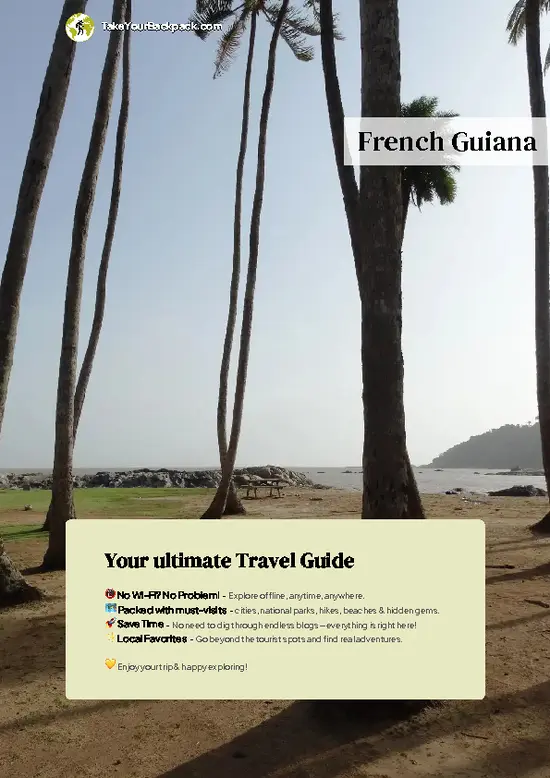
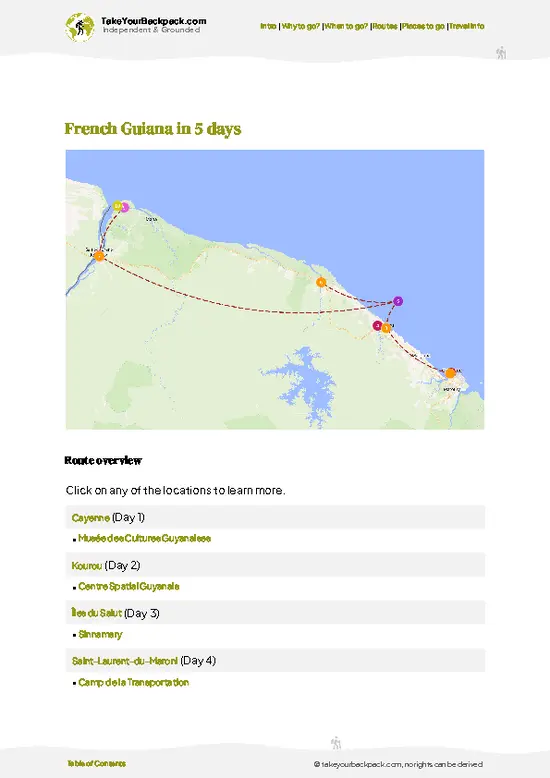
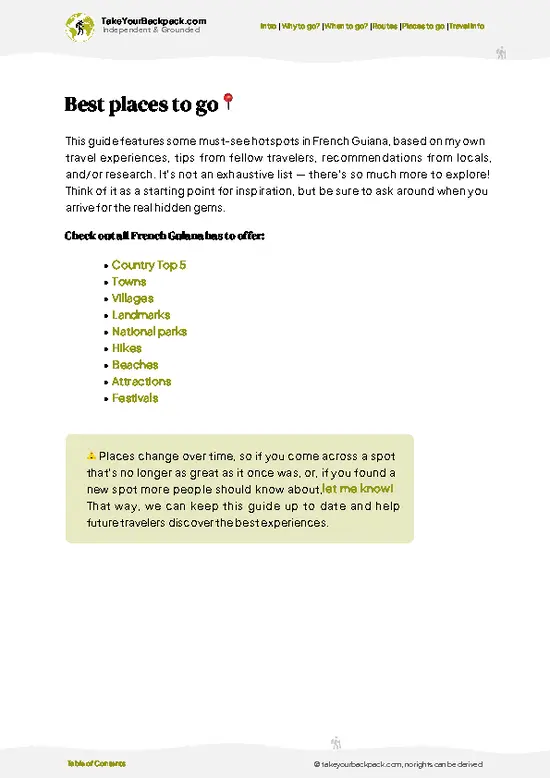
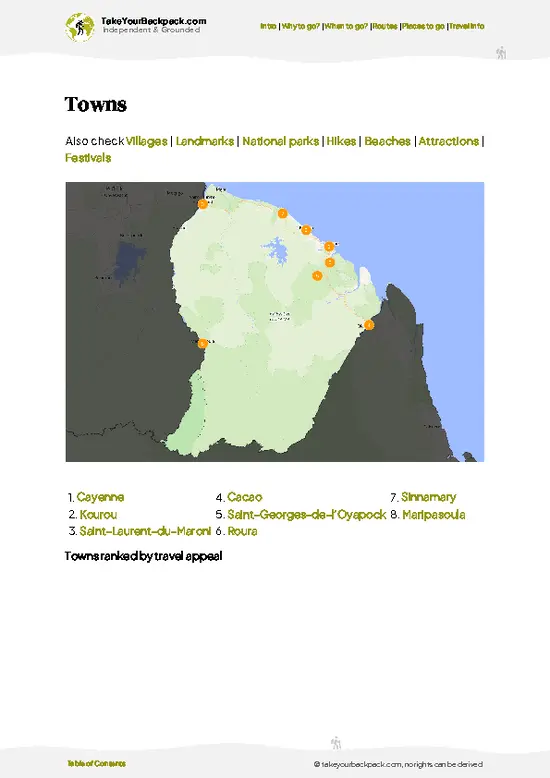
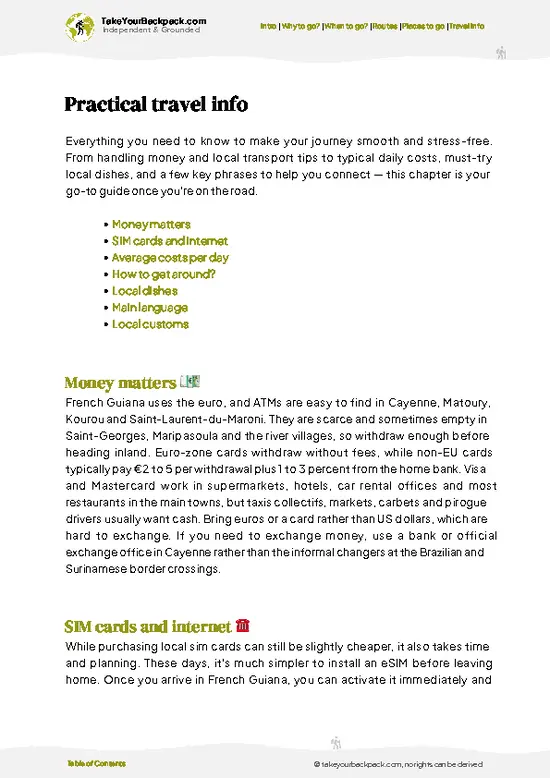
example page 0 from our offline Travel Guide for French Guiana
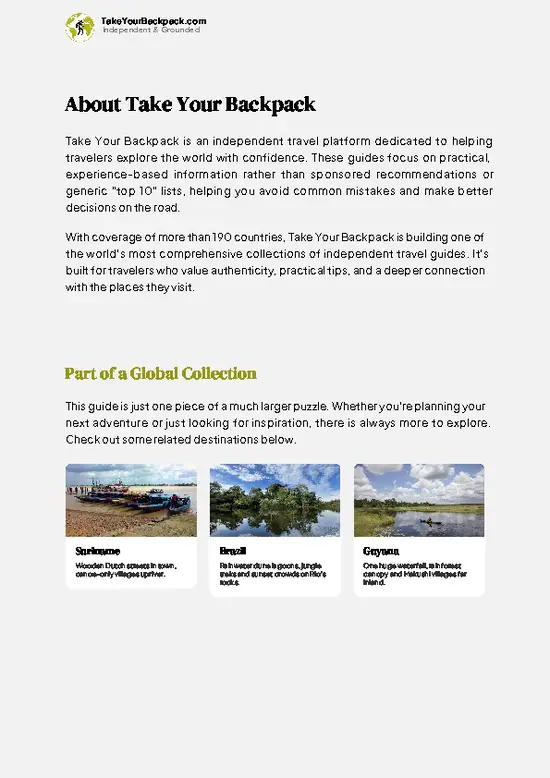
example page 1 from our offline Travel Guide for French Guiana
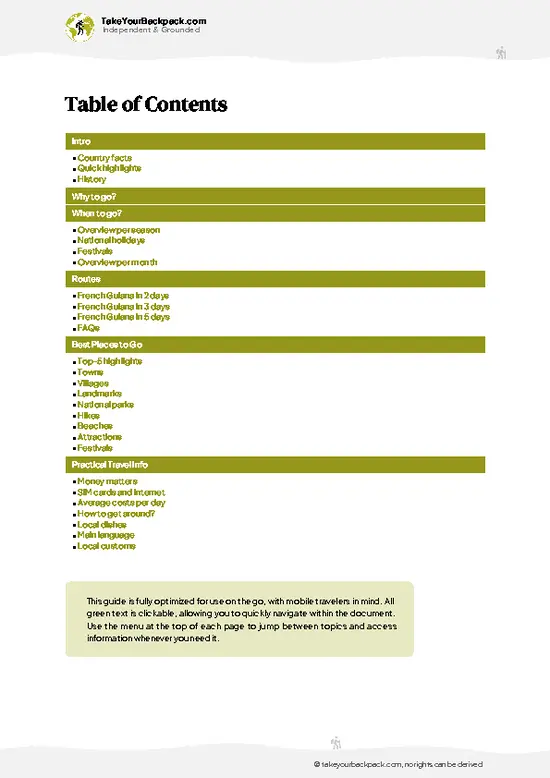
example page 2 from our offline Travel Guide for French Guiana
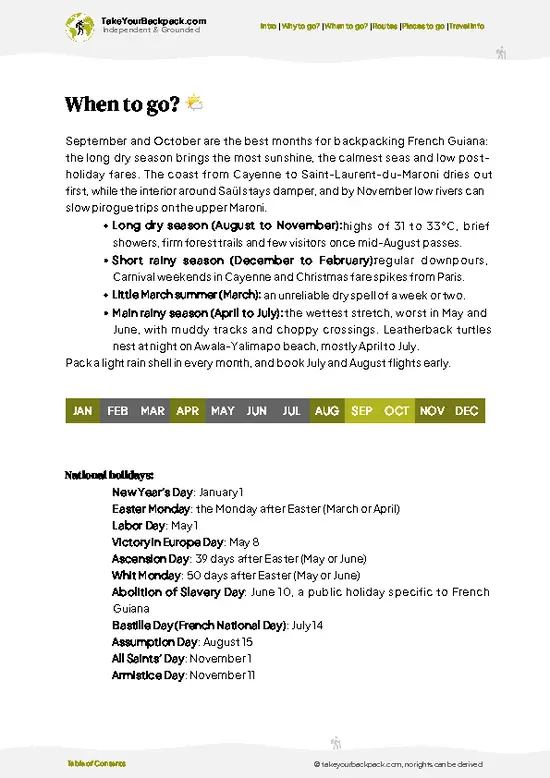
example page 3 from our offline Travel Guide for French Guiana
example page 4 from our offline Travel Guide for French Guiana
example page 5 from our offline Travel Guide for French Guiana
example page 6 from our offline Travel Guide for French Guiana
example page 7 from our offline Travel Guide for French Guiana
The digital guide (180 pages) contains:
42 highlights, ranked by travel appeal
Optimized 2, 3 & 5-day travel routes
Cities, national parks, landmarks, beaches
How to get around
Offline-friendly for travel without Wi-Fi
👉 Click to see all 30+ guide features

📅 Plan smarter in minutes, not weeks
Month by month travel advice
Festivals & national holidays
Budget expectations

🗺️ Go to the right places, skip the overrated ones
Honest pros & cons of destinations
Top hikes, parks & viewpoints
Lesser-known places most travelers miss
Clear “worth it vs skip it” guidance

🛏️ Travel smoothly without rookie mistakes
Best areas to stay
Transport systems explained simply
Common scams & safety advice
SIM cards, money & practical tips

🌍 Understand the country, not just visit it
Culture & traditions
52 Essential phrases & customs
Festivals worth planning around
Traveler-friendly historical context
Insights that make places more meaningful

📱 Built for real travel conditions
Fully downloadable PDF
Works completely offline
Optimized for phone use
Useful in remote areas & buses
Everything in one place
Save weeks of stressful planning
Get instant access to your full guide. 30‑day money-back guarantee.
+ Add another guide for just US$7.80

By proceeding you agree to our terms.
Sent to your inbox immediately after payment • 100% Secure Checkout
Best Backpacking Travel Advisor 2025 tourism awardBest Backpacking
Travel Advisor
2025
What others say about Take Your Backpack Guides:
⭐⭐⭐⭐⭐
Fantastic, amazing amount of information!
⭐⭐⭐⭐⭐
My goodness this is amazing, it's what I've been looking for hats off too you!
⭐⭐⭐⭐⭐
I think this is absolutely BRILLIANT
⭐⭐⭐⭐
Very complete and informative. It's still missing places, but I gotta to commend you
⭐⭐⭐⭐⭐
This is truly amazing, thank you, can't wait to explore it with my kids!
⭐⭐⭐⭐⭐
Awesome resource, thank you!
⭐⭐⭐⭐⭐
This is amazing! Can't wait to explore the ones I haven't seen
⭐⭐⭐⭐
I love this! Well done, great idea.
⭐⭐⭐⭐⭐
Thanks for taking the time to make this gem!
⭐⭐⭐⭐⭐
This might be the best website I've ever seen.
⭐⭐⭐⭐⭐
Congratulations, and thank you so much for your work; it's incredibly valuable.
⭐⭐⭐⭐
In all seriousness I think you did a great job pointing out the important spots
⭐⭐⭐⭐⭐
10/10 very good
⭐⭐⭐⭐⭐
As someone who's only just starting to visit regularly this is awesome, thank you.
⭐⭐⭐⭐
Thank you very much! I'm going to visit my dad, it's going to be very useful!
⭐⭐⭐⭐⭐
This is really cool! We'll be travelling for the first time and this definitely come in handy.
⭐⭐⭐⭐⭐
You are now our minister of culture, congratulations 👨‍💼
⭐⭐⭐⭐⭐
Just wanted to tell you that this is a pearl! Going to follow your recommendations.
⭐⭐⭐⭐⭐
This is so cool. I'll definitely be using the resource for my travels soon.
⭐⭐⭐⭐⭐
This is very impressive! Good work.
⭐⭐⭐⭐⭐
This is an amazing and informative site. Very well done!

🛏️ Where to stay?Where staying makes the most sense

Camp de la Transportation in French Guiana isn’t your typical backpacker hotspot, so let’s cut through the hype. The area around the site itself is quiet, almost too quiet, with limited options for socializing or budget stays. If you’re chasing the Instagram-perfect colonial ruins vibe, be ready for crowds during peak hours and a reality that’s less polished postcard, more raw history with a heavy dose of reflection.

For backpackers, the real move is to base yourself in Cayenne, the regional capital, about 10 kilometers away. This is where the pulse is—safe neighborhoods with a mix of guesthouses … read more 👉
Camp de la Transportation in French Guiana isn’t your typical backpacker hotspot, so let’s cut through the hype. The area around the site itself is quiet, almost too quiet, with limited options for socializing or budget stays. If you’re chasing the Instagram-perfect colonial ruins vibe, be ready for crowds during peak hours and a reality that’s less polished postcard, more raw history with a heavy dose of reflection.

For backpackers, the real move is to base yourself in Cayenne, the regional capital, about 10 kilometers away. This is where the pulse is—safe neighborhoods with a mix of guesthouses and budget spots that attract solo travelers and small groups. Cayenne offers a gritty, authentic urban experience with street markets, local eateries, and a chance to connect with other travelers without the tourist bubble. It’s also the practical choice for transport links and supplies.

Staying in Cayenne means you get the best of both worlds: easy access to Camp de la Transportation for a day trip and a lively, social atmosphere to recharge. The vibe here is unpretentious and real, perfect if you want to dive into French Guiana’s complex history without losing touch with the present-day local culture.

👛 Costs (as of 4 September 2026)Travel costs and budget guide for Camp de la Transportation

As of the most recent estimates, visiting the Camp de la Transportation in Saint-Laurent-du-Maroni, French Guiana, involves the following costs:

- Regular Visits:
- Adults: €6
- Children under 12: €2
- Children aged 12 to 16: €3
- Group rate (for 8 or more people): €4 per person

- Special Night Tour "Camp la nuit tombe":
- Adults: €15
- Children under 12: €7.50

These prices are based on information from the official tourism office. Please note that prices may vary, and it's advisable to check the latest rates before planning your visit.
⚠️ Prices can change and everyone travels differently, so take this as a rough guide. Hope it helps you plan your adventure!

FAQFrequently asked questions about Camp de la Transportation

Visiting Camp de la Transportation typically requires about 1 to 2 hours to explore the museum and the historical site thoroughly. This allows enough time to see the exhibits and understand the history of the penal colony. Guided tours may take slightly longer, around 2 hours.
Yes, Camp de la Transportation is worth the entrance fee, which is usually around 5 to 7 euros. The site offers a unique insight into the history of French Guiana's penal system and the harsh conditions prisoners endured. It is both educational and impactful for those interested in history.
Camp de la Transportation is located near Saint-Laurent-du-Maroni in French Guiana. You can reach it by taxi or local transport from the town center, about 5 kilometers away. It is accessible by road, and some visitors also arrange tours that include transportation.
⚠️ Things can change over time, so always validate details locally before you go.

Other French Guianese attractions near Camp de la Transportation

Explore more nearby:

  • Centre Spatial Guyanais—rocket launches, space technology, visitor center, control facilities| 154 km away
  • Îles du Salut Historic Site—offshore islands, former penal colony, ocean views, wildlife encounters| 162 km away
  • Zoo de Guyane—rainforest enclosures, native fauna, canopy walkways, conservation focus| 181 km away

💡 Not sure where to go next?
Create a personalized itinerary for French Guiana including Camp de la Transportation and the places that fit your trip.

Generate my itinerary

👉 Discover all attractions

Or checkout all French Guiana has to offer (think cities, towns, villages, national parks, hikes, beaches, festivals)
Country photo of French Guiana

We 💚 feedbackKey takeaways before you go

Camp de la Transportation isn’t your postcard-perfect spot. It’s raw, a bit rough around the edges, and yes, the crowds can be a grind if you show up midday. But here’s the kicker: the real magic is in the silence of the ruins once the tour groups leave. The weight of history hits differently when you’re alone with those crumbling walls and the stories they hold. If you’re after polished, skip it. But if you want a place that makes you pause and rethink, this is it. Just bring patience—and maybe a good guide.

✍️ Help improve this page!
The information on this page is based on in-depth research, insights shared by experienced travelers, and feedback from the local travel community in French Guiana. While every effort is made to keep the information accurate and current, conditions can change — so if you spot anything incorrect or outdated, please get in touch.


🙋‍♂️ Give feedback

👋 Meet the founderWho’s Behind Take Your Backpack?

Johan, backpacker and founder of TakeYourBackpackHi, I’m Johan (Netherlands 🇳🇱), the creator of TakeYourBackpack. Over the past decade, I’ve backpacked through 80+ countries across six continents, gaining extensive experience with independent travel, long-term trips, and overland routes.

This site is built on a combination of firsthand travel experience and carefully curated insights from other backpackers. Many guides are based on places I’ve personally visited, while others bring together tips, observations, and practical advice shared by trusted travelers I’ve met along the way.

The goal is to provide realistic, experience-driven guidance — not generic itineraries — so you can explore destinations with better context, clearer expectations, and more confidence.

Get full country guide •
Instant download • 42 highlights • Full Offline guide