×

French Polynesia🇵🇫 | national parksFakarava AtollShark-filled passes, Tetamanu village, pink sand, pearl farms, Tuamotu night sky | things to do and best time to go

Explore Three Waterfalls HikeExplore Teahupo’o

Backpacking in Fakarava Atoll
🏆 Top picknational park ranked #1
By Johan Kruseman 🇳🇱 | Updated October 15, 2026

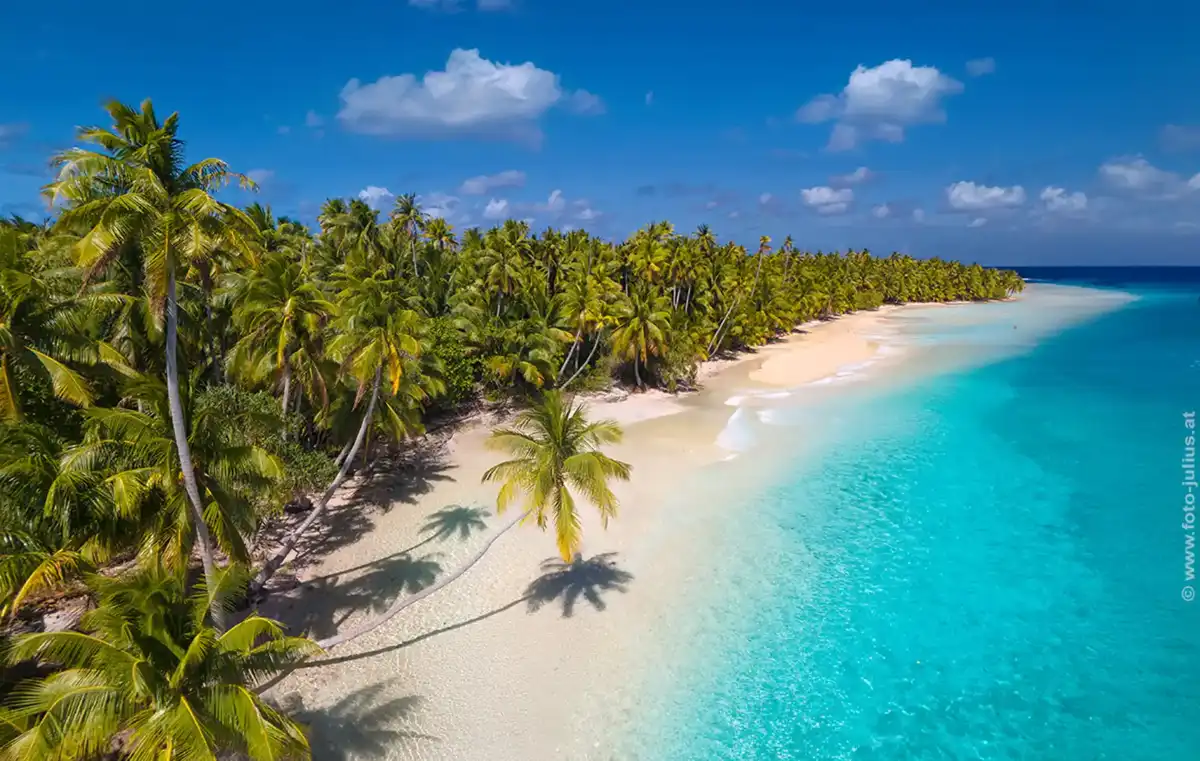
The decision most travelers face is whether to base in the north near Rotoava or push south to Tetamanu, and it comes down to how much you want to dive or snorkel the famous pass. Fakarava Atoll sits in the Tuamotu archipelago of French Polynesia, northeast of Tahiti, and the whole thing is a UNESCO biosphere reserve. Forget hiking boots. The “trails” are one sandy road along the north rim, a bike, and a lot of lagoon walking, so you get long flat rides with coral-colored water on one side and surf on the other. Wildlife is the draw: grey reef sharks in the hundreds, rays, napoleon wrasse. The catch is that there is little shade, few shops, and flights are limited. Go midweek in the morning for the calmest water at the north pass. This suits divers, snorkelers and slow-travel types who like quiet. If you need mountains, nightlife or varied trails, skip it.

Discover everything you want to know in the 📖 French Polynesia Travel Guide.


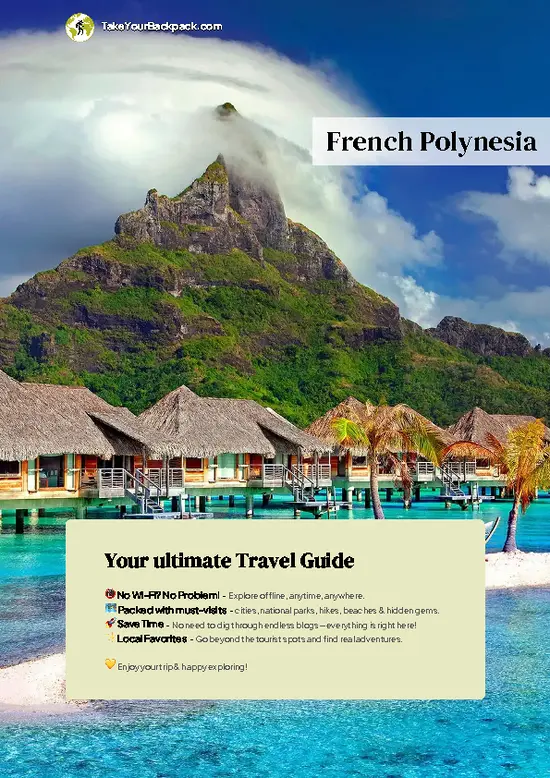
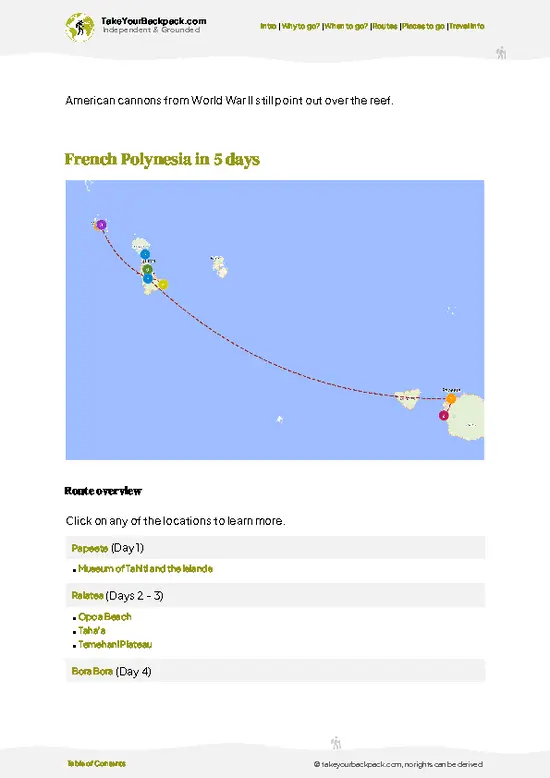
example page 0 from our offline Travel Guide for French Polynesia
example page 1 from our offline Travel Guide for French Polynesia
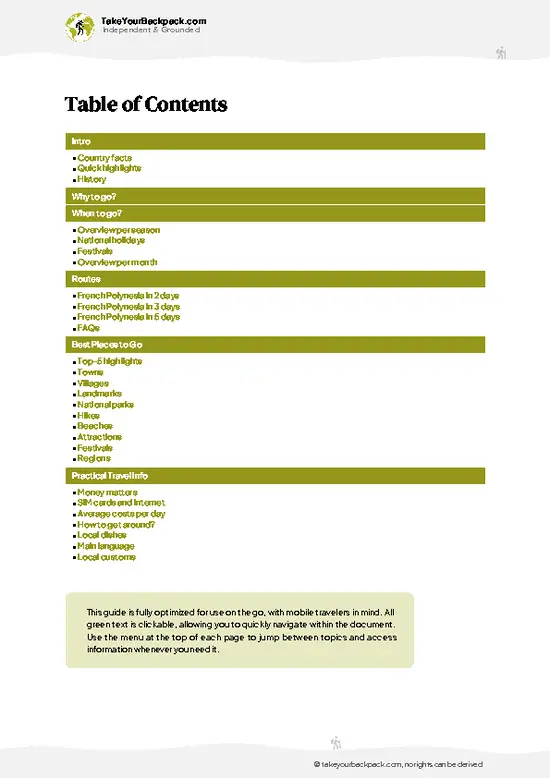
example page 2 from our offline Travel Guide for French Polynesia
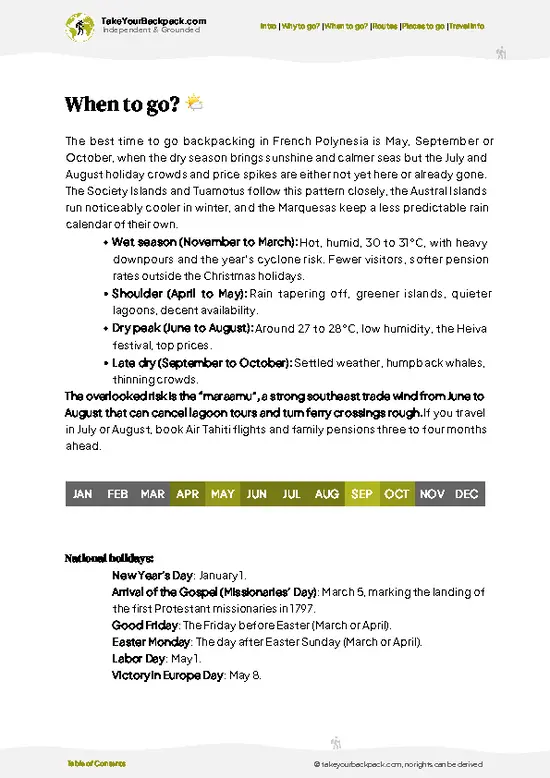
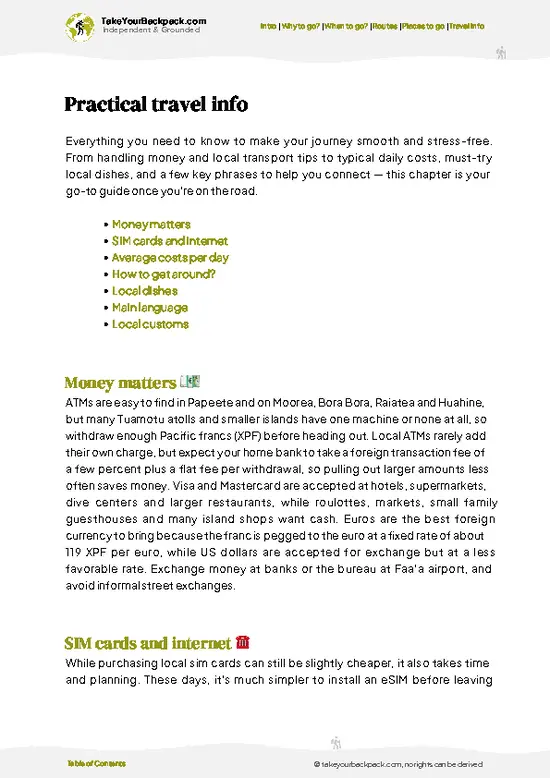
example page 3 from our offline Travel Guide for French Polynesia
example page 4 from our offline Travel Guide for French Polynesia
example page 5 from our offline Travel Guide for French Polynesia
example page 6 from our offline Travel Guide for French Polynesia
example page 7 from our offline Travel Guide for French Polynesia
Loading the map 🌍
CLICK TO FILTER
towns
villages
landmarks
national parks
hikes
beaches
attractions
festivals
regions
SHOW COUNTRY’S BESTSHOW ALL

✨ Why go?
Ranked #1 national park in French Polynesia
Why Fakarava Atoll should be on your travel list

Backpackers pick Fakarava for the water, not the walking, and for how easily you can run it yourself. The north end around Rotoava has a single paved road, so a rented bike gets you to the edge of Garuae Pass, the lagoon beaches and the little shops without a tour. Snorkeling the Garuae Pass drift, where sharks hold position in the current, is done by most visitors with a local operator, but plenty of the shallow reef is yours for the price of a mask. The south is wilder and has the Tetamanu pass with its coral gardens and a tiny village, reached by boat. Guesthouses with camping spots and family-run pensions keep it workable for a modest budget, and you can cook, swim and read between dives. It suits self-guided travelers who like slow days, reef right off the beach and starry nights with … read more 👉
Backpackers pick Fakarava for the water, not the walking, and for how easily you can run it yourself. The north end around Rotoava has a single paved road, so a rented bike gets you to the edge of Garuae Pass, the lagoon beaches and the little shops without a tour. Snorkeling the Garuae Pass drift, where sharks hold position in the current, is done by most visitors with a local operator, but plenty of the shallow reef is yours for the price of a mask. The south is wilder and has the Tetamanu pass with its coral gardens and a tiny village, reached by boat. Guesthouses with camping spots and family-run pensions keep it workable for a modest budget, and you can cook, swim and read between dives. It suits self-guided travelers who like slow days, reef right off the beach and starry nights with almost no light pollution. Tours matter only for diving and the south.

💡 HighlightsKey sights and experiences for travelers

  1. Garuae Pass (north): The largest pass in French Polynesia, about 1.6 km wide. Divers and snorkelers drift past walls of grey reef sharks, hammerheads on occasion, and schools of barracuda.
  2. Tetamanu and the south pass: A small village by Tumakohua Pass with the famous Wall of Sharks, a coral-lined shallow channel and a historic stone church, one of the oldest in the Tuamotus.
  3. Rotoava village: The main settlement, with a Catholic church, a few shops, a quay and bike rental. Walk the shore at sunset when the lagoon turns pink.
  4. Pink sand beaches in the south: Fine sand with a rosy tint, shallow water and almost nobody around, reached by boat. Bring a hat, there is little shade.
  5. Snorkeling the Tetamanu coral gardens: Shallow, clear water with colorful reef fish, blacktip sharks and rays. Suited to
… read more 👉
  1. Garuae Pass (north): The largest pass in French Polynesia, about 1.6 km wide. Divers and snorkelers drift past walls of grey reef sharks, hammerheads on occasion, and schools of barracuda.
  2. Tetamanu and the south pass: A small village by Tumakohua Pass with the famous Wall of Sharks, a coral-lined shallow channel and a historic stone church, one of the oldest in the Tuamotus.
  3. Rotoava village: The main settlement, with a Catholic church, a few shops, a quay and bike rental. Walk the shore at sunset when the lagoon turns pink.
  4. Pink sand beaches in the south: Fine sand with a rosy tint, shallow water and almost nobody around, reached by boat. Bring a hat, there is little shade.
  5. Snorkeling the Tetamanu coral gardens: Shallow, clear water with colorful reef fish, blacktip sharks and rays. Suited to confident swimmers.
  6. Pearl farms: Visit a small family farm to see grafting and buy black pearls directly, often better value than shops in Papeete.
  7. Night sky and sunset on the north rim: Low light pollution gives a dense Milky Way, best from the pier or beach by Rotoava.
Allow two to three days for the north highlights and another two for the south.
Spotted a mistake or missing something? Contact us.
🌤️ When to go?Best time to explore Fakarava Atoll

The best window for Fakarava is May to October, when the dry season brings sunshine, lower humidity and calmer diving conditions.
  • Dry Season (May to October): Daytime highs sit around 27 to 29°C (81 to 84°F), nights dip to 22 to 24°C (72 to 75°F). Sunrise and sunset land near 6:00 and 17:30, so you get roughly 11 hours of light. Wind is steadier, which suits kitesurfers.
  • Wet Season (November to April): Expect 29 to 32°C (84 to 90°F), heavy humidity and sudden downpours. Days stretch to about 13 hours of light. Cyclones are rare but possible, mostly January to March.
  • Grouper Spawning (June and July): Thousands of camouflage groupers gather in the South Pass around the full moon, and sharks gather to hunt them. Dive operators book out early, and rooms in the south fill first.
  • Crowds and Prices:
… read more 👉
The best window for Fakarava is May to October, when the dry season brings sunshine, lower humidity and calmer diving conditions.
  • Dry Season (May to October): Daytime highs sit around 27 to 29°C (81 to 84°F), nights dip to 22 to 24°C (72 to 75°F). Sunrise and sunset land near 6:00 and 17:30, so you get roughly 11 hours of light. Wind is steadier, which suits kitesurfers.
  • Wet Season (November to April): Expect 29 to 32°C (84 to 90°F), heavy humidity and sudden downpours. Days stretch to about 13 hours of light. Cyclones are rare but possible, mostly January to March.
  • Grouper Spawning (June and July): Thousands of camouflage groupers gather in the South Pass around the full moon, and sharks gather to hunt them. Dive operators book out early, and rooms in the south fill first.
  • Crowds and Prices: July and August are the busiest months, and pensions raise rates modestly. Flights from Tahiti fill up then too. November to April is quiet and often cheaper.
Book the Tahiti flight and your dive pension together at least two months ahead for June or July.


source: climatestotravel.comJANJanuary: fair for travelingFEBFebruary: fair for travelingMARMarch: fair for travelingAPRApril: fair for travelingMAYMay: highly recommended for travelingJUNJune: excellent for travelingJULJuly: excellent for travelingAUGAugust: excellent for travelingSEPSeptember: highly recommended for travelingOCTOctober: excellent for travelingNOVNovember: fair for travelingDECDecember: fair for traveling
french-polynesia-national-park-fakarava-atoll
© Google | Silver. Julius

✈️ The backpacker research shortcutFrench Polynesia Travel Guide

An offline-friendly backpacking guide with optimized travel routes, ranked highlights, transport advice, and the best areas to stay.
example page 0 from our offline Travel Guide for French Polynesia
example page 1 from our offline Travel Guide for French Polynesia
example page 2 from our offline Travel Guide for French Polynesia
example page 3 from our offline Travel Guide for French Polynesia
example page 4 from our offline Travel Guide for French Polynesia
example page 5 from our offline Travel Guide for French Polynesia
example page 6 from our offline Travel Guide for French Polynesia
example page 7 from our offline Travel Guide for French Polynesia
The digital guide (149 pages) contains:
✅ 41 highlights, ranked by travel appeal
✅ Optimized 2, 3 & 5-day travel routes
✅ Cities, national parks, landmarks, beaches
✅ How to get around
✅ Offline-friendly for travel without Wi-Fi
👉 Click to see all 30+ guide features

📅 Plan smarter in minutes, not weeks
✅ Month by month travel advice
✅ Festivals & national holidays
✅ Budget expectations

🗺️ Go to the right places, skip the overrated ones
✅ Honest pros & cons of destinations
✅ Top hikes, parks & viewpoints
✅ Lesser-known places most travelers miss
✅ Clear “worth it vs skip it” guidance

🛏️ Travel smoothly without rookie mistakes
✅ Best areas to stay
✅ Transport systems explained simply
✅ Common scams & safety advice
✅ SIM cards, money & practical tips

🌍 Understand the country, not just visit it
✅ Culture & traditions
✅ 52 Essential phrases & customs
✅ Festivals worth planning around
✅ Traveler-friendly historical context
✅ Insights that make places more meaningful

📱 Built for real travel conditions
✅ Fully downloadable PDF
✅ Works completely offline
✅ Optimized for phone use
✅ Useful in remote areas & buses
✅ Everything in one place
Stop searching, start planning
Get instant access to your full guide. 30‑day money-back guarantee.
+ Add another guide for just

By proceeding you agree to our terms.
Sent to your inbox immediately after payment • 100% Secure Checkout
Best Backpacking Travel Advisor 2025 tourism awardBest Backpacking
Travel Advisor
2025
What others say about Take Your Backpack Guides:
⭐⭐⭐⭐⭐
Fantastic, amazing amount of information!
⭐⭐⭐⭐⭐
My goodness this is amazing, it's what I've been looking for hats off too you!
⭐⭐⭐⭐⭐
I think this is absolutely BRILLIANT
⭐⭐⭐⭐
Very complete and informative. It's still missing places, but I gotta to commend you
⭐⭐⭐⭐⭐
This is truly amazing, thank you, can't wait to explore it with my kids!
⭐⭐⭐⭐⭐
Awesome resource, thank you!
⭐⭐⭐⭐⭐
This is amazing! Can't wait to explore the ones I haven't seen
⭐⭐⭐⭐
I love this! Well done, great idea.
⭐⭐⭐⭐⭐
Thanks for taking the time to make this gem!
⭐⭐⭐⭐⭐
This might be the best website I've ever seen.
⭐⭐⭐⭐⭐
Congratulations, and thank you so much for your work; it's incredibly valuable.
⭐⭐⭐⭐
In all seriousness I think you did a great job pointing out the important spots
⭐⭐⭐⭐⭐
10/10 very good
⭐⭐⭐⭐⭐
As someone who's only just starting to visit regularly this is awesome, thank you.
⭐⭐⭐⭐
Thank you very much! I'm going to visit my dad, it's going to be very useful!
⭐⭐⭐⭐⭐
This is really cool! We'll be travelling for the first time and this definitely come in handy.
⭐⭐⭐⭐⭐
You are now our minister of culture, congratulations 👨‍💼
⭐⭐⭐⭐⭐
Just wanted to tell you that this is a pearl! Going to follow your recommendations.
⭐⭐⭐⭐⭐
This is so cool. I'll definitely be using the resource for my travels soon.
⭐⭐⭐⭐⭐
This is very impressive! Good work.
⭐⭐⭐⭐⭐
This is an amazing and informative site. Very well done!

🛏️ Where to stay?Best areas to stay in French Polynesia

Most backpackers stay in Rotoava, the main village on the northeast tip of the atoll, with the other main option being the quieter south around Tetamanu.

There are no places to stay inside the biosphere reserve's wild stretches beyond a handful of small family pensions scattered along the lagoon, and those sit within the atoll itself.

Rotoava has the most choice: family-run pensions and guesthouses with simple bungalows or rooms, bike rentals, two small grocery stores, a bakery, dive centers and the airport nearby. Some pensions offer a kitchen, which is the single best way to save money here. … read more 👉
Most backpackers stay in Rotoava, the main village on the northeast tip of the atoll, with the other main option being the quieter south around Tetamanu.

There are no places to stay inside the biosphere reserve's wild stretches beyond a handful of small family pensions scattered along the lagoon, and those sit within the atoll itself.

Rotoava has the most choice: family-run pensions and guesthouses with simple bungalows or rooms, bike rentals, two small grocery stores, a bakery, dive centers and the airport nearby. Some pensions offer a kitchen, which is the single best way to save money here. Beds start at around 8,000 to 12,000 XPF (US$75 to 110) for a basic room, though a dorm-style bed is rare. A few places offer camping spots with shared facilities for roughly 2,500 to 4,000 XPF (US$23 to 37).

In the south, Tumakohua Pass and Tetamanu have a few remote pensions, mostly with half board included. Rooms there are rustic, electricity can be limited, and you rely on your host for meals and boat transfers. Diving the South Pass is right at your doorstep. Getting there takes a long boat ride, so plan at least three nights.

For most budgets, split your stay: two or three nights in Rotoava, then two in the south. Book ahead, since the whole atoll has only a modest number of beds.

👛 Costs (as of 15 October 2026)Travel costs and budget guide for Fakarava Atoll

Expect to spend about US$110 to 190 per day on Fakarava, with accommodation and food making up most of it.
CategoryBudget RangeLocal Reality
Entrance FeesUS$0There is no fee to enter the atoll or the village beaches. Dive and snorkel excursions are paid separately.
Accommodation (high season)US$45 to 90Camping spots or basic pension rooms in Rotoava. Rooms in the south often include half board and cost more.
Food and SuppliesUS$30 to 50Groceries are imported and pricey. A restaurant meal runs US$15 to 25, and cooking in a pension kitchen cuts the total.
Local TransportUS$8 to 15Bike rental costs about US$10 to 15 a day, and the one paved road is easy to ride. Boat transfers to the south are priced separately.
ActivitiesUS$27 to 35A guided snorkel trip is roughly US$45 to 70, and a single dive is
… read more 👉
Expect to spend about US$110 to 190 per day on Fakarava, with accommodation and food making up most of it.
CategoryBudget RangeLocal Reality
Entrance FeesUS$0There is no fee to enter the atoll or the village beaches. Dive and snorkel excursions are paid separately.
Accommodation (high season)US$45 to 90Camping spots or basic pension rooms in Rotoava. Rooms in the south often include half board and cost more.
Food and SuppliesUS$30 to 50Groceries are imported and pricey. A restaurant meal runs US$15 to 25, and cooking in a pension kitchen cuts the total.
Local TransportUS$8 to 15Bike rental costs about US$10 to 15 a day, and the one paved road is easy to ride. Boat transfers to the south are priced separately.
ActivitiesUS$27 to 35A guided snorkel trip is roughly US$45 to 70, and a single dive is about US$90 to 120. This row averages out over a multi-day stay.
Total Daily BudgetUS$110 to 190Prices are quoted in Pacific francs (XPF), and most pensions accept cash. Carry enough from Tahiti, because ATMs are limited.
⚠️ Prices can change and everyone travels differently, so take this as a rough guide. Hope it helps you plan your adventure!

🥾 TrailsBest hikes in Fakarava Atoll national park

Fakarava has no named hiking trails in the usual sense, so the walks are coastal and flat, and most of the effort is heat and wind.
  • North coastal road: Starting from Rotoava, a single paved road runs roughly 25 km to the Ohotu area, passing coconut groves, small beaches and the airport. Cycling takes about 2 to 3 hours each way at an easy pace, walking much longer. Difficulty is easy, but shade is scarce.
  • Rotoava shoreline: A short stroll of 30 to 60 minutes along the lagoon past the church and quay. Sand, coral rubble and calm water. Easy.
  • Pink sand beaches: In the far south, reached by a boat
… read more 👉
Fakarava has no named hiking trails in the usual sense, so the walks are coastal and flat, and most of the effort is heat and wind.
  • North coastal road: Starting from Rotoava, a single paved road runs roughly 25 km to the Ohotu area, passing coconut groves, small beaches and the airport. Cycling takes about 2 to 3 hours each way at an easy pace, walking much longer. Difficulty is easy, but shade is scarce.
  • Rotoava shoreline: A short stroll of 30 to 60 minutes along the lagoon past the church and quay. Sand, coral rubble and calm water. Easy.
  • Pink sand beaches: In the far south, reached by a boat trip of about 90 minutes from Rotoava. Soft sand, so wear sandals.
  • South atoll tracks: Around Tetamanu and Hirifa, sandy and coral tracks lead between the pass and guesthouses, usually 1 to 2 hours on foot. Terrain is uneven and sunny. Easy to moderate.
  • Lagoon and pass snorkeling: The real highlights. Drift snorkels through Garuae and Tumakohua take 1 to 2 hours with a guide. Moderate because of the current.
Wildlife is mostly underwater: grey reef sharks, blacktip sharks, manta and eagle rays, napoleon wrasse and turtles, with seabirds and land crabs on the motus. Reaching the atoll is by short flight from Tahiti, or by supply ship, and there is no public transport on the island, so rent a bike, scooter or car in Rotoava or arrange pickup through your guesthouse. The north is quiet even in peak months, and the south is quieter still. Pack reef-safe sunscreen, plenty of water, and a hat. Access to the atoll is free, though dive and boat trips cost extra.
⚠️ Hiking info can sometimes be outdated or inaccurate. Before you hit the trail, check the latest conditions with locals. If you do spot anything that's off, I'd love to hear from you, so I can update it for fellow travelers.

🛡️ SafetyTraveler Safety Guide

Fakarava is a calm, low-risk atoll, and most problems come from sun, wind and currents rather than anything dramatic.

The sun is fierce on the coral flats, so wear a long-sleeve rash guard, a hat and reef-safe sunscreen. Carry plenty of water when cycling the road out of Rotoava, because shade and shops thin out quickly. Heavy rain can arrive suddenly in the wet season.

The passes have strong tidal currents. Snorkel or dive them only with a local operator who times the entry to the tide, and never drift alone at the mouth of Garuae or Tumakohua. Reef sharks, mostly blacktip, whitetip and gray, are everywhere and are used to divers. Stay calm, keep your hands to yourself and do not spearfish or carry bait nearby. Wear reef shoes in the shallows, as stonefish and sharp coral are the more likely … read more 👉
Fakarava is a calm, low-risk atoll, and most problems come from sun, wind and currents rather than anything dramatic.

The sun is fierce on the coral flats, so wear a long-sleeve rash guard, a hat and reef-safe sunscreen. Carry plenty of water when cycling the road out of Rotoava, because shade and shops thin out quickly. Heavy rain can arrive suddenly in the wet season.

The passes have strong tidal currents. Snorkel or dive them only with a local operator who times the entry to the tide, and never drift alone at the mouth of Garuae or Tumakohua. Reef sharks, mostly blacktip, whitetip and gray, are everywhere and are used to divers. Stay calm, keep your hands to yourself and do not spearfish or carry bait nearby. Wear reef shoes in the shallows, as stonefish and sharp coral are the more likely nuisances.

There is a small clinic in Rotoava, but serious cases require evacuation to Tahiti, so carry travel insurance that covers diving and medical flights.

FAQCommon questions from travelers

Plan on four to five days to cover the atoll properly. Spend two days around Rotoava for snorkeling, the lagoon and cycling, then at least two nights in the south near Tumakohua Pass for the best diving. Divers often stay a week to fit in the Garuae and South Pass dives.
Yes, though you will rely on local boats and hosts. Air Tahiti flies from Papeete to Fakarava in about one hour, and Rotoava is small enough to explore by bicycle, which rents for roughly US$10 to 15 a day. The south requires a pension-arranged boat transfer, usually about 90 minutes and often US$40 to 100 per person round trip.
No entrance fee or permit is required to visit Fakarava Atoll, which is a UNESCO biosphere reserve. Costs come from guided activities, such as a snorkel trip at around US$45 to 70 or a dive at roughly US$90 to 120. Some southern pensions and motus charge small visitor or landing fees, so ask your host.
⚠️ Things can change over time, so always validate details locally before you go.

Other French Polynesian national parks near Fakarava Atoll

Explore more nearby:

  • Tahiti Iti—Teahupo’o barrel, Te Pari cliffs, road's end, Taravao plateau| 417 km away
  • Teahupo’o—reef break, surf culture, remote coastline| 423 km away
  • Papenoo Valley—Unpaved 4x4 crossing, Lake Vaihiria eels, waterfall walls, river-mouth black sand| 426 km away

💡 Not sure where to go next?
Create a personalized itinerary for French Polynesia including Fakarava Atoll and the places that fit your trip.

Generate my itinerary

👉 Discover all national parks

Or checkout all French Polynesia has to offer (think cities, towns, villages, national parks, hikes, beaches, festivals)
Country photo of French Polynesia

We 💚 feedbackIs it worth it?

Give Fakarava four to five nights if you can, split between north and south. Two nights feels rushed once you factor in boat schedules and weather, and a week suits only divers or dedicated hammock readers. I would spend the first nights near Rotoava for easy bike rides, then move south to Tetamanu for the best snorkeling. Bring cash and snacks, since shops are small.

✍️ Help improve this page!
The information on this page is based on in-depth research, insights shared by experienced travelers, and feedback from the local travel community in French Polynesia. While every effort is made to keep the information accurate and current, conditions can change — so if you spot anything incorrect or outdated, please get in touch.


🙋‍♂️ Give feedback

👋 Meet the founderWho’s Behind Take Your Backpack?

Johan, backpacker and founder of TakeYourBackpackHi, I’m Johan (Netherlands 🇳🇱), the creator of TakeYourBackpack. Over the past 3 decades, I’ve backpacked through 90+ countries across six continents, gaining extensive experience with independent travel, long-term trips, and overland routes.

This site is built on a combination of firsthand travel experience and carefully curated insights from other backpackers. Many guides are based on places I’ve personally visited, while others bring together tips, observations, and practical advice shared by trusted travelers I’ve met along the way.

The goal is to provide realistic, experience-driven guidance — not generic itineraries — so you can explore destinations with better context, clearer expectations, and more confidence.