v2.webp)
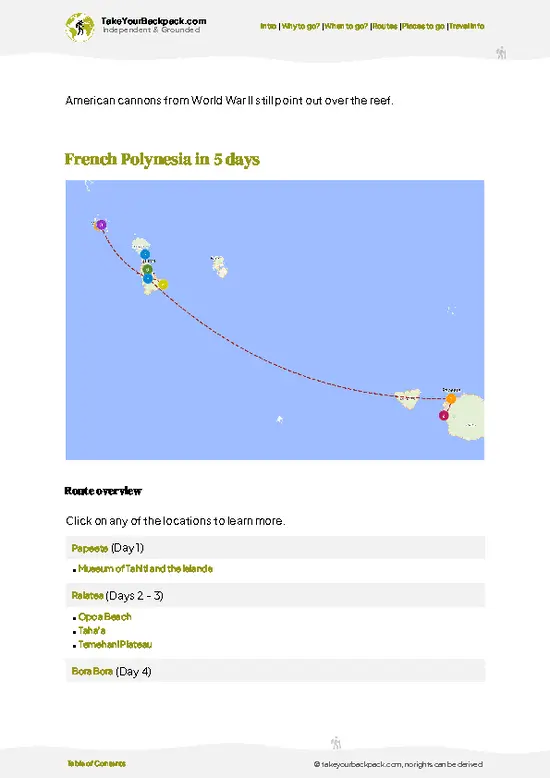
- Maeva Marae Complex: Stone temples, platforms and fish traps along Lake Fauna Nui, with Marae Fare Miro Miro and Matairea Rahi Hill nearby. Free to wander, and an hour or two is enough.
- Fare Village: The main waterfront town, with a harbor, small shops, and food trucks (roulottes) that fill up at dusk.
- Faie Blue-Eyed Eels: Sacred eels with pale blue eyes live in a shallow stream near the bridge, and local kids sell tuna to feed them.
- Maeva Stone Fish Traps: V-shaped stone fish traps in the Fauna Nui channel at Maeva are still used and show how islanders fished long before nets.
- Avea Bay: A pale sand beach on Huahine Iti with calm, clear water, good for snorkeling with few people around.
- Belvedere viewpoint: A steep road climbs to a lookout over Maroe Bay, the lagoon and the bridge between the two
- Maeva Marae Complex: Stone temples, platforms and fish traps along Lake Fauna Nui, with Marae Fare Miro Miro and Matairea Rahi Hill nearby. Free to wander, and an hour or two is enough.
- Fare Village: The main waterfront town, with a harbor, small shops, and food trucks (roulottes) that fill up at dusk.
- Faie Blue-Eyed Eels: Sacred eels with pale blue eyes live in a shallow stream near the bridge, and local kids sell tuna to feed them.
- Maeva Stone Fish Traps: V-shaped stone fish traps in the Fauna Nui channel at Maeva are still used and show how islanders fished long before nets.
- Avea Bay: A pale sand beach on Huahine Iti with calm, clear water, good for snorkeling with few people around.
- Belvedere viewpoint: A steep road climbs to a lookout over Maroe Bay, the lagoon and the bridge between the two islands, best in late afternoon.
- Vanilla Farms: Several family plantations show hand pollination and curing, and you can buy pods straight from the grower.
- Pearl Farm Visit: The lagoon pearl farm near Faie explains grafting and harvest, and prices are lower than in tourist shops elsewhere.
- Parea Village: A quiet southern settlement with a few homes, fruit stalls and a slow pace that most visitors skip.
- Motu Snorkel and Lagoon Cruise: A boat trip to the motu, with coral gardens, rays and a picnic on a sandbar.
Spotted a mistake or missing something? Contact us.


 Best Backpacking
.jpg) Hi, I’m Johan (Netherlands 🇳🇱), the creator of TakeYourBackpack. Over the past 3 decades, I’ve backpacked through 90+ countries across six continents, gaining extensive experience with independent travel, long-term trips, and overland routes.
Hi, I’m Johan (Netherlands 🇳🇱), the creator of TakeYourBackpack. Over the past 3 decades, I’ve backpacked through 90+ countries across six continents, gaining extensive experience with independent travel, long-term trips, and overland routes.