×

French Polynesia🇵🇫 | national parksTemehani Plateauendemic flora, highland plateau, rare orchids | things to do and best time to go

Explore Papenoo ValleyExplore Tahiti Iti

Backpacking in Temehani Plateau
🌟 Highlightnational park ranked #2
By Johan Kruseman 🇳🇱 | Updated July 30, 2026

The first real decision with Temehani Plateau is whether you commit a full day (and real effort) to reach it, or stay coastal and just admire Raiatea from sea level; that choice decides if your trip is about beaches or about one hard, rewarding inland push. Temehani sits high above Raiatea in the Society Islands of French Polynesia, a protected plateau famous for its rare tiare apetahi flower and big, open views. For backpackers, it’s a serious hike rather than a casual stroll: steep, often muddy, hot, and with limited shade, but with satisfying ridgelines, birds, and a sense of being far from the resort bubble. Access usually requires a guide or arranged transport, and any fees or tours add up fast, with no true budget camping on the plateau itself. Compared with easier coastal trails on Raiatea or the more polished circuits on Moorea and Tahiti, Temehani feels wilder, less crowded, and more “pay with sweat, not infrastructure.”

Discover everything you want to know in the 📖 French Polynesia Travel Guide.
Loading the map 🌍
CLICK TO FILTER
towns
villages
landmarks
national parks
hikes
beaches
attractions
festivals
regions
SHOW COUNTRY’S BESTSHOW ALL

✨ Why go?
Ranked #2 national park in French Polynesia
What sets this place apart

Backpackers flock to the Temehani Plateau in French Polynesia for a mix of independent exploration and affordable options. This park offers a chance to escape the typical tourist routes. You can set up camp or find budget-friendly hostels nearby, allowing you to stretch your funds while soaking in the stunning landscapes.

The trail variety here is impressive. You’ll find everything from easy walks to challenging hikes, making it suitable for all skill levels. Whether you’re a first-timer or a seasoned trekker, you can tailor your experience to match your comfort zone.

What sets Temehani apart is its suitability for self-guided travelers. You don’t need to rely on tours to enjoy the park. The well-marked trails and clear signage make navigation straightforward. This freedom allows you to … read more 👉
Backpackers flock to the Temehani Plateau in French Polynesia for a mix of independent exploration and affordable options. This park offers a chance to escape the typical tourist routes. You can set up camp or find budget-friendly hostels nearby, allowing you to stretch your funds while soaking in the stunning landscapes.

The trail variety here is impressive. You’ll find everything from easy walks to challenging hikes, making it suitable for all skill levels. Whether you’re a first-timer or a seasoned trekker, you can tailor your experience to match your comfort zone.

What sets Temehani apart is its suitability for self-guided travelers. You don’t need to rely on tours to enjoy the park. The well-marked trails and clear signage make navigation straightforward. This freedom allows you to explore at your own pace, stopping to appreciate the unique flora and fauna without feeling rushed.

However, be mindful of the weather. Conditions can change rapidly, so pack accordingly. Bring enough water and snacks, as amenities are limited. This preparation will help you focus on the moments that truly matter, preserving both your energy and budget.
Want to include Temehani Plateau in your French Polynesia route?
Create a personalized French Polynesia itinerary that includes Temehani Plateau and the places that fit your trip — based on your travel style, budget, and available time. Get your route in seconds.

Generate my trip

💡 HighlightsEssential experiences to have while exploring Temehani Plateau

  • Tiare Apetahi (the plateau’s famous flower) — A tiny, porcelain-white gardenia found essentially only on Temehani. Seeing it in situ is a rare treat: fragile, endemic and treated like a local celebrity. Don’t touch or pick — it’s why the place is protected.
  • Jagged limestone karst and pinnacles — The plateau’s weathered coral and limestone create dramatic, toothy rock formations and honeycombed pavements you won’t see on a beach postcard. Great for moody photos and for feeling like you’ve stepped off the usual tropical map.
  • Panoramic views over Raiatea, Tahaa and the lagoon — From the higher edges you get sweeping, layered views of motus, reef channels and neighboring islands. Sunrises and late-afternoon light here can turn the lagoon into liquid turquoise and gold.
  • Cloud-forest pockets
read more 👉
  • Tiare Apetahi (the plateau’s famous flower) — A tiny, porcelain-white gardenia found essentially only on Temehani. Seeing it in situ is a rare treat: fragile, endemic and treated like a local celebrity. Don’t touch or pick — it’s why the place is protected.
  • Jagged limestone karst and pinnacles — The plateau’s weathered coral and limestone create dramatic, toothy rock formations and honeycombed pavements you won’t see on a beach postcard. Great for moody photos and for feeling like you’ve stepped off the usual tropical map.
  • Panoramic views over Raiatea, Tahaa and the lagoon — From the higher edges you get sweeping, layered views of motus, reef channels and neighboring islands. Sunrises and late-afternoon light here can turn the lagoon into liquid turquoise and gold.
  • Cloud-forest pockets and unique plant communities — Microclimates on the plateau support mossy trunks, rare orchids and other plants adapted to mist and wind. It’s a compact, high-altitude ecosystem that feels totally different from the palms on the coast.
  • Wildlife and birding opportunities — The isolation protects a suite of land birds, insects and endemic species that are easier to spot here than on busy shores. It’s a quiet spot for anyone who likes listening more than talking.
  • Rugged hiking routes and ridge walks — Trails here are rough, often steep and can be overgrown; that’s part of the appeal. Guided hikes give the best access and local knowledge about routes, flora and fragile areas to avoid.
  • Cultural significance and sacred spots — Temehani is woven into local stories and customs; parts of the plateau are considered tapu (sacred). Respect, a guide and asking permission where needed are part of the experience — and they make the visit richer.
Spotted a mistake or missing something? Contact us.

Things to do near Temehani Plateau

Ratings based on Tripadvisor reviews. When you book through this link, you support our work at no extra cost to you.

🌤️ When to go?Choosing the right time of year


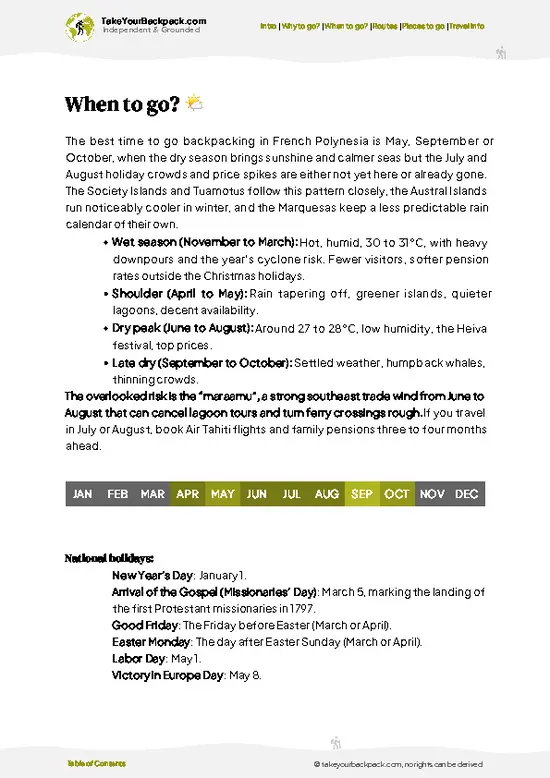
  • Weather: The dry season from May to October is your best bet. Expect less rain, which means trails won’t turn into mud traps. The wet season (November to April) brings heavy showers and humidity that can sap your energy fast.

  • Temperature: Daytime temps hover around 24-28°C (75-82°F) during the dry months, perfect for hiking without overheating. Wet season temps climb higher, often hitting 30°C (86°F) or more, paired with sticky humidity.

  • Daylight Hours: Daylight is fairly consistent year-round, roughly 11-12 hours daily. However, the dry season’s clearer skies mean you’ll get more reliable light for early starts and late finishes.

  • Crowds: The dry season attracts more visitors, especially July and August. If you want solitude, aim for shoulder months like May or September, when the
read more 👉

  • Weather: The dry season from May to October is your best bet. Expect less rain, which means trails won’t turn into mud traps. The wet season (November to April) brings heavy showers and humidity that can sap your energy fast.

  • Temperature: Daytime temps hover around 24-28°C (75-82°F) during the dry months, perfect for hiking without overheating. Wet season temps climb higher, often hitting 30°C (86°F) or more, paired with sticky humidity.

  • Daylight Hours: Daylight is fairly consistent year-round, roughly 11-12 hours daily. However, the dry season’s clearer skies mean you’ll get more reliable light for early starts and late finishes.

  • Crowds: The dry season attracts more visitors, especially July and August. If you want solitude, aim for shoulder months like May or September, when the park is quieter but still dry.

  • Seasonal Activities: Dry months are ideal for trekking and exploring the plateau’s unique flora and fauna. Wet season limits access to some trails due to flooding and slippery conditions.

  • Price Fluctuations: Accommodation and transport costs spike during the dry season’s peak months. Booking in shoulder seasons can save you a decent chunk without sacrificing weather quality.


Pro-tip: Plan your trip for late May or early September to dodge crowds and high prices while still enjoying dry, comfortable conditions.


source: climatestotravel.comJANJanuary: fair for travelingFEBFebruary: fair for travelingMARMarch: fair for travelingAPRApril: fair for travelingMAYMay: highly recommended for travelingJUNJune: excellent for travelingJULJuly: excellent for travelingAUGAugust: excellent for travelingSEPSeptember: highly recommended for travelingOCTOctober: excellent for travelingNOVNovember: fair for travelingDECDecember: fair for traveling
when-to-go

✈️ The backpacker research shortcutFrench Polynesia Travel Guide

An offline-friendly backpacking guide with optimized travel routes, ranked highlights, transport advice, and the best areas to stay.
example page 0 from our offline Travel Guide for French Polynesia
example page 1 from our offline Travel Guide for French Polynesia
example page 2 from our offline Travel Guide for French Polynesia
example page 3 from our offline Travel Guide for French Polynesia
example page 4 from our offline Travel Guide for French Polynesia
example page 5 from our offline Travel Guide for French Polynesia
example page 6 from our offline Travel Guide for French Polynesia
example page 7 from our offline Travel Guide for French Polynesia
The digital guide (181 pages) contains:
45 highlights, ranked by travel appeal
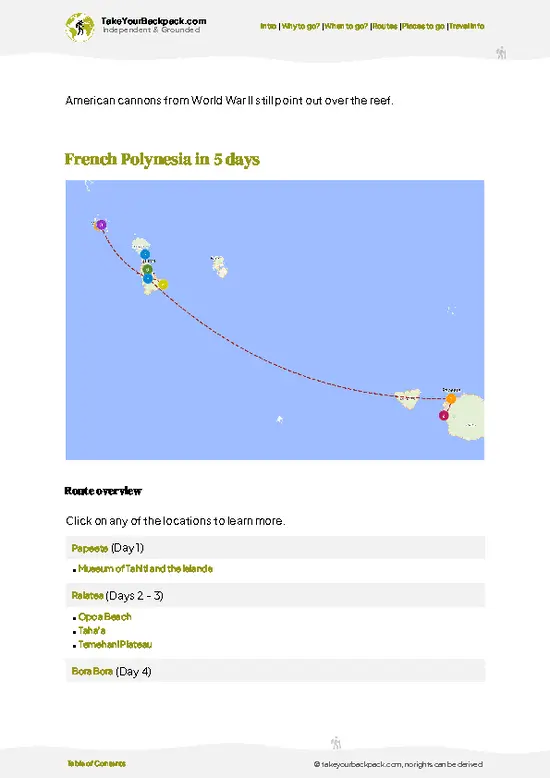
Optimized 2, 3 & 5-day travel routes
Cities, national parks, landmarks, beaches
How to get around
Offline-friendly for travel without Wi-Fi
👉 Click to see all 30+ guide features

📅 Plan smarter in minutes, not weeks
Month by month travel advice
Festivals & national holidays
Budget expectations

🗺️ Go to the right places, skip the overrated ones
Honest pros & cons of destinations
Top hikes, parks & viewpoints
Lesser-known places most travelers miss
Clear “worth it vs skip it” guidance

🛏️ Travel smoothly without rookie mistakes
Best areas to stay
Transport systems explained simply
Common scams & safety advice
SIM cards, money & practical tips

🌍 Understand the country, not just visit it
Culture & traditions
52 Essential phrases & customs
Festivals worth planning around
Traveler-friendly historical context
Insights that make places more meaningful

📱 Built for real travel conditions
Fully downloadable PDF
Works completely offline
Optimized for phone use
Useful in remote areas & buses
Everything in one place
Save weeks of stressful planning
Get instant access to your full guide. 30‑day money-back guarantee.


By proceeding you agree to our terms.
Sent to your inbox immediately after payment • 100% Secure Checkout
Best Backpacking Travel Advisor 2025 tourism awardBest Backpacking
Travel Advisor
2025
What others say about Take Your Backpack Guides:
⭐⭐⭐⭐⭐
Fantastic, amazing amount of information!
⭐⭐⭐⭐⭐
My goodness this is amazing, it's what I've been looking for hats off too you!
⭐⭐⭐⭐⭐
I think this is absolutely BRILLIANT
⭐⭐⭐⭐
Very complete and informative. It's still missing places, but I gotta to commend you
⭐⭐⭐⭐⭐
This is truly amazing, thank you, can't wait to explore it with my kids!
⭐⭐⭐⭐⭐
Awesome resource, thank you!
⭐⭐⭐⭐⭐
This is amazing! Can't wait to explore the ones I haven't seen
⭐⭐⭐⭐
I love this! Well done, great idea.
⭐⭐⭐⭐⭐
Thanks for taking the time to make this gem!
⭐⭐⭐⭐⭐
This might be the best website I've ever seen.
⭐⭐⭐⭐⭐
Congratulations, and thank you so much for your work; it's incredibly valuable.
⭐⭐⭐⭐
In all seriousness I think you did a great job pointing out the important spots
⭐⭐⭐⭐⭐
10/10 very good
⭐⭐⭐⭐⭐
As someone who's only just starting to visit regularly this is awesome, thank you.
⭐⭐⭐⭐
Thank you very much! I'm going to visit my dad, it's going to be very useful!
⭐⭐⭐⭐⭐
This is really cool! We'll be travelling for the first time and this definitely come in handy.
⭐⭐⭐⭐⭐
You are now our minister of culture, congratulations 👨‍💼
⭐⭐⭐⭐⭐
Just wanted to tell you that this is a pearl! Going to follow your recommendations.
⭐⭐⭐⭐⭐
This is so cool. I'll definitely be using the resource for my travels soon.
⭐⭐⭐⭐⭐
This is very impressive! Good work.
⭐⭐⭐⭐⭐
This is an amazing and informative site. Very well done!

🛏️ Where to stay?Where staying makes the most sense

When it comes to staying near Temehani Plateau, options are limited but solid. Inside the national park, you won’t find traditional accommodations. Instead, the best bet is to camp. Bring your own gear, as the park offers a few designated camping spots. This allows you to immerse yourself in the stunning surroundings without the distractions of modern amenities.

If you prefer a roof over your head, head to the nearby town of Papetee. It’s about an hour away and has a range of hostels and guesthouses. Look for places like the Pension de la Plage, which offers a cozy atmosphere and local charm. … read more 👉
When it comes to staying near Temehani Plateau, options are limited but solid. Inside the national park, you won’t find traditional accommodations. Instead, the best bet is to camp. Bring your own gear, as the park offers a few designated camping spots. This allows you to immerse yourself in the stunning surroundings without the distractions of modern amenities.

If you prefer a roof over your head, head to the nearby town of Papetee. It’s about an hour away and has a range of hostels and guesthouses. Look for places like the Pension de la Plage, which offers a cozy atmosphere and local charm. It’s a great base for exploring the plateau while still being close to the conveniences of town.

Another option is to check out the village of Teahupo’o. Known for its surf culture, it has a few budget-friendly accommodations. Staying here gives you a chance to experience local life and enjoy some excellent seafood after a day of hiking.

Keep in mind that transportation can be tricky. Renting a car or arranging local transport is essential for accessing the park and nearby areas. Plan ahead to avoid any surprises that could drain your energy or budget.

👛 Costs (as of 30 July 2026)What things cost and how to budget

Visiting Temehani Plateau in French Polynesia can be a rewarding experience, but it’s essential to be aware of the costs involved to avoid surprises.

Entry fees for the national park are generally around €10 to €15 per person. This fee helps maintain the trails and facilities. If you’re planning to camp, expect to pay an additional €5 to €10 per night for a designated camping area.

Transportation is another factor. If you’re renting a car, budget around €50 to €80 per day. Alternatively, local taxis can be pricey, often costing €30 to €50 for a short ride. Public transport is limited, so plan accordingly.

Food and water are crucial, especially on hikes. A meal at a local eatery can range from €10 to €25. Stocking up on snacks and water before heading into the park is wise; prices can spike … read more 👉
Visiting Temehani Plateau in French Polynesia can be a rewarding experience, but it’s essential to be aware of the costs involved to avoid surprises.

Entry fees for the national park are generally around €10 to €15 per person. This fee helps maintain the trails and facilities. If you’re planning to camp, expect to pay an additional €5 to €10 per night for a designated camping area.

Transportation is another factor. If you’re renting a car, budget around €50 to €80 per day. Alternatively, local taxis can be pricey, often costing €30 to €50 for a short ride. Public transport is limited, so plan accordingly.

Food and water are crucial, especially on hikes. A meal at a local eatery can range from €10 to €25. Stocking up on snacks and water before heading into the park is wise; prices can spike in remote areas.

Guided tours are available for those who prefer a structured experience. These can cost anywhere from €50 to €150, depending on the length and inclusions.

Lastly, consider the cost of gear if you’re not bringing your own. Renting equipment like tents or hiking poles can add another €10 to €30 to your budget.

Being aware of these costs will help you allocate your resources wisely, ensuring you can fully enjoy the beauty of Temehani Plateau without financial stress.


source: tahititourisme.com
⚠️ Prices can change and everyone travels differently, so take this as a rough guide. Hope it helps you plan your adventure!

🥾 TrailsHiking Temehani Plateau national park: highlights and difficulty

The Temehani Plateau in French Polynesia is a hidden gem for hikers, offering a mix of lush landscapes, unique flora, and stunning vistas. The terrain is a bit rugged, with steep ascents and descents, but the views are totally worth the effort. As you hike, keep an eye out for the endemic Tiare Apetahi flower, which adds a special touch to the scenery. Wildlife is pretty cool too; you might spot some colorful birds flitting about, making it a nature lover’s paradise.

There’s a designated trail called Temehani Trail that showcases the best of the plateau. Here are the details:
  • Length: 8 km
  • Estimated
read more 👉
The Temehani Plateau in French Polynesia is a hidden gem for hikers, offering a mix of lush landscapes, unique flora, and stunning vistas. The terrain is a bit rugged, with steep ascents and descents, but the views are totally worth the effort. As you hike, keep an eye out for the endemic Tiare Apetahi flower, which adds a special touch to the scenery. Wildlife is pretty cool too; you might spot some colorful birds flitting about, making it a nature lover’s paradise.

There’s a designated trail called Temehani Trail that showcases the best of the plateau. Here are the details:
  • Length: 8 km
  • Estimated Duration: 4-6 hours
  • Difficulty Level: Moderate to Challenging
  • Key Features: Stunning panoramic views, unique flora, and the chance to see rare bird species
  • Terrain: Rocky paths, steep inclines, and some muddy sections

Getting to the park is relatively easy. You can catch a local bus from the main town, but it might take a little patience as schedules can be erratic. The park isn’t usually crowded, so you can enjoy the tranquility of nature without feeling overwhelmed by tourists. Plus, there’s no entrance fee, which is a sweet bonus for budget travelers. Just pack some water and snacks, and you’re good to go!
⚠️ Hiking info can sometimes be outdated or inaccurate. Before you hit the trail, check the latest conditions with locals. If you do spot anything that's off, I'd love to hear from you, so I can update it for fellow travelers.

🛡️ SafetyTraveler Safety Guide

The Temehani Plateau offers a rewarding experience, but it’s essential to approach it with a grounded mindset. Weather can shift quickly; expect sun, rain, and humidity all in one day. Dress in layers and carry a lightweight rain jacket.

The terrain varies, with steep sections and uneven footing. Navigation can be tricky, so download a reliable map or bring a compass. Pay attention to trail markers, especially in dense foliage. River crossings are possible, so waterproof footwear is a smart choice.

Wildlife encounters are rare, but respect the local fauna. If you spot a bird or lizard, observe from a distance. Feeding animals disrupts their natural behavior and can lead to unwanted encounters.

Many first-timers underestimate the physical demands. Pace yourself, take breaks, and stay hydrated. … read more 👉
The Temehani Plateau offers a rewarding experience, but it’s essential to approach it with a grounded mindset. Weather can shift quickly; expect sun, rain, and humidity all in one day. Dress in layers and carry a lightweight rain jacket.

The terrain varies, with steep sections and uneven footing. Navigation can be tricky, so download a reliable map or bring a compass. Pay attention to trail markers, especially in dense foliage. River crossings are possible, so waterproof footwear is a smart choice.

Wildlife encounters are rare, but respect the local fauna. If you spot a bird or lizard, observe from a distance. Feeding animals disrupts their natural behavior and can lead to unwanted encounters.

Many first-timers underestimate the physical demands. Pace yourself, take breaks, and stay hydrated. Start early to avoid the midday heat. With thoughtful preparation, you’ll preserve your energy for the breathtaking views that await.

Other French Polynesian national parks near Temehani Plateau

Explore more nearby:

  • Papenoo Valley—waterfalls, lush rainforest, river canyons| 231 km away
  • Teahupo’o—reef break, surf culture, remote coastline| 261 km away
  • Tahiti Iti—sea cliffs, black sand coves, rugged peninsula| 264 km away

💡 Not sure where to go next?
Create a personalized itinerary for French Polynesia including Temehani Plateau and the places that fit your trip.

Generate my itinerary

👉 Discover all national parks

Or checkout all French Polynesia has to offer (think cities, towns, villages, national parks, hikes, beaches, festivals)
Country photo of French Polynesia

We 💚 feedbackIs it worth it?

Le Temehani Plateau est un endroit où la nature se dévoile sans artifice. Attendez-vous à des sentiers boueux et des montées raides, mais la vue en vaut chaque goutte de sueur. La surprise? Les fleurs de tiare qui embaument l’air, un parfum qui reste avec vous longtemps après. Attention aux moustiques; un bon répulsif est essentiel. Profitez de chaque instant, mais gardez un œil sur votre énergie. C’est là que la magie opère, dans ces moments simples et authentiques.

✍️ Help improve this page!
The information on this page is based on in-depth research, insights shared by experienced travelers, and feedback from the local travel community in French Polynesia. While every effort is made to keep the information accurate and current, conditions can change — so if you spot anything incorrect or outdated, please get in touch.


🙋‍♂️ Give feedback

👋 Meet the founderWho’s Behind Take Your Backpack?

Johan, backpacker and founder of TakeYourBackpackHi, I’m Johan (Netherlands 🇳🇱), the creator of TakeYourBackpack. Over the past decade, I’ve backpacked through 80+ countries across six continents, gaining extensive experience with independent travel, long-term trips, and overland routes.

This site is built on a combination of firsthand travel experience and carefully curated insights from other backpackers. Many guides are based on places I’ve personally visited, while others bring together tips, observations, and practical advice shared by trusted travelers I’ve met along the way.

The goal is to provide realistic, experience-driven guidance — not generic itineraries — so you can explore destinations with better context, clearer expectations, and more confidence.

Get full country guide •
Instant download • 45 highlights • Full Offline guide