×

Gabon🇬🇦 | attractionsMusée National des Arts et Traditions du GabonFang guardians, Punu masks, Kota brass, Ngombi harps | things to do and best time to go

Explore Sette CamaExplore Cathédrale Sainte-Marie de Libreville

Backpacking in Musée National des Arts et Traditions du Gabon
🏆 Top pickattraction ranked #1
By Johan Kruseman 🇳🇱 | Updated October 22, 2026

The first thing you notice is the quiet: a ceiling fan ticking over a room of dark wood, and a Fang guardian figure staring back with inlaid metal eyes. Musée National des Arts et Traditions du Gabon sits in Libreville, Gabon’s capital, and it holds masks, reliquary figures, harps and everyday tools from the country’s many ethnic groups. Hours can be irregular because the museum depends on public funding, so call or ask at your lodging before crossing town. Labels are mostly in French, so load an offline translation app. Carry small cash in case a guide offers to walk you through, and ask before photographing. It is not polished, and some displays look tired, yet the objects carry real weight and crowds are rare. Unlike the Musée de la Femme, which concentrates on women’s lives, this one covers ritual, music and craft across many peoples.

Discover everything you want to know in the 📖 Gabon Travel Guide.


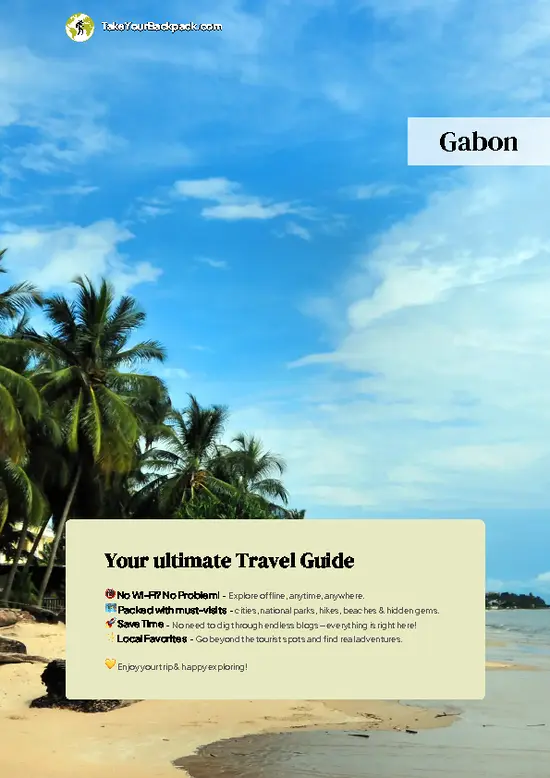
example page 0 from our offline Travel Guide for Gabon
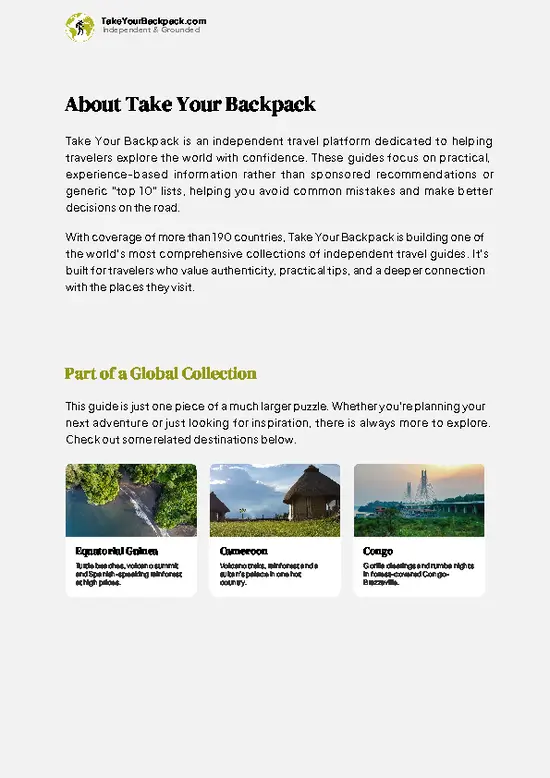
example page 1 from our offline Travel Guide for Gabon
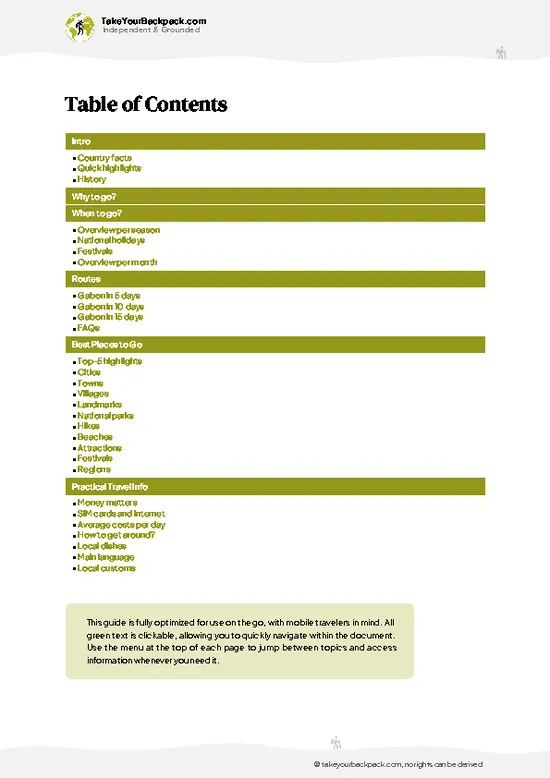
example page 2 from our offline Travel Guide for Gabon
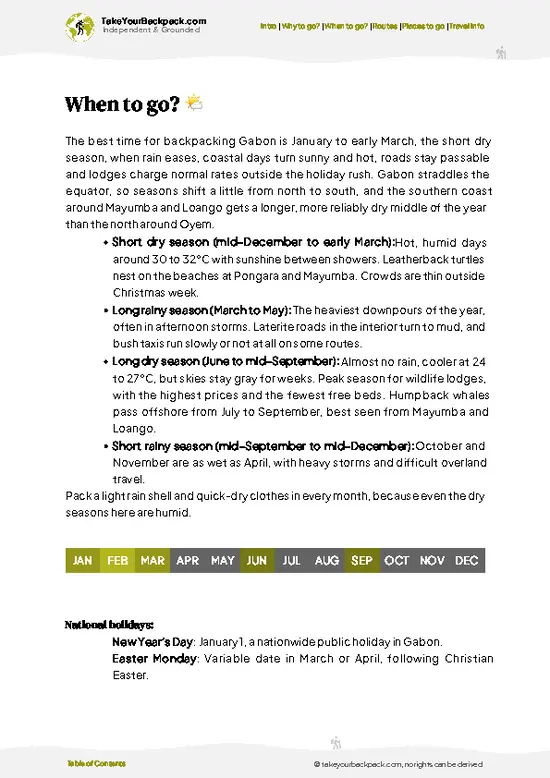
example page 3 from our offline Travel Guide for Gabon
example page 4 from our offline Travel Guide for Gabon
example page 5 from our offline Travel Guide for Gabon
example page 6 from our offline Travel Guide for Gabon
example page 7 from our offline Travel Guide for Gabon
Loading the map 🌍
CLICK TO FILTER
cities
towns
villages
landmarks
national parks
hikes
beaches
attractions
festivals
regions
SHOW COUNTRY’S BESTSHOW ALL

✨ Why go?
Ranked #1 attraction in Gabon
Why Musée National des Arts et Traditions du Gabon should be on your travel list

Musée National des Arts et Traditions du Gabon is the quickest way to make sense of Gabon’s cultural map before you head into the interior. Libreville’s beaches and markets show you today; this place explains the older systems behind the villages you will pass on the road. You can stand in front of a Fang byeri guardian figure, then see how its austere style differs from a Punu white-faced mask, and suddenly the ethnic names on a bus-station chalkboard mean something. The collection also gives context for Bwiti, the initiation tradition that is still practiced in forest communities. For the effort, the visit is small: a short taxi hop and an hour or two indoors, ideal for a hot or rainy afternoon. It suits anyone who likes to arrive in a country with a few key reference points already in their … read more 👉
Musée National des Arts et Traditions du Gabon is the quickest way to make sense of Gabon’s cultural map before you head into the interior. Libreville’s beaches and markets show you today; this place explains the older systems behind the villages you will pass on the road. You can stand in front of a Fang byeri guardian figure, then see how its austere style differs from a Punu white-faced mask, and suddenly the ethnic names on a bus-station chalkboard mean something. The collection also gives context for Bwiti, the initiation tradition that is still practiced in forest communities. For the effort, the visit is small: a short taxi hop and an hour or two indoors, ideal for a hot or rainy afternoon. It suits anyone who likes to arrive in a country with a few key reference points already in their head, and who would rather see the original carvings than only photos in a guidebook.

💡 HighlightsPlaces and moments you shouldn't skip

  1. Fang byeri guardian figures: Carved wooden figures once set atop boxes holding ancestral bones. The elongated torsos and calm, shut-in faces are the image most people associate with Gabonese art.
  2. Punu white-faced masks: Kaolin-whitened faces with narrow eyes and elaborate coiffures, linked to dances performed on stilts. The smooth finish is striking up close.
  3. Kota mbulu-ngulu reliquary figures: Wood covered with hammered brass and copper sheets, giving a flat, glinting face. They show how different the Kota approach to guarding ancestors was from the Fang one.
  4. Ngombi harps: The arched harp tied to Bwiti ceremonies, often decorated with a carved female figure. Seeing its construction explains why it is played at initiations.
  5. Mitsogo ritual masks: Bold, angular masks from the forest highlands, used
… read more 👉
  1. Fang byeri guardian figures: Carved wooden figures once set atop boxes holding ancestral bones. The elongated torsos and calm, shut-in faces are the image most people associate with Gabonese art.
  2. Punu white-faced masks: Kaolin-whitened faces with narrow eyes and elaborate coiffures, linked to dances performed on stilts. The smooth finish is striking up close.
  3. Kota mbulu-ngulu reliquary figures: Wood covered with hammered brass and copper sheets, giving a flat, glinting face. They show how different the Kota approach to guarding ancestors was from the Fang one.
  4. Ngombi harps: The arched harp tied to Bwiti ceremonies, often decorated with a carved female figure. Seeing its construction explains why it is played at initiations.
  5. Mitsogo ritual masks: Bold, angular masks from the forest highlands, used in initiation societies. They are more abstract than the Punu pieces and worth comparing side by side.
  6. Everyday tools and household objects: Fishing gear, raffia work, cooking and farming implements. These make the ritual pieces easier to place in daily life.
Musée National des Arts et Traditions du Gabon can be covered in about one to two hours if you read the labels and compare the mask styles.
Spotted a mistake or missing something? Contact us.

Things to do around Musée National des Arts et Traditions du Gabon

Ratings based on Tripadvisor reviews. When you book through this link, you support our work at no extra cost to you.

🌤️ When to go?Weather, crowds, and seasonal trade-offs

  • Long Dry Season (June to September): The most comfortable window for walking Libreville between the museum and the waterfront. Rain is scarce, skies are often overcast and hazy, and temperatures run about 22 to 28°C (72 to 82°F). Galleries are quiet, though school groups appear on some weekday mornings.
  • Short Dry Season (December to February): Sunnier and warmer, around 23 to 31°C (73 to 88°F), with only occasional downpours. Expect a few more visitors around the holidays, when diaspora families are in town and hotel prices edge up.
  • Main Rainy Season (March to May): Humid, about 23 to 31°C (73 to 88°F), with heavy afternoon storms that flood roads and slow taxis. Mornings are usually workable, and the museum is nearly empty.
  • Short Rains (October to November): The wettest stretch, with near-daily
… read more 👉
  • Long Dry Season (June to September): The most comfortable window for walking Libreville between the museum and the waterfront. Rain is scarce, skies are often overcast and hazy, and temperatures run about 22 to 28°C (72 to 82°F). Galleries are quiet, though school groups appear on some weekday mornings.
  • Short Dry Season (December to February): Sunnier and warmer, around 23 to 31°C (73 to 88°F), with only occasional downpours. Expect a few more visitors around the holidays, when diaspora families are in town and hotel prices edge up.
  • Main Rainy Season (March to May): Humid, about 23 to 31°C (73 to 88°F), with heavy afternoon storms that flood roads and slow taxis. Mornings are usually workable, and the museum is nearly empty.
  • Short Rains (October to November): The wettest stretch, with near-daily storms and thick humidity. Beds are cheapest now, and the indoor galleries make a sensible refuge.
Go in the morning, when it is coolest, and check opening days first, since hours can change.


source: climatestotravel.comJANJanuary: fair for travelingFEBFebruary: fair for travelingMARMarch: fair for travelingAPRApril: fair for travelingMAYMay: good for travelingJUNJune: excellent for travelingJULJuly: excellent for travelingAUGAugust: highly recommended for travelingSEPSeptember: highly recommended for travelingOCTOctober: good for travelingNOVNovember: fair for travelingDECDecember: fair for traveling
when-to-go

✈️ The backpacker research shortcutGabon Travel Guide

An offline-friendly backpacking guide with optimized travel routes, ranked highlights, transport advice, and the best areas to stay.
example page 0 from our offline Travel Guide for Gabon
example page 1 from our offline Travel Guide for Gabon
example page 2 from our offline Travel Guide for Gabon
example page 3 from our offline Travel Guide for Gabon
example page 4 from our offline Travel Guide for Gabon
example page 5 from our offline Travel Guide for Gabon
example page 6 from our offline Travel Guide for Gabon
example page 7 from our offline Travel Guide for Gabon
The digital guide (209 pages) contains:
✅ 47 highlights, ranked by travel appeal
✅ Optimized 5, 10 & 15-day travel routes
✅ Cities, national parks, landmarks, beaches
✅ How to get around
✅ Offline-friendly for travel without Wi-Fi
👉 Click to see all 30+ guide features

📅 Plan smarter in minutes, not weeks
✅ Month by month travel advice
✅ Festivals & national holidays
✅ Budget expectations

🗺️ Go to the right places, skip the overrated ones
✅ Honest pros & cons of destinations
✅ Top hikes, parks & viewpoints
✅ Lesser-known places most travelers miss
✅ Clear “worth it vs skip it” guidance

🛏️ Travel smoothly without rookie mistakes
✅ Best areas to stay
✅ Transport systems explained simply
✅ Common scams & safety advice
✅ SIM cards, money & practical tips

🌍 Understand the country, not just visit it
✅ Culture & traditions
✅ 52 Essential phrases & customs
✅ Festivals worth planning around
✅ Traveler-friendly historical context
✅ Insights that make places more meaningful

📱 Built for real travel conditions
✅ Fully downloadable PDF
✅ Works completely offline
✅ Optimized for phone use
✅ Useful in remote areas & buses
✅ Everything in one place
Stop searching, start planning
Get instant access to your full guide. 30‑day money-back guarantee.
+ Add another guide for just

By proceeding you agree to our terms.
Sent to your inbox immediately after payment • 100% Secure Checkout
Best Backpacking Travel Advisor 2025 tourism awardBest Backpacking
Travel Advisor
2025
What others say about Take Your Backpack Guides:
⭐⭐⭐⭐⭐
Fantastic, amazing amount of information!
⭐⭐⭐⭐⭐
My goodness this is amazing, it's what I've been looking for hats off too you!
⭐⭐⭐⭐⭐
I think this is absolutely BRILLIANT
⭐⭐⭐⭐
Very complete and informative. It's still missing places, but I gotta to commend you
⭐⭐⭐⭐⭐
This is truly amazing, thank you, can't wait to explore it with my kids!
⭐⭐⭐⭐⭐
Awesome resource, thank you!
⭐⭐⭐⭐⭐
This is amazing! Can't wait to explore the ones I haven't seen
⭐⭐⭐⭐
I love this! Well done, great idea.
⭐⭐⭐⭐⭐
Thanks for taking the time to make this gem!
⭐⭐⭐⭐⭐
This might be the best website I've ever seen.
⭐⭐⭐⭐⭐
Congratulations, and thank you so much for your work; it's incredibly valuable.
⭐⭐⭐⭐
In all seriousness I think you did a great job pointing out the important spots
⭐⭐⭐⭐⭐
10/10 very good
⭐⭐⭐⭐⭐
As someone who's only just starting to visit regularly this is awesome, thank you.
⭐⭐⭐⭐
Thank you very much! I'm going to visit my dad, it's going to be very useful!
⭐⭐⭐⭐⭐
This is really cool! We'll be travelling for the first time and this definitely come in handy.
⭐⭐⭐⭐⭐
You are now our minister of culture, congratulations 👨‍💼
⭐⭐⭐⭐⭐
Just wanted to tell you that this is a pearl! Going to follow your recommendations.
⭐⭐⭐⭐⭐
This is so cool. I'll definitely be using the resource for my travels soon.
⭐⭐⭐⭐⭐
This is very impressive! Good work.
⭐⭐⭐⭐⭐
This is an amazing and informative site. Very well done!

🛏️ Where to stay?Where staying makes the most sense

The best base is central Libreville, around the Louis and Glass districts, where you can reach the museum by a short taxi ride and eat, change money and find transport without long trips. Louis is the main hub for budget travelers. It has the densest cluster of cheap guesthouses, small restaurants, bakeries and ATMs, and the streets stay lively into the evening. Taxis are easy to flag down, which matters because the museum sits away from the main walking areas.

Glass is a good second choice if you want a more local feel. It is busier and louder, with markets, street food and shared taxis heading … read more 👉
The best base is central Libreville, around the Louis and Glass districts, where you can reach the museum by a short taxi ride and eat, change money and find transport without long trips. Louis is the main hub for budget travelers. It has the densest cluster of cheap guesthouses, small restaurants, bakeries and ATMs, and the streets stay lively into the evening. Taxis are easy to flag down, which matters because the museum sits away from the main walking areas.

Glass is a good second choice if you want a more local feel. It is busier and louder, with markets, street food and shared taxis heading in every direction, so it suits travelers comfortable with a bit of chaos. Solo travelers meet others more easily in Louis, where the few backpacker-friendly places and expat cafes are concentrated.

The seafront area near the Boulevard Triomphal has pleasant walks and a calmer atmosphere, but lodging there leans pricey and quiet. Whichever area you choose, use registered taxis after dark and agree on the fare before you get in. Mornings are the easiest time to get around, so book a bed within a short ride of the main avenues and make the museum your first stop of the day.

👛 Costs (as of 22 October 2026)How expensive it really is

Musée National des Arts et Traditions du Gabon can be covered on roughly €34 to 74 a day in Libreville, with the museum itself a small part of that. The table below uses high-season figures, and travelers pay in Central African francs.
CategoryBudget RangeLocal Reality
Museum entry€2 to 5Modest fee, sometimes cheaper for residents and students. Cash only.
Guide or extras€0 to 8Staff may offer an informal tour. Photography may carry a small charge.
Accommodation (high season)€20 to 35Basic guesthouse or simple hotel room in Louis or Glass. Low season can run €15 to 28.
Local transport€3 to 8Shared taxis cost under €1 per hop. A private taxi to the museum usually costs €3 to 6 each way.
Food€8 to 15Street grilled fish, bread and local snacks are cheapest. Sit-down meals run €8 to 14.
Water and snacks€1
… read more 👉
Musée National des Arts et Traditions du Gabon can be covered on roughly €34 to 74 a day in Libreville, with the museum itself a small part of that. The table below uses high-season figures, and travelers pay in Central African francs.
CategoryBudget RangeLocal Reality
Museum entry€2 to 5Modest fee, sometimes cheaper for residents and students. Cash only.
Guide or extras€0 to 8Staff may offer an informal tour. Photography may carry a small charge.
Accommodation (high season)€20 to 35Basic guesthouse or simple hotel room in Louis or Glass. Low season can run €15 to 28.
Local transport€3 to 8Shared taxis cost under €1 per hop. A private taxi to the museum usually costs €3 to 6 each way.
Food€8 to 15Street grilled fish, bread and local snacks are cheapest. Sit-down meals run €8 to 14.
Water and snacks€1 to 3Bottled water is widely sold.
Total Daily Budget€34 to 74Around €54 for a typical day with the museum visit included.
⚠️ Prices can change and everyone travels differently, so take this as a rough guide. Hope it helps you plan your adventure!

FAQFrequently asked questions about Musée National des Arts et Traditions du Gabon

Allow 1 to 2 hours for Musée National des Arts et Traditions du Gabon, which is enough to see the masks, reliquary figures and everyday objects from Gabon’s ethnic groups. Add another hour if you ask staff for a guided explanation. Pair it with a half day in Libreville, since other sights lie a short taxi ride away.
Musée National des Arts et Traditions du Gabon is worth the small entry fee, roughly €2 to 5, if you want to understand the Fang, Punu and Kota traditions behind the masks and figures you see for sale in markets. The collection is compact and some labeling is limited, so a guide adds a lot. Budget travelers get far more context here than from a souvenir stall.
Take a taxi from central Libreville to Musée National des Arts et Traditions du Gabon, which usually takes 10 to 25 minutes depending on traffic and costs about €3 to 6. Shared taxis run along the main avenues for under €1, then you walk or hop in another cab for the last stretch. Libreville’s Léon-Mba airport is about 20 minutes away by road, and rush hour can double the time.
⚠️ Things can change over time, so always validate details locally before you go.

Other Gabonese attractions near Musée National des Arts et Traditions du Gabon

Explore more nearby:


💡 Not sure where to go next?
Create a personalized itinerary for Gabon including Musée National des Arts et Traditions du Gabon and the places that fit your trip.

Generate my itinerary

👉 Discover all attractions

Or checkout all Gabon has to offer (think cities, towns, villages, national parks, hikes, beaches, festivals)
Country photo of Gabon

We 💚 feedbackFinal thoughts on visiting Musée National des Arts et Traditions du Gabon

Musée National des Arts et Traditions du Gabon suits curious travelers who like to understand a country’s beliefs before heading to the forest, and anyone who collects masks or music. If you want slick multimedia, skip it. I would go on a hot afternoon, brush up on a few French museum words and pick one object to study properly instead of rushing the room.

✍️ Help improve this page!
The information on this page is based on in-depth research, insights shared by experienced travelers, and feedback from the local travel community in Gabon. While every effort is made to keep the information accurate and current, conditions can change — so if you spot anything incorrect or outdated, please get in touch.


🙋‍♂️ Give feedback

👋 Meet the founderWho’s Behind Take Your Backpack?

Johan, backpacker and founder of TakeYourBackpackHi, I’m Johan (Netherlands 🇳🇱), the creator of TakeYourBackpack. Over the past 3 decades, I’ve backpacked through 90+ countries across six continents, gaining extensive experience with independent travel, long-term trips, and overland routes.

This site is built on a combination of firsthand travel experience and carefully curated insights from other backpackers. Many guides are based on places I’ve personally visited, while others bring together tips, observations, and practical advice shared by trusted travelers I’ve met along the way.

The goal is to provide realistic, experience-driven guidance — not generic itineraries — so you can explore destinations with better context, clearer expectations, and more confidence.