×

Gabon🇬🇦 | regionsOgooué-Ivindodense rainforest, Ivindo National Park, remote villages, rare wildlife | things to do and best time to go

Explore Waka National ParkExplore Bongoville

Backpacking in Ogooué-Ivindo
🏆 Top pickregion ranked #1
By Johan Kruseman 🇳🇱 | Updated October 15, 2026

Your boots squelch in the red mud as a chorus of frogs drowns out your thoughts—then, just as you’re about to curse the humidity, a flash of grey: a troop of mandrills barrels across the trail, so close you can smell the musk. That’s Ogooué-Ivindo. Tucked in Gabon’s northeast, this region is the wild heart of the country—dense rainforest, rivers that coil like snakes, and villages where time moves at the pace of a dugout canoe.

Ogooué-Ivindo is the anti-itinerary. It’s not cheap or easy—bush taxis are unpredictable, and you’ll pay for the privilege of seeing gorillas or elephants in Ivindo or Lopé National Park. But you get a raw, unfiltered Africa: Makokou’s market buzz, the thunder of Kongou Falls, and nights where the only light is fireflies. It’s less polished than Loango’s beaches, less trafficked than Libreville’s bars. If you want comfort, look elsewhere. If you want stories, start here.

Discover everything you want to know in the 📖 Gabon Travel Guide.


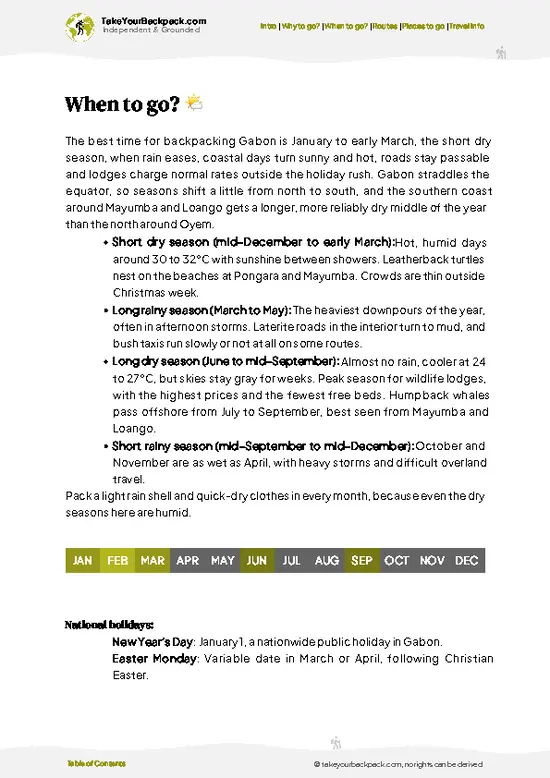
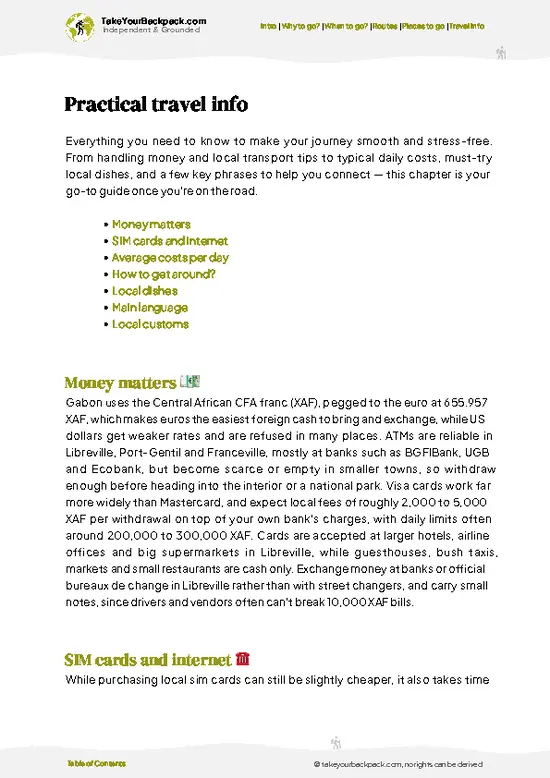
example page 0 from our offline Travel Guide for Gabon
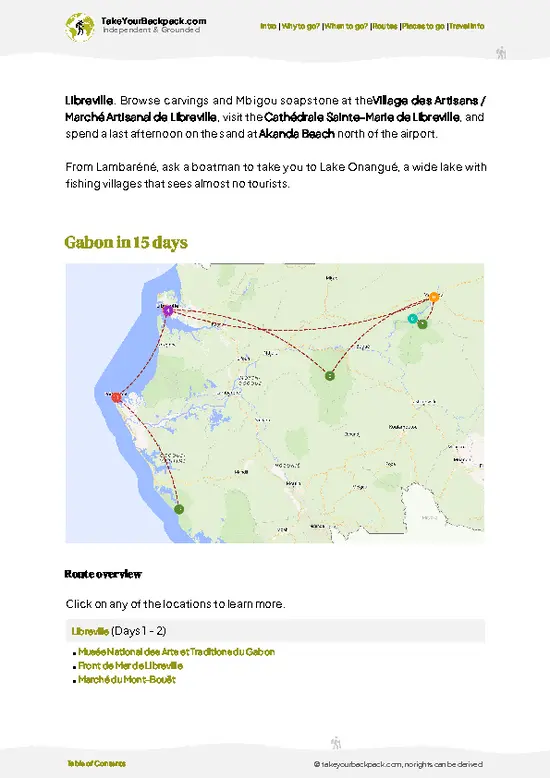
example page 1 from our offline Travel Guide for Gabon
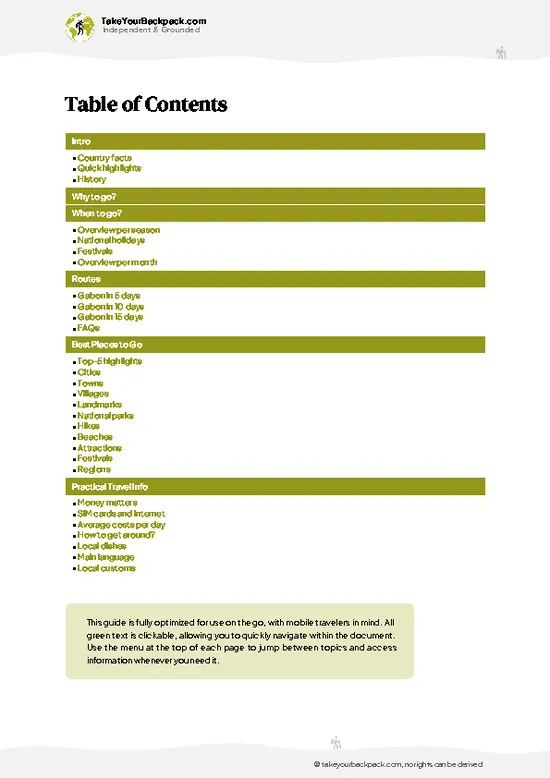
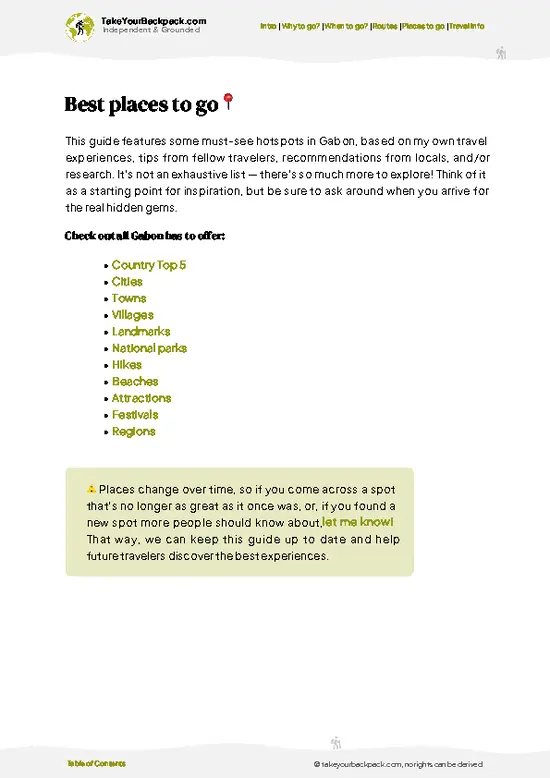
example page 2 from our offline Travel Guide for Gabon
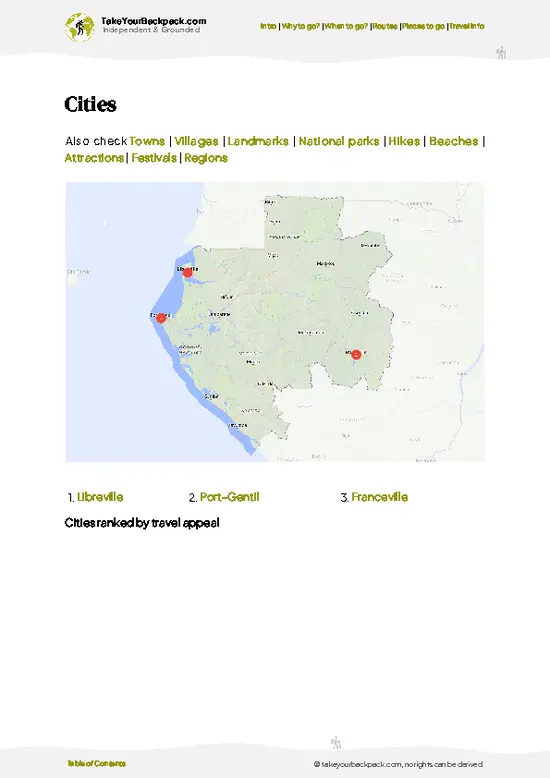
example page 3 from our offline Travel Guide for Gabon
example page 4 from our offline Travel Guide for Gabon
example page 5 from our offline Travel Guide for Gabon
example page 6 from our offline Travel Guide for Gabon
example page 7 from our offline Travel Guide for Gabon
Loading the map 🌍
CLICK TO FILTER
cities
towns
villages
landmarks
national parks
hikes
beaches
attractions
festivals
regions
SHOW COUNTRY’S BESTSHOW ALL

✨ Why go?
Ranked #1 region in Gabon
Reasons people choose to visit here

In the heart of Gabon, Ogooué-Ivindo is a backpacker’s playground that offers a rich tapestry of landscapes. You’ve got everything from dense rainforests to winding rivers, all within a stone’s throw of each other. This means you can dive into multiple experiences without the hassle of constant relocation.

Imagine waking up to the sounds of the jungle, then hopping on a canoe to explore the Ogooué River. You can easily switch gears from nature hikes to visiting local villages, soaking in the culture without feeling rushed. This region thrives on slow travel, allowing you to savor every moment.

Transport options are surprisingly flexible. You can catch a local taxi-brousse or rent a bike, giving you the freedom to roam at your own pace. This isn’t just about getting from point A to B; it’s … read more 👉
In the heart of Gabon, Ogooué-Ivindo is a backpacker’s playground that offers a rich tapestry of landscapes. You’ve got everything from dense rainforests to winding rivers, all within a stone’s throw of each other. This means you can dive into multiple experiences without the hassle of constant relocation.

Imagine waking up to the sounds of the jungle, then hopping on a canoe to explore the Ogooué River. You can easily switch gears from nature hikes to visiting local villages, soaking in the culture without feeling rushed. This region thrives on slow travel, allowing you to savor every moment.

Transport options are surprisingly flexible. You can catch a local taxi-brousse or rent a bike, giving you the freedom to roam at your own pace. This isn’t just about getting from point A to B; it’s about immersing yourself in the local vibe.

So, if you’re looking for a place where nature and culture collide seamlessly, Ogooué-Ivindo is your ticket. It’s a chance to experience Gabon like a local, not just another tourist.

💡 HighlightsTop highlights of Ogooué-Ivindo

  • Kongou Falls (Chutes de Kongou) — One of the most powerful river waterfalls in Central Africa, this thunderous, multi-tiered cascade on the Ivindo River is the signature natural spectacle of the region. The roar, spray and rainforest amphitheatre around it feel distinctly remote — the scale and the intact surrounding primary forest are what make Kongou unforgettable and hard to reproduce elsewhere.
  • Langoué Bai (Ivindo National Park) — A classic African forest “bai” (a big grassy clearing in the middle of rainforest) where forest elephants, sitatunga, buffalos and primates congregate to salt-lick and graze. The open, wildlife-packed clearing with raised observation platforms gives rare, close views of deep-forest species that you won’t get on a savanna safari.
  • Ivindo River canoe/boat expeditions
… read more 👉
  • Kongou Falls (Chutes de Kongou) — One of the most powerful river waterfalls in Central Africa, this thunderous, multi-tiered cascade on the Ivindo River is the signature natural spectacle of the region. The roar, spray and rainforest amphitheatre around it feel distinctly remote — the scale and the intact surrounding primary forest are what make Kongou unforgettable and hard to reproduce elsewhere.
  • Langoué Bai (Ivindo National Park) — A classic African forest “bai” (a big grassy clearing in the middle of rainforest) where forest elephants, sitatunga, buffalos and primates congregate to salt-lick and graze. The open, wildlife-packed clearing with raised observation platforms gives rare, close views of deep-forest species that you won’t get on a savanna safari.
  • Ivindo River canoe/boat expeditions — Paddling or taking a pirogue along the Ivindo is an experience: narrow rainforest channels, sudden rapids, kingfishers and hornbills, and the approach to hidden cascades. The river trip is both transport and wildlife-watching — you’ll see the forest in a way roads can’t deliver.
  • Makokou market and riverfront life — The provincial town of Makokou is the human gateway to the Ivindo. The market by the river is where you get fresh smoked fish, forest products, local crafts and a real sense of daily life — traders, boatmen and bush-harvest foods. It’s practical, noisy and endlessly useful for meeting people and arranging forest trips.
  • Mekambo and surrounding village trails — A smaller, less-visited town to the north of Makokou that’s a good base for local village visits, short forest walks and seeing logging-era relics. The town gives a quieter, more local counterpoint to the park zones and offers insight into how forest communities live and trade in the region.
  • Mingouli Falls (hidden gem) — A lesser-known cascade upstream from the main tourist routes on the Ivindo system. Smaller than Kongou but intimate and often deserted, Mingouli rewards the effort to reach it: forest pools, easy swimming in some seasons and a very local feel — a place where locals go to cool off and picnick.
  • Ipassa-area forest trails (hidden gem) — Short biodiversity trails and old research paths around the Makokou area that locals and naturalists use to see canopy birds, shy primates and unusual understory plants. They’re quieter than the headline park spots and give you a true “in-the-forest” day without the crowds.
  • Baka (Pygmy) cultural-foraging visits (hidden gem) — Small Baka community visits and foraging demonstrations near Makokou offer an authentic, respectful window into forest knowledge: tracking, edible plants, honey-harvesting and traditional songs. These encounters (when arranged through local guides and community programs) are culturally rich and can’t be replicated outside this part of Gabon’s rainforest belt.
  • Forest camping and night walks in Ivindo National Park — Staying at a riverside camp inside or adjacent to the park and doing guided night walks is a proper jungle experience: frogs and insects come alive, nocturnal primates and civets may be heard or seen, and the sense of being inside an uninterrupted rainforest is what sets Ivindo apart from tamer reserves.
  • Riverside smokehouses and fishing villages — Small riverside communities along the Ivindo where traditional smoking of catfish and freshwater fish still happens over open fires. Visiting these smokehouses and watching local fish-processing gives a grounded cultural snapshot — practical, sensory and tied to the river ecology that defines everyday life here.
Spotted a mistake or missing something? Contact us.

⌛️ 5 daysA smart one-week plan

Day 1: Libreville
Start your journey in Libreville, the capital. This city is your gateway to the wild. Spend the day acclimating and gathering supplies. The transport system here is straightforward, with taxis and buses connecting you to the main hubs. Stock up on essentials—snacks, water, and a local SIM card. The vibe is relaxed, but don’t linger too long; you’ll want to hit the road early tomorrow.

Day 2: Makokou
Catch a morning bus to Makokou. The ride takes about six hours, winding through lush landscapes. This is where the real adventure begins. Makokou is the last major stop before the deep jungle. The transport options dwindle here, so plan your next moves carefully. Explore the local market for fresh produce and chat with locals; they often have the best tips for navigating the … read more 👉
Day 1: Libreville
Start your journey in Libreville, the capital. This city is your gateway to the wild. Spend the day acclimating and gathering supplies. The transport system here is straightforward, with taxis and buses connecting you to the main hubs. Stock up on essentials—snacks, water, and a local SIM card. The vibe is relaxed, but don’t linger too long; you’ll want to hit the road early tomorrow.

Day 2: Makokou
Catch a morning bus to Makokou. The ride takes about six hours, winding through lush landscapes. This is where the real adventure begins. Makokou is the last major stop before the deep jungle. The transport options dwindle here, so plan your next moves carefully. Explore the local market for fresh produce and chat with locals; they often have the best tips for navigating the area.

Day 3: Ivindo National Park
From Makokou, hire a guide for a trip into Ivindo National Park. This is a must-do day. The park is a biodiversity hotspot, and your guide will help you spot wildlife that you’d miss on your own. The trails can be challenging, but the payoff is worth it. You’ll feel like you’re in a living postcard. Don’t forget to bring a waterproof bag for your gear; sudden downpours are common.

Day 4: Off-Path Reward: Bantu Village
Take a detour to a nearby Bantu village. This isn’t on the usual tourist path, but it’s a chance to connect with the local culture. Spend the day learning about traditional crafts and customs. The villagers are welcoming, and you’ll leave with a deeper understanding of the region. This experience is invaluable and enriches your trip.

Day 5: Return to Libreville
Head back to Libreville, retracing your steps. Use this time to reflect on your journey. The transport back is easier, and you’ll appreciate the comfort of the city after days in the wild. This final day is about winding down and soaking in the memories.

The must-do day? Day 3 in Ivindo National Park. It’s the heart of your adventure, where nature and culture collide, making every effort worthwhile.

🌤️ When to go?Weather, crowds, and seasonal trade-offs

  • Topic: Weather - The dry season from June to September is your golden window. Rainfall drops sharply, making trails less of a mudslide and wildlife spotting easier. The wet season (October to May) floods paths and rivers, turning your trek into a slog and limiting access to key spots.
  • Topic: Temperature - Expect highs around 28-30°C (82-86°F) during the dry months, with nights cooling to a comfortable 18-20°C (64-68°F). The wet season is warmer and stickier, often pushing 32°C (90°F) with humidity that can sap your energy fast.
  • Topic: Daylight Hours - Near the equator, daylight stays steady year-round, roughly 12 hours. This means no drastic shifts in your hiking schedule, but plan to start early to avoid afternoon heat and sudden tropical showers.
  • Topic: Crowds - Ogooué-Ivindo is off
… read more 👉
  • Topic: Weather - The dry season from June to September is your golden window. Rainfall drops sharply, making trails less of a mudslide and wildlife spotting easier. The wet season (October to May) floods paths and rivers, turning your trek into a slog and limiting access to key spots.
  • Topic: Temperature - Expect highs around 28-30°C (82-86°F) during the dry months, with nights cooling to a comfortable 18-20°C (64-68°F). The wet season is warmer and stickier, often pushing 32°C (90°F) with humidity that can sap your energy fast.
  • Topic: Daylight Hours - Near the equator, daylight stays steady year-round, roughly 12 hours. This means no drastic shifts in your hiking schedule, but plan to start early to avoid afternoon heat and sudden tropical showers.
  • Topic: Crowds - Ogooué-Ivindo is off the beaten path, so crowds are minimal year-round. However, the dry season attracts a handful of eco-tourists and researchers, so you’ll find a livelier vibe without losing that remote feel.
  • Topic: Seasonal Activities - Dry months open up river safaris and night walks to spot elusive forest elephants and gorillas. Wet season limits these but offers lush greenery and birdwatching for the patient.
  • Topic: Price Fluctuations - Expect higher prices during the dry season when demand peaks. Booking early can snag better rates, but last-minute deals pop up in the wet season if you’re flexible and ready for adventure.
Pro-tip: Aim for late June or early July—dry trails, fewer tourists, and the best chance to catch wildlife on the move before the mid-season rush.


source: climatestotravel.comJANJanuary: fair for travelingFEBFebruary: fair for travelingMARMarch: fair for travelingAPRApril: fair for travelingMAYMay: fair for travelingJUNJune: excellent for travelingJULJuly: excellent for travelingAUGAugust: highly recommended for travelingSEPSeptember: highly recommended for travelingOCTOctober: below average for travelingNOVNovember: below average for travelingDECDecember: below average for traveling
when-to-go

✈️ The backpacker research shortcutGabon Travel Guide

An offline-friendly backpacking guide with optimized travel routes, ranked highlights, transport advice, and the best areas to stay.
example page 0 from our offline Travel Guide for Gabon
example page 1 from our offline Travel Guide for Gabon
example page 2 from our offline Travel Guide for Gabon
example page 3 from our offline Travel Guide for Gabon
example page 4 from our offline Travel Guide for Gabon
example page 5 from our offline Travel Guide for Gabon
example page 6 from our offline Travel Guide for Gabon
example page 7 from our offline Travel Guide for Gabon
The digital guide (209 pages) contains:
✅ 47 highlights, ranked by travel appeal
✅ Optimized 5, 10 & 15-day travel routes
✅ Cities, national parks, landmarks, beaches
✅ How to get around
✅ Offline-friendly for travel without Wi-Fi
👉 Click to see all 30+ guide features

📅 Plan smarter in minutes, not weeks
✅ Month by month travel advice
✅ Festivals & national holidays
✅ Budget expectations

🗺️ Go to the right places, skip the overrated ones
✅ Honest pros & cons of destinations
✅ Top hikes, parks & viewpoints
✅ Lesser-known places most travelers miss
✅ Clear “worth it vs skip it” guidance

🛏️ Travel smoothly without rookie mistakes
✅ Best areas to stay
✅ Transport systems explained simply
✅ Common scams & safety advice
✅ SIM cards, money & practical tips

🌍 Understand the country, not just visit it
✅ Culture & traditions
✅ 52 Essential phrases & customs
✅ Festivals worth planning around
✅ Traveler-friendly historical context
✅ Insights that make places more meaningful

📱 Built for real travel conditions
✅ Fully downloadable PDF
✅ Works completely offline
✅ Optimized for phone use
✅ Useful in remote areas & buses
✅ Everything in one place
Stop searching, start planning
Get instant access to your full guide. 30‑day money-back guarantee.
+ Add another guide for just

By proceeding you agree to our terms.
Sent to your inbox immediately after payment • 100% Secure Checkout
Best Backpacking Travel Advisor 2025 tourism awardBest Backpacking
Travel Advisor
2025
What others say about Take Your Backpack Guides:
⭐⭐⭐⭐⭐
Fantastic, amazing amount of information!
⭐⭐⭐⭐⭐
My goodness this is amazing, it's what I've been looking for hats off too you!
⭐⭐⭐⭐⭐
I think this is absolutely BRILLIANT
⭐⭐⭐⭐
Very complete and informative. It's still missing places, but I gotta to commend you
⭐⭐⭐⭐⭐
This is truly amazing, thank you, can't wait to explore it with my kids!
⭐⭐⭐⭐⭐
Awesome resource, thank you!
⭐⭐⭐⭐⭐
This is amazing! Can't wait to explore the ones I haven't seen
⭐⭐⭐⭐
I love this! Well done, great idea.
⭐⭐⭐⭐⭐
Thanks for taking the time to make this gem!
⭐⭐⭐⭐⭐
This might be the best website I've ever seen.
⭐⭐⭐⭐⭐
Congratulations, and thank you so much for your work; it's incredibly valuable.
⭐⭐⭐⭐
In all seriousness I think you did a great job pointing out the important spots
⭐⭐⭐⭐⭐
10/10 very good
⭐⭐⭐⭐⭐
As someone who's only just starting to visit regularly this is awesome, thank you.
⭐⭐⭐⭐
Thank you very much! I'm going to visit my dad, it's going to be very useful!
⭐⭐⭐⭐⭐
This is really cool! We'll be travelling for the first time and this definitely come in handy.
⭐⭐⭐⭐⭐
You are now our minister of culture, congratulations 👨‍💼
⭐⭐⭐⭐⭐
Just wanted to tell you that this is a pearl! Going to follow your recommendations.
⭐⭐⭐⭐⭐
This is so cool. I'll definitely be using the resource for my travels soon.
⭐⭐⭐⭐⭐
This is very impressive! Good work.
⭐⭐⭐⭐⭐
This is an amazing and informative site. Very well done!

🛏️ Where to stay?How to pick the right area

When you’re roaming through Ogooué-Ivindo, Gabon, you’ll want to land in spots that balance safety, social vibes, and budget-friendliness. Let’s break it down.

Start in Mouila, the region’s capital. It’s a hub for backpackers, with a lively market scene and friendly locals. You’ll find plenty of opportunities to mingle, whether you’re sharing a meal or swapping stories with fellow travelers. The laid-back atmosphere makes it easy to relax after a day of exploring.

Next up is Lékoni, a charming town that’s often overlooked. It’s a gateway to stunning natural sights, and the local community is … read more 👉
When you’re roaming through Ogooué-Ivindo, Gabon, you’ll want to land in spots that balance safety, social vibes, and budget-friendliness. Let’s break it down.

Start in Mouila, the region’s capital. It’s a hub for backpackers, with a lively market scene and friendly locals. You’ll find plenty of opportunities to mingle, whether you’re sharing a meal or swapping stories with fellow travelers. The laid-back atmosphere makes it easy to relax after a day of exploring.

Next up is Lékoni, a charming town that’s often overlooked. It’s a gateway to stunning natural sights, and the local community is welcoming. You can easily connect with guides for hikes or river trips, making it a perfect base for adventure. Plus, the cost of living is low, so your wallet will thank you.

Don’t miss Lastoursville either. It’s a bit off the beaten path, but that’s where the magic happens. The town has a unique character, and you’ll find a mix of locals and travelers. The social scene is vibrant, especially around the small eateries where you can taste local dishes and share laughs.

Each of these spots offers a different flavor of Ogooué-Ivindo, so you can choose what fits your vibe. Embrace the trade-offs, and you’ll walk away with stories worth telling.

🚌 Getting aroundHow to get around Ogooué-Ivindo

Ogooué-Ivindo is a realm where time bends and the rhythm of travel dances to its own beat. Forget the rigid schedules of urban life; here, it’s all about intuition and the occasional stroke of luck. You might find yourself waiting for a ride that shows up late or hopping on a shared taxi that’s more crowded than a market on a Saturday. The air is thick with the scent of adventure, and every journey feels like a mini-quest. You’ll navigate through lush jungles and winding rivers, where the only certainty is that you’ll be immersed in the wild beauty of Gabon.

Here’s the lowdown on getting around Ogooué-Ivindo without breaking the bank:
  • Shared Taxis: These are your go-to for short distances. Expect to pay around 1,000-3,000 CFA for a ride. They run from early morning until sunset, but don’t
… read more 👉
Ogooué-Ivindo is a realm where time bends and the rhythm of travel dances to its own beat. Forget the rigid schedules of urban life; here, it’s all about intuition and the occasional stroke of luck. You might find yourself waiting for a ride that shows up late or hopping on a shared taxi that’s more crowded than a market on a Saturday. The air is thick with the scent of adventure, and every journey feels like a mini-quest. You’ll navigate through lush jungles and winding rivers, where the only certainty is that you’ll be immersed in the wild beauty of Gabon.

Here’s the lowdown on getting around Ogooué-Ivindo without breaking the bank:
  • Shared Taxis: These are your go-to for short distances. Expect to pay around 1,000-3,000 CFA for a ride. They run from early morning until sunset, but don’t expect a strict schedule; they leave when full. Comfort varies, but you’ll get a local experience.
  • Minibuses (Transports en Commun): Ideal for budget travelers, these can take you between towns. Fares range from 2,000-5,000 CFA depending on the distance. They’re usually packed, but they’re a great way to meet locals. Just be prepared for a bumpy ride!
  • Motorbike Taxis (Benskin): For a quick hop, these are your best bet. Prices start at around 500 CFA for short trips. They’re faster and can navigate through traffic better than cars. Just make sure to negotiate the fare beforehand and wear a helmet!
  • Boat Services: If you’re feeling adventurous, consider taking a boat along the rivers. Prices vary widely based on distance and type of boat, but expect to pay around 5,000-10,000 CFA for a scenic ride. It’s a slower option, but the views are worth it.
  • Car Rentals: For those who want to explore at their own pace, renting a car can cost around 30,000 CFA per day. This gives you the freedom to venture off the beaten path, but be ready for rough roads and limited signage.

Master tactical tip: Always ask locals about the best times to travel. They know the ins and outs of the region and can help you avoid long waits or crowded rides. Embrace the chaos, and you’ll find that the journey is just as rewarding as the destination.

🍲 FoodWhat to Eat & Drink

In the heart of Ogooué-Ivindo, food is more than sustenance; it’s a vibrant celebration of culture. Dive into manioc, a starchy root that’s a staple here, often served as a side dish or mashed into a comforting porridge. Pair it with sauce gombo, a rich okra stew that’s both hearty and flavorful. Don’t miss out on poulet braisé, grilled chicken marinated in local spices, smoky and tender, often enjoyed with a side of fried plantains.

For drinks, seek out palm wine, a sweet, fermented delight tapped fresh from the palm trees. It’s a communal experience, often shared among friends. If you’re in the mood for something refreshing, try bissap, a hibiscus drink that’s tart and invigorating, perfect for the humid climate.

When it comes to dining, embrace the local vibe at bustling markets. Here, … read more 👉
In the heart of Ogooué-Ivindo, food is more than sustenance; it’s a vibrant celebration of culture. Dive into manioc, a starchy root that’s a staple here, often served as a side dish or mashed into a comforting porridge. Pair it with sauce gombo, a rich okra stew that’s both hearty and flavorful. Don’t miss out on poulet braisé, grilled chicken marinated in local spices, smoky and tender, often enjoyed with a side of fried plantains.

For drinks, seek out palm wine, a sweet, fermented delight tapped fresh from the palm trees. It’s a communal experience, often shared among friends. If you’re in the mood for something refreshing, try bissap, a hibiscus drink that’s tart and invigorating, perfect for the humid climate.

When it comes to dining, embrace the local vibe at bustling markets. Here, you’ll find street vendors serving up steaming bowls of fufu and grilled fish, all while the air is thick with the aroma of spices. Casual cafés offer a laid-back atmosphere where you can sip on coffee and watch the world go by.

Etiquette is simple: share your food and enjoy the company. Eating with your hands is common, so don’t hesitate to dig in. Just remember, it’s all about the experience, the flavors, and the connections you make along the way.

FAQFrequently asked questions about Ogooué-Ivindo

5 to 7 days are ideal to explore Ogooué-Ivindo thoroughly, allowing time for key sites like Ivindo National Park and Lope National Park. This duration covers wildlife viewing, hiking, and cultural visits without rushing.
Without a car, travel options are limited but include local bush taxis and river transport on the Ogooué River. Walking and arranging rides with locals are common for short distances, but infrastructure is sparse and schedules irregular.
Ogooué-Ivindo is known for its rich biodiversity, especially in Ivindo National Park, home to waterfalls like Kongou Falls and diverse wildlife including forest elephants and gorillas. It is a prime destination for eco-tourism and rainforest exploration in Gabon.
⚠️ Things can change over time, so always validate details locally before you go.

Ideas for continuing your journey

Ogooué-Ivindo isn’t the only highlight in Gabon. Explore all what Gabon has to offer.
Country photo of Gabon

We 💚 feedbackFinal thoughts on visiting Ogooué-Ivindo

Ogooué-Ivindo has a raw, electric vibe that feels like stepping into a living postcard. The best surprise? The locals’ warmth; they’ll invite you into their world without hesitation. Don’t miss the river trips at dawn—wildlife wakes up in a way that’ll stick with you. Just a heads-up: the roads can be tricky, so don’t rush. Embrace the slow pace; it’s part of the charm. You’re not just visiting; you’re experiencing something real. Trust me, it’s worth every moment.

✍️ Help improve this page!
The information on this page is based on in-depth research, insights shared by experienced travelers, and feedback from the local travel community in Gabon. While every effort is made to keep the information accurate and current, conditions can change — so if you spot anything incorrect or outdated, please get in touch.


🙋‍♂️ Give feedback

👋 Meet the founderWho’s Behind Take Your Backpack?

Johan, backpacker and founder of TakeYourBackpackHi, I’m Johan (Netherlands 🇳🇱), the creator of TakeYourBackpack. Over the past 3 decades, I’ve backpacked through 90+ countries across six continents, gaining extensive experience with independent travel, long-term trips, and overland routes.

This site is built on a combination of firsthand travel experience and carefully curated insights from other backpackers. Many guides are based on places I’ve personally visited, while others bring together tips, observations, and practical advice shared by trusted travelers I’ve met along the way.

The goal is to provide realistic, experience-driven guidance — not generic itineraries — so you can explore destinations with better context, clearer expectations, and more confidence.