×

Gabon🇬🇦 | national parksPongara National Parksea turtle nesting, coastal forest, river delta | things to do and best time to go

Explore Moukalaba-Doudou National ParkExplore Birougou National Park

Backpacking in Pongara
👍 Recommendednational park ranked #5
By Johan Kruseman 🇳🇱 | Updated July 12, 2026

Most travelers only realize after the fact that Pongara National Park’s real gift is its proximity to Libreville—saving you a full day’s slog compared to Gabon’s more remote reserves. Pongara sits just across the estuary from the capital, making it the rare West African park you can reach by boat in under an hour. For backpackers, this means less time and money lost in transit, and more spent on the park’s wild Atlantic beaches, mangrove forests, and the chance (if you hit the right season) to watch sea turtles nesting at night. Trails are sandy and straightforward, but don’t expect mountain drama—Pongara is about subtlety: tidal creeks, birdlife, and the hush of the surf. Accommodation is basic, camping is possible but rustic, and the entrance fee is moderate by Gabon standards. It’s quieter than Loango or Ivindo, but also less dramatic—think solitude and soft horizons, not safari spectacle.

Discover everything you want to know in the 📖 Gabon Travel Guide.


Get your Gabon guide
52 ranked highlights, routes & tips, works offline (222 pages)
Loading the map 🌍
CLICK TO FILTER
cities
towns
villages
landmarks
national parks
hikes
beaches
attractions
festivals
regions
SHOW COUNTRY’S BESTSHOW ALL

✨ Why go?
Ranked #5 national park in Gabon
Reasons people choose to explore here

Backpackers flock to Pongara National Park for its blend of independent exploration and affordable options. The park offers a range of budget camping spots and nearby hostels, making it easy to stretch your funds while soaking in the lush surroundings.

With varied trails, you can choose between leisurely strolls along the coast or more challenging hikes through dense forest. This diversity caters to different skill levels and interests, ensuring everyone finds their stride.

What sets Pongara apart is its suitability for self-guided travelers. You don’t need to rely on tours to experience its beauty; the well-marked paths allow you to navigate at your own pace. Just be mindful of the wildlife—keep your distance and respect their space.

By opting for this park, you preserve your energy … read more 👉
Backpackers flock to Pongara National Park for its blend of independent exploration and affordable options. The park offers a range of budget camping spots and nearby hostels, making it easy to stretch your funds while soaking in the lush surroundings.

With varied trails, you can choose between leisurely strolls along the coast or more challenging hikes through dense forest. This diversity caters to different skill levels and interests, ensuring everyone finds their stride.

What sets Pongara apart is its suitability for self-guided travelers. You don’t need to rely on tours to experience its beauty; the well-marked paths allow you to navigate at your own pace. Just be mindful of the wildlife—keep your distance and respect their space.

By opting for this park, you preserve your energy and budget for the moments that truly matter, like watching a sunset over the ocean or spotting a rare bird in the canopy.
Want to include Pongara National Park in your Gabon route?
Create a personalized Gabon itinerary that includes Pongara National Park and the places that fit your trip — based on your travel style, budget, and available time. Get your route in seconds.

Generate my trip

💡 HighlightsPlaces and moments you shouldn't skip

  • Mangrove estuary at the Komo River mouth — a tangled maze of mangroves that defines the park: great for slow boat trips, learning how estuaries work, and spotting crabs, waders and the occasional crocodile sliding between roots. The shifting channels and reflections make it a photographer’s treat at low light.
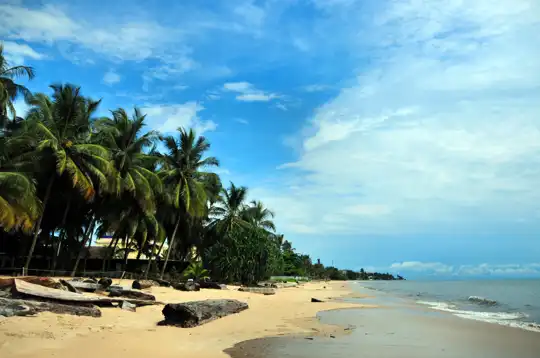
  • Long, empty Atlantic beaches and sand dunes — miles of raw shoreline and crescent dunes that feel utterly remote despite being close to Libreville. Perfect for easy beach walks, camping (with permission), and dramatic sunset views when the light turns the sand and surf orange.
  • Sea turtle nesting sites — Pongara is an important nesting area for marine turtles (including leatherbacks and olive ridleys), especially in nesting season, when you can sometimes see tracks and nests on the
read more 👉
  • Mangrove estuary at the Komo River mouth — a tangled maze of mangroves that defines the park: great for slow boat trips, learning how estuaries work, and spotting crabs, waders and the occasional crocodile sliding between roots. The shifting channels and reflections make it a photographer’s treat at low light.
  • Long, empty Atlantic beaches and sand dunes — miles of raw shoreline and crescent dunes that feel utterly remote despite being close to Libreville. Perfect for easy beach walks, camping (with permission), and dramatic sunset views when the light turns the sand and surf orange.
  • Sea turtle nesting sites — Pongara is an important nesting area for marine turtles (including leatherbacks and olive ridleys), especially in nesting season, when you can sometimes see tracks and nests on the beach or join guided night patrols run by local conservation groups.
  • Coastal rainforest and short hiking trails — the park contains pockets of lowland forest that you can explore on foot: expect shady trails, loud birdlife, and a decent chance to see monkeys and small mammals if you move quietly at dawn or dusk.
  • Birdwatching hotspots — from mangrove specialists and shorebirds on the tidal flats to forest species inland, Pongara punches above its weight for bird diversity. Bring binoculars for kingfishers, herons, raptors and seasonal migrants.
  • Estuary wildlife and dolphins — boat rides often turn up dolphins playing in the Komo estuary and a rich mix of fish and crustaceans; these boat trips are one of the best ways to feel the park’s marine connection without needing any fancy gear.
  • Tidally exposed lagoons and mudflats — when the tide drops you’ll see a different world: exposed flats full of feeding shorebirds, fiddler crabs, and dramatic patterns in the sand—great for short exploratory walks and a quieter side of the park.
Spotted a mistake or missing something? Contact us.

Things to do near Pongara National Park

Ratings based on Tripadvisor reviews. When you book through this link, you support our work at no extra cost to you.

🌤️ When to go?Seasonal considerations and timing


  • Weather: Pongara National Park experiences a tropical climate with a distinct wet season from October to May. Heavy rains can flood trails and limit wildlife spotting, so aim for the dry season between June and September for easier trekking and more reliable conditions.

  • Temperature: Temperatures hover around 24–30°C (75–86°F) year-round. The dry season tends to be slightly cooler and less humid, making physical activity more comfortable and reducing the risk of heat exhaustion.

  • Daylight Hours: Near the equator, daylight is consistent, roughly 12 hours daily. This stability means you don’t have to adjust your plans drastically by season, but early starts are still smart to avoid midday heat.

  • Crowds: Pongara is off the beaten path, so crowds are minimal year-round. However, the dry
read more 👉

  • Weather: Pongara National Park experiences a tropical climate with a distinct wet season from October to May. Heavy rains can flood trails and limit wildlife spotting, so aim for the dry season between June and September for easier trekking and more reliable conditions.

  • Temperature: Temperatures hover around 24–30°C (75–86°F) year-round. The dry season tends to be slightly cooler and less humid, making physical activity more comfortable and reducing the risk of heat exhaustion.

  • Daylight Hours: Near the equator, daylight is consistent, roughly 12 hours daily. This stability means you don’t have to adjust your plans drastically by season, but early starts are still smart to avoid midday heat.

  • Crowds: Pongara is off the beaten path, so crowds are minimal year-round. However, the dry season sees a slight uptick in visitors, mostly researchers and eco-tourists, so expect more activity but never overwhelming numbers.

  • Seasonal Activities: Dry months are best for hiking and wildlife viewing, especially spotting nesting sea turtles on the beaches. Wet season limits access but brings lush greenery and bird migrations, which might appeal to specialized interests.

  • Price Fluctuations: Accommodation and guide fees tend to rise during the dry season due to higher demand. Booking in advance can lock in better rates, especially for the June–September window.


Pro-tip: Prioritize the dry season for practical travel and wildlife encounters, but if you’re after solitude and lower costs, the shoulder months of May or October offer a workable compromise.


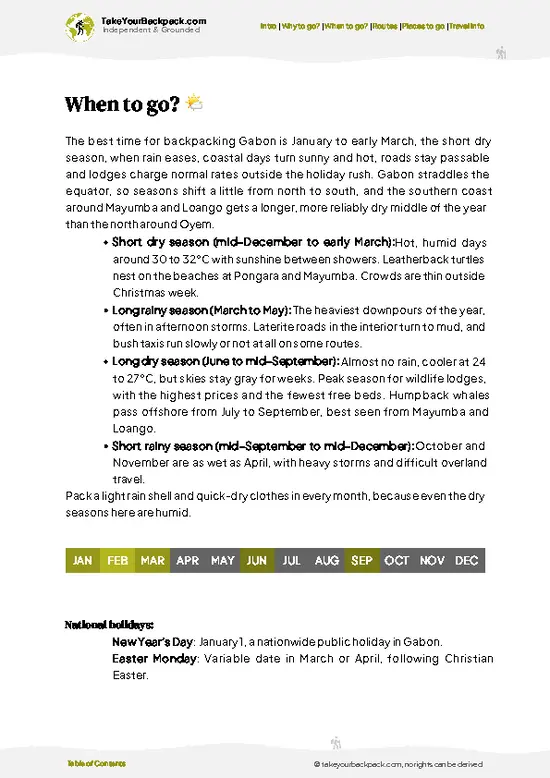
source: climatestotravel.comJANJanuary: fair for travelingFEBFebruary: fair for travelingMARMarch: fair for travelingAPRApril: fair for travelingMAYMay: good for travelingJUNJune: excellent for travelingJULJuly: excellent for travelingAUGAugust: excellent for travelingSEPSeptember: excellent for travelingOCTOctober: good for travelingNOVNovember: fair for travelingDECDecember: fair for traveling
when-to-go

✈️ The backpacker research shortcutGabon Travel Guide

An offline-friendly backpacking guide with optimized travel routes, ranked highlights, transport advice, and the best areas to stay.
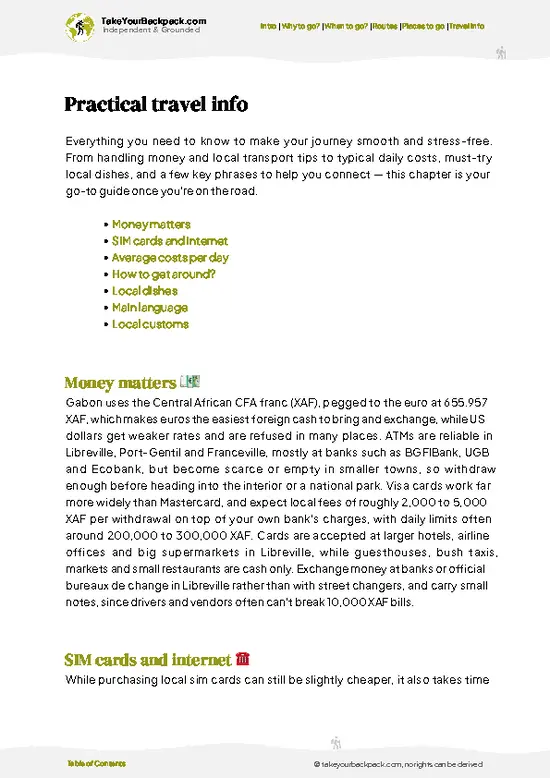
example page 0 from our offline Travel Guide for Gabon
example page 1 from our offline Travel Guide for Gabon
example page 2 from our offline Travel Guide for Gabon
example page 3 from our offline Travel Guide for Gabon
example page 4 from our offline Travel Guide for Gabon
example page 5 from our offline Travel Guide for Gabon
example page 6 from our offline Travel Guide for Gabon
example page 7 from our offline Travel Guide for Gabon
The digital guide (222 pages) contains:
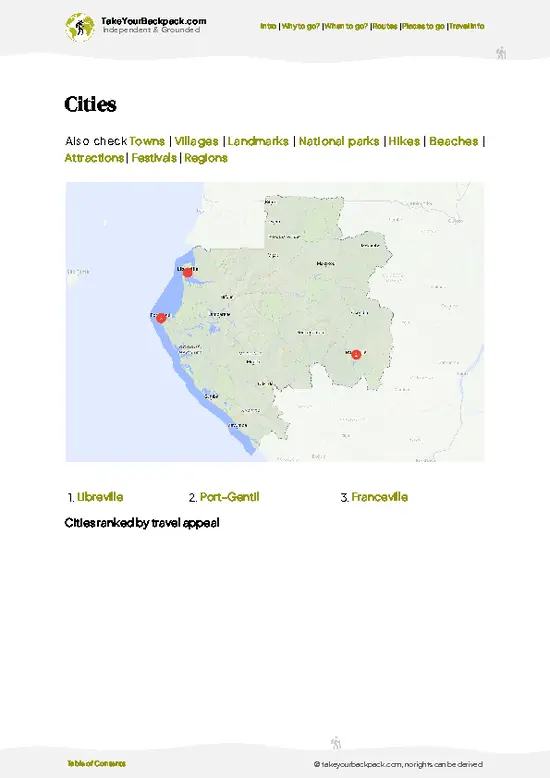
52 highlights, ranked by travel appeal
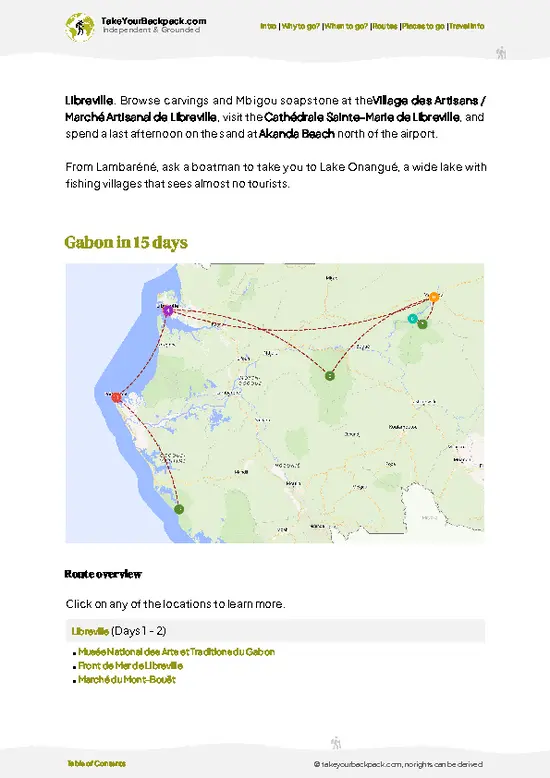
Optimized 5, 10 & 15-day travel routes
Cities, national parks, landmarks, beaches
How to get around
Offline-friendly for travel without Wi-Fi
👉 Click to see all 30+ guide features

📅 Plan smarter in minutes, not weeks
Month by month travel advice
Festivals & national holidays
Budget expectations

🗺️ Go to the right places, skip the overrated ones
Honest pros & cons of destinations
Top hikes, parks & viewpoints
Lesser-known places most travelers miss
Clear “worth it vs skip it” guidance

🛏️ Travel smoothly without rookie mistakes
Best areas to stay
Transport systems explained simply
Common scams & safety advice
SIM cards, money & practical tips

🌍 Understand the country, not just visit it
Culture & traditions
52 Essential phrases & customs
Festivals worth planning around
Traveler-friendly historical context
Insights that make places more meaningful

📱 Built for real travel conditions
Fully downloadable PDF
Works completely offline
Optimized for phone use
Useful in remote areas & buses
Everything in one place
Save weeks of stressful planning
Get instant access to your full guide. 30‑day money-back guarantee.


By proceeding you agree to our terms.
Sent to your inbox immediately after payment • 100% Secure Checkout
Best Backpacking Travel Advisor 2025 tourism awardBest Backpacking
Travel Advisor
2025
What others say about Take Your Backpack Guides:
⭐⭐⭐⭐⭐
Fantastic, amazing amount of information!
⭐⭐⭐⭐⭐
My goodness this is amazing, it's what I've been looking for hats off too you!
⭐⭐⭐⭐⭐
I think this is absolutely BRILLIANT
⭐⭐⭐⭐
Very complete and informative. It's still missing places, but I gotta to commend you
⭐⭐⭐⭐⭐
This is truly amazing, thank you, can't wait to explore it with my kids!
⭐⭐⭐⭐⭐
Awesome resource, thank you!
⭐⭐⭐⭐⭐
This is amazing! Can't wait to explore the ones I haven't seen
⭐⭐⭐⭐
I love this! Well done, great idea.
⭐⭐⭐⭐⭐
Thanks for taking the time to make this gem!
⭐⭐⭐⭐⭐
This might be the best website I've ever seen.
⭐⭐⭐⭐⭐
Congratulations, and thank you so much for your work; it's incredibly valuable.
⭐⭐⭐⭐
In all seriousness I think you did a great job pointing out the important spots
⭐⭐⭐⭐⭐
10/10 very good
⭐⭐⭐⭐⭐
As someone who's only just starting to visit regularly this is awesome, thank you.
⭐⭐⭐⭐
Thank you very much! I'm going to visit my dad, it's going to be very useful!
⭐⭐⭐⭐⭐
This is really cool! We'll be travelling for the first time and this definitely come in handy.
⭐⭐⭐⭐⭐
You are now our minister of culture, congratulations 👨‍💼
⭐⭐⭐⭐⭐
Just wanted to tell you that this is a pearl! Going to follow your recommendations.
⭐⭐⭐⭐⭐
This is so cool. I'll definitely be using the resource for my travels soon.
⭐⭐⭐⭐⭐
This is very impressive! Good work.
⭐⭐⭐⭐⭐
This is an amazing and informative site. Very well done!

🛏️ Where to stay?How to pick the right area

Pongara National Park is a treasure for backpackers, but your accommodation options are limited. Inside the park, there are no formal lodges or hotels. Instead, you’ll find basic campsites where you can pitch your tent. This is a great way to immerse yourself in the sounds of the jungle, but be prepared for the elements. Bring your own gear and supplies, as amenities are sparse.

For a bit more comfort, head to nearby Libreville, about an hour away. Here, you’ll find budget-friendly guesthouses and hostels that cater to backpackers. Look for places like the Hotel Le Relais or the Auberge de la … read more 👉
Pongara National Park is a treasure for backpackers, but your accommodation options are limited. Inside the park, there are no formal lodges or hotels. Instead, you’ll find basic campsites where you can pitch your tent. This is a great way to immerse yourself in the sounds of the jungle, but be prepared for the elements. Bring your own gear and supplies, as amenities are sparse.

For a bit more comfort, head to nearby Libreville, about an hour away. Here, you’ll find budget-friendly guesthouses and hostels that cater to backpackers. Look for places like the Hotel Le Relais or the Auberge de la Lune, which offer decent rates and a chance to recharge before heading back into the wild.

Keep in mind that transportation can be tricky. Arrange your rides in advance to avoid delays. This way, you preserve your energy and budget for the real adventure—exploring the park’s rich biodiversity and stunning landscapes.

👛 Costs (as of 22 May 2026)Travel costs and budget guide for Pongara

Visiting Pongara National Park in Gabon can be an incredible experience, but it’s essential to be aware of the costs involved to avoid any surprises.

Entry fees for the park typically range from €10 to €20 (about $11 to $22). This fee grants you access to the park’s stunning landscapes and wildlife. However, keep in mind that this is just the starting point.

If you’re planning to hire a guide, which is highly recommended for a richer experience, expect to pay between €30 and €50 ($33 to $55) for a half-day tour. Full-day tours can go up to €100 ($110). Guides not only enhance your understanding of the ecosystem but also help navigate the trails safely.

Transportation is another factor. If you’re coming from Libreville, a taxi-brousse (shared minibus) will cost around €10 ($11) one way. … read more 👉
Visiting Pongara National Park in Gabon can be an incredible experience, but it’s essential to be aware of the costs involved to avoid any surprises.

Entry fees for the park typically range from €10 to €20 (about $11 to $22). This fee grants you access to the park’s stunning landscapes and wildlife. However, keep in mind that this is just the starting point.

If you’re planning to hire a guide, which is highly recommended for a richer experience, expect to pay between €30 and €50 ($33 to $55) for a half-day tour. Full-day tours can go up to €100 ($110). Guides not only enhance your understanding of the ecosystem but also help navigate the trails safely.

Transportation is another factor. If you’re coming from Libreville, a taxi-brousse (shared minibus) will cost around €10 ($11) one way. Private transfers can be significantly more, ranging from €50 to €100 ($55 to $110), depending on your negotiation skills and the vehicle type.

Accommodation options vary. Basic lodges near the park start at around €30 ($33) per night, while more comfortable options can reach €100 ($110) or more. Always check what’s included; some places might charge extra for meals or amenities.

Lastly, budget for food. Local eateries are affordable, with meals costing about €5 to €10 ($6 to $11). If you opt for dining at lodges or upscale restaurants, prices can easily double.

In summary, a day trip to Pongara National Park can range from €50 to €150 ($55 to $165) per person, depending on your choices. Planning ahead and understanding these costs will help you focus on enjoying the park without financial stress.
⚠️ Prices can change and everyone travels differently, so take this as a rough guide. Hope it helps you plan your adventure!

🥾 TrailsHiking Pongara national park: highlights and difficulty

Pongara National Park is a hidden gem in Gabon, offering a mix of coastal and forest hikes that are pretty breathtaking. You’ll find yourself wandering through lush mangrove forests and along stunning beaches where the ocean meets the land. The wildlife is a treat, too; keep your eyes peeled for monkeys swinging above you and the occasional sea turtle if you’re lucky.

While the park isn’t crisscrossed with trails like some other national parks, there are a few spots worth checking out. One of the highlights is the Pongara Trail, which gives you a taste of the diverse ecosystem.
  • Length: 8 km
  • Estimated
read more 👉
Pongara National Park is a hidden gem in Gabon, offering a mix of coastal and forest hikes that are pretty breathtaking. You’ll find yourself wandering through lush mangrove forests and along stunning beaches where the ocean meets the land. The wildlife is a treat, too; keep your eyes peeled for monkeys swinging above you and the occasional sea turtle if you’re lucky.

While the park isn’t crisscrossed with trails like some other national parks, there are a few spots worth checking out. One of the highlights is the Pongara Trail, which gives you a taste of the diverse ecosystem.
  • Length: 8 km
  • Estimated Duration: 3-4 hours
  • Difficulty Level: Moderate
  • Key Features: Mangroves, coastal views, diverse wildlife
  • Terrain: Mixed, with some sandy stretches and uneven forest paths

Getting to the park is relatively straightforward. You can catch a taxi-brousse from Libreville, which is the capital, and it’s about an hour’s ride. Just be prepared for a bit of a wait at the station, as they tend to leave when full. As for crowds, it’s not usually packed, so you can enjoy the tranquility. Entrance fees are quite reasonable, typically around $10, but it’s a good idea to check for any updates before you go.
⚠️ Hiking info can sometimes be outdated or inaccurate. Before you hit the trail, check the latest conditions with locals. If you do spot anything that's off, I'd love to hear from you, so I can update it for fellow travelers.

🛡️ SafetyStaying Safe: What Travelers Should Know

Pongara National Park offers a generally straightforward hiking experience, but a few realities can catch you off guard. The weather can shift quickly; afternoon rains are common, so pack a reliable rain jacket and quick-dry gear. Trails are well-marked, but some sections can be muddy and uneven, so sturdy footwear is essential.

Wildlife encounters, like spotting monkeys or various bird species, are thrilling, but keep your distance. Never feed animals; it disrupts their natural behavior.

Timing matters—early mornings are best for wildlife activity and cooler temperatures. Stay hydrated, and pace yourself, especially in humid conditions. With a bit of preparation and respect for the environment, you’ll preserve your energy and budget for the moments that truly matter.

Other Gabonese national parks near Pongara

Explore more nearby:


💡 Not sure where to go next?
Create a personalized itinerary for Gabon including Pongara and the places that fit your trip.

Generate my itinerary

👉 Discover all national parks

Or checkout all Gabon has to offer (think cities, towns, villages, national parks, hikes, beaches, festivals)
Country photo of Gabon

We 💚 feedbackSumming up the experience

Pongara National Park is a wild, unfiltered experience. Expect to share the trails with monkeys and the occasional elephant, but don’t underestimate the mud—bring sturdy boots. The best surprise? The quiet moments on the beach at sunset, where the ocean meets the forest. Just be aware that the rainy season can turn paths into swamps, so plan your visit wisely. Embrace the unpredictability; it’s part of the adventure.

✍️ Help improve this page!
The information on this page is based on in-depth research, insights shared by experienced travelers, and feedback from the local travel community in Gabon. While every effort is made to keep the information accurate and current, conditions can change — so if you spot anything incorrect or outdated, please get in touch.


🙋‍♂️ Give feedback

👋 Meet the founderWho’s Behind Take Your Backpack?

Johan, backpacker and founder of TakeYourBackpackHi, I’m Johan (Netherlands 🇳🇱), the creator of TakeYourBackpack. Over the past decade, I’ve backpacked through 80+ countries across six continents, gaining extensive experience with independent travel, long-term trips, and overland routes.

This site is built on a combination of firsthand travel experience and carefully curated insights from other backpackers. Many guides are based on places I’ve personally visited, while others bring together tips, observations, and practical advice shared by trusted travelers I’ve met along the way.

The goal is to provide realistic, experience-driven guidance — not generic itineraries — so you can explore destinations with better context, clearer expectations, and more confidence.

Get full Gabon guide •
Instant download • 52 highlights • Full Offline guide