×

Germany🇩🇪 | hikesEifelsteigvolcanic lakes, moorland, remote plateaus | things to do and best time to go

Explore MalerwegExplore Albsteig

Backpacking in Eifelsteig
🏆 Top pickhike ranked #2
By Johan Kruseman 🇳🇱 | Updated October 15, 2026

You have to choose on the Eifelsteig: commit to the full 313 km from Aachen to Trier, or cherry-pick a couple of stages and keep it casual. That choice matters, because this trail in western Germany, running through the Eifel region between Cologne and the Luxembourg border, rewards slow, steady walkers more than peak-baggers. The Eifelsteig strings together forest, moorland, volcanic lakes, castle ridges, and quiet farm villages; nothing is jaw-on-the-floor every minute, but the rhythm builds. It’s moderate rather than brutal, with rolling ups and downs that sneak up on your legs after a few days. Public transport is a big plus: you can reach trailheads like Aachen, Monschau, or Gerolstein by train and bus without stress. Compared with flashier German routes like the Rheinsteig or Harz Witches’ Trail, the Eifelsteig feels quieter, more lived-in; less drama, more slow-burn satisfaction and that end-of-day beer in a sleepy Gasthaus.

Discover everything you want to know in the 📖 Germany Travel Guide.
Best time to go: March - October
Duration: 12 days
Distance: 313 kilometers
Total ascent: 3,200 meters


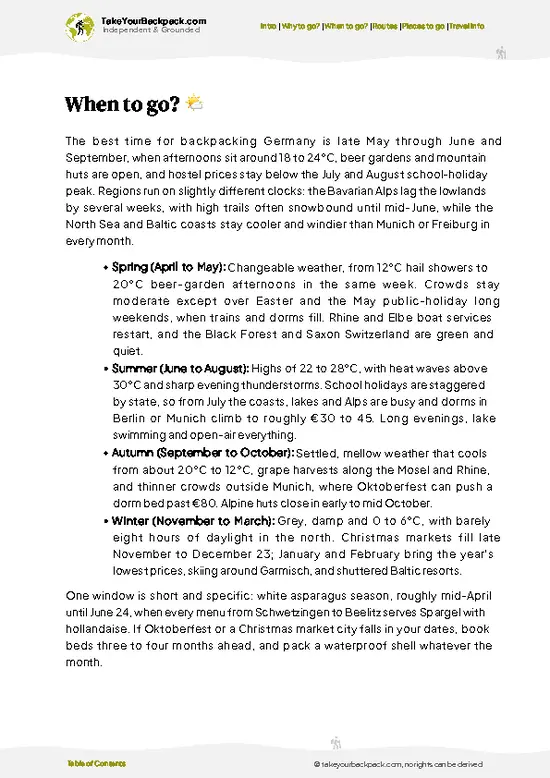
example page 0 from our offline Travel Guide for Germany
example page 1 from our offline Travel Guide for Germany
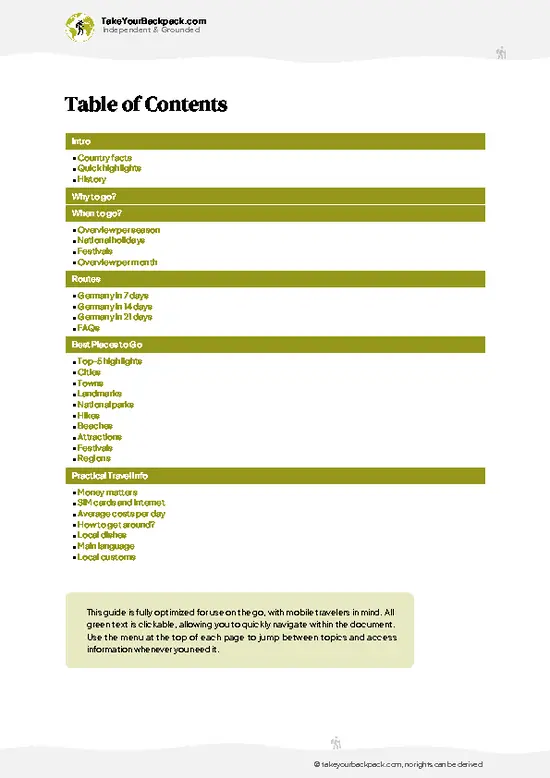
example page 2 from our offline Travel Guide for Germany
example page 3 from our offline Travel Guide for Germany
example page 4 from our offline Travel Guide for Germany
example page 5 from our offline Travel Guide for Germany
example page 6 from our offline Travel Guide for Germany
example page 7 from our offline Travel Guide for Germany
Loading the map 🌍
CLICK TO FILTER
cities
towns
landmarks
national parks
hikes
beaches
attractions
festivals
regions
SHOW COUNTRY’S BESTSHOW ALL

✨ Why go?
Ranked #2 hike in Germany
What makes this hike worth hiking

The Eifelsteig is a magnet for backpackers craving a blend of challenge and reward. This trail offers a stellar scenery-to-effort ratio that keeps you pushing forward. Picture this: rolling hills, dense forests, and dramatic cliffs that drop into lush valleys. Each step reveals a new vista, and the payoff is always worth the burn in your legs.

Getting there is a breeze. With public transport access from major cities like Cologne and Bonn, you can hop on a train and be on the trail in no time. Plus, the low cost of the hike means you can splurge on a hearty meal or a cold beer at the end of the day without breaking the bank.

What’s fantastic is the flexible distances. You can tackle sections that fit your pace, whether you’re a seasoned pro or a curious newbie. This adaptability makes it … read more 👉
The Eifelsteig is a magnet for backpackers craving a blend of challenge and reward. This trail offers a stellar scenery-to-effort ratio that keeps you pushing forward. Picture this: rolling hills, dense forests, and dramatic cliffs that drop into lush valleys. Each step reveals a new vista, and the payoff is always worth the burn in your legs.

Getting there is a breeze. With public transport access from major cities like Cologne and Bonn, you can hop on a train and be on the trail in no time. Plus, the low cost of the hike means you can splurge on a hearty meal or a cold beer at the end of the day without breaking the bank.

What’s fantastic is the flexible distances. You can tackle sections that fit your pace, whether you’re a seasoned pro or a curious newbie. This adaptability makes it easy to weave the Eifelsteig into a longer backpacking route through Germany, allowing you to explore more while still savoring the journey. Each mile is a step into the heart of the Eifel region, where the effort transforms into pure joy.

💡 HighlightsWhat this place is best known for

  1. Monschau and the Rur Valley Ridges: A tiny, picture-perfect half-timbered town tucked into steep red-sandstone slopes — the cobbled streets, snug cafes and the craggy ridgelines above Monschau give you the rare combo of proper village culture and immediate rugged hiking. Trails up from town tighten into exposed clifftop paths with wide views down the Rur gorge; great spot to mix a coffee break with dramatic photo ops.
  2. Eifel National Park’s beech woods and raised bogs: Long stretches of old-growth beech forest and peat bog boardwalks feel almost primeval, especially outside high season. Quiet, soft trails, lots of birdlife (woodpeckers, raptors at times), and real solitude — the park’s scale makes the Eifel feel less “walked” than many other European routes.
  3. Rursee (Rur Reservoir) shoreline:
… read more 👉
  1. Monschau and the Rur Valley Ridges: A tiny, picture-perfect half-timbered town tucked into steep red-sandstone slopes — the cobbled streets, snug cafes and the craggy ridgelines above Monschau give you the rare combo of proper village culture and immediate rugged hiking. Trails up from town tighten into exposed clifftop paths with wide views down the Rur gorge; great spot to mix a coffee break with dramatic photo ops.
  2. Eifel National Park’s beech woods and raised bogs: Long stretches of old-growth beech forest and peat bog boardwalks feel almost primeval, especially outside high season. Quiet, soft trails, lots of birdlife (woodpeckers, raptors at times), and real solitude — the park’s scale makes the Eifel feel less “walked” than many other European routes.
  3. Rursee (Rur Reservoir) shoreline: A big, twisty lake carved into the hills with cliffs, inlets and a dramatic dam — parts of the Eifelsteig hug the waterline so you get constant changing reflections and bays. Boats run on the lake in summer, so you can mix a lakeside picnic with a shorter stage if your legs need a break.
  4. Daun Maare (volcanic crater lakes): The Vulkaneifel’s signature circular maars — Pulvermaar and the Dauner Maare — are startlingly blue, nearly perfect crater lakes left from volcanic explosions. Geology lovers will nerd out, swimmers will appreciate the clear water on warm days, and the contrast with forested slopes makes for standout scenery you won’t find on ordinary ridgeline hikes.
  5. Hohe Acht and wide panoramic summits: The Eifel’s highest point (and nearby high plateaus) delivers the big-picture views — rolling lava-shaped hills, patchwork fields and distant ridgelines stretching toward the Rhine. On a clear day you get the scale of the whole region; it’s the kind of viewpoint that reminds you this trail is long-distance, not just a day loop.
Spotted a mistake or missing something? Contact us.

Things to do near Eifelsteig

Ratings based on Tripadvisor reviews. When you book through this link, you support our work at no extra cost to you.

🌤️ When to go?When to go for the best experience

  • Weather: Spring and early autumn deliver the best trail conditions. Expect mild rain showers but avoid the muddiest months of November and December. Summer can scorch with highs around 25-30°C (77-86°F), turning the trail into a sweatbox.
  • Temperature: Late May to September offers daytime temps between 15-25°C (59-77°F), perfect for pushing hard without overheating. Nights can dip to 10°C (50°F), so pack layers.
  • Daylight Hours: Long summer days stretch up to 16 hours of light, giving you more trail time and flexibility. Winter cuts this down to 8 hours, forcing early starts and rushed finishes.
  • Crowds: Peak summer months attract weekend hikers and families, especially on popular sections near Monschau and Aachen. Spring and autumn weekdays feel more solitary, letting you own the path.
… read more 👉
  • Weather: Spring and early autumn deliver the best trail conditions. Expect mild rain showers but avoid the muddiest months of November and December. Summer can scorch with highs around 25-30°C (77-86°F), turning the trail into a sweatbox.
  • Temperature: Late May to September offers daytime temps between 15-25°C (59-77°F), perfect for pushing hard without overheating. Nights can dip to 10°C (50°F), so pack layers.
  • Daylight Hours: Long summer days stretch up to 16 hours of light, giving you more trail time and flexibility. Winter cuts this down to 8 hours, forcing early starts and rushed finishes.
  • Crowds: Peak summer months attract weekend hikers and families, especially on popular sections near Monschau and Aachen. Spring and autumn weekdays feel more solitary, letting you own the path.
  • Seasonal Activities: Autumn paints the forests in fiery reds and golds, adding a visual punch to every step. Spring bursts with wildflowers and fresh greenery, while winter offers a quiet, stark beauty if you’re ready for cold and occasional snow.
  • Price Fluctuations: Accommodation and transport costs spike in July and August. Booking outside these months can save you a solid chunk, especially midweek.
Pro-tip: Aim for late May or early October—cool air, fewer crowds, and the trail’s character at its peak make every kilometer feel earned and unforgettable.


source: climatestotravel.comJANJanuary: fair for travelingFEBFebruary: fair for travelingMARMarch: good for travelingAPRApril: highly recommended for travelingMAYMay: excellent for travelingJUNJune: highly recommended for travelingJULJuly: good for travelingAUGAugust: good for travelingSEPSeptember: highly recommended for travelingOCTOctober: excellent for travelingNOVNovember: fair for travelingDECDecember: below average for traveling
when-to-go

✈️ The backpacker research shortcutGermany Travel Guide

An offline-friendly backpacking guide with optimized travel routes, ranked highlights, transport advice, and the best areas to stay.
example page 0 from our offline Travel Guide for Germany
example page 1 from our offline Travel Guide for Germany
example page 2 from our offline Travel Guide for Germany
example page 3 from our offline Travel Guide for Germany
example page 4 from our offline Travel Guide for Germany
example page 5 from our offline Travel Guide for Germany
example page 6 from our offline Travel Guide for Germany
example page 7 from our offline Travel Guide for Germany
The digital guide (502 pages) contains:
✅ 135 highlights, ranked by travel appeal
✅ Optimized 7, 14 & 21-day travel routes
✅ Cities, national parks, landmarks, beaches
✅ How to get around
✅ Offline-friendly for travel without Wi-Fi
👉 Click to see all 30+ guide features

📅 Plan smarter in minutes, not weeks
✅ Month by month travel advice
✅ Festivals & national holidays
✅ Budget expectations

🗺️ Go to the right places, skip the overrated ones
✅ Honest pros & cons of destinations
✅ Top hikes, parks & viewpoints
✅ Lesser-known places most travelers miss
✅ Clear “worth it vs skip it” guidance

🛏️ Travel smoothly without rookie mistakes
✅ Best areas to stay
✅ Transport systems explained simply
✅ Common scams & safety advice
✅ SIM cards, money & practical tips

🌍 Understand the country, not just visit it
✅ Culture & traditions
✅ 52 Essential phrases & customs
✅ Festivals worth planning around
✅ Traveler-friendly historical context
✅ Insights that make places more meaningful

📱 Built for real travel conditions
✅ Fully downloadable PDF
✅ Works completely offline
✅ Optimized for phone use
✅ Useful in remote areas & buses
✅ Everything in one place
Stop searching, start planning
Get instant access to your full guide. 30‑day money-back guarantee.
+ Add another guide for just

By proceeding you agree to our terms.
Sent to your inbox immediately after payment • 100% Secure Checkout
Best Backpacking Travel Advisor 2025 tourism awardBest Backpacking
Travel Advisor
2025
What others say about Take Your Backpack Guides:
⭐⭐⭐⭐⭐
Fantastic, amazing amount of information!
⭐⭐⭐⭐⭐
My goodness this is amazing, it's what I've been looking for hats off too you!
⭐⭐⭐⭐⭐
I think this is absolutely BRILLIANT
⭐⭐⭐⭐
Very complete and informative. It's still missing places, but I gotta to commend you
⭐⭐⭐⭐⭐
This is truly amazing, thank you, can't wait to explore it with my kids!
⭐⭐⭐⭐⭐
Awesome resource, thank you!
⭐⭐⭐⭐⭐
This is amazing! Can't wait to explore the ones I haven't seen
⭐⭐⭐⭐
I love this! Well done, great idea.
⭐⭐⭐⭐⭐
Thanks for taking the time to make this gem!
⭐⭐⭐⭐⭐
This might be the best website I've ever seen.
⭐⭐⭐⭐⭐
Congratulations, and thank you so much for your work; it's incredibly valuable.
⭐⭐⭐⭐
In all seriousness I think you did a great job pointing out the important spots
⭐⭐⭐⭐⭐
10/10 very good
⭐⭐⭐⭐⭐
As someone who's only just starting to visit regularly this is awesome, thank you.
⭐⭐⭐⭐
Thank you very much! I'm going to visit my dad, it's going to be very useful!
⭐⭐⭐⭐⭐
This is really cool! We'll be travelling for the first time and this definitely come in handy.
⭐⭐⭐⭐⭐
You are now our minister of culture, congratulations 👨‍💼
⭐⭐⭐⭐⭐
Just wanted to tell you that this is a pearl! Going to follow your recommendations.
⭐⭐⭐⭐⭐
This is so cool. I'll definitely be using the resource for my travels soon.
⭐⭐⭐⭐⭐
This is very impressive! Good work.
⭐⭐⭐⭐⭐
This is an amazing and informative site. Very well done!

🛏️ Where to stay?How to pick the right area

If you enjoy meeting fellow travelers, consider choosing hostels with high ratings for atmosphere. On the other hand, if you prefer having your own space, a hotel might be a better option.

🥾 Hike detailsEverything you need to know before hiking Eifelsteig

Total Distance: The Eifelsteig stretches about 313 kilometers (194 miles) from Aachen to Trier. It’s broken down into manageable sections, typically around 15-20 kilometers (9-12 miles) each day.

Estimated Duration: Most hikers take about 12 to 14 days to complete the entire trail, depending on your pace and how many breaks you take to soak in the scenery or enjoy a local brew.

Difficulty Level: This trail is generally considered moderate. While there are some steep sections, they’re usually manageable for anyone with a decent level of fitness.

Starting Point: The trail begins in Aachen. You … read more 👉
Total Distance: The Eifelsteig stretches about 313 kilometers (194 miles) from Aachen to Trier. It’s broken down into manageable sections, typically around 15-20 kilometers (9-12 miles) each day.

Estimated Duration: Most hikers take about 12 to 14 days to complete the entire trail, depending on your pace and how many breaks you take to soak in the scenery or enjoy a local brew.

Difficulty Level: This trail is generally considered moderate. While there are some steep sections, they’re usually manageable for anyone with a decent level of fitness.

Starting Point: The trail begins in Aachen. You can reach Aachen easily by train from major cities like Cologne or Düsseldorf. The train station is conveniently located near the trailhead.

Major Landmarks Along the Route:
  • Prüm Abbey: A stunning historical site with beautiful architecture.
  • Schwarzer Mann: The highest point in the Eifel region, offering fantastic views.
  • Trier: A UNESCO World Heritage site with Roman ruins and charming streets.

Type of Terrain and Scenery: Expect a mix of forests, rolling hills, and picturesque villages. The trail often meanders along rivers and through beautiful valleys, giving you plenty of postcard-worthy views.

Typical Vegetation and Wildlife: You’ll find lush beech and oak forests, with wildflowers dotting the trails in spring and summer. Wildlife includes deer, foxes, and a variety of birds. Keep your eyes peeled for the occasional wild boar, too!

This trail is a gem for independent hikers. Just pack your essentials, and you’ll be all set to explore the beautiful Eifel region!
⚠️ Hiking info can sometimes be outdated or inaccurate. Before you hit the trail, check the latest conditions with locals. If you do spot anything that's off, I'd love to hear from you, so I can update it for fellow travelers.

🛡️ SafetySafety Tips and Common Scams in Eifelsteig

The Eifelsteig is a feast for the senses, but it demands respect. Weather can shift quickly; sunny mornings can morph into drizzly afternoons. Layer up and pack a lightweight rain jacket. The trail is mostly well-marked, but some sections can be steep and rocky. Watch your footing, especially on descents where loose gravel can send you sliding.

Wildlife is part of the charm here. You might spot deer or wild boar, but keep your distance. They’re more afraid of you than you are of them. If you encounter a snake, give it space; most are harmless but can startle you if you’re not paying attention.

Timing is key. Early mornings offer cooler temps and fewer crowds. Don’t rush; take breaks to soak in the views. A cold beer at the end of the day is a well-earned reward. With the right preparation, … read more 👉
The Eifelsteig is a feast for the senses, but it demands respect. Weather can shift quickly; sunny mornings can morph into drizzly afternoons. Layer up and pack a lightweight rain jacket. The trail is mostly well-marked, but some sections can be steep and rocky. Watch your footing, especially on descents where loose gravel can send you sliding.

Wildlife is part of the charm here. You might spot deer or wild boar, but keep your distance. They’re more afraid of you than you are of them. If you encounter a snake, give it space; most are harmless but can startle you if you’re not paying attention.

Timing is key. Early mornings offer cooler temps and fewer crowds. Don’t rush; take breaks to soak in the views. A cold beer at the end of the day is a well-earned reward. With the right preparation, the Eifelsteig is a manageable adventure that leaves you with stories to tell and memories to cherish.

FAQFrequently asked questions about Eifelsteig

The Eifelsteig hike typically takes about 7 to 8 days to complete, covering approximately 313 kilometers from Aachen to Trier. Most hikers plan daily stages of 20 to 25 kilometers. The trail is well-marked and designed for multi-day trekking.
The difficulty of the Eifelsteig hike is moderate. It features varied terrain including forest paths, hills, and some steep sections, with daily elevation changes around 300 to 600 meters. It is suitable for hikers with a reasonable level of fitness and some hiking experience.
No, you do not need a guide or permit to hike the Eifelsteig. The trail is open to the public year-round and well signposted, allowing independent navigation. Guided tours are available but optional.
⚠️ Things can change over time, so always validate details locally before you go.

Other German hikes near Eifelsteig

Explore more nearby:

  • Saar-Hunsrück-Steig—quartzite ridges, deep valleys, Celtic sites| 140 km away
  • Moselsteig—vineyard slopes, river bends, Roman relics| 140 km away
  • Rothaarsteig—upland meadows, beech woods, source springs| 155 km away

💡 Not sure where to go next?
Create a personalized itinerary for Germany including Eifelsteig and the places that fit your trip.

Generate my itinerary

👉 Discover all hikes

Or checkout all Germany has to offer (think cities, towns, villages, national parks, hikes, beaches, festivals)
Country photo of Germany

We 💚 feedbackParting advice and final tips

The Eifelsteig is a wild ride through Germany’s heart, where ancient forests and rugged cliffs collide. You’ll earn every breathtaking view, especially at the high points overlooking the valleys. But be ready for the mud—after rain, those trails can turn into slippery challenges. It’s a test of grit, but the payoff? A cold beer in a local village, savoring the journey you just conquered. That’s the real reward.

✈️ When did I visit Germany?
Being a neighbouring country of my home base, I visited Germany many times.

✍️ Help improve this page!
The information on this page is based on my own backpacking experience in Germany, supplemented with up-to-date research and feedback from other travelers. Travel details can change, so if you notice anything outdated or incomplete, feel free to let me know.


🙋‍♂️ Give feedback

👋 Meet the founderWho’s Behind Take Your Backpack?

Johan, backpacker and founder of TakeYourBackpackHi, I’m Johan (Netherlands 🇳🇱), the creator of TakeYourBackpack. Over the past 3 decades, I’ve backpacked through 90+ countries across six continents, gaining extensive experience with independent travel, long-term trips, and overland routes.

This site is built on a combination of firsthand travel experience and carefully curated insights from other backpackers. Many guides are based on places I’ve personally visited, while others bring together tips, observations, and practical advice shared by trusted travelers I’ve met along the way.

The goal is to provide realistic, experience-driven guidance — not generic itineraries — so you can explore destinations with better context, clearer expectations, and more confidence.