×

Germany🇩🇪 | best hikesThe 10 Top hikes in Germany

Germany offers a diverse tapestry of hiking trails that cater to every backpacker’s style, budget, and experience level. From the Alps in the south to the forested hills of the north, each region presents unique challenges and rewards. The difficulty of trails varies significantly; while some paths are well-marked and suitable for beginners, others demand serious stamina and navigation skills.

Seasonal nuances also play a crucial role. Spring and summer provide longer daylight hours, ideal for tackling higher-altitude hikes, while autumn offers stunning foliage but shorter days. Choosing the right hike can shape your overall trip experience, influencing your vibe and cultural immersion.

For independent travelers, understanding local logistics—like public transport access and accommodation options—can enhance safety and ease of travel. Ultimately, the right trail not only enriches your journey but also aligns with your recovery needs, ensuring you enjoy every step of your adventure in Germany.

By Johan Kruseman 🇳🇱 | Updated June 10, 2026
Explore the best beaches in Germany

Why go?Key Factors That Shape the Experience

Hiking in Germany offers a unique blend of terrain variety, altitude, and trail infrastructure that sets it apart from other countries. The landscape ranges from the Alps in the south to the North Sea coast, providing options for every skill level. This diversity means that hikers can choose between challenging ascents with breathtaking views or leisurely walks through lush forests and charming villages.

The trail infrastructure in Germany is exceptionally well-developed. Marked paths, rest areas, and reliable signage make navigation straightforward. This system allows hikers to focus on the experience rather than worrying about getting lost. However, this convenience comes with trade-offs. While well-maintained trails are accessible, they can attract larger crowds, especially during peak … read more 👉
Hiking in Germany offers a unique blend of terrain variety, altitude, and trail infrastructure that sets it apart from other countries. The landscape ranges from the Alps in the south to the North Sea coast, providing options for every skill level. This diversity means that hikers can choose between challenging ascents with breathtaking views or leisurely walks through lush forests and charming villages.

The trail infrastructure in Germany is exceptionally well-developed. Marked paths, rest areas, and reliable signage make navigation straightforward. This system allows hikers to focus on the experience rather than worrying about getting lost. However, this convenience comes with trade-offs. While well-maintained trails are accessible, they can attract larger crowds, especially during peak seasons. This can dilute the sense of solitude that many seek in nature.

Altitude plays a crucial role in the hiking experience. The higher elevations in the Bavarian Alps offer stunning vistas but require a higher level of fitness and preparation. Conversely, lower-altitude trails provide a more forgiving experience but may lack the dramatic scenery that comes with elevation. Understanding these dynamics helps hikers choose paths that align with their physical capabilities and scenic desires.

Seasonality also impacts the hiking landscape. Spring and autumn offer mild weather and vibrant foliage, but winter can bring snow and ice, making some trails hazardous. Travelers must weigh the benefits of stunning seasonal views against the potential risks of inclement weather.

Ultimately, Germany’s hiking system rewards those who plan thoughtfully. The balance between accessibility and immersive experiences is key. By understanding the nuances of terrain, altitude, and seasonal conditions, hikers can unlock a more enriching adventure, ensuring that every step taken is both safe and rewarding.
Why These Made the Cut
The list of best hikes in Germany is created based on scenery, challenge, trail quality, landmarks, and overall enjoyment. If you feel a hike is missing in this list, please let us know.

When to go?Optimal Periods for Travel

Seasonality


Germany’s hiking landscape is influenced by distinct seasonal patterns. Understanding these can enhance the hiking experience significantly.

Spring, particularly from March to May, brings mild temperatures and blooming flora. However, early spring can still be chilly, especially at higher altitudes. Snow may linger on trails in mountainous regions, affecting access and safety. Late spring offers longer daylight hours, making it ideal for extended hikes.

Summer, from June to August, is peak hiking season. Trails are fully accessible, and the weather is generally warm. However, this is also when crowds peak, especially in popular areas. Higher altitudes can provide a cooler escape, but thunderstorms are common in the afternoons. Planning hikes for early mornings can help avoid … read more 👉

Seasonality


Germany’s hiking landscape is influenced by distinct seasonal patterns. Understanding these can enhance the hiking experience significantly.

Spring, particularly from March to May, brings mild temperatures and blooming flora. However, early spring can still be chilly, especially at higher altitudes. Snow may linger on trails in mountainous regions, affecting access and safety. Late spring offers longer daylight hours, making it ideal for extended hikes.

Summer, from June to August, is peak hiking season. Trails are fully accessible, and the weather is generally warm. However, this is also when crowds peak, especially in popular areas. Higher altitudes can provide a cooler escape, but thunderstorms are common in the afternoons. Planning hikes for early mornings can help avoid both crowds and inclement weather.

Autumn, from September to November, presents a beautiful transition. The foliage changes color, creating stunning vistas. Early autumn offers mild weather and fewer crowds, making it a prime time for hiking. However, as temperatures drop, trails can become muddy, and daylight hours shorten. Late autumn may bring rain and early snow, complicating trail conditions.

Winter, from December to February, is a mixed bag. Lower elevations may be muddy or icy, while higher altitudes can offer excellent snowshoeing or winter hiking opportunities. However, daylight is limited, and trails may be less maintained. Proper gear is essential for safety.

Balancing these factors is key. Optimal months for hiking generally fall in late spring and early autumn, where conditions are favorable, and crowds are manageable. Shoulder seasons can provide a quieter experience but come with trade-offs in weather and trail conditions. Understanding these dynamics allows for smarter planning and a more rewarding hiking experience.

hike hoppingSuggested Travel Strategies

General Routing Logic

To efficiently combine hikes across Germany, start by clustering regions. The Bavarian Alps, the Black Forest, and the Saxon Switzerland National Park each offer distinct landscapes and experiences. Traveling south to north or vice versa allows for a natural flow, minimizing backtracking. Prioritize your hikes based on altitude and difficulty. Higher trails often require more recovery time, so balance challenging hikes with easier ones to maintain energy levels.

Typical Time Needed

Allocate at least two to three days per region. This allows for one or two major hikes and time to explore the local culture. For example, a day hike in the Alps can take six to eight hours, while a leisurely stroll in the Black Forest might only require three to four. Factor in recovery … read more 👉

General Routing Logic

To efficiently combine hikes across Germany, start by clustering regions. The Bavarian Alps, the Black Forest, and the Saxon Switzerland National Park each offer distinct landscapes and experiences. Traveling south to north or vice versa allows for a natural flow, minimizing backtracking. Prioritize your hikes based on altitude and difficulty. Higher trails often require more recovery time, so balance challenging hikes with easier ones to maintain energy levels.

Typical Time Needed

Allocate at least two to three days per region. This allows for one or two major hikes and time to explore the local culture. For example, a day hike in the Alps can take six to eight hours, while a leisurely stroll in the Black Forest might only require three to four. Factor in recovery time; a day of strenuous hiking should ideally be followed by a lighter day or a rest day to recharge.

Common Planning Mistakes

One common pitfall is underestimating travel time between hikes. Germany’s efficient transport system is a boon, but rural areas may have limited connections. Avoid cramming too many hikes into a short timeframe; this leads to fatigue and missed experiences. Instead, focus on quality over quantity.

Trade-offs and Constraints

Consider the trade-off between speed and depth of experience. Rushing through multiple hikes may save time but sacrifices immersion in the local culture and scenery. Budget constraints can also impact comfort levels; staying in local guesthouses can enhance the experience but may require more planning. Ultimately, the goal is to find a balance between effort and reward, ensuring that each hike contributes to a fulfilling journey. Flexibility is key; be prepared to adjust plans based on weather or personal energy levels.

The ListThe Best hikes of Germany

1 Malerweg

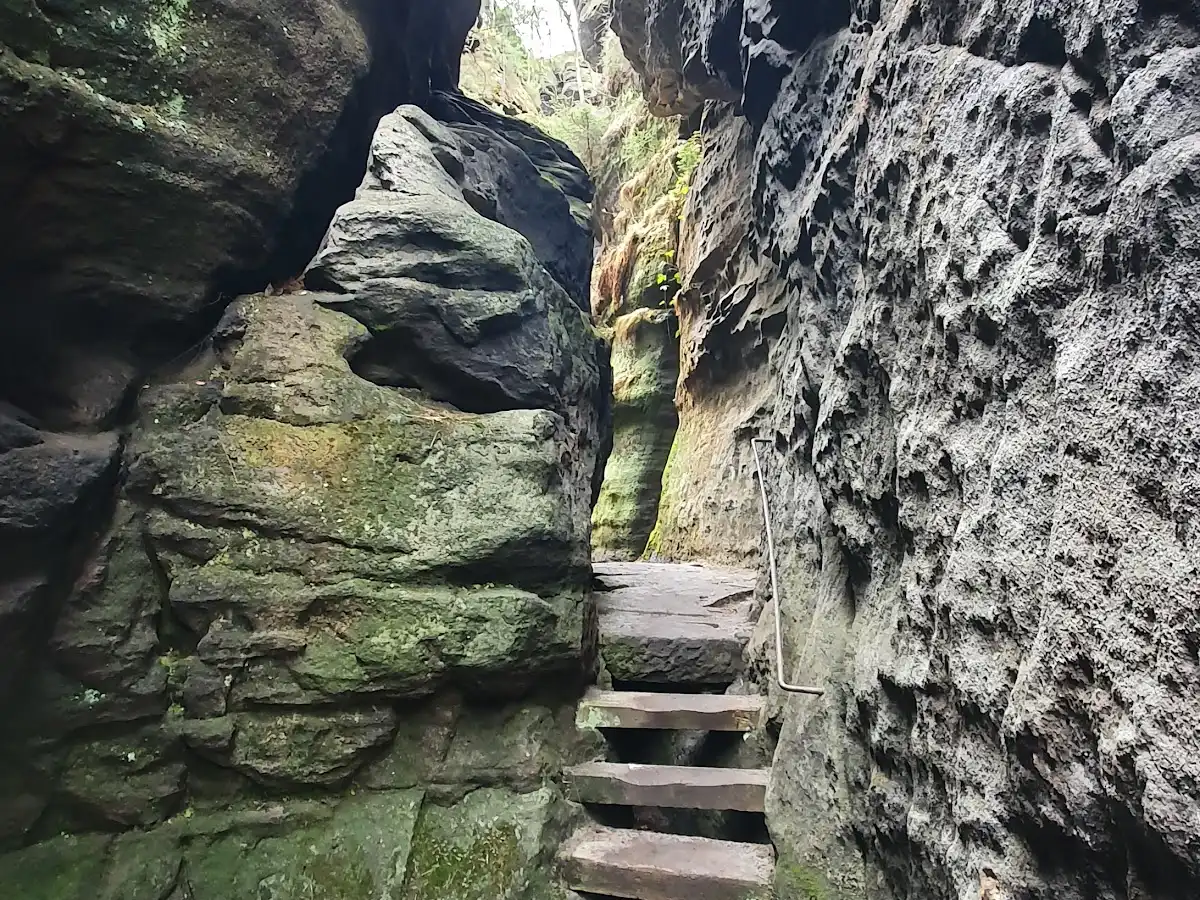
Elbe sandstone, river gorges, painter viewpoints

Walk dramatic cliff paths and forested ravines, pausing at overlooks that inspired generations of landscape artists.

germany-hike-malerweg
© Google |

2 Eifelsteig

volcanic lakes, moorland, remote plateaus

Traverse a landscape shaped by ancient eruptions, with tranquil water-filled craters and stretches of open heathland.

3 Rennsteig Trail

Thuringian Forest, ridge path, border stones

Traverse an old boundary route through dense woods and open clearings, marked by historic stones and panoramic rest stops.

germany-hike-rennsteig-trail
© Google | Michael Herrmann

4 Moselsteig Trail

vineyard slopes, river bends, Roman relics

Climb terraced hillsides and descend to riverside towns, with frequent glimpses of ancient ruins and working vineyards.

germany-hike-moselsteig-trail
© Google | Tamara Van Gerwen

5 Harz Witches’ Trail

spruce woods, granite tors, folklore sites

Navigate dense forests and rocky outcrops, encountering legends and traditions rooted in the Harz region’s mythic past.

germany-hike-harz-witches-trail
© Google | Enrico

6 Heidschnuckenweg

heather moors, grazing sheep, sandy tracks

Cross open heathland dotted with flocks and birch groves, especially vibrant during late summer’s purple bloom.

7 Goldsteig

Bavarian Forest, granite ridges, borderland views

Walk through dense woodland and along high crests, with frequent panoramas across the Czech border and deep into Bavaria.

germany-hike-goldsteig
© Google |

8 Westweg Trail

Black Forest, high moors, glacial lakes

Cross the length of the Black Forest on a route that alternates between dense woodland, open plateaus, and quiet tarns.

9 Albsteig (Schwäbische Alb)

limestone cliffs, juniper heath, castle ruins

Follow a ridge route that weaves through exposed rock, open grasslands, and scattered fortresses overlooking the Swabian countryside.

10 Altmühltal-Panoramaweg

river bends, fossil quarries, beech forests

Trace gentle valleys and wooded slopes, passing ancient fossils and quiet villages along the winding Altmühl River.

11 Rothaarsteig

upland meadows, beech woods, source springs

Hike rolling hills and quiet forests, passing the headwaters of major rivers and occasional open viewpoints.

12 Saar-Hunsrück-Steig

quartzite ridges, deep valleys, Celtic sites

Wind through rugged uplands and forested gorges, encountering archaeological traces and broad vistas over the Saarland.

germany-hike-saar-hunsruck-steig v1
© Google |

13 Fränkischer Gebirgsweg

sandstone towers, Franconian Switzerland, brewery villages

Experience rugged rock formations and forested hills, linking small towns known for their traditional brewing culture.

germany-hike-frankischer-gebirgsweg
© Google |

14 Kammweg

Ore Mountains, border ridge, spruce uplands

Follow a highland spine along the Czech border, with long forest stretches and occasional mining heritage sites.

15 Herreninsel in Chiemsee

island parkland, royal palace, lakeshore trails

Stroll manicured grounds and wooded paths, circling the island’s palace and enjoying broad views across Chiemsee’s waters.

Think you know Germany?

Prove you’re a true local — uncover 5 lesser-known hikes in Germany that locals tend to keep to themselves.
Loading the map 🌍

Expert viewExpert Commentary on hikes

Trail Logistics

Germany’s hiking landscape is as diverse as its culture. With over 200,000 kilometers of trails, you’ll want to prioritize wisely. Aim for three to five hikes that showcase different regions. This allows you to experience the varied terrains—from the Alps in the south to the rolling hills of the Rhine Valley. Each region has its own character, and understanding this will help you choose wisely.

Consider the time commitment. Most hikes range from a few hours to a full day. If you’re looking for a more immersive experience, plan for multi-day hikes. Just remember, the longer the hike, the more you’ll need to budget for accommodation and food. A good rule of thumb is to allocate a day for every 20-25 kilometers of trail, factoring in breaks and recovery time.

Altitude and

read more 👉

Trail Logistics

Germany’s hiking landscape is as diverse as its culture. With over 200,000 kilometers of trails, you’ll want to prioritize wisely. Aim for three to five hikes that showcase different regions. This allows you to experience the varied terrains—from the Alps in the south to the rolling hills of the Rhine Valley. Each region has its own character, and understanding this will help you choose wisely.

Consider the time commitment. Most hikes range from a few hours to a full day. If you’re looking for a more immersive experience, plan for multi-day hikes. Just remember, the longer the hike, the more you’ll need to budget for accommodation and food. A good rule of thumb is to allocate a day for every 20-25 kilometers of trail, factoring in breaks and recovery time.

Altitude and Difficulty

Germany’s elevation changes can be significant, especially in the Bavarian Alps. Trails here can range from gentle slopes to steep ascents. Pay attention to the difficulty ratings. A moderate trail might seem manageable, but if it includes significant altitude gain, it can become a real challenge.

For example, a hike that starts at 600 meters and peaks at 2,000 meters will require more acclimatization and stamina. If you’re not used to altitude, consider starting with lower trails to build your endurance. This is where pacing becomes crucial. Slow and steady wins the race. If you find yourself gasping for air, take a break. It’s better to enjoy the scenery than to push through and risk injury.

Recovery and Pacing

Recovery is often overlooked but is vital for a successful hiking experience. After a long day on the trail, give yourself time to recuperate. This means not just resting your legs but also hydrating and refueling. A good mix of carbohydrates and protein will help restore your energy levels.

Pacing is equally important. Many hikers underestimate how long it takes to cover a distance. A general guideline is to plan for 3-5 kilometers per hour on flat terrain, but this can drop significantly with elevation. Factor in time for breaks, especially if you’re hiking with a group. Everyone has different stamina levels, and it’s essential to keep the pace comfortable for all.

Planning and Prioritizing

When planning your hikes, consider the season. Spring and fall offer mild weather and fewer crowds, making them ideal for hiking. Summer can be hot, especially in southern regions, while winter hiking requires specialized gear and skills.

Local culture plays a role too. In some areas, you’ll find huts and guesthouses that offer food and shelter, while in others, you might need to be self-sufficient. Researching local customs can enhance your experience. For instance, in Bavaria, it’s common to stop for a beer and pretzel at a mountain hut. This not only provides a break but also a taste of local culture.

Safety and Cultural Considerations

Safety should always be a priority. Familiarize yourself with the trail conditions and weather forecasts. In mountainous areas, conditions can change rapidly. Carry a map and a compass, even if you plan to use a GPS. Technology can fail, and knowing how to navigate the old-fashioned way is a valuable skill.

Cultural considerations are also essential. Respect local customs and the environment. In some regions, it’s customary to greet fellow hikers with a friendly “Grüß Gott.” This small gesture fosters a sense of community on the trails. Additionally, be mindful of wildlife and adhere to local guidelines regarding trail etiquette.

Trade-offs and Constraints

Every choice comes with trade-offs. Opting for a popular trail may mean encountering more people, while a lesser-known path might offer solitude but require more navigation skills. Weigh your priorities: do you want to experience the buzz of fellow hikers or the tranquility of nature?

Budget is another constraint. While many trails are free, some may require permits or fees for parking. Factor in transportation costs, especially if you’re traveling between regions. Public transport is often reliable, but it can be time-consuming. If you’re short on time, consider renting a car for more flexibility.

In summary, understanding the logistics of hiking in Germany is about more than just picking a trail. It’s about knowing how to navigate the system, from altitude and pacing to cultural nuances and safety. With the right planning and mindset, you’ll unlock a hiking experience that’s not just enjoyable but also deeply rewarding.

✈️ The backpacker research shortcutGermany Travel Guide

An offline-friendly backpacking guide with optimized travel routes, ranked highlights, transport advice, and the best areas to stay.
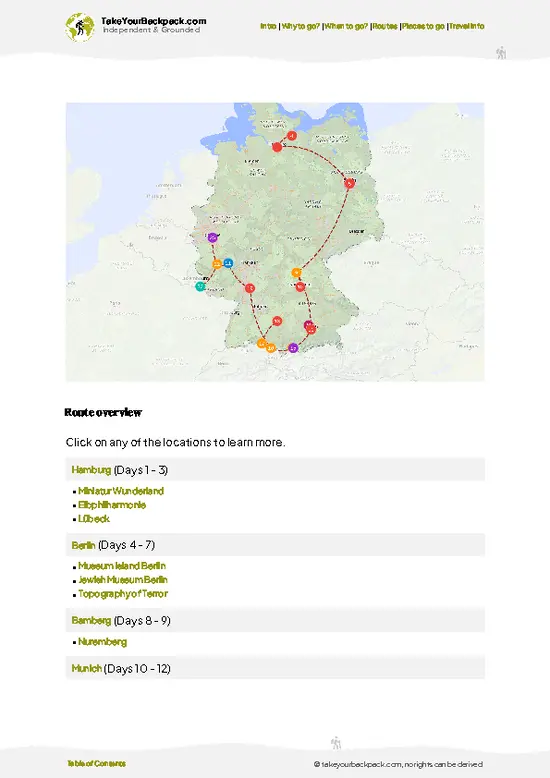
example page 0 from our offline Travel Guide for Germany
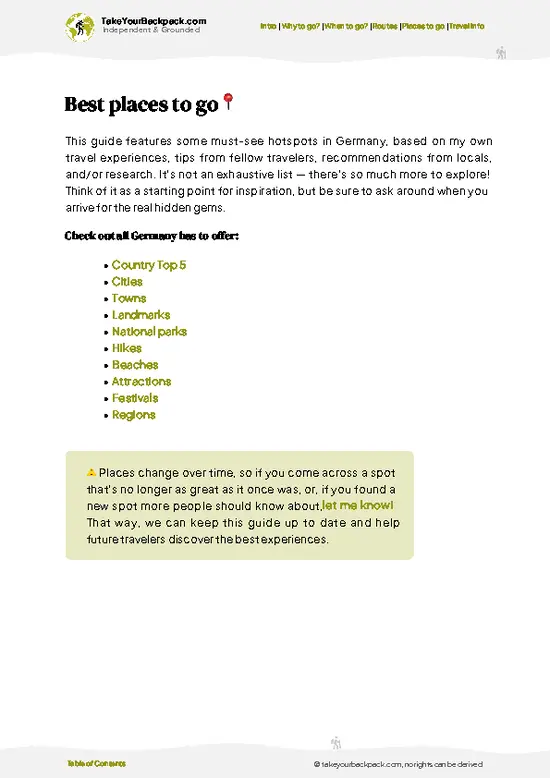
example page 1 from our offline Travel Guide for Germany
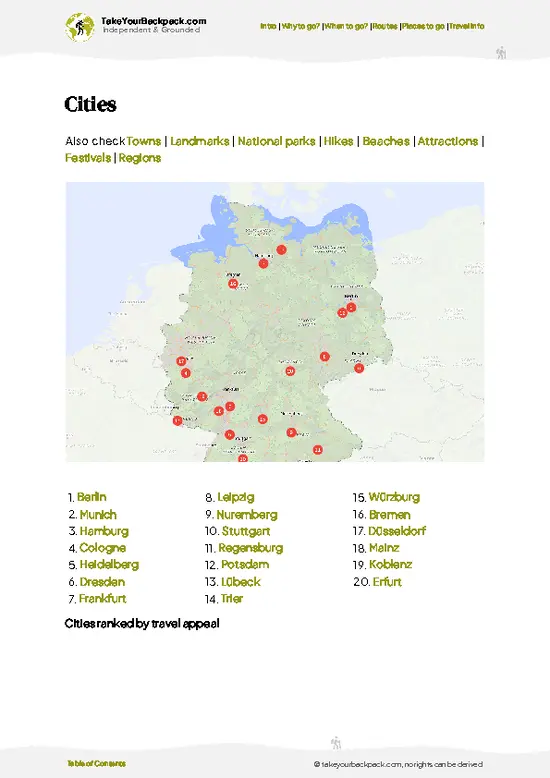
example page 2 from our offline Travel Guide for Germany
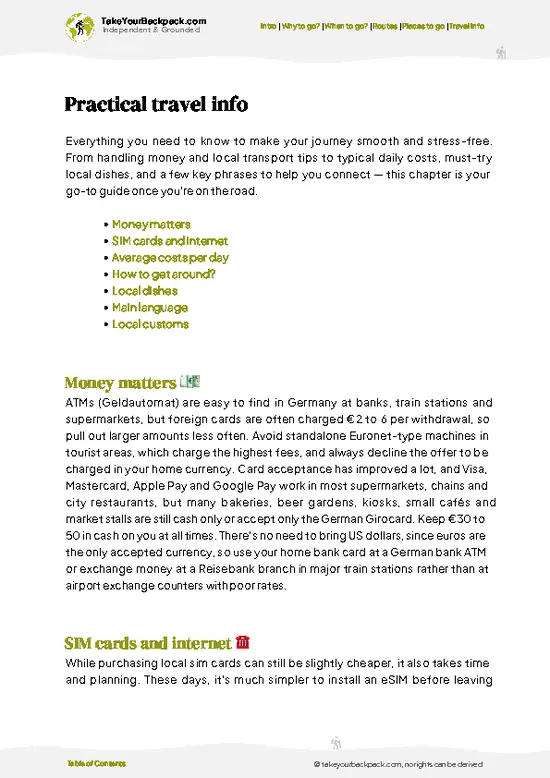
example page 3 from our offline Travel Guide for Germany
example page 4 from our offline Travel Guide for Germany
example page 5 from our offline Travel Guide for Germany
example page 6 from our offline Travel Guide for Germany
example page 7 from our offline Travel Guide for Germany
The digital guide (531 pages) contains:
142 highlights, ranked by travel appeal
Optimized 7, 14 & 21-day travel routes
Cities, national parks, landmarks, beaches
How to get around
Offline-friendly for travel without Wi-Fi
👉 Click to see all 30+ guide features

📅 Plan smarter in minutes, not weeks
Month by month travel advice
Festivals & national holidays
Budget expectations

🗺️ Go to the right places, skip the overrated ones
Honest pros & cons of destinations
Top hikes, parks & viewpoints
Lesser-known places most travelers miss
Clear “worth it vs skip it” guidance

🛏️ Travel smoothly without rookie mistakes
Best areas to stay
Transport systems explained simply
Common scams & safety advice
SIM cards, money & practical tips

🌍 Understand the country, not just visit it
Culture & traditions
52 Essential phrases & customs
Festivals worth planning around
Traveler-friendly historical context
Insights that make places more meaningful

📱 Built for real travel conditions
Fully downloadable PDF
Works completely offline
Optimized for phone use
Useful in remote areas & buses
Everything in one place
Save weeks of stressful planning
Get instant access to your full guide. 30‑day money-back guarantee.


By proceeding you agree to our terms.
Sent to your inbox immediately after payment • 100% Secure Checkout
Best Backpacking Travel Advisor 2025 tourism awardBest Backpacking
Travel Advisor
2025
What others say about Take Your Backpack Guides:
⭐⭐⭐⭐⭐
Fantastic, amazing amount of information!
⭐⭐⭐⭐⭐
My goodness this is amazing, it's what I've been looking for hats off too you!
⭐⭐⭐⭐⭐
I think this is absolutely BRILLIANT
⭐⭐⭐⭐
Very complete and informative. It's still missing places, but I gotta to commend you
⭐⭐⭐⭐⭐
This is truly amazing, thank you, can't wait to explore it with my kids!
⭐⭐⭐⭐⭐
Awesome resource, thank you!
⭐⭐⭐⭐⭐
This is amazing! Can't wait to explore the ones I haven't seen
⭐⭐⭐⭐
I love this! Well done, great idea.
⭐⭐⭐⭐⭐
Thanks for taking the time to make this gem!
⭐⭐⭐⭐⭐
This might be the best website I've ever seen.
⭐⭐⭐⭐⭐
Congratulations, and thank you so much for your work; it's incredibly valuable.
⭐⭐⭐⭐
In all seriousness I think you did a great job pointing out the important spots
⭐⭐⭐⭐⭐
10/10 very good
⭐⭐⭐⭐⭐
As someone who's only just starting to visit regularly this is awesome, thank you.
⭐⭐⭐⭐
Thank you very much! I'm going to visit my dad, it's going to be very useful!
⭐⭐⭐⭐⭐
This is really cool! We'll be travelling for the first time and this definitely come in handy.
⭐⭐⭐⭐⭐
You are now our minister of culture, congratulations 👨‍💼
⭐⭐⭐⭐⭐
Just wanted to tell you that this is a pearl! Going to follow your recommendations.
⭐⭐⭐⭐⭐
This is so cool. I'll definitely be using the resource for my travels soon.
⭐⭐⭐⭐⭐
This is very impressive! Good work.
⭐⭐⭐⭐⭐
This is an amazing and informative site. Very well done!

🛏️ Where to stay?Best Places to Stay in Germany

Yes — Germany has abundant hostels or budget accommodation in every major city, concentrated in central and nightlife neighborhoods.

Top clusters are central districts and creative quarters: Berlin (Mitte, Kreuzberg, Friedrichshain) and Hamburg (St. Pauli, St. Georg) give the best mix of cheap beds, late‑night bars, and direct access to sights; Munich (Altstadt, Maxvorstadt, Schwabing), Cologne (Altstadt, Ehrenfeld) and Frankfurt (Bahnhofsviertel, Sachsenhausen) concentrate options near transport hubs and attractions but can be pricier and noisier.

Choose central neighborhoods for shortest transit to highlights at the cost of noise and higher rates; pick edge or creative districts for lower … read more 👉
Yes — Germany has abundant hostels or budget accommodation in every major city, concentrated in central and nightlife neighborhoods.

Top clusters are central districts and creative quarters: Berlin (Mitte, Kreuzberg, Friedrichshain) and Hamburg (St. Pauli, St. Georg) give the best mix of cheap beds, late‑night bars, and direct access to sights; Munich (Altstadt, Maxvorstadt, Schwabing), Cologne (Altstadt, Ehrenfeld) and Frankfurt (Bahnhofsviertel, Sachsenhausen) concentrate options near transport hubs and attractions but can be pricier and noisier.

Choose central neighborhoods for shortest transit to highlights at the cost of noise and higher rates; pick edge or creative districts for lower prices, more local character and better nightlife, but expect longer tram rides and variable quietness and safety after midnight.

If you enjoy meeting fellow travelers, consider choosing hostels with high ratings for atmosphere. On the other hand, if you prefer having your own space, a hotel might be a better option.

GermanyExplore Germany

👋 Meet the founderWho’s Behind Take Your Backpack?

Johan, backpacker and founder of TakeYourBackpackHi, I’m Johan (Netherlands 🇳🇱), the creator of TakeYourBackpack. Over the past decade, I’ve backpacked through 80+ countries across six continents, gaining extensive experience with independent travel, long-term trips, and overland routes.

This site is built on a combination of firsthand travel experience and carefully curated insights from other backpackers. Many guides are based on places I’ve personally visited, while others bring together tips, observations, and practical advice shared by trusted travelers I’ve met along the way.

The goal is to provide realistic, experience-driven guidance — not generic itineraries — so you can explore destinations with better context, clearer expectations, and more confidence.

Get full Germany guide •
Instant download • 142 highlights • Full Offline guide