×

Germany🇩🇪 | citiesKoblenzRhine-Moselle confluence, fortress views, cable car | things to do and best time to go

Explore UlmExplore Mainz

Backpacking in Koblenz
👌 Worth visitingcity ranked #19
By Johan Kruseman 🇳🇱 | Updated September 4, 2026

Most people only realize on the train out that Koblenz is the perfect Rhine–Mosel basecamp: you can day-trip to Cologne, Bonn, Cochem, and the castles without repacking your bag. Sitting where the Rhine and Mosel meet in western Germany, it’s compact, safe, and cheaper than the big-name cities, with a relaxed, almost student-town feel. The Deutsches Eck, Ehrenbreitstein Fortress by cable car, and riverside paths are the real draw; nightlife is modest and hostels can feel quiet, so it’s better for slow, scenic days than wild social marathons.

Discover everything you want to know in the 📖 Germany Travel Guide.


Get your Germany guide
140 ranked highlights, routes & tips, works offline (514 pages)
Loading the map 🌍
CLICK TO FILTER
cities
towns
landmarks
national parks
hikes
beaches
attractions
festivals
regions
SHOW COUNTRY’S BESTSHOW ALL

✨ Why go?
Ranked #19 city in Germany
The unique appeal for travelers

Koblenz is a strategic basecamp for backpackers, balancing affordability with a wealth of highlights. Its walkability makes it easy to explore on foot, while the hostels offer a mix of comfort and community. You’ll find delicious local food that won’t break the bank, perfect for fueling your adventures. The city’s nightlife is vibrant yet laid-back, ideal for unwinding after a day of exploration. Plus, with easy onward travel options, you can seamlessly connect to nearby destinations. If you’re after a place that combines charm with practicality, Koblenz is worth more than just a quick stop.
Want to include Koblenz in your Germany route?
Create a personalized Germany itinerary that includes Koblenz and the places that fit your trip — based on your travel style, budget, and available time. Get your route in seconds.

Generate my trip

💡 HighlightsTop highlights of Koblenz

  1. Deutsches Eck (German Corner) — The symbolic spot where the Rhine and Moselle meet, with the huge equestrian statue of Kaiser Wilhelm I; great for the classic photo, river-watching, and understanding why this place has been strategically important for centuries.
  2. Ehrenbreitstein Fortress — A massive 19th-century fortress on the hill above the city: history-packed ramparts, a few small museums, and one of the best panoramic views over Koblenz and the river junction.
  3. Koblenz Cable Car (Seilbahn) — A short, scenic ride from the Deutsches Eck up to Ehrenbreitstein; it’s cheap, quick, and gives you a bird’s-eye view of the Rhine and the old town — a proper experience rather than just transportation.
  4. Kurfürstliches Schloss (Electoral Palace) — The elegant baroque palace facing the Rhine with
read more 👉
  1. Deutsches Eck (German Corner) — The symbolic spot where the Rhine and Moselle meet, with the huge equestrian statue of Kaiser Wilhelm I; great for the classic photo, river-watching, and understanding why this place has been strategically important for centuries.
  2. Ehrenbreitstein Fortress — A massive 19th-century fortress on the hill above the city: history-packed ramparts, a few small museums, and one of the best panoramic views over Koblenz and the river junction.
  3. Koblenz Cable Car (Seilbahn) — A short, scenic ride from the Deutsches Eck up to Ehrenbreitstein; it’s cheap, quick, and gives you a bird’s-eye view of the Rhine and the old town — a proper experience rather than just transportation.
  4. Kurfürstliches Schloss (Electoral Palace) — The elegant baroque palace facing the Rhine with formal gardens; nice to walk around, sit on the terrace, and catch occasional concerts or festivals on the lawn.
  5. Altstadt (Old Town) & Florinsmarkt — Narrow cobbled streets, cafes, historic facades and little shops; the Florinsmarkt is the heart of local life and the best place to linger, eat, and people-watch.
  6. Schängelbrunnen — A small, playful fountain tucked in the old town that spits water at passersby on cue — silly, local, and exactly the kind of charming local detail you’d miss if you only saw the big sights.
  7. Basilica of St. Kastor (Basilika St. Kastor) — Koblenz’s oldest church, right by the Deutsches Eck; the Romanesque architecture and its role in medieval politics make it worth stepping inside for atmosphere and history.
  8. Forum Confluentes / Mittelrhein-Museum & Romanticum — The cultural complex near the river that houses the regional art/history museum (Mittelrhein-Museum) and the interactive Romanticum Rhine experience — good if you want context on the region and a hands-on way to learn about the Rhine.
  9. Schloss Stolzenfels — A neo-Gothic riverside castle on the outskirts of Koblenz (but still in the city limits): dramatic terraces, restored interiors and riverside walks — a romantic 19th-century rebuild with real views and quiet paths.
  10. Fort Konstantin & Rhine Promenade — Fort Konstantin is a lower-profile fortress park with surprisingly nice city views and fewer tourists; combine it with a stroll along the Rhine promenade for local cafés, ferries, and a real feel for riverside life in Koblenz.
A few excellent day trips just outside Koblenz: Marksburg Castle in Braubach, the Loreley viewpoint and Rhine Gorge (UNESCO valley between St. Goar and St. Goarshausen), and Sayn Castle & Arboretum in nearby Bendorf.
Spotted a mistake or missing something? Contact us.

Things to do in Koblenz

Ratings based on Tripadvisor reviews. When you book through this link, you support our work at no extra cost to you.

🏘️ NeighborhoodsKey areas and districts to know

Koblenz is a charming blend of history and modernity, making it a strategic stop for backpackers.

Altstadt (Old Town): This area is the heart of Koblenz. Cobblestone streets, historic buildings, and vibrant cafés create a lively atmosphere. It’s walkable and perfect for short stays. Expect higher prices here, but the nightlife is buzzing, with plenty of bars and restaurants.

Neuendorf: A quieter neighborhood, ideal for those seeking a more local vibe. It’s affordable and offers easy access to public transport. Great for longer stays, you’ll find parks and local shops, but nightlife is limited.

Rhein-Mosel-Halle: Close to the rivers, this area is perfect for scenic walks. It’s a bit pricier but offers excellent transport links. Suitable for both short and longer visits, you can enjoy riverside dining and occasional events.

⌛️ 1 dayHow to make the most of one day

Koblenz, where the Moselle and Rhine rivers embrace, is a city steeped in history and charm. Start your morning at the Deutsches Eck, where the iconic equestrian statue of Emperor William I stands guard. Grab a coffee at a nearby café and soak in the riverside views.

As you stroll through the Altstadt, the old town, let the cobblestone streets lead you to the Basilica of St. Castor, a stunning example of Romanesque architecture. For lunch, try a local eatery in the bustling Münzplatz, where you can savor traditional dishes like Sauerbraten.

In the afternoon, hop on the cable car to the Ehrenbreitstein Fortress. The panoramic views are worth the ride, and you’ll find a few less-traveled paths to explore.

As evening descends, head to the charming neighborhood of Lützel. Dine at a cozy … read more 👉
Koblenz, where the Moselle and Rhine rivers embrace, is a city steeped in history and charm. Start your morning at the Deutsches Eck, where the iconic equestrian statue of Emperor William I stands guard. Grab a coffee at a nearby café and soak in the riverside views.

As you stroll through the Altstadt, the old town, let the cobblestone streets lead you to the Basilica of St. Castor, a stunning example of Romanesque architecture. For lunch, try a local eatery in the bustling Münzplatz, where you can savor traditional dishes like Sauerbraten.

In the afternoon, hop on the cable car to the Ehrenbreitstein Fortress. The panoramic views are worth the ride, and you’ll find a few less-traveled paths to explore.

As evening descends, head to the charming neighborhood of Lützel. Dine at a cozy restaurant along the Rhine, perhaps trying some local Riesling. This blend of history, food, and stunning vistas makes for a day that feels both rich and rewarding.
Turn your Koblenz visit into an Germany adventure
Build a complete Germany route with Koblenz, hidden gems, must-see destinations, and realistic travel times included.

Generate my trip

🌤️ When to go?Choosing the right time of year


  • Weather: Spring and early autumn offer mild, pleasant conditions, avoiding the cold dampness of winter and the sometimes stifling summer heat.

  • Temperature: Expect 10-20°C (50-68°F) in spring and fall, perfect for hiking and exploring without overheating or freezing.

  • Daylight Hours: Late spring to early summer stretches daylight to around 16 hours, maximizing your adventure time.

  • Crowds: Summer months bring tourists in full force, especially around the Rhine festivals, so expect busy streets and higher prices.

  • Seasonal Activities: The Koblenz wine festivals in late summer and the Christmas markets in December are highlights but come with crowds and premium costs.

  • Price Fluctuations: Accommodation and transport costs spike in summer and during festivals; shoulder seasons offer better
read more 👉

  • Weather: Spring and early autumn offer mild, pleasant conditions, avoiding the cold dampness of winter and the sometimes stifling summer heat.

  • Temperature: Expect 10-20°C (50-68°F) in spring and fall, perfect for hiking and exploring without overheating or freezing.

  • Daylight Hours: Late spring to early summer stretches daylight to around 16 hours, maximizing your adventure time.

  • Crowds: Summer months bring tourists in full force, especially around the Rhine festivals, so expect busy streets and higher prices.

  • Seasonal Activities: The Koblenz wine festivals in late summer and the Christmas markets in December are highlights but come with crowds and premium costs.

  • Price Fluctuations: Accommodation and transport costs spike in summer and during festivals; shoulder seasons offer better deals and quieter experiences.


Pro-tip: Aim for late April to early June or September to early October—sweet spots where weather, daylight, and prices align for maximum value and comfort.


source: climatestotravel.comJANJanuary: fair for travelingFEBFebruary: fair for travelingMARMarch: good for travelingAPRApril: highly recommended for travelingMAYMay: excellent for travelingJUNJune: highly recommended for travelingJULJuly: good for travelingAUGAugust: good for travelingSEPSeptember: excellent for travelingOCTOctober: highly recommended for travelingNOVNovember: good for travelingDECDecember: good for traveling
when-to-go

✈️ The backpacker research shortcutGermany Travel Guide

An offline-friendly backpacking guide with optimized travel routes, ranked highlights, transport advice, and the best areas to stay.
example page 0 from our offline Travel Guide for Germany
example page 1 from our offline Travel Guide for Germany
example page 2 from our offline Travel Guide for Germany
example page 3 from our offline Travel Guide for Germany
example page 4 from our offline Travel Guide for Germany
example page 5 from our offline Travel Guide for Germany
example page 6 from our offline Travel Guide for Germany
example page 7 from our offline Travel Guide for Germany
The digital guide (514 pages) contains:
140 highlights, ranked by travel appeal
Optimized 7, 14 & 21-day travel routes
Cities, national parks, landmarks, beaches
How to get around
Offline-friendly for travel without Wi-Fi
👉 Click to see all 30+ guide features

📅 Plan smarter in minutes, not weeks
Month by month travel advice
Festivals & national holidays
Budget expectations

🗺️ Go to the right places, skip the overrated ones
Honest pros & cons of destinations
Top hikes, parks & viewpoints
Lesser-known places most travelers miss
Clear “worth it vs skip it” guidance

🛏️ Travel smoothly without rookie mistakes
Best areas to stay
Transport systems explained simply
Common scams & safety advice
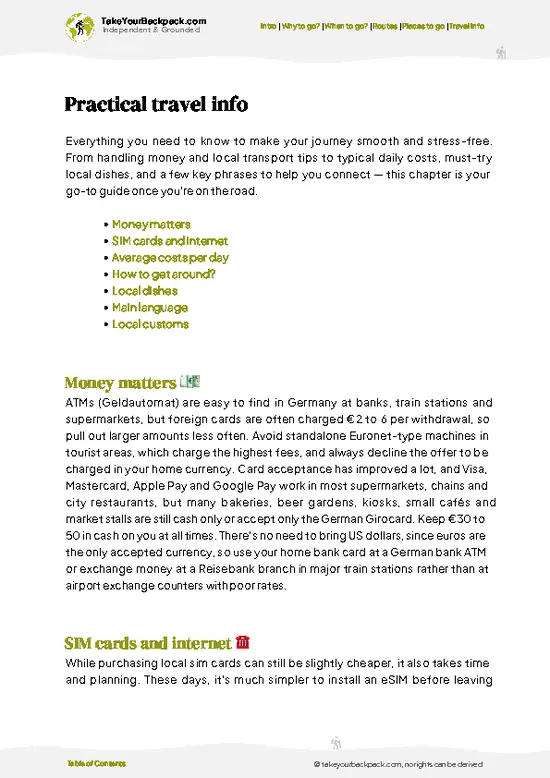
SIM cards, money & practical tips

🌍 Understand the country, not just visit it
Culture & traditions
52 Essential phrases & customs
Festivals worth planning around
Traveler-friendly historical context
Insights that make places more meaningful

📱 Built for real travel conditions
Fully downloadable PDF
Works completely offline
Optimized for phone use
Useful in remote areas & buses
Everything in one place
Save weeks of stressful planning
Get instant access to your full guide. 30‑day money-back guarantee.
+ Add another guide for just US$7.80

By proceeding you agree to our terms.
Sent to your inbox immediately after payment • 100% Secure Checkout
Best Backpacking Travel Advisor 2025 tourism awardBest Backpacking
Travel Advisor
2025
What others say about Take Your Backpack Guides:
⭐⭐⭐⭐⭐
Fantastic, amazing amount of information!
⭐⭐⭐⭐⭐
My goodness this is amazing, it's what I've been looking for hats off too you!
⭐⭐⭐⭐⭐
I think this is absolutely BRILLIANT
⭐⭐⭐⭐
Very complete and informative. It's still missing places, but I gotta to commend you
⭐⭐⭐⭐⭐
This is truly amazing, thank you, can't wait to explore it with my kids!
⭐⭐⭐⭐⭐
Awesome resource, thank you!
⭐⭐⭐⭐⭐
This is amazing! Can't wait to explore the ones I haven't seen
⭐⭐⭐⭐
I love this! Well done, great idea.
⭐⭐⭐⭐⭐
Thanks for taking the time to make this gem!
⭐⭐⭐⭐⭐
This might be the best website I've ever seen.
⭐⭐⭐⭐⭐
Congratulations, and thank you so much for your work; it's incredibly valuable.
⭐⭐⭐⭐
In all seriousness I think you did a great job pointing out the important spots
⭐⭐⭐⭐⭐
10/10 very good
⭐⭐⭐⭐⭐
As someone who's only just starting to visit regularly this is awesome, thank you.
⭐⭐⭐⭐
Thank you very much! I'm going to visit my dad, it's going to be very useful!
⭐⭐⭐⭐⭐
This is really cool! We'll be travelling for the first time and this definitely come in handy.
⭐⭐⭐⭐⭐
You are now our minister of culture, congratulations 👨‍💼
⭐⭐⭐⭐⭐
Just wanted to tell you that this is a pearl! Going to follow your recommendations.
⭐⭐⭐⭐⭐
This is so cool. I'll definitely be using the resource for my travels soon.
⭐⭐⭐⭐⭐
This is very impressive! Good work.
⭐⭐⭐⭐⭐
This is an amazing and informative site. Very well done!

🛏️ Where to stay?Where staying makes the most sense

In Koblenz, the sweet spot for backpackers is the Altstadt (Old Town). It’s where you get the best mix of safety, social buzz, and budget options. The cobblestone streets are packed with lively bars and cafés, perfect for meeting fellow travelers without the tourist overload of bigger cities. Hostels here tend to cluster near the river, making it easy to explore on foot and soak in the Rhine and Moselle confluence vibes. Compared to the quieter, more residential districts like Ehrenbreitstein, Altstadt offers a compact, walkable scene that’s both welcoming and wallet-friendly. It’s the logical … read more 👉
In Koblenz, the sweet spot for backpackers is the Altstadt (Old Town). It’s where you get the best mix of safety, social buzz, and budget options. The cobblestone streets are packed with lively bars and cafés, perfect for meeting fellow travelers without the tourist overload of bigger cities. Hostels here tend to cluster near the river, making it easy to explore on foot and soak in the Rhine and Moselle confluence vibes. Compared to the quieter, more residential districts like Ehrenbreitstein, Altstadt offers a compact, walkable scene that’s both welcoming and wallet-friendly. It’s the logical choice if you want to maximize social energy without sacrificing comfort or safety.

🚌 Getting aroundHow to get from A to B

Koblenz moves at a pace that’s neither frantic nor sluggish—it’s a city where the Rhine and Moselle rivers dictate a natural rhythm, blending old-world steadiness with modern efficiency. You won’t find the chaos of a megacity here, but don’t expect everything to run like clockwork either. The flow is more about intuitive timing than rigid schedules, where locals and travelers alike navigate with a mix of planned routes and spontaneous detours. Understanding this balance is your key to mastering transit here: it’s about choosing when to save time, when to save money, and when to lean into comfort.


  • Walking: The heart of Koblenz is compact and walkable, making this the cheapest and often fastest way to get around downtown. No schedule, no cost, just your own pace and the chance to soak in
read more 👉
Koblenz moves at a pace that’s neither frantic nor sluggish—it’s a city where the Rhine and Moselle rivers dictate a natural rhythm, blending old-world steadiness with modern efficiency. You won’t find the chaos of a megacity here, but don’t expect everything to run like clockwork either. The flow is more about intuitive timing than rigid schedules, where locals and travelers alike navigate with a mix of planned routes and spontaneous detours. Understanding this balance is your key to mastering transit here: it’s about choosing when to save time, when to save money, and when to lean into comfort.


  • Walking: The heart of Koblenz is compact and walkable, making this the cheapest and often fastest way to get around downtown. No schedule, no cost, just your own pace and the chance to soak in riverside views and historic streets.

  • Bus (Stadtwerke Koblenz): Runs roughly from 5:30 AM to midnight, with tickets around €2.50. It’s affordable and covers most neighborhoods, but expect stops every few minutes, so it’s slower than a direct route but reliable for budget travelers.

  • Regional Trains (DB Regio): Connects Koblenz to nearby towns and cities with departures every 30-60 minutes. Tickets start at about €5 for short hops. Faster than buses but pricier and less frequent, ideal when time is tight and comfort matters.

  • Ferry across the Rhine: Operates from early morning until evening, costing about €1.50. It’s a scenic shortcut that saves walking time and adds a splash of local flavor, though it runs less frequently outside peak hours.

👛 Costs (as of 4 September 2026)Travel costs and budget guide for Koblenz

Backpacking through Koblenz means balancing your budget with the city’s charm and efficiency. Here’s the real deal on what your daily expenses will look like, broken down so you can pick your battles between time, money, and comfort.
  • Dorm Accommodation (High Season): Expect to pay around €25 to €35 per night in a hostel dorm during peak months (May to September). Popular spots fill fast, so prices reflect demand and convenience.
  • Dorm Accommodation (Off-Season): Drop to about €15 to €25 per night when the crowds thin out in late fall and winter. You’ll find quieter hostels and sometimes better deals, but some places may close for the season.
  • Meals: Budget roughly €10 to €15 per day if you stick to supermarkets, bakeries, and casual street food. A sit-down meal at a modest restaurant will
read more 👉
Backpacking through Koblenz means balancing your budget with the city’s charm and efficiency. Here’s the real deal on what your daily expenses will look like, broken down so you can pick your battles between time, money, and comfort.
  • Dorm Accommodation (High Season): Expect to pay around €25 to €35 per night in a hostel dorm during peak months (May to September). Popular spots fill fast, so prices reflect demand and convenience.
  • Dorm Accommodation (Off-Season): Drop to about €15 to €25 per night when the crowds thin out in late fall and winter. You’ll find quieter hostels and sometimes better deals, but some places may close for the season.
  • Meals: Budget roughly €10 to €15 per day if you stick to supermarkets, bakeries, and casual street food. A sit-down meal at a modest restaurant will push you closer to €15 to €25 per meal, so plan accordingly if you want to indulge.
  • Local Transport: Single bus or tram tickets cost about €2.50 each. If you’re hopping around town multiple times a day, this adds up quickly.
  • City Transport Pass: A day pass for unlimited rides is around €6.50, which is a smart buy if you’re covering several neighborhoods or making multiple trips.
  • Basic Activities/Entry Fees: Museums and attractions typically charge between €5 and €10. Some historic sites or boat tours might be a bit more, but many outdoor sights are free or low-cost.
  • Miscellaneous Expenses: Factor in about €5 to €10 for extras like bottled water, snacks, or small souvenirs. These little costs sneak up on you if you’re not careful.

Add it all up, and you’re looking at a daily budget ranging from roughly €50 on the lean side during off-season, up to €80 or more if you’re traveling high season with a few comforts. Knowing where your money goes lets you decide if you want to save on accommodation and splurge on experiences, or vice versa. It’s the classic trade-off game, and Koblenz plays it with a straightforward, traveler-friendly hand.


source: koblenz-tourismus.de
⚠️ Prices can change and everyone travels differently, so take this as a rough guide. Hope it helps you plan your adventure!

🚌 Day tripsExploring the surroundings

Koblenz is a fantastic launchpad for day trips that blend history, nature, and culture. Here are some top picks that make the most of your time and money.

Burg Eltz
Just a short train ride away, Burg Eltz is a fairytale castle that feels like stepping into a storybook. The hike to the castle is scenic, and once there, you can explore its rich history and stunning architecture. Aim for spring or early fall to avoid the summer crowds. Budget around €10 for entry and transport. A common mistake? Many visitors miss the best views by sticking to the main path. Take the longer trail for a breathtaking perspective.


Rüdesheim am Rhein
This charming town along the Rhine is famous for its wine and picturesque vineyards. A quick train ride gets you there in about an hour. Spend the day sampling … read more 👉
Koblenz is a fantastic launchpad for day trips that blend history, nature, and culture. Here are some top picks that make the most of your time and money.

Burg Eltz
Just a short train ride away, Burg Eltz is a fairytale castle that feels like stepping into a storybook. The hike to the castle is scenic, and once there, you can explore its rich history and stunning architecture. Aim for spring or early fall to avoid the summer crowds. Budget around €10 for entry and transport. A common mistake? Many visitors miss the best views by sticking to the main path. Take the longer trail for a breathtaking perspective.


Rüdesheim am Rhein
This charming town along the Rhine is famous for its wine and picturesque vineyards. A quick train ride gets you there in about an hour. Spend the day sampling local Rieslings and wandering through the Drosselgasse, a lively street filled with shops and eateries. Expect to spend around €20 on wine tastings and snacks. The best time to visit is during the grape harvest in late summer. Don’t rush; savor the experience.


Cochem
Cochem is another gem on the Moselle River, about an hour and a half from Koblenz. The highlight is the Reichsburg Cochem, a castle perched high above the town. The views are worth the climb. Budget around €15 for transport and entry. Late spring is ideal, with blooming flowers enhancing the scenery. First-timers often overlook the charming riverside paths—don’t miss them!
👉 Explore Cochem
Want to know what more Germany offers?
The Germany Travel Guide describes 140 highlights, from cities to national parks, from beaches to hikes

Get the Travel Guide -

🍲 FoodWhat to Eat & Drink

In Koblenz, dive into the hearty world of Rheinische cuisine. Try the Sauerbraten, a pot roast marinated in vinegar and spices, or indulge in Reibekuchen, crispy potato pancakes often served with applesauce.

Street vendors and local markets buzz with energy, offering quick bites and a chance to mingle. Grab a Bratwurst from a stall, and wash it down with a refreshing Kölsch beer, a local favorite.

Don’t miss the Weinfest if you’re there in season; it’s a celebration of regional wines. Remember, sharing a table is common, so don’t hesitate to join in the communal vibe. Enjoy the flavors and the camaraderie!

🛡️ SafetyTraveler Safety Guide

Koblenz is generally safe, but like any city, a little awareness goes a long way. Stick to well-lit areas at night, especially along the Rhine and Moselle rivers. Solo travelers should feel comfortable, but keep your belongings close—pickpockets can be sneaky in crowded spots like the Deutsches Eck.

Watch for common scams, like overly friendly locals offering unsolicited help or trying to sell you something on the street. A confident demeanor and a clear sense of direction will keep you in control. Enjoy the city, but stay sharp.

FAQFrequently asked questions about Koblenz

2 to 3 days are sufficient to explore Koblenz. This allows time to visit key sites like the Deutsches Eck, Ehrenbreitstein Fortress, and take a Rhine river cruise. Additional days may be needed if planning day trips to nearby castles or the Moselle Valley.
Yes, Koblenz is safe for solo backpackers. The city has low crime rates and a friendly atmosphere, especially in tourist areas. Standard precautions apply, such as avoiding poorly lit areas at night and keeping valuables secure.
Koblenz is known for its location at the confluence of the Rhine and Moselle rivers, marked by the Deutsches Eck monument. It is also famous for the Ehrenbreitstein Fortress, one of the largest preserved fortresses in Europe. The city is a gateway to the scenic Rhine Gorge, a UNESCO World Heritage site.
⚠️ Things can change over time, so always validate details locally before you go.

Other German cities near Koblenz

Explore more nearby:

  • Wiesbaden—Thermal spas, neoclassical facades, casino| 56 km away
  • Mainz—Cathedral square, Gutenberg legacy, wine taverns| 62 km away
  • Cologne—Cathedral spires, Roman mosaics, carnival culture| 78 km away

💡 Not sure where to go next?
Create a personalized itinerary for Germany including Koblenz and the places that fit your trip.

Generate my itinerary

👉 Discover all cities

Or checkout all Germany has to offer (think cities, towns, villages, national parks, hikes, beaches, festivals)
Country photo of Germany

We 💚 feedbackKey takeaways before you go

Koblenz is a treasure trove of history, where the Rhine and Moselle rivers meet. You’ll feel the weight of centuries in its castles and cobblestone streets. Just know, it can get touristy, especially in summer. Plan your visit wisely to soak in the charm without the crowds.

✈️ When did I visit Germany?
Being a neighbouring country of my home base, I visited Germany many times.

✍️ Help improve this page!
The information on this page is based on my own backpacking experience in Germany, supplemented with up-to-date research and feedback from other travelers. Travel details can change, so if you notice anything outdated or incomplete, feel free to let me know.


🙋‍♂️ Give feedback

👋 Meet the founderWho’s Behind Take Your Backpack?

Johan, backpacker and founder of TakeYourBackpackHi, I’m Johan (Netherlands 🇳🇱), the creator of TakeYourBackpack. Over the past decade, I’ve backpacked through 80+ countries across six continents, gaining extensive experience with independent travel, long-term trips, and overland routes.

This site is built on a combination of firsthand travel experience and carefully curated insights from other backpackers. Many guides are based on places I’ve personally visited, while others bring together tips, observations, and practical advice shared by trusted travelers I’ve met along the way.

The goal is to provide realistic, experience-driven guidance — not generic itineraries — so you can explore destinations with better context, clearer expectations, and more confidence.

Get full Germany guide •
Instant download • 140 highlights • Full Offline guide