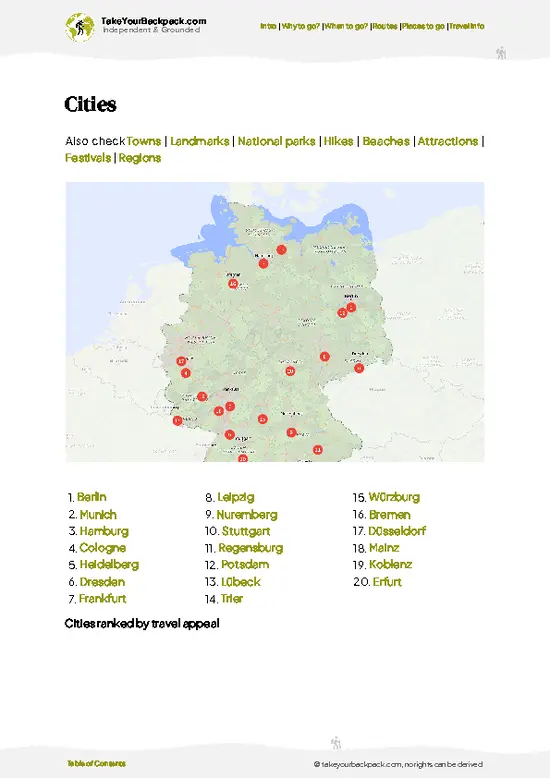
How many cities to visit: I advise
three to five cities for a two-week trip, and two or three for a week. The reasoning is practical. German cities reward unhurried exploring, since much of the value sits in neighborhoods, markets, museums and evenings, and every extra stop costs half a day in transfers, luggage and check-in. Going beyond five turns the trip into a rail timetable.
Choosing between kinds of cities: Pick by interest, not fame. If you travel on a tight budget and like nightlife, street art and cheap eating, favor the
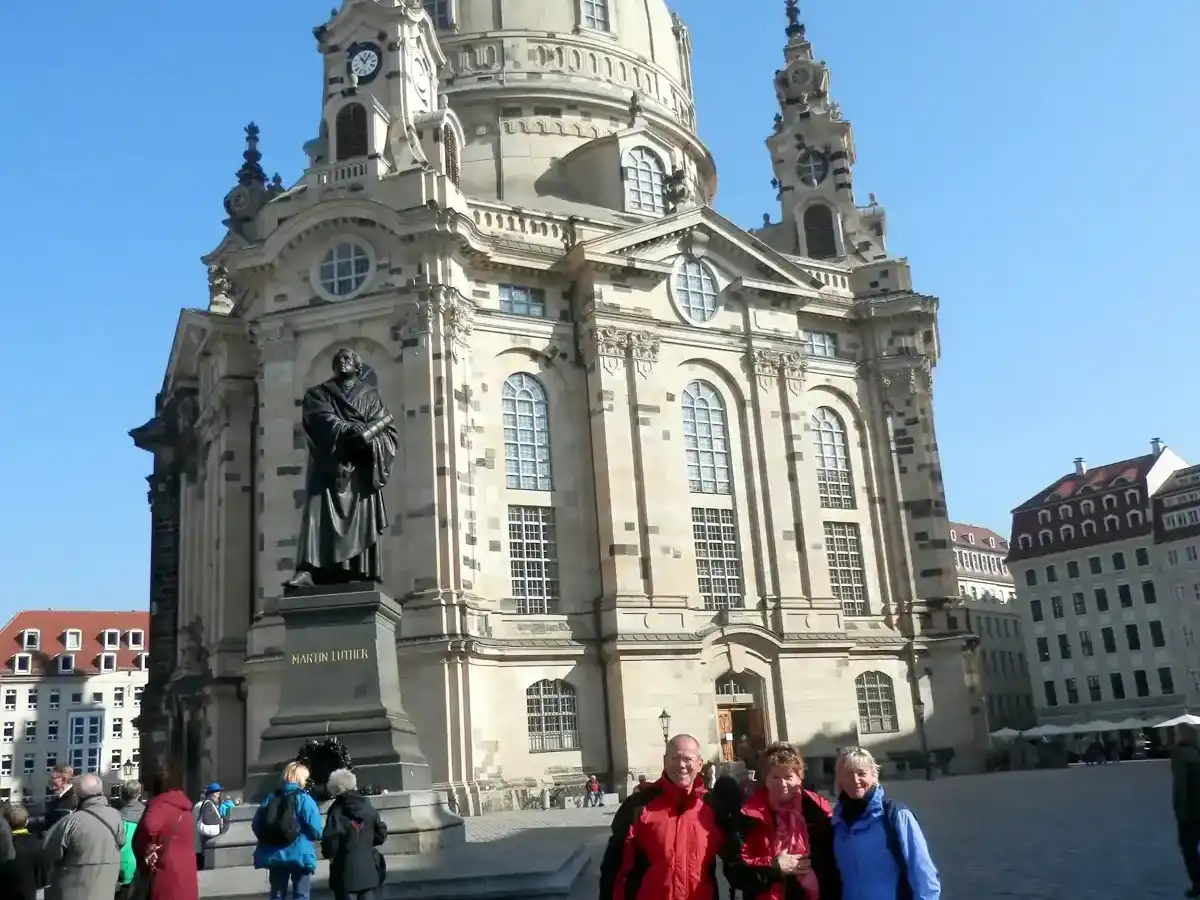
eastern and large metropolitan cities, where rents and menu prices are lower. If you want historic architecture, favor
southern and reconstructed old-town cities, accepting higher prices and summer crowds. If you want museums and music, look at
regional capitals …
read more 👉 How many cities to visit: I advise three to five cities for a two-week trip, and two or three for a week. The reasoning is practical. German cities reward unhurried exploring, since much of the value sits in neighborhoods, markets, museums and evenings, and every extra stop costs half a day in transfers, luggage and check-in. Going beyond five turns the trip into a rail timetable.
Choosing between kinds of cities: Pick by interest, not fame. If you travel on a tight budget and like nightlife, street art and cheap eating, favor the eastern and large metropolitan cities, where rents and menu prices are lower. If you want historic architecture, favor southern and reconstructed old-town cities, accepting higher prices and summer crowds. If you want museums and music, look at regional capitals in the west, which carry big collections without peak tourist pressure. For relaxed river or harbor atmosphere, the northern cities suit slower trips. Mixing one big city with smaller ones keeps costs balanced, because the big ones are often the best value for hostels but the most tiring.
What it costs: A realistic budget is €55 to 85 a day for a backpacker, covering a hostel dorm bed (€20 to 40, higher in the south and during festivals), supermarket and bakery meals plus one cheap sit-down meal (€15 to 25), and local transit. Add city transport day tickets at roughly €5 to 9. Museum entries typically run €8 to 15, and many cities offer free or reduced days and student discounts. Guided walking tours range from free (tip-based, with €5 to 10 customary) to €15 to 25 for paid ones. Per visit of two nights, expect €110 to 200 including a couple of paid sights.
Saving money properly: Supermarkets such as Aldi, Lidl and Rewe, and bakery lunches, are why Germany is cheaper than it looks. Restaurants add service in the price, so tipping is modest, rounding up or about 5 to 10 percent. Bottle returns (Pfand) are refundable, usually €0.25 per bottle, which is why you see people collecting them. Buy long-distance train tickets early for the Sparpreis fares, which can be far below flexible prices, and use regional day tickets for short hops.
Safety and rules: German cities are generally safe, with petty theft concentrated around main train stations, crowded markets and nightlife districts. Keep valuables out of back pockets, and note that station surroundings can feel rough at night even if they are not dangerous. Cyclists have priority on marked lanes, and walking in a bike lane is a common tourist error that causes real collisions. Jaywalking is frowned on, especially with children present.
Cultural habits that matter: Quiet hours (Ruhezeit) apply on Sundays and at night, so noisy hostel behavior draws complaints. Cash is still common at small bakeries, beer halls and markets, so carry some. Directness is normal, not rudeness. Greet staff when entering shops, and expect to ask for the bill, since it will not arrive unprompted. Public transport tickets must be validated where required, and fare inspectors fine unvalidated travelers around €60.







 Best Backpacking
 Hi, I’m Johan (Netherlands 🇳🇱), the creator of TakeYourBackpack. Over the past 3 decades, I’ve backpacked through 90+ countries across six continents, gaining extensive experience with independent travel, long-term trips, and overland routes.