×

Germany🇩🇪 | national parksTaunuslow mountains, Roman ruins, heath plateaus | things to do and best time to go

Explore Weser UplandsExplore Vulkaneifel

Backpacking in Taunus
👀 For curious travelersnational park ranked #27
By Johan Kruseman 🇳🇱 | Updated October 15, 2026

Your first real choice in the Taunus is whether to treat it as a quick escape from Frankfurt or commit a few days and skip “bigger name” parks like Eifel or Kellerwald-Edersee; that decision decides if you get casual forest walks or a full hiking base. The Taunus, just north of Frankfurt in Hesse, is a low mountain range with easy access, no entrance fees, and mostly mellow trails through beech woods, old spa towns, and the occasional Roman ruin. Views are decent rather than dramatic, wildlife is shy, and crowds cluster around cable cars and viewpoints on sunny weekends while large areas stay quiet. Wild camping is technically not allowed and budget beds lean toward simple guesthouses rather than classic backpacker hostels, so it’s cheaper than the Alps but less “trail community.” I use it when I want fast, low-stress hiking days, not when I’m chasing big scenery.

Discover everything you want to know in the 📖 Germany Travel Guide.


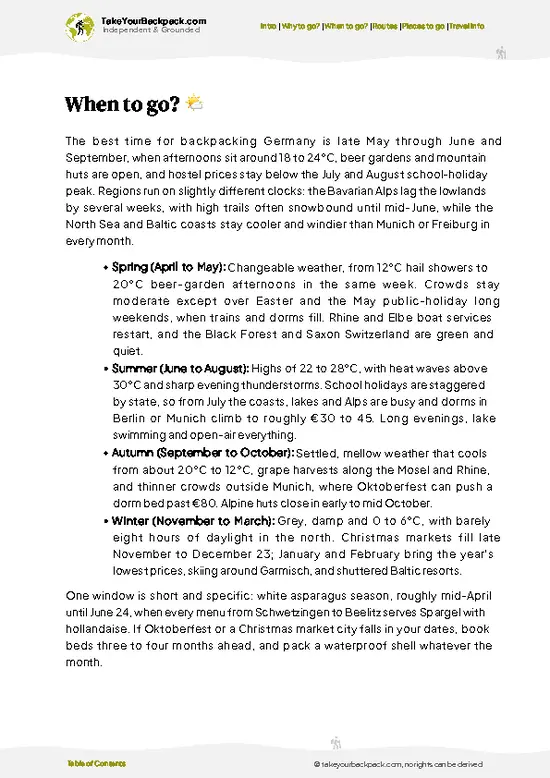
example page 0 from our offline Travel Guide for Germany
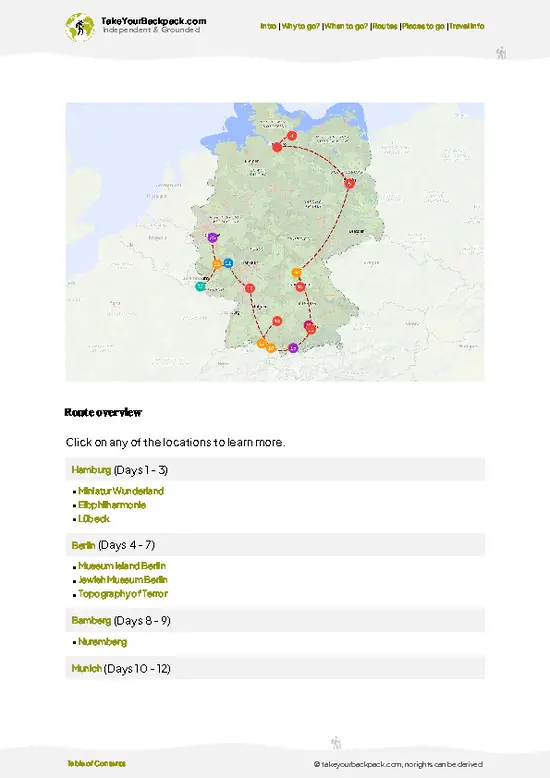
example page 1 from our offline Travel Guide for Germany
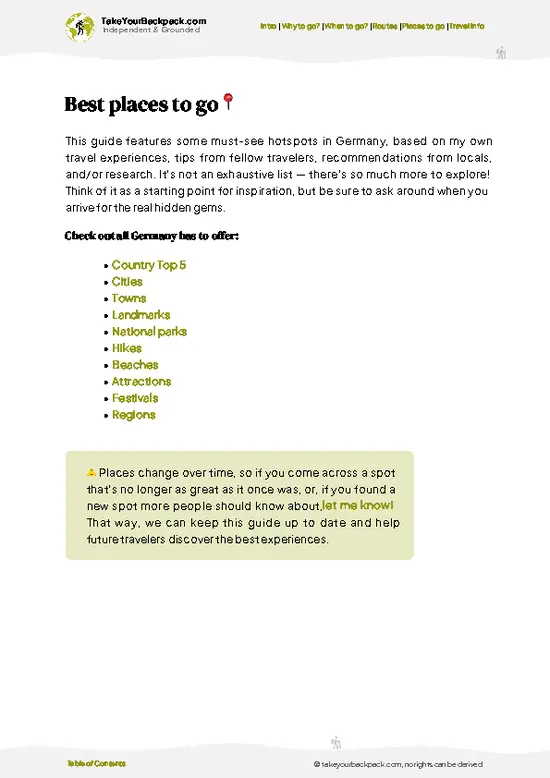
example page 2 from our offline Travel Guide for Germany
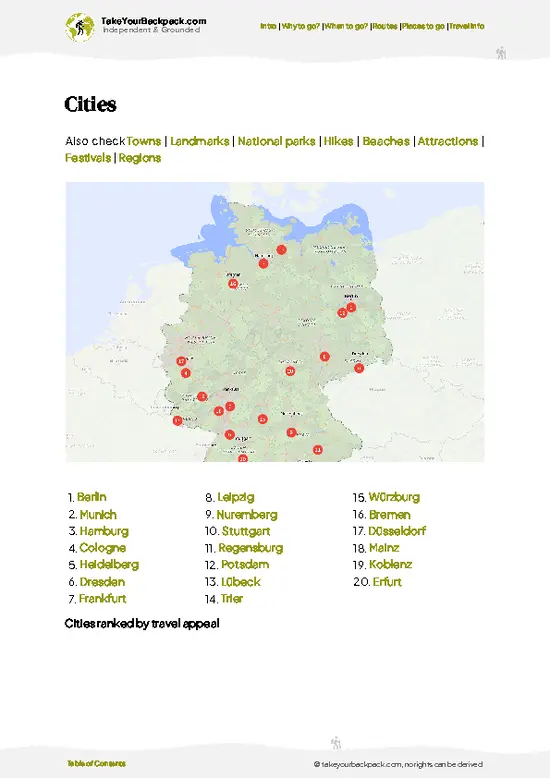
example page 3 from our offline Travel Guide for Germany
example page 4 from our offline Travel Guide for Germany
example page 5 from our offline Travel Guide for Germany
example page 6 from our offline Travel Guide for Germany
example page 7 from our offline Travel Guide for Germany
Loading the map 🌍
CLICK TO FILTER
cities
towns
landmarks
national parks
hikes
beaches
attractions
festivals
regions
SHOW COUNTRY’S BESTSHOW ALL

✨ Why go?
Ranked #27 national park in Germany
What sets this place apart

Backpackers flock to Taunus National Park for its blend of independent exploration and budget-friendly options. With numerous camping sites and hostels nearby, you can stretch your euros while enjoying the great outdoors. The park offers a variety of trails, from easy strolls to challenging hikes, catering to all skill levels. This makes it ideal for self-guided travelers who prefer to set their own pace rather than join organized tours. You’ll find that the freedom to roam and the stunning landscapes make every step worthwhile, without the hidden costs that can drain your energy and budget.

💡 HighlightsWhat this place is best known for

  • Großer Feldberg — The highest peak in the Taunus (about 878 m) and the obvious must-climb. Great panoramic views, alpine-like weather, marked trails from several trailheads and a mix of dense beech-spruce woods where you’ll likely spot birds of prey and wild boar tracks.
  • Altkönig Celtic Fort — An ancient hilltop with impressive Celtic ramparts that give the place real atmosphere. Short ridgeline hikes reward you with stone walls, forested slopes and a genuine sense of history rather than just a postcard view.
  • Saalburg Roman Fort — A meticulously reconstructed Roman fort on the old Limes frontier, complete with a small museum. It’s an easy, fascinating stop: archaeology, reconstructions and interpretive trails that link nature with 2,000-year-old human stories.
  • Eschbacher Klippen — Striking
… read more 👉
  • Großer Feldberg — The highest peak in the Taunus (about 878 m) and the obvious must-climb. Great panoramic views, alpine-like weather, marked trails from several trailheads and a mix of dense beech-spruce woods where you’ll likely spot birds of prey and wild boar tracks.
  • Altkönig Celtic Fort — An ancient hilltop with impressive Celtic ramparts that give the place real atmosphere. Short ridgeline hikes reward you with stone walls, forested slopes and a genuine sense of history rather than just a postcard view.
  • Saalburg Roman Fort — A meticulously reconstructed Roman fort on the old Limes frontier, complete with a small museum. It’s an easy, fascinating stop: archaeology, reconstructions and interpretive trails that link nature with 2,000-year-old human stories.
  • Eschbacher Klippen — Striking quartzite rock outcrops near Usingen that make for fun scrambling, short climbs and sunset photo ops. The cliffs rise out of beech forest and feel surprisingly wild for being so close to towns.
  • Burg Falkenstein (ruins) — Dramatic medieval castle ruins perched on a rocky outcrop above Königstein. The walk up through the forest is short and steep; the views over the Rhine valley and the Taunus ridges are worth the effort.
  • Weiltal (Weil Valley) — A peaceful river valley with long, shady footpaths, meadows and classic Taunus woodland. It’s ideal for easy day-hikes, birdwatching and cooling off at little river crossings in summer.
  • Limes Hiking Routes — Hike stretches of the Upper Germanic-Rhaetian Limes (a UNESCO World Heritage site) and pass watchtower remains, reconstructed sections and interpretive signs. The trail links cultural sites with quiet forest walking — one of the best ways to experience Taunus history and landscape together.
Spotted a mistake or missing something? Contact us.

Things to do near Taunus

Ratings based on Tripadvisor reviews. When you book through this link, you support our work at no extra cost to you.

🌤️ When to go?Seasonal considerations and timing

  • Weather: Spring and early autumn offer mild, stable weather—around 10-20°C (50-68°F)—ideal for hiking without the summer heat or winter chill.
  • Temperature: Summer can spike to 25-30°C (77-86°F), which might drain your energy on long treks; winter drops below freezing, limiting trail access.
  • Daylight Hours: Late spring to early autumn provides 14-16 hours of daylight, maximizing your hiking window and reducing the need for night navigation.
  • Crowds: Summer weekends attract local tourists, especially on popular trails; weekdays in shoulder seasons are quieter and more peaceful.
  • Seasonal Activities: Autumn brings vibrant foliage and mushroom foraging; spring showcases wildflowers and birdwatching, adding layers to your experience.
  • Price Fluctuations: Accommodation and transport costs peak
… read more 👉
  • Weather: Spring and early autumn offer mild, stable weather—around 10-20°C (50-68°F)—ideal for hiking without the summer heat or winter chill.
  • Temperature: Summer can spike to 25-30°C (77-86°F), which might drain your energy on long treks; winter drops below freezing, limiting trail access.
  • Daylight Hours: Late spring to early autumn provides 14-16 hours of daylight, maximizing your hiking window and reducing the need for night navigation.
  • Crowds: Summer weekends attract local tourists, especially on popular trails; weekdays in shoulder seasons are quieter and more peaceful.
  • Seasonal Activities: Autumn brings vibrant foliage and mushroom foraging; spring showcases wildflowers and birdwatching, adding layers to your experience.
  • Price Fluctuations: Accommodation and transport costs peak in summer; booking in shoulder seasons often yields better rates without sacrificing conditions.
Pro-tip: Aim for late April to early June or September to early October—these windows balance weather, light, and crowd levels, saving your energy and budget for the trails that truly matter.


source: climatestotravel.comJANJanuary: below average for travelingFEBFebruary: below average for travelingMARMarch: good for travelingAPRApril: highly recommended for travelingMAYMay: excellent for travelingJUNJune: excellent for travelingJULJuly: good for travelingAUGAugust: good for travelingSEPSeptember: excellent for travelingOCTOctober: highly recommended for travelingNOVNovember: fair for travelingDECDecember: below average for traveling
when-to-go

✈️ The backpacker research shortcutGermany Travel Guide

An offline-friendly backpacking guide with optimized travel routes, ranked highlights, transport advice, and the best areas to stay.
example page 0 from our offline Travel Guide for Germany
example page 1 from our offline Travel Guide for Germany
example page 2 from our offline Travel Guide for Germany
example page 3 from our offline Travel Guide for Germany
example page 4 from our offline Travel Guide for Germany
example page 5 from our offline Travel Guide for Germany
example page 6 from our offline Travel Guide for Germany
example page 7 from our offline Travel Guide for Germany
The digital guide (502 pages) contains:
✅ 135 highlights, ranked by travel appeal
✅ Optimized 7, 14 & 21-day travel routes
✅ Cities, national parks, landmarks, beaches
✅ How to get around
✅ Offline-friendly for travel without Wi-Fi
👉 Click to see all 30+ guide features

📅 Plan smarter in minutes, not weeks
✅ Month by month travel advice
✅ Festivals & national holidays
✅ Budget expectations

🗺️ Go to the right places, skip the overrated ones
✅ Honest pros & cons of destinations
✅ Top hikes, parks & viewpoints
✅ Lesser-known places most travelers miss
✅ Clear “worth it vs skip it” guidance

🛏️ Travel smoothly without rookie mistakes
✅ Best areas to stay
✅ Transport systems explained simply
✅ Common scams & safety advice
✅ SIM cards, money & practical tips

🌍 Understand the country, not just visit it
✅ Culture & traditions
✅ 52 Essential phrases & customs
✅ Festivals worth planning around
✅ Traveler-friendly historical context
✅ Insights that make places more meaningful

📱 Built for real travel conditions
✅ Fully downloadable PDF
✅ Works completely offline
✅ Optimized for phone use
✅ Useful in remote areas & buses
✅ Everything in one place
Stop searching, start planning
Get instant access to your full guide. 30‑day money-back guarantee.
+ Add another guide for just

By proceeding you agree to our terms.
Sent to your inbox immediately after payment • 100% Secure Checkout
Best Backpacking Travel Advisor 2025 tourism awardBest Backpacking
Travel Advisor
2025
What others say about Take Your Backpack Guides:
⭐⭐⭐⭐⭐
Fantastic, amazing amount of information!
⭐⭐⭐⭐⭐
My goodness this is amazing, it's what I've been looking for hats off too you!
⭐⭐⭐⭐⭐
I think this is absolutely BRILLIANT
⭐⭐⭐⭐
Very complete and informative. It's still missing places, but I gotta to commend you
⭐⭐⭐⭐⭐
This is truly amazing, thank you, can't wait to explore it with my kids!
⭐⭐⭐⭐⭐
Awesome resource, thank you!
⭐⭐⭐⭐⭐
This is amazing! Can't wait to explore the ones I haven't seen
⭐⭐⭐⭐
I love this! Well done, great idea.
⭐⭐⭐⭐⭐
Thanks for taking the time to make this gem!
⭐⭐⭐⭐⭐
This might be the best website I've ever seen.
⭐⭐⭐⭐⭐
Congratulations, and thank you so much for your work; it's incredibly valuable.
⭐⭐⭐⭐
In all seriousness I think you did a great job pointing out the important spots
⭐⭐⭐⭐⭐
10/10 very good
⭐⭐⭐⭐⭐
As someone who's only just starting to visit regularly this is awesome, thank you.
⭐⭐⭐⭐
Thank you very much! I'm going to visit my dad, it's going to be very useful!
⭐⭐⭐⭐⭐
This is really cool! We'll be travelling for the first time and this definitely come in handy.
⭐⭐⭐⭐⭐
You are now our minister of culture, congratulations 👨‍💼
⭐⭐⭐⭐⭐
Just wanted to tell you that this is a pearl! Going to follow your recommendations.
⭐⭐⭐⭐⭐
This is so cool. I'll definitely be using the resource for my travels soon.
⭐⭐⭐⭐⭐
This is very impressive! Good work.
⭐⭐⭐⭐⭐
This is an amazing and informative site. Very well done!

🛏️ Where to stay?How to pick the right area

For backpackers heading to Taunus National Park, options abound. While there aren’t many accommodations directly inside the park, nearby towns like Königstein and Bad Soden offer solid choices. Look for hostels or guesthouses that cater to budget travelers.

Königstein has a charming vibe and easy access to trails. Bad Soden, known for its thermal baths, provides a unique twist after a day of hiking.

Be mindful of booking in advance during peak seasons; prices can spike. Also, check for any hidden fees, especially in guesthouses. This way, you’ll keep your budget intact for those unforgettable moments in nature.

👛 Costs (as of 15 October 2026)Typical daily expenses

Visiting Taunus National Park in Germany is a fantastic choice, but being prepared for costs will keep your experience smooth.

Entry to the park is free, which is a major plus. However, if you plan to use public transport to get there, budget around €5 to €10 for a round trip, depending on your starting point.

Parking fees at popular trailheads can range from €2 to €5 per day. If you’re thinking of staying overnight, accommodations vary widely. Expect to pay between €60 and €150 for a decent hotel or guesthouse. Camping options are available too, typically costing around €10 to €20 per night.

Food is another consideration. A meal at a local restaurant will set you back about €10 to €20. If you prefer to pack your own meals, grocery prices are reasonable. A day’s worth of supplies might … read more 👉
Visiting Taunus National Park in Germany is a fantastic choice, but being prepared for costs will keep your experience smooth.

Entry to the park is free, which is a major plus. However, if you plan to use public transport to get there, budget around €5 to €10 for a round trip, depending on your starting point.

Parking fees at popular trailheads can range from €2 to €5 per day. If you’re thinking of staying overnight, accommodations vary widely. Expect to pay between €60 and €150 for a decent hotel or guesthouse. Camping options are available too, typically costing around €10 to €20 per night.

Food is another consideration. A meal at a local restaurant will set you back about €10 to €20. If you prefer to pack your own meals, grocery prices are reasonable. A day’s worth of supplies might run you around €15 to €30.

Lastly, guided tours or activities can add to your budget. These usually range from €20 to €50 per person, depending on the experience.

Being aware of these costs will help you allocate your budget wisely, ensuring you can enjoy the park’s beauty without any surprises.


source: taunus.info
⚠️ Prices can change and everyone travels differently, so take this as a rough guide. Hope it helps you plan your adventure!

🥾 TrailsPlan your hike in Taunus: routes, terrain, and sights

The Taunus National Park in Germany offers a mix of scenic views and diverse terrains that cater to various hiking preferences. Picture rolling hills, dense forests, and the occasional panoramic viewpoint that makes you stop and take a photo (or ten). Wildlife is abundant here, with deer, foxes, and a variety of bird species, so keep your eyes peeled. The trails vary in difficulty, from easy strolls to more challenging hikes, making it accessible for both beginners and seasoned trekkers.

One of the standout trails is the Großer Feldberg:
  • Length: 12 km
  • Estimated Duration: 4 hours
  • Difficulty Level:
… read more 👉
The Taunus National Park in Germany offers a mix of scenic views and diverse terrains that cater to various hiking preferences. Picture rolling hills, dense forests, and the occasional panoramic viewpoint that makes you stop and take a photo (or ten). Wildlife is abundant here, with deer, foxes, and a variety of bird species, so keep your eyes peeled. The trails vary in difficulty, from easy strolls to more challenging hikes, making it accessible for both beginners and seasoned trekkers.

One of the standout trails is the Großer Feldberg:
  • Length: 12 km
  • Estimated Duration: 4 hours
  • Difficulty Level: Moderate
  • Key Features: Summit views, ancient trees, and a lovely lookout tower
  • Terrain: Mixed paths with some rocky sections and gentle climbs

Another great option is the Rheinsteig:
  • Length: 10 km
  • Estimated Duration: 3 hours
  • Difficulty Level: Moderate
  • Key Features: Stunning river views, vineyards, and historical sites
  • Terrain: Varied, with both flat stretches and steep ascents

Getting to the park is pretty straightforward via public transport. Trains and buses connect major towns to the park, so you won’t have to wrestle with complicated logistics. Just check the schedules ahead of time, especially on weekends. Crowds can vary; weekends and holidays tend to be busier, but there are enough trails that you can usually find a quiet spot. And good news—there’s no entrance fee, so you can save that cash for a nice local meal after your hike!
⚠️ Hiking info can sometimes be outdated or inaccurate. Before you hit the trail, check the latest conditions with locals. If you do spot anything that's off, I'd love to hear from you, so I can update it for fellow travelers.

🛡️ SafetyScams, Hazards, and Annoyances

Taunus National Park is generally straightforward for backpackers, but a few realities can enhance your experience. Weather can shift quickly, so pack layers and be ready for rain. The trails vary; some sections are steep and rocky, requiring good footwear and careful footing. Navigation is usually clear, but a map or GPS is wise, especially in dense areas. Wildlife is present, but encounters are rare; respect their space and keep food secured. Prepare well, and you’ll preserve your energy for the stunning views and peaceful moments that truly matter.

FAQTraveler FAQ

2 to 3 days are sufficient to explore the main highlights of Taunus National Park, including popular hiking trails and scenic viewpoints. This allows time for day hikes and visiting key spots like the Großer Feldberg, the highest peak at 881 meters.
Yes, you can visit Taunus without a car. The park is accessible by public transport, with trains and buses connecting nearby towns like Bad Homburg and Königstein to trailheads and visitor centers.
No entrance fee or permit is required to enter Taunus National Park. It is open year-round for free, but some guided tours or special activities may have separate charges.
⚠️ Things can change over time, so always validate details locally before you go.

Other German national parks near Taunus

Explore more nearby:

  • Kellerwald-Edersee—ancient oaks, rolling hills, reservoir shores| 111 km away
  • Vulkaneifel—crater lakes, lava fields, mineral springs| 113 km away
  • Rhön—open plateaus, basalt domes, wildflower meadows| 121 km away

💡 Not sure where to go next?
Create a personalized itinerary for Germany including Taunus and the places that fit your trip.

Generate my itinerary

👉 Discover all national parks

Or checkout all Germany has to offer (think cities, towns, villages, national parks, hikes, beaches, festivals)
Country photo of Germany

We 💚 feedbackFinal thoughts on exploring Taunus

Taunus is a treasure for its dense forests and winding trails that feel untouched. But be ready for the weather; it can shift quickly, so pack layers. Embrace the unpredictability—it adds character to your adventure. Just don’t let it catch you off guard.

✈️ When did I visit Germany?
Being a neighbouring country of my home base, I visited Germany many times.

✍️ Help improve this page!
The information on this page is based on my own backpacking experience in Germany, supplemented with up-to-date research and feedback from other travelers. Travel details can change, so if you notice anything outdated or incomplete, feel free to let me know.


🙋‍♂️ Give feedback

👋 Meet the founderWho’s Behind Take Your Backpack?

Johan, backpacker and founder of TakeYourBackpackHi, I’m Johan (Netherlands 🇳🇱), the creator of TakeYourBackpack. Over the past 3 decades, I’ve backpacked through 90+ countries across six continents, gaining extensive experience with independent travel, long-term trips, and overland routes.

This site is built on a combination of firsthand travel experience and carefully curated insights from other backpackers. Many guides are based on places I’ve personally visited, while others bring together tips, observations, and practical advice shared by trusted travelers I’ve met along the way.

The goal is to provide realistic, experience-driven guidance — not generic itineraries — so you can explore destinations with better context, clearer expectations, and more confidence.