×

Germany🇩🇪 | citiesWürzburgBaroque palace, vineyard hills, Main river views | things to do and best time to go

Explore WiesbadenExplore Leipzig

Backpacking in Würzburg
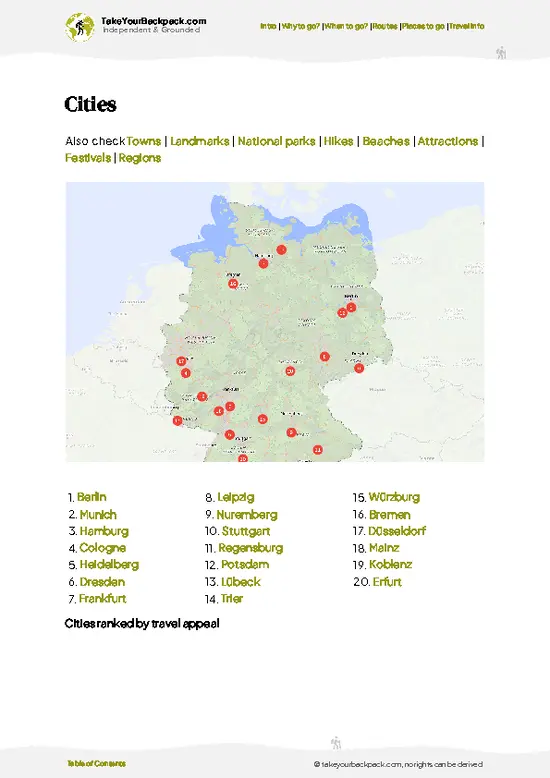
👌 Worth visitingcity ranked #15
By Johan Kruseman 🇳🇱 | Updated July 30, 2026

Most people skip Würzburg on the way between Frankfurt and Nuremberg, but it’s one of the few German “student towns” where you can drink cheap wine on a fortress wall while looking straight down at a baroque palace that rivals anything in Munich. Sitting in northern Bavaria on the Main River, it’s compact, walkable, and easy to slot into an Interrail route. The Residenz, Marienberg Fortress, and the bridgeside wine stands are the headliners; nightlife is solid but not wild, and hostels are fewer than in bigger cities, so meeting other backpackers takes a bit more effort. Prices are mid-range for Germany, safer and calmer than Frankfurt, livelier than Bamberg, with a relaxed, wine-fueled, slightly academic vibe that rewards slow evenings more than big nights out.

Discover everything you want to know in the 📖 Germany Travel Guide.


Get your Germany guide
140 ranked highlights, routes & tips, works offline (514 pages)
Loading the map 🌍
CLICK TO FILTER
cities
towns
landmarks
national parks
hikes
beaches
attractions
festivals
regions
SHOW COUNTRY’S BESTSHOW ALL

✨ Why go?
Ranked #15 city in Germany
What sets this place apart

Würzburg is a strategic stop for backpackers weaving through Germany. It’s not just about the highlights; it’s about how they fit into your journey. The city offers a basecamp value that’s hard to beat. You can easily launch day trips to nearby gems without the hassle of constant packing.

Accommodations are plentiful, with affordable hostels that foster a social vibe, perfect for meeting fellow travelers. The food scene is a delightful mix of local fare and international options, keeping your taste buds happy without breaking the bank.

Würzburg’s walkability makes it a breeze to explore on foot, allowing you to soak in the atmosphere without the stress of public transport. When the sun sets, the nightlife buzzes with energy, offering a range of bars and cafes to unwind. Plus, onward travel … read more 👉
Würzburg is a strategic stop for backpackers weaving through Germany. It’s not just about the highlights; it’s about how they fit into your journey. The city offers a basecamp value that’s hard to beat. You can easily launch day trips to nearby gems without the hassle of constant packing.

Accommodations are plentiful, with affordable hostels that foster a social vibe, perfect for meeting fellow travelers. The food scene is a delightful mix of local fare and international options, keeping your taste buds happy without breaking the bank.

Würzburg’s walkability makes it a breeze to explore on foot, allowing you to soak in the atmosphere without the stress of public transport. When the sun sets, the nightlife buzzes with energy, offering a range of bars and cafes to unwind. Plus, onward travel is simple, connecting you to major hubs. This city is ideal for those seeking a blend of culture and convenience, making it more than just a pit stop.
Want to include Würzburg in your Germany route?
Create a personalized Germany itinerary that includes Würzburg and the places that fit your trip — based on your travel style, budget, and available time. Get your route in seconds.

Generate my trip

💡 HighlightsWhat this place is best known for

  1. Würzburg Residence (Würzburger Residenz) — A UNESCO baroque palace with Tiepolo ceiling frescoes and perfectly manicured gardens; tour the state rooms and you’ll get why this place is the city’s showpiece.
  2. Marienberg Fortress (Festung Marienberg) — Dominating the hill above the Main, the fortress offers military history, a museum of Franconian art and sweeping views of Würzburg’s rooftops and vineyards. Walk up or take the short bus—both are worth it.
  3. Alte Mainbrücke (Old Main Bridge) — Lined with saints’ statues and local winetaverns, this is where locals sit with a bottle of Franconian wine at sunset. Great for people-watching and postcard views of the fortress.
  4. Würzburg Cathedral (St. Kilian / Kiliansdom) — One of Germany’s largest Romanesque churches; its atmosphere, carved choir
read more 👉
  1. Würzburg Residence (Würzburger Residenz) — A UNESCO baroque palace with Tiepolo ceiling frescoes and perfectly manicured gardens; tour the state rooms and you’ll get why this place is the city’s showpiece.
  2. Marienberg Fortress (Festung Marienberg) — Dominating the hill above the Main, the fortress offers military history, a museum of Franconian art and sweeping views of Würzburg’s rooftops and vineyards. Walk up or take the short bus—both are worth it.
  3. Alte Mainbrücke (Old Main Bridge) — Lined with saints’ statues and local winetaverns, this is where locals sit with a bottle of Franconian wine at sunset. Great for people-watching and postcard views of the fortress.
  4. Würzburg Cathedral (St. Kilian / Kiliansdom) — One of Germany’s largest Romanesque churches; its atmosphere, carved choir stalls and centuries of episcopal history make it more than just a pretty façade.
  5. Käppele (Wallfahrtskirche Mariä Heimsuchung) — A hilltop pilgrimage church reached by a beautiful Baroque staircase of Stations of the Cross; quiet, scenic and a local favorite for sunset panoramas.
  6. Juliusspital — Not just a hospital: this historic foundation runs vineyards, wine cellars and a charming courtyard. Drop in for a tasting or to see the old hospital chapel and wine baroque architecture.
  7. Marktplatz & Falkenhaus — The bustling market square with the frothy rococo Falkenhaus façade and weekly markets. It’s the best spot to soak up daily life and try Würzburg street food or local producers.
  8. Museum im Kulturspeicher — Housed in an old riverside granary, this contemporary and modern art museum has rotating exhibitions and a stunning riverside setting; good contrast to the city’s baroque side.
  9. Mainfränkisches Museum — The go-to place for regional art and artifacts: medieval pieces, Franconian treasures and displays that explain this area’s culture and history in an accessible way.
  10. Neumünster & Cloister Garden — A baroque church complex beside the river with a peaceful cloister garden and striking interior mosaics; tucked-in, contemplative and often less crowded than other sites.
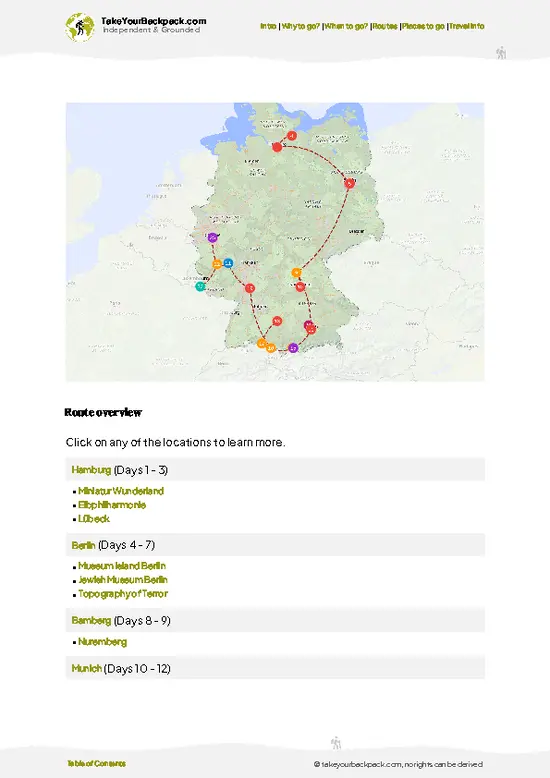
A few excellent day-trip options nearby: the rococo Schloss Veitshöchheim and its gardens, the medieval town of Rothenburg ob der Tauber, and the historic city of Bamberg — all easily reachable from Würzburg.
Spotted a mistake or missing something? Contact us.

Things to do in Würzburg

Ratings based on Tripadvisor reviews. When you book through this link, you support our work at no extra cost to you.

🏘️ NeighborhoodsHow different areas shape the experience

Würzburg is a compact city that packs a punch for backpackers, blending rich history with a vibrant atmosphere. Here’s how the neighborhoods stack up:

Altstadt (Old Town): This is the heart of Würzburg, where history meets hustle. You’ll find the Residenz, a UNESCO site, and plenty of cozy cafes. It’s walkable, making it easy to explore on foot. Prices can be higher here, but the experience is worth it. Perfect for short stays, especially if you want to soak in the local culture and nightlife.

Sanderau: A quieter residential area, Sanderau offers a more laid-back vibe. It’s still close to the center, with good transport links. Ideal for longer stays if you prefer a peaceful retreat after a day of exploration. Prices are moderate, and you’ll find local eateries that won’t break the bank.
read more 👉
Würzburg is a compact city that packs a punch for backpackers, blending rich history with a vibrant atmosphere. Here’s how the neighborhoods stack up:

Altstadt (Old Town): This is the heart of Würzburg, where history meets hustle. You’ll find the Residenz, a UNESCO site, and plenty of cozy cafes. It’s walkable, making it easy to explore on foot. Prices can be higher here, but the experience is worth it. Perfect for short stays, especially if you want to soak in the local culture and nightlife.

Sanderau: A quieter residential area, Sanderau offers a more laid-back vibe. It’s still close to the center, with good transport links. Ideal for longer stays if you prefer a peaceful retreat after a day of exploration. Prices are moderate, and you’ll find local eateries that won’t break the bank.

Zellerau: This neighborhood is a bit off the tourist path, but it’s where you’ll find a more authentic Würzburg experience. It’s walkable and has a mix of nightlife and quiet spots. Great for budget-conscious travelers looking for local charm. Perfect for both short and longer stays, especially if you want to mingle with locals.

Frauenland: A student-heavy area, Frauenland buzzes with youthful energy. It’s affordable and has a lively nightlife scene. Walkable and well-connected, it’s a great choice for those looking to experience Würzburg’s vibrant side while keeping costs down. Ideal for short stays, especially if you enjoy a lively atmosphere.

⌛️ 1 dayHow to make the most of one day

Würzburg, a charming city in Bavaria, is a delightful blend of history, culture, and stunning architecture. Its baroque buildings and vineyards create a picturesque backdrop, making it a perfect spot for a day of exploration.

Start your morning at the Marktplatz, where the vibrant atmosphere is palpable. Grab a fresh pretzel and a cup of coffee from a local vendor. The Würzburg Residence, a UNESCO World Heritage site, is just a short stroll away. Spend an hour marveling at its opulent rooms and the grand staircase, which feels like stepping into a royal past.

In the afternoon, head to the Old Main Bridge. This iconic spot offers stunning views of the fortress and the river. Cross the bridge and wander through the Juliusspital vineyard, where you can sample some local wines. It’s a lesser-known … read more 👉
Würzburg, a charming city in Bavaria, is a delightful blend of history, culture, and stunning architecture. Its baroque buildings and vineyards create a picturesque backdrop, making it a perfect spot for a day of exploration.

Start your morning at the Marktplatz, where the vibrant atmosphere is palpable. Grab a fresh pretzel and a cup of coffee from a local vendor. The Würzburg Residence, a UNESCO World Heritage site, is just a short stroll away. Spend an hour marveling at its opulent rooms and the grand staircase, which feels like stepping into a royal past.

In the afternoon, head to the Old Main Bridge. This iconic spot offers stunning views of the fortress and the river. Cross the bridge and wander through the Juliusspital vineyard, where you can sample some local wines. It’s a lesser-known gem, often overshadowed by the more touristy spots, but the experience of sipping wine surrounded by lush vines is unforgettable.

As evening approaches, make your way to the Neubau district. This area is less frequented by tourists, yet it’s brimming with cozy restaurants. Try a traditional Franconian dish at a local eatery. The ambiance is warm, and the locals are friendly, making it a perfect way to wrap up your day.

Würzburg may be compact, but its rich experiences and hidden corners make it a city worth savoring. Each moment spent here is a chance to connect with its vibrant culture and history.
Turn your Würzburg visit into an Germany adventure
Build a complete Germany route with Würzburg, hidden gems, must-see destinations, and realistic travel times included.

Generate my trip

🌤️ When to go?Weather, crowds, and seasonal trade-offs


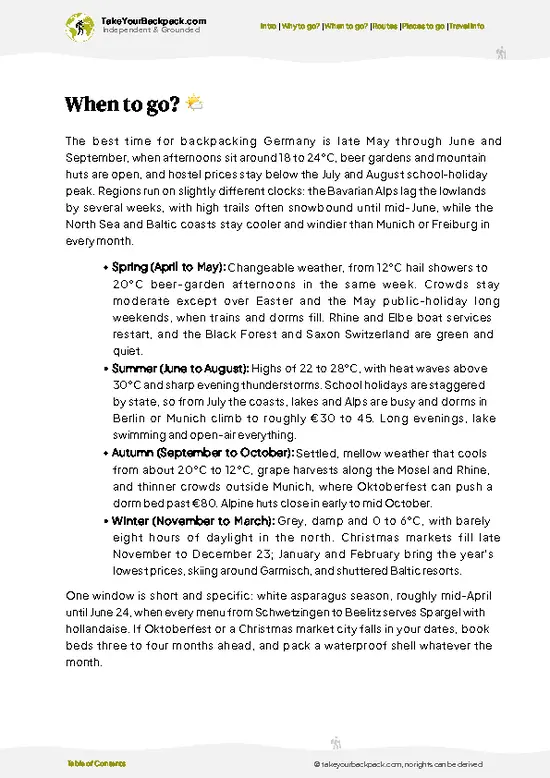
  • Weather: Würzburg’s weather swings from cold winters around -1°C (30°F) to warm summers hitting 25°C (77°F). Spring and early autumn offer mild, pleasant conditions ideal for walking and exploring without overheating or freezing.

  • Daylight Hours: Long summer days stretch to 16 hours, giving you more daylight for sightseeing and late-night strolls. Winter days shrink to about 8 hours, limiting outdoor time but enhancing cozy indoor experiences.

  • Crowds: Summer months attract tourists, especially July and August, bumping up crowds at vineyards and historic sites. Shoulder seasons like May and September provide a quieter, more authentic vibe.

  • Seasonal Activities: Wine festivals bloom in late summer and early autumn, a cultural highlight. Winter brings Christmas markets, turning the city
read more 👉

  • Weather: Würzburg’s weather swings from cold winters around -1°C (30°F) to warm summers hitting 25°C (77°F). Spring and early autumn offer mild, pleasant conditions ideal for walking and exploring without overheating or freezing.

  • Daylight Hours: Long summer days stretch to 16 hours, giving you more daylight for sightseeing and late-night strolls. Winter days shrink to about 8 hours, limiting outdoor time but enhancing cozy indoor experiences.

  • Crowds: Summer months attract tourists, especially July and August, bumping up crowds at vineyards and historic sites. Shoulder seasons like May and September provide a quieter, more authentic vibe.

  • Seasonal Activities: Wine festivals bloom in late summer and early autumn, a cultural highlight. Winter brings Christmas markets, turning the city into a festive playground but also a magnet for visitors.

  • Price Fluctuations: Accommodation and flights peak in summer and during Christmas markets. Booking in shoulder seasons can save you a solid chunk of cash without sacrificing experience quality.


Pro-tip: Aim for late spring or early autumn—sweet spots where weather, crowds, and prices align to give you the best bang for your backpacking buck.


source: climatestotravel.comJANJanuary: fair for travelingFEBFebruary: fair for travelingMARMarch: good for travelingAPRApril: highly recommended for travelingMAYMay: excellent for travelingJUNJune: highly recommended for travelingJULJuly: good for travelingAUGAugust: good for travelingSEPSeptember: excellent for travelingOCTOctober: highly recommended for travelingNOVNovember: good for travelingDECDecember: fair for traveling
germany-city-wurzburg
© Google | Constantin Cilibiu

✈️ The backpacker research shortcutGermany Travel Guide

An offline-friendly backpacking guide with optimized travel routes, ranked highlights, transport advice, and the best areas to stay.
example page 0 from our offline Travel Guide for Germany
example page 1 from our offline Travel Guide for Germany
example page 2 from our offline Travel Guide for Germany
example page 3 from our offline Travel Guide for Germany
example page 4 from our offline Travel Guide for Germany
example page 5 from our offline Travel Guide for Germany
example page 6 from our offline Travel Guide for Germany
example page 7 from our offline Travel Guide for Germany
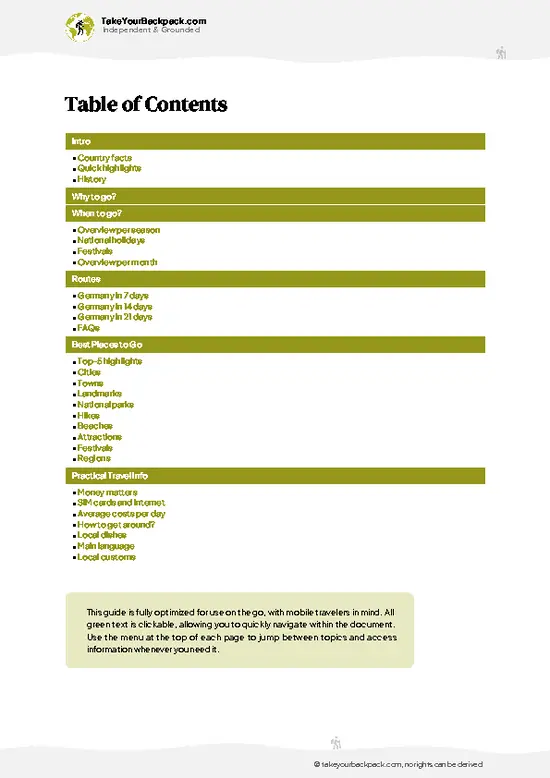
The digital guide (514 pages) contains:
140 highlights, ranked by travel appeal
Optimized 7, 14 & 21-day travel routes
Cities, national parks, landmarks, beaches
How to get around
Offline-friendly for travel without Wi-Fi
👉 Click to see all 30+ guide features

📅 Plan smarter in minutes, not weeks
Month by month travel advice
Festivals & national holidays
Budget expectations

🗺️ Go to the right places, skip the overrated ones
Honest pros & cons of destinations
Top hikes, parks & viewpoints
Lesser-known places most travelers miss
Clear “worth it vs skip it” guidance

🛏️ Travel smoothly without rookie mistakes
Best areas to stay
Transport systems explained simply
Common scams & safety advice
SIM cards, money & practical tips

🌍 Understand the country, not just visit it
Culture & traditions
52 Essential phrases & customs
Festivals worth planning around
Traveler-friendly historical context
Insights that make places more meaningful

📱 Built for real travel conditions
Fully downloadable PDF
Works completely offline
Optimized for phone use
Useful in remote areas & buses
Everything in one place
Save weeks of stressful planning
Get instant access to your full guide. 30‑day money-back guarantee.


By proceeding you agree to our terms.
Sent to your inbox immediately after payment • 100% Secure Checkout
Best Backpacking Travel Advisor 2025 tourism awardBest Backpacking
Travel Advisor
2025
What others say about Take Your Backpack Guides:
⭐⭐⭐⭐⭐
Fantastic, amazing amount of information!
⭐⭐⭐⭐⭐
My goodness this is amazing, it's what I've been looking for hats off too you!
⭐⭐⭐⭐⭐
I think this is absolutely BRILLIANT
⭐⭐⭐⭐
Very complete and informative. It's still missing places, but I gotta to commend you
⭐⭐⭐⭐⭐
This is truly amazing, thank you, can't wait to explore it with my kids!
⭐⭐⭐⭐⭐
Awesome resource, thank you!
⭐⭐⭐⭐⭐
This is amazing! Can't wait to explore the ones I haven't seen
⭐⭐⭐⭐
I love this! Well done, great idea.
⭐⭐⭐⭐⭐
Thanks for taking the time to make this gem!
⭐⭐⭐⭐⭐
This might be the best website I've ever seen.
⭐⭐⭐⭐⭐
Congratulations, and thank you so much for your work; it's incredibly valuable.
⭐⭐⭐⭐
In all seriousness I think you did a great job pointing out the important spots
⭐⭐⭐⭐⭐
10/10 very good
⭐⭐⭐⭐⭐
As someone who's only just starting to visit regularly this is awesome, thank you.
⭐⭐⭐⭐
Thank you very much! I'm going to visit my dad, it's going to be very useful!
⭐⭐⭐⭐⭐
This is really cool! We'll be travelling for the first time and this definitely come in handy.
⭐⭐⭐⭐⭐
You are now our minister of culture, congratulations 👨‍💼
⭐⭐⭐⭐⭐
Just wanted to tell you that this is a pearl! Going to follow your recommendations.
⭐⭐⭐⭐⭐
This is so cool. I'll definitely be using the resource for my travels soon.
⭐⭐⭐⭐⭐
This is very impressive! Good work.
⭐⭐⭐⭐⭐
This is an amazing and informative site. Very well done!

🛏️ Where to stay?Choosing the right base

Altstadt (Old Town) is the prime spot for backpackers in Würzburg. It’s compact, safe, and buzzing with life—perfect for solo travelers who want to dive into the city’s pulse without wasting time on transit. You’ll find plenty of budget hostels here, often within walking distance of the main sights, bars, and eateries. The vibe is a mix of historic charm and youthful energy, thanks to the university crowd. It’s social without being overwhelming, making it easy to meet fellow travelers.

Compared to neighborhoods like Sanderau or Heidingsfeld, which are quieter and more residential, Altstadt offers … read more 👉
Altstadt (Old Town) is the prime spot for backpackers in Würzburg. It’s compact, safe, and buzzing with life—perfect for solo travelers who want to dive into the city’s pulse without wasting time on transit. You’ll find plenty of budget hostels here, often within walking distance of the main sights, bars, and eateries. The vibe is a mix of historic charm and youthful energy, thanks to the university crowd. It’s social without being overwhelming, making it easy to meet fellow travelers.

Compared to neighborhoods like Sanderau or Heidingsfeld, which are quieter and more residential, Altstadt offers a better balance of comfort and convenience. You sacrifice a bit of peace for access and atmosphere, but that trade-off is worth it if your priority is connecting with others and maximizing your time. Staying here means you’re plugged into Würzburg’s heartbeat, not just passing through it.

🚌 Getting aroundHow to get from A to B

Würzburg moves with a rhythm that’s part old-world precision, part relaxed charm. The city’s pulse is set by its trams and buses, which run on a dependable schedule, but the vibe on the streets feels casual—locals stroll, pause for coffee, and let the day unfold without a frantic rush. It’s a place where you can trust the timetable but still savor the freedom to wander. Understanding this flow is your first win: Würzburg’s transit system rewards those who plan smartly but also leaves room for spontaneous detours.


  • Walking: Würzburg’s compact center is a treasure trove best explored on foot. Most major sights are within a 20-minute walk of each other, making this the cheapest and most immersive option. No schedules, no fares—just your own pace and the city’s layers unfolding beneath your
read more 👉
Würzburg moves with a rhythm that’s part old-world precision, part relaxed charm. The city’s pulse is set by its trams and buses, which run on a dependable schedule, but the vibe on the streets feels casual—locals stroll, pause for coffee, and let the day unfold without a frantic rush. It’s a place where you can trust the timetable but still savor the freedom to wander. Understanding this flow is your first win: Würzburg’s transit system rewards those who plan smartly but also leaves room for spontaneous detours.


  • Walking: Würzburg’s compact center is a treasure trove best explored on foot. Most major sights are within a 20-minute walk of each other, making this the cheapest and most immersive option. No schedules, no fares—just your own pace and the city’s layers unfolding beneath your feet.


  • Tram (Straßenbahn): The backbone of Würzburg’s public transit, trams run roughly every 10-15 minutes from early morning (around 5:00 AM) until midnight. A single ticket costs about €2.50 and covers a 90-minute window, perfect for hopping on and off. Trams are punctual and comfortable, a solid choice if you want to cover more ground quickly without breaking the bank.


  • Bus: Buses fill in the gaps where trams don’t reach, especially in outer neighborhoods. They share the same ticket system and timetable constraints, but expect a bit more variability in frequency—some lines run every 20-30 minutes. Ideal for budget travelers aiming to explore beyond the city core without renting a bike or car.


  • Bicycle Rentals: If you want to blend speed with freedom, renting a bike is a smart move. Würzburg is bike-friendly, with dedicated lanes and scenic routes along the Main River. Rentals start around €10 per day, offering a middle ground between walking and public transit in terms of cost and comfort.


Mastering Würzburg’s transit means balancing your time and money against how much comfort you want. Walk when you can to soak it all in, jump on a tram to save time, and use buses or bikes to stretch your radius without overspending. This isn’t just transportation—it’s your strategy for unlocking the city’s best moments.

👛 Costs (as of 30 July 2026)Travel costs and budget guide for Würzburg

Backpacking in Würzburg, Germany, comes with a clear set of trade-offs between time, money, and comfort. Knowing what you’re paying for—and what you’re giving up—lets you make smarter choices that fit your style and goals.
  • Dorm Accommodation (High Season): Expect to pay around €25 to €35 per night in popular hostels during peak months (May to September). These spots fill fast, so you’re paying a premium for convenience and social buzz.
  • Dorm Accommodation (Off-Season): From October through April, prices drop to about €18 to €25. You sacrifice some atmosphere and possibly fewer events, but you gain quieter nights and more space.
  • Meals: Budget about €10 to €15 daily if you stick to supermarkets, street food, or casual eateries. Würzburg has solid bakeries and markets where you can grab fresh,
read more 👉
Backpacking in Würzburg, Germany, comes with a clear set of trade-offs between time, money, and comfort. Knowing what you’re paying for—and what you’re giving up—lets you make smarter choices that fit your style and goals.
  • Dorm Accommodation (High Season): Expect to pay around €25 to €35 per night in popular hostels during peak months (May to September). These spots fill fast, so you’re paying a premium for convenience and social buzz.
  • Dorm Accommodation (Off-Season): From October through April, prices drop to about €18 to €25. You sacrifice some atmosphere and possibly fewer events, but you gain quieter nights and more space.
  • Meals: Budget about €10 to €15 daily if you stick to supermarkets, street food, or casual eateries. Würzburg has solid bakeries and markets where you can grab fresh, affordable bites. Dining out at mid-range restaurants pushes this higher, around €20 to €30 per day.
  • Local Transport: Single bus or tram rides cost roughly €2.50 each. If you’re hopping on and off multiple times, this adds up quickly.
  • City Transport Pass: A day pass is about €5.50, which makes sense if you plan to explore widely or have a packed schedule. It’s a classic time-money trade-off: pay upfront to save hassle and cash on multiple tickets.
  • Basic Activities/Entry Fees: Museums and attractions typically charge between €5 and €10. Würzburg’s Residenz Palace, for example, is around €8. Budget a bit more if you want guided tours or special exhibitions.
  • Miscellaneous Expenses: Think snacks, water, occasional coffee, or small souvenirs—set aside €5 to €10 daily. These add up quietly but can shape your experience significantly.

Add it all up, and you’re looking at a daily budget roughly between €50 and €75 for a backpacker who balances comfort and economy. Push for the lower end by choosing off-season stays, cooking some meals, and limiting paid activities. Or lean into convenience and richer experiences, and the price climbs accordingly. Understanding these trade-offs means you’re not just spending money—you’re investing in the kind of trip you want.


source: numbeo.com
⚠️ Prices can change and everyone travels differently, so take this as a rough guide. Hope it helps you plan your adventure!

🚌 Day tripsWhere to go beyond the main area

Würzburg is a fantastic launchpad for day trips that blend culture, history, and stunning landscapes. Here’s how to maximize your time and money while diving into the heart of Franconia.

Rothenburg ob der Tauber
Just an hour away, Rothenburg feels like stepping into a medieval fairy tale. The well-preserved walls and cobblestone streets are perfect for wandering. Don’t miss the Night Watchman tour for a quirky take on the town’s history. Budget around €15 for transport and a few euros for snacks. The best time to visit is spring or fall when the crowds thin out. A common mistake? Skipping the local shops for souvenirs; they often have unique, handcrafted items that are worth the splurge.
👉 Explore Rothenburg ob der Tauber

Bamberg
About 1.5 hours from Würzburg, Bamberg is a UNESCO World … read more 👉
Würzburg is a fantastic launchpad for day trips that blend culture, history, and stunning landscapes. Here’s how to maximize your time and money while diving into the heart of Franconia.

Rothenburg ob der Tauber
Just an hour away, Rothenburg feels like stepping into a medieval fairy tale. The well-preserved walls and cobblestone streets are perfect for wandering. Don’t miss the Night Watchman tour for a quirky take on the town’s history. Budget around €15 for transport and a few euros for snacks. The best time to visit is spring or fall when the crowds thin out. A common mistake? Skipping the local shops for souvenirs; they often have unique, handcrafted items that are worth the splurge.
👉 Explore Rothenburg ob der Tauber

Bamberg
About 1.5 hours from Würzburg, Bamberg is a UNESCO World Heritage site known for its stunning architecture and vibrant beer culture. The Old Town is a maze of charming alleys and the famous smoked beer, Rauchbier, is a must-try. Expect to spend around €20 for transport and a meal. Late spring is ideal, as the beer gardens come alive. First-timers often overlook the little breweries tucked away from the main square; these are where the real magic happens.
👉 Explore Bamberg

Miltenberg
Just a short 45-minute train ride, Miltenberg is a picturesque town along the Main River. The half-timbered houses and the historic castle provide a perfect backdrop for a leisurely day. You can easily explore on foot, making it a budget-friendly option at around €10 for transport. Late summer is lovely, with outdoor festivals adding to the atmosphere. Many visitors miss the local wine taverns; don’t skip the chance to taste the regional wines!


Aschaffenburg
In under an hour, you can reach Aschaffenburg, home to the impressive Johannisburg Castle. The castle’s gardens are perfect for a picnic, and the town has a relaxed vibe. Plan for about €15 for transport and a light lunch. Early autumn is particularly pleasant. A common oversight is not checking the castle’s opening hours; they can vary, so plan ahead!
Want to know what more Germany offers?
The Germany Travel Guide describes 140 highlights, from cities to national parks, from beaches to hikes

Get the Travel Guide -

🍲 FoodLocal Flavors for Backpackers

In Würzburg, local cuisine is a celebration of hearty flavors. Don’t miss the Schäufele, a tender pork shoulder, often served with potato dumplings and sauerkraut. Pair it with a glass of Franconian wine, especially the crisp Silvaner. This region is known for its vineyards, and sipping wine while overlooking the river is a must.

For a casual bite, head to the Marktplatz. Here, you’ll find stalls offering Bratwurst sizzling on the grill, filling the air with mouthwatering aromas. Grab one in a bun, topped with mustard, and you’re set for a quick, satisfying meal.

Würzburg’s drinking culture thrives in its wine taverns and biergartens. Locals often gather to enjoy a glass of wine or a local beer, sharing stories and laughter. Remember, it’s customary to clink glasses and make eye contact … read more 👉
In Würzburg, local cuisine is a celebration of hearty flavors. Don’t miss the Schäufele, a tender pork shoulder, often served with potato dumplings and sauerkraut. Pair it with a glass of Franconian wine, especially the crisp Silvaner. This region is known for its vineyards, and sipping wine while overlooking the river is a must.

For a casual bite, head to the Marktplatz. Here, you’ll find stalls offering Bratwurst sizzling on the grill, filling the air with mouthwatering aromas. Grab one in a bun, topped with mustard, and you’re set for a quick, satisfying meal.

Würzburg’s drinking culture thrives in its wine taverns and biergartens. Locals often gather to enjoy a glass of wine or a local beer, sharing stories and laughter. Remember, it’s customary to clink glasses and make eye contact while toasting—it’s all about connection. Embrace the laid-back vibe, and let the flavors of Würzburg guide your culinary adventure.

🛡️ SafetyScams, Hazards, and Annoyances

Würzburg is generally safe, but like any city, a little awareness goes a long way. Stick to well-lit areas when wandering at night, especially around the Old Town and along the river. Solo travelers should feel comfortable, but keep your belongings close—pickpockets can be a nuisance in crowded spots like the market square.

Scams are rare, but be cautious of overly friendly strangers asking for money or offering unsolicited help. If someone approaches you with a sob story, a polite decline is usually best. Everyday annoyances include the occasional street performer who might get a bit too persistent for your taste. Just smile and walk on. By staying alert and trusting your instincts, you can navigate Würzburg with ease and enjoy its charm.

Other German cities near Würzburg

Explore more nearby:

  • Nürnberg—Castle hill, WWII sites, Christmas market| 89 km away
  • Frankfurt—Skyscraper skyline, financial district, airport hub| 98 km away
  • Heidelberg—Castle ruins, Neckar river, student traditions| 102 km away

💡 Not sure where to go next?
Create a personalized itinerary for Germany including Würzburg and the places that fit your trip.

Generate my itinerary

👉 Discover all cities

Or checkout all Germany has to offer (think cities, towns, villages, national parks, hikes, beaches, festivals)
Country photo of Germany

We 💚 feedbackKey takeaways before you go

Würzburg is a treasure trove of Baroque architecture, especially the Residenz, which feels like stepping into a painting. You’ll savor the local wines too—trust me, they’re worth the detour. But be ready for a compact city; it can feel crowded during festivals. Embrace the hustle, and you’ll find the charm in the chaos. Just know that the best experiences often come with a bit of a squeeze.

✈️ When did I visit Germany?
Being a neighbouring country of my home base, I visited Germany many times.

✍️ Help improve this page!
The information on this page is based on my own backpacking experience in Germany, supplemented with up-to-date research and feedback from other travelers. Travel details can change, so if you notice anything outdated or incomplete, feel free to let me know.


🙋‍♂️ Give feedback

👋 Meet the founderWho’s Behind Take Your Backpack?

Johan, backpacker and founder of TakeYourBackpackHi, I’m Johan (Netherlands 🇳🇱), the creator of TakeYourBackpack. Over the past decade, I’ve backpacked through 80+ countries across six continents, gaining extensive experience with independent travel, long-term trips, and overland routes.

This site is built on a combination of firsthand travel experience and carefully curated insights from other backpackers. Many guides are based on places I’ve personally visited, while others bring together tips, observations, and practical advice shared by trusted travelers I’ve met along the way.

The goal is to provide realistic, experience-driven guidance — not generic itineraries — so you can explore destinations with better context, clearer expectations, and more confidence.

Get full Germany guide •
Instant download • 140 highlights • Full Offline guide