×

Ghana🇬🇭 | townsBibiani
Mining town, forest fringe, rail junction | things to do and best time to go

Explore NkawkawExplore Dunkwa-on-Offin

Backpacking in Bibiani
👌 Worth visitingtown ranked #23
By Johan Kruseman 🇳🇱 | Updated May 12, 2026

Your shirt sticks to your back as you step off the tro-tro, the air thick with the scent of fried plantain and red dust. Bibiani sits in Ghana’s Western North Region, a mining town that hums with the sound of commerce but rarely makes the tourist circuit. For backpackers, Bibiani is more crossroads than destination—useful as a launchpad for forest hikes or as a pit stop between Kumasi and the coast. The market’s lively, but there’s no old town to wander; you’ll find more practical guesthouses than hostels, and evenings lean quiet unless you befriend locals over street food. Transport is straightforward—shared taxis and buses rule, but don’t expect much English or backpacker camaraderie. Costs are low, safety is standard for rural Ghana, and compared to busier towns like Tarkwa, Bibiani feels more workaday, less scenic, but refreshingly real.

Discover everything you want to know in the 📖 Ghana Travel Guide.
Loading the map 🌍
CLICK TO FILTER
city
town
village
unique site
national park
hike
beach
attraction
festival
region
SHOW COUNTRY‘S BESTSHOW ALL

✨ Why go?
Ranked #23 town in Ghana
What sets this place apart

Bibiani serves as a gateway for backpackers seeking both adventure and cultural immersion. Its proximity to lush hiking trails and local markets makes it a practical stop for those wanting to explore the natural beauty of Ghana. The walkable streets invite leisurely strolls, while small-scale guesthouses offer a cozy atmosphere where you can swap stories with fellow travelers. Expect a mix of solo adventurers and small groups, often lingering a few days to soak in the local cuisine and friendly vibes. It’s not a party hub, but the social energy is palpable, making it perfect for those who appreciate a community feel.
Get the complete Travel Guide for Ghana
Everything organized for offline planning — routes, highlights, costs & tips

See what’s inside 👉

Get the Travel Guide -

💡 HighlightsPlaces and moments you shouldn't skip

  • Bibiani Central Market — The beating heart of the town: fresh produce, livewire trade in cocoa and cassava, street food stalls and a great place to watch daily life and practice your bargaining.
  • Bibiani Chief’s Palace (Traditional Council) — The cultural center where local chieftaincy is practiced; visiting (with permission) gives a window into Akan protocol, stools, drumming and local lore.
  • Bibiani Timber Quarter and Sawmills — Bibiani’s timber industry is real and visible on short walks around the industrial area; you’ll see skilled carpenters, open-air wood yards and traditional joinery that tell the town’s economic story.
  • Cocoa Buying Centers and Farmer Co-ops — Seasonal but very experiential: watch farmers deliver beans, learn the grading process and feel how cocoa shapes community
read more 👉
  • Bibiani Central Market — The beating heart of the town: fresh produce, livewire trade in cocoa and cassava, street food stalls and a great place to watch daily life and practice your bargaining.
  • Bibiani Chief’s Palace (Traditional Council) — The cultural center where local chieftaincy is practiced; visiting (with permission) gives a window into Akan protocol, stools, drumming and local lore.
  • Bibiani Timber Quarter and Sawmills — Bibiani’s timber industry is real and visible on short walks around the industrial area; you’ll see skilled carpenters, open-air wood yards and traditional joinery that tell the town’s economic story.
  • Cocoa Buying Centers and Farmer Co-ops — Seasonal but very experiential: watch farmers deliver beans, learn the grading process and feel how cocoa shapes community rhythms around harvest time.
  • Main Town Churches and Religious Sites — The town’s churches (and mosques) are active community hubs with noteworthy stained glass, choir life and weekly gatherings that reveal local faith, music and social networks.
  • Bibiani Senior High Technical School campus — Ghanaian SHS campuses are social anchors; visiting (during public events) exposes spirited student life, timber-work and technical displays often tied to local crafts.
  • Weekly Market Day (the town’s market day) — The expanded market day turns the town into a regional trading hub: livestock, second-hand goods, cloth merchants and itinerant food vendors make it a must for photographers and culture-watchers.
  • Local Food Stalls and Street-food Corridors — Simple but essential: try local fufu, light soup, red-red and grilled tilapia from the busy food corridors to understand everyday Bibiani tastes and hospitality.
  • Community Palm-oil and Cassava Processing Sites — Visiting a small processing spot (with permission) gives a hands-on view of rural industries — traditional methods, communal labor and seasonal rhythms are all on display.
  • Municipal Assembly Area and Market Square — The civic core where announcements, small events and local politics happen; good for catching local festivals, parades or public meetings that shape town life.
A few easy day trips from Bibiani: the Bibiani Forest Reserve for short forest walks, nearby cocoa farms and village circuits to see rural life up close, and the regional market towns and cultural sites in the Bibiani-Anhwiaso-Bekwai area.
Spotted a mistake or missing something? Contact us.
🏘️ NeighborhoodsWhere things are and how it's laid out

Bibiani is a lively town in Ghana, rich in culture and local charm, perfect for backpackers seeking authentic experiences.

Central Bibiani: This area buzzes with energy. Markets overflow with fresh produce and street food. It’s walkable, making it easy to explore local shops. Nightlife is low-key, with a few bars where you can mingle with locals. Ideal for short stays, as everything is within reach.

Nkwanta: A quieter neighborhood, Nkwanta offers a more laid-back vibe. It’s less touristy, providing a genuine glimpse into daily life. Transport options are available, but you might need to rely on shared taxis. Perfect for longer stays if you want to soak in the local culture.

Bokro: This area is a bit off the beaten path. It’s more residential, with fewer amenities but a strong sense of community. … read more 👉
Bibiani is a lively town in Ghana, rich in culture and local charm, perfect for backpackers seeking authentic experiences.

Central Bibiani: This area buzzes with energy. Markets overflow with fresh produce and street food. It’s walkable, making it easy to explore local shops. Nightlife is low-key, with a few bars where you can mingle with locals. Ideal for short stays, as everything is within reach.

Nkwanta: A quieter neighborhood, Nkwanta offers a more laid-back vibe. It’s less touristy, providing a genuine glimpse into daily life. Transport options are available, but you might need to rely on shared taxis. Perfect for longer stays if you want to soak in the local culture.

Bokro: This area is a bit off the beaten path. It’s more residential, with fewer amenities but a strong sense of community. If you’re looking for peace and a slower pace, this is your spot. Not ideal for nightlife, but great for those wanting to escape the hustle.

⌛️ 1 day1-day itinerary for Bibiani

Bibiani, a lively town in Ghana’s Western Region, pulses with the rhythm of everyday life. The air is thick with the scent of roasted plantains and the chatter of locals, making it a perfect spot for an authentic experience.

Start your morning at the bustling market. The vibrant colors of fresh produce and the sounds of bargaining fill the air. Grab a breakfast of kelewele—spicy fried plantains—while chatting with vendors. This is where you’ll feel the town’s heartbeat.

In the afternoon, head to the Bibiani River. The cool breeze and the gentle flow of water create a serene escape. Bring a book or just sit and soak in the atmosphere. If you’re feeling adventurous, take a short hike in the nearby hills for a panoramic view of the town.

As evening falls, explore the local eateries. Try a … read more 👉
Bibiani, a lively town in Ghana’s Western Region, pulses with the rhythm of everyday life. The air is thick with the scent of roasted plantains and the chatter of locals, making it a perfect spot for an authentic experience.

Start your morning at the bustling market. The vibrant colors of fresh produce and the sounds of bargaining fill the air. Grab a breakfast of kelewele—spicy fried plantains—while chatting with vendors. This is where you’ll feel the town’s heartbeat.

In the afternoon, head to the Bibiani River. The cool breeze and the gentle flow of water create a serene escape. Bring a book or just sit and soak in the atmosphere. If you’re feeling adventurous, take a short hike in the nearby hills for a panoramic view of the town.

As evening falls, explore the local eateries. Try a bowl of fufu with light soup at a family-run spot in the Aboso neighborhood. The warmth of the people and the rich flavors will make you feel right at home. This day in Bibiani isn’t just about sights; it’s about connecting with the soul of the place.
Build the Right Itinerary
Use the Ghana Travel Guide’s 5, 10 & 15-day routes as a starting point to plan a trip that actually works on the ground.

Get the Travel Guide -

🌤️ When to go?Weather, crowds, and seasonal trade-offs


  • Weather: Bibiani’s dry season from November to March offers clearer skies and less humidity, making trails less slippery and the air easier to breathe. The rainy season (April to October) brings heavy downpours that can turn paths into mud baths and obscure views.

  • Temperature: Expect highs around 28–32°C (82–90°F) year-round, but the dry season feels cooler and more comfortable, especially in the mornings and evenings when temperatures dip to 20°C (68°F).

  • Daylight Hours: Roughly 12 hours of daylight year-round, but the dry season’s clearer skies mean more consistent light for early starts and late hikes without the threat of sudden storms.

  • Crowds: Bibiani is off the beaten path, so crowds are minimal year-round. However, local festivals in the dry season can bring a lively buzz, adding
read more 👉

  • Weather: Bibiani’s dry season from November to March offers clearer skies and less humidity, making trails less slippery and the air easier to breathe. The rainy season (April to October) brings heavy downpours that can turn paths into mud baths and obscure views.

  • Temperature: Expect highs around 28–32°C (82–90°F) year-round, but the dry season feels cooler and more comfortable, especially in the mornings and evenings when temperatures dip to 20°C (68°F).

  • Daylight Hours: Roughly 12 hours of daylight year-round, but the dry season’s clearer skies mean more consistent light for early starts and late hikes without the threat of sudden storms.

  • Crowds: Bibiani is off the beaten path, so crowds are minimal year-round. However, local festivals in the dry season can bring a lively buzz, adding cultural flavor without overwhelming the town.

  • Seasonal Activities: Dry months are prime for exploring mining heritage sites and nearby forests without the hassle of rain, while the rainy season nurtures lush greenery, perfect if you’re chasing vibrant landscapes and fewer tourists.

  • Price Fluctuations: Accommodation and transport costs dip slightly during the rainy season due to lower demand, but the trade-off is dealing with unpredictable weather and muddy trails.


Pro-tip: Aim for late dry season—February to March—when the air is crisp, the landscape is still green, and you get the best balance of comfort, light, and local life.


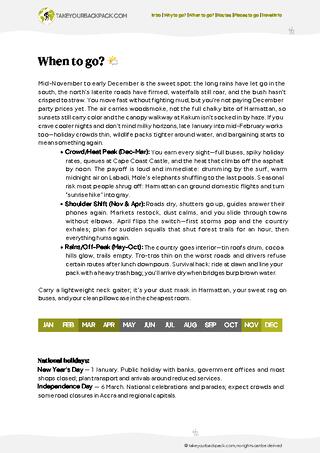
source: climatestotravel.comJANJanuary: highly recommended for travelingFEBFebruary: excellent for travelingMARMarch: excellent for travelingAPRApril: fair for travelingMAYMay: fair for travelingJUNJune: fair for travelingJULJuly: fair for travelingAUGAugust: fair for travelingSEPSeptember: good for travelingOCTOctober: good for travelingNOVNovember: highly recommended for travelingDECDecember: highly recommended for traveling
when-to-go

✈️ The backpacker research shortcutGhana Travel Guide

An offline-friendly backpacking guide with optimized travel routes, ranked highlights, transport advice, and the best areas to stay.
example page 0 from our offline Travel Guide for Ghanaexample page 1 from our offline Travel Guide for Ghanaexample page 2 from our offline Travel Guide for Ghanaexample page 3 from our offline Travel Guide for Ghanaexample page 4 from our offline Travel Guide for Ghanaexample page 5 from our offline Travel Guide for Ghana
The digital guide (365 pages) contains:
111 highlights, ranked by travel appeal
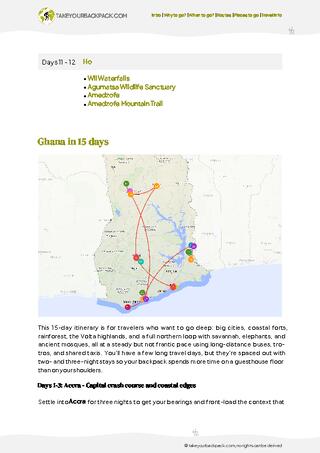
Optimized 5, 10 & 15-day travel routes
Best neighborhoods to stay
How to get around
Offline-friendly for travel without Wi-Fi
👉 See all 30+ guide features

📅 Plan smarter in minutes, not weeks
Month by month travel advice
Festivals & national holidays
Budget expectations

🗺️ Go to the right places, skip the overrated ones
Honest pros & cons of destinations
Top hikes, parks & viewpoints
Lesser-known places most travelers miss
Clear “worth it vs skip it” guidance

🛏️ Travel smoothly without rookie mistakes
Best areas to stay
Transport systems explained simply
Common scams & safety advice
SIM cards, money & practical tips

🌍 Understand the country, not just visit it
Culture & traditions
52 Essential phrases & customs
Festivals worth planning around
Traveler-friendly historical context
Insights that make places more meaningful

📱 Built for real travel conditions
Fully downloadable PDF
Works completely offline
Optimized for phone use
Useful in remote areas & buses
Everything in one place
Save weeks of stressful planning
Get instant access to the full guide directly. 30-day money-back guarantee.


Sent to your inbox immediately after payment • 100% Secure Checkout
Best Backpacking Travel Advisor 2025 tourism awardBest Backpacking
Travel Advisor
2025
What others say about Take Your Backpack Guides:
⭐⭐⭐⭐⭐
Fantastic, amazing amount of information!
⭐⭐⭐⭐⭐
My goodness this is amazing, it's what I've been looking for hats off too you!
⭐⭐⭐⭐⭐
I think this is absolutely BRILLIANT
⭐⭐⭐⭐
Very complete and informative. It's still missing places, but I gotta to commend you
⭐⭐⭐⭐⭐
This is truly amazing, thank you, can't wait to explore it with my kids!
⭐⭐⭐⭐⭐
Awesome resource, thank you!
⭐⭐⭐⭐⭐
This is amazing! Can't wait to explore the ones I haven't seen
⭐⭐⭐⭐
I love this! Well done, great idea.
⭐⭐⭐⭐⭐
Thanks for taking the time to make this gem!
⭐⭐⭐⭐⭐
This might be the best website I've ever seen.
⭐⭐⭐⭐⭐
Congratulations, and thank you so much for your work; it's incredibly valuable.
⭐⭐⭐⭐
In all seriousness I think you did a great job pointing out the important spots
⭐⭐⭐⭐⭐
10/10 very good
⭐⭐⭐⭐⭐
As someone who's only just starting to visit regularly this is awesome, thank you.
⭐⭐⭐⭐
Thank you very much! I'm going to visit my dad, it's going to be very useful!
⭐⭐⭐⭐⭐
This is really cool! We'll be travelling for the first time and this definitely come in handy.
⭐⭐⭐⭐⭐
You are now our minister of culture, congratulations 👨‍💼
⭐⭐⭐⭐⭐
Just wanted to tell you that this is a pearl! Going to follow your recommendations.
⭐⭐⭐⭐⭐
This is so cool. I'll definitely be using the resource for my travels soon.
⭐⭐⭐⭐⭐
This is very impressive! Good work.
⭐⭐⭐⭐⭐
This is an amazing and informative site. Very well done!

🛏️ Where to stay?Best areas and accommodation options

In Bibiani, the best spot for backpackers is the town center around the main market and the junction near the district assembly. This area hums with local life—vendors calling out, the scent of roasted plantains mixing with fresh earth after rain. It’s safe, well-lit at night, and where you’ll find the few budget guesthouses and informal hostels that cater to solo travelers. Staying here means easy access to transport and a chance to plug into the community vibe without wandering into quieter, less connected residential zones. The social pulse here beats strongest, making it easier to meet fellow … read more 👉
In Bibiani, the best spot for backpackers is the town center around the main market and the junction near the district assembly. This area hums with local life—vendors calling out, the scent of roasted plantains mixing with fresh earth after rain. It’s safe, well-lit at night, and where you’ll find the few budget guesthouses and informal hostels that cater to solo travelers. Staying here means easy access to transport and a chance to plug into the community vibe without wandering into quieter, less connected residential zones. The social pulse here beats strongest, making it easier to meet fellow travelers or locals over a shared meal or roadside chai.

🚌 Getting aroundMoving around without the hassle

Bibiani moves at its own pace—neither frantic nor sluggish, but a steady rhythm shaped by market hours and the hum of daily life. The air carries the scent of fresh earth and roasting plantains, while the streets pulse with a mix of purposeful strides and casual chats. Time here isn’t dictated by clocks but by the sun’s arc and the ebb of local commerce. If you want to blend in and get around without fuss, you’ll need to sync with this flow—embracing a bit of unpredictability while leaning on the town’s practical transit options.


  • Walking: The most reliable way to soak in Bibiani’s character. Distances between key spots are manageable, and the streets offer a sensory map of the town’s life. No cost, just wear sturdy shoes and expect uneven sidewalks.

  • Tro-Tro: These shared minibuses are
read more 👉
Bibiani moves at its own pace—neither frantic nor sluggish, but a steady rhythm shaped by market hours and the hum of daily life. The air carries the scent of fresh earth and roasting plantains, while the streets pulse with a mix of purposeful strides and casual chats. Time here isn’t dictated by clocks but by the sun’s arc and the ebb of local commerce. If you want to blend in and get around without fuss, you’ll need to sync with this flow—embracing a bit of unpredictability while leaning on the town’s practical transit options.


  • Walking: The most reliable way to soak in Bibiani’s character. Distances between key spots are manageable, and the streets offer a sensory map of the town’s life. No cost, just wear sturdy shoes and expect uneven sidewalks.

  • Tro-Tro: These shared minibuses are the budget traveler’s lifeline. They run frequently from early morning (around 6 AM) until early evening (about 6 PM), costing just a few cedis. Expect a lively, sometimes cramped ride with stops on demand.

  • Motorbike Taxis (Okada): When time is tight or the sun is high, these dart through traffic with ease. Negotiate fares upfront—usually cheap but variable—and hold on tight for a quick, bumpy ride.

  • Local Buses: Larger and less frequent than tro-tros, these run on set routes connecting Bibiani to nearby towns. They’re slower but more comfortable, with fares slightly higher. Departures typically align with market days and early morning schedules.

👛 Costs (as of 24 October 2025)Typical daily expenses

Backpacking in Bibiani, Ghana, is a straightforward experience with costs that reflect its small-town vibe and local pace of life. Here’s what you can expect to spend day-to-day as an independent traveler.
  • Dorm Accommodation: Bibiani doesn’t have a bustling hostel scene like bigger cities, so dorm-style options are limited. Budget guesthouses or shared rooms in local inns typically run around $5 to $10 per night. These places are basic but clean, often with a fan and shared bathroom. Expect simple, no-frills comfort.
  • Meals: Eating local is both a cultural dive and a wallet saver. Street food and small local eateries offer hearty meals like waakye or banku with soup for about $1 to $3. If you opt for a more formal restaurant, prices might creep up to $5. Fresh fruit and snacks from markets
read more 👉
Backpacking in Bibiani, Ghana, is a straightforward experience with costs that reflect its small-town vibe and local pace of life. Here’s what you can expect to spend day-to-day as an independent traveler.
  • Dorm Accommodation: Bibiani doesn’t have a bustling hostel scene like bigger cities, so dorm-style options are limited. Budget guesthouses or shared rooms in local inns typically run around $5 to $10 per night. These places are basic but clean, often with a fan and shared bathroom. Expect simple, no-frills comfort.
  • Meals: Eating local is both a cultural dive and a wallet saver. Street food and small local eateries offer hearty meals like waakye or banku with soup for about $1 to $3. If you opt for a more formal restaurant, prices might creep up to $5. Fresh fruit and snacks from markets are cheap and refreshing, perfect for midday breaks.
  • Local Transport: Getting around Bibiani is mostly on foot or by trotro (shared minibus). Short trotro rides cost around $0.20 to $0.50, making it easy to hop between neighborhoods or nearby villages. Taxis are available but pricier, around $2 to $5 for short trips, so reserve those for when you’re carrying heavy gear or traveling late.
  • Basic Activities/Entry Fees: Bibiani’s charm lies in its natural surroundings and local markets rather than ticketed attractions. Visiting local markets or walking through town is free. If you want to explore nearby forest reserves or cultural sites, expect small entry fees around $1 to $3. These modest costs keep your adventure authentic and low-key.
  • Miscellaneous Expenses: Budget a few dollars for essentials like bottled water, snacks, or phone credit. A 1.5-liter bottle of water costs about $0.50, and a local SIM card with data can be had for $5 to $10, enough to keep you connected without breaking the bank.

All told, you’re looking at a daily budget of roughly $8 to $20, depending on how much comfort or convenience you want. Bibiani rewards those who embrace its simplicity—walking the dusty streets, savoring local flavors, and moving at the rhythm of a town that’s off the usual tourist track. The modest costs here aren’t just about saving money; they’re part of the experience, grounding you in a place where every dollar stretches into a genuine connection.


source: ghana.travel
⚠️ Prices can change and everyone travels differently, so take this as a rough guide. Hope it helps you plan your adventure!

🚌 Day tripsWhere to go beyond the main area

Bibiani, Ghana, is a fantastic launchpad for day trips that immerse you in local culture and stunning landscapes. Here are some worthwhile excursions that will make your backpacking experience richer.

Kakum National Park
Just a couple of hours from Bibiani, Kakum offers a canopy walkway that sways high above the rainforest floor. The thrill of walking among the treetops is matched only by the symphony of chirping birds and rustling leaves below. Expect to pay around $10 for entry, and bring a packed lunch to enjoy in the park. The best time to visit is during the dry season, from November to March, when the trails are less muddy. First-timers often underestimate the park’s size; plan to spend at least half a day exploring.
👉 Explore Kakum National Park

Nzulezo Stilt Village
A unique … read more 👉
Bibiani, Ghana, is a fantastic launchpad for day trips that immerse you in local culture and stunning landscapes. Here are some worthwhile excursions that will make your backpacking experience richer.

Kakum National Park
Just a couple of hours from Bibiani, Kakum offers a canopy walkway that sways high above the rainforest floor. The thrill of walking among the treetops is matched only by the symphony of chirping birds and rustling leaves below. Expect to pay around $10 for entry, and bring a packed lunch to enjoy in the park. The best time to visit is during the dry season, from November to March, when the trails are less muddy. First-timers often underestimate the park’s size; plan to spend at least half a day exploring.
👉 Explore Kakum National Park

Nzulezo Stilt Village
A unique experience awaits at Nzulezo, a village built entirely on stilts over Lake Tadane. The journey takes about two hours by taxi and a short canoe ride. For around $15, you can explore the village and interact with locals, who are often eager to share their stories. The best time to visit is during the dry season when the water levels are stable. Many backpackers miss the chance to engage with the community; don’t just snap photos—take the time to learn about their way of life.


Bui National Park
For wildlife enthusiasts, Bui National Park is a must. About an hour’s drive from Bibiani, this park is home to elephants and various bird species. The entrance fee is around $5, and you can hire a local guide for about $10. The dry season is ideal for spotting wildlife, while the wet season can make trails tricky. A common mistake is not bringing enough water; the heat can be intense, so stay hydrated while you explore.
Want to know what more Ghana offers?
The Ghana Travel Guide describes 111 highlights, from cities to national parks, from beaches to hikes

Get the Travel Guide -

🛡️ SafetyScams, Hazards, and Annoyances

Bibiani is generally safe, but staying aware enhances your experience. Stick to well-lit areas at night; the streets can be quiet, and a little caution goes a long way. Solo travelers should blend in—dress modestly and engage with locals to build rapport.

Watch for common scams, like overly friendly strangers offering unsolicited help. Politely decline and keep your belongings close. Everyday annoyances include occasional power outages, so a portable charger is a smart companion. Embrace the rhythm of the town, and you’ll find the beauty in its simplicity.

Other Ghanaian towns near Bibiani

Explore more nearby:

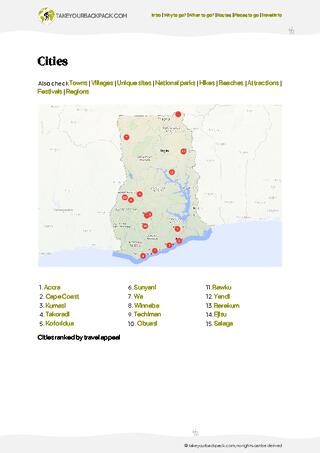
  • Dunkwa-on-Offin—Offin River, gold mining, market center| 80 km away
  • Mampong—Botanical gardens, teacher training college, Asante royal seat| 121 km away
  • Agogo—Asante town, mango orchards, Presbyterian mission| 141 km away

👉 Discover all towns

Or checkout all Ghana has to offer (think cities, towns, villages, national parks, hikes, beaches, festivals)
Country photo of Ghana

We 💚 feedbackParting advice and final tips

Bibiani’s charm lies in its vibrant local markets, where the air is thick with the scent of spices and laughter. But be ready for the heat; it can be relentless. Embrace the sweat—it’s part of the experience that makes the community feel alive.

✈️ When did I visit Ghana?
Ghana I visited in December 2024, starting in Accra following the coast, then up north to Mole National park to finish in the Volta Region.

✍️ Help improve this page!
The information on this page is based on my own backpacking experience in Ghana, supplemented with up-to-date research and feedback from other travelers. Travel details can change, so if you notice anything outdated or incomplete, feel free to let me know.


🙋‍♂️ Give feedback

👋 Meet the founderWho’s Behind Take Your Backpack?

Johan, backpacker and founder of TakeYourBackpackHi, I’m Johan (Netherlands 🇳🇱), the creator of TakeYourBackpack. Over the past decade, I’ve backpacked through 80+ countries across six continents, gaining extensive experience with independent travel, long-term trips, and overland routes.

This site is built on a combination of firsthand travel experience and carefully curated insights from other backpackers. Many guides are based on places I’ve personally visited, while others bring together tips, observations, and practical advice shared by trusted travelers I’ve met along the way.

The goal is to provide realistic, experience-driven guidance — not generic itineraries — so you can explore destinations with better context, clearer expectations, and more confidence.

Get Full Country Guide |
Instant download • 111 highlights • Full Offline guide