×

Ghana🇬🇭 | national parksKakum National ParkCanopy walkway, Cape Coast hinterland, rainforest birds | things to do and best time to go

Explore Digya National ParkExplore Mole National Park

Backpacking in Kakum
🏆 Top picknational park ranked #2
By Johan Kruseman 🇳🇱 | Updated October 2, 2026

Kakum is not a place for wild trekking through unbroken jungle, and it is not a safari either. Most visitors come for the canopy walkway, which takes about 30 minutes, and leave without ever seeing the rest of the park. It sits in Ghana’s Central Region, about 30 km north of Cape Coast, and covers roughly 375 square kilometers of rainforest. Compared with Mole National Park, you get no elephant sightings from a safari truck. Compared with Ankasa, it is far easier to reach and far more crowded. I stood on the third bridge at dawn, wet air thick with rotting fruit, while hornbills thudded overhead and the whole platform swayed under my boots. The cons are real: the main trail is short, weekends bring school groups, and forest elephants are almost never seen. Book the early slot, avoid Sundays, and ask rangers about the longer guided hikes to avoid paying for a quick loop.

Discover everything you want to know in the 📖 Ghana Travel Guide.


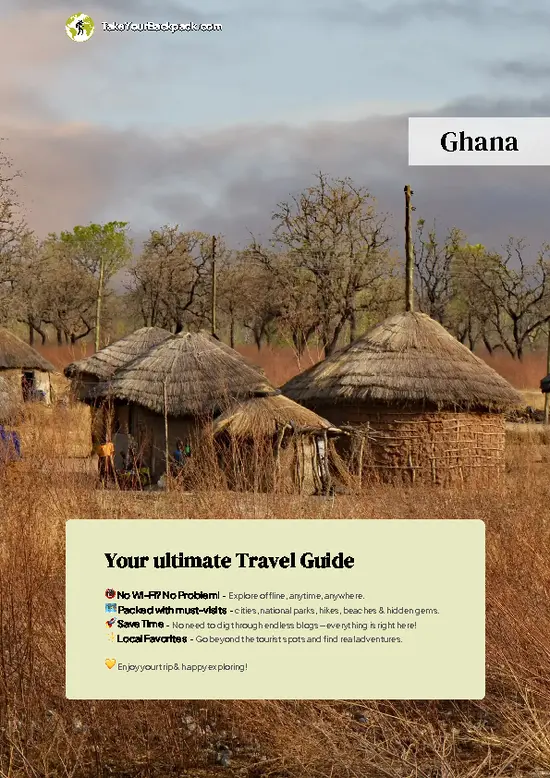
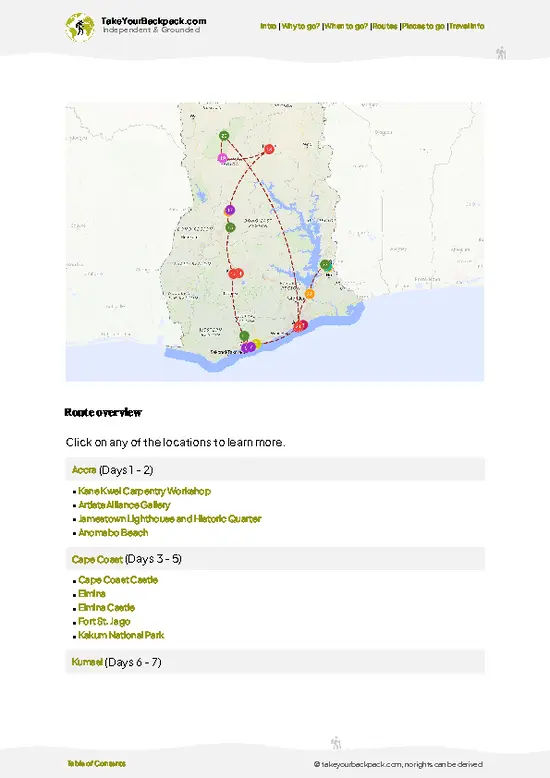
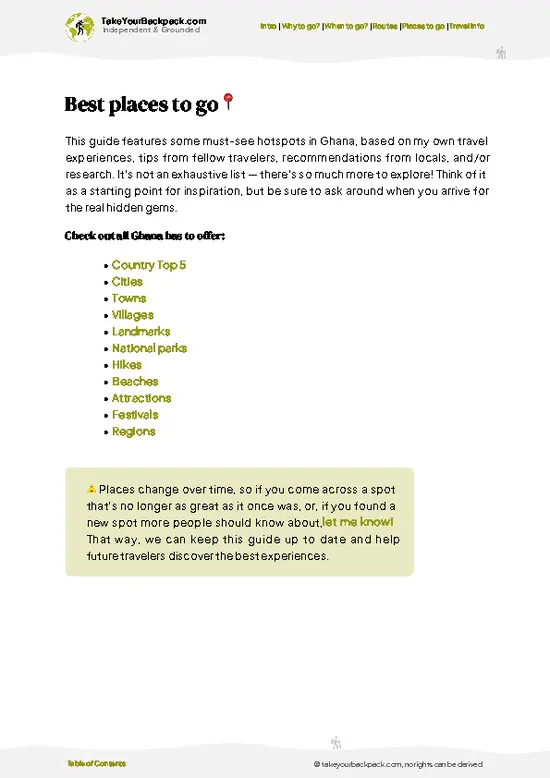
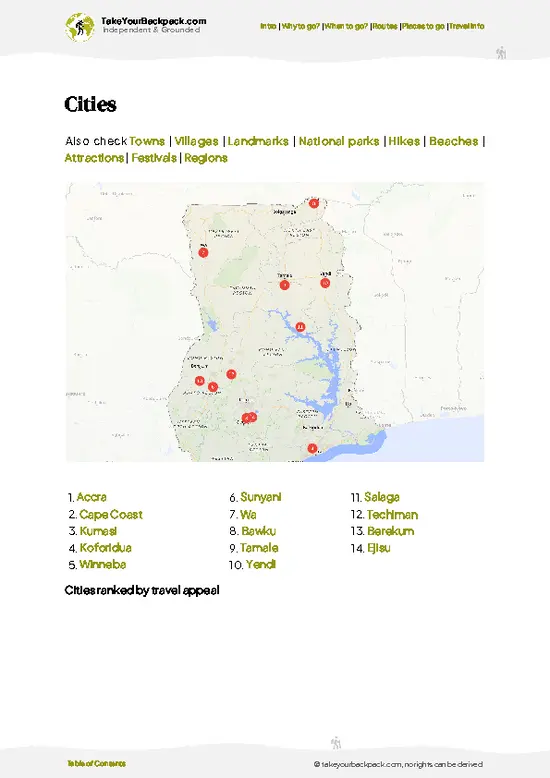
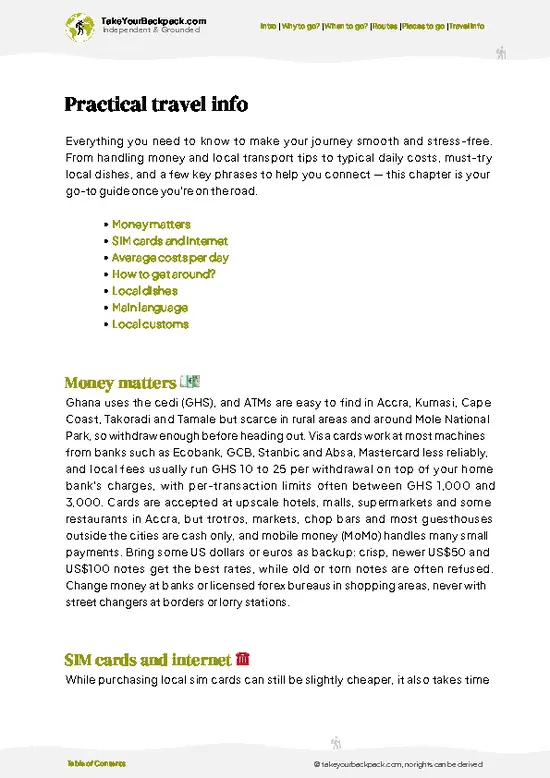
example page 0 from our offline Travel Guide for Ghana
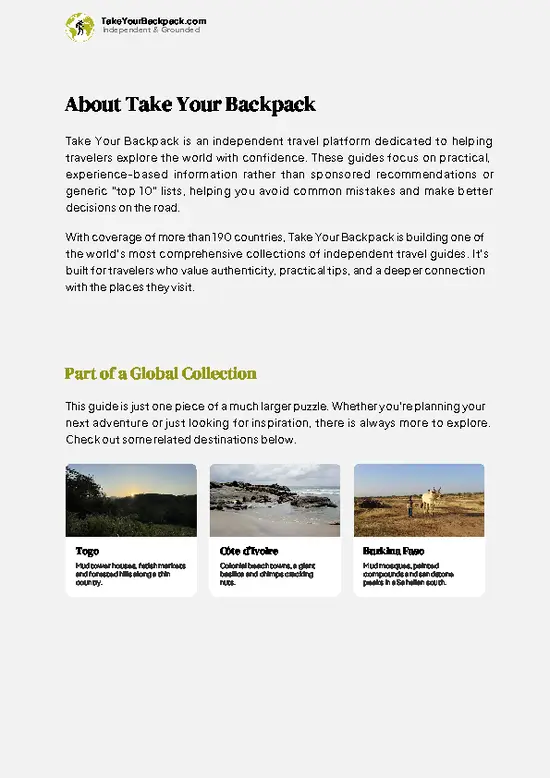
example page 1 from our offline Travel Guide for Ghana
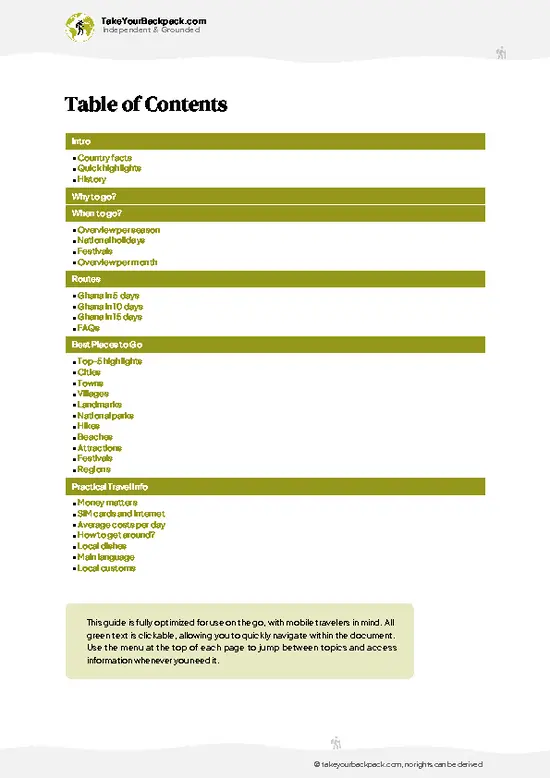
example page 2 from our offline Travel Guide for Ghana
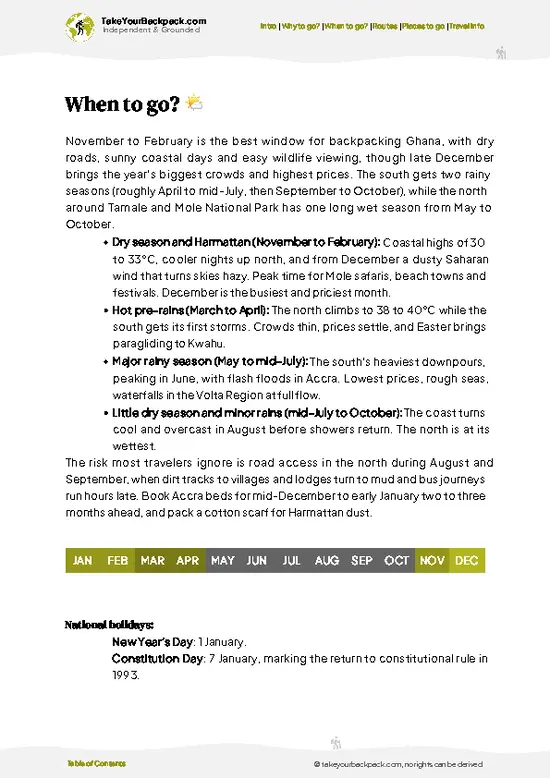
example page 3 from our offline Travel Guide for Ghana
example page 4 from our offline Travel Guide for Ghana
example page 5 from our offline Travel Guide for Ghana
example page 6 from our offline Travel Guide for Ghana
example page 7 from our offline Travel Guide for Ghana
Loading the map 🌍
CLICK TO FILTER
cities
towns
villages
landmarks
national parks
hikes
beaches
attractions
festivals
regions
SHOW COUNTRY’S BESTSHOW ALL

✨ Why go?
Ranked #2 national park in Ghana
Reasons people choose to explore here

Backpackers choose Kakum because it is the easiest rainforest to reach in Ghana without a private car. Shared taxis and trotros run from Cape Coast to the park gate, so you can do it independently in a day trip. Nearby guesthouses and hostels keep the budget low, and camping platforms inside the forest give a night among the trees at modest cost. The trail variety is smaller than in bigger parks, but it includes the canopy bridges, a nature trail, and longer guided hikes where you can spot monkeys, butterflies, and birds. Self-guided wandering is not allowed, since rangers must accompany every group, so this park suits travelers happy to follow a guide rather than strike out alone. That is not a bad thing. Guides know where the hornbills feed, which trees are medicinal, and where the forest … read more 👉
Backpackers choose Kakum because it is the easiest rainforest to reach in Ghana without a private car. Shared taxis and trotros run from Cape Coast to the park gate, so you can do it independently in a day trip. Nearby guesthouses and hostels keep the budget low, and camping platforms inside the forest give a night among the trees at modest cost. The trail variety is smaller than in bigger parks, but it includes the canopy bridges, a nature trail, and longer guided hikes where you can spot monkeys, butterflies, and birds. Self-guided wandering is not allowed, since rangers must accompany every group, so this park suits travelers happy to follow a guide rather than strike out alone. That is not a bad thing. Guides know where the hornbills feed, which trees are medicinal, and where the forest goes quiet. Pair Kakum with the castles of Cape Coast and nearby beaches for a rounded few days on a tight budget.

💡 HighlightsThe experiences that define the visit

  1. Canopy Walkway: Seven suspension bridges link treetop platforms, about 350 m long and up to 40 m above the forest floor. It is the park’s signature experience and gives a bird’s-eye view of the crowns.
  2. Nature Trail: A short guided loop at ground level where rangers point out medicinal plants, giant buttress roots, and old trees that are impossible to appreciate from above.
  3. Forest Birdlife: Kakum shelters more than 250 bird species, including hornbills, turacos, and sunbirds. Early morning from the canopy is your best chance to see them.
  4. Primates: Several monkey species live here, including Diana monkeys and putty-nosed monkeys. You will usually hear them before you spot them.
  5. Butterflies: The forest supports hundreds of butterfly species, and clearings near the trail often fill with color after
… read more 👉
  1. Canopy Walkway: Seven suspension bridges link treetop platforms, about 350 m long and up to 40 m above the forest floor. It is the park’s signature experience and gives a bird’s-eye view of the crowns.
  2. Nature Trail: A short guided loop at ground level where rangers point out medicinal plants, giant buttress roots, and old trees that are impossible to appreciate from above.
  3. Forest Birdlife: Kakum shelters more than 250 bird species, including hornbills, turacos, and sunbirds. Early morning from the canopy is your best chance to see them.
  4. Primates: Several monkey species live here, including Diana monkeys and putty-nosed monkeys. You will usually hear them before you spot them.
  5. Butterflies: The forest supports hundreds of butterfly species, and clearings near the trail often fill with color after rain.
  6. Tree-Top Camping: Overnight stays on platforms let you hear the forest at night, when tree hyraxes call and insects fill the dark. It costs more than a regular visit but feels very different.
  7. Visitor Center and Conservation Displays: Exhibits explain the park’s history, its protection, and the forest’s wildlife, and are a useful orientation before your walk.
If I had to pick one first, it would be the Canopy Walkway at opening time. The sway of the boards, the cool morning air, and the sudden birdsong make it the quickest way to understand what a rainforest canopy actually feels like.
Spotted a mistake or missing something? Contact us.

🌤️ When to go?Choosing the right time of year

  • Main Dry Season (November to March): Best window for hiking. Days reach 30 to 33°C (86 to 91°F), nights 22 to 24°C (72 to 75°F), and trails are firmer. December and January bring the most visitors and Harmattan haze can dull views.
  • Short Dry Spell (August): A brief lull in rain with lighter crowds and temperatures around 26 to 28°C (79 to 82°F).
  • Major Rainy Season (April to July): Heavy downpours, mud, and leeches make longer hikes slower, though the forest is intensely green and quiet. Humidity is high.
  • Minor Rains (September to October): Showers are shorter but frequent. Fewer people visit.
  • Daylight: Year-round about 12 hours, with sunrise near 6:00 and sunset near 18:00 given the equatorial position.
  • Prices: Park fees are fixed all year, but accommodation rates rise around Christmas and Easter.
… read more 👉
  • Main Dry Season (November to March): Best window for hiking. Days reach 30 to 33°C (86 to 91°F), nights 22 to 24°C (72 to 75°F), and trails are firmer. December and January bring the most visitors and Harmattan haze can dull views.
  • Short Dry Spell (August): A brief lull in rain with lighter crowds and temperatures around 26 to 28°C (79 to 82°F).
  • Major Rainy Season (April to July): Heavy downpours, mud, and leeches make longer hikes slower, though the forest is intensely green and quiet. Humidity is high.
  • Minor Rains (September to October): Showers are shorter but frequent. Fewer people visit.
  • Daylight: Year-round about 12 hours, with sunrise near 6:00 and sunset near 18:00 given the equatorial position.
  • Prices: Park fees are fixed all year, but accommodation rates rise around Christmas and Easter.
Arrive at opening time on a weekday morning for cooler air, active birds, and almost no queue.


source: climatestotravel.comJANJanuary: excellent for travelingFEBFebruary: excellent for travelingMARMarch: highly recommended for travelingAPRApril: fair for travelingMAYMay: fair for travelingJUNJune: fair for travelingJULJuly: fair for travelingAUGAugust: fair for travelingSEPSeptember: fair for travelingOCTOctober: fair for travelingNOVNovember: highly recommended for travelingDECDecember: excellent for traveling
when-to-go

✈️ The backpacker research shortcutGhana Travel Guide

An offline-friendly backpacking guide with optimized travel routes, ranked highlights, transport advice, and the best areas to stay.
example page 0 from our offline Travel Guide for Ghana
example page 1 from our offline Travel Guide for Ghana
example page 2 from our offline Travel Guide for Ghana
example page 3 from our offline Travel Guide for Ghana
example page 4 from our offline Travel Guide for Ghana
example page 5 from our offline Travel Guide for Ghana
example page 6 from our offline Travel Guide for Ghana
example page 7 from our offline Travel Guide for Ghana
The digital guide (321 pages) contains:
✅ 105 highlights, ranked by travel appeal
✅ Optimized 5, 10 & 15-day travel routes
✅ Cities, national parks, landmarks, beaches
✅ How to get around
✅ Offline-friendly for travel without Wi-Fi
👉 Click to see all 30+ guide features

📅 Plan smarter in minutes, not weeks
✅ Month by month travel advice
✅ Festivals & national holidays
✅ Budget expectations

🗺️ Go to the right places, skip the overrated ones
✅ Honest pros & cons of destinations
✅ Top hikes, parks & viewpoints
✅ Lesser-known places most travelers miss
✅ Clear “worth it vs skip it” guidance

🛏️ Travel smoothly without rookie mistakes
✅ Best areas to stay
✅ Transport systems explained simply
✅ Common scams & safety advice
✅ SIM cards, money & practical tips

🌍 Understand the country, not just visit it
✅ Culture & traditions
✅ 52 Essential phrases & customs
✅ Festivals worth planning around
✅ Traveler-friendly historical context
✅ Insights that make places more meaningful

📱 Built for real travel conditions
✅ Fully downloadable PDF
✅ Works completely offline
✅ Optimized for phone use
✅ Useful in remote areas & buses
✅ Everything in one place
Stop searching, start planning
Get instant access to your full guide. 30‑day money-back guarantee.
+ Add another guide for just

By proceeding you agree to our terms.
Sent to your inbox immediately after payment • 100% Secure Checkout
Best Backpacking Travel Advisor 2025 tourism awardBest Backpacking
Travel Advisor
2025
What others say about Take Your Backpack Guides:
⭐⭐⭐⭐⭐
Fantastic, amazing amount of information!
⭐⭐⭐⭐⭐
My goodness this is amazing, it's what I've been looking for hats off too you!
⭐⭐⭐⭐⭐
I think this is absolutely BRILLIANT
⭐⭐⭐⭐
Very complete and informative. It's still missing places, but I gotta to commend you
⭐⭐⭐⭐⭐
This is truly amazing, thank you, can't wait to explore it with my kids!
⭐⭐⭐⭐⭐
Awesome resource, thank you!
⭐⭐⭐⭐⭐
This is amazing! Can't wait to explore the ones I haven't seen
⭐⭐⭐⭐
I love this! Well done, great idea.
⭐⭐⭐⭐⭐
Thanks for taking the time to make this gem!
⭐⭐⭐⭐⭐
This might be the best website I've ever seen.
⭐⭐⭐⭐⭐
Congratulations, and thank you so much for your work; it's incredibly valuable.
⭐⭐⭐⭐
In all seriousness I think you did a great job pointing out the important spots
⭐⭐⭐⭐⭐
10/10 very good
⭐⭐⭐⭐⭐
As someone who's only just starting to visit regularly this is awesome, thank you.
⭐⭐⭐⭐
Thank you very much! I'm going to visit my dad, it's going to be very useful!
⭐⭐⭐⭐⭐
This is really cool! We'll be travelling for the first time and this definitely come in handy.
⭐⭐⭐⭐⭐
You are now our minister of culture, congratulations 👨‍💼
⭐⭐⭐⭐⭐
Just wanted to tell you that this is a pearl! Going to follow your recommendations.
⭐⭐⭐⭐⭐
This is so cool. I'll definitely be using the resource for my travels soon.
⭐⭐⭐⭐⭐
This is very impressive! Good work.
⭐⭐⭐⭐⭐
This is an amazing and informative site. Very well done!

🛏️ Where to stay?Choosing the right base

The best base for most backpackers is Cape Coast, about 30 km south, where hostels, guesthouses, and beach lodges cost roughly US$10 to 40 a night. Trotros to the park leave from the main station and take around 45 to 60 minutes. Staying in town also lets you see Cape Coast Castle and local restaurants.
Inside the park, the only option is basic canopy-side camping. Platforms and tents are available through the park office, offering a rare chance to hear the forest after dark. Facilities are simple, so bring a flashlight and insect repellent.
Near the entrance, a few small guesthouses and a rustic … read more 👉
The best base for most backpackers is Cape Coast, about 30 km south, where hostels, guesthouses, and beach lodges cost roughly US$10 to 40 a night. Trotros to the park leave from the main station and take around 45 to 60 minutes. Staying in town also lets you see Cape Coast Castle and local restaurants.
Inside the park, the only option is basic canopy-side camping. Platforms and tents are available through the park office, offering a rare chance to hear the forest after dark. Facilities are simple, so bring a flashlight and insect repellent.
Near the entrance, a few small guesthouses and a rustic lodge provide cheaper, quieter rooms, though choice is limited and meals may be basic. These work well if you want to be first through the gate.
Elmina is another option, about 20 km west of Cape Coast, with a fishing harbor, Portuguese fort, and relaxed guesthouses. Beach-side places around Cape Coast and Elmina often have dorms or budget rooms. Book ahead around Christmas and Easter, when rooms fill quickly.

👛 Costs (as of 2 October 2026)Typical daily expenses

A day at Kakum typically costs US$30 to 70 for a backpacker, including transport from Cape Coast, park entry, and food. Prices below are approximate and can change.
CategoryBudget RangeLocal Reality
Entrance and canopy walkUS$10 to 20 for international visitorsGhanaian residents pay far less, and the guided walk is included in the ticket.
Camping or tree platformUS$15 to 40Limited spaces, so arrange it with the park office in advance.
Accommodation in Cape CoastUS$10 to 40 per nightDorms and guesthouses are plentiful, with higher prices near peak holidays.
Local transportUS$2 to 6 each wayTrotros and shared taxis are cheap but leave only when full. Private taxis cost US$20 to 35 round trip.
Food and suppliesUS$5 to 15Snacks and meals at the gate are basic, and Cape Coast offers cheaper local dishes
… read more 👉
A day at Kakum typically costs US$30 to 70 for a backpacker, including transport from Cape Coast, park entry, and food. Prices below are approximate and can change.
CategoryBudget RangeLocal Reality
Entrance and canopy walkUS$10 to 20 for international visitorsGhanaian residents pay far less, and the guided walk is included in the ticket.
Camping or tree platformUS$15 to 40Limited spaces, so arrange it with the park office in advance.
Accommodation in Cape CoastUS$10 to 40 per nightDorms and guesthouses are plentiful, with higher prices near peak holidays.
Local transportUS$2 to 6 each wayTrotros and shared taxis are cheap but leave only when full. Private taxis cost US$20 to 35 round trip.
Food and suppliesUS$5 to 15Snacks and meals at the gate are basic, and Cape Coast offers cheaper local dishes such as jollof or fried fish.
Guide tips and extrasUS$2 to 5Tipping rangers is appreciated, and camera fees may apply.
⚠️ Prices can change and everyone travels differently, so take this as a rough guide. Hope it helps you plan your adventure!

🥾 TrailsScenic routes and wildlife spotting in Kakum

Hiking in Kakum is guided and fairly gentle, with humid, shaded forest paths, roots, and some muddy sections. Most visitors do the canopy walk and a short nature trail, but longer routes are available for those who ask. You may see monkeys, butterflies, and many birds, while forest elephants and bongos live here but are rarely seen.
Canopy Walkway
  • Length: about 350 m across seven bridges
  • Duration: 30 to 45 minutes, plus the walk up
  • Difficulty: Easy to moderate, though heights can be unnerving
  • Key features: Platforms up to 40 m high with views over the treetops
  • Terrain: Rope and plank bridges, with a
… read more 👉
Hiking in Kakum is guided and fairly gentle, with humid, shaded forest paths, roots, and some muddy sections. Most visitors do the canopy walk and a short nature trail, but longer routes are available for those who ask. You may see monkeys, butterflies, and many birds, while forest elephants and bongos live here but are rarely seen.
Canopy Walkway
  • Length: about 350 m across seven bridges
  • Duration: 30 to 45 minutes, plus the walk up
  • Difficulty: Easy to moderate, though heights can be unnerving
  • Key features: Platforms up to 40 m high with views over the treetops
  • Terrain: Rope and plank bridges, with a short uphill path from the visitor center
Nature Trail
  • Length: roughly 1 to 2 km
  • Duration: about 1 hour
  • Difficulty: Easy
  • Key features: Medicinal plants, large trees, forest sounds
  • Terrain: Packed earth with roots and some slippery patches
Longer Guided Hikes
  • Length: varies by arrangement
  • Duration: half day or more
  • Difficulty: Moderate
  • Key features: Deeper forest and better chance of wildlife
  • Terrain: Narrow trails, mud in wet months
The park is about 30 km from Cape Coast, reached by trotro or shared taxi along the Twifo Praso road, then a short walk or ride from the junction. Crowds peak on weekends and holidays, especially school groups, so go early on weekdays. Entrance is charged to all visitors, with lower rates for Ghanaians, and guided walks are included in the ticket price. Wear sturdy shoes and bring water.
⚠️ Hiking info can sometimes be outdated or inaccurate. Before you hit the trail, check the latest conditions with locals. If you do spot anything that's off, I'd love to hear from you, so I can update it for fellow travelers.

🛡️ SafetyTraveler Safety Guide

Kakum is straightforward and well managed, with rangers guiding every group. The main hazards are heat, humidity, and slippery ground. Wear sturdy shoes with grip, since roots and mud make footing tricky after rain, and bring at least a liter of water for even short walks. The canopy bridges are secured by netting and staff limit group size, but go slowly, keep to the center, and hold the rails if heights bother you. Wildlife is mostly shy: monkeys and birds are common, elephants are rare, and snakes and insects are best avoided by staying on the trail. Use repellent for mosquitoes, especially around dawn and dusk. Long sleeves help against ants and thorns. If you join a longer guided hike, start early and carry snacks, since the forest can feel much hotter than the coast by midday.

FAQCommon questions from travelers

One full day is enough for the main sights, and two days suit you better if you want a longer guided hike or a night on the canopy camping platform. The canopy walkway takes about 30 to 45 minutes and the nature trail around an hour. Cape Coast is only 30 km away, so many people combine Kakum with its castle in a two-day stay.
Yes, you can reach Kakum without a car using trotros or shared taxis from Cape Coast, which take roughly 45 to 60 minutes and cost about US$2 to 6 each way. Ask to be dropped at the park junction on the Twifo Praso road and walk or take a short ride to the visitor center. Private taxis from Cape Coast cost around US$20 to 35 round trip and can wait for you.
Yes, there is an entrance fee, and international visitors pay roughly US$10 to 20, which usually includes a guided walk and the canopy walkway. Ghanaian residents pay a much lower rate. No separate hiking permit is needed for the standard routes, but overnight camping and longer guided hikes must be arranged with the park office, with extra fees of roughly US$15 to 40.
⚠️ Things can change over time, so always validate details locally before you go.

Other Ghanaian national parks near Kakum

Explore more nearby:


💡 Not sure where to go next?
Create a personalized itinerary for Ghana including Kakum and the places that fit your trip.

Generate my itinerary

👉 Discover all national parks

Or checkout all Ghana has to offer (think cities, towns, villages, national parks, hikes, beaches, festivals)
Country photo of Ghana

We 💚 feedbackParting advice and final tips

Kakum is worth the trip for the moment you step onto the first bridge and the forest floor drops away beneath you, with hornbills calling at eye level. The drawback is time: the main walk is short, and midday crowds can turn it into a queue. Go early, ask about a longer guided hike, and treat it as a morning highlight rather than a full wilderness trek.

✈️ When did I visit Ghana?
Ghana I visited in December 2024, starting in Accra following the coast, then up north to Mole National park to finish in the Volta Region.

✍️ Help improve this page!
The information on this page is based on my own backpacking experience in Ghana, supplemented with up-to-date research and feedback from other travelers. Travel details can change, so if you notice anything outdated or incomplete, feel free to let me know.


🙋‍♂️ Give feedback

👋 Meet the founderWho’s Behind Take Your Backpack?

Johan, backpacker and founder of TakeYourBackpackHi, I’m Johan (Netherlands 🇳🇱), the creator of TakeYourBackpack. Over the past 3 decades, I’ve backpacked through 90+ countries across six continents, gaining extensive experience with independent travel, long-term trips, and overland routes.

This site is built on a combination of firsthand travel experience and carefully curated insights from other backpackers. Many guides are based on places I’ve personally visited, while others bring together tips, observations, and practical advice shared by trusted travelers I’ve met along the way.

The goal is to provide realistic, experience-driven guidance — not generic itineraries — so you can explore destinations with better context, clearer expectations, and more confidence.