×

Ghana🇬🇭 | festivalsHomowoGa people, famine remembrance, kpokpoi feast, drumming | things to do and best time to go

Explore HogbetsotsoExplore Panafest

Backpacking in Homowo
🏆 Top pickfestival ranked #3
By Johan Kruseman 🇳🇱 | Updated July 30, 2026

If you crave air-conditioned predictability, hate crowds, or wilt at the thought of drumming that doesn’t stop until sunrise, Homowo will chew you up and spit you out. But if you’re the kind of backpacker who wants to feel a city’s pulse through your soles, Accra’s Homowo festival is a kinetic masterclass in communal joy and resilience. Homowo isn’t a tourist spectacle—it’s a Ga people’s defiant celebration of overcoming famine, and you’re invited to witness, not direct. The festival explodes across Accra and its coastal neighborhoods, with pounding kpanlogo drums, highlife music, and a swirl of red palm oil and maize in the air. The crowd is mostly locals—families, elders, kids in face paint—plus a handful of travelers who know how to blend in. It’s loud, sweaty, and utterly alive. Homowo lasts several days, but the energy peaks on the main parade day. You’ll leave gritty, grinning, and with a new respect for the stamina of Ghanaian grandmothers.

Discover everything you want to know in the 📖 Ghana Travel Guide.


Get your Ghana guide
108 ranked highlights, routes & tips, works offline (399 pages)
Loading the map 🌍
CLICK TO FILTER
cities
towns
villages
landmarks
national parks
hikes
beaches
attractions
festivals
regions
SHOW COUNTRY’S BESTSHOW ALL

✨ Why go?
Ranked #3 festival in Ghana
What makes this festival worth celebrating

Backpackers flock to Ghana during the Homowo festival for a reason. This isn’t just a party; it’s a cultural immersion that pulses with social energy. Imagine streets alive with vibrant drumming, colorful costumes, and the aroma of traditional dishes wafting through the air. It’s a temporary community where you can connect with locals, share stories, and dance like nobody’s watching.

Planning your route around Homowo isn’t just smart; it’s essential. The festival offers a unique chance to experience Ghanaian culture in a way that’s both affordable and authentic. Compared to similar events worldwide, the costs here are a steal, allowing you to save your budget for other adventures.

Plus, it fits seamlessly into longer travel plans. You can explore Accra’s bustling markets or venture to nearby … read more 👉
Backpackers flock to Ghana during the Homowo festival for a reason. This isn’t just a party; it’s a cultural immersion that pulses with social energy. Imagine streets alive with vibrant drumming, colorful costumes, and the aroma of traditional dishes wafting through the air. It’s a temporary community where you can connect with locals, share stories, and dance like nobody’s watching.

Planning your route around Homowo isn’t just smart; it’s essential. The festival offers a unique chance to experience Ghanaian culture in a way that’s both affordable and authentic. Compared to similar events worldwide, the costs here are a steal, allowing you to save your budget for other adventures.

Plus, it fits seamlessly into longer travel plans. You can explore Accra’s bustling markets or venture to nearby beaches before diving into the festival’s festivities. This is where the journey transforms into a rewarding challenge, blending exploration with celebration. Don’t miss out on this vibrant experience; it’s the heartbeat of Ghana that will fuel your travels long after the last drumbeat fades.
Want to include Homowo in your Ghana route?
Create a personalized Ghana itinerary that includes Homowo and the places that fit your trip — based on your travel style, budget, and available time. Get your route in seconds.

Generate my trip

💡 HighlightsEssential experiences to have while celebrating the Homowo

  • Kpokpoi and the communal feast — The star of Homowo is kpokpoi, the traditional cornmeal-based dish served with palm oil and stew; families and communities share huge plates, so it’s the best time to taste authentic Ga home cooking and eat shoulder-to-shoulder with locals.
  • Sprinkling to ancestors and the “hooting at hunger” ritual — Central to the festival is the symbolic sprinkling of food on family shrines and public spaces and the ceremonial “hooting” that celebrates the end of past famine — a powerful mix of reverence and triumph that explains the festival’s name.
  • Durbar of chiefs and colorful processions — Chiefs in full regalia, palanquins, drummers and courtiers assemble in a formal durbar: it’s pageantry, protocol and local politics in one, and the best place to see traditional
read more 👉
  • Kpokpoi and the communal feast — The star of Homowo is kpokpoi, the traditional cornmeal-based dish served with palm oil and stew; families and communities share huge plates, so it’s the best time to taste authentic Ga home cooking and eat shoulder-to-shoulder with locals.
  • Sprinkling to ancestors and the “hooting at hunger” ritual — Central to the festival is the symbolic sprinkling of food on family shrines and public spaces and the ceremonial “hooting” that celebrates the end of past famine — a powerful mix of reverence and triumph that explains the festival’s name.
  • Durbar of chiefs and colorful processions — Chiefs in full regalia, palanquins, drummers and courtiers assemble in a formal durbar: it’s pageantry, protocol and local politics in one, and the best place to see traditional authority and costumes up close.
  • Drumming, dancing and Kpanlogo rhythms — Expect nonstop percussive energy: traditional drumming ensembles, Kpanlogo and other Ga dances, call-and-response singing and troupes performing in the streets — great for watching (or joining) high-energy local rhythms.
  • Street life, visiting and market culture — Homowo turns neighborhoods into open-air parties: street food stalls, pop-up markets, relatives visiting each other in traditional cloth and lots of casual mingling — perfect for sampling snacks, buying crafts and feeling the communal buzz.
Spotted a mistake or missing something? Contact us.

Things to do near Homowo

Ratings based on Tripadvisor reviews. When you book through this link, you support our work at no extra cost to you.

🌤️ When to go?When is the celebration of Homowo?


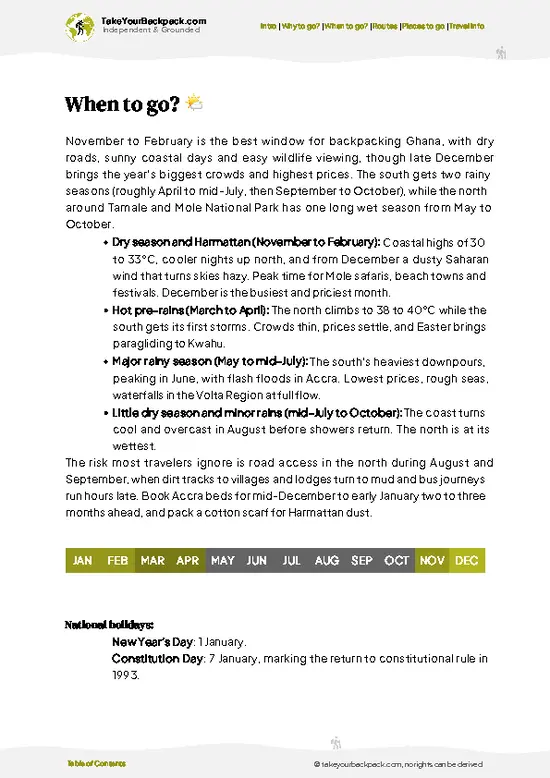
  • Topic: Weather – Homowo falls in the dry season, typically between late February and early April. Expect temperatures around 28-32°C (82-90°F), which means hot days but manageable humidity. Avoid the rainy season (May to October) to keep your gear dry and your spirits high.

  • Topic: Temperature – Daytime heat can be intense, so plan for early morning or late afternoon festival activities. Nights cool down to around 22-24°C (72-75°F), perfect for relaxed strolls or late-night street food hunts without sweating buckets.

  • Topic: Daylight Hours – Around 12 hours of daylight year-round, but the dry season offers clearer skies and longer evenings to soak in the festival’s vibrant parades and drumming sessions.

  • Topic: Crowds – Homowo draws locals and tourists alike, but the dry season sees
read more 👉

  • Topic: Weather – Homowo falls in the dry season, typically between late February and early April. Expect temperatures around 28-32°C (82-90°F), which means hot days but manageable humidity. Avoid the rainy season (May to October) to keep your gear dry and your spirits high.

  • Topic: Temperature – Daytime heat can be intense, so plan for early morning or late afternoon festival activities. Nights cool down to around 22-24°C (72-75°F), perfect for relaxed strolls or late-night street food hunts without sweating buckets.

  • Topic: Daylight Hours – Around 12 hours of daylight year-round, but the dry season offers clearer skies and longer evenings to soak in the festival’s vibrant parades and drumming sessions.

  • Topic: Crowds – Homowo draws locals and tourists alike, but the dry season sees a surge in visitors. Arrive early to secure accommodations and prime viewing spots; latecomers risk missing the best moments or paying premium prices.

  • Topic: Seasonal Activities – The festival coincides with the end of the hunger season, so you’ll witness traditional food offerings and harvest celebrations. Timing your visit here means catching authentic rituals that vanish outside this window.

  • Topic: Price Fluctuations – Expect accommodation and transport costs to spike during Homowo’s peak days. Booking weeks ahead locks in better rates and spares you last-minute scramble fees.


Pro-tip: Target the first week of Homowo to dodge the thickest crowds and highest prices while still diving deep into the festival’s pulse—early arrival pays off in energy and wallet.


source: climatestotravel.comJANJanuary: not recommended for travelingFEBFebruary: excellent for travelingMARMarch: not recommended for travelingAPRApril: not recommended for travelingMAYMay: not recommended for travelingJUNJune: not recommended for travelingJULJuly: not recommended for travelingAUGAugust: not recommended for travelingSEPSeptember: not recommended for travelingOCTOctober: not recommended for travelingNOVNovember: not recommended for travelingDECDecember: not recommended for traveling

✈️ The backpacker research shortcutGhana Travel Guide

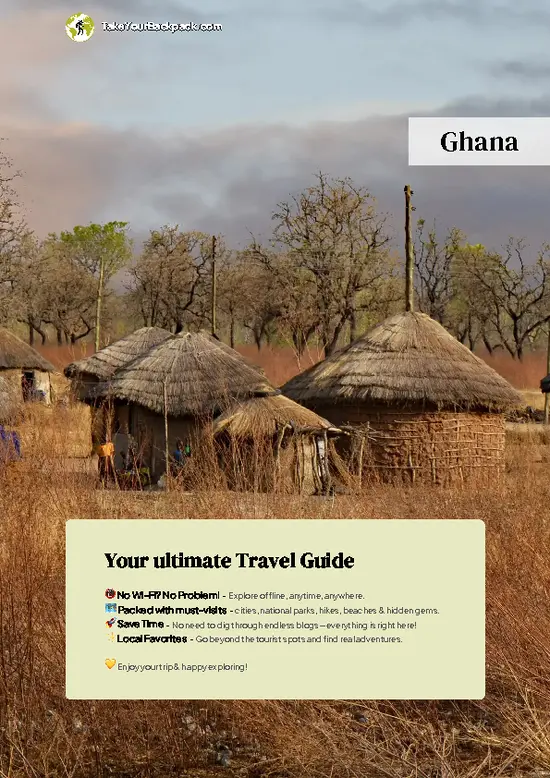
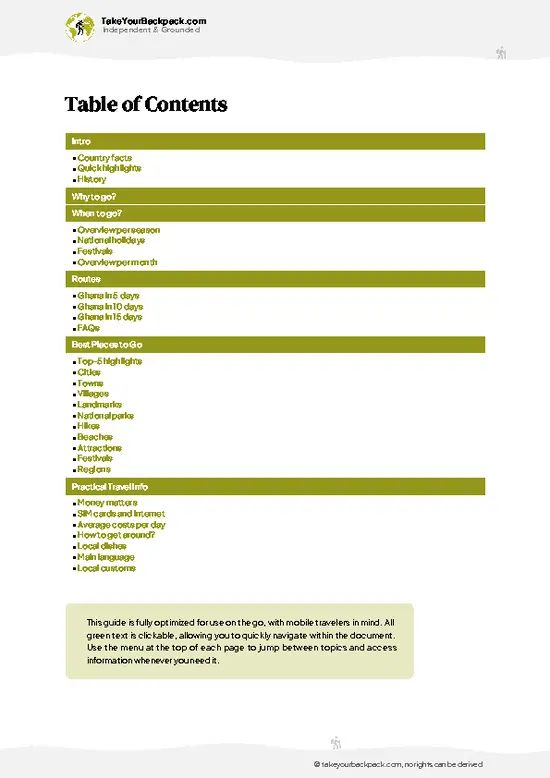
An offline-friendly backpacking guide with optimized travel routes, ranked highlights, transport advice, and the best areas to stay.
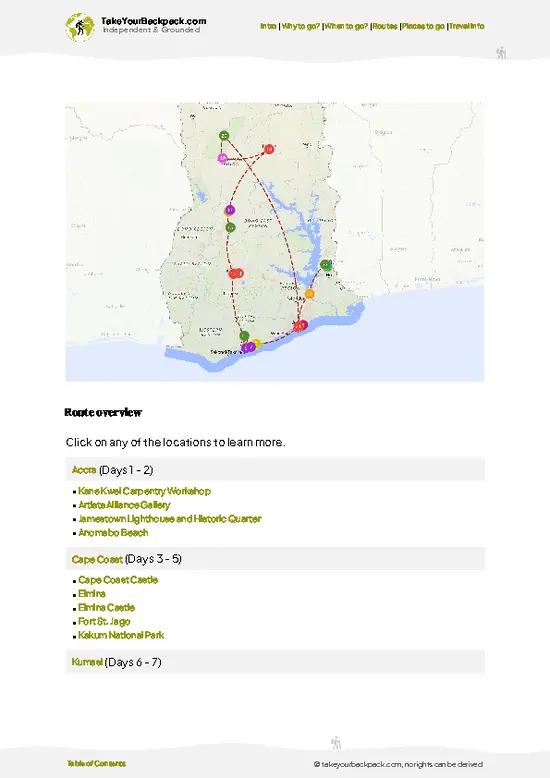
example page 0 from our offline Travel Guide for Ghana
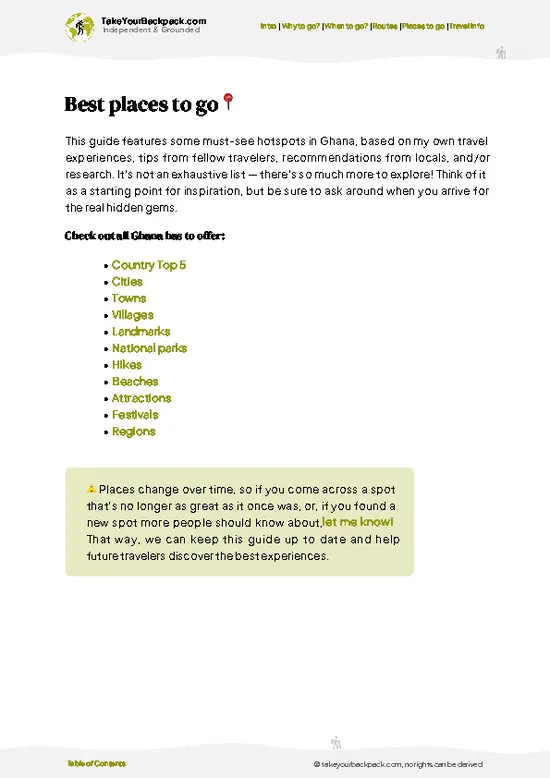
example page 1 from our offline Travel Guide for Ghana
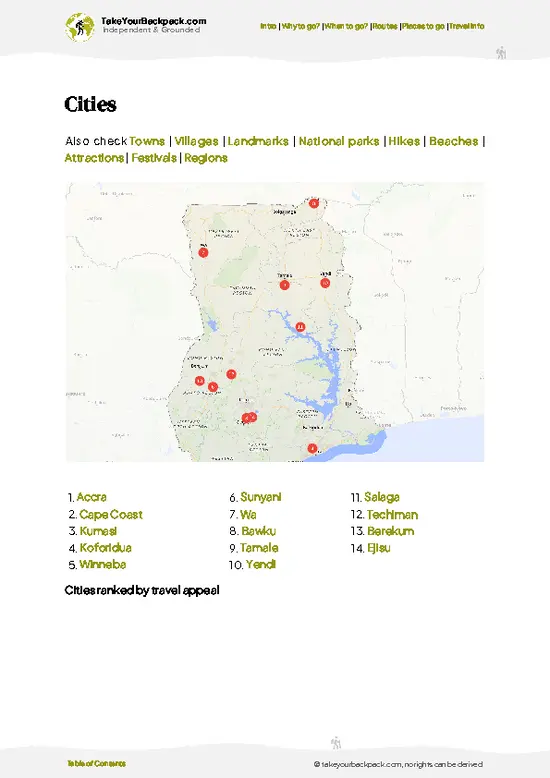
example page 2 from our offline Travel Guide for Ghana
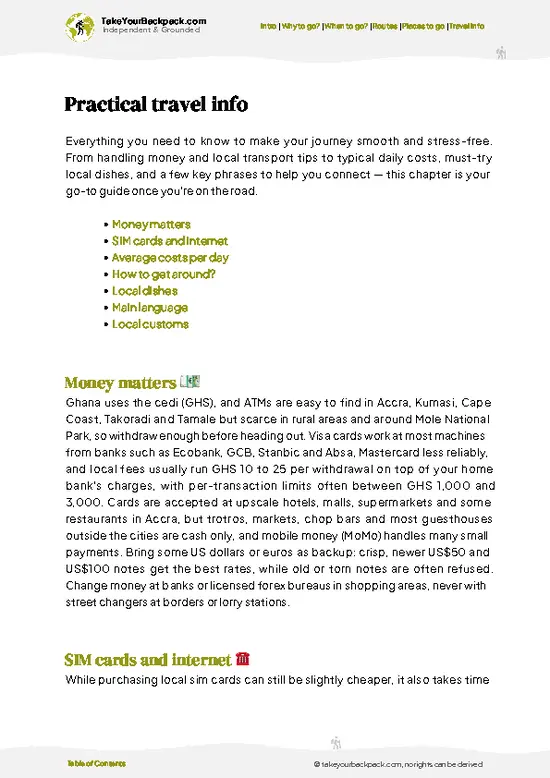
example page 3 from our offline Travel Guide for Ghana
example page 4 from our offline Travel Guide for Ghana
example page 5 from our offline Travel Guide for Ghana
example page 6 from our offline Travel Guide for Ghana
example page 7 from our offline Travel Guide for Ghana
The digital guide (399 pages) contains:
108 highlights, ranked by travel appeal
Optimized 5, 10 & 15-day travel routes
Cities, national parks, landmarks, beaches
How to get around
Offline-friendly for travel without Wi-Fi
👉 Click to see all 30+ guide features

📅 Plan smarter in minutes, not weeks
Month by month travel advice
Festivals & national holidays
Budget expectations

🗺️ Go to the right places, skip the overrated ones
Honest pros & cons of destinations
Top hikes, parks & viewpoints
Lesser-known places most travelers miss
Clear “worth it vs skip it” guidance

🛏️ Travel smoothly without rookie mistakes
Best areas to stay
Transport systems explained simply
Common scams & safety advice
SIM cards, money & practical tips

🌍 Understand the country, not just visit it
Culture & traditions
52 Essential phrases & customs
Festivals worth planning around
Traveler-friendly historical context
Insights that make places more meaningful

📱 Built for real travel conditions
Fully downloadable PDF
Works completely offline
Optimized for phone use
Useful in remote areas & buses
Everything in one place
Save weeks of stressful planning
Get instant access to your full guide. 30‑day money-back guarantee.


By proceeding you agree to our terms.
Sent to your inbox immediately after payment • 100% Secure Checkout
Best Backpacking Travel Advisor 2025 tourism awardBest Backpacking
Travel Advisor
2025
What others say about Take Your Backpack Guides:
⭐⭐⭐⭐⭐
Fantastic, amazing amount of information!
⭐⭐⭐⭐⭐
My goodness this is amazing, it's what I've been looking for hats off too you!
⭐⭐⭐⭐⭐
I think this is absolutely BRILLIANT
⭐⭐⭐⭐
Very complete and informative. It's still missing places, but I gotta to commend you
⭐⭐⭐⭐⭐
This is truly amazing, thank you, can't wait to explore it with my kids!
⭐⭐⭐⭐⭐
Awesome resource, thank you!
⭐⭐⭐⭐⭐
This is amazing! Can't wait to explore the ones I haven't seen
⭐⭐⭐⭐
I love this! Well done, great idea.
⭐⭐⭐⭐⭐
Thanks for taking the time to make this gem!
⭐⭐⭐⭐⭐
This might be the best website I've ever seen.
⭐⭐⭐⭐⭐
Congratulations, and thank you so much for your work; it's incredibly valuable.
⭐⭐⭐⭐
In all seriousness I think you did a great job pointing out the important spots
⭐⭐⭐⭐⭐
10/10 very good
⭐⭐⭐⭐⭐
As someone who's only just starting to visit regularly this is awesome, thank you.
⭐⭐⭐⭐
Thank you very much! I'm going to visit my dad, it's going to be very useful!
⭐⭐⭐⭐⭐
This is really cool! We'll be travelling for the first time and this definitely come in handy.
⭐⭐⭐⭐⭐
You are now our minister of culture, congratulations 👨‍💼
⭐⭐⭐⭐⭐
Just wanted to tell you that this is a pearl! Going to follow your recommendations.
⭐⭐⭐⭐⭐
This is so cool. I'll definitely be using the resource for my travels soon.
⭐⭐⭐⭐⭐
This is very impressive! Good work.
⭐⭐⭐⭐⭐
This is an amazing and informative site. Very well done!

🛏️ Where to stay?How to pick the right area

When you’re gearing up for the Homowo festival in Ghana, the right base can make all the difference. Head to Osu, a vibrant neighborhood buzzing with energy. Here, you’ll find a mix of budget-friendly accommodations and a lively social scene. The streets are lined with local eateries and bars, perfect for mingling with fellow travelers and locals alike.

Another solid choice is Labadi. This area offers a laid-back beach vibe, where you can unwind after a day of festivities. The proximity to the ocean means you can catch some sun or enjoy a beach bonfire, creating a perfect backdrop for new friendships. … read more 👉
When you’re gearing up for the Homowo festival in Ghana, the right base can make all the difference. Head to Osu, a vibrant neighborhood buzzing with energy. Here, you’ll find a mix of budget-friendly accommodations and a lively social scene. The streets are lined with local eateries and bars, perfect for mingling with fellow travelers and locals alike.

Another solid choice is Labadi. This area offers a laid-back beach vibe, where you can unwind after a day of festivities. The proximity to the ocean means you can catch some sun or enjoy a beach bonfire, creating a perfect backdrop for new friendships.

Don’t overlook Accra’s central districts like Makola Market. Staying near the market immerses you in the local culture. The hustle and bustle is palpable, and you’ll find affordable guesthouses that keep you close to the action.

Safety is key, so stick to well-lit areas and travel in groups when possible. By choosing these neighborhoods, you’re not just securing a place to sleep; you’re setting the stage for an adventure filled with rich experiences and connections.

👛 Costs (as of 30 July 2026)Money, prices, and spending tips

The Homowo Festival in Ghana is a vibrant celebration, but navigating the costs can be tricky. Here’s a breakdown to keep your budget in check while you soak up the culture.
  • Festival Tickets: Entry to the festival is often free, but some events may charge a small fee, typically around $5 to $10. Look for local performances or special ceremonies that might have a cover charge.
  • Accommodation: Options range widely. Budget travelers can find dorm beds in hostels for about $10 to $20 per night. If you prefer a private room, expect to pay between $30 and $60. Booking in advance is wise, especially during the festival.
  • Local Transport: Getting around can be done affordably. Shared taxis or “trotros” (minibuses) cost around $0.50 to $2 for short distances. If you’re venturing further, budget $10 to $20
read more 👉
The Homowo Festival in Ghana is a vibrant celebration, but navigating the costs can be tricky. Here’s a breakdown to keep your budget in check while you soak up the culture.
  • Festival Tickets: Entry to the festival is often free, but some events may charge a small fee, typically around $5 to $10. Look for local performances or special ceremonies that might have a cover charge.
  • Accommodation: Options range widely. Budget travelers can find dorm beds in hostels for about $10 to $20 per night. If you prefer a private room, expect to pay between $30 and $60. Booking in advance is wise, especially during the festival.
  • Local Transport: Getting around can be done affordably. Shared taxis or “trotros” (minibuses) cost around $0.50 to $2 for short distances. If you’re venturing further, budget $10 to $20 for longer rides. Always negotiate fares beforehand to avoid surprises.
  • Food & Drinks: Street food is your best friend here. You can enjoy local dishes for as little as $1 to $5. Restaurants will set you back about $5 to $15 per meal. Don’t forget to try the palm wine; it’s a must and usually costs around $2 to $4.
  • Miscellaneous Expenses: Factor in souvenirs, tips, and unexpected costs. Set aside $20 to $50 for this. It’s easy to get caught up in the moment, so having a cushion helps you enjoy without worry.

Keep these figures in mind as you plan. They’ll help you avoid the pitfalls and keep your energy focused on the festival’s vibrant experiences.


source: ghana.travel
⚠️ Prices can change and everyone travels differently, so take this as a rough guide. Hope it helps you plan your adventure!

🍲 FoodWhat to Eat & Drink

At the Homowo Festival in Ghana, food is more than sustenance; it’s a celebration. You’ll find jollof rice steaming in massive pots, its spicy aroma mingling with the scent of grilled tilapia and kelewele—spicy fried plantains that pack a punch. Don’t miss the fufu, a starchy staple, often served with rich, flavorful soups.

Venture to the festival stalls, where vendors proudly showcase their local specialties. Try the groundnut soup; it’s creamy and comforting, perfect for sharing. Speaking of sharing, be ready to embrace the communal spirit. It’s customary to offer a taste of your dish to friends and even strangers, fostering connections over flavors.

When it comes to drinks, grab a palm wine or sobolo, a refreshing hibiscus drink that’s both tangy and sweet. Cash is king here, so keep … read more 👉
At the Homowo Festival in Ghana, food is more than sustenance; it’s a celebration. You’ll find jollof rice steaming in massive pots, its spicy aroma mingling with the scent of grilled tilapia and kelewele—spicy fried plantains that pack a punch. Don’t miss the fufu, a starchy staple, often served with rich, flavorful soups.

Venture to the festival stalls, where vendors proudly showcase their local specialties. Try the groundnut soup; it’s creamy and comforting, perfect for sharing. Speaking of sharing, be ready to embrace the communal spirit. It’s customary to offer a taste of your dish to friends and even strangers, fostering connections over flavors.

When it comes to drinks, grab a palm wine or sobolo, a refreshing hibiscus drink that’s both tangy and sweet. Cash is king here, so keep some on hand; not all vendors accept cards. Serving sizes can be generous, so pace yourself—this isn’t a race.

Immerse yourself in the vibrant atmosphere, where every bite and sip tells a story. This festival isn’t just about food; it’s about the experience of togetherness and tradition.

Other Ghanaian festivals near Homowo

Explore more nearby:

  • Panafest—African diaspora, Cape Coast Castle, cultural performances, reconciliation| 0 km away
  • Aboakyir—Winneba, deer hunt, competitive teams, coastal traditions| 12 km away
  • Bakatue—Elmina lagoon, fishing rites, canoe processions, chief’s blessing| 54 km away

💡 Not sure where to go next?
Create a personalized itinerary for Ghana including Homowo and the places that fit your trip.

Generate my itinerary

👉 Discover all festivals

Or checkout all Ghana has to offer (think cities, towns, villages, national parks, hikes, beaches, festivals)
Country photo of Ghana

We 💚 feedbackIs it worth it?

Homowo in Ghana is a vibrant celebration of resilience and culture that pulses with life. The energy of the drums, the aroma of traditional dishes, and the joy of the people make it a must-experience. But be ready for crowds; navigating through throngs can be exhausting. Embrace the chaos, though—it’s part of the adventure. Focus on the moments that matter, and you’ll leave with stories that outshine any inconvenience.

✈️ When did I visit Ghana?
Ghana I visited in December 2024, starting in Accra following the coast, then up north to Mole National park to finish in the Volta Region.

✍️ Help improve this page!
The information on this page is based on my own backpacking experience in Ghana, supplemented with up-to-date research and feedback from other travelers. Travel details can change, so if you notice anything outdated or incomplete, feel free to let me know.


🙋‍♂️ Give feedback

👋 Meet the founderWho’s Behind Take Your Backpack?

Johan, backpacker and founder of TakeYourBackpackHi, I’m Johan (Netherlands 🇳🇱), the creator of TakeYourBackpack. Over the past decade, I’ve backpacked through 80+ countries across six continents, gaining extensive experience with independent travel, long-term trips, and overland routes.

This site is built on a combination of firsthand travel experience and carefully curated insights from other backpackers. Many guides are based on places I’ve personally visited, while others bring together tips, observations, and practical advice shared by trusted travelers I’ve met along the way.

The goal is to provide realistic, experience-driven guidance — not generic itineraries — so you can explore destinations with better context, clearer expectations, and more confidence.

Get full Ghana guide •
Instant download • 108 highlights • Full Offline guide