v2.webp)
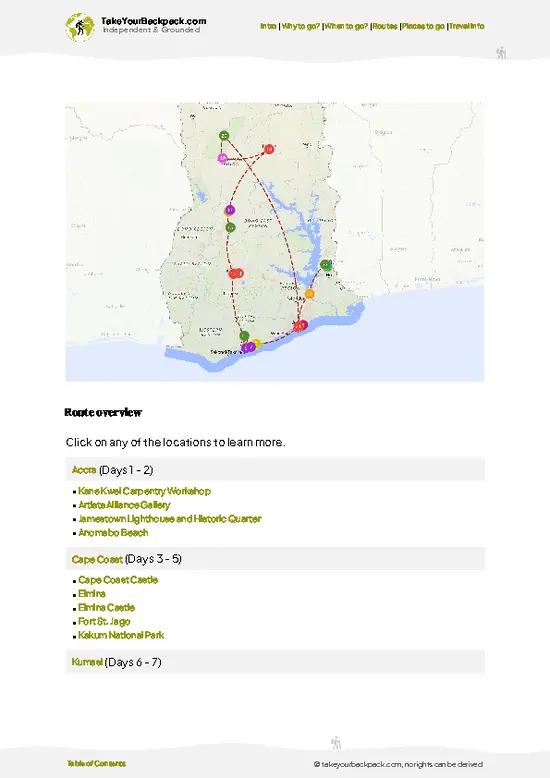
- Larabanga Mosque: Ghana’s oldest mosque, traditionally dated to 1421, is a Sudanese-style building of mud, wattle and timber beams, with buttresses and two small minarets. The details, down to the hand-smoothed plaster, are worth a close look. Go at sunrise or late afternoon when the walls turn deep orange. Non-Muslims view from outside, with a guide and a donation of roughly US$2 to 5. Allow 30 to 45 minutes.
- The Mystic Stone and the Holy Koran: Villagers tell of a stone that moved back to its place after being shifted, and of a hand-written Koran said to have been given to the village founder. Both are kept near the mosque, and the story is told by a local guide. The telling is the draw, so it is best with a guide in the cooler morning hours. Costs fall within the same small donation, and
- Larabanga Mosque: Ghana’s oldest mosque, traditionally dated to 1421, is a Sudanese-style building of mud, wattle and timber beams, with buttresses and two small minarets. The details, down to the hand-smoothed plaster, are worth a close look. Go at sunrise or late afternoon when the walls turn deep orange. Non-Muslims view from outside, with a guide and a donation of roughly US$2 to 5. Allow 30 to 45 minutes.
- The Mystic Stone and the Holy Koran: Villagers tell of a stone that moved back to its place after being shifted, and of a hand-written Koran said to have been given to the village founder. Both are kept near the mosque, and the story is told by a local guide. The telling is the draw, so it is best with a guide in the cooler morning hours. Costs fall within the same small donation, and a visit takes 20 to 30 minutes.
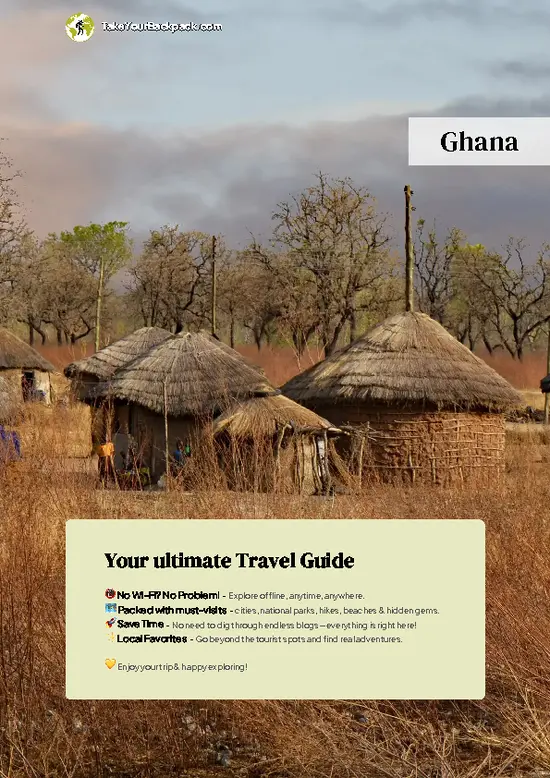
- Village walk with a local guide: Walk through Gonja compounds with round mud huts, grain stores and women pounding shea and cooking. The community runs guided tours, usually US$3 to 8 per person. Late afternoon is best, when the heat drops and families are outside. Allow 1.5 to 2 hours.
Spotted a mistake or missing something? Contact us.


 Best Backpacking
.jpg) Hi, I’m Johan (Netherlands 🇳🇱), the creator of TakeYourBackpack. Over the past 3 decades, I’ve backpacked through 90+ countries across six continents, gaining extensive experience with independent travel, long-term trips, and overland routes.
Hi, I’m Johan (Netherlands 🇳🇱), the creator of TakeYourBackpack. Over the past 3 decades, I’ve backpacked through 90+ countries across six continents, gaining extensive experience with independent travel, long-term trips, and overland routes.