×

Ghana🇬🇭 | villagesNzulezoStilt houses, Tano Lake, dugout canoes, Nzema fishing life | things to do and best time to go

Explore Wli WaterfallsExplore Larabanga

Backpacking in Nzulezo
🏆 Top pickvillage ranked #1
By Johan Kruseman 🇳🇱 | Updated October 22, 2026

Look down at the boardwalk planks and you’ll notice there’s no cemetery here. The dead are carried back to the mainland, because the lake is for the living. Nzulezo sits in Ghana’s Western Region, in Jomoro District near the village of Beyin, reached by a canoe ride along the Amazuri wetland to Lake Tadane. Roughly 500 people live in raffia-and-timber houses on stilts, and the whole place creaks softly underfoot. The pros: an utterly distinct setting, quiet evenings and a real working community. The cons: it’s humid, mosquitoes are relentless, and facilities are basic. I paddled in at dawn, water lettuce brushing the hull, the air smelling of wet wood and woodsmoke, and a child waved from a doorway as if I were the mailman. Most travelers come on a half-day visit from Beyin. Staying overnight is possible but rare, so you won’t find a hostel scene. Compared with nearby Busua or Axim, it’s far quieter and more authentic.

Discover everything you want to know in the 📖 Ghana Travel Guide.


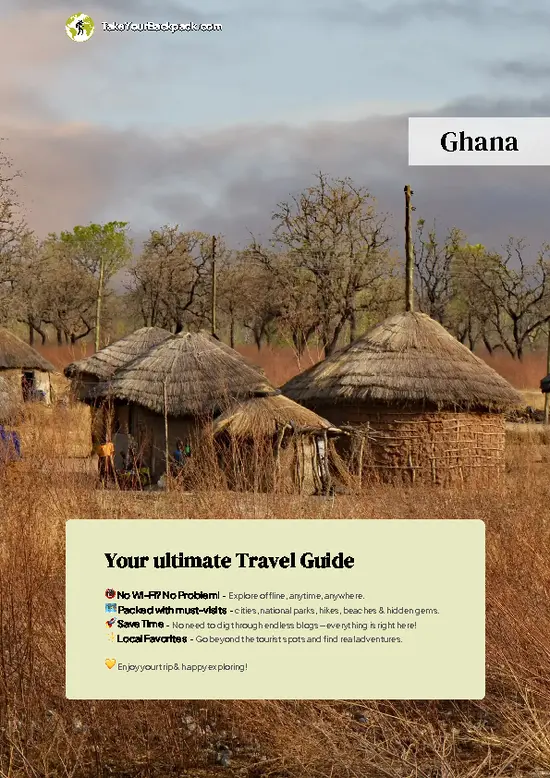
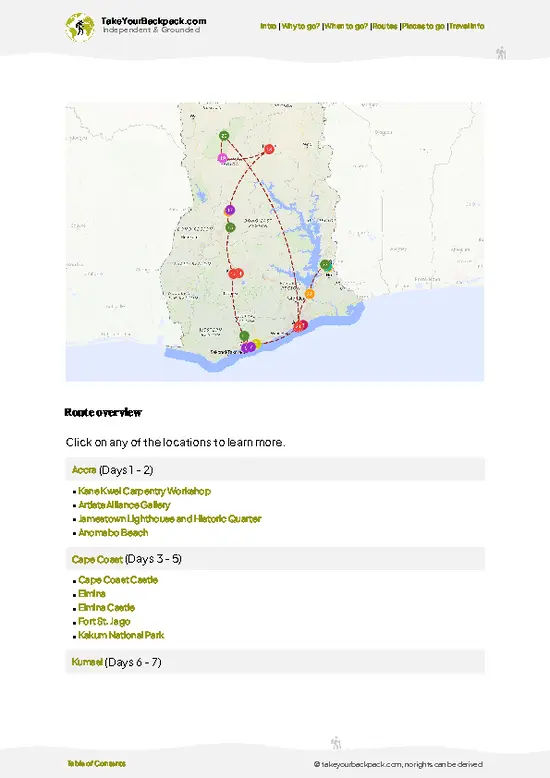
example page 0 from our offline Travel Guide for Ghana
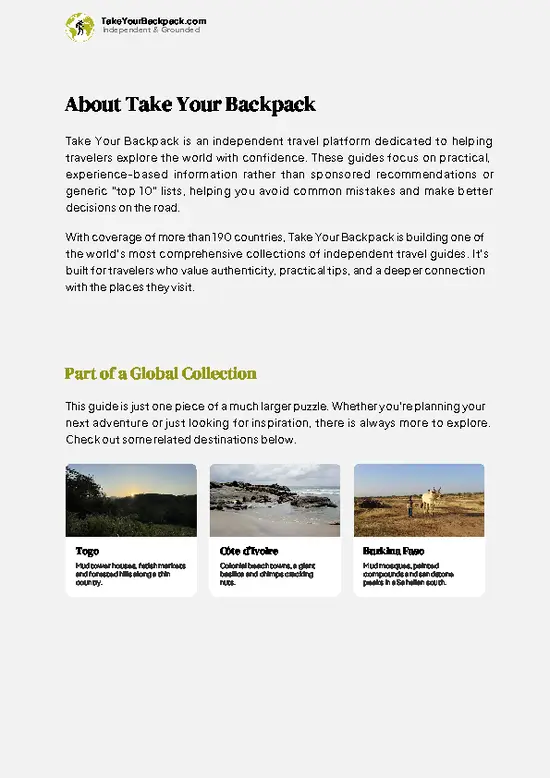
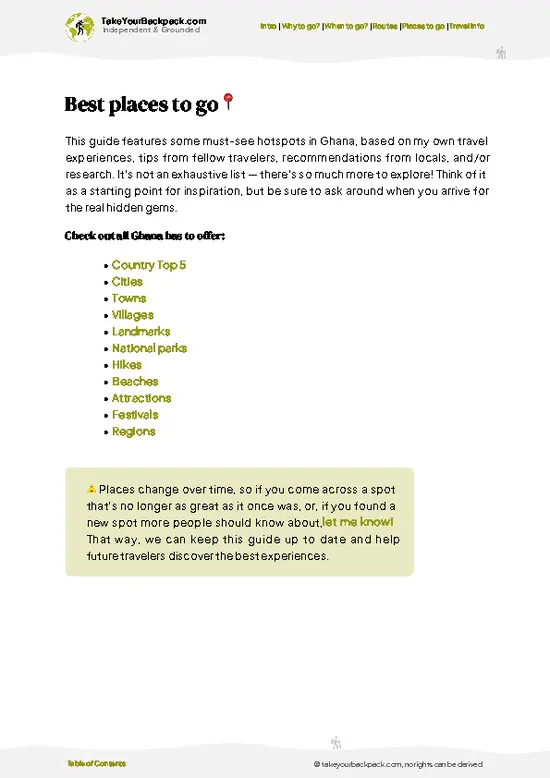
example page 1 from our offline Travel Guide for Ghana
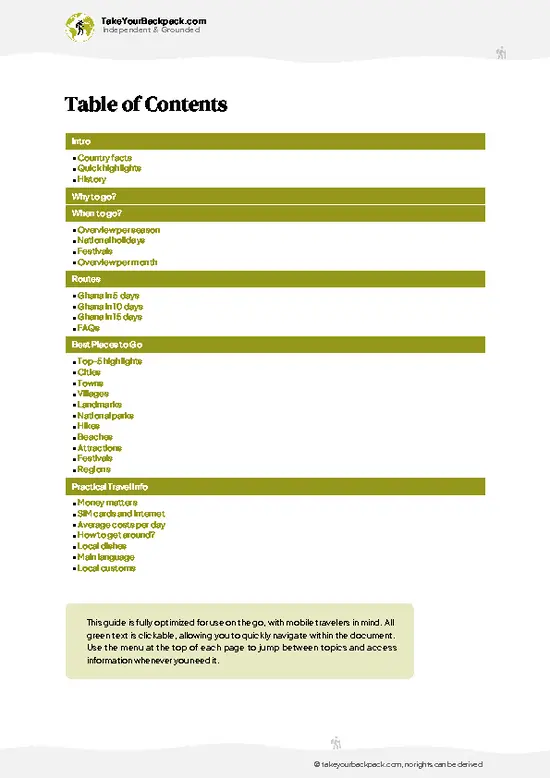
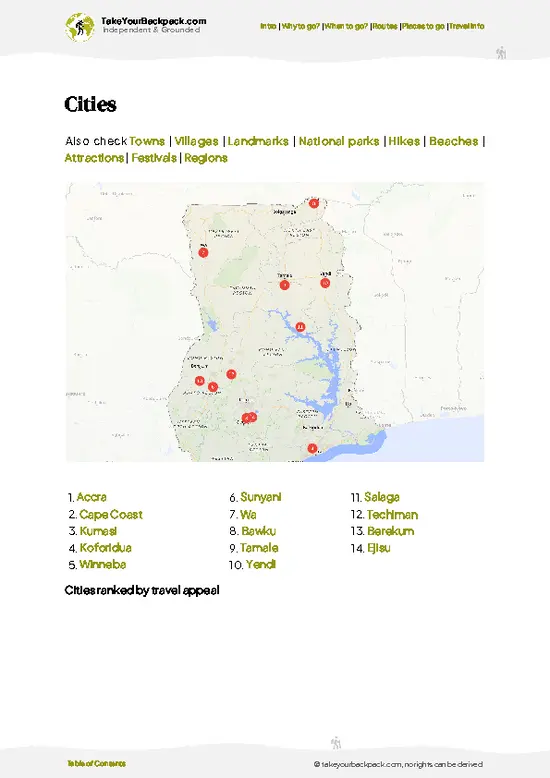
example page 2 from our offline Travel Guide for Ghana
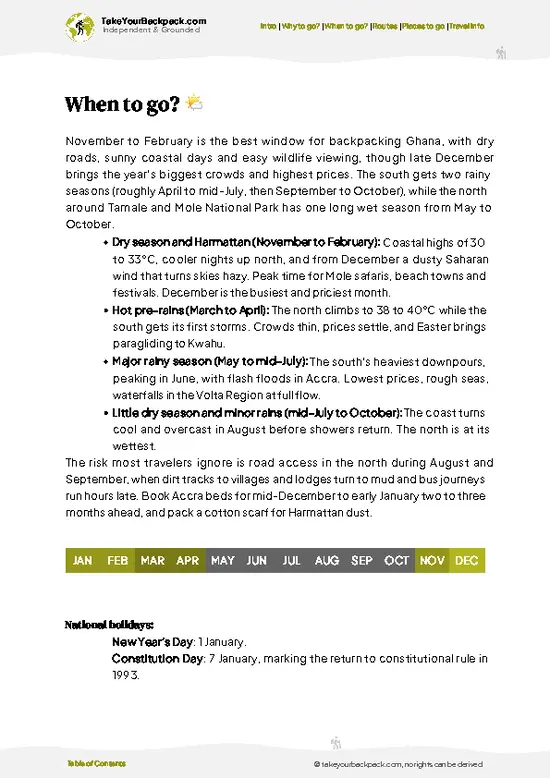
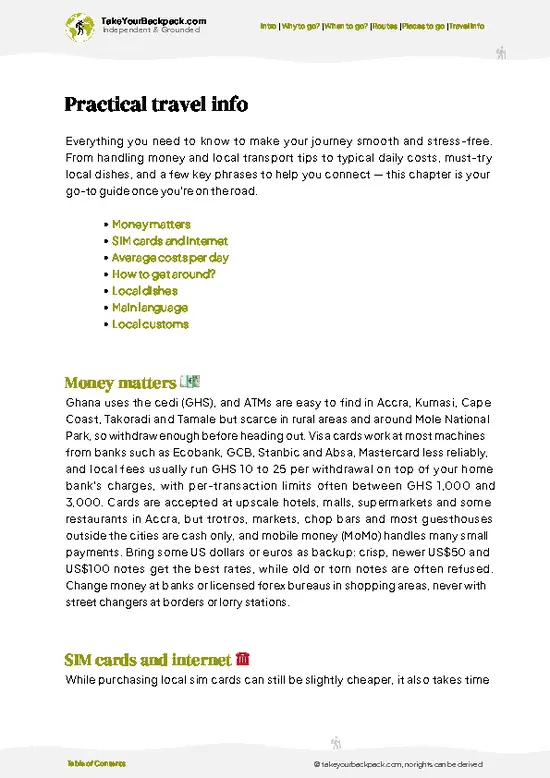
example page 3 from our offline Travel Guide for Ghana
example page 4 from our offline Travel Guide for Ghana
example page 5 from our offline Travel Guide for Ghana
example page 6 from our offline Travel Guide for Ghana
example page 7 from our offline Travel Guide for Ghana
Loading the map 🌍
CLICK TO FILTER
cities
towns
villages
landmarks
national parks
hikes
beaches
attractions
festivals
regions
SHOW COUNTRY’S BESTSHOW ALL

✨ Why go?
Ranked #1 village in Ghana
What makes this village worth visiting

Backpackers choose Nzulezo because it is a working stilt village, not a reconstruction, and getting there is half the experience. The canoe journey through the Amazuri wetland takes you past raffia palms and birdlife, and it feels more like an expedition than a tour stop. It fits neatly as a pause on the western coast route between Takoradi, Axim and the Ivorian border at Elubo, adding a rural, watery contrast to the beach towns of Busua and Axim. Most visitors stay two to four hours, and that is enough to see daily life, talk with your guide and look around. Staying overnight suits slow travelers and photographers who want early light on the lake without other visitors. It’s a better fit for solo travelers and couples who like quiet than for anyone wanting nightlife or company. Expect basic … read more 👉
Backpackers choose Nzulezo because it is a working stilt village, not a reconstruction, and getting there is half the experience. The canoe journey through the Amazuri wetland takes you past raffia palms and birdlife, and it feels more like an expedition than a tour stop. It fits neatly as a pause on the western coast route between Takoradi, Axim and the Ivorian border at Elubo, adding a rural, watery contrast to the beach towns of Busua and Axim. Most visitors stay two to four hours, and that is enough to see daily life, talk with your guide and look around. Staying overnight suits slow travelers and photographers who want early light on the lake without other visitors. It’s a better fit for solo travelers and couples who like quiet than for anyone wanting nightlife or company. Expect basic comforts, heat and insects. If you prefer sandy beaches and cold beer, treat it as a half-day excursion instead.

💡 HighlightsEssential experiences to have while visiting Nzulezo

  1. Canoe Trip Through the Amazuri Wetland: The 5 km paddle from the Beyin landing runs through a narrow channel lined with raffia palms and floating vegetation. You may see kingfishers, herons and the occasional monkey. Go early in the morning, when it’s cool and quiet. Expect about GH¢100 to 200 (roughly US$7 to 15) for the guide, canoe and village entry, and 1 to 1.5 hours each way.
  2. Walking the Village Boardwalk: Nzulezo is built entirely over water, with timber walkways connecting the houses, a school, a church and a community meeting house. Your guide explains the founding legend, which credits a snail with leading the Nzema settlers to the lake. Watch for women paddling to market and children moving between houses by canoe. Morning is best for activity. It’s typically included in the entry
… read more 👉
  1. Canoe Trip Through the Amazuri Wetland: The 5 km paddle from the Beyin landing runs through a narrow channel lined with raffia palms and floating vegetation. You may see kingfishers, herons and the occasional monkey. Go early in the morning, when it’s cool and quiet. Expect about GH¢100 to 200 (roughly US$7 to 15) for the guide, canoe and village entry, and 1 to 1.5 hours each way.
  2. Walking the Village Boardwalk: Nzulezo is built entirely over water, with timber walkways connecting the houses, a school, a church and a community meeting house. Your guide explains the founding legend, which credits a snail with leading the Nzema settlers to the lake. Watch for women paddling to market and children moving between houses by canoe. Morning is best for activity. It’s typically included in the entry fee, and a walk takes 1 to 2 hours.
  3. Paddling Out on Lake Tadane: Beyond the houses the lake opens wide, and you can ask a villager to take you out, or even try the standing paddle technique yourself. It’s a calm place to watch fishers at work and the light shifting over still water. Early morning or late afternoon is best. Budget a few extra dollars as a tip, perhaps US$2 to 5, and allow 30 to 60 minutes.
For day trips nearby, Fort Apollonia in Beyin, the beaches at Busua and Cape Three Points lighthouse are all reachable. I’d pick Fort Apollonia first, since it’s just minutes from the canoe landing and explains the Nzema history behind the lake.
Spotted a mistake or missing something? Contact us.

Things to do around Nzulezo

Ratings based on Tripadvisor reviews. When you book through this link, you support our work at no extra cost to you.

🌤️ When to go?Choosing the right time of year

  • Main Dry Season (December to February): Best overall, with days around 28 to 32°C (82 to 90°F), lower humidity and the clearest canoe trips. Harmattan haze can dull photos, and prices at beach towns rise slightly.
  • Short Dry Spell (August): Cooler, often cloudy, at about 24 to 27°C (75 to 81°F), with fewer visitors. Showers still occur.
  • Major Rainy Season (April to July): The wettest period, with heavy downpours, water levels higher and muddy access roads. Temperatures stay around 26 to 30°C (79 to 86°F), and mosquitoes are worst.
  • Minor Rains (September to November): Lighter showers, green wetlands and quiet trails. Expect 25 to 30°C (77 to 86°F).
Daylight is nearly constant year-round at about 12 hours, with sunrise near 6 a.m., so go in the early morning for cooler paddling and softer light.

source: climatestotravel.comJANJanuary: highly recommended for travelingFEBFebruary: highly recommended for travelingMARMarch: excellent for travelingAPRApril: good for travelingMAYMay: fair for travelingJUNJune: fair for travelingJULJuly: fair for travelingAUGAugust: fair for travelingSEPSeptember: fair for travelingOCTOctober: good for travelingNOVNovember: excellent for travelingDECDecember: highly recommended for traveling
when-to-go

✈️ The backpacker research shortcutGhana Travel Guide

An offline-friendly backpacking guide with optimized travel routes, ranked highlights, transport advice, and the best areas to stay.
example page 0 from our offline Travel Guide for Ghana
example page 1 from our offline Travel Guide for Ghana
example page 2 from our offline Travel Guide for Ghana
example page 3 from our offline Travel Guide for Ghana
example page 4 from our offline Travel Guide for Ghana
example page 5 from our offline Travel Guide for Ghana
example page 6 from our offline Travel Guide for Ghana
example page 7 from our offline Travel Guide for Ghana
The digital guide (321 pages) contains:
✅ 105 highlights, ranked by travel appeal
✅ Optimized 5, 10 & 15-day travel routes
✅ Cities, national parks, landmarks, beaches
✅ How to get around
✅ Offline-friendly for travel without Wi-Fi
👉 Click to see all 30+ guide features

📅 Plan smarter in minutes, not weeks
✅ Month by month travel advice
✅ Festivals & national holidays
✅ Budget expectations

🗺️ Go to the right places, skip the overrated ones
✅ Honest pros & cons of destinations
✅ Top hikes, parks & viewpoints
✅ Lesser-known places most travelers miss
✅ Clear “worth it vs skip it” guidance

🛏️ Travel smoothly without rookie mistakes
✅ Best areas to stay
✅ Transport systems explained simply
✅ Common scams & safety advice
✅ SIM cards, money & practical tips

🌍 Understand the country, not just visit it
✅ Culture & traditions
✅ 52 Essential phrases & customs
✅ Festivals worth planning around
✅ Traveler-friendly historical context
✅ Insights that make places more meaningful

📱 Built for real travel conditions
✅ Fully downloadable PDF
✅ Works completely offline
✅ Optimized for phone use
✅ Useful in remote areas & buses
✅ Everything in one place
Stop searching, start planning
Get instant access to your full guide. 30‑day money-back guarantee.
+ Add another guide for just

By proceeding you agree to our terms.
Sent to your inbox immediately after payment • 100% Secure Checkout
Best Backpacking Travel Advisor 2025 tourism awardBest Backpacking
Travel Advisor
2025
What others say about Take Your Backpack Guides:
⭐⭐⭐⭐⭐
Fantastic, amazing amount of information!
⭐⭐⭐⭐⭐
My goodness this is amazing, it's what I've been looking for hats off too you!
⭐⭐⭐⭐⭐
I think this is absolutely BRILLIANT
⭐⭐⭐⭐
Very complete and informative. It's still missing places, but I gotta to commend you
⭐⭐⭐⭐⭐
This is truly amazing, thank you, can't wait to explore it with my kids!
⭐⭐⭐⭐⭐
Awesome resource, thank you!
⭐⭐⭐⭐⭐
This is amazing! Can't wait to explore the ones I haven't seen
⭐⭐⭐⭐
I love this! Well done, great idea.
⭐⭐⭐⭐⭐
Thanks for taking the time to make this gem!
⭐⭐⭐⭐⭐
This might be the best website I've ever seen.
⭐⭐⭐⭐⭐
Congratulations, and thank you so much for your work; it's incredibly valuable.
⭐⭐⭐⭐
In all seriousness I think you did a great job pointing out the important spots
⭐⭐⭐⭐⭐
10/10 very good
⭐⭐⭐⭐⭐
As someone who's only just starting to visit regularly this is awesome, thank you.
⭐⭐⭐⭐
Thank you very much! I'm going to visit my dad, it's going to be very useful!
⭐⭐⭐⭐⭐
This is really cool! We'll be travelling for the first time and this definitely come in handy.
⭐⭐⭐⭐⭐
You are now our minister of culture, congratulations 👨‍💼
⭐⭐⭐⭐⭐
Just wanted to tell you that this is a pearl! Going to follow your recommendations.
⭐⭐⭐⭐⭐
This is so cool. I'll definitely be using the resource for my travels soon.
⭐⭐⭐⭐⭐
This is very impressive! Good work.
⭐⭐⭐⭐⭐
This is an amazing and informative site. Very well done!

🛏️ Where to stay?Best areas to stay in Ghana

Most backpackers sleep elsewhere, so the best option depends on how much comfort you want. The most memorable is a homestay or basic guesthouse in Nzulezo, usually arranged through the village tourism office at Beyin before you paddle in. Expect simple rooms with mattresses on stilts, mosquito nets, shared facilities and no air conditioning, for about US$10 to 25. It’s quiet at night, and you’ll hear frogs, water and the occasional paddle. Bring a headlamp, repellent and your own water.
For more comfort, stay in Beyin, where a few small guesthouses and beach lodges sit near the sea, about 15 minutes … read more 👉
Most backpackers sleep elsewhere, so the best option depends on how much comfort you want. The most memorable is a homestay or basic guesthouse in Nzulezo, usually arranged through the village tourism office at Beyin before you paddle in. Expect simple rooms with mattresses on stilts, mosquito nets, shared facilities and no air conditioning, for about US$10 to 25. It’s quiet at night, and you’ll hear frogs, water and the occasional paddle. Bring a headlamp, repellent and your own water.
For more comfort, stay in Beyin, where a few small guesthouses and beach lodges sit near the sea, about 15 minutes from the canoe landing. Rooms are generally US$15 to 40, and the beach setting makes a pleasant rest after the humid paddle.
The best social hub is Busua, about 1.5 to 2 hours away by road. It has backpacker-friendly places such as Alaska Beach Club and Busua Inn, plus surf lessons, beach bars and dorm beds from around US$8 to 15. Axim is closer, about an hour away, with a quieter beach feel and basic guesthouses. If you want to meet other travelers, choose Busua. If you prefer to see Nzulezo at dawn, stay in Beyin or the village itself.

🚌 Day tripsExploring the surroundings

Day trips from Nzulezo are easy if you treat the nearby coastal town of Beyin as your launch point, since the Western Region's main road links it to forts, beaches and rainforest, though shared transport thins out after mid-afternoon.
Fort Apollonia, Beyin:
The small whitewashed fort sits a short walk from the lagoon landing where the Nzulezo canoes depart. It dates from the 1770s and houses a modest museum on the Nzema people and the colonial trade. Expect 45 minutes inside and an entry fee of roughly US$3 to 5. Go before or after your canoe trip, because mid-morning heat makes the stone rooms stuffy. First-timers often skip it, which is a pity at this price.

Axim and Fort St. Anthony:
Axim is the nearest proper town, about an hour by tro-tro from Beyin at US$2 to 3 each way. The Portuguese-built … read more 👉
Day trips from Nzulezo are easy if you treat the nearby coastal town of Beyin as your launch point, since the Western Region's main road links it to forts, beaches and rainforest, though shared transport thins out after mid-afternoon.
Fort Apollonia, Beyin:
The small whitewashed fort sits a short walk from the lagoon landing where the Nzulezo canoes depart. It dates from the 1770s and houses a modest museum on the Nzema people and the colonial trade. Expect 45 minutes inside and an entry fee of roughly US$3 to 5. Go before or after your canoe trip, because mid-morning heat makes the stone rooms stuffy. First-timers often skip it, which is a pity at this price.

Axim and Fort St. Anthony:
Axim is the nearest proper town, about an hour by tro-tro from Beyin at US$2 to 3 each way. The Portuguese-built fort stands on a headland above fishing canoes and gives the best sea view in this stretch of coast, for about US$3 to 5. Leave Beyin by 8 a.m. so you are not hunting for a ride back at dusk, and carry small cedi notes because there are no ATMs at the fort. The dry months from November to March keep the road and the beach pleasant.
👉 Explore Axim
Busua Beach:
Busua is the place to swap lake silence for surf and a cold drink. Count on two to three hours each way with a change in Axim or Takoradi direction, so it is a full day for US$10 to 15 in transport plus lunch. Swimming is best in the calmer dry season, and the rainy months of May to July bring strong rip currents. The usual mistake is starting after 10 a.m., which leaves you barely two hours on sand before the last vehicles head back.

Ankasa Conservation Area:
This is the wildest day out, a protected rainforest near the Ivorian border with forest elephants, monkeys and hundreds of bird species. Getting there takes roughly two hours via Elubo road transport, and you should budget US$25 to 40 with entry, a required guide and a motorbike or taxi hop to the gate. Go between December and February, when trails are firmer and birds are easier to spot. Many first-timers expect to see elephants, but sightings are rare; the real draw is the sound and size of the trees.
👉 Explore Ankasa Conservation Area

FAQTraveler FAQ

Most travelers go via Takoradi, then travel about 3 hours by road to Beyin, typically through Axim using shared taxis or minibuses (around GH¢50 to 100 in total). From Beyin, a canoe takes 1 to 1.5 hours along the Amazuri wetland to Nzulezo. Check in at the Beyin tourism office, where you pay about GH¢100 to 200 for the guide and canoe. Accra to Takoradi takes roughly 4 to 5 hours by bus.
Yes, if you want a working stilt village and a quiet canoe trip, and you accept the long journey. The 5 km paddle through palm-lined wetland is as memorable as the village itself, and the visit costs roughly US$7 to 15. It’s less suited to travelers wanting beaches, nightlife or comfort. Combine it with Fort Apollonia in Beyin and the beaches at Busua or Axim for a fuller trip.
Yes, but only as a long day trip from Takoradi, Axim or Busua, and an early start is wise. Beyin is about 3 hours from Takoradi and 1 hour from Axim, and the canoe adds 2 to 3 hours round trip plus time in the village. Leave by 6 or 7 a.m. to be back before dark, since afternoon shared transport thins out. Staying overnight in Beyin or Nzulezo makes it much more relaxed.
⚠️ Things can change over time, so always validate details locally before you go.

Where to go next

Nzulezo isn’t the only highlight in Ghana. Explore all what Ghana has to offer.
Country photo of Ghana

We 💚 feedbackParting advice and final tips

Nzulezo is worth the trip because you’re not looking at a staged display. People are fishing, repairing boardwalks and raising kids over water, and the paddle in feels earned. The drawback is simple. It’s humid, buggy and a long haul from anywhere, and getting back by public transport can be slow. Go early, bring repellent and cash, and treat the visit as a quiet half-day, not a major sight.

✈️ When did I visit Ghana?
Ghana I visited in December 2024, starting in Accra following the coast, then up north to Mole National park to finish in the Volta Region.

✍️ Help improve this page!
The information on this page is based on my own backpacking experience in Ghana, supplemented with up-to-date research and feedback from other travelers. Travel details can change, so if you notice anything outdated or incomplete, feel free to let me know.


🙋‍♂️ Give feedback

👋 Meet the founderWho’s Behind Take Your Backpack?

Johan, backpacker and founder of TakeYourBackpackHi, I’m Johan (Netherlands 🇳🇱), the creator of TakeYourBackpack. Over the past 3 decades, I’ve backpacked through 90+ countries across six continents, gaining extensive experience with independent travel, long-term trips, and overland routes.

This site is built on a combination of firsthand travel experience and carefully curated insights from other backpackers. Many guides are based on places I’ve personally visited, while others bring together tips, observations, and practical advice shared by trusted travelers I’ve met along the way.

The goal is to provide realistic, experience-driven guidance — not generic itineraries — so you can explore destinations with better context, clearer expectations, and more confidence.