



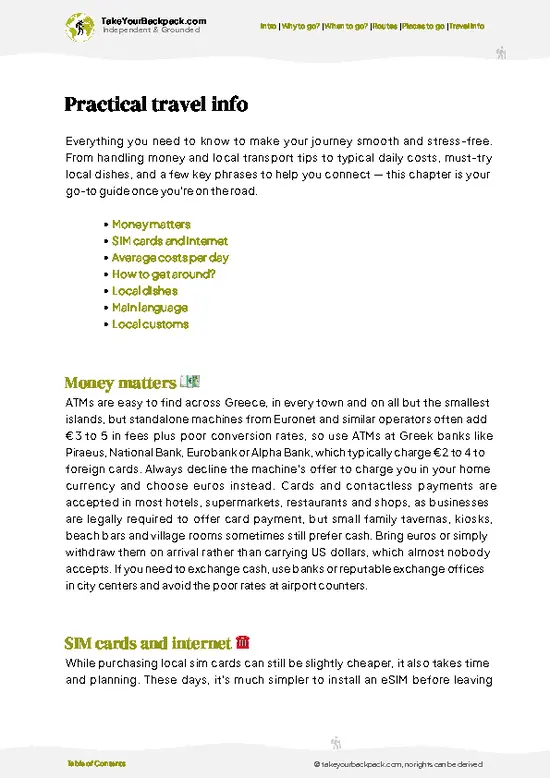
- Chora (the hilltop village and Kastro) — Narrow, stepped lanes, cubic white houses and a compact Kastro (medieval settlement ruins) make Chora feel like a living postcard. It’s where locals actually live, so wandering here gives the clearest sense of Sikinos’ everyday rhythm and old-school architecture.
- Alopronia harbour — The island’s tiny port: a handful of tavernas, fishing boats, and a pebble/sandy strip where people swim off the quay. It’s the island’s social hub and the best place to catch the first/last boat and watch island life up close.
- Windmills & sunset viewpoint above Chora — A short walk up from the village brings you to a cluster of old windmills and open rock that frame sunsets better than most travel photos. It’s simple, atmospheric and very local — not a commercial viewpoint.
- Island footpaths and terraces — Sikinos’ old network of mule tracks links villages, chapels and terraces of dry-stone vineyards and olive groves. Hikes here feel intimate: you’ll pass abandoned cisterns, small fruit trees and walls that show how islanders eked out a living for centuries.
- Southern coves and snorkeling spots — Small, pebble coves on the island’s southern coast are often empty even in summer. Clear water, rocky seabeds and sea caves make them perfect for swimming or snorkeling — most visitors only stick to the port beach.
- Paleokastro / old acropolis ruins (hidden gem) — A compact archaeological footprint of an older fort/settlement above the island — nothing museumified, just stones and views. It’s a peaceful spot to imagine the island’s deeper past without a crowd or interpretation panels.
- Episkopi chapel & surrounding viewpoint (hidden gem) — A little chapel and lookout reached on a short hike from Chora: sweeping views of neighboring isles and steep north-facing terraces. Locals use it for quiet prayers and picnics; most daytrippers miss it entirely.
- Village tavern culture (Chora’s tavernas and the village bakery) — More than a place to eat: the slow, home-cooked meals, tray of local cheese, spit-roasted lamb on feast days, and the bakery’s morning bread make dining here an honest local exchange you won’t experience the same way on busier islands.
- Agios Panteleimon cliffside chapel (hidden gem) — A tiny cliff-top chapel reached by a footpath; it’s photogenic but, more importantly, a great spot to sit with the wind, watch fishing boats and feel like you’ve found a private corner of the Aegean.
- Rocky promontory near Alopronia (personal favorite) — A short walk from the port leads to low, flat rocks that drop into the sea. I like sitting here mid-afternoon: the light, the wash of boat noise far below, and the easy jump-in swims. It’s unflashy, totally local and the best spot on the island to just be.
Spotted a mistake or missing something? Contact us.

Ios Island Trekking Tours: Discover Ios Unexplored

Cheese and Wine Tasting (Guided Tour INCLUDED)

Official Wristband in los, Cyclades

Ios: Cooking Experience with Cheese and Wine Tasting

Bar Crawl Ios Ticket in Cyclades

Ios Culture & Flavor E-Bike Tour: Chora & Diaseli

Full Ios Heritage & Flavor E-Bike Tour

Luxury Private Boat Tour in Ios with the Saxdor 320

Ios History & Myth E-Bike Tour: Discover Homer’s legacy

 Best Backpacking
 Hi, I’m Johan (Netherlands 🇳🇱), the creator of TakeYourBackpack. Over the past 3 decades, I’ve backpacked through 90+ countries across six continents, gaining extensive experience with independent travel, long-term trips, and overland routes.