×

Guadeloupe🇬🇵 | national parksÎles de la Petite Terre Nature ReserveTwo coral islets, iguanas, powdery beaches, boat-only access | things to do and best time to go

Explore Pointe des ChâteauxExplore Réserve Naturelle de la Désirade

Backpacking in Îles de la Petite Terre Nature Reserve
👌 Worth visitingnational park ranked #4
By Johan Kruseman 🇳🇱 | Updated October 22, 2026

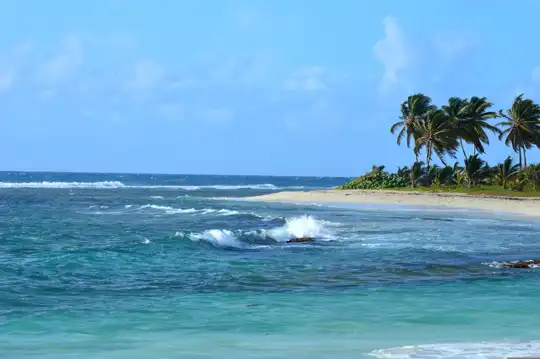
Iguanas rule the path on Terre-de-Bas, where the endangered Lesser Antillean iguana lounges along the trail to the lighthouse and barely shifts for your boots. The reserve sits off the southeast coast of Guadeloupe, two flat islets, Terre-de-Haut and Terre-de-Bas, with no village, no shop and no shade beyond scrub. That is the appeal and the problem. Boats leave from Saint-François, and the crossing can be rough, so take seasickness tablets before boarding, not after. Bring all your water and food, because nothing is sold on the islands, and pack out every scrap. Reef shoes save your feet on sharp coral. Book a day ahead in busy months, since seats on the small boats fill. Snorkelers, wildlife nerds and beach lovers who like quiet will adore it. Anyone wanting facilities, long hikes or a lazy resort day will be frustrated.

Discover everything you want to know in the 📖 Guadeloupe Travel Guide.


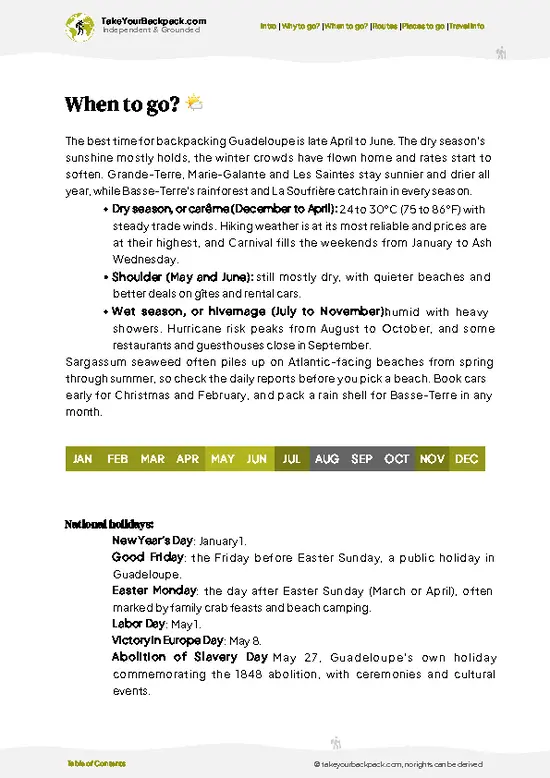
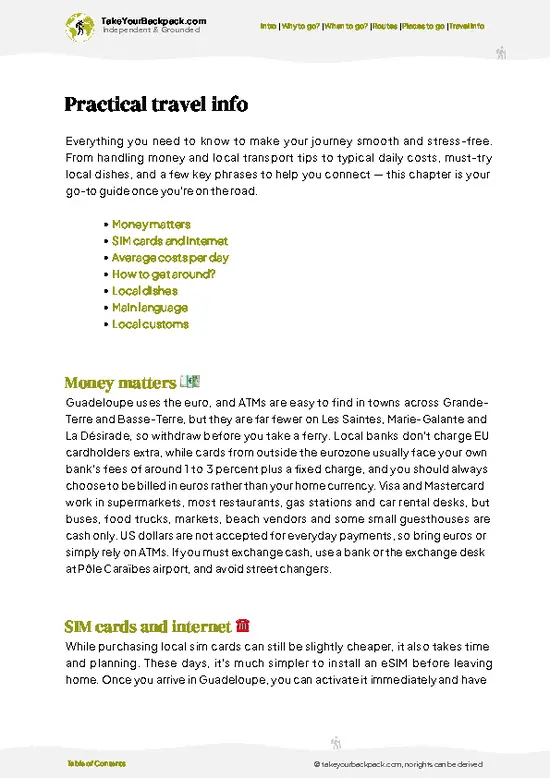
example page 0 from our offline Travel Guide for Guadeloupe
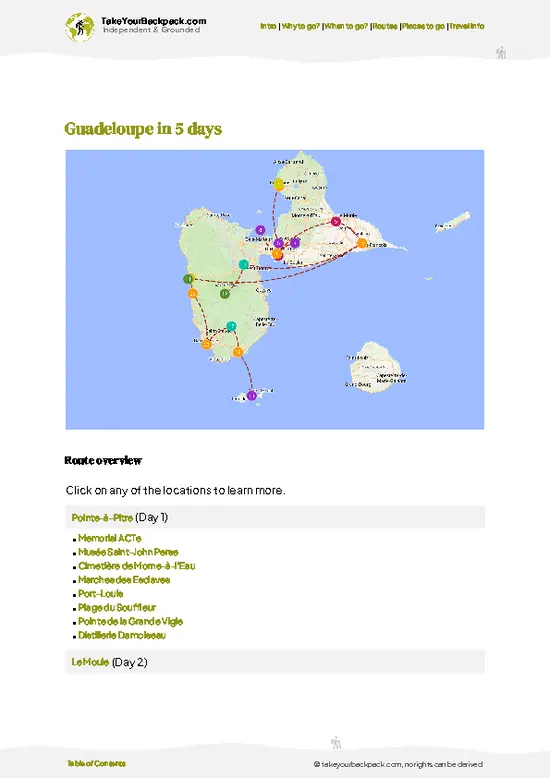
example page 1 from our offline Travel Guide for Guadeloupe
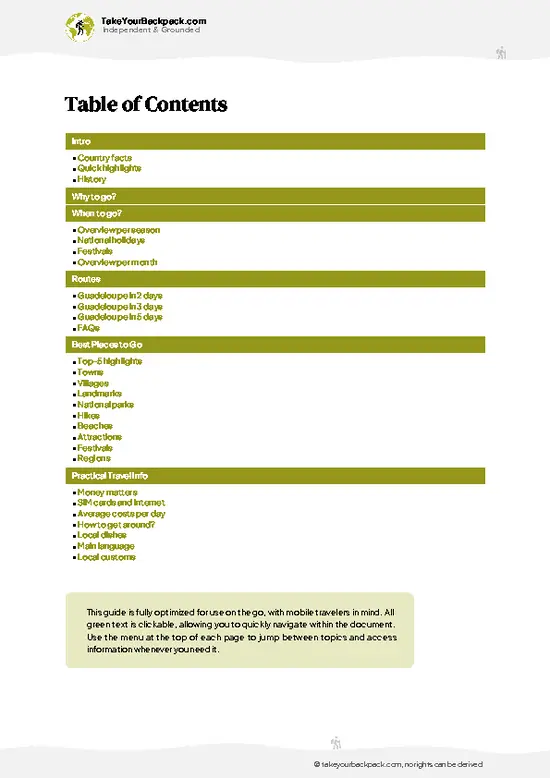
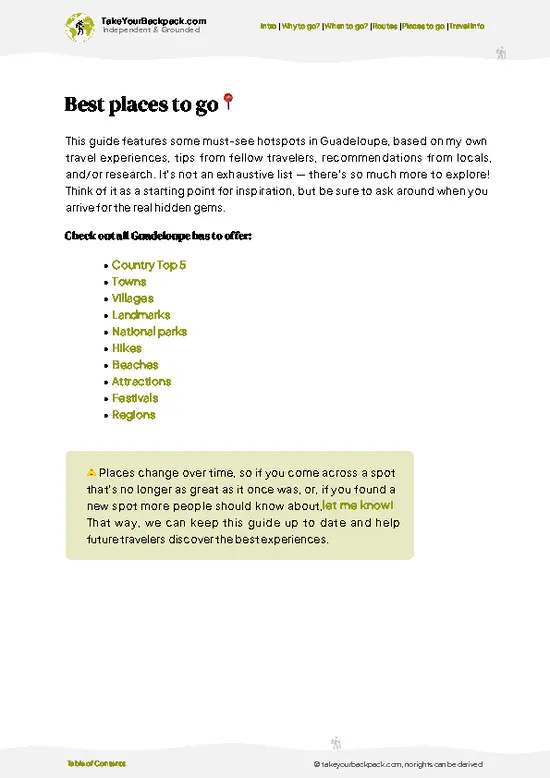
example page 2 from our offline Travel Guide for Guadeloupe
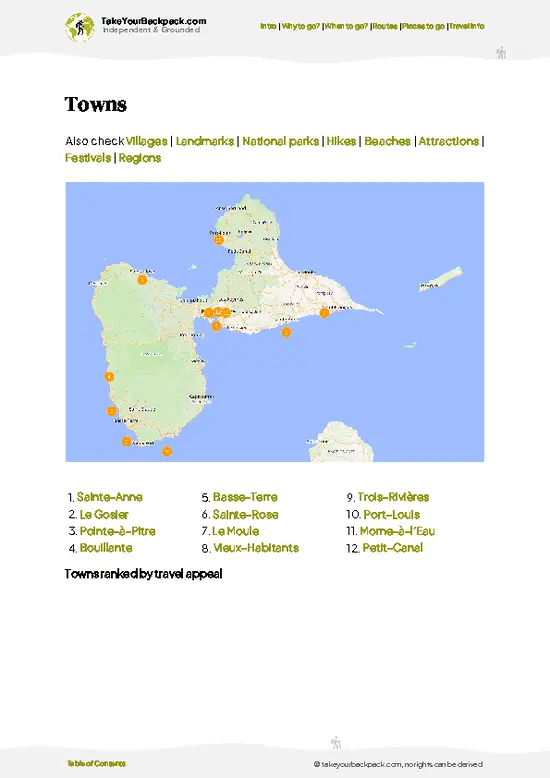
example page 3 from our offline Travel Guide for Guadeloupe
example page 4 from our offline Travel Guide for Guadeloupe
example page 5 from our offline Travel Guide for Guadeloupe
example page 6 from our offline Travel Guide for Guadeloupe
example page 7 from our offline Travel Guide for Guadeloupe
Loading the map 🌍
CLICK TO FILTER
towns
villages
landmarks
national parks
hikes
beaches
attractions
festivals
regions
SHOW COUNTRY’S BESTSHOW ALL

✨ Why go?
Ranked #4 national park in Guadeloupe
Reasons people choose to explore here

Îles de la Petite Terre Nature Reserve suits backpackers who want wild, unpackaged nature without a tour group script. You land, you walk, you swim, and nobody schedules your hours beyond the boat times. The two islets are small enough that you can see the lot in a day, which makes them an easy add-on to a base in Saint-François or elsewhere on Grande-Terre.

The draw is the animals. Lesser Antillean iguanas are everywhere on Terre-de-Bas, and the shallows hold sea turtles and nurse sharks, so a mask and snorkel does more than any guided talk. Lemon sharks are often seen near the sandy bays too.

The second reason is the sheer simplicity. There are two islets, a handful of tracks and a lighthouse, so you can plan your own day with no map reading and no gear beyond sun protection. Cheap local … read more 👉
Îles de la Petite Terre Nature Reserve suits backpackers who want wild, unpackaged nature without a tour group script. You land, you walk, you swim, and nobody schedules your hours beyond the boat times. The two islets are small enough that you can see the lot in a day, which makes them an easy add-on to a base in Saint-François or elsewhere on Grande-Terre.

The draw is the animals. Lesser Antillean iguanas are everywhere on Terre-de-Bas, and the shallows hold sea turtles and nurse sharks, so a mask and snorkel does more than any guided talk. Lemon sharks are often seen near the sandy bays too.

The second reason is the sheer simplicity. There are two islets, a handful of tracks and a lighthouse, so you can plan your own day with no map reading and no gear beyond sun protection. Cheap local boat seats beat private charters for anyone watching spending, and you meet fellow travelers on deck.

💡 HighlightsPlaces and moments you shouldn't skip

  1. Lesser Antillean iguanas on Terre-de-Bas: the reserve’s signature animal, grey-green and the size of a forearm, sunning on paths and under sea grape trees. Keep a respectful distance and never feed them.
  2. Terre-de-Bas lighthouse: the oldest lighthouse in Guadeloupe, reached on a short sandy track through dry scrub. The views over turquoise water and the neighboring islet are the best on the reserve.
  3. Snorkeling the sheltered lagoon: calm, clear water holds sea turtles, rays and reef fish. Wear a rash shirt, since shade is scarce.
  4. Nurse sharks in the shallows: harmless, slow-moving sharks often rest near the sandy bays. Watch them from a distance and never touch.
  5. Terre-de-Bas beach: a quieter shore with fine pale sand, good for a swim after the walks, with only a few boats beside you.
  6. Coastal walk
… read more 👉
  1. Lesser Antillean iguanas on Terre-de-Bas: the reserve’s signature animal, grey-green and the size of a forearm, sunning on paths and under sea grape trees. Keep a respectful distance and never feed them.
  2. Terre-de-Bas lighthouse: the oldest lighthouse in Guadeloupe, reached on a short sandy track through dry scrub. The views over turquoise water and the neighboring islet are the best on the reserve.
  3. Snorkeling the sheltered lagoon: calm, clear water holds sea turtles, rays and reef fish. Wear a rash shirt, since shade is scarce.
  4. Nurse sharks in the shallows: harmless, slow-moving sharks often rest near the sandy bays. Watch them from a distance and never touch.
  5. Terre-de-Bas beach: a quieter shore with fine pale sand, good for a swim after the walks, with only a few boats beside you.
  6. Coastal walk around Terre-de-Bas: a loop of tracks passing salt ponds, coral rubble beaches and low scrub, ideal for spotting birds like terns and frigatebirds.
  7. Beach picnic stops: the white sand strips are good for lunch with your own supplies, so bring food and carry out all litter.
Îles de la Petite Terre Nature Reserve rewards an early arrival, so head first to the iguanas and the lighthouse path before the sun gets harsh and the boats unload more visitors.
Spotted a mistake or missing something? Contact us.

Things to do near Îles de la Petite Terre Nature Reserve

Ratings based on Tripadvisor reviews. When you book through this link, you support our work at no extra cost to you.

🌤️ When to go?Weather, crowds, and seasonal trade-offs

  • Dry Season (Feb to May): Seas are calmest and the sun is steady, so boat crossings from Saint-François run smoothly. Air runs 24 to 30°C (75 to 86°F), water about 26 to 28°C (79 to 82°F). Daylight lasts roughly 11.5 to 12.5 hours.
  • Hurricane Season (Jun to Nov): Hotter at 26 to 32°C (79 to 90°F), with squalls and a real storm risk from August to October. Crossings get cancelled when the swell picks up. Rates drop and the islands feel empty.
  • Peak Winter (Dec to Jan): Cooler trade-wind days of 23 to 29°C (73 to 84°F) and the busiest weeks for boats and rooms on the mainland. Prices climb around Christmas and New Year.
  • Wildlife Timing: Iguanas are out year-round, and nesting sea turtles come ashore on the beaches from about March to October.
Book a weekday crossing in February or March for calm water and fewer people on the sand.

source: climatestotravel.comJANJanuary: excellent for travelingFEBFebruary: excellent for travelingMARMarch: excellent for travelingAPRApril: excellent for travelingMAYMay: highly recommended for travelingJUNJune: fair for travelingJULJuly: good for travelingAUGAugust: good for travelingSEPSeptember: fair for travelingOCTOctober: fair for travelingNOVNovember: fair for travelingDECDecember: excellent for traveling

✈️ The backpacker research shortcutGuadeloupe Travel Guide

An offline-friendly backpacking guide with optimized travel routes, ranked highlights, transport advice, and the best areas to stay.
example page 0 from our offline Travel Guide for Guadeloupe
example page 1 from our offline Travel Guide for Guadeloupe
example page 2 from our offline Travel Guide for Guadeloupe
example page 3 from our offline Travel Guide for Guadeloupe
example page 4 from our offline Travel Guide for Guadeloupe
example page 5 from our offline Travel Guide for Guadeloupe
example page 6 from our offline Travel Guide for Guadeloupe
example page 7 from our offline Travel Guide for Guadeloupe
The digital guide (206 pages) contains:
✅ 51 highlights, ranked by travel appeal
✅ Optimized 2, 3 & 5-day travel routes
✅ Cities, national parks, landmarks, beaches
✅ How to get around
✅ Offline-friendly for travel without Wi-Fi
👉 Click to see all 30+ guide features

📅 Plan smarter in minutes, not weeks
✅ Month by month travel advice
✅ Festivals & national holidays
✅ Budget expectations

🗺️ Go to the right places, skip the overrated ones
✅ Honest pros & cons of destinations
✅ Top hikes, parks & viewpoints
✅ Lesser-known places most travelers miss
✅ Clear “worth it vs skip it” guidance

🛏️ Travel smoothly without rookie mistakes
✅ Best areas to stay
✅ Transport systems explained simply
✅ Common scams & safety advice
✅ SIM cards, money & practical tips

🌍 Understand the country, not just visit it
✅ Culture & traditions
✅ 52 Essential phrases & customs
✅ Festivals worth planning around
✅ Traveler-friendly historical context
✅ Insights that make places more meaningful

📱 Built for real travel conditions
✅ Fully downloadable PDF
✅ Works completely offline
✅ Optimized for phone use
✅ Useful in remote areas & buses
✅ Everything in one place
Stop searching, start planning
Get instant access to your full guide. 30‑day money-back guarantee.
+ Add another guide for just

By proceeding you agree to our terms.
Sent to your inbox immediately after payment • 100% Secure Checkout
Best Backpacking Travel Advisor 2025 tourism awardBest Backpacking
Travel Advisor
2025
What others say about Take Your Backpack Guides:
⭐⭐⭐⭐⭐
Fantastic, amazing amount of information!
⭐⭐⭐⭐⭐
My goodness this is amazing, it's what I've been looking for hats off too you!
⭐⭐⭐⭐⭐
I think this is absolutely BRILLIANT
⭐⭐⭐⭐
Very complete and informative. It's still missing places, but I gotta to commend you
⭐⭐⭐⭐⭐
This is truly amazing, thank you, can't wait to explore it with my kids!
⭐⭐⭐⭐⭐
Awesome resource, thank you!
⭐⭐⭐⭐⭐
This is amazing! Can't wait to explore the ones I haven't seen
⭐⭐⭐⭐
I love this! Well done, great idea.
⭐⭐⭐⭐⭐
Thanks for taking the time to make this gem!
⭐⭐⭐⭐⭐
This might be the best website I've ever seen.
⭐⭐⭐⭐⭐
Congratulations, and thank you so much for your work; it's incredibly valuable.
⭐⭐⭐⭐
In all seriousness I think you did a great job pointing out the important spots
⭐⭐⭐⭐⭐
10/10 very good
⭐⭐⭐⭐⭐
As someone who's only just starting to visit regularly this is awesome, thank you.
⭐⭐⭐⭐
Thank you very much! I'm going to visit my dad, it's going to be very useful!
⭐⭐⭐⭐⭐
This is really cool! We'll be travelling for the first time and this definitely come in handy.
⭐⭐⭐⭐⭐
You are now our minister of culture, congratulations 👨‍💼
⭐⭐⭐⭐⭐
Just wanted to tell you that this is a pearl! Going to follow your recommendations.
⭐⭐⭐⭐⭐
This is so cool. I'll definitely be using the resource for my travels soon.
⭐⭐⭐⭐⭐
This is very impressive! Good work.
⭐⭐⭐⭐⭐
This is an amazing and informative site. Very well done!

🛏️ Where to stay?Best areas to stay in Guadeloupe

No lodging exists on Îles de la Petite Terre Nature Reserve, so you sleep on the mainland of Grande-Terre and cross by boat for the day. Overnight stays and camping on the islands are not allowed, and the only buildings are the lighthouse and a small warden presence.
Saint-François is the best base. It is the departure point for the catamaran and speedboat trips, about 40 to 60 minutes to the islands, and it has guesthouses, small apart-hotels and studios from roughly €50 to 90 a night, with rooms near the marina on the higher side. Restaurants and a supermarket sit within walking distance, and … read more 👉
No lodging exists on Îles de la Petite Terre Nature Reserve, so you sleep on the mainland of Grande-Terre and cross by boat for the day. Overnight stays and camping on the islands are not allowed, and the only buildings are the lighthouse and a small warden presence.
Saint-François is the best base. It is the departure point for the catamaran and speedboat trips, about 40 to 60 minutes to the islands, and it has guesthouses, small apart-hotels and studios from roughly €50 to 90 a night, with rooms near the marina on the higher side. Restaurants and a supermarket sit within walking distance, and buses link it to Pointe-à-Pitre.
Le Moule, about 30 minutes by road to the north, is quieter and cheaper, with rental apartments around €45 to 75 and a surf crowd. Sainte-Anne, closer to Pointe-à-Pitre, suits travelers who want a lively beach town with gîtes at €60 to 100.
A rental car makes sense for reaching the departure points early. Book rooms ahead from December to April, when the small guesthouses fill quickly.

👛 Costs (as of 22 October 2026)Travel costs and budget guide for Îles de la Petite Terre Nature Reserve

Îles de la Petite Terre Nature Reserve costs roughly €155 to 200 a day when you include the boat trip, mainland lodging and food. The boat is the big expense, because there are no roads or lodging on the islands.
CategoryBudget RangeLocal Reality
Entrance fee€0 to 5Usually folded into the boat ticket, with a small landing contribution possible.
Boat crossing€70 to 110Catamaran or speedboat day trips from Saint-François, often including a snorkel stop and a beach lunch.
Accommodation (high season)€50 to 90Guesthouses and studios in Saint-François or Le Moule. Camping on the islands is not permitted.
Local transport€10 to 45Buses are cheap but sparse. A rental car runs about €35 to 55 a day if you split it.
Food and supplies€20 to 35Bakery lunches and market picnics keep costs down. Bring your own
… read more 👉
Îles de la Petite Terre Nature Reserve costs roughly €155 to 200 a day when you include the boat trip, mainland lodging and food. The boat is the big expense, because there are no roads or lodging on the islands.
CategoryBudget RangeLocal Reality
Entrance fee€0 to 5Usually folded into the boat ticket, with a small landing contribution possible.
Boat crossing€70 to 110Catamaran or speedboat day trips from Saint-François, often including a snorkel stop and a beach lunch.
Accommodation (high season)€50 to 90Guesthouses and studios in Saint-François or Le Moule. Camping on the islands is not permitted.
Local transport€10 to 45Buses are cheap but sparse. A rental car runs about €35 to 55 a day if you split it.
Food and supplies€20 to 35Bakery lunches and market picnics keep costs down. Bring your own water, as nothing is sold on the islands.
Total Daily Budget€155 to 200Per person, per day, in high season.
⚠️ Prices can change and everyone travels differently, so take this as a rough guide. Hope it helps you plan your adventure!

🥾 TrailsDiscover Îles de la Petite Terre Nature Reserve's top trails and natural wonders

Îles de la Petite Terre Nature Reserve is a walker’s reserve in miniature, with short, flat, sandy tracks and no steep climbs. Terrain is dry scrub, coral rubble and beach, with almost no shade, so hats and water matter more than boots. Wildlife is the highlight, from iguanas to nesting seabirds, with turtles and rays in the water.

  • Lighthouse track: Terre-de-Bas lighthouse path. Easy, roughly 30 to 45 minutes each way at a relaxed pace. Sandy and rocky ground through scrub, with iguanas along the route and a good viewpoint at the end.
  • Island loop: Terre-de-Bas coastal circuit. Easy, around 1 to
… read more 👉
Îles de la Petite Terre Nature Reserve is a walker’s reserve in miniature, with short, flat, sandy tracks and no steep climbs. Terrain is dry scrub, coral rubble and beach, with almost no shade, so hats and water matter more than boots. Wildlife is the highlight, from iguanas to nesting seabirds, with turtles and rays in the water.

  • Lighthouse track: Terre-de-Bas lighthouse path. Easy, roughly 30 to 45 minutes each way at a relaxed pace. Sandy and rocky ground through scrub, with iguanas along the route and a good viewpoint at the end.
  • Island loop: Terre-de-Bas coastal circuit. Easy, around 1 to 2 hours with stops. Passes salt ponds, beaches and viewpoints, and is the best way to see birdlife.
  • Snorkeling: shallow lagoon swims close to shore. Easy for confident swimmers, with turtles and reef fish.

Getting there is by boat only, from Saint-François on Grande-Terre, and public transport does not run to the dock, so most travelers arrive by car, taxi or a hitch from town. Crowds are modest but build around midday when several boats land at once, so arrive on the first sailing. There are no shops or facilities on the islands, so bring water, food and sun protection. The reserve is protected, so stay on marked tracks, keep away from nests and take every item of rubbish back to the boat. An access fee applies and is usually bundled into the boat ticket.
⚠️ Hiking info can sometimes be outdated or inaccurate. Before you hit the trail, check the latest conditions with locals. If you do spot anything that's off, I'd love to hear from you, so I can update it for fellow travelers.

🛡️ SafetySafety Tips and Common Scams in Îles de la Petite Terre Nature Reserve

Îles de la Petite Terre is straightforward, but sun and sea conditions matter more than any wildlife. There is almost no shade on the beaches, so bring reef-safe sunscreen, a hat, a long-sleeved shirt and more water than you expect, since none is sold on the islands. The sandy footpaths are flat and easy, though the limestone near the lighthouse is sharp, so wear closed shoes or sturdy sandals.
The boat crossing can be choppy in the afternoon, so take seasickness tablets beforehand if you are prone to it. Snorkeling in the lagoon is calm, but currents run in the channels, so stay inside the marked areas.
Lemon sharks and rays are common in the shallows and harmless if left alone. Keep your distance from the iguanas, which are protected, never feed them, and stay on the marked trails to avoid crushing nests. Take all trash back with you.

FAQCommon questions from travelers

One day is enough for Îles de la Petite Terre Nature Reserve, since the islands are tiny and the boat trip takes roughly 6 to 8 hours round trip. The crossing from Saint-François takes about 40 to 60 minutes. Add a second day on Grande-Terre for Pointe des Châteaux or the beaches of Sainte-Anne.
You cannot reach Îles de la Petite Terre Nature Reserve without a boat, and no car is needed on the islands themselves. Tours leave from Saint-François, which has a bus link to Pointe-à-Pitre, roughly 45 minutes to an hour away. A rental car at about €35 to 55 a day is handy for early departures, but taxis or a shared lift also work.
Îles de la Petite Terre Nature Reserve has no formal permit for day visitors, and the landing fee is normally included in your boat ticket, which costs roughly €70 to 110. Overnight stays and camping are not allowed. Visits are by licensed operators from Saint-François, and the lagoon and nesting areas have marked boundaries you must respect.
⚠️ Things can change over time, so always validate details locally before you go.

Other Guadeloupean national parks near Îles de la Petite Terre Nature Reserve

Explore more nearby:


💡 Not sure where to go next?
Create a personalized itinerary for Guadeloupe including Îles de la Petite Terre Nature Reserve and the places that fit your trip.

Generate my itinerary

👉 Discover all national parks

Or checkout all Guadeloupe has to offer (think cities, towns, villages, national parks, hikes, beaches, festivals)
Country photo of Guadeloupe

We 💚 feedbackSumming up the experience

Îles de la Petite Terre Nature Reserve is for snorkelers, wildlife watchers and anyone happy with sand, sun and silence. If you need cafés, shade or a long hike, pick another stop. I would book the earliest boat, bring double the water you expect to drink and keep a rash shirt handy.

✍️ Help improve this page!
The information on this page is based on in-depth research, insights shared by experienced travelers, and feedback from the local travel community in Guadeloupe. While every effort is made to keep the information accurate and current, conditions can change — so if you spot anything incorrect or outdated, please get in touch.


🙋‍♂️ Give feedback

👋 Meet the founderWho’s Behind Take Your Backpack?

Johan, backpacker and founder of TakeYourBackpackHi, I’m Johan (Netherlands 🇳🇱), the creator of TakeYourBackpack. Over the past 3 decades, I’ve backpacked through 90+ countries across six continents, gaining extensive experience with independent travel, long-term trips, and overland routes.

This site is built on a combination of firsthand travel experience and carefully curated insights from other backpackers. Many guides are based on places I’ve personally visited, while others bring together tips, observations, and practical advice shared by trusted travelers I’ve met along the way.

The goal is to provide realistic, experience-driven guidance — not generic itineraries — so you can explore destinations with better context, clearer expectations, and more confidence.