×

Guadeloupe🇬🇵 | best national parksExplore the 6 Best national parks in Guadeloupe

In Guadeloupe, national parks are sanctuaries of biodiversity, showcasing lush landscapes and vibrant wildlife. Each park offers a unique experience shaped by its geography and seasonality. For backpackers, the choice of park influences your travel pace, budget, and cultural immersion. Some parks are more accessible, while others demand a commitment to adventure. Understanding these nuances helps you navigate your journey, ensuring you soak in the island’s rich natural beauty and local culture.

By Johan Kruseman 🇳🇱 | Updated June 9, 2026
Explore the best hikes in Guadeloupe

Why go?What Makes Them Special

The national parks in Guadeloupe stand out due to their biodiversity and unique landscapes shaped by volcanic activity and lush rainforests. This Caribbean archipelago offers a rich tapestry of ecosystems, from mangroves to coral reefs, making it a hotspot for ecotourism. However, accessibility can be a double-edged sword; while some parks are easily reached, the most immersive experiences often require a trek into less-traveled areas, demanding time and effort.

Travelers must weigh time versus depth of exploration. Short visits may skim the surface, while longer stays allow for a more profound connection with the environment. The island’s climatic conditions can also influence plans; the wet season may deter some, but it brings vibrant flora and fauna. Understanding these trade-offs is crucial … read more 👉
The national parks in Guadeloupe stand out due to their biodiversity and unique landscapes shaped by volcanic activity and lush rainforests. This Caribbean archipelago offers a rich tapestry of ecosystems, from mangroves to coral reefs, making it a hotspot for ecotourism. However, accessibility can be a double-edged sword; while some parks are easily reached, the most immersive experiences often require a trek into less-traveled areas, demanding time and effort.

Travelers must weigh time versus depth of exploration. Short visits may skim the surface, while longer stays allow for a more profound connection with the environment. The island’s climatic conditions can also influence plans; the wet season may deter some, but it brings vibrant flora and fauna. Understanding these trade-offs is crucial for maximizing the adventure and truly appreciating what Guadeloupe’s national parks have to offer.
Our Approach to Ranking
The list of best national parks in Guadeloupe is created based on landscapes, wildlife, adventure opportunities, facilities, and overall experience. If you feel a national park is missing in this list, please let us know.

When to go?Optimal Periods for Travel

Seasonality plays a crucial role in exploring national parks in Guadeloupe. The dry season, typically from December to April, offers the best weather for hiking. Expect lower humidity and less rain, making trails more accessible and wildlife more visible. However, this is peak tourist season, so trails can feel crowded, and prices may spike.

Shoulder seasons in May and November present a mixed bag. Rainfall increases, but so do opportunities for solitude. Costs often drop, and the lush landscapes can be stunning. Wildlife is still active, but trails may be muddy.

Summer months bring heat and humidity, along with the risk of tropical storms. While the parks are less crowded, conditions can be challenging. Weigh the trade-offs carefully: vibrant scenery versus comfort and accessibility.

national park hoppingTips for Visiting Multiple Destinations

General Routing Logic

To efficiently explore Guadeloupe’s national parks, cluster them by region. Start in the north with Parc National de la Guadeloupe, then head south to Parc des Mamelles. This route allows for a natural progression, minimizing backtracking.

Typical Time Needed

Plan for at least half a day in each park. This pacing ensures you can hike trails, soak in views, and enjoy facilities without feeling rushed.

Common Planning Mistakes

Many travelers underestimate travel times between parks. Factor in winding roads and potential delays. Avoid cramming too many parks into one day; it dilutes the experience.

Trade-Offs and Constraints

Speed can sacrifice depth. A quick visit might save time but miss the essence of each park. Budget constraints may limit comfort, but investing … read more 👉

General Routing Logic

To efficiently explore Guadeloupe’s national parks, cluster them by region. Start in the north with Parc National de la Guadeloupe, then head south to Parc des Mamelles. This route allows for a natural progression, minimizing backtracking.

Typical Time Needed

Plan for at least half a day in each park. This pacing ensures you can hike trails, soak in views, and enjoy facilities without feeling rushed.

Common Planning Mistakes

Many travelers underestimate travel times between parks. Factor in winding roads and potential delays. Avoid cramming too many parks into one day; it dilutes the experience.

Trade-Offs and Constraints

Speed can sacrifice depth. A quick visit might save time but miss the essence of each park. Budget constraints may limit comfort, but investing in guided tours can enhance the experience. Flexibility is key; be ready to adjust plans based on weather or personal interest.

The ListHighly Recommended national parks of Guadeloupe

1 Parc National de la Guadeloupe

rainforest trails, La Soufrière volcano, mountain rivers

Ascend misty slopes through dense forest, cross suspension bridges over rushing streams, and encounter waterfalls beneath the island’s highest peak.

2 Jacques Cousteau Underwater Reserve

marine sanctuary, volcanic seabed, coral gardens

Dive or snorkel among volcanic rock formations, exploring underwater landscapes teeming with sponges, sea fans, and tropical fish.

guadeloupe-national-park-jacques-cousteau-underwater-reserve
© Google | Fabien Bouvet

3 Grand Cul-de-Sac Marin Natural Reserve

seagrass beds, barrier reef, mangrove channels

Paddle through winding waterways, spot sea turtles in calm lagoons, and observe the transition from dense mangroves to open Caribbean sea.

guadeloupe-national-park-grand-cul-de-sac-marin-natural-reserve
© Google | Thierry Marinault

4 Îles de la Petite Terre Nature Reserve

deserted islands, sea turtle nesting, dry scrub

Land on uninhabited islets, walk sandy trails among low vegetation, and watch for iguanas and nesting turtles along untouched beaches.

5 Réserve Naturelle de la Désirade

arid plateaus, iguana habitat, wind-swept cliffs

Follow rugged trails across dry limestone terrain, watching for endemic reptiles and panoramic ocean views from exposed headlands.

6 Réserve Naturelle de l’Îlet du Gosier

coral islet, shallow reefs, picnic beaches

Swim or kayak to a small offshore island, relax under casuarina trees, and snorkel among colorful fish in clear, sheltered waters.

Loading the map 🌍

Expert viewTips and Advice from Travelers

Terrain
Guadeloupe’s national parks are a mix of lush rainforests, volcanic landscapes, and coastal ecosystems. Each park has its own character, shaped by the island’s diverse geology. The terrain can be rugged, especially in areas like La Grande Soufrière, where trails can be steep and challenging. If you’re not in peak physical condition, consider the effort required. You might sacrifice time if you try to tackle too many parks in one trip. Prioritize based on your comfort level and interests.

Park Infrastructure
The infrastructure varies significantly. Some parks have well-maintained trails and visitor centers, while others are more remote and require a bit of navigation savvy. If you’re short on time, focus on parks with better facilities. They often provide guided tours that can enhance … read more 👉
Terrain
Guadeloupe’s national parks are a mix of lush rainforests, volcanic landscapes, and coastal ecosystems. Each park has its own character, shaped by the island’s diverse geology. The terrain can be rugged, especially in areas like La Grande Soufrière, where trails can be steep and challenging. If you’re not in peak physical condition, consider the effort required. You might sacrifice time if you try to tackle too many parks in one trip. Prioritize based on your comfort level and interests.

Park Infrastructure
The infrastructure varies significantly. Some parks have well-maintained trails and visitor centers, while others are more remote and require a bit of navigation savvy. If you’re short on time, focus on parks with better facilities. They often provide guided tours that can enhance your experience and save you from getting lost. However, these tours can add to your budget. Weigh the cost against the potential for deeper insights into the local flora and fauna.

Wildlife Activity
Wildlife is abundant, but timing is key. Early mornings or late afternoons are prime for spotting birds and other creatures. If you’re planning to visit multiple parks, consider the best times for wildlife activity. You might find that spending a full day in one park yields richer experiences than trying to rush through several. The trade-off here is between quantity and quality—more parks mean less time to soak in the unique ecosystems.

Planning and Prioritizing
Aim to visit two to three parks for a balanced experience. This allows you to dive deeper into each park’s offerings without feeling rushed. Consider local cultural events or festivals that might enhance your visit. These can provide a unique lens through which to appreciate the parks. Be mindful of safety, especially in remote areas. Always check local guidelines and be respectful of the environment and cultural sites.

Safety & Cultural Considerations
Understanding local customs can enrich your experience. Engage with park rangers or local guides; they often share insights that you won’t find in guidebooks. Respect the natural surroundings and follow safety protocols, especially in volcanic areas. The trade-off here is between convenience and authenticity—taking the time to learn from locals can lead to a more rewarding adventure.

✈️ The backpacker research shortcutGuadeloupe Travel Guide

An offline-friendly backpacking guide with optimized travel routes, ranked highlights, transport advice, and the best areas to stay.
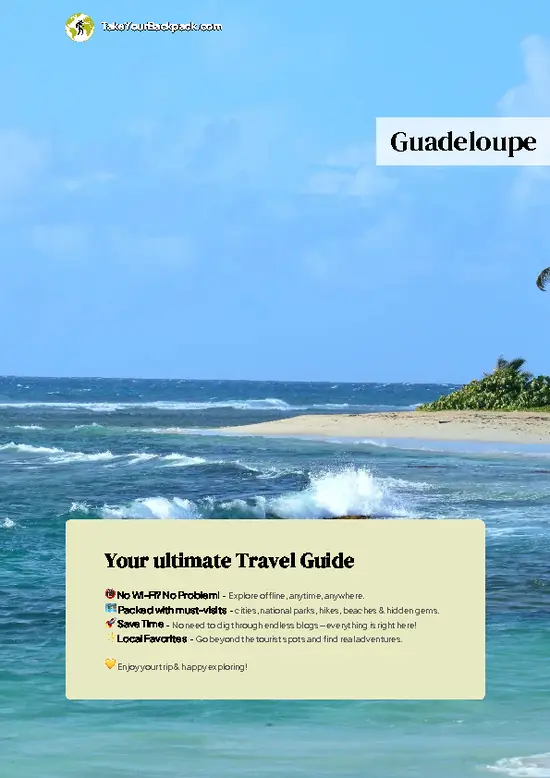
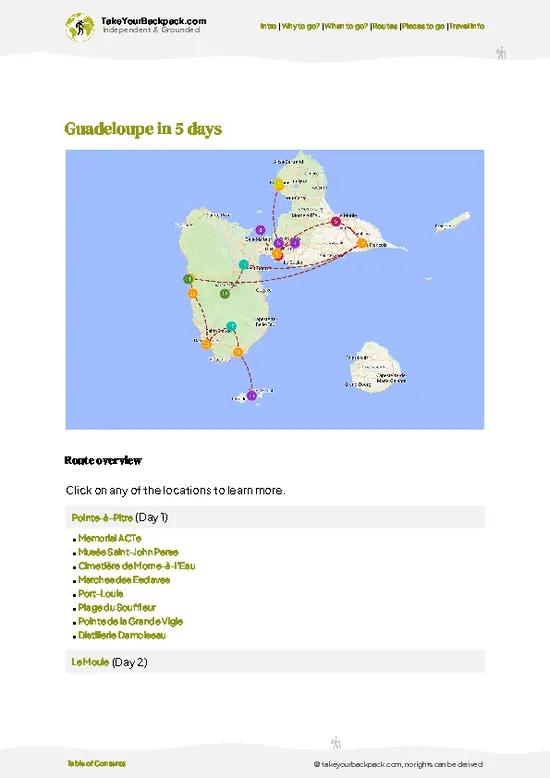
example page 0 from our offline Travel Guide for Guadeloupe
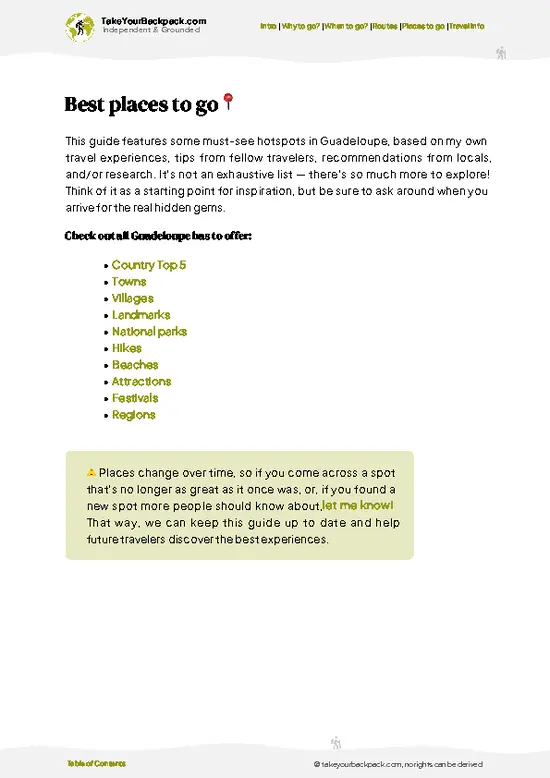
example page 1 from our offline Travel Guide for Guadeloupe
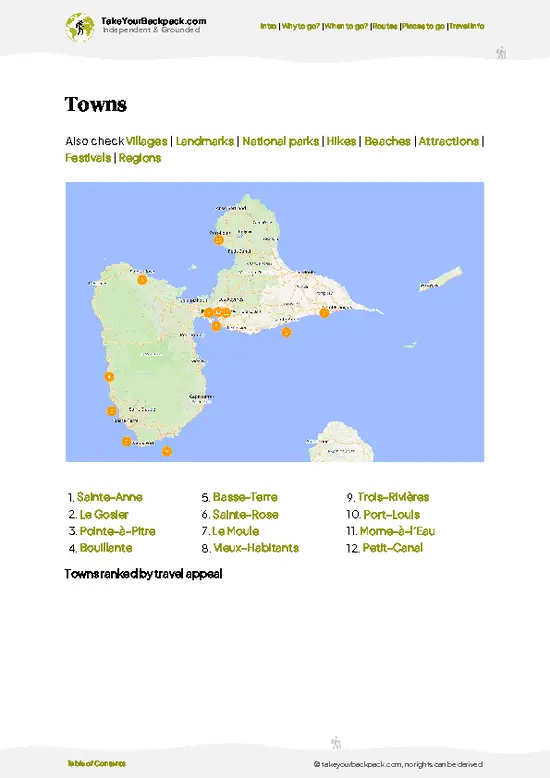
example page 2 from our offline Travel Guide for Guadeloupe
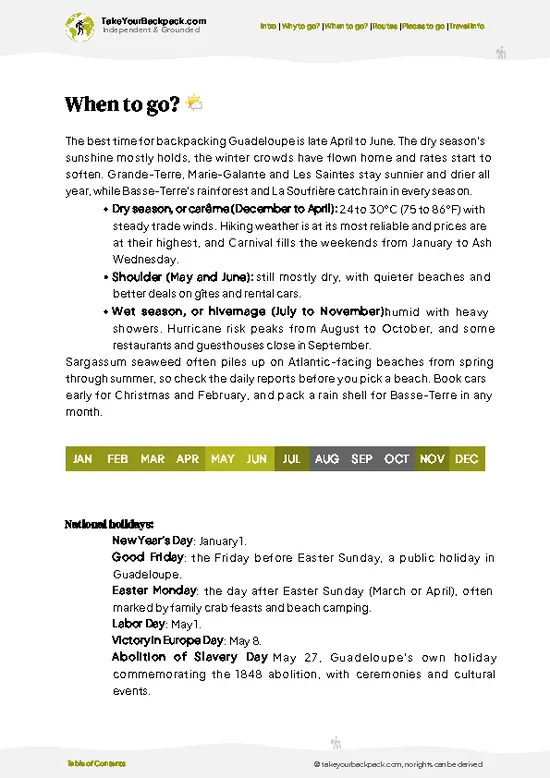
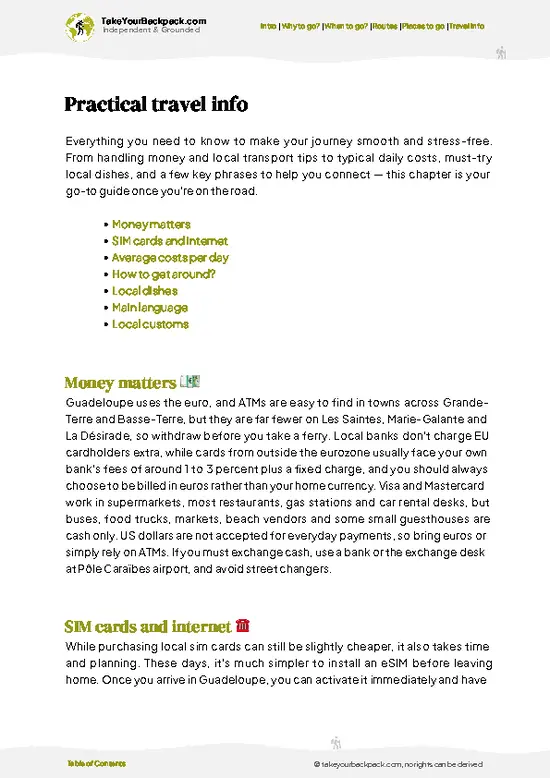
example page 3 from our offline Travel Guide for Guadeloupe
example page 4 from our offline Travel Guide for Guadeloupe
example page 5 from our offline Travel Guide for Guadeloupe
example page 6 from our offline Travel Guide for Guadeloupe
example page 7 from our offline Travel Guide for Guadeloupe
The digital guide (228 pages) contains:
59 highlights, ranked by travel appeal
Optimized 2, 3 & 5-day travel routes
Cities, national parks, landmarks, beaches
How to get around
Offline-friendly for travel without Wi-Fi
👉 Click to see all 30+ guide features

📅 Plan smarter in minutes, not weeks
Month by month travel advice
Festivals & national holidays
Budget expectations

🗺️ Go to the right places, skip the overrated ones
Honest pros & cons of destinations
Top hikes, parks & viewpoints
Lesser-known places most travelers miss
Clear “worth it vs skip it” guidance

🛏️ Travel smoothly without rookie mistakes
Best areas to stay
Transport systems explained simply
Common scams & safety advice
SIM cards, money & practical tips

🌍 Understand the country, not just visit it
Culture & traditions
52 Essential phrases & customs
Festivals worth planning around
Traveler-friendly historical context
Insights that make places more meaningful

📱 Built for real travel conditions
Fully downloadable PDF
Works completely offline
Optimized for phone use
Useful in remote areas & buses
Everything in one place
Save weeks of stressful planning
Get instant access to your full guide. 30‑day money-back guarantee.


By proceeding you agree to our terms.
Sent to your inbox immediately after payment • 100% Secure Checkout
Best Backpacking Travel Advisor 2025 tourism awardBest Backpacking
Travel Advisor
2025
What others say about Take Your Backpack Guides:
⭐⭐⭐⭐⭐
Fantastic, amazing amount of information!
⭐⭐⭐⭐⭐
My goodness this is amazing, it's what I've been looking for hats off too you!
⭐⭐⭐⭐⭐
I think this is absolutely BRILLIANT
⭐⭐⭐⭐
Very complete and informative. It's still missing places, but I gotta to commend you
⭐⭐⭐⭐⭐
This is truly amazing, thank you, can't wait to explore it with my kids!
⭐⭐⭐⭐⭐
Awesome resource, thank you!
⭐⭐⭐⭐⭐
This is amazing! Can't wait to explore the ones I haven't seen
⭐⭐⭐⭐
I love this! Well done, great idea.
⭐⭐⭐⭐⭐
Thanks for taking the time to make this gem!
⭐⭐⭐⭐⭐
This might be the best website I've ever seen.
⭐⭐⭐⭐⭐
Congratulations, and thank you so much for your work; it's incredibly valuable.
⭐⭐⭐⭐
In all seriousness I think you did a great job pointing out the important spots
⭐⭐⭐⭐⭐
10/10 very good
⭐⭐⭐⭐⭐
As someone who's only just starting to visit regularly this is awesome, thank you.
⭐⭐⭐⭐
Thank you very much! I'm going to visit my dad, it's going to be very useful!
⭐⭐⭐⭐⭐
This is really cool! We'll be travelling for the first time and this definitely come in handy.
⭐⭐⭐⭐⭐
You are now our minister of culture, congratulations 👨‍💼
⭐⭐⭐⭐⭐
Just wanted to tell you that this is a pearl! Going to follow your recommendations.
⭐⭐⭐⭐⭐
This is so cool. I'll definitely be using the resource for my travels soon.
⭐⭐⭐⭐⭐
This is very impressive! Good work.
⭐⭐⭐⭐⭐
This is an amazing and informative site. Very well done!

🛏️ Where to stay?Where to Stay in Guadeloupe

Yes — Guadeloupe has some hostels and mainly budget accommodation in the form of guesthouses and gîtes, but true backpacker hostels are limited and scattered so expect basic facilities rather than full-service dorms.
Most options concentrate on Grande‑Terre around Pointe‑à‑Pitre (transport hub and airport access but fewer cheap beds), Le Gosier and Sainte‑Anne (best for beaches, restaurants and nightlife with more tourist-friendly budget rooms), and on Basse‑Terre around Deshaies and Bouillante (quieter, best for hiking, diving and national-park access but with sparse public transport and fewer low-cost choices).
Bring a rental car or be ready for limited buses, book ahead in high season, … read more 👉
Yes — Guadeloupe has some hostels and mainly budget accommodation in the form of guesthouses and gîtes, but true backpacker hostels are limited and scattered so expect basic facilities rather than full-service dorms.
Most options concentrate on Grande‑Terre around Pointe‑à‑Pitre (transport hub and airport access but fewer cheap beds), Le Gosier and Sainte‑Anne (best for beaches, restaurants and nightlife with more tourist-friendly budget rooms), and on Basse‑Terre around Deshaies and Bouillante (quieter, best for hiking, diving and national-park access but with sparse public transport and fewer low-cost choices).
Bring a rental car or be ready for limited buses, book ahead in high season, expect simple amenities and occasional hot‑water or power quirks, pick Grande‑Terre for ease of transport and nightlife, and pick Basse‑Terre for quieter nature access.

If you enjoy meeting fellow travelers, consider choosing hostels with high ratings for atmosphere. On the other hand, if you prefer having your own space, a hotel might be a better option.

GuadeloupeMore of Guadeloupe

👋 Meet the founderWho’s Behind Take Your Backpack?

Johan, backpacker and founder of TakeYourBackpackHi, I’m Johan (Netherlands 🇳🇱), the creator of TakeYourBackpack. Over the past decade, I’ve backpacked through 80+ countries across six continents, gaining extensive experience with independent travel, long-term trips, and overland routes.

This site is built on a combination of firsthand travel experience and carefully curated insights from other backpackers. Many guides are based on places I’ve personally visited, while others bring together tips, observations, and practical advice shared by trusted travelers I’ve met along the way.

The goal is to provide realistic, experience-driven guidance — not generic itineraries — so you can explore destinations with better context, clearer expectations, and more confidence.

Get full Guadeloupe guide •
Instant download • 59 highlights • Full Offline guide