×

Guadeloupe🇬🇵 | regionsÎlet du GosierLighthouse islet, reef snorkeling, boat-taxi hop, far-side cove | things to do and best time to go

Explore Marie-GalanteExplore Les Saintes

Backpacking in Îlet du Gosier
👌 Worth visitingregion ranked #4
By Johan Kruseman 🇳🇱 | Updated October 22, 2026

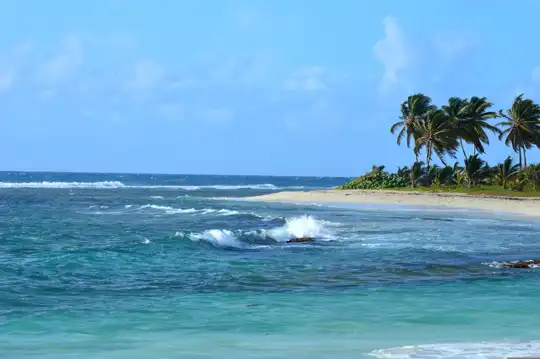
Îlet du Gosier sits just off the coast of Le Gosier, on the south shore of Grande-Terre in Guadeloupe. It is tiny, with a white lighthouse, a calm lagoon and a reef good for snorkeling. It is also busy at midday, with no real wilderness or nightlife. Boat taxis from the Gosier waterfront are the quick, comfortable option and cost a bit more, while a kayak or paddleboard costs more effort but gives you the empty mornings. I’d take the first boat out and the last one back, since you get the cool light and the best sand for a modest fare. Bring water and snacks, because supplies on the islet are limited. A good first day: arrive early, snorkel the reef, walk the shoreline loop, then eat lunch back in town.

Discover everything you want to know in the 📖 Guadeloupe Travel Guide.


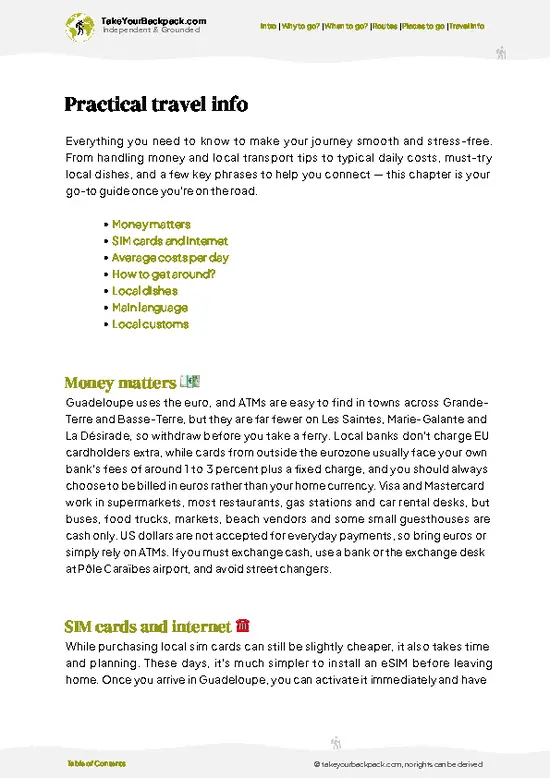
example page 0 from our offline Travel Guide for Guadeloupe
example page 1 from our offline Travel Guide for Guadeloupe
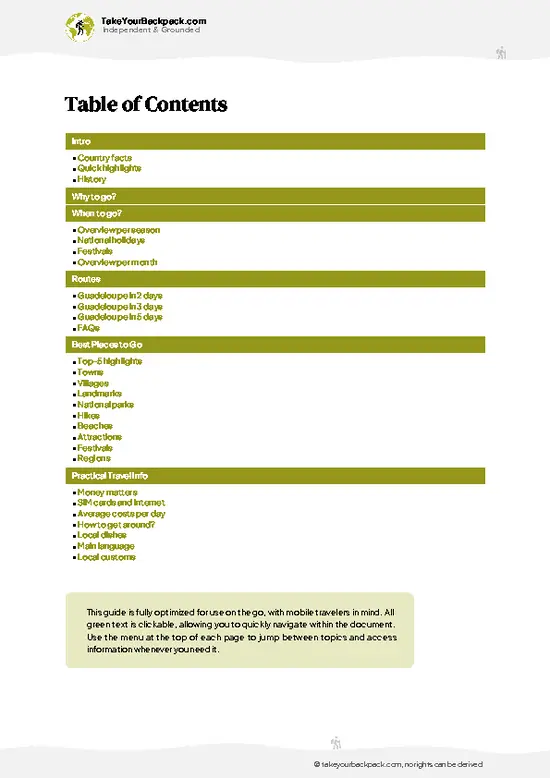
example page 2 from our offline Travel Guide for Guadeloupe
example page 3 from our offline Travel Guide for Guadeloupe
example page 4 from our offline Travel Guide for Guadeloupe
example page 5 from our offline Travel Guide for Guadeloupe
example page 6 from our offline Travel Guide for Guadeloupe
example page 7 from our offline Travel Guide for Guadeloupe
Loading the map 🌍
CLICK TO FILTER
towns
villages
landmarks
national parks
hikes
beaches
attractions
festivals
regions
SHOW COUNTRY’S BESTSHOW ALL

✨ Why go?
Ranked #4 region in Guadeloupe
What sets this place apart

Îlet du Gosier gives you a full beach day without the hassle of a rental car or a bus timetable. You step off a boat and everything is within a few minutes’ walk: the white lighthouse, a sheltered swimming lagoon and a coral reef right off the shore. The island is small enough that you can leave your bag under a tree and wander without worry. The other draw is the mix of crowds and quiet. The main beach near the landing fills up with day-trippers, but the far side of the islet and the rocky edges stay calmer. Because the crossing is short, you can fit a swim, a walk and lunch in town into one day, and use Le Gosier as a cheap, practical base with plenty of places to eat and sleep. Snorkelers will appreciate that the reef is shallow and close, so you don’t need a tour to see fish.

💡 HighlightsMust-see experiences and standout moments

  1. Gosier Lighthouse: the white tower is the islet’s signature and the first thing you see from the mainland. You can photograph it from the sand and it makes a handy landmark when you wander.
  2. Main Beach by the Landing: pale sand and calm, shallow water with a few shaded spots. It is the easiest place to swim, and the busiest around midday.
  3. Reef Snorkeling off the Shore: the coral begins close to the beach, so you can see reef fish with just a mask and snorkel. The water is calmest in the morning.
  4. Boat Crossing from Le Gosier: the short ride in a small boat taxi is part of the fun, with the coast and resorts shrinking behind you.
  5. Shoreline Loop: a walk around the islet takes you along rocks, scrub and small sandy patches. Few day-trippers do the full circuit, so you get solitude fast.
  6. Shaded Picnic
… read more 👉
  1. Gosier Lighthouse: the white tower is the islet’s signature and the first thing you see from the mainland. You can photograph it from the sand and it makes a handy landmark when you wander.
  2. Main Beach by the Landing: pale sand and calm, shallow water with a few shaded spots. It is the easiest place to swim, and the busiest around midday.
  3. Reef Snorkeling off the Shore: the coral begins close to the beach, so you can see reef fish with just a mask and snorkel. The water is calmest in the morning.
  4. Boat Crossing from Le Gosier: the short ride in a small boat taxi is part of the fun, with the coast and resorts shrinking behind you.
  5. Shoreline Loop: a walk around the islet takes you along rocks, scrub and small sandy patches. Few day-trippers do the full circuit, so you get solitude fast.
  6. Shaded Picnic Spots: scattered trees offer relief from the sun. Locals bring lunch here and settle in for the afternoon.
  7. Views of Grande-Terre’s Coast: from the shore you look back at Le Gosier’s beaches and hotels. On clear days the mountains of Basse-Terre rise in the distance.
  8. Sunset Return Crossing: the last boats back give you soft light over the water and a calmer islet once the crowds leave.
Îlet du Gosier costs the least to explore on foot, since the shoreline loop is free once you have paid for the boat across.
Spotted a mistake or missing something? Contact us.

Things to do around Îlet du Gosier

Ratings based on Tripadvisor reviews. When you book through this link, you support our work at no extra cost to you.

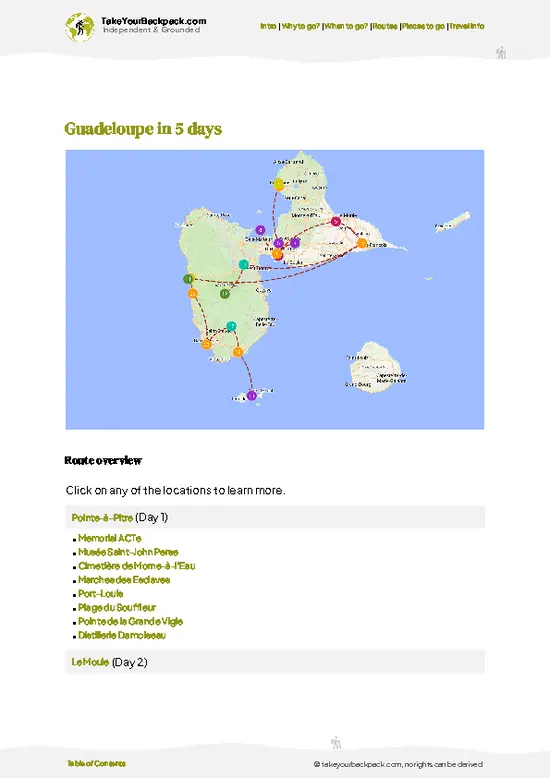
⌛️ 5 daysWhat you can realistically do in a week

This is a slow beach-and-boat itinerary, because the only transport that matters here is the small boat taxi and the walk along the Le Gosier waterfront. Boats run on demand in daylight, so the pace is set by weather and the sun.

Day 1: Le Gosier: Spend the first day on the mainland. Scout the waterfront, check the sea conditions and buy water, snacks and sunscreen. Then book your boat for the next morning, since this is the one thing that can fail if the sea is rough. An evening walk by the marina lets you meet the boat operators and choose a reliable one.

Day 2: Îlet du Gosier: Take an early boat so you arrive before the day-trippers. Start with the reef snorkel while the water is still glassy, then walk the full shoreline loop and finish at the lighthouse. Stay through midday if you want … read more 👉
This is a slow beach-and-boat itinerary, because the only transport that matters here is the small boat taxi and the walk along the Le Gosier waterfront. Boats run on demand in daylight, so the pace is set by weather and the sun.

Day 1: Le Gosier: Spend the first day on the mainland. Scout the waterfront, check the sea conditions and buy water, snacks and sunscreen. Then book your boat for the next morning, since this is the one thing that can fail if the sea is rough. An evening walk by the marina lets you meet the boat operators and choose a reliable one.

Day 2: Îlet du Gosier: Take an early boat so you arrive before the day-trippers. Start with the reef snorkel while the water is still glassy, then walk the full shoreline loop and finish at the lighthouse. Stay through midday if you want shade and a long lunch, and take a late boat back for softer light.

Day 3: Pointe de la Verdure: The detour is the beach area just along the coast from Le Gosier. It adds another stretch of sand and an easy walk without needing a long transfer, and it lets you see the islet from the mainland side. Return to Le Gosier for dinner.

Day 4: Îlet du Gosier: Come back for the far-side cove and the quieter rocks. A second visit lets you try the other side of the reef and take the photos you missed. Bring a book and stay until the evening boat.

Day 5: Le Gosier: Use the last day for a slow morning, last swim and a meal on the waterfront.

If you only get one day, make it Day 2: the early boat, the empty reef and the lighthouse before the crowds is the whole reason to come.

🌤️ When to go?Weather, crowds, and seasonal trade-offs

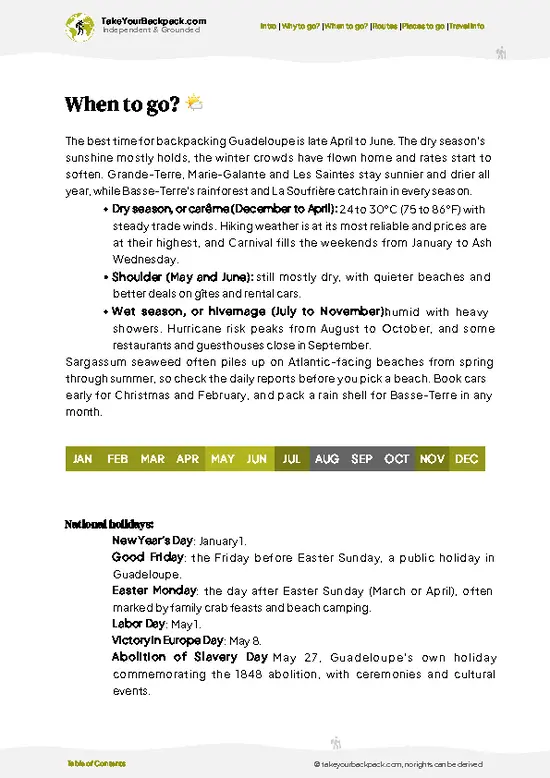
  • Dry Season (Lent, roughly February to May): Rain is lightest and the sea is calm and clear for snorkeling around the islet. Highs run 28 to 31°C (82 to 88°F), with trade winds taking the edge off. Daylight lasts about 11.5 to 12.5 hours.
  • Peak Winter (December to January): Cooler nights near 21°C (70°F) and the busiest beaches, with European holiday crowds. Lodging and flights cost the most, and the islet’s sandy strip fills by midday.
  • Rainy Season (July to November): Hot and humid at 30 to 33°C (86 to 91°F), with short heavy showers. Rooms drop noticeably in price and the sand is quieter, but this is the hurricane window, with September the riskiest month.
  • Carnival (January to Ash Wednesday): Weekend parades in nearby towns add color, and rooms book up around the Mardi Gras days.
Go on a weekday … read more 👉
  • Dry Season (Lent, roughly February to May): Rain is lightest and the sea is calm and clear for snorkeling around the islet. Highs run 28 to 31°C (82 to 88°F), with trade winds taking the edge off. Daylight lasts about 11.5 to 12.5 hours.
  • Peak Winter (December to January): Cooler nights near 21°C (70°F) and the busiest beaches, with European holiday crowds. Lodging and flights cost the most, and the islet’s sandy strip fills by midday.
  • Rainy Season (July to November): Hot and humid at 30 to 33°C (86 to 91°F), with short heavy showers. Rooms drop noticeably in price and the sand is quieter, but this is the hurricane window, with September the riskiest month.
  • Carnival (January to Ash Wednesday): Weekend parades in nearby towns add color, and rooms book up around the Mardi Gras days.
Go on a weekday in March or April, when water is clear and weekend picnic crowds are gone.


source: climatestotravel.comJANJanuary: excellent for travelingFEBFebruary: excellent for travelingMARMarch: excellent for travelingAPRApril: excellent for travelingMAYMay: highly recommended for travelingJUNJune: fair for travelingJULJuly: fair for travelingAUGAugust: fair for travelingSEPSeptember: below average for travelingOCTOctober: fair for travelingNOVNovember: good for travelingDECDecember: excellent for traveling
guadeloupe-region-ilet-du-gosier v1
© Google |

✈️ The backpacker research shortcutGuadeloupe Travel Guide

An offline-friendly backpacking guide with optimized travel routes, ranked highlights, transport advice, and the best areas to stay.
example page 0 from our offline Travel Guide for Guadeloupe
example page 1 from our offline Travel Guide for Guadeloupe
example page 2 from our offline Travel Guide for Guadeloupe
example page 3 from our offline Travel Guide for Guadeloupe
example page 4 from our offline Travel Guide for Guadeloupe
example page 5 from our offline Travel Guide for Guadeloupe
example page 6 from our offline Travel Guide for Guadeloupe
example page 7 from our offline Travel Guide for Guadeloupe
The digital guide (206 pages) contains:
✅ 51 highlights, ranked by travel appeal
✅ Optimized 2, 3 & 5-day travel routes
✅ Cities, national parks, landmarks, beaches
✅ How to get around
✅ Offline-friendly for travel without Wi-Fi
👉 Click to see all 30+ guide features

📅 Plan smarter in minutes, not weeks
✅ Month by month travel advice
✅ Festivals & national holidays
✅ Budget expectations

🗺️ Go to the right places, skip the overrated ones
✅ Honest pros & cons of destinations
✅ Top hikes, parks & viewpoints
✅ Lesser-known places most travelers miss
✅ Clear “worth it vs skip it” guidance

🛏️ Travel smoothly without rookie mistakes
✅ Best areas to stay
✅ Transport systems explained simply
✅ Common scams & safety advice
✅ SIM cards, money & practical tips

🌍 Understand the country, not just visit it
✅ Culture & traditions
✅ 52 Essential phrases & customs
✅ Festivals worth planning around
✅ Traveler-friendly historical context
✅ Insights that make places more meaningful

📱 Built for real travel conditions
✅ Fully downloadable PDF
✅ Works completely offline
✅ Optimized for phone use
✅ Useful in remote areas & buses
✅ Everything in one place
Stop searching, start planning
Get instant access to your full guide. 30‑day money-back guarantee.
+ Add another guide for just

By proceeding you agree to our terms.
Sent to your inbox immediately after payment • 100% Secure Checkout
Best Backpacking Travel Advisor 2025 tourism awardBest Backpacking
Travel Advisor
2025
What others say about Take Your Backpack Guides:
⭐⭐⭐⭐⭐
Fantastic, amazing amount of information!
⭐⭐⭐⭐⭐
My goodness this is amazing, it's what I've been looking for hats off too you!
⭐⭐⭐⭐⭐
I think this is absolutely BRILLIANT
⭐⭐⭐⭐
Very complete and informative. It's still missing places, but I gotta to commend you
⭐⭐⭐⭐⭐
This is truly amazing, thank you, can't wait to explore it with my kids!
⭐⭐⭐⭐⭐
Awesome resource, thank you!
⭐⭐⭐⭐⭐
This is amazing! Can't wait to explore the ones I haven't seen
⭐⭐⭐⭐
I love this! Well done, great idea.
⭐⭐⭐⭐⭐
Thanks for taking the time to make this gem!
⭐⭐⭐⭐⭐
This might be the best website I've ever seen.
⭐⭐⭐⭐⭐
Congratulations, and thank you so much for your work; it's incredibly valuable.
⭐⭐⭐⭐
In all seriousness I think you did a great job pointing out the important spots
⭐⭐⭐⭐⭐
10/10 very good
⭐⭐⭐⭐⭐
As someone who's only just starting to visit regularly this is awesome, thank you.
⭐⭐⭐⭐
Thank you very much! I'm going to visit my dad, it's going to be very useful!
⭐⭐⭐⭐⭐
This is really cool! We'll be travelling for the first time and this definitely come in handy.
⭐⭐⭐⭐⭐
You are now our minister of culture, congratulations 👨‍💼
⭐⭐⭐⭐⭐
Just wanted to tell you that this is a pearl! Going to follow your recommendations.
⭐⭐⭐⭐⭐
This is so cool. I'll definitely be using the resource for my travels soon.
⭐⭐⭐⭐⭐
This is very impressive! Good work.
⭐⭐⭐⭐⭐
This is an amazing and informative site. Very well done!

🛏️ Where to stay?How to pick the right area

Gosier town itself is the best place to sleep, because the islet has no accommodation and the boats leave from right in front of the town beach. Rooms and apartments cost roughly €45 to 90 a night in the low season, more in winter. The waterfront area around the marina and the main beach is the most social. You can walk to bars, bakeries, dive shops and the boat landing, and you will meet other travelers on the sand at sunset. Stay on the central streets rather than the far hotel strip if you want to avoid taxis.

Pointe de la Verdure, just west, has a quieter resort feel with calm swimming and … read more 👉
Gosier town itself is the best place to sleep, because the islet has no accommodation and the boats leave from right in front of the town beach. Rooms and apartments cost roughly €45 to 90 a night in the low season, more in winter. The waterfront area around the marina and the main beach is the most social. You can walk to bars, bakeries, dive shops and the boat landing, and you will meet other travelers on the sand at sunset. Stay on the central streets rather than the far hotel strip if you want to avoid taxis.

Pointe de la Verdure, just west, has a quieter resort feel with calm swimming and easy bus links, better for couples and light sleepers. Bas-du-Fort next door adds a marina, restaurants and an aquarium, and it is lively at night with clubs and casual bars.

Sainte-Anne, about 20 minutes east by road, draws backpackers who want long white beaches and a relaxed village market. Pointe-à-Pitre is handy for ferries and the airport, but I would sleep there only for an early departure. All of these areas are safe by day. After dark, stick to well-lit streets.

🚌 Getting aroundHow to get from A to B

Îlet du Gosier is a tiny uninhabited islet reached by boat from the Gosier waterfront, and the town center on the mainland is small enough to cross on foot in 15 minutes. Walking stops making sense once you head for Pointe de la Verdure hotels, the Sainte-Anne beaches or Pointe-à-Pitre, where heat and traffic wear you down. Buses and boats are reliable by day, but service thins out after dark and on Sundays.
  • Boat to the islet: Small boats and glass-bottom launches leave the Gosier marina and beach, usually about €5 to 10 round trip, a 10-minute hop. Skip the pricier private charters. Go on the first departures around 9 AM, before the sand fills and the sun gets savage, and settle the return time with the skipper before you board.
  • Kayak or paddleboard: Rentals cost roughly €15 to 30 for a couple
… read more 👉
Îlet du Gosier is a tiny uninhabited islet reached by boat from the Gosier waterfront, and the town center on the mainland is small enough to cross on foot in 15 minutes. Walking stops making sense once you head for Pointe de la Verdure hotels, the Sainte-Anne beaches or Pointe-à-Pitre, where heat and traffic wear you down. Buses and boats are reliable by day, but service thins out after dark and on Sundays.
  • Boat to the islet: Small boats and glass-bottom launches leave the Gosier marina and beach, usually about €5 to 10 round trip, a 10-minute hop. Skip the pricier private charters. Go on the first departures around 9 AM, before the sand fills and the sun gets savage, and settle the return time with the skipper before you board.
  • Kayak or paddleboard: Rentals cost roughly €15 to 30 for a couple of hours and the crossing is under 20 minutes in calm water. This is the best value if you have energy, because you set your own schedule, but the afternoon wind can make the return harder than the trip out, so leave early.
  • Local buses: Routes along the Gosier road run to Pointe-à-Pitre and Sainte-Anne for about €1.50 to 3, every 15 to 30 minutes in the morning. They are slow and sometimes crowded, yet the cheapest way to cover the coast, and I would use them for most trips. Last runs go early evening.
  • Taxis: A ride from Pointe-à-Pitre or the airport costs about €20 to 35, 15 to 25 minutes in light traffic. Comfortable and quick, though worth it mainly for late arrivals or when three or four of you split the fare.
  • Rental scooter or car: Roughly €35 to 60 a day, useful for exploring Grande-Terre beaches. Parking in Gosier is tight on weekends.
Do the islet in the morning, then ride a bus for the rest of the day, and keep small coins handy for the driver.

🍲 FoodEating & Drinking in Îlet du Gosier

Start with accras de morue, salt cod fritters that arrive crackling hot, chile-spiked and greasy in the best way, usually sold from beach stalls and snack counters for about €3 to 6 a portion. Lunch plates of colombo (a curry spiced with turmeric, coriander and cumin) or grilled lambi, conch with garlicky sauce, run about €10 to 18. Try boudin créole, a spicy blood sausage, with a cold Carib beer.

For drinks, order a ti-punch: white rhum agricole, a wedge of lime and cane syrup, stirred by you at the table. Fresh juices from soursop, passion fruit and guava come cold from kiosks for €2 to 4.

For backpackers, the best value is the snack counters and beach shacks near the Gosier waterfront, plus bakeries for coconut or guava pastries at breakfast. Pointe-à-Pitre’s covered market is the place … read more 👉
Start with accras de morue, salt cod fritters that arrive crackling hot, chile-spiked and greasy in the best way, usually sold from beach stalls and snack counters for about €3 to 6 a portion. Lunch plates of colombo (a curry spiced with turmeric, coriander and cumin) or grilled lambi, conch with garlicky sauce, run about €10 to 18. Try boudin créole, a spicy blood sausage, with a cold Carib beer.

For drinks, order a ti-punch: white rhum agricole, a wedge of lime and cane syrup, stirred by you at the table. Fresh juices from soursop, passion fruit and guava come cold from kiosks for €2 to 4.

For backpackers, the best value is the snack counters and beach shacks near the Gosier waterfront, plus bakeries for coconut or guava pastries at breakfast. Pointe-à-Pitre’s covered market is the place for spices, vanilla and bakery bites.

Local custom: greet people with a bonjour before ordering, since skipping it comes across as rude. Lunch runs long around noon to 2 PM, many kitchens close mid-afternoon, and Sunday lunch is a family affair. Sit on the sand with your plate and take your time.

FAQFrequently asked questions about Îlet du Gosier

One full day is enough for Îlet du Gosier itself, since the islet is tiny and a boat ride takes only 10 to 15 minutes from the Gosier waterfront. Most travelers spend a morning snorkeling and picnicking, then return by early afternoon. Add two or three days if you want to base yourself in Gosier and visit Sainte-Anne and Pointe-à-Pitre, both within 20 to 30 minutes by road.
Îlet du Gosier can be reached without a car by taking a short boat from the Gosier marina, about €5 to 10 round trip, or by paddling a rented kayak for €15 to 30. On the mainland, local buses connect Gosier with Pointe-à-Pitre and Sainte-Anne for roughly €1.50 to 3, while taxis from the airport cost about €20 to 35. Services thin out after early evening, so plan your return before dark.
Îlet du Gosier is known for its small white-sand islet with a lighthouse, shallow turquoise water and easy snorkeling just offshore. It sits a few hundred meters off the Gosier coast, which makes it the most popular quick beach escape on Grande-Terre. Visitors come for the calm swimming, the beach picnics and views back toward the Gosier waterfront, and weekends tend to be the busiest.
⚠️ Things can change over time, so always validate details locally before you go.

Other Guadeloupean regions near Îlet du Gosier

Explore more nearby:

  • Îlet Caret—Lagoon sandbar, knee-deep water, mangrove channels, Sainte-Rose launch| 23 km away
  • Basse-Terre Mountains—volcanic peaks, rainforest trails, waterfalls, cloud forest| 34 km away
  • Les Saintes—Horseshoe bay, Breton lanes, hilltop forts, electric scooters| 40 km away

💡 Not sure where to go next?
Create a personalized itinerary for Guadeloupe including Îlet du Gosier and the places that fit your trip.

Generate my itinerary

👉 Discover all regions

Or checkout all Guadeloupe has to offer (think cities, towns, villages, national parks, hikes, beaches, festivals)
Country photo of Guadeloupe

We 💚 feedbackIs it worth it?

Îlet du Gosier looks best from the water on the way back, when the lighthouse glows against the darkening coast and the day-trippers have gone. Most visitors overlook the walk around the whole shoreline and stay by the landing. I’d skip the crowded beach after noon and spend that time circling the islet, with a mask in my bag.

✍️ Help improve this page!
The information on this page is based on in-depth research, insights shared by experienced travelers, and feedback from the local travel community in Guadeloupe. While every effort is made to keep the information accurate and current, conditions can change — so if you spot anything incorrect or outdated, please get in touch.


🙋‍♂️ Give feedback

👋 Meet the founderWho’s Behind Take Your Backpack?

Johan, backpacker and founder of TakeYourBackpackHi, I’m Johan (Netherlands 🇳🇱), the creator of TakeYourBackpack. Over the past 3 decades, I’ve backpacked through 90+ countries across six continents, gaining extensive experience with independent travel, long-term trips, and overland routes.

This site is built on a combination of firsthand travel experience and carefully curated insights from other backpackers. Many guides are based on places I’ve personally visited, while others bring together tips, observations, and practical advice shared by trusted travelers I’ve met along the way.

The goal is to provide realistic, experience-driven guidance — not generic itineraries — so you can explore destinations with better context, clearer expectations, and more confidence.