×

Guadeloupe🇬🇵 | landmarksLes Marches Aux Esclavesstone steps, memorial site, historical plaques | things to do and best time to go

Explore Les SaintesExplore Cimetière de Morne-À-l’Eau

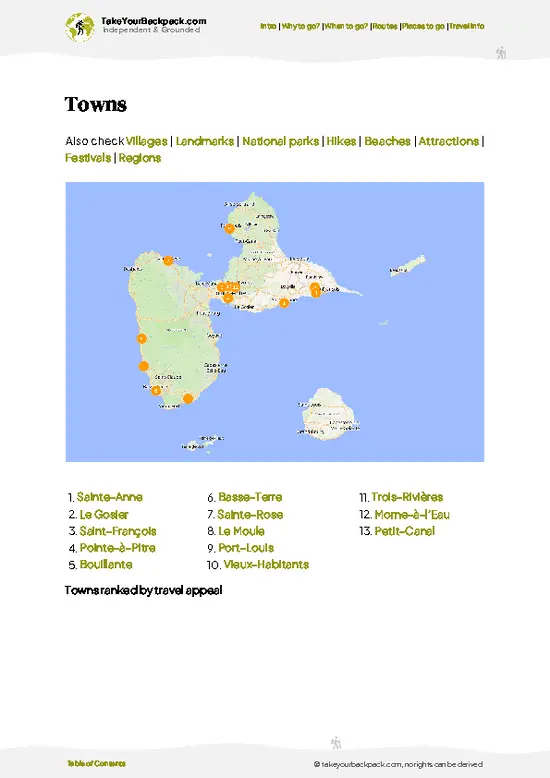
Backpacking in Les Marches Aux Esclaves
👀 For curious travelersunique site ranked #6
By Johan Kruseman 🇳🇱 | Updated May 29, 2026

You know that thing people realize only afterward? Les Marches Aux Esclaves takes 15–30 minutes to visit properly, which makes it the perfect anchor stop to combine with beaches and rum distilleries in the same day instead of burning a whole afternoon. It sits in Petit-Canal on Grande-Terre, up on Guadeloupe’s north coast, away from the resort bubble. As a backpacker stop, it’s low-cost, low-frills, and emotionally heavy. The stone steps and chains hit harder than the photos, but there’s zero “wow” in the Instagram sense—no epic viewpoints, just a quiet gut punch of history. Crowds are usually light, facilities are minimal, and public transport is patchy, so it’s easier with a car or hitchhiking confidence. You’ll get powerful, simple photos, but the real value is standing there and letting it feel uncomfortable.

Discover everything you want to know in the 📖 Guadeloupe Travel Guide.
Loading the map 🌍
CLICK TO FILTER
towns
villages
landmarks
national parks
hikes
beaches
attractions
festivals
regions
SHOW COUNTRY’S BESTSHOW ALL

✨ Why go?
Ranked #6 unique site in Guadeloupe
Reasons people choose to visit here

Les Marches Aux Esclaves in Guadeloupe isn’t just another stop on your itinerary; it’s a raw reminder of history that demands your attention. Sure, you’ll encounter crowds snapping selfies, but don’t let that deter you. The emotional weight of this site, where enslaved people once descended to the harbor, is palpable. It’s a place that invites reflection, not just a photo op.

The cost? Minimal. You can stroll through this poignant landmark without breaking the bank. It’s easily accessible, fitting seamlessly into a broader route that includes the stunning beaches and lush landscapes of Guadeloupe. You can hit the nearby market for local flavors afterward, making it a perfect day trip.

What makes this site truly stand out is its authenticity. Unlike many tourist traps, it offers a glimpse … read more 👉
Les Marches Aux Esclaves in Guadeloupe isn’t just another stop on your itinerary; it’s a raw reminder of history that demands your attention. Sure, you’ll encounter crowds snapping selfies, but don’t let that deter you. The emotional weight of this site, where enslaved people once descended to the harbor, is palpable. It’s a place that invites reflection, not just a photo op.

The cost? Minimal. You can stroll through this poignant landmark without breaking the bank. It’s easily accessible, fitting seamlessly into a broader route that includes the stunning beaches and lush landscapes of Guadeloupe. You can hit the nearby market for local flavors afterward, making it a perfect day trip.

What makes this site truly stand out is its authenticity. Unlike many tourist traps, it offers a glimpse into the island’s complex past, enriching your travel experience. Pairing this visit with a hike in the surrounding areas or a dip in the ocean creates a balanced adventure. It’s not just about the sights; it’s about the stories that linger long after you leave.
Want to include Les Marches Aux Esclaves in your Guadeloupe route?
Create a personalized Guadeloupe itinerary that includes Les Marches Aux Esclaves and the places that fit your trip — based on your travel style, budget, and available time. Get your route in seconds.

Generate my trip

💡 HighlightsPlaces and moments you shouldn't skip

  • The Stone Steps Themselves — The rough, worn staircase is the site’s focal point: the uneven stones and low risers tell a tactile story you don’t get from plaques alone. Walking them (slowly and respectfully) gives a physical sense of the place’s age and human traffic over time.
  • Raw Historical Weight — This is a place explicitly tied to the memory of the transatlantic slave trade; it stands out because its meaning is immediate and unvarnished, not hidden inside a museum. That bluntness makes reflections here more powerful than in a curated exhibit.
  • Interpretive Plaques and Local Testimonies — On-site panels and often local guides or elders provide layered context: facts, dates, and oral histories. Hearing stories from people with family ties to the island gives the site emotional depth
read more 👉
  • The Stone Steps Themselves — The rough, worn staircase is the site’s focal point: the uneven stones and low risers tell a tactile story you don’t get from plaques alone. Walking them (slowly and respectfully) gives a physical sense of the place’s age and human traffic over time.
  • Raw Historical Weight — This is a place explicitly tied to the memory of the transatlantic slave trade; it stands out because its meaning is immediate and unvarnished, not hidden inside a museum. That bluntness makes reflections here more powerful than in a curated exhibit.
  • Interpretive Plaques and Local Testimonies — On-site panels and often local guides or elders provide layered context: facts, dates, and oral histories. Hearing stories from people with family ties to the island gives the site emotional depth you can’t get from a sign alone.
  • Architectural Details — Look for original masonry, cobbles, and any adjacent colonial-era stonework; these details show construction techniques and how the built landscape connected to ports and plantations. For history buffs, those little features are the real evidence.
  • Sense of Place and Landscape — The steps’ position in the coastline/harbor area (where applicable) frames them against sea and sky, making the site visually stark and memorable. That interplay of built element and natural backdrop is what makes photos and quiet moments linger.
  • Commemorative Practices — The site often serves as a locus for ceremonies, wreath-layings, or cultural gatherings. Seeing or timing a visit for a remembrance event adds community context and shows the site is still a living part of Guadeloupean identity.
  • Proximity to Related Sites — It’s usually close to other colonial-era remains or museums, which makes it a strong anchor for a short, concentrated history walk. Combine it with nearby plantations, cemeteries, or museums to stitch together the bigger story.
  • Quiet Space for Reflection — Beyond facts and architecture, the site’s calm, sometimes wind-swept atmosphere invites slow, personal reflection—exactly why it’s worth spending 15-30 minutes here even if you’re on a tight budget and schedule.
Spotted a mistake or missing something? Contact us.

Things to do near Les Marches Aux Esclaves

Ratings based on Tripadvisor reviews. When you book through this link, you support our work at no extra cost to you.

🌤️ When to go?Best time to visit Les Marches Aux Esclaves


  • Weather: Guadeloupe’s tropical climate means it’s hot and humid most of the year. The dry season from December to April is your best bet—less rain, fewer mudslides, and a more comfortable hike around Les Marches Aux Esclaves.

  • Temperature: Expect highs around 29-31°C (84-88°F) during the dry months, dropping to 26-28°C (79-82°F) in the wetter season. Nights stay warm, rarely dipping below 22°C (72°F), so pack light but prepare for humidity.

  • Daylight Hours: Daylight is pretty consistent year-round, roughly 11 to 12 hours daily. Early mornings and late afternoons offer cooler temps and softer light—prime for exploring without frying under the midday sun.

  • Crowds: The dry season draws more tourists, especially around Christmas and Easter. Les Marches Aux Esclaves isn’t a major tourist
read more 👉

  • Weather: Guadeloupe’s tropical climate means it’s hot and humid most of the year. The dry season from December to April is your best bet—less rain, fewer mudslides, and a more comfortable hike around Les Marches Aux Esclaves.

  • Temperature: Expect highs around 29-31°C (84-88°F) during the dry months, dropping to 26-28°C (79-82°F) in the wetter season. Nights stay warm, rarely dipping below 22°C (72°F), so pack light but prepare for humidity.

  • Daylight Hours: Daylight is pretty consistent year-round, roughly 11 to 12 hours daily. Early mornings and late afternoons offer cooler temps and softer light—prime for exploring without frying under the midday sun.

  • Crowds: The dry season draws more tourists, especially around Christmas and Easter. Les Marches Aux Esclaves isn’t a major tourist hotspot, but expect more local groups and guided tours then. The off-season offers solitude but comes with heavier rain.

  • Seasonal Activities: Dry months coincide with local festivals and cultural events, adding layers to your visit beyond the hike. The wet season is quieter but can flood trails, making some sections tricky or closed.

  • Price Fluctuations: Accommodation and transport costs spike in the dry season, especially December through March. Off-season rates drop significantly, but you trade that for unpredictable weather and limited services.


Pro-tip: Aim for late April or early December—just before or after peak season—to balance decent weather, manageable crowds, and better prices while still catching the essence of Guadeloupe’s culture.


source: climatestotravel.comJANJanuary: excellent for travelingFEBFebruary: excellent for travelingMARMarch: excellent for travelingAPRApril: highly recommended for travelingMAYMay: fair for travelingJUNJune: fair for travelingJULJuly: fair for travelingAUGAugust: fair for travelingSEPSeptember: below average for travelingOCTOctober: below average for travelingNOVNovember: good for travelingDECDecember: highly recommended for traveling
guadeloupe-unique-site-les-marches-aux-esclaves
© Google |

✈️ The backpacker research shortcutGuadeloupe Travel Guide

An offline-friendly backpacking guide with optimized travel routes, ranked highlights, transport advice, and the best areas to stay.
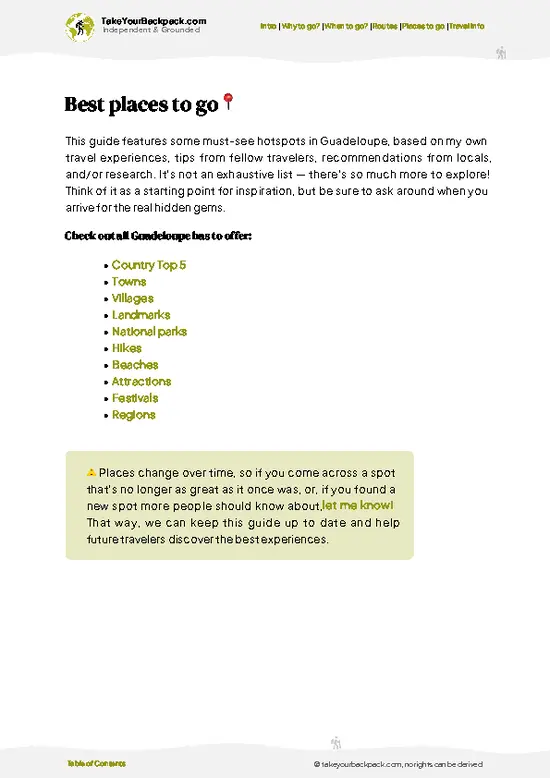
example page 0 from our offline Travel Guide for Guadeloupe
example page 1 from our offline Travel Guide for Guadeloupe
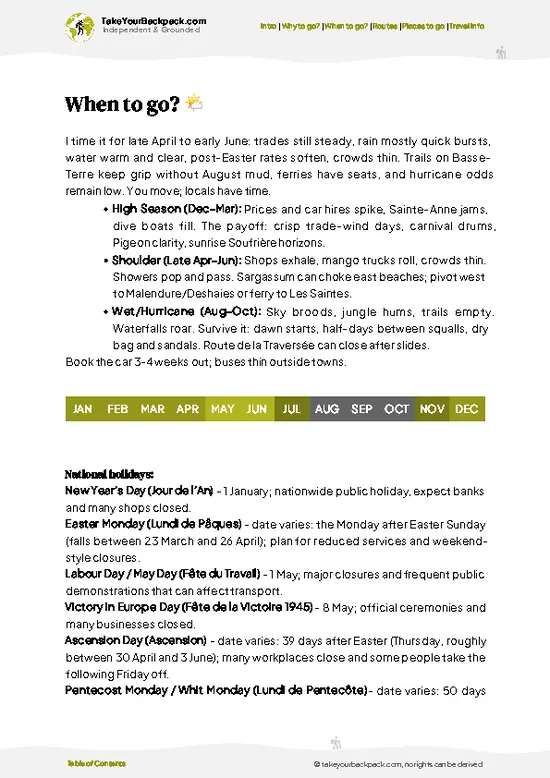
example page 2 from our offline Travel Guide for Guadeloupe
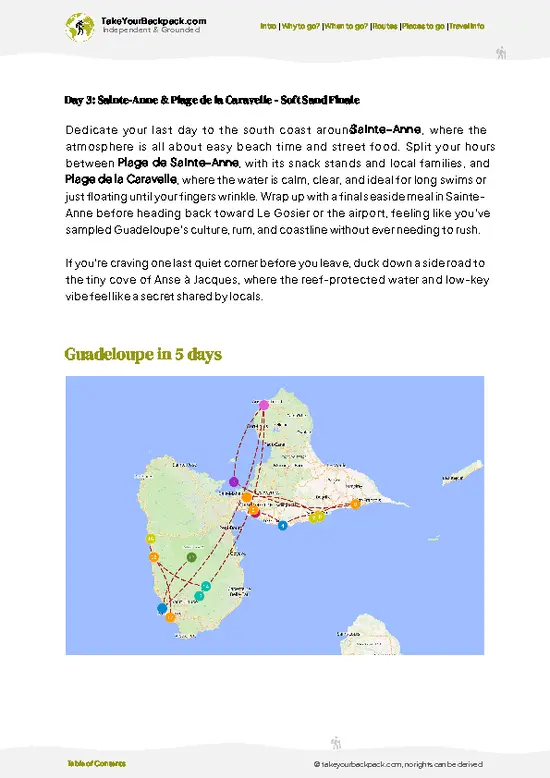
example page 3 from our offline Travel Guide for Guadeloupe
example page 4 from our offline Travel Guide for Guadeloupe
example page 5 from our offline Travel Guide for Guadeloupe
example page 6 from our offline Travel Guide for Guadeloupe
example page 7 from our offline Travel Guide for Guadeloupe
The digital guide (228 pages) contains:
59 highlights, ranked by travel appeal
Optimized 2, 3 & 5-day travel routes
Cities, national parks, landmarks, beaches
How to get around
Offline-friendly for travel without Wi-Fi
👉 Click to see all 30+ guide features

📅 Plan smarter in minutes, not weeks
Month by month travel advice
Festivals & national holidays
Budget expectations

🗺️ Go to the right places, skip the overrated ones
Honest pros & cons of destinations
Top hikes, parks & viewpoints
Lesser-known places most travelers miss
Clear “worth it vs skip it” guidance

🛏️ Travel smoothly without rookie mistakes
Best areas to stay
Transport systems explained simply
Common scams & safety advice
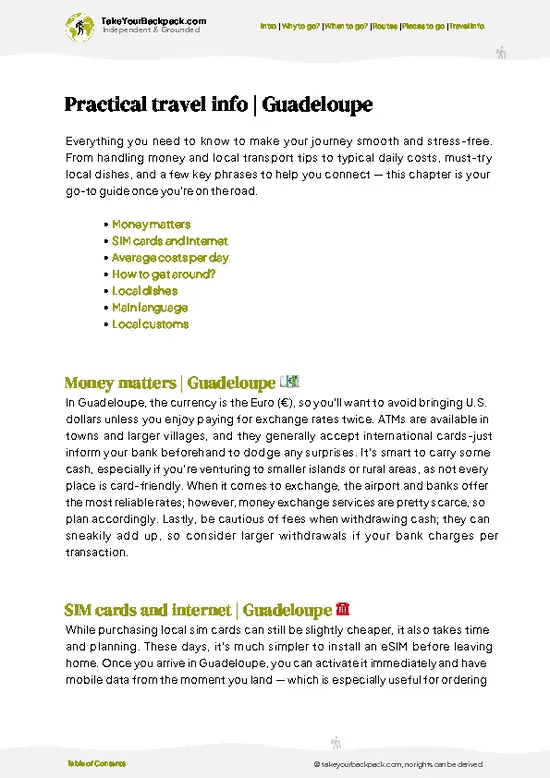
SIM cards, money & practical tips

🌍 Understand the country, not just visit it
Culture & traditions
52 Essential phrases & customs
Festivals worth planning around
Traveler-friendly historical context
Insights that make places more meaningful

📱 Built for real travel conditions
Fully downloadable PDF
Works completely offline
Optimized for phone use
Useful in remote areas & buses
Everything in one place
Save weeks of stressful planning
Get instant access to your full guide. 30‑day money-back guarantee.


By proceeding you agree to our terms.
Sent to your inbox immediately after payment • 100% Secure Checkout
Best Backpacking Travel Advisor 2025 tourism awardBest Backpacking
Travel Advisor
2025
What others say about Take Your Backpack Guides:
⭐⭐⭐⭐⭐
Fantastic, amazing amount of information!
⭐⭐⭐⭐⭐
My goodness this is amazing, it's what I've been looking for hats off too you!
⭐⭐⭐⭐⭐
I think this is absolutely BRILLIANT
⭐⭐⭐⭐
Very complete and informative. It's still missing places, but I gotta to commend you
⭐⭐⭐⭐⭐
This is truly amazing, thank you, can't wait to explore it with my kids!
⭐⭐⭐⭐⭐
Awesome resource, thank you!
⭐⭐⭐⭐⭐
This is amazing! Can't wait to explore the ones I haven't seen
⭐⭐⭐⭐
I love this! Well done, great idea.
⭐⭐⭐⭐⭐
Thanks for taking the time to make this gem!
⭐⭐⭐⭐⭐
This might be the best website I've ever seen.
⭐⭐⭐⭐⭐
Congratulations, and thank you so much for your work; it's incredibly valuable.
⭐⭐⭐⭐
In all seriousness I think you did a great job pointing out the important spots
⭐⭐⭐⭐⭐
10/10 very good
⭐⭐⭐⭐⭐
As someone who's only just starting to visit regularly this is awesome, thank you.
⭐⭐⭐⭐
Thank you very much! I'm going to visit my dad, it's going to be very useful!
⭐⭐⭐⭐⭐
This is really cool! We'll be travelling for the first time and this definitely come in handy.
⭐⭐⭐⭐⭐
You are now our minister of culture, congratulations 👨‍💼
⭐⭐⭐⭐⭐
Just wanted to tell you that this is a pearl! Going to follow your recommendations.
⭐⭐⭐⭐⭐
This is so cool. I'll definitely be using the resource for my travels soon.
⭐⭐⭐⭐⭐
This is very impressive! Good work.
⭐⭐⭐⭐⭐
This is an amazing and informative site. Very well done!

🛏️ Where to stay?Best areas to stay in Guadeloupe

Staying near Les Marches Aux Esclaves in Guadeloupe? You’ll want to be smart about your choices. The area around Pointe-à-Pitre is your best bet. It’s bustling, with a mix of locals and travelers. You’ll find vibrant markets and street food that’ll make your taste buds dance.

Look for accommodations in the city center. It’s safe, and you’ll have easy access to public transport. Plus, you can mingle with other backpackers at local cafés. The vibe is relaxed, and you’ll meet people who share your passion for exploration.

Another option is the coastal area of Le Gosier. It’s a bit quieter but … read more 👉
Staying near Les Marches Aux Esclaves in Guadeloupe? You’ll want to be smart about your choices. The area around Pointe-à-Pitre is your best bet. It’s bustling, with a mix of locals and travelers. You’ll find vibrant markets and street food that’ll make your taste buds dance.

Look for accommodations in the city center. It’s safe, and you’ll have easy access to public transport. Plus, you can mingle with other backpackers at local cafés. The vibe is relaxed, and you’ll meet people who share your passion for exploration.

Another option is the coastal area of Le Gosier. It’s a bit quieter but still social. You can enjoy stunning sunsets and chill on the beach after a day of exploring. There are budget-friendly guesthouses and hostels that cater to solo travelers.

Both areas offer a genuine slice of Guadeloupe life, away from the tourist traps. You’ll feel the pulse of the island, and that’s where the real magic happens. Just remember, the crowds can get thick, especially during peak season. Plan accordingly, and you’ll have an authentic experience that’s worth every penny.

👛 Costs (as of 21 December 2025)Typical daily expenses

Visiting Les Marches Aux Esclaves in Guadeloupe is a journey into history, but it comes with its own set of costs. Here’s a breakdown to help you plan without the fluff.
  • Entry Fee: Expect to pay around €5 to €10. This small fee grants you access to the site and its poignant history. It’s worth every cent for the insight you’ll gain.
  • Guided Tours: If you want a deeper understanding, guided tours range from €15 to €30. These tours often include local guides who share stories that aren’t in any brochure. They bring the place to life.
  • Transportation: Getting there can vary. A taxi from Pointe-à-Pitre might cost you €30 to €50. Public transport is cheaper, around €2 to €5, but it can be less convenient. Factor in your comfort level.
  • Food and Drink: Plan for about €10 to €20 for a meal nearby. Local
read more 👉
Visiting Les Marches Aux Esclaves in Guadeloupe is a journey into history, but it comes with its own set of costs. Here’s a breakdown to help you plan without the fluff.
  • Entry Fee: Expect to pay around €5 to €10. This small fee grants you access to the site and its poignant history. It’s worth every cent for the insight you’ll gain.
  • Guided Tours: If you want a deeper understanding, guided tours range from €15 to €30. These tours often include local guides who share stories that aren’t in any brochure. They bring the place to life.
  • Transportation: Getting there can vary. A taxi from Pointe-à-Pitre might cost you €30 to €50. Public transport is cheaper, around €2 to €5, but it can be less convenient. Factor in your comfort level.
  • Food and Drink: Plan for about €10 to €20 for a meal nearby. Local eateries offer authentic dishes that are a feast for the senses. Don’t skip trying the local specialties.
  • Souvenirs: Budget around €5 to €20 for keepsakes. Local artisans sell crafts that reflect the culture. These aren’t just trinkets; they’re pieces of history.

This isn’t just a stop on your itinerary; it’s a chance to connect with the past. Make sure you’re prepared for the costs, and you’ll find the experience is worth every euro.


source: guadeloupe-islands.com
⚠️ Prices can change and everyone travels differently, so take this as a rough guide. Hope it helps you plan your adventure!

Other Guadeloupean landmarks near Les Marches Aux Esclaves

Explore more nearby:


💡 Not sure where to go next?
Create a personalized itinerary for Guadeloupe including Les Marches Aux Esclaves and the places that fit your trip.

Generate my itinerary

👉 Discover all landmarks

Or checkout all Guadeloupe has to offer (think cities, towns, villages, national parks, hikes, beaches, festivals)
Country photo of Guadeloupe

We 💚 feedbackIs it worth it?

Visiting Les Marches Aux Esclaves is a raw experience. The crowds can be overwhelming, especially during peak season, but don’t let that deter you. The real magic lies in the stories etched into the stones and the haunting beauty of the coastline. You might stumble upon a local artist painting nearby, capturing the essence of the place. Just be prepared for the heat—bring water and a hat. This isn’t just a stop on your itinerary; it’s a moment to reflect and connect with history.

✍️ Help improve this page!
The information on this page is based on in-depth research, insights shared by experienced travelers, and feedback from the local travel community in Guadeloupe. While every effort is made to keep the information accurate and current, conditions can change — so if you spot anything incorrect or outdated, please get in touch.


🙋‍♂️ Give feedback

👋 Meet the founderWho’s Behind Take Your Backpack?

Johan, backpacker and founder of TakeYourBackpackHi, I’m Johan (Netherlands 🇳🇱), the creator of TakeYourBackpack. Over the past decade, I’ve backpacked through 80+ countries across six continents, gaining extensive experience with independent travel, long-term trips, and overland routes.

This site is built on a combination of firsthand travel experience and carefully curated insights from other backpackers. Many guides are based on places I’ve personally visited, while others bring together tips, observations, and practical advice shared by trusted travelers I’ve met along the way.

The goal is to provide realistic, experience-driven guidance — not generic itineraries — so you can explore destinations with better context, clearer expectations, and more confidence.

Get full Guadeloupe guide •
Instant download • 59 highlights • Full Offline guide