×

Guatemala🇬🇹 | attractionsMuseo del Ferrocarril FEGUASteam locomotives, rail yards, restored coaches, Zone 1 station | things to do and best time to go

Explore Catedral Metropolitana de SantiagoExplore Museo de Arte Moderno Carlos Mérida

Backpacking in Museo del Ferrocarril FEGUA
👌 Worth visitingattraction ranked #14
By Johan Kruseman 🇳🇱 | Updated October 20, 2026

Rust flakes under your fingertips as you run a hand along a locomotive’s boiler, and somewhere behind you a loose sheet of tin ticks in the breeze. That sound, metal cooling in the shade of old sheds, is what I connect with this place. The Museo del Ferrocarril FEGUA sits in Guatemala’s capital, in the south of Guatemala City’s Zona 1 beside the old rail yards. It is small, uncrowded and cheap, so go on a weekday and join the guided walk, since labels are sparse and guides explain what the engines hauled. Mind the surroundings by arriving by taxi. The cab-sized brass bells hang near the old station platform.

Discover everything you want to know in the 📖 Guatemala Travel Guide.


example page 0 from our offline Travel Guide for Guatemala
example page 1 from our offline Travel Guide for Guatemala
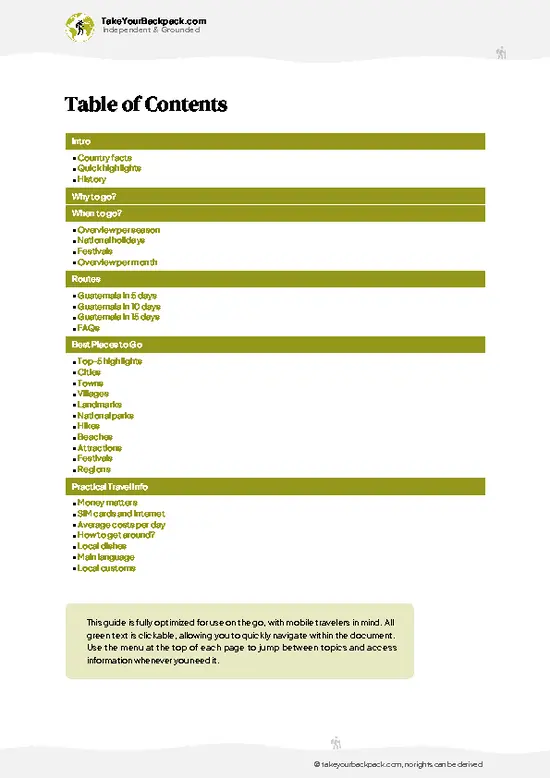
example page 2 from our offline Travel Guide for Guatemala
example page 3 from our offline Travel Guide for Guatemala
example page 4 from our offline Travel Guide for Guatemala
example page 5 from our offline Travel Guide for Guatemala
example page 6 from our offline Travel Guide for Guatemala
example page 7 from our offline Travel Guide for Guatemala
Loading the map 🌍
CLICK TO FILTER
cities
towns
villages
landmarks
national parks
hikes
beaches
attractions
festivals
regions
SHOW COUNTRY’S BESTSHOW ALL

✨ Why go?
Ranked #14 attraction in Guatemala
What sets this place apart

Museo del Ferrocarril FEGUA is the best place in the capital to understand how coffee and bananas reached the coast, and why Guatemala’s railway collapsed. The yard holds steam and diesel locomotives you can walk right up to, plus passenger coaches with worn wooden interiors that you can step inside. That hands-on access is rare, and it makes the history physical rather than something read off a plaque.
The second reason is context. The line to Puerto Barrios tied the highlands to the Caribbean port, and the story of its decline runs through the country’s politics and its foreign-owned fruit trade. A visit also adds an easy, low-effort stop to a capital day, since it sits close to other Zona 1 sights. Rail fans will want a full hour; everyone else still gets a clear, unusual look at a lost transport era.

💡 HighlightsPlaces and moments you shouldn't skip

  1. Steam locomotives in the yard: the headline attraction, hulking black engines you can stand beside and photograph up close, with plates and valves still visible.
  2. Diesel engines: later models that show how the network modernized before it faded, with open cabs in some cases.
  3. Restored passenger coaches: wooden seats, luggage racks and window frames give a feel for old first-class and ordinary travel.
  4. Old station building and platform: the faded architecture of the Zona 1 terminal, where the railway’s offices once ran.
  5. Historic photographs and documents: displays showing construction crews, bridges and the line’s links to the Atlantic coast.
  6. Railway tools and signals: lanterns, telegraph gear and track equipment that explain daily operations.
  7. Guided walk with staff: guides add the stories behind each
… read more 👉
  1. Steam locomotives in the yard: the headline attraction, hulking black engines you can stand beside and photograph up close, with plates and valves still visible.
  2. Diesel engines: later models that show how the network modernized before it faded, with open cabs in some cases.
  3. Restored passenger coaches: wooden seats, luggage racks and window frames give a feel for old first-class and ordinary travel.
  4. Old station building and platform: the faded architecture of the Zona 1 terminal, where the railway’s offices once ran.
  5. Historic photographs and documents: displays showing construction crews, bridges and the line’s links to the Atlantic coast.
  6. Railway tools and signals: lanterns, telegraph gear and track equipment that explain daily operations.
  7. Guided walk with staff: guides add the stories behind each engine that the labels leave out.
Start with the steam locomotives in the yard, because they are the main draw and look best before midday crowds and harsh sun arrive.
Spotted a mistake or missing something? Contact us.

Things to do around Museo del Ferrocarril FEGUA

Ratings based on Tripadvisor reviews. When you book through this link, you support our work at no extra cost to you.

🌤️ When to go?When to go for the best experience

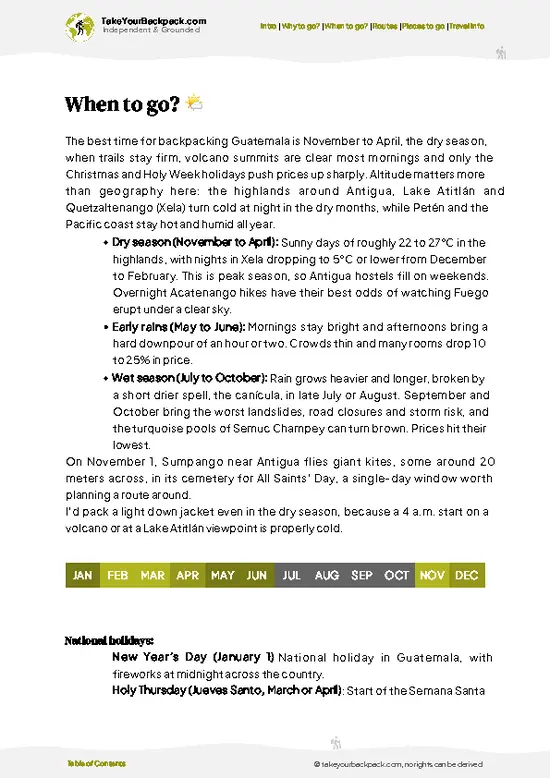
  • Dry Season (November to April): Mornings in Guatemala City run about 14 to 18°C (57 to 64°F), and afternoons reach 24 to 28°C (75 to 82°F). The museum's outdoor locomotives and rail yard are easiest to enjoy now.
  • Rainy Season (May to October): Storms arrive most afternoons, so go before lunch. Highs sit near 24 to 26°C (75 to 79°F), and daylight stays close to 12 hours all year.
  • Crowds and Prices: Weekends bring local families, and school groups fill weekday mornings. Entry costs the same all year, but hotels in Zona 1 get pricier around Semana Santa and Christmas.
Arrive on a weekday morning for open yards and the best light for photographing the old engines.

source: climatestotravel.comJANJanuary: excellent for travelingFEBFebruary: excellent for travelingMARMarch: excellent for travelingAPRApril: highly recommended for travelingMAYMay: fair for travelingJUNJune: fair for travelingJULJuly: fair for travelingAUGAugust: fair for travelingSEPSeptember: good for travelingOCTOctober: fair for travelingNOVNovember: highly recommended for travelingDECDecember: highly recommended for traveling
when-to-go

✈️ The backpacker research shortcutGuatemala Travel Guide

An offline-friendly backpacking guide with optimized travel routes, ranked highlights, transport advice, and the best areas to stay.
example page 0 from our offline Travel Guide for Guatemala
example page 1 from our offline Travel Guide for Guatemala
example page 2 from our offline Travel Guide for Guatemala
example page 3 from our offline Travel Guide for Guatemala
example page 4 from our offline Travel Guide for Guatemala
example page 5 from our offline Travel Guide for Guatemala
example page 6 from our offline Travel Guide for Guatemala
example page 7 from our offline Travel Guide for Guatemala
The digital guide (272 pages) contains:
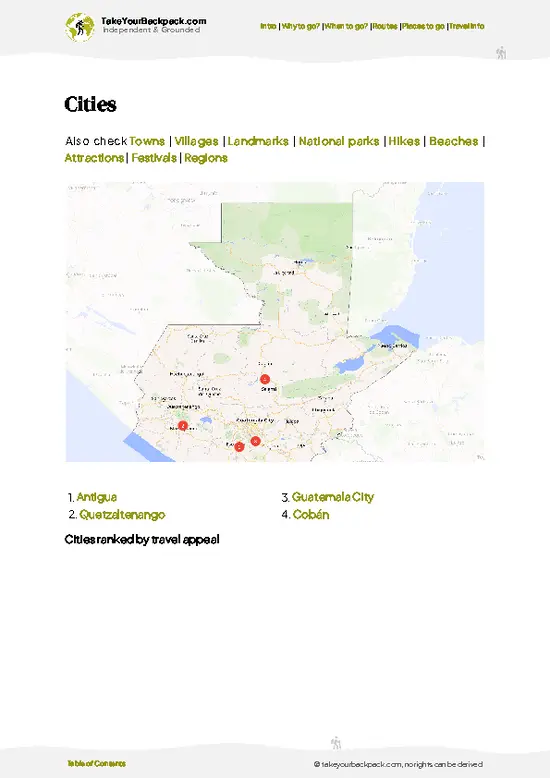
✅ 85 highlights, ranked by travel appeal
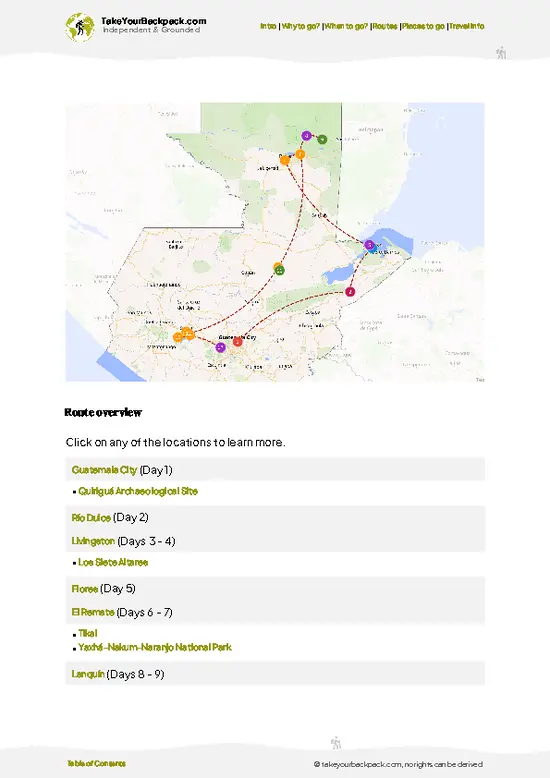
✅ Optimized 5, 10 & 15-day travel routes
✅ Cities, national parks, landmarks, beaches
✅ How to get around
✅ Offline-friendly for travel without Wi-Fi
👉 Click to see all 30+ guide features

📅 Plan smarter in minutes, not weeks
✅ Month by month travel advice
✅ Festivals & national holidays
✅ Budget expectations

🗺️ Go to the right places, skip the overrated ones
✅ Honest pros & cons of destinations
✅ Top hikes, parks & viewpoints
✅ Lesser-known places most travelers miss
✅ Clear “worth it vs skip it” guidance

🛏️ Travel smoothly without rookie mistakes
✅ Best areas to stay
✅ Transport systems explained simply
✅ Common scams & safety advice
✅ SIM cards, money & practical tips

🌍 Understand the country, not just visit it
✅ Culture & traditions
✅ 52 Essential phrases & customs
✅ Festivals worth planning around
✅ Traveler-friendly historical context
✅ Insights that make places more meaningful

📱 Built for real travel conditions
✅ Fully downloadable PDF
✅ Works completely offline
✅ Optimized for phone use
✅ Useful in remote areas & buses
✅ Everything in one place
Stop searching, start planning
Get instant access to your full guide. 30‑day money-back guarantee.
+ Add another guide for just

By proceeding you agree to our terms.
Sent to your inbox immediately after payment • 100% Secure Checkout
Best Backpacking Travel Advisor 2025 tourism awardBest Backpacking
Travel Advisor
2025
What others say about Take Your Backpack Guides:
⭐⭐⭐⭐⭐
Fantastic, amazing amount of information!
⭐⭐⭐⭐⭐
My goodness this is amazing, it's what I've been looking for hats off too you!
⭐⭐⭐⭐⭐
I think this is absolutely BRILLIANT
⭐⭐⭐⭐
Very complete and informative. It's still missing places, but I gotta to commend you
⭐⭐⭐⭐⭐
This is truly amazing, thank you, can't wait to explore it with my kids!
⭐⭐⭐⭐⭐
Awesome resource, thank you!
⭐⭐⭐⭐⭐
This is amazing! Can't wait to explore the ones I haven't seen
⭐⭐⭐⭐
I love this! Well done, great idea.
⭐⭐⭐⭐⭐
Thanks for taking the time to make this gem!
⭐⭐⭐⭐⭐
This might be the best website I've ever seen.
⭐⭐⭐⭐⭐
Congratulations, and thank you so much for your work; it's incredibly valuable.
⭐⭐⭐⭐
In all seriousness I think you did a great job pointing out the important spots
⭐⭐⭐⭐⭐
10/10 very good
⭐⭐⭐⭐⭐
As someone who's only just starting to visit regularly this is awesome, thank you.
⭐⭐⭐⭐
Thank you very much! I'm going to visit my dad, it's going to be very useful!
⭐⭐⭐⭐⭐
This is really cool! We'll be travelling for the first time and this definitely come in handy.
⭐⭐⭐⭐⭐
You are now our minister of culture, congratulations 👨‍💼
⭐⭐⭐⭐⭐
Just wanted to tell you that this is a pearl! Going to follow your recommendations.
⭐⭐⭐⭐⭐
This is so cool. I'll definitely be using the resource for my travels soon.
⭐⭐⭐⭐⭐
This is very impressive! Good work.
⭐⭐⭐⭐⭐
This is an amazing and informative site. Very well done!

🛏️ Where to stay?Choosing the right base

Zona 1 is the best area for backpackers, and it sits close to the museum. The old center has the densest cluster of hostels in the capital, plus cheap comedores, so you can walk to dinner and meet other travelers over shared tables. Streets around Parque Central are busy and fine by day, but after dark take a taxi or ride-hailing car instead of walking, even short distances. Zona 4 is the other good option. The Cuatro Grados Norte strip has cafes, bars and a calmer, more modern feel, and its hostels and guesthouses attract solo travelers and digital nomads. Zona 10 has the safest streets and the … read more 👉
Zona 1 is the best area for backpackers, and it sits close to the museum. The old center has the densest cluster of hostels in the capital, plus cheap comedores, so you can walk to dinner and meet other travelers over shared tables. Streets around Parque Central are busy and fine by day, but after dark take a taxi or ride-hailing car instead of walking, even short distances. Zona 4 is the other good option. The Cuatro Grados Norte strip has cafes, bars and a calmer, more modern feel, and its hostels and guesthouses attract solo travelers and digital nomads. Zona 10 has the safest streets and the best restaurants, but beds there cost more and the social scene is thinner. Whichever you choose, book ahead in high season.

👛 Costs (as of 20 October 2026)What things cost and how to budget

Museo del Ferrocarril FEGUA is a low-cost stop, and a day built around it comes to roughly US$34 including a dorm bed. Entry is cheap, and the rest of your spending goes on getting there and eating.
CategoryBudget RangeLocal Reality
Entrance ticketUS$1 to 3Foreigners pay a little more than Guatemalans, and cash is easiest.
Guided visitUS$0 to 5Staff or guides may walk you through the engines and carriages. Tips are appreciated.
Local transportUS$1 to 6City buses cost under US$1, while ride-hailing from Zona 1 or Zona 4 costs a few dollars.
FoodUS$5 to 10A set lunch at a comedor in Zona 1 is the best value.
Accommodation (high season)US$10 to 18Dorm beds in Zona 1 and Zona 4, with rates rising at Easter and Christmas.
Snacks and waterUS$2 to 4Street vendors sell fruit and drinks nearby.
Total Daily BudgetUS$34Per person, per day, in high season.
⚠️ Prices can change and everyone travels differently, so take this as a rough guide. Hope it helps you plan your adventure!

FAQCommon questions from travelers

Museo del Ferrocarril FEGUA needs about 1 to 2 hours. The collection of locomotives, carriages and station buildings is compact, and you can see everything in 60 to 90 minutes. Pair it with a walk around Zona 1 and Parque Central for a half day.
Museo del Ferrocarril FEGUA is worth the small fee, which is roughly US$1 to 3. You can walk beside full-size steam and diesel locomotives and climb into old carriages, which is rare in the capital. Rail fans and photographers get the most from it, while others may find an hour is enough.
Museo del Ferrocarril FEGUA is in Zona 1 of Guatemala City, near the old railway station. From Parque Central it is a 15 to 25 minute walk, though a taxi or ride-hailing car for US$2 to 4 is safer. City buses also run there for under US$1, and from La Aurora airport the ride takes about 20 to 30 minutes.
⚠️ Things can change over time, so always validate details locally before you go.

Other Guatemalan attractions near Museo del Ferrocarril FEGUA

Explore more nearby:


💡 Not sure where to go next?
Create a personalized itinerary for Guatemala including Museo del Ferrocarril FEGUA and the places that fit your trip.

Generate my itinerary

👉 Discover all attractions

Or checkout all Guatemala has to offer (think cities, towns, villages, national parks, hikes, beaches, festivals)
Country photo of Guatemala

We 💚 feedbackWhat to keep in mind

Museo del Ferrocarril FEGUA needs only an hour or so, or a little longer if you love trains. I would pair it with a Zona 1 morning rather than give it a separate day, and I would take a taxi both ways.

✈️ When did I visit Guatemala?
Guatemala I visited during my half year trip through South and Central America back in 2003

✍️ Help improve this page!
The information on this page is based on my own backpacking experience in Guatemala, supplemented with up-to-date research and feedback from other travelers. Travel details can change, so if you notice anything outdated or incomplete, feel free to let me know.


🙋‍♂️ Give feedback

👋 Meet the founderWho’s Behind Take Your Backpack?

Johan, backpacker and founder of TakeYourBackpackHi, I’m Johan (Netherlands 🇳🇱), the creator of TakeYourBackpack. Over the past 3 decades, I’ve backpacked through 90+ countries across six continents, gaining extensive experience with independent travel, long-term trips, and overland routes.

This site is built on a combination of firsthand travel experience and carefully curated insights from other backpackers. Many guides are based on places I’ve personally visited, while others bring together tips, observations, and practical advice shared by trusted travelers I’ve met along the way.

The goal is to provide realistic, experience-driven guidance — not generic itineraries — so you can explore destinations with better context, clearer expectations, and more confidence.