
×

Guinea-Bissau🇬🇼 | townsFarimOio River views, colonial-era buildings, riverside port | things to do and best time to go

Explore MansôaExplore Fulacunda

Backpacking in Farim
🌟 Highlighttown ranked #7
By Johan Kruseman 🇳🇱 | Updated May 19, 2026

Everyone talks about Farim’s old colonial bridge, but let’s be honest: you’re not crossing half of Guinea-Bissau just for a rusty landmark. What actually matters is the way Farim slows you down, lets you breathe in the river air, and gives you a front-row seat to the Casamance borderlands. Tucked in the north, a few hours from Bissau by battered minibus, Farim is a small, sun-baked town where the pace is set by the market’s chatter and the river’s lazy current. For backpackers, it’s less a destination than a pause—a practical stopover if you’re heading to Senegal, or a base for exploring the salt flats and mangroves nearby. The town is walkable, but don’t expect hostels or a buzzing café scene; evenings are slow, and you’ll likely be the only foreigner at the riverside bar. It’s cheaper and more relaxed than Bissau, but less scenic than the coast. Safety is typical for rural Guinea-Bissau: keep your wits, but don’t expect trouble. Farim isn’t a highlight reel—it’s a real place, and that’s its quiet reward.

Discover everything you want to know in the 📖 Guinea-Bissau Travel Guide.
Loading the map 🌍
CLICK TO FILTER
city
town
unique site
national park
hike
beach
attraction
festival
region
SHOW COUNTRY’S BESTSHOW ALL

✨ Why go?
Ranked #7 town in Guinea-Bissau
What sets this place apart

Farim serves as a gateway for backpackers exploring Guinea-Bissau, perfectly positioned for those eager to dive into the natural beauty and cultural richness of the region. Its walkable streets make it easy to navigate, allowing you to soak in the local atmosphere without feeling rushed. The town is a convenient base for nearby hikes, with trails leading to lush landscapes and serene beaches that beckon for a lazy afternoon.

Accommodations here are mostly small-scale hostels and guesthouses, fostering a friendly social atmosphere where solo travelers and small groups can easily connect. You’ll find local food experiences that are both authentic and affordable, with street vendors serving up delicious dishes that reflect the region’s flavors.

Most travelers tend to stay a few days, enjoying … read more 👉
Farim serves as a gateway for backpackers exploring Guinea-Bissau, perfectly positioned for those eager to dive into the natural beauty and cultural richness of the region. Its walkable streets make it easy to navigate, allowing you to soak in the local atmosphere without feeling rushed. The town is a convenient base for nearby hikes, with trails leading to lush landscapes and serene beaches that beckon for a lazy afternoon.

Accommodations here are mostly small-scale hostels and guesthouses, fostering a friendly social atmosphere where solo travelers and small groups can easily connect. You’ll find local food experiences that are both authentic and affordable, with street vendors serving up delicious dishes that reflect the region’s flavors.

Most travelers tend to stay a few days, enjoying the slower pace and the chance to linger over meals or share stories with fellow adventurers. If you’re a slow traveler or a hiker looking for a blend of relaxation and exploration, Farim offers a satisfying balance without the distractions of nightlife or urban chaos.
Get the complete Travel Guide for Guinea-Bissau
Everything organized for offline planning — routes, highlights, costs & tips

See what’s inside 👉

Get the Travel Guide -

💡 HighlightsEssential experiences to have while visiting Farim

  • Farim riverfront / boat landing — The town’s working riverside is where life happens: wooden pirogues, cargo canoes and river taxis arrive and depart, fishermen mend nets, and you can watch the tide shape daily commerce. Great for photography, people-watching, and catching boats to nearby villages.
  • Farim Central Market — A compact, bustling market selling fresh fish, local produce, spices, and everyday goods. Visiting gives a real sense of local foodways and trade rhythms; it’s the best place to sample street food and see how cashew and fish markets feed the town economy.
  • Colonial-era town center — Walkable streets with faded Portuguese-era public buildings and house fronts that tell Farim’s colonial-administrative past. The architecture and layout give context to the town’s role in regional
read more 👉
  • Farim riverfront / boat landing — The town’s working riverside is where life happens: wooden pirogues, cargo canoes and river taxis arrive and depart, fishermen mend nets, and you can watch the tide shape daily commerce. Great for photography, people-watching, and catching boats to nearby villages.
  • Farim Central Market — A compact, bustling market selling fresh fish, local produce, spices, and everyday goods. Visiting gives a real sense of local foodways and trade rhythms; it’s the best place to sample street food and see how cashew and fish markets feed the town economy.
  • Colonial-era town center — Walkable streets with faded Portuguese-era public buildings and house fronts that tell Farim’s colonial-administrative past. The architecture and layout give context to the town’s role in regional trade and make for an easy self-guided history stroll.
  • Mangrove and estuary boat trips — Short motorboat or pirogue excursions into the surrounding mangrove channels offer birdwatching, quiet scenery, and visits to riverside fishing settlements. These trips show the natural environment that shapes local livelihoods and are straightforward to arrange from the riverfront.
Nearby day trips worth doing from Farim include the historic town of Cacheu with its Portuguese fort and mangrove estuary, plus short river trips to nearby fishing villages and mangrove creeks.
Spotted a mistake or missing something? Contact us.

🏘️ NeighborhoodsKey areas and districts to know

Farim is a vibrant hub in Guinea-Bissau, where the pulse of local life meets the charm of a laid-back atmosphere. Here’s how to navigate its neighborhoods for a smoother experience.

Centro: This is the heart of Farim. The streets buzz with local markets and street vendors, offering a sensory overload of colors and scents. It’s walkable, making it easy to explore on foot. Budget-friendly accommodations are plentiful here, perfect for short stays. Nightlife is low-key, with a few bars where you can sip a local drink and mingle with residents.

Praia de Farim: Just a short stroll from the center, this area offers a more relaxed vibe. The beach is a great spot to unwind after a day of exploring. It’s less crowded, ideal for longer stays if you want to soak in the coastal atmosphere. Transport … read more 👉
Farim is a vibrant hub in Guinea-Bissau, where the pulse of local life meets the charm of a laid-back atmosphere. Here’s how to navigate its neighborhoods for a smoother experience.

Centro: This is the heart of Farim. The streets buzz with local markets and street vendors, offering a sensory overload of colors and scents. It’s walkable, making it easy to explore on foot. Budget-friendly accommodations are plentiful here, perfect for short stays. Nightlife is low-key, with a few bars where you can sip a local drink and mingle with residents.

Praia de Farim: Just a short stroll from the center, this area offers a more relaxed vibe. The beach is a great spot to unwind after a day of exploring. It’s less crowded, ideal for longer stays if you want to soak in the coastal atmosphere. Transport options are limited, so plan to walk or rent a bike.

Quintal: A quieter neighborhood, Quintal is where you’ll find local families and a slower pace. It’s less touristy, giving you an authentic feel of daily life in Farim. Accommodations are modest but affordable. This area is best for those looking to escape the hustle and enjoy a peaceful retreat, though nightlife is virtually nonexistent.

Navigating these neighborhoods will unlock the true essence of Farim, making your backpacking adventure both enriching and enjoyable.

⌛️ 1 dayHow to make the most of one day

Farim, a lively town in Guinea-Bissau, pulses with the rhythm of daily life. It’s a place where the air is thick with the scent of grilled fish and the sounds of laughter spill from bustling markets. Here, you can experience the authentic heart of West Africa, far from the usual tourist trails.

Start your morning at the local market, where vendors display vibrant fruits and vegetables. The sun filters through the stalls, casting a warm glow on the colorful produce. Engage with the locals; their smiles are as inviting as the fresh mangoes. Grab a breakfast of *pão com chouriço*, a local bread stuffed with spicy sausage, and wash it down with a cup of strong, sweet coffee. This isn’t just a meal; it’s a taste of community.

In the afternoon, wander through the streets of the Bairro de São João. … read more 👉
Farim, a lively town in Guinea-Bissau, pulses with the rhythm of daily life. It’s a place where the air is thick with the scent of grilled fish and the sounds of laughter spill from bustling markets. Here, you can experience the authentic heart of West Africa, far from the usual tourist trails.

Start your morning at the local market, where vendors display vibrant fruits and vegetables. The sun filters through the stalls, casting a warm glow on the colorful produce. Engage with the locals; their smiles are as inviting as the fresh mangoes. Grab a breakfast of *pão com chouriço*, a local bread stuffed with spicy sausage, and wash it down with a cup of strong, sweet coffee. This isn’t just a meal; it’s a taste of community.

In the afternoon, wander through the streets of the Bairro de São João. This neighborhood, often overlooked by travelers, showcases traditional mud-brick houses adorned with intricate designs. Stop by the small art gallery run by local artists; their works reflect the vibrant culture and stories of the region. You might even catch a glimpse of a painter at work, brush in hand, capturing the essence of Farim.

As the sun begins to set, head to the banks of the Cacheu River. The golden light dances on the water, creating a perfect backdrop for reflection. Here, you can find a small, unassuming café where you can sip on *cachaça* while watching fishermen return with their catch. The atmosphere is relaxed, a perfect way to wind down after a day of exploration.

End your evening with a stroll through the town center, where the sounds of music and laughter fill the air. Join in the local festivities if you can; it’s a chance to connect with the community and feel the pulse of Farim. This day isn’t just about seeing; it’s about feeling the spirit of a place that thrives on connection and culture.
Build the Right Itinerary
Use the Guinea-Bissau Travel Guide’s 2, 3 & 5-day routes as a starting point to plan a trip that actually works on the ground.

Get the Travel Guide -

🌤️ When to go?Seasonal considerations and timing


  • Weather: Farim’s climate swings between a wet season from June to October and a dry season from November to May. The dry months bring clearer skies and less humidity, making trekking and exploring more comfortable.

  • Temperature: Expect highs around 30–33°C (86–91°F) during the dry season, with cooler nights dropping to 20°C (68°F). The wet season feels hotter and stickier, often pushing 35°C (95°F) with heavy, humid air that can drain your energy fast.

  • Daylight Hours: Near the equator, daylight stays steady year-round—about 12 hours—so you won’t lose daylight for early starts or late finishes regardless of when you visit.

  • Crowds: Farim isn’t a tourist hotspot, but the dry season draws more local visitors and traders, adding a lively buzz without overwhelming the town’s laid-back vibe.
read more 👉

  • Weather: Farim’s climate swings between a wet season from June to October and a dry season from November to May. The dry months bring clearer skies and less humidity, making trekking and exploring more comfortable.

  • Temperature: Expect highs around 30–33°C (86–91°F) during the dry season, with cooler nights dropping to 20°C (68°F). The wet season feels hotter and stickier, often pushing 35°C (95°F) with heavy, humid air that can drain your energy fast.

  • Daylight Hours: Near the equator, daylight stays steady year-round—about 12 hours—so you won’t lose daylight for early starts or late finishes regardless of when you visit.

  • Crowds: Farim isn’t a tourist hotspot, but the dry season draws more local visitors and traders, adding a lively buzz without overwhelming the town’s laid-back vibe.

  • Seasonal Activities: Dry months are prime for river excursions and village visits, while the wet season’s lush greenery transforms the landscape, ideal for photographers who don’t mind the mud.

  • Price Fluctuations: Accommodation and transport costs dip slightly in the wet season due to fewer visitors, but some services may be limited or less reliable because of rain-damaged roads.


Pro-tip: Aim for the shoulder months of November or May—enjoy manageable humidity, fewer crowds, and better prices, all while catching Farim’s landscape in transition.


source: climatestotravel.comJANJanuary: excellent for travelingFEBFebruary: excellent for travelingMARMarch: excellent for travelingAPRApril: excellent for travelingMAYMay: highly recommended for travelingJUNJune: fair for travelingJULJuly: fair for travelingAUGAugust: fair for travelingSEPSeptember: fair for travelingOCTOctober: fair for travelingNOVNovember: highly recommended for travelingDECDecember: excellent for traveling
guinea-bissau-city-farim
© Google |

✈️ The backpacker research shortcutGuinea-Bissau Travel Guide

An offline-friendly backpacking guide with optimized travel routes, ranked highlights, transport advice, and the best areas to stay.
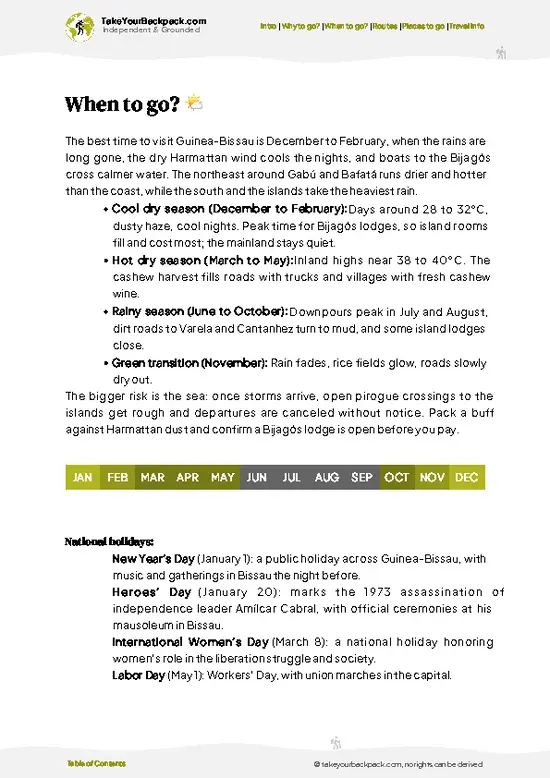
example page 0 from our offline Travel Guide for Guinea-Bissauexample page 1 from our offline Travel Guide for Guinea-Bissauexample page 2 from our offline Travel Guide for Guinea-Bissauexample page 3 from our offline Travel Guide for Guinea-Bissauexample page 4 from our offline Travel Guide for Guinea-Bissauexample page 5 from our offline Travel Guide for Guinea-Bissauexample page 6 from our offline Travel Guide for Guinea-Bissauexample page 7 from our offline Travel Guide for Guinea-Bissau
The digital guide (232 pages) contains:
53 highlights, ranked by travel appeal
Optimized 2, 3 & 5-day travel routes
Cities, national parks, beaches, historical sites, ...
How to get around
Offline-friendly for travel without Wi-Fi
👉 Click to see all 30+ guide features

📅 Plan smarter in minutes, not weeks
Month by month travel advice
Festivals & national holidays
Budget expectations

🗺️ Go to the right places, skip the overrated ones
Honest pros & cons of destinations
Top hikes, parks & viewpoints
Lesser-known places most travelers miss
Clear “worth it vs skip it” guidance

🛏️ Travel smoothly without rookie mistakes
Best areas to stay
Transport systems explained simply
Common scams & safety advice
SIM cards, money & practical tips

🌍 Understand the country, not just visit it
Culture & traditions
52 Essential phrases & customs
Festivals worth planning around
Traveler-friendly historical context
Insights that make places more meaningful

📱 Built for real travel conditions
Fully downloadable PDF
Works completely offline
Optimized for phone use
Useful in remote areas & buses
Everything in one place
Save weeks of stressful planning
Get instant access to the full guide directly. 30-day money-back guarantee.


Sent to your inbox immediately after payment • 100% Secure Checkout
Best Backpacking Travel Advisor 2025 tourism awardBest Backpacking
Travel Advisor
2025
What others say about Take Your Backpack Guides:
⭐⭐⭐⭐⭐
Fantastic, amazing amount of information!
⭐⭐⭐⭐⭐
My goodness this is amazing, it's what I've been looking for hats off too you!
⭐⭐⭐⭐⭐
I think this is absolutely BRILLIANT
⭐⭐⭐⭐
Very complete and informative. It's still missing places, but I gotta to commend you
⭐⭐⭐⭐⭐
This is truly amazing, thank you, can't wait to explore it with my kids!
⭐⭐⭐⭐⭐
Awesome resource, thank you!
⭐⭐⭐⭐⭐
This is amazing! Can't wait to explore the ones I haven't seen
⭐⭐⭐⭐
I love this! Well done, great idea.
⭐⭐⭐⭐⭐
Thanks for taking the time to make this gem!
⭐⭐⭐⭐⭐
This might be the best website I've ever seen.
⭐⭐⭐⭐⭐
Congratulations, and thank you so much for your work; it's incredibly valuable.
⭐⭐⭐⭐
In all seriousness I think you did a great job pointing out the important spots
⭐⭐⭐⭐⭐
10/10 very good
⭐⭐⭐⭐⭐
As someone who's only just starting to visit regularly this is awesome, thank you.
⭐⭐⭐⭐
Thank you very much! I'm going to visit my dad, it's going to be very useful!
⭐⭐⭐⭐⭐
This is really cool! We'll be travelling for the first time and this definitely come in handy.
⭐⭐⭐⭐⭐
You are now our minister of culture, congratulations 👨‍💼
⭐⭐⭐⭐⭐
Just wanted to tell you that this is a pearl! Going to follow your recommendations.
⭐⭐⭐⭐⭐
This is so cool. I'll definitely be using the resource for my travels soon.
⭐⭐⭐⭐⭐
This is very impressive! Good work.
⭐⭐⭐⭐⭐
This is an amazing and informative site. Very well done!

🛏️ Where to stay?Best areas and accommodation options

Farim’s heart for backpackers pulses strongest around the central market district and the nearby riverfront stretch. This area hums with life from dawn till dusk—vendors calling out, the scent of grilled fish mingling with fresh earth after a rain. It’s where you’ll find the most budget-friendly guesthouses and a handful of hostels that cater to solo travelers and small groups. Staying here means you’re never far from the pulse of daily life, making it easy to strike up conversations with locals or fellow backpackers over a shared meal or a cold drink.

Compared to the quieter residential neighborhoods … read more 👉
Farim’s heart for backpackers pulses strongest around the central market district and the nearby riverfront stretch. This area hums with life from dawn till dusk—vendors calling out, the scent of grilled fish mingling with fresh earth after a rain. It’s where you’ll find the most budget-friendly guesthouses and a handful of hostels that cater to solo travelers and small groups. Staying here means you’re never far from the pulse of daily life, making it easy to strike up conversations with locals or fellow backpackers over a shared meal or a cold drink.

Compared to the quieter residential neighborhoods scattered on the outskirts, the central zone offers a safer, more social atmosphere. The streets are busier, lit by street vendors and the occasional flicker of a generator-powered lamp, which naturally deters trouble. Plus, the riverfront’s gentle breeze cuts through the tropical heat, giving you a moment to breathe after a day of exploring. This blend of accessibility, community, and sensory richness makes the central market and riverfront area the smart choice for anyone wanting to dive into Farim’s authentic rhythm without sacrificing safety or connection.

🚌 Getting aroundMoving around without the hassle

Farim moves at a pace that feels like a slow exhale under the West African sun. It’s not about strict timetables or flashing neon signs telling you when the next bus leaves. Instead, the town pulses with a rhythm of local chatter, the occasional honk, and the shuffle of feet on dusty streets. You’ll find that here, intuition and patience are your best allies. The light shifts softly through the baobabs and mango trees, casting long shadows that stretch across the market stalls. This isn’t a place where everything runs like clockwork, but that’s part of its charm — the flow is organic, shaped by the people and the heat, not by rigid schedules.


  • Walking: The most reliable and immersive way to get around Farim. The town is compact, with dusty lanes and shaded paths that reveal local life in
read more 👉
Farim moves at a pace that feels like a slow exhale under the West African sun. It’s not about strict timetables or flashing neon signs telling you when the next bus leaves. Instead, the town pulses with a rhythm of local chatter, the occasional honk, and the shuffle of feet on dusty streets. You’ll find that here, intuition and patience are your best allies. The light shifts softly through the baobabs and mango trees, casting long shadows that stretch across the market stalls. This isn’t a place where everything runs like clockwork, but that’s part of its charm — the flow is organic, shaped by the people and the heat, not by rigid schedules.


  • Walking: The most reliable and immersive way to get around Farim. The town is compact, with dusty lanes and shaded paths that reveal local life in every corner. Walking costs nothing, lets you soak in the scent of spices and fresh fruit, and gives you the freedom to pause at a roadside café or chat with vendors.


  • Motorcycle Taxis (Motos): These are everywhere, zipping through narrow streets with surprising ease. They’re cheap—usually around 100-200 CFA per short ride—and run all day until dusk. Expect a bumpy, open-air ride that’s fast but requires a steady grip on your belongings and nerves. No fixed stops; just flag one down and shout your destination.


  • Minibus Taxis: For longer trips or hopping between neighborhoods, minibuses are your go-to. They leave when full, so timing is flexible but unpredictable. Fares hover around 300-500 CFA depending on distance. The ride is cramped and noisy, but it’s a great way to blend in with locals and catch snippets of conversation in Fula or Mandinka.


  • Bicycle Rentals: A step up from walking, renting a bike costs about 1,000 CFA per day. It’s a quiet, sweat-inducing way to explore beyond the center, especially if you want to visit the river or nearby villages. The roads can be rough, so a sturdy bike and some basic repair know-how are musts.


  • Shared Taxis to Regional Hubs: For budget travelers aiming to leave Farim, shared taxis to bigger towns like Bissau or Cacheu run early morning and late afternoon. Prices vary but expect around 3,000-5,000 CFA. These rides are less about comfort and more about efficiency—vehicles fill quickly, and the pace can be brisk, so be ready to hop in and go.

👛 Costs (as of 15 May 2026)How expensive it really is

Backpacking in Farim, Guinea-Bissau, is a raw, off-the-beaten-path experience where your money stretches but you’ll want to be prepared for basic comforts and local rhythms.
  • Dorm Accommodation: Expect simple guesthouses or hostels with shared rooms, often without fancy amenities. Prices hover around €5 to €10 per night. The rooms are basic—think mosquito nets, a fan if you’re lucky, and a bed that’s more functional than plush.
  • Meals: Local eateries serve up hearty, straightforward meals—rice, fish, and fresh vegetables dominate. Street food and small restaurants cost about €2 to €4 per meal. Fresh fruit and snacks from markets are even cheaper, but don’t expect much variety beyond local staples.
  • Local Transport: Getting around is mostly by shared taxis or minibuses. A typical short ride
read more 👉
Backpacking in Farim, Guinea-Bissau, is a raw, off-the-beaten-path experience where your money stretches but you’ll want to be prepared for basic comforts and local rhythms.
  • Dorm Accommodation: Expect simple guesthouses or hostels with shared rooms, often without fancy amenities. Prices hover around €5 to €10 per night. The rooms are basic—think mosquito nets, a fan if you’re lucky, and a bed that’s more functional than plush.
  • Meals: Local eateries serve up hearty, straightforward meals—rice, fish, and fresh vegetables dominate. Street food and small restaurants cost about €2 to €4 per meal. Fresh fruit and snacks from markets are even cheaper, but don’t expect much variety beyond local staples.
  • Local Transport: Getting around is mostly by shared taxis or minibuses. A typical short ride costs around €0.50 to €1.50. The vehicles are often crowded and slow, but they’re the pulse of daily life here, giving you a real sense of the town’s pace and people.
  • Basic Activities/Entry Fees: Farim’s attractions are low-key and mostly free or very cheap. Visiting local markets, riverside walks, or small cultural sites might cost €1 to €3 if there’s a fee at all. Organized tours or special excursions are rare and usually pricier, so plan accordingly.
  • Miscellaneous Expenses: Budget around €1 to €3 for essentials like bottled water, occasional snacks, or small tips. Internet access can be patchy and might cost a bit more if you rely on local SIM cards or cafes.

All told, you’re looking at roughly €10 to €20 per day to cover the basics in Farim. It’s not about luxury here—it’s about immersing yourself in a place where every euro goes toward authentic, grounded experiences rather than polished tourist comforts.
⚠️ Prices can change and everyone travels differently, so take this as a rough guide. Hope it helps you plan your adventure!

🚌 Day tripsEasy escapes and nearby places

Farim, Guinea-Bissau, is a backpacker’s dream base for exploring the region’s rich culture and stunning landscapes. With its laid-back vibe and proximity to unique destinations, you can easily dive into authentic experiences without the hassle.

Cacheu River Tour
A boat ride along the Cacheu River is a must. You’ll glide past mangroves, where the air is thick with the scent of salt and earth. Keep your eyes peeled for monkeys swinging through the trees and colorful birds flitting about. The trip takes about two hours, and you can snag a local guide for around $15. Best visited in the dry season from November to April, this trip offers a serene escape from the hustle of daily life. A common mistake? Underestimating the power of the sun; bring sunscreen and a hat.


Bolama Island Adventureread more 👉
Farim, Guinea-Bissau, is a backpacker’s dream base for exploring the region’s rich culture and stunning landscapes. With its laid-back vibe and proximity to unique destinations, you can easily dive into authentic experiences without the hassle.

Cacheu River Tour
A boat ride along the Cacheu River is a must. You’ll glide past mangroves, where the air is thick with the scent of salt and earth. Keep your eyes peeled for monkeys swinging through the trees and colorful birds flitting about. The trip takes about two hours, and you can snag a local guide for around $15. Best visited in the dry season from November to April, this trip offers a serene escape from the hustle of daily life. A common mistake? Underestimating the power of the sun; bring sunscreen and a hat.


Bolama Island Adventure
Just a short ferry ride from Farim, Bolama Island is a slice of history. Once the capital of Guinea-Bissau, its colonial architecture stands in stark contrast to the vibrant local life. Spend your day wandering through crumbling buildings and chatting with friendly locals. The ferry ride is about 30 minutes and costs around $5. Aim for the morning to avoid the heat and catch the best light for photos. Many first-timers miss the chance to explore the island’s backroads, where you’ll find hidden beaches and local markets.


Orango Island Exploration
For a taste of true wilderness, head to Orango Island. Known for its unique wildlife and stunning landscapes, it’s a paradise for nature lovers. The journey involves a two-hour boat ride, costing about $20. Plan your visit during the dry season for the best wildlife sightings. The real treasure lies in the island’s remote beaches, where you can soak in the tranquility. A common oversight is not bringing enough water; the heat can be intense.


Local Market Day
Staying in Farim means you can easily dive into the local culture by visiting the bustling market. Open every Saturday, it’s a sensory overload of colors, sounds, and smells. You’ll find everything from fresh produce to handmade crafts. Spend a few hours here, chatting with vendors and sampling local delicacies. It’s free to wander, but budget around $10 for snacks and souvenirs. Arrive early to beat the crowds and soak up the vibrant atmosphere. Many travelers miss the chance to engage with locals, which can lead to richer experiences.
Want to know what more Guinea-Bissau offers?
The Guinea-Bissau Travel Guide describes 53 highlights, from cities to national parks, from beaches to hikes

Get the Travel Guide -

🛡️ SafetyStaying Safe: What Travelers Should Know

Farim, Guinea-Bissau, is generally safe, but a few practical tips can enhance your experience. The town has a laid-back vibe, but like any place, awareness is key. Stick to well-lit areas at night, especially if you’re solo. The streets can be quiet, and a little caution goes a long way.

Watch for common scams, like overly friendly locals offering unsolicited help. They might expect a tip, so politely decline if you’re not interested. Also, be mindful of your belongings in crowded areas; pickpocketing can happen, especially during market hours when distractions abound.

Embrace the local culture, but keep your wits about you. Carry a small amount of cash and avoid flashy jewelry. This approach not only keeps you safe but also helps you blend in, allowing you to soak up the authentic atmosphere … read more 👉
Farim, Guinea-Bissau, is generally safe, but a few practical tips can enhance your experience. The town has a laid-back vibe, but like any place, awareness is key. Stick to well-lit areas at night, especially if you’re solo. The streets can be quiet, and a little caution goes a long way.

Watch for common scams, like overly friendly locals offering unsolicited help. They might expect a tip, so politely decline if you’re not interested. Also, be mindful of your belongings in crowded areas; pickpocketing can happen, especially during market hours when distractions abound.

Embrace the local culture, but keep your wits about you. Carry a small amount of cash and avoid flashy jewelry. This approach not only keeps you safe but also helps you blend in, allowing you to soak up the authentic atmosphere without unnecessary stress. Enjoy the journey; the rewards are worth it.

Other Bissau-Guinean towns near Farim

Explore more nearby:

  • Bigene—agricultural center, peanut fields, rural bus stop| 36 km away
  • Bissorã—local markets, cashew orchards, rural crossroads| 39 km away
  • Mansôa—riverbank setting, regional bus hub, lively street stalls| 48 km away

👉 Discover all towns

Or checkout all Guinea-Bissau has to offer (think cities, towns, villages, national parks, hikes, beaches, festivals)
Country photo of Guinea-Bissau

We 💚 feedbackIs it worth it?

Farim has a pulse that’s hard to ignore. The air is thick with the scent of grilled fish and the laughter of locals fills the streets. You’ll stumble upon a market bursting with colors and flavors that feel like a warm embrace. Just be ready for the heat; it can be relentless. The best surprise? The genuine smiles from the people who are eager to share their stories. Embrace the chaos, and you’ll find a rhythm that’s uniquely Farim.

✍️ Help improve this page!
The information on this page is based on in-depth research, insights shared by experienced travelers, and feedback from the local travel community in Guinea-Bissau. While every effort is made to keep the information accurate and current, conditions can change — so if you spot anything incorrect or outdated, please get in touch.


🙋‍♂️ Give feedback

👋 Meet the founderWho’s Behind Take Your Backpack?

Johan, backpacker and founder of TakeYourBackpackHi, I’m Johan (Netherlands 🇳🇱), the creator of TakeYourBackpack. Over the past decade, I’ve backpacked through 80+ countries across six continents, gaining extensive experience with independent travel, long-term trips, and overland routes.

This site is built on a combination of firsthand travel experience and carefully curated insights from other backpackers. Many guides are based on places I’ve personally visited, while others bring together tips, observations, and practical advice shared by trusted travelers I’ve met along the way.

The goal is to provide realistic, experience-driven guidance — not generic itineraries — so you can explore destinations with better context, clearer expectations, and more confidence.

Get full country guide •
Instant download • 53 highlights • Full Offline guide