×

Guinea-Bissau🇬🇼 | best townsWhere to Find the 10 Best towns in Guinea-Bissau

In Guinea-Bissau, towns pulse with unique rhythms shaped by their regional identities and cultural nuances. From the bustling streets of Bissau, where the scent of grilled fish mingles with the chatter of locals, to the tranquil vibe of Bolama, each town offers a distinct backpacking experience. Seasonal variations affect accessibility and safety, while local festivals can enhance immersion. Choosing the right town not only influences your budget but also the depth of your cultural engagement and overall travel ease.

By Johan Kruseman 🇳🇱 | Updated September 4, 2026
Explore the best villages in Guinea-Bissau

Why go?What Makes Them Special

In Guinea-Bissau, towns pulse with a unique local charm that reflects the country’s rich cultural tapestry. The pace of life is slow, allowing travelers to savor the vibrant markets and the aroma of street food wafting through the air. Each town offers a distinct flavor, shaped by its historical and geographical context. The coastal towns, for instance, showcase a blend of African and Portuguese influences, while inland areas reveal the heart of traditional Balanta culture.

Travelers must consider the trade-offs between accessibility and depth of exploration. While some towns are easier to reach, venturing off the beaten path often leads to more immersive experiences. The climatic conditions can also affect travel plans, with the rainy season making certain areas less accessible. Understanding … read more 👉
In Guinea-Bissau, towns pulse with a unique local charm that reflects the country’s rich cultural tapestry. The pace of life is slow, allowing travelers to savor the vibrant markets and the aroma of street food wafting through the air. Each town offers a distinct flavor, shaped by its historical and geographical context. The coastal towns, for instance, showcase a blend of African and Portuguese influences, while inland areas reveal the heart of traditional Balanta culture.

Travelers must consider the trade-offs between accessibility and depth of exploration. While some towns are easier to reach, venturing off the beaten path often leads to more immersive experiences. The climatic conditions can also affect travel plans, with the rainy season making certain areas less accessible. Understanding these nuances is essential for crafting an itinerary that balances exploration with the realities of travel in this captivating country.
Evaluating the Top Choices
The list of best towns in Guinea-Bissau is created based on charm, local culture, atmosphere, hidden gems, and visitor appeal. If you feel a town is missing in this list, please let us know.

When to go?Best Time to Visit Guinea-Bissau for towns

Seasonality plays a crucial role in the experience of towns across Guinea-Bissau. The dry season, from November to April, brings cooler temperatures and less humidity, making it ideal for exploring local life. Streets buzz with activity, as markets flourish and festivals light up the calendar.

May to October marks the rainy season, where heavy downpours can transform the landscape but also slow down daily routines. This period sees fewer tourists, leading to a more intimate experience, though some roads may become impassable.

Shoulder seasons offer a mixed bag. Traveling just before or after the peak dry season can provide a balance of decent weather and lower costs, but expect some unpredictability in conditions.

Understanding these patterns helps in planning trips that align with the … read more 👉
Seasonality plays a crucial role in the experience of towns across Guinea-Bissau. The dry season, from November to April, brings cooler temperatures and less humidity, making it ideal for exploring local life. Streets buzz with activity, as markets flourish and festivals light up the calendar.

May to October marks the rainy season, where heavy downpours can transform the landscape but also slow down daily routines. This period sees fewer tourists, leading to a more intimate experience, though some roads may become impassable.

Shoulder seasons offer a mixed bag. Traveling just before or after the peak dry season can provide a balance of decent weather and lower costs, but expect some unpredictability in conditions.

Understanding these patterns helps in planning trips that align with the vibrant pulse of local life, ensuring that the effort of getting there is met with rich rewards.

town hoppingTips for Visiting Multiple Destinations

Traveling through Guinea-Bissau requires a thoughtful approach to maximize the experience. Start in the capital, Bissau, where the vibrant markets pulse with life. From there, head north to the coastal town of Bolama, known for its colonial architecture and serene beaches. This route allows for a gradual immersion into the local culture, balancing urban energy with coastal tranquility.

Plan for at least two days in each town to soak in the atmosphere without feeling rushed. Avoid the common mistake of trying to cram too many stops into a short timeframe; this can lead to travel fatigue and missed experiences.

Consider the trade-offs between speed and depth. A faster pace may save time but sacrifices the chance to connect with locals or enjoy the scenery. Embrace flexibility; sometimes the best moments arise from unplanned detours.

The ListTop towns of Guinea-Bissau

1 Bafatá

old Portuguese quarter, Geba River, faded architecture

Wander riverside streets lined with colonial buildings and discover a town shaped by its river and layered history.

2 Bolama

island capital, crumbling mansions, tidal flats

Explore an island town where grand buildings recall a colonial past and tidal flats stretch beyond the quiet streets.

guinea-bissau-city-bolama v1
© Google |

3 Buba

coastal inlet, timber port, quiet neighborhoods

Watch boats load timber at the port or stroll quiet lanes in a town where the coast and commerce meet.

4 Canchungo

central plaza, faded colonial grid, local crafts

Browse craft stalls and navigate a grid of old streets in a town that remains a regional center for trade and gathering.

5 Catió

forest fringe, regional trading post, ethnic diversity

Meet traders and travelers in a town where forested hills, diverse communities, and commerce converge at the southern edge.

guinea-bissau-city-catio
© Google |

6 Farim

Oio River views, colonial-era buildings, riverside port

Walk along the Oio River, passing faded colonial facades and a port that still serves as a link to the interior.

guinea-bissau-city-farim
© Google |

7 Bissorã

local markets, cashew orchards, rural crossroads

Experience daily life in a town where agricultural trade, regional transport, and the scent of cashew trees shape the atmosphere.

8 Mansôa

riverbank setting, regional bus hub, lively street stalls

Navigate a busy riverside town where travelers connect, street vendors cluster, and the river’s edge offers a glimpse of local routines.

guinea-bissau-city-mansoa
© Google |

9 Sao Domingos

border crossing, customs post, roadside market

Navigate border formalities and browse market stalls in a town that marks the transition between Guinea-Bissau and Senegal.

10 Bigene

agricultural center, peanut fields, rural bus stop

Pass through a farming hub surrounded by peanut fields, where buses gather and rural life unfolds at a measured pace.

11 Fulacunda

island access, mangrove creeks, quiet ferry point

Board a ferry to the islands or watch mangroves at low tide in a town that feels shaped by water and slow movement.

12 Quebo

savanna edge, weekly market, crossroads village

Pause at a market town on the savanna’s edge, where rural commerce and passing trucks define the pace of daily life.

13 Nhacra

junction town, local eateries, market square

Sample local dishes and watch daily commerce in a town that serves as a key junction for travelers heading inland.

14 Empada

rice fields, small river port, local fishing

See rice paddies stretch to the horizon and boats unload their catch in a town where agriculture and fishing intersect.

15 Ingoré

border proximity, roadside stalls, transport stop

Stop in a borderland town where trucks pause, roadside stalls serve travelers, and the landscape hints at nearby Senegal.

16 Madina do Boé

remote interior, savanna landscape, traditional villages

Travel deep inland to a region of open savanna and scattered villages, where traditions persist far from the coast.

17 Quinhamel

Bijagós gateway, palm groves, riverside port

Set out for the islands or linger among palm groves in a port town that connects the mainland to the Bijagós archipelago.

18 Cacine

remote river port, forested surroundings, fishing boats

Arrive by boat or road in a secluded port town where forest and river meet, and fishing boats line the shore.

19 Niumana

river crossing, small ferry, agricultural plots

Cross the river by local ferry and see fields stretch out from a settlement that serves as a link between regions.

Think you know Guinea-Bissau?

Prove you’re a true local — uncover 9 lesser-known towns in Guinea-Bissau that locals tend to keep to themselves.
Loading the map 🌍

Expert viewExpert Commentary on towns

Travel Rhythm
Guinea-Bissau’s towns are best explored with a flexible itinerary. Aim for three to five towns to capture the essence of the country. Each town offers a distinct flavor, from the coastal vibes to the inland rhythms. The travel time between them can be unpredictable, often dictated by road conditions and local transport schedules. Expect to spend a few hours to a full day on the road, so plan accordingly.

Local Charm
Each town has its own character. The coastal towns pulse with the scent of salt and fish, while the inland areas are rich with the aroma of spices and fresh produce. Engage with locals; their warmth and stories add depth to your experience. Markets are vibrant, filled with the chatter of bartering and the colors of local crafts. However, be prepared for a slower … read more 👉
Travel Rhythm
Guinea-Bissau’s towns are best explored with a flexible itinerary. Aim for three to five towns to capture the essence of the country. Each town offers a distinct flavor, from the coastal vibes to the inland rhythms. The travel time between them can be unpredictable, often dictated by road conditions and local transport schedules. Expect to spend a few hours to a full day on the road, so plan accordingly.

Local Charm
Each town has its own character. The coastal towns pulse with the scent of salt and fish, while the inland areas are rich with the aroma of spices and fresh produce. Engage with locals; their warmth and stories add depth to your experience. Markets are vibrant, filled with the chatter of bartering and the colors of local crafts. However, be prepared for a slower pace of life. Infrastructure can be basic, and amenities may not always meet Western standards.

Logistical Considerations
Transportation options vary. Shared taxis and buses are common but can be crowded and uncomfortable. Renting a bicycle or motorbike can offer more freedom, but be cautious of road conditions. Safety is generally manageable, but stay aware of your surroundings, especially in busier areas. Cultural norms are essential to respect; dress modestly and greet locals with a smile.

Regional Variation
The coastal towns often feel more tourist-friendly, with a laid-back atmosphere and opportunities for beach activities. In contrast, the inland towns provide a more authentic glimpse into daily life, but they require a bit more effort to navigate. The trade-off is clear: the more you venture off the beaten path, the richer your experience, but also the more patience and adaptability you’ll need.

Final Thoughts
Ultimately, the reward lies in the connections you make and the stories you gather. The first cold beer after a long day of travel, the laughter shared with locals, and the breathtaking views from a hilltop are what make the journey worthwhile. Embrace the grit, and let the towns of Guinea-Bissau reveal their treasures to you.

✈️ The backpacker research shortcutGuinea-Bissau Travel Guide

An offline-friendly backpacking guide with optimized travel routes, ranked highlights, transport advice, and the best areas to stay.
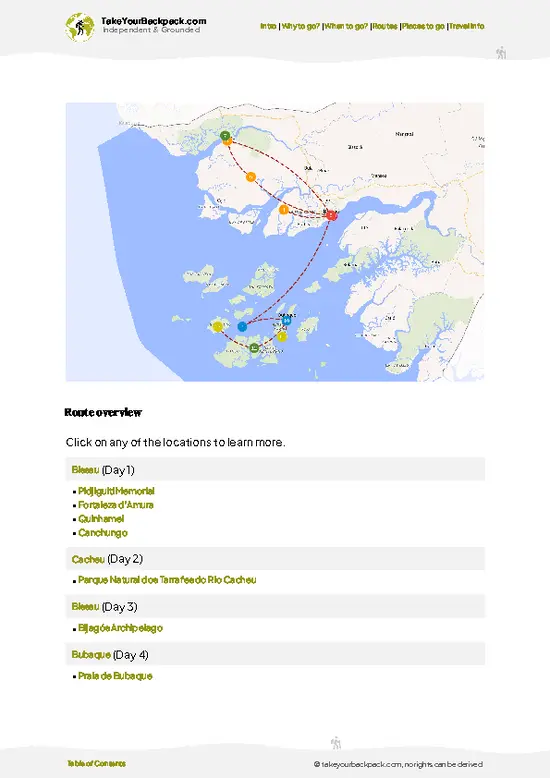
example page 0 from our offline Travel Guide for Guinea-Bissau
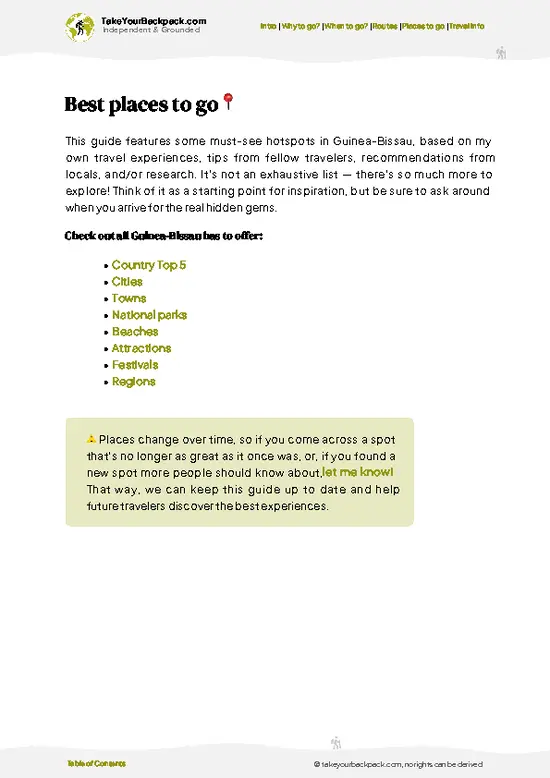
example page 1 from our offline Travel Guide for Guinea-Bissau
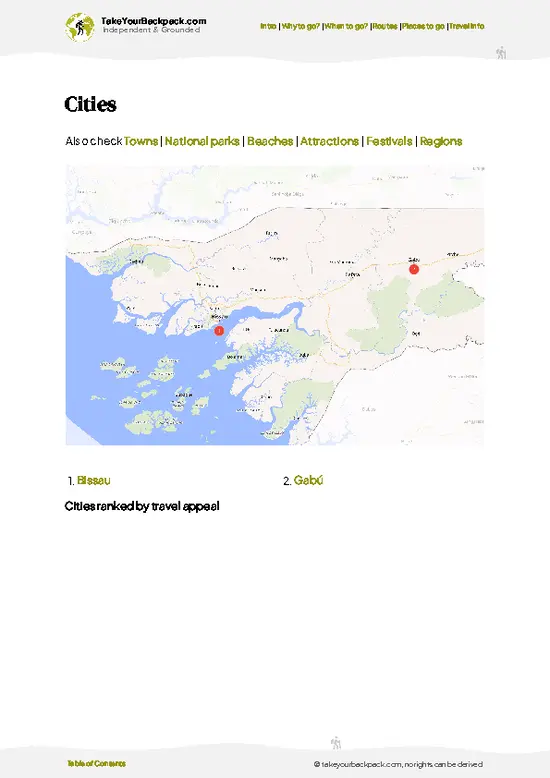
example page 2 from our offline Travel Guide for Guinea-Bissau
example page 3 from our offline Travel Guide for Guinea-Bissau
example page 4 from our offline Travel Guide for Guinea-Bissau
example page 5 from our offline Travel Guide for Guinea-Bissau
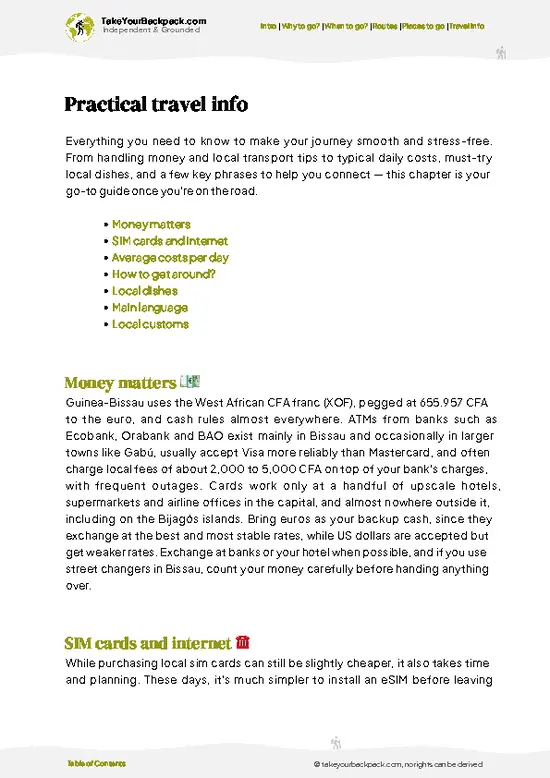
example page 6 from our offline Travel Guide for Guinea-Bissau
example page 7 from our offline Travel Guide for Guinea-Bissau
The digital guide (230 pages) contains:
53 highlights, ranked by travel appeal
Optimized 2, 3 & 5-day travel routes
Cities, national parks, landmarks, beaches
How to get around
Offline-friendly for travel without Wi-Fi
👉 Click to see all 30+ guide features

📅 Plan smarter in minutes, not weeks
Month by month travel advice
Festivals & national holidays
Budget expectations

🗺️ Go to the right places, skip the overrated ones
Honest pros & cons of destinations
Top hikes, parks & viewpoints
Lesser-known places most travelers miss
Clear “worth it vs skip it” guidance

🛏️ Travel smoothly without rookie mistakes
Best areas to stay
Transport systems explained simply
Common scams & safety advice
SIM cards, money & practical tips

🌍 Understand the country, not just visit it
Culture & traditions
52 Essential phrases & customs
Festivals worth planning around
Traveler-friendly historical context
Insights that make places more meaningful

📱 Built for real travel conditions
Fully downloadable PDF
Works completely offline
Optimized for phone use
Useful in remote areas & buses
Everything in one place
Save weeks of stressful planning
Get instant access to your full guide. 30‑day money-back guarantee.
+ Add another guide for just €6.50

By proceeding you agree to our terms.
Sent to your inbox immediately after payment • 100% Secure Checkout
Best Backpacking Travel Advisor 2025 tourism awardBest Backpacking
Travel Advisor
2025
What others say about Take Your Backpack Guides:
⭐⭐⭐⭐⭐
Fantastic, amazing amount of information!
⭐⭐⭐⭐⭐
My goodness this is amazing, it's what I've been looking for hats off too you!
⭐⭐⭐⭐⭐
I think this is absolutely BRILLIANT
⭐⭐⭐⭐
Very complete and informative. It's still missing places, but I gotta to commend you
⭐⭐⭐⭐⭐
This is truly amazing, thank you, can't wait to explore it with my kids!
⭐⭐⭐⭐⭐
Awesome resource, thank you!
⭐⭐⭐⭐⭐
This is amazing! Can't wait to explore the ones I haven't seen
⭐⭐⭐⭐
I love this! Well done, great idea.
⭐⭐⭐⭐⭐
Thanks for taking the time to make this gem!
⭐⭐⭐⭐⭐
This might be the best website I've ever seen.
⭐⭐⭐⭐⭐
Congratulations, and thank you so much for your work; it's incredibly valuable.
⭐⭐⭐⭐
In all seriousness I think you did a great job pointing out the important spots
⭐⭐⭐⭐⭐
10/10 very good
⭐⭐⭐⭐⭐
As someone who's only just starting to visit regularly this is awesome, thank you.
⭐⭐⭐⭐
Thank you very much! I'm going to visit my dad, it's going to be very useful!
⭐⭐⭐⭐⭐
This is really cool! We'll be travelling for the first time and this definitely come in handy.
⭐⭐⭐⭐⭐
You are now our minister of culture, congratulations 👨‍💼
⭐⭐⭐⭐⭐
Just wanted to tell you that this is a pearl! Going to follow your recommendations.
⭐⭐⭐⭐⭐
This is so cool. I'll definitely be using the resource for my travels soon.
⭐⭐⭐⭐⭐
This is very impressive! Good work.
⭐⭐⭐⭐⭐
This is an amazing and informative site. Very well done!

🛏️ Where to stay?Where to Base Yourself

Yes — hostels and budget accommodation exist but are limited: most are basic guesthouses and small budget hotels concentrated in Bissau city centre and on the Bijagós islands (mainly Bubaque and Bolama), with few options outside those hubs.
In Bissau city centre you get proximity to markets, transport links and some nightlife but must expect noise, simple facilities and take precautions against petty crime; the Bandim/market area is cheapest and best for local food and day trips but very basic and loud; the Bijagós islands offer quiet beaches and wildlife with generally relaxed safety but far fewer services, irregular transport and sometimes higher prices for essentials.

If you enjoy meeting … read more 👉
Yes — hostels and budget accommodation exist but are limited: most are basic guesthouses and small budget hotels concentrated in Bissau city centre and on the Bijagós islands (mainly Bubaque and Bolama), with few options outside those hubs.
In Bissau city centre you get proximity to markets, transport links and some nightlife but must expect noise, simple facilities and take precautions against petty crime; the Bandim/market area is cheapest and best for local food and day trips but very basic and loud; the Bijagós islands offer quiet beaches and wildlife with generally relaxed safety but far fewer services, irregular transport and sometimes higher prices for essentials.

If you enjoy meeting fellow travelers, consider choosing hostels with high ratings for atmosphere. On the other hand, if you prefer having your own space, a hotel might be a better option.

Guinea-BissauExpand Your Journey

👋 Meet the founderWho’s Behind Take Your Backpack?

Johan, backpacker and founder of TakeYourBackpackHi, I’m Johan (Netherlands 🇳🇱), the creator of TakeYourBackpack. Over the past decade, I’ve backpacked through 80+ countries across six continents, gaining extensive experience with independent travel, long-term trips, and overland routes.

This site is built on a combination of firsthand travel experience and carefully curated insights from other backpackers. Many guides are based on places I’ve personally visited, while others bring together tips, observations, and practical advice shared by trusted travelers I’ve met along the way.

The goal is to provide realistic, experience-driven guidance — not generic itineraries — so you can explore destinations with better context, clearer expectations, and more confidence.

Get full country guide •
Instant download • 53 highlights • Full Offline guide