v2.webp)
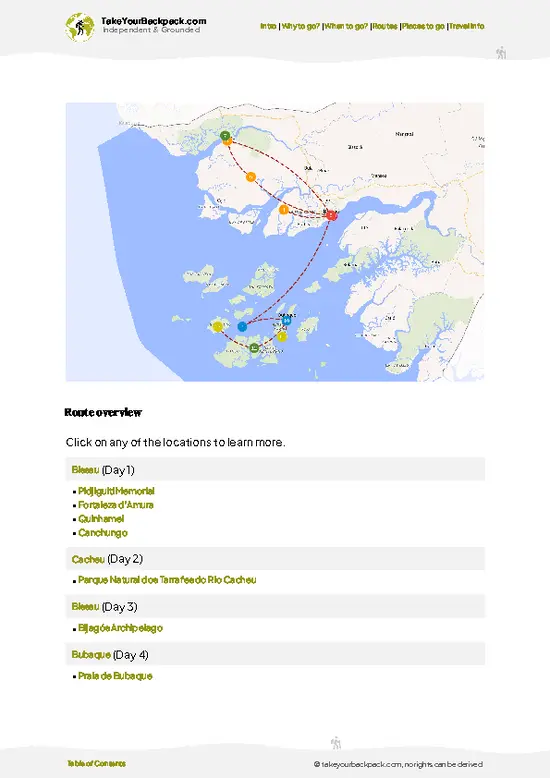
- Mansôa central market: The town’s core and the best look at local trade, with cashews, palm oil, rice, dried fish and secondhand clothes on tables under tarps. Go early in the morning when stock is freshest. Free entry, a snack costs under €1, and one hour is plenty.
- The junction and taxi park: The crossroads is the town’s real stage, with shared taxis and minibuses loading for every corner of the country. Morning is liveliest. Free, 30 to 45 minutes, and a cold drink from a roadside seller costs under €1.
- Rice paddies and mangrove edges: A short walk from the center brings you to the tidal flats where Balanta farmers tend bolanhas, the diked rice fields. Early morning or late afternoon gives soft light and cooler air. Free, 1 to 2 hours. Ask locally before crossing dikes, since they are working
- Mansôa central market: The town’s core and the best look at local trade, with cashews, palm oil, rice, dried fish and secondhand clothes on tables under tarps. Go early in the morning when stock is freshest. Free entry, a snack costs under €1, and one hour is plenty.
- The junction and taxi park: The crossroads is the town’s real stage, with shared taxis and minibuses loading for every corner of the country. Morning is liveliest. Free, 30 to 45 minutes, and a cold drink from a roadside seller costs under €1.
- Rice paddies and mangrove edges: A short walk from the center brings you to the tidal flats where Balanta farmers tend bolanhas, the diked rice fields. Early morning or late afternoon gives soft light and cooler air. Free, 1 to 2 hours. Ask locally before crossing dikes, since they are working fields.
- Cashew orchards on the outskirts: Cashew trees ring the town, and during the harvest, roughly March to June, families gather the fruit and roast nuts by the road. Walk through in the morning. Free to stroll, a bag of nuts costs about €1 to 3, allow 1 hour.
- Evening street-food stretch: After dark, grills and charcoal stoves along the main road serve skewers, fried fish and rice with spicy sauce. Come around dusk for the freshest food. A meal runs about €2 to 4, and 1 hour fits.
Spotted a mistake or missing something? Contact us.

 Best Backpacking
.jpg) Hi, I’m Johan (Netherlands 🇳🇱), the creator of TakeYourBackpack. Over the past 3 decades, I’ve backpacked through 90+ countries across six continents, gaining extensive experience with independent travel, long-term trips, and overland routes.
Hi, I’m Johan (Netherlands 🇳🇱), the creator of TakeYourBackpack. Over the past 3 decades, I’ve backpacked through 90+ countries across six continents, gaining extensive experience with independent travel, long-term trips, and overland routes.