×

Guinea🇬🇳 | attractionsFaranah Riverside Cultural and Market Areariverbank market, local produce, open-air gathering | things to do and best time to go

Explore Kindia Central Market and Craft StallsExplore Labé Central Market and Artisan Quarter

Backpacking in Faranah Riverside Cultural and Market Area
👀 For curious travelersattraction ranked #13
By Johan Kruseman 🇳🇱 | Updated September 4, 2026

Your shirt sticks to your back as you edge through a knot of women balancing pyramids of mangoes on their heads, the air thick with the tang of smoked fish and the metallic clang of a blacksmith’s hammer echoing from somewhere behind the peanut stalls. A kid darts past, clutching a battered radio blasting Congolese rumba, and you catch the sharp, sweet scent of palm wine before the river breeze cuts through the heat for half a second. This is Faranah Riverside Cultural and Market Area, sprawled along the banks of the Niger River in central Guinea—about as far from the sanitized Instagram feeds as you can get.

Here’s the truth: Faranah isn’t easy. It’s a logistical headache compared to Conakry’s coastal draws or the Fouta Djallon’s waterfalls. You’ll sweat, you’ll haggle, you’ll get stared at. But if you want Guinea’s soul—raw, loud, and unscripted—this is it. The crowds are real, the prices are low, and the energy is relentless. Forget curated photo ops; the magic here is messy, human, and absolutely worth the detour.

Discover everything you want to know in the 📖 Guinea Travel Guide.


Get your Guinea guide
61 ranked highlights, routes & tips, works offline (253 pages)
Loading the map 🌍
CLICK TO FILTER
cities
towns
landmarks
national parks
hikes
beaches
attractions
festivals
regions
SHOW COUNTRY’S BESTSHOW ALL

✨ Why go?
Ranked #13 attraction in Guinea
Why Faranah Riverside Cultural and Market Area should be on your travel list

The Faranah Riverside Cultural and Market Area isn’t some polished postcard spot where you snap a quick selfie and move on. It’s loud, chaotic, and yes, crowded—especially when the market’s in full swing. You’ll wrestle with the heat, the throng of locals and traders, and the constant hum of bargaining voices. But here’s the thing: this place is the heartbeat of Guinea’s interior life. It’s where tradition isn’t just preserved; it’s lived, shouted, and bartered over every day. The market spills over with raw, unfiltered culture—handwoven fabrics, spices that punch your senses, and crafts that tell stories older than the country itself.

Backpackers who make the trek aren’t just ticking off a box. They’re diving into a major milestone on Guinea’s overland routes, a place where you can feel … read more 👉
The Faranah Riverside Cultural and Market Area isn’t some polished postcard spot where you snap a quick selfie and move on. It’s loud, chaotic, and yes, crowded—especially when the market’s in full swing. You’ll wrestle with the heat, the throng of locals and traders, and the constant hum of bargaining voices. But here’s the thing: this place is the heartbeat of Guinea’s interior life. It’s where tradition isn’t just preserved; it’s lived, shouted, and bartered over every day. The market spills over with raw, unfiltered culture—handwoven fabrics, spices that punch your senses, and crafts that tell stories older than the country itself.

Backpackers who make the trek aren’t just ticking off a box. They’re diving into a major milestone on Guinea’s overland routes, a place where you can feel the pulse of the nation’s history and economy in real time. It’s a rare chance to witness the intersection of rural and urban life, where ancient customs meet the hustle of modern trade. The effort to get here—often involving bumpy roads and language barriers—is rewarded with an experience that’s as educational as it is exhilarating. If you want to understand Guinea beyond the surface, this is where you start.
Want to include Faranah Riverside Cultural and Market Area in your Guinea route?
Create a personalized Guinea itinerary that includes Faranah Riverside Cultural and Market Area and the places that fit your trip — based on your travel style, budget, and available time. Get your route in seconds.

Generate my trip

💡 HighlightsDon't-miss highlights and experiences

1. The Morning Fish Market
Forget the filtered sunrise shots—this is the real pulse of Faranah. At dawn, the riverside explodes with energy as fishermen haul in their catch, and the bargaining begins. You’ll see catfish the size of your forearm, eels wriggling in woven baskets, and women with voices that could cut through steel haggling over the day’s best. The smell is a slap: river mud, fresh fish, woodsmoke. It’s not pretty, but it’s alive. If you want to understand how a community eats, hustles, and survives, stand here for an hour. Just don’t expect anyone to pose for your camera—they’re busy making a living.


2. The Open-Air Tailor Stalls
Instagram will show you a swirl of color, but it won’t tell you how the tailors work: hunched over battered Singers, snipping, measuring, gossiping … read more 👉
1. The Morning Fish Market
Forget the filtered sunrise shots—this is the real pulse of Faranah. At dawn, the riverside explodes with energy as fishermen haul in their catch, and the bargaining begins. You’ll see catfish the size of your forearm, eels wriggling in woven baskets, and women with voices that could cut through steel haggling over the day’s best. The smell is a slap: river mud, fresh fish, woodsmoke. It’s not pretty, but it’s alive. If you want to understand how a community eats, hustles, and survives, stand here for an hour. Just don’t expect anyone to pose for your camera—they’re busy making a living.


2. The Open-Air Tailor Stalls
Instagram will show you a swirl of color, but it won’t tell you how the tailors work: hunched over battered Singers, snipping, measuring, gossiping in rapid-fire Malinké. Here, you can commission a shirt or dress, pick your own wax print, and watch it take shape in real time. The tailors are artists and comedians—if you’re game, they’ll size you up with a joke before they ever touch a tape measure. This is where style is made, not bought. The process is half the entertainment.


3. The Riverbank Drumming Circles
You’ll hear them before you see them: a syncopated thunder rolling across the water. These aren’t staged shows for tourists. Local musicians gather at the river’s edge, especially on market days, to play for themselves and anyone who cares to listen. Sometimes it’s a dozen djembes, sometimes just a few kids with battered buckets. If you’re lucky, you’ll catch a spontaneous dance-off—bare feet kicking up dust, laughter ricocheting off the water. It’s raw, unscripted, and impossible to fake.


4. The Palm Wine Shacks
No glossy travel mag will tell you this is where the best stories happen. Tucked behind the main market, these rough-hewn huts serve cloudy palm wine in recycled bottles. The regulars are quick to size up a stranger, but if you’re respectful, you’ll be invited to sit, sip, and swap tales. The taste? Funky, slightly sour, and stronger than you think. The entertainment is in the conversation—politics, football, local gossip, and the occasional impromptu song. This is Faranah’s social network, unplugged.


5. The Sunset Canoe Crossing
Here’s the anti-Instagram moment: battered wooden canoes ferrying people, produce, and the occasional goat across the Niger as the sun drops. It’s not choreographed, and it’s not always graceful—expect leaks, laughter, and the odd scramble to keep your feet dry. But the view from the middle of the river, with the market noise fading and the sky on fire, is the kind of memory that sticks. No filter needed.
Spotted a mistake or missing something? Contact us.
🌤️ When to go?Weather, crowds, and seasonal trade-offs


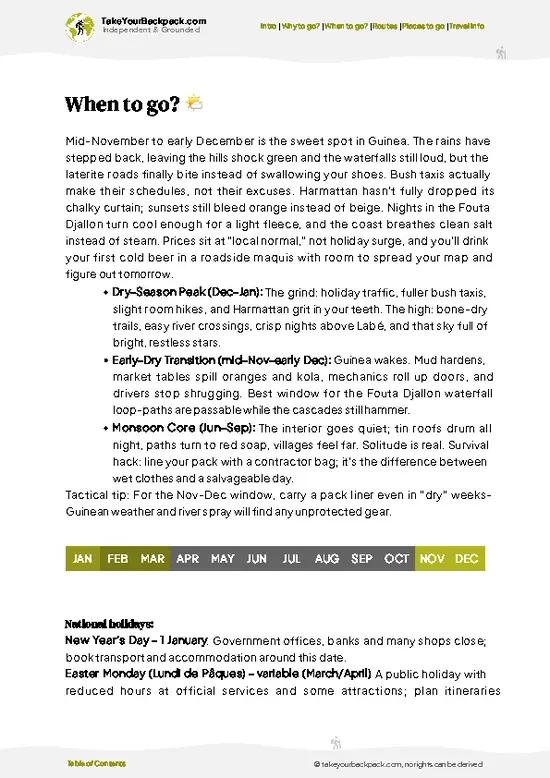
  • Weather: The best time to visit Faranah Riverside is during the dry season from November to February. Expect clear skies and minimal rain, unlike the heavy downpours from June to September that can turn the market muddy and slow your pace.

  • Temperature: Daytime temps hover around 28-32°C (82-90°F) in the dry months, which is warm but manageable with shade and breaks. The wet season heats up to 33-35°C (91-95°F) with high humidity, making outdoor wandering exhausting.

  • Daylight Hours: Daylight stays steady year-round, roughly 11 to 12 hours, so you have plenty of time to explore without rushing. Sunrise is around 6:30 AM, sunset near 6:30 PM.

  • Crowds: The dry season draws more locals and traders, so expect livelier markets and cultural events. The wet season sees fewer visitors but also
read more 👉

  • Weather: The best time to visit Faranah Riverside is during the dry season from November to February. Expect clear skies and minimal rain, unlike the heavy downpours from June to September that can turn the market muddy and slow your pace.

  • Temperature: Daytime temps hover around 28-32°C (82-90°F) in the dry months, which is warm but manageable with shade and breaks. The wet season heats up to 33-35°C (91-95°F) with high humidity, making outdoor wandering exhausting.

  • Daylight Hours: Daylight stays steady year-round, roughly 11 to 12 hours, so you have plenty of time to explore without rushing. Sunrise is around 6:30 AM, sunset near 6:30 PM.

  • Crowds: The dry season draws more locals and traders, so expect livelier markets and cultural events. The wet season sees fewer visitors but also fewer vendors, which can dull the experience.

  • Seasonal Activities: Cultural festivals and river ceremonies peak in December and January, offering authentic encounters beyond the usual market hustle. Avoid the rainy months if you want to catch these.

  • Price Fluctuations: Prices for goods and accommodations tend to rise during the dry season due to higher demand. The wet season offers better bargains but at the cost of limited access and comfort.


Pro-tip: Aim for late November or early December to catch the dry season’s start—fewer crowds than peak December and the market buzzing with fresh energy.


source: climatestotravel.comJANJanuary: excellent for travelingFEBFebruary: excellent for travelingMARMarch: good for travelingAPRApril: fair for travelingMAYMay: fair for travelingJUNJune: below average for travelingJULJuly: below average for travelingAUGAugust: below average for travelingSEPSeptember: below average for travelingOCTOctober: fair for travelingNOVNovember: highly recommended for travelingDECDecember: excellent for traveling
when-to-go

✈️ The backpacker research shortcutGuinea Travel Guide

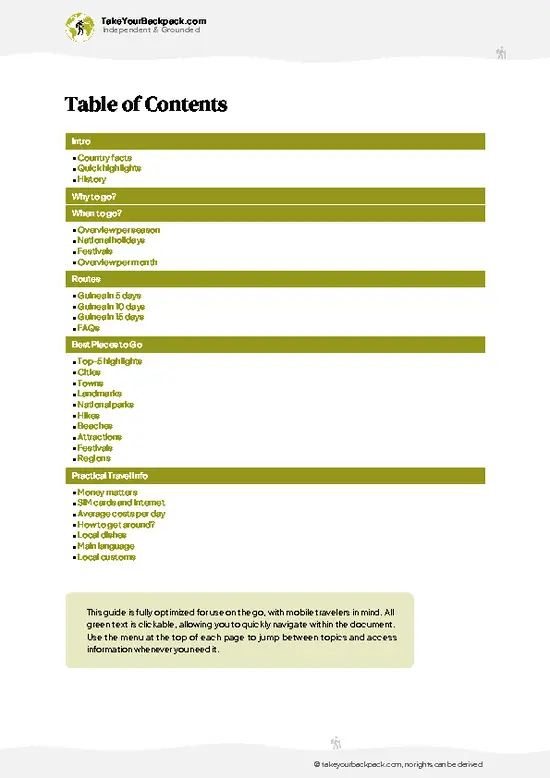
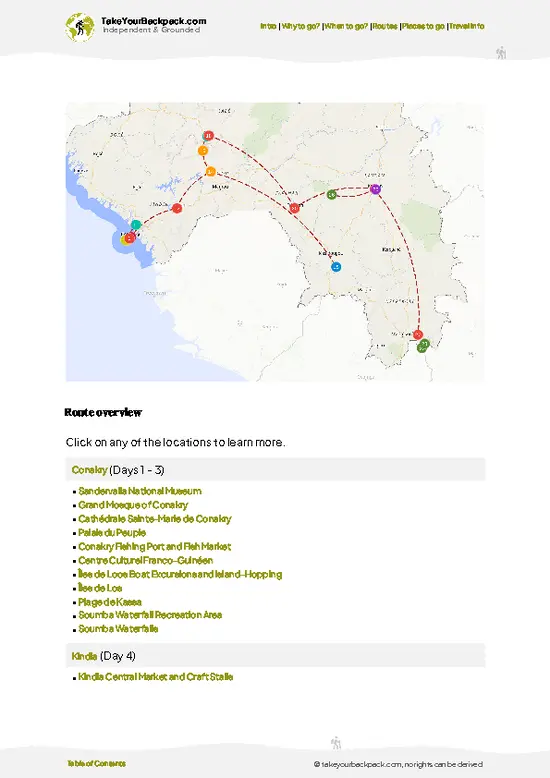
An offline-friendly backpacking guide with optimized travel routes, ranked highlights, transport advice, and the best areas to stay.
example page 0 from our offline Travel Guide for Guinea
example page 1 from our offline Travel Guide for Guinea
example page 2 from our offline Travel Guide for Guinea
example page 3 from our offline Travel Guide for Guinea
example page 4 from our offline Travel Guide for Guinea
example page 5 from our offline Travel Guide for Guinea
example page 6 from our offline Travel Guide for Guinea
example page 7 from our offline Travel Guide for Guinea
The digital guide (253 pages) contains:
61 highlights, ranked by travel appeal
Optimized 5, 10 & 15-day travel routes
Cities, national parks, landmarks, beaches
How to get around
Offline-friendly for travel without Wi-Fi
👉 Click to see all 30+ guide features

📅 Plan smarter in minutes, not weeks
Month by month travel advice
Festivals & national holidays
Budget expectations

🗺️ Go to the right places, skip the overrated ones
Honest pros & cons of destinations
Top hikes, parks & viewpoints
Lesser-known places most travelers miss
Clear “worth it vs skip it” guidance

🛏️ Travel smoothly without rookie mistakes
Best areas to stay
Transport systems explained simply
Common scams & safety advice
SIM cards, money & practical tips

🌍 Understand the country, not just visit it
Culture & traditions
52 Essential phrases & customs
Festivals worth planning around
Traveler-friendly historical context
Insights that make places more meaningful

📱 Built for real travel conditions
Fully downloadable PDF
Works completely offline
Optimized for phone use
Useful in remote areas & buses
Everything in one place
Save weeks of stressful planning
Get instant access to your full guide. 30‑day money-back guarantee.
+ Add another guide for just US$7.80

By proceeding you agree to our terms.
Sent to your inbox immediately after payment • 100% Secure Checkout
Best Backpacking Travel Advisor 2025 tourism awardBest Backpacking
Travel Advisor
2025
What others say about Take Your Backpack Guides:
⭐⭐⭐⭐⭐
Fantastic, amazing amount of information!
⭐⭐⭐⭐⭐
My goodness this is amazing, it's what I've been looking for hats off too you!
⭐⭐⭐⭐⭐
I think this is absolutely BRILLIANT
⭐⭐⭐⭐
Very complete and informative. It's still missing places, but I gotta to commend you
⭐⭐⭐⭐⭐
This is truly amazing, thank you, can't wait to explore it with my kids!
⭐⭐⭐⭐⭐
Awesome resource, thank you!
⭐⭐⭐⭐⭐
This is amazing! Can't wait to explore the ones I haven't seen
⭐⭐⭐⭐
I love this! Well done, great idea.
⭐⭐⭐⭐⭐
Thanks for taking the time to make this gem!
⭐⭐⭐⭐⭐
This might be the best website I've ever seen.
⭐⭐⭐⭐⭐
Congratulations, and thank you so much for your work; it's incredibly valuable.
⭐⭐⭐⭐
In all seriousness I think you did a great job pointing out the important spots
⭐⭐⭐⭐⭐
10/10 very good
⭐⭐⭐⭐⭐
As someone who's only just starting to visit regularly this is awesome, thank you.
⭐⭐⭐⭐
Thank you very much! I'm going to visit my dad, it's going to be very useful!
⭐⭐⭐⭐⭐
This is really cool! We'll be travelling for the first time and this definitely come in handy.
⭐⭐⭐⭐⭐
You are now our minister of culture, congratulations 👨‍💼
⭐⭐⭐⭐⭐
Just wanted to tell you that this is a pearl! Going to follow your recommendations.
⭐⭐⭐⭐⭐
This is so cool. I'll definitely be using the resource for my travels soon.
⭐⭐⭐⭐⭐
This is very impressive! Good work.
⭐⭐⭐⭐⭐
This is an amazing and informative site. Very well done!

🛏️ Where to stay?Best areas and accommodation options

The Faranah Riverside Cultural and Market Area in Guinea isn’t some polished tourist hotspot. It’s raw, bustling, and yes, crowded—especially during market days when locals flood the streets with goods, chatter, and life. If you’re chasing a sanitized, quiet experience, you’re in the wrong place. But if you want to dive headfirst into the pulse of Guinea’s culture, this is where it happens.

For backpackers, the best spots to stay are neighborhoods just a short walk from the riverside market but not smack in the middle of the chaos. These areas offer a balance: you’re close enough to soak in the … read more 👉
The Faranah Riverside Cultural and Market Area in Guinea isn’t some polished tourist hotspot. It’s raw, bustling, and yes, crowded—especially during market days when locals flood the streets with goods, chatter, and life. If you’re chasing a sanitized, quiet experience, you’re in the wrong place. But if you want to dive headfirst into the pulse of Guinea’s culture, this is where it happens.

For backpackers, the best spots to stay are neighborhoods just a short walk from the riverside market but not smack in the middle of the chaos. These areas offer a balance: you’re close enough to soak in the market’s energy without being overwhelmed by the noise and crowds at all hours. Safety here is relative—stick to well-trodden streets, and you’ll find a surprisingly social vibe. Solo travelers often find themselves invited into local homes or small eateries, where the real cultural exchange happens away from any tourist gloss.

Budget travelers appreciate these nearby quarters because they offer affordable guesthouses and simple lodgings that prioritize community over luxury. You’ll meet other backpackers, local guides, and vendors who know the city’s secrets. The charm isn’t in fancy amenities but in the authentic connections and the chance to witness a living, breathing marketplace that’s been the heart of Faranah for generations. This is Guinea’s real magic—unfiltered, unpredictable, and utterly alive.

👛 Costs (as of 4 September 2026)How expensive it really is

As of the most recent estimates, visiting the Faranah Riverside Cultural and Market Area in Guinea involves a guided tour priced at approximately €50 to €100 per person. This fee typically includes transportation, a local guide, and visits to the market and cultural sites. Additional costs may apply for optional activities or personal expenses.

source: afriquesogue.com
⚠️ Prices can change and everyone travels differently, so take this as a rough guide. Hope it helps you plan your adventure!

FAQCommon questions from travelers

2 to 3 hours is sufficient to explore Faranah Riverside Cultural and Market Area, allowing time to browse the market stalls and enjoy the riverside atmosphere.
Yes, the entrance fee is worth it as it provides access to a vibrant local market and cultural experience unique to the region, typically costing around 2,000 Guinean francs (about $0.20 USD).
You can reach Faranah Riverside Cultural and Market Area by taking a bush taxi or shared minibus from Faranah town center, located approximately 1 kilometer from the main bus station.
⚠️ Things can change over time, so always validate details locally before you go.

Other Guinean attractions near Faranah Riverside Cultural and Market Area

Explore more nearby:


💡 Not sure where to go next?
Create a personalized itinerary for Guinea including Faranah Riverside Cultural and Market Area and the places that fit your trip.

Generate my itinerary

👉 Discover all attractions

Or checkout all Guinea has to offer (think cities, towns, villages, national parks, hikes, beaches, festivals)
Country photo of Guinea

We 💚 feedbackFinal thoughts on visiting Faranah Riverside Cultural and Market Area

The Faranah Riverside Cultural and Market Area isn’t a polished postcard—it’s raw, loud, and sometimes overwhelming. Expect crowds that don’t quit and vendors who know how to work a hard bargain. But here’s the kicker: beneath the chaos, you’ll find a pulse that’s pure Guinea—authentic music spilling from open windows, spices that hit your nose before you see the stall, and genuine smiles that aren’t just for tourists. If you can handle the sensory overload, this place rewards with moments you won’t find anywhere else.

✍️ Help improve this page!
The information on this page is based on in-depth research, insights shared by experienced travelers, and feedback from the local travel community in Guinea. While every effort is made to keep the information accurate and current, conditions can change — so if you spot anything incorrect or outdated, please get in touch.


🙋‍♂️ Give feedback

👋 Meet the founderWho’s Behind Take Your Backpack?

Johan, backpacker and founder of TakeYourBackpackHi, I’m Johan (Netherlands 🇳🇱), the creator of TakeYourBackpack. Over the past decade, I’ve backpacked through 80+ countries across six continents, gaining extensive experience with independent travel, long-term trips, and overland routes.

This site is built on a combination of firsthand travel experience and carefully curated insights from other backpackers. Many guides are based on places I’ve personally visited, while others bring together tips, observations, and practical advice shared by trusted travelers I’ve met along the way.

The goal is to provide realistic, experience-driven guidance — not generic itineraries — so you can explore destinations with better context, clearer expectations, and more confidence.

Get full Guinea guide •
Instant download • 61 highlights • Full Offline guide