×

Guinea🇬🇳 | best attractionsExplore the 10 Best attractions in Guinea

Guinea’s best attractions are defined by their raw, unfiltered connection to West Africa’s diverse landscapes and cultures. From the humid, dense forests of the southeast to the arid, rocky plateaus in the north, each region offers a distinct vibe that shapes your backpacking experience. Independent travel here means navigating variable infrastructure and seasonal rains that can turn dirt roads into mud traps, so timing and location are crucial. Choosing the right destination affects everything: the intensity of cultural immersion, the ease of getting around, safety on less-traveled paths, and how your budget stretches in local markets or remote villages. Understanding these factors lets you tailor your trip to the authentic pulse of Guinea.

By Johan Kruseman 🇳🇱 | Updated September 4, 2026
Explore the best festivals in Guinea

Why go?Key Factors That Shape the Experience

Guinea’s attractions stand apart because they demand a certain grit and patience, rewarding travelers willing to navigate its rugged infrastructure and raw landscapes. Unlike more polished tourist circuits, Guinea offers a deep dive into West Africa’s less-trodden cultural and natural realms. The country’s geography—marked by dense rainforests, savannahs, and the Fouta Djallon highlands—creates a patchwork of ecosystems that feel untouched, but reaching these places often means long, bumpy rides on roads that test both vehicle and traveler. This trade-off between accessibility and immersion is central: the less convenient the journey, the more authentic and unfiltered the experience.

Guinea’s climate adds another layer of complexity. The rainy season transforms dirt tracks into mud traps, … read more 👉
Guinea’s attractions stand apart because they demand a certain grit and patience, rewarding travelers willing to navigate its rugged infrastructure and raw landscapes. Unlike more polished tourist circuits, Guinea offers a deep dive into West Africa’s less-trodden cultural and natural realms. The country’s geography—marked by dense rainforests, savannahs, and the Fouta Djallon highlands—creates a patchwork of ecosystems that feel untouched, but reaching these places often means long, bumpy rides on roads that test both vehicle and traveler. This trade-off between accessibility and immersion is central: the less convenient the journey, the more authentic and unfiltered the experience.

Guinea’s climate adds another layer of complexity. The rainy season transforms dirt tracks into mud traps, limiting travel windows and requiring careful planning. Yet, this same season brings the landscape to life with lush greenery and roaring waterfalls, making the effort worthwhile for those who time it right. The country’s rich cultural fabric, woven from diverse ethnic groups with distinct languages and traditions, offers a rare chance to witness vibrant local life far from tourist crowds. However, limited tourism infrastructure means accommodations and services are basic, demanding flexibility and a spirit of adventure.

In sum, Guinea’s attractions matter because they challenge travelers to slow down and engage deeply. The payoff is a visceral connection to a place where nature and culture remain largely unspoiled, but only if one accepts the inherent trade-offs of travel here.
Why These Made the Cut
The list of best attractions in Guinea is created based on cultural significance or entertainment value. If you feel a attraction is missing in this list, please let us know.

When to go?When to Plan Your Trip

Seasonal Patterns Shape Your Experience

Guinea’s climate swings between a heavy, humid rainy season and a hot, dry spell, and these shifts dictate how accessible and enjoyable its attractions feel. The rainy months bring thick, persistent downpours that turn dirt roads into slick mud and trails into slippery challenges. The air thickens with the scent of wet earth and dense foliage, but the constant moisture can obscure views and limit outdoor activities. During this time, expect fewer visitors and lower prices, but also prepare for travel delays and a damp, heavy atmosphere that tests your gear and patience.

Best Windows for Exploration

The dry season offers a reprieve from the relentless rain, with clearer skies and firmer ground underfoot. This period is when the landscape sharpens into … read more 👉

Seasonal Patterns Shape Your Experience

Guinea’s climate swings between a heavy, humid rainy season and a hot, dry spell, and these shifts dictate how accessible and enjoyable its attractions feel. The rainy months bring thick, persistent downpours that turn dirt roads into slick mud and trails into slippery challenges. The air thickens with the scent of wet earth and dense foliage, but the constant moisture can obscure views and limit outdoor activities. During this time, expect fewer visitors and lower prices, but also prepare for travel delays and a damp, heavy atmosphere that tests your gear and patience.

Best Windows for Exploration

The dry season offers a reprieve from the relentless rain, with clearer skies and firmer ground underfoot. This period is when the landscape sharpens into focus—the dust settles, rivers calm, and the sun casts long, warm shadows that bring out the textures of the terrain. Days are hot but manageable, and nights cool enough to rest well. This stretch is prime for trekking, wildlife spotting, and navigating the country’s rugged paths without the constant threat of mudslides or flooded routes.

Shoulder Seasons: A Calculated Trade-Off

The transitions between wet and dry seasons carry their own character. Early dry months might still hold patches of mud and occasional showers, but the crowds are thinner and costs dip. Late dry season edges toward hotter, dustier conditions, which can sap energy but reward with golden light and quieter trails. Travelers willing to accept these trade-offs gain a more intimate, less polished encounter with Guinea’s raw environment, but must be ready for sudden weather shifts and variable trail conditions.

attraction hoppingTips for Visiting Multiple Destinations

How to Combine the Best Attractions of Guinea Into One Trip


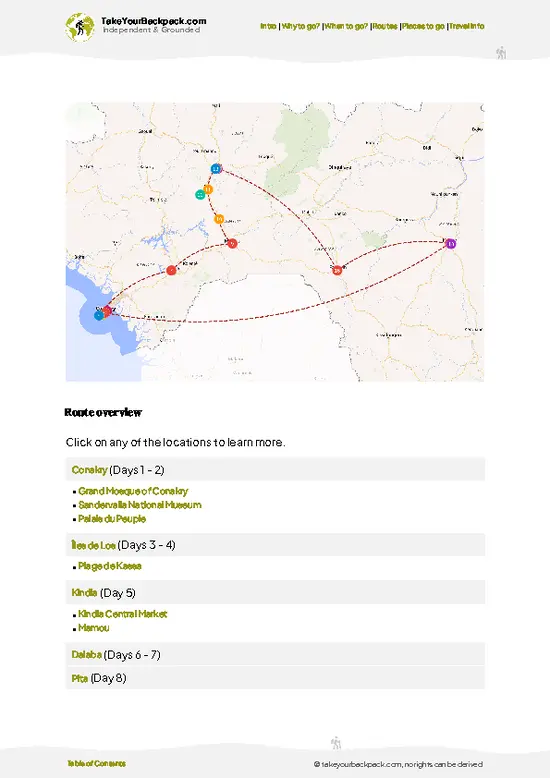
Navigating Guinea’s diverse attractions demands a clear sense of regional flow. The country’s highlights naturally group into coastal, forested highlands, and savannah zones, so planning a route that respects these clusters saves time and energy. Starting from the capital and moving outward in a loop or a linear path helps avoid backtracking on rough roads. Each region deserves at least two to three days to absorb its character—rushing through ruins or markets often means missing the subtle rhythms of daily life or the slow reveal of a landscape’s texture.

Travelers often underestimate the time needed to transition between areas. Distances may look short on a map, but road conditions and transport options stretch travel times unpredictably. … read more 👉

How to Combine the Best Attractions of Guinea Into One Trip


Navigating Guinea’s diverse attractions demands a clear sense of regional flow. The country’s highlights naturally group into coastal, forested highlands, and savannah zones, so planning a route that respects these clusters saves time and energy. Starting from the capital and moving outward in a loop or a linear path helps avoid backtracking on rough roads. Each region deserves at least two to three days to absorb its character—rushing through ruins or markets often means missing the subtle rhythms of daily life or the slow reveal of a landscape’s texture.

Travelers often underestimate the time needed to transition between areas. Distances may look short on a map, but road conditions and transport options stretch travel times unpredictably. Building in buffer days for unexpected delays or spontaneous detours keeps the itinerary flexible and less stressful. It’s tempting to cram in every attraction, but this usually sacrifices depth for speed. A slower pace allows for moments like watching the light shift over a savannah horizon or savoring the scent of wet earth after a tropical rain.

Budget and comfort trade-offs are real here. Opting for local transport and simpler accommodations stretches funds but demands patience and adaptability. Conversely, private vehicles and higher-end lodgings speed up travel and ease fatigue but at a steeper price. Balancing these factors with personal priorities ensures the trip feels rewarding rather than exhausting. Ultimately, the best Guinea itinerary respects the country’s raw edges and rewards those willing to meet them on their own terms.

The ListTop attractions of Guinea

1 Îles de Loos Boat Excursions and Island-Hopping

beach coves, boat transfers, island villages

Travel by boat to explore quiet beaches and small settlements, with opportunities for swimming, walking, and meeting local islanders.

2 Sandervalia National Museum

ethnographic displays, traditional masks, sculpture garden

Explore exhibits of regional artifacts and art, offering context on Guinea’s diverse cultures and historical traditions.

guinea-attraction-sandervalia-national-museum
© Google |

3 Grand Mosque of Conakry

minaret towers, prayer hall, city skyline

Observe the mosque’s scale and design, a focal point for worship and a prominent feature in Conakry’s urban landscape.

4 Soumba Waterfall Recreation Area

forest pools, picnic spots, natural cascades

Relax by shaded pools and enjoy the sound of falling water, with opportunities for swimming and informal gatherings.

guinea-attraction-soumba-waterfall-recreation-area
© Google |

5 Cathédrale Sainte-Marie de Conakry

stained glass, domed architecture, city landmark

Admire the cathedral’s distinctive design and interior details, offering a quiet perspective on Conakry’s religious and architectural landscape.

guinea-attraction-cathedrale-sainte-marie-de-conakry
© Google |

6 Palais du Peuple

assembly hall, modernist façade, civic plaza

View the building’s striking exterior and public spaces, often used for official events and large gatherings in central Conakry.

guinea-attraction-palais-du-peuple v1
© Google |

7 Centre Culturel Franco-Guinéen

performance venue, art exhibitions, cultural events

Attend live performances or browse rotating exhibits in a space that connects local artists and international cultural influences.

guinea-attraction-centre-culturel-franco-guineen
© Google |

8 Conakry Fishing Port and Fish Market

wooden pirogues, seafood stalls, harbor bustle

Watch fishermen unload their catch and navigate the lively market, where fresh seafood and daily commerce shape the waterfront atmosphere.

guinea-attraction-conakry-fishing-port-and-fish-market v1
© Google |

9 Boké Bauxite Heritage and Colonial-Era Wharf Area

bauxite mining relics, colonial warehouses, riverside wharf

Trace the industrial past along the riverfront, where mining infrastructure and colonial buildings reveal the region’s economic and social history.

10 Kankan Traditional Market and Cloth-Dyeing Area

textile stalls, dye pits, local fabrics

Browse hand-dyed cloth and observe artisans at work, gaining insight into regional textile techniques and everyday commerce.

11 Labé Central Market and Artisan Quarter

tailor shops, leatherwork, woven goods

Discover a network of workshops and market stalls, where skilled makers produce clothing, accessories, and household items.

12 Kindia Central Market and Craft Stalls

fruit vendors, handmade baskets, pottery stands

Navigate a busy marketplace filled with fresh produce and crafts, where local artisans display practical and decorative wares.

13 Faranah Riverside Cultural and Market Area

riverbank market, local produce, open-air gathering

Experience daily life along the river, where vendors sell seasonal goods and residents gather for trade and conversation.

Think you know Guinea?

Prove you’re a true local — uncover 3 lesser-known attractions in Guinea that locals tend to keep to themselves.
Loading the map 🌍

Expert viewPro Tips for Exploring the Best

Expert Commentary


Guinea’s attractions demand a mindset that balances ambition with patience. You won’t be ticking off a dozen sites in a week without feeling rushed or missing the essence of what makes this country unique. Aim for a handful—three to five major experiences spread across different regions—to truly absorb the layers of culture, landscape, and history. Each attraction requires a commitment of time and energy that goes beyond the usual tourist checklist. Travel here is often about the journey as much as the destination, with infrastructure that can slow you down but also forces you to slow down, which is a rare gift in itself.

Budgeting for Guinea means factoring in more than just entry fees or guide costs. Transport between attractions can be unpredictable, often involving … read more 👉

Expert Commentary


Guinea’s attractions demand a mindset that balances ambition with patience. You won’t be ticking off a dozen sites in a week without feeling rushed or missing the essence of what makes this country unique. Aim for a handful—three to five major experiences spread across different regions—to truly absorb the layers of culture, landscape, and history. Each attraction requires a commitment of time and energy that goes beyond the usual tourist checklist. Travel here is often about the journey as much as the destination, with infrastructure that can slow you down but also forces you to slow down, which is a rare gift in itself.

Budgeting for Guinea means factoring in more than just entry fees or guide costs. Transport between attractions can be unpredictable, often involving shared taxis or bush taxis that run on local schedules rather than yours. Roads vary from paved stretches to rough, dusty tracks that test your vehicle and patience. This means travel times can double or triple what maps suggest. Accommodations range from basic guesthouses to modest hotels, so expect to pay a bit more for comfort and reliability, especially in remote areas. The payoff is the chance to wake up to a landscape that feels untouched, where the air carries the scent of earth and wild vegetation rather than exhaust fumes.

Planning your visit requires a clear-eyed approach to regional differences. The coastal and forested zones offer lush greenery and cooler air but come with humidity and occasional heavy rains that can disrupt travel plans. Inland, the savannah and mountainous areas present drier conditions and more rugged terrain, which can be physically demanding but reward you with expansive views and a sense of isolation that’s hard to find elsewhere. Understanding these shifts helps you pack right and schedule activities when conditions are most favorable. For example, trekking or exploring natural reserves is best done early in the day before the heat builds or afternoon storms roll in.

Safety is a practical concern that shapes how you experience Guinea. While many areas are welcoming and safe for travelers who respect local customs, some regions require vigilance due to political tensions or limited medical facilities. It’s wise to travel with a local guide or trusted contact, especially when venturing off the beaten path. This not only enhances your safety but enriches your experience through authentic interactions and insights you won’t get solo. Cultural respect is paramount—dress modestly, learn a few phrases in local languages, and approach communities with humility. The warmth you receive in return often makes the effort worthwhile.

One of the most vivid memories from my time in Guinea was the moment after a long, bumpy ride through a remote village. The sun was setting, casting a golden glow over a river valley, and the air smelled of wood smoke and fresh earth. That kind of scene doesn’t come from a quick stop at a roadside viewpoint; it’s earned through the grit of travel and the willingness to embrace unpredictability. The reward is not just the view but the feeling of having arrived somewhere real, where your presence matters and the landscape tells a story.

In summary, prioritize quality over quantity. Select a few attractions that offer contrasting experiences—nature, culture, history—and give yourself the flexibility to adapt your plans. Guinea’s charm lies in its rawness and the genuine connections you make along the way, not in ticking off a long list of sites. Prepare for slower travel, variable comfort, and the occasional logistical headache, but know that these challenges are part of the package. When you finally settle into a quiet moment by a river or share a meal with locals after a day’s trek, you’ll understand why the effort was worth it.

✈️ The backpacker research shortcutGuinea Travel Guide

An offline-friendly backpacking guide with optimized travel routes, ranked highlights, transport advice, and the best areas to stay.
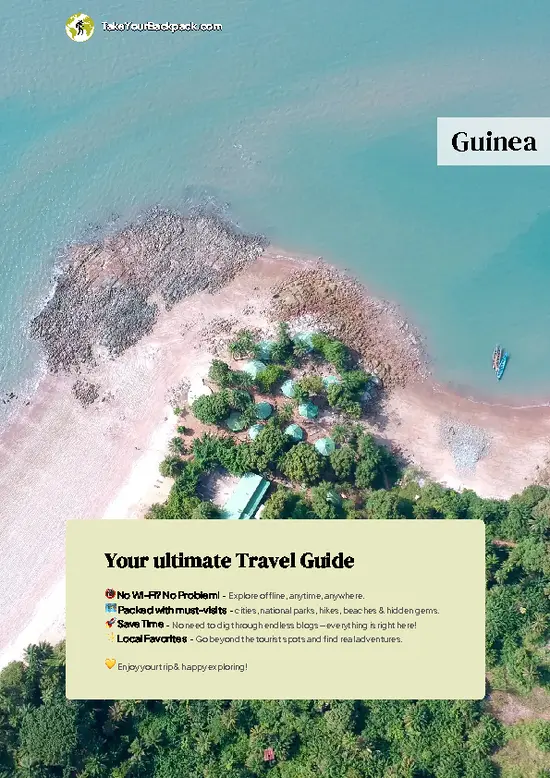
example page 0 from our offline Travel Guide for Guinea
example page 1 from our offline Travel Guide for Guinea
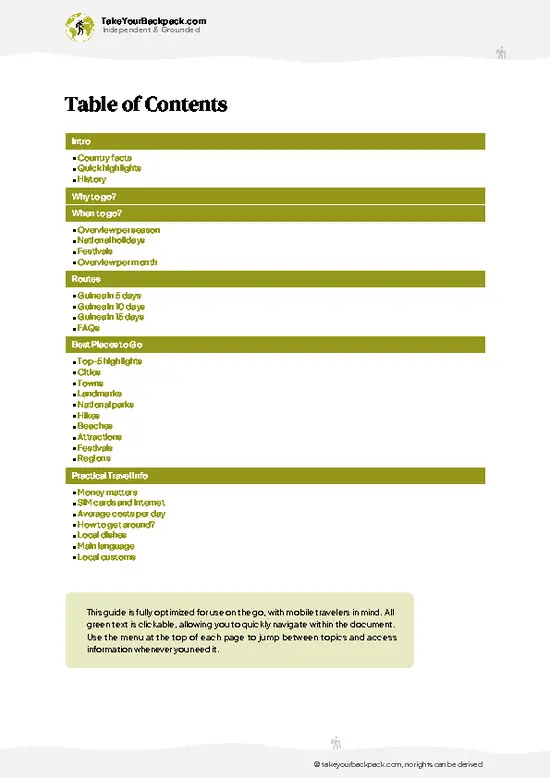
example page 2 from our offline Travel Guide for Guinea
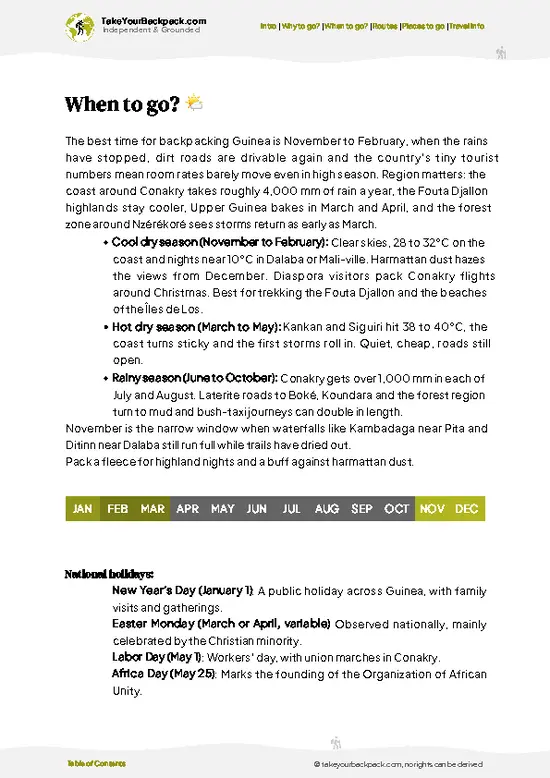
example page 3 from our offline Travel Guide for Guinea
example page 4 from our offline Travel Guide for Guinea
example page 5 from our offline Travel Guide for Guinea
example page 6 from our offline Travel Guide for Guinea
example page 7 from our offline Travel Guide for Guinea
The digital guide (253 pages) contains:
61 highlights, ranked by travel appeal
Optimized 5, 10 & 15-day travel routes
Cities, national parks, landmarks, beaches
How to get around
Offline-friendly for travel without Wi-Fi
👉 Click to see all 30+ guide features

📅 Plan smarter in minutes, not weeks
Month by month travel advice
Festivals & national holidays
Budget expectations

🗺️ Go to the right places, skip the overrated ones
Honest pros & cons of destinations
Top hikes, parks & viewpoints
Lesser-known places most travelers miss
Clear “worth it vs skip it” guidance

🛏️ Travel smoothly without rookie mistakes
Best areas to stay
Transport systems explained simply
Common scams & safety advice
SIM cards, money & practical tips

🌍 Understand the country, not just visit it
Culture & traditions
52 Essential phrases & customs
Festivals worth planning around
Traveler-friendly historical context
Insights that make places more meaningful

📱 Built for real travel conditions
Fully downloadable PDF
Works completely offline
Optimized for phone use
Useful in remote areas & buses
Everything in one place
Save weeks of stressful planning
Get instant access to your full guide. 30‑day money-back guarantee.
+ Add another guide for just US$7.80

By proceeding you agree to our terms.
Sent to your inbox immediately after payment • 100% Secure Checkout
Best Backpacking Travel Advisor 2025 tourism awardBest Backpacking
Travel Advisor
2025
What others say about Take Your Backpack Guides:
⭐⭐⭐⭐⭐
Fantastic, amazing amount of information!
⭐⭐⭐⭐⭐
My goodness this is amazing, it's what I've been looking for hats off too you!
⭐⭐⭐⭐⭐
I think this is absolutely BRILLIANT
⭐⭐⭐⭐
Very complete and informative. It's still missing places, but I gotta to commend you
⭐⭐⭐⭐⭐
This is truly amazing, thank you, can't wait to explore it with my kids!
⭐⭐⭐⭐⭐
Awesome resource, thank you!
⭐⭐⭐⭐⭐
This is amazing! Can't wait to explore the ones I haven't seen
⭐⭐⭐⭐
I love this! Well done, great idea.
⭐⭐⭐⭐⭐
Thanks for taking the time to make this gem!
⭐⭐⭐⭐⭐
This might be the best website I've ever seen.
⭐⭐⭐⭐⭐
Congratulations, and thank you so much for your work; it's incredibly valuable.
⭐⭐⭐⭐
In all seriousness I think you did a great job pointing out the important spots
⭐⭐⭐⭐⭐
10/10 very good
⭐⭐⭐⭐⭐
As someone who's only just starting to visit regularly this is awesome, thank you.
⭐⭐⭐⭐
Thank you very much! I'm going to visit my dad, it's going to be very useful!
⭐⭐⭐⭐⭐
This is really cool! We'll be travelling for the first time and this definitely come in handy.
⭐⭐⭐⭐⭐
You are now our minister of culture, congratulations 👨‍💼
⭐⭐⭐⭐⭐
Just wanted to tell you that this is a pearl! Going to follow your recommendations.
⭐⭐⭐⭐⭐
This is so cool. I'll definitely be using the resource for my travels soon.
⭐⭐⭐⭐⭐
This is very impressive! Good work.
⭐⭐⭐⭐⭐
This is an amazing and informative site. Very well done!

🛏️ Where to stay?Best Stay Options in Guinea

Yes — hostels and budget guesthouses exist in Guinea, concentrated in Conakry; options outside the capital are sparse and travel and infrastructure constraints make inland budget stays harder and less reliable.
Kaloum is the central district nearest ferries, markets and government services but is busiest and often pricier; Dixinn (university/embassy zone) and parts of Ratoma host the most and cheapest guesthouses with quieter streets and better local nightlife; Matam offers mid-range budget options near beaches and conference facilities but can feel more isolated.
Expect basic standards (intermittent electricity, limited hot water, cash-only payments), book ahead for Conakry, carry a mosquito … read more 👉
Yes — hostels and budget guesthouses exist in Guinea, concentrated in Conakry; options outside the capital are sparse and travel and infrastructure constraints make inland budget stays harder and less reliable.
Kaloum is the central district nearest ferries, markets and government services but is busiest and often pricier; Dixinn (university/embassy zone) and parts of Ratoma host the most and cheapest guesthouses with quieter streets and better local nightlife; Matam offers mid-range budget options near beaches and conference facilities but can feel more isolated.
Expect basic standards (intermittent electricity, limited hot water, cash-only payments), book ahead for Conakry, carry a mosquito net and personal lock, and favor Dixinn or Ratoma for safer, quieter budget stays while using Kaloum for short central access.

If you enjoy meeting fellow travelers, consider choosing hostels with high ratings for atmosphere. On the other hand, if you prefer having your own space, a hotel might be a better option.

GuineaWhere to Go Next

👋 Meet the founderWho’s Behind Take Your Backpack?

Johan, backpacker and founder of TakeYourBackpackHi, I’m Johan (Netherlands 🇳🇱), the creator of TakeYourBackpack. Over the past decade, I’ve backpacked through 80+ countries across six continents, gaining extensive experience with independent travel, long-term trips, and overland routes.

This site is built on a combination of firsthand travel experience and carefully curated insights from other backpackers. Many guides are based on places I’ve personally visited, while others bring together tips, observations, and practical advice shared by trusted travelers I’ve met along the way.

The goal is to provide realistic, experience-driven guidance — not generic itineraries — so you can explore destinations with better context, clearer expectations, and more confidence.

Get full Guinea guide •
Instant download • 61 highlights • Full Offline guide