×

Guinea🇬🇳 | regionsFouta Djallonrolling plateaus, cool climate, Fulani villages, cascading waterfalls | things to do and best time to go

Explore Fouta Djallon HighlandsExplore Dalaba

Backpacking in Fouta Djallon
🏆 Top pickregion ranked #1
By Johan Kruseman 🇳🇱 | Updated June 4, 2026

Forget the idea that Fouta Djallon is just a quick pit stop for waterfall selfies—this region is the backbone of Guinea’s wild heart, not a sideshow. Smack in the middle of the country, Fouta Djallon is where the air cools, the hills roll, and the trails twist through villages that haven’t been staged for Instagram. Backpackers come for the scenery—think cliffs, canyons, and rivers that actually earn the word “dramatic”—but stay for the slow-burn hospitality and the sense that you’re in on a secret. Dalaba and Labé are the main hubs, but the real magic is in the smaller towns and the hike-in waterfalls you’ll have to yourself. It’s cheap, but you’ll pay in time: transport is slow, roads are rough, and you’ll need patience to get between towns. Compared to the coast or Conakry, Fouta Djallon is raw, less polished, and refreshingly light on tour groups.

Discover everything you want to know in the 📖 Guinea Travel Guide.


Get your Guinea guide
67 ranked highlights, routes & tips, works offline (282 pages)
Loading the map 🌍
CLICK TO FILTER
cities
towns
landmarks
national parks
hikes
beaches
attractions
festivals
regions
SHOW COUNTRY’S BESTSHOW ALL

✨ Why go?
Ranked #1 region in Guinea
Why Fouta Djallon should be on your travel list

In the heart of Guinea, Fouta Djallon is a backpacker’s playground, and here’s why you should dive in. First off, the variety of landscapes is mind-blowing. You’ve got everything from lush mountains to cascading waterfalls, all within a few hours’ hike. This means you can soak in diverse experiences without the hassle of constant relocation.

Transport here is surprisingly flexible. You can hop on a shared taxi-brousse or rent a bike to explore at your own pace. This freedom lets you linger in places that catch your eye, making slow travel a breeze.

But it’s not just about nature. Fouta Djallon is rich in culture. You can visit traditional villages, engage with local artisans, and savor authentic cuisine that tells the story of the land. The blend of nature and culture creates a unique … read more 👉
In the heart of Guinea, Fouta Djallon is a backpacker’s playground, and here’s why you should dive in. First off, the variety of landscapes is mind-blowing. You’ve got everything from lush mountains to cascading waterfalls, all within a few hours’ hike. This means you can soak in diverse experiences without the hassle of constant relocation.

Transport here is surprisingly flexible. You can hop on a shared taxi-brousse or rent a bike to explore at your own pace. This freedom lets you linger in places that catch your eye, making slow travel a breeze.

But it’s not just about nature. Fouta Djallon is rich in culture. You can visit traditional villages, engage with local artisans, and savor authentic cuisine that tells the story of the land. The blend of nature and culture creates a unique tapestry of experiences that you won’t find in a guidebook.

So, if you’re looking for a spot where you can truly immerse yourself, Fouta Djallon is calling. It’s the kind of place where you can feel like a local, not just another tourist passing through.
Want to include Fouta Djallon in your Guinea route?
Create a personalized Guinea itinerary that includes Fouta Djallon and the places that fit your trip — based on your travel style, budget, and available time. Get your route in seconds.

Generate my trip

💡 HighlightsKey sights and experiences for travelers

  1. Timbo (old capital of the Imamate of Futa Jallon) — Stone ruins, narrow alleys and the footprint of an 18th-century theocratic state give Timbo a real sense of history you won’t find elsewhere in Guinea. The site is walkable and the local storytellers still point out former palaces and defensive earthworks.
  2. Labé and the Tinkisso valley — Labé is the cultural heart of the Fula world in Guinea: a busy market, impressive mosque architecture, and nearby Tinkisso river gorges carving dramatic valleys. It’s the best place to watch everyday Fulani life mixed with breathtaking highland scenery.
  3. Dalaba plateau — A cool, green hill station with colonial-era villas, panoramic viewpoints and short, rewarding day-walks across undulating plateaux. Locals grow vegetables and apples here, so you get mountain
read more 👉
  1. Timbo (old capital of the Imamate of Futa Jallon) — Stone ruins, narrow alleys and the footprint of an 18th-century theocratic state give Timbo a real sense of history you won’t find elsewhere in Guinea. The site is walkable and the local storytellers still point out former palaces and defensive earthworks.
  2. Labé and the Tinkisso valley — Labé is the cultural heart of the Fula world in Guinea: a busy market, impressive mosque architecture, and nearby Tinkisso river gorges carving dramatic valleys. It’s the best place to watch everyday Fulani life mixed with breathtaking highland scenery.
  3. Dalaba plateau — A cool, green hill station with colonial-era villas, panoramic viewpoints and short, rewarding day-walks across undulating plateaux. Locals grow vegetables and apples here, so you get mountain climate, good views and a slower pace all in one stop.
  4. Pita and the Konkouré gorges & waterfalls — The Pita area sits where steep sandstone cliffs drop into deep gorges and tumbling falls on the Konkouré and its tributaries. Good for hiking, swimming in rock pools and seeing striking geology up close — very different from Guinea’s coastal lowlands.
  5. Headwaters of West Africa’s great rivers — Fouta Djallon is literally the water tower of West Africa: the springs that feed the Niger, Senegal and Gambia rivers rise here. Visiting the headwater bogs and springs (around Labé, Dalaba and nearby highlands) is a unique, almost sacred landscape experience — you can stand where rivers that shape whole countries begin.
  6. Monts Loura (Loura Hills) — Hidden gem: remote escarpments with wide views over the highlands. Less visited than the better-known plateaux, the Loura Hills reward hikers with solitude, traditional villages clinging to ridges and sunrise vistas that feel entirely your own.
  7. Lélouma’s gorges and pastoral villages — Hidden gem: an under-visited stretch of deep valleys and forested ravines where transhumant Fulani camps, terraced fields and small waterfalls cluster. It’s ideal for people who want off-track walking and authentic village stays without tourist crowds.
  8. Weekly markets and cattle fairs (suku) — The rhythm of Fouta Djallon is best experienced at local markets — not the curated craft stalls but the real suku where livestock, millet, fabrics and gossip change hands. Labé’s main market is the most famous, but small weekly markets around Pita and Dalaba are where you see traditional dress, bargaining and social life up close.
  9. Traditional Fulani villages and pastoral life — Hidden gem: staying in or walking between small homesteads introduces you to a pastoral culture unchanged in many ways — portable huts, dairy processing, improvised corrals and evening songs. For cultural depth, skip staged shows and ask to visit a family compound or a herder camp.
  10. Highland trekking routes across the plateaux — The network of trails between Timbo, Dalaba and Pita crosses cliffs, grassy ledges, tiny waterfalls and isolated hamlets. Day hikes or multi-day treks deliver varied scenery and encounters with shepherds and farmers — the landscape here is distinctive: rounded plateaux punctuated by sheer gorges and bright red laterite tracks.
Spotted a mistake or missing something? Contact us.
⌛️ 5 daysSeeing the highlights in 5 days

Day 1: Conakry
The journey kicks off in Conakry, the bustling capital. You’ll want to get an early start; the transport options are limited and can be unpredictable. Buses and shared taxis are your best bets, but they can fill up fast. Aim for the 7 AM departures to avoid the midday heat and snag a seat. The ride to Fouta Djallon is about five hours, but the scenery is a treat. Rolling hills and vibrant markets flash by, setting the stage for your adventure.

Day 2: Labé
Arriving in Labé, the heart of Fouta Djallon, you’ll feel the shift in pace. This town is a hub for exploring the surrounding mountains. Spend the day acclimating and wandering the local markets. Grab a bowl of the spicy peanut soup; it’s a local favorite. The transport here is more reliable, with options to hire a guide … read more 👉
Day 1: Conakry
The journey kicks off in Conakry, the bustling capital. You’ll want to get an early start; the transport options are limited and can be unpredictable. Buses and shared taxis are your best bets, but they can fill up fast. Aim for the 7 AM departures to avoid the midday heat and snag a seat. The ride to Fouta Djallon is about five hours, but the scenery is a treat. Rolling hills and vibrant markets flash by, setting the stage for your adventure.

Day 2: Labé
Arriving in Labé, the heart of Fouta Djallon, you’ll feel the shift in pace. This town is a hub for exploring the surrounding mountains. Spend the day acclimating and wandering the local markets. Grab a bowl of the spicy peanut soup; it’s a local favorite. The transport here is more reliable, with options to hire a guide for the next leg. This is where you can start to feel like a local, not just a visitor.

Day 3: Dalaba
Head to Dalaba, a short ride from Labé. This town is known for its cooler climate and stunning landscapes. The winding roads can be bumpy, but the views are worth it. Spend the afternoon hiking to the nearby waterfalls. If you’re feeling adventurous, take a detour to the nearby village of Tountouroun. The traditional lifestyle and warm hospitality are an off-path reward that adds depth to your experience.

Day 4: Timbi Madina
Onward to Timbi Madina, a village that feels like a step back in time. The transport here is less frequent, so plan to leave early. The journey takes you through lush valleys and past terraced farms. Once you arrive, immerse yourself in local culture. Join a community meal; it’s a chance to connect and share stories.

Day 5: Return to Conakry
Wrap up your trip by heading back to Conakry. This leg can be long, so leave early to avoid the afternoon rush. Reflect on your journey as you navigate the same scenic route back. The must-do day? Day 3 in Dalaba. The combination of nature, culture, and the chance to connect with locals makes it the highlight of your Fouta Djallon experience.
Turn your Fouta Djallon visit into an Guinea adventure
Build a complete Guinea route with Fouta Djallon, hidden gems, must-see destinations, and realistic travel times included.

Generate my trip

🌤️ When to go?Weather, crowds, and seasonal trade-offs


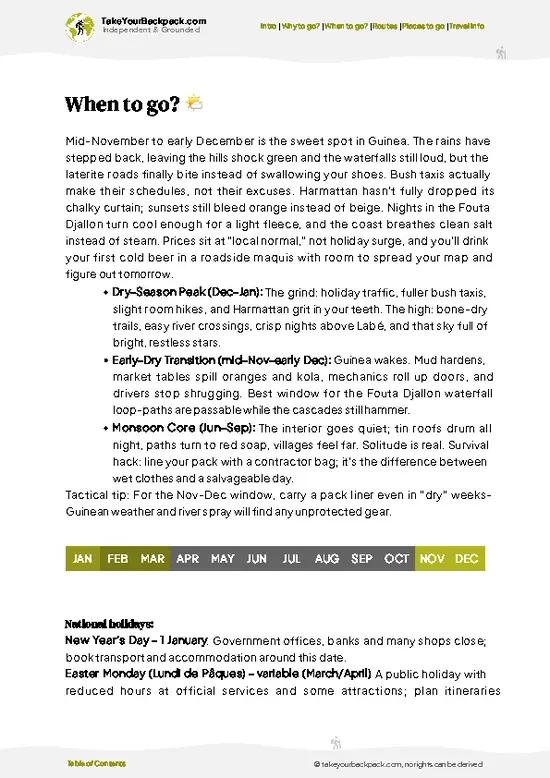
  • Weather: The dry season from November to April is your golden window. Expect clear skies and trails that don’t turn into mud baths. The rainy season (May to October) floods paths and can make some areas inaccessible, so unless you’re into impromptu river crossings, avoid it.

  • Temperature: Daytime temps hover around 25-30°C (77-86°F) in the dry season—perfect for trekking without overheating. Nights can dip to 15°C (59°F), so pack a light jacket. The wet season is warmer but stickier, with highs pushing 32°C (90°F) and humidity that saps energy fast.

  • Daylight Hours: Daylight is fairly consistent year-round, roughly 11-12 hours. But during the dry season, clearer skies mean you get more usable daylight for hiking and exploring without the threat of sudden downpours cutting your day short.
read more 👉

  • Weather: The dry season from November to April is your golden window. Expect clear skies and trails that don’t turn into mud baths. The rainy season (May to October) floods paths and can make some areas inaccessible, so unless you’re into impromptu river crossings, avoid it.

  • Temperature: Daytime temps hover around 25-30°C (77-86°F) in the dry season—perfect for trekking without overheating. Nights can dip to 15°C (59°F), so pack a light jacket. The wet season is warmer but stickier, with highs pushing 32°C (90°F) and humidity that saps energy fast.

  • Daylight Hours: Daylight is fairly consistent year-round, roughly 11-12 hours. But during the dry season, clearer skies mean you get more usable daylight for hiking and exploring without the threat of sudden downpours cutting your day short.

  • Crowds: Fouta Djallon isn’t exactly overrun, but the dry season sees a modest uptick in visitors, especially around Christmas and Easter. If you want solitude, aim for shoulder months like November or March—still dry, fewer people.

  • Seasonal Activities: Dry season is prime for trekking, waterfall visits, and village stays. The wet season brings lush greenery and swollen rivers, great for photography but tough for hiking. Some locals celebrate festivals in December, adding cultural spice to your trip.

  • Price Fluctuations: Expect slightly higher prices during the dry season when demand peaks. Off-season (rainy months) can mean cheaper accommodation and transport, but you pay in comfort and accessibility.


Pro-tip: Book your trip for late November or early March to snag the sweet spot—dry trails, manageable crowds, and better rates before the high season frenzy kicks in.


source: climatestotravel.comJANJanuary: excellent for travelingFEBFebruary: excellent for travelingMARMarch: highly recommended for travelingAPRApril: highly recommended for travelingMAYMay: fair for travelingJUNJune: below average for travelingJULJuly: below average for travelingAUGAugust: below average for travelingSEPSeptember: fair for travelingOCTOctober: fair for travelingNOVNovember: highly recommended for travelingDECDecember: excellent for traveling
when-to-go

✈️ The backpacker research shortcutGuinea Travel Guide

An offline-friendly backpacking guide with optimized travel routes, ranked highlights, transport advice, and the best areas to stay.
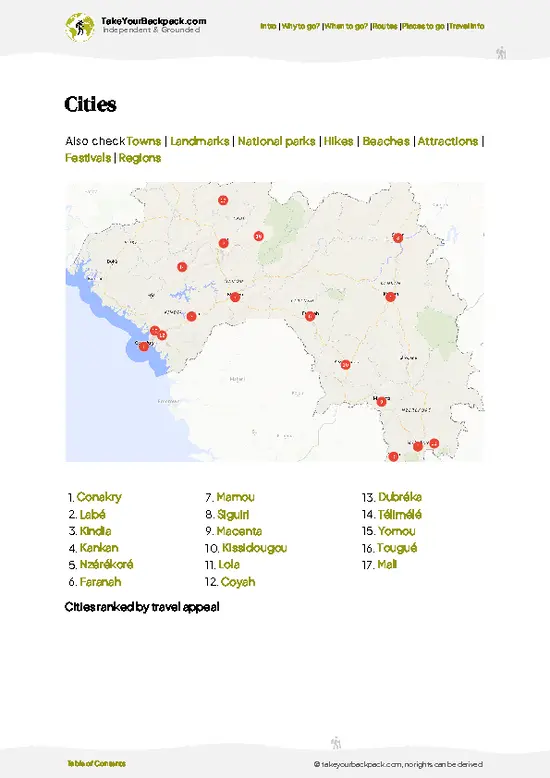
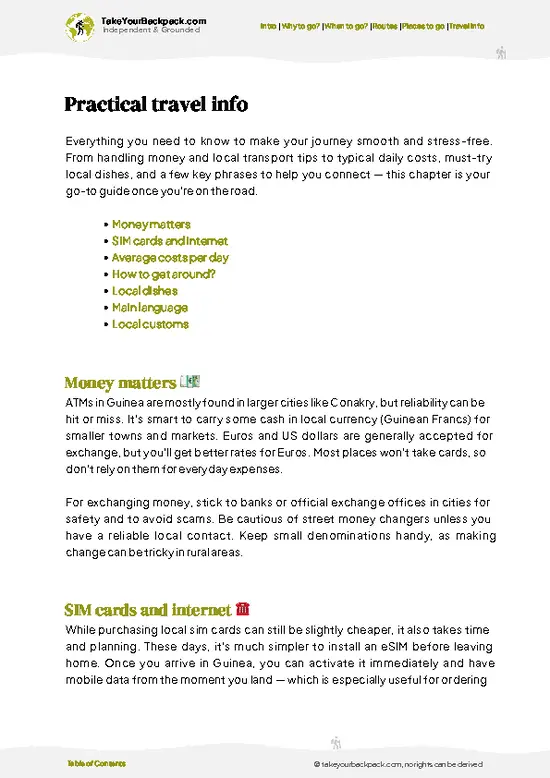
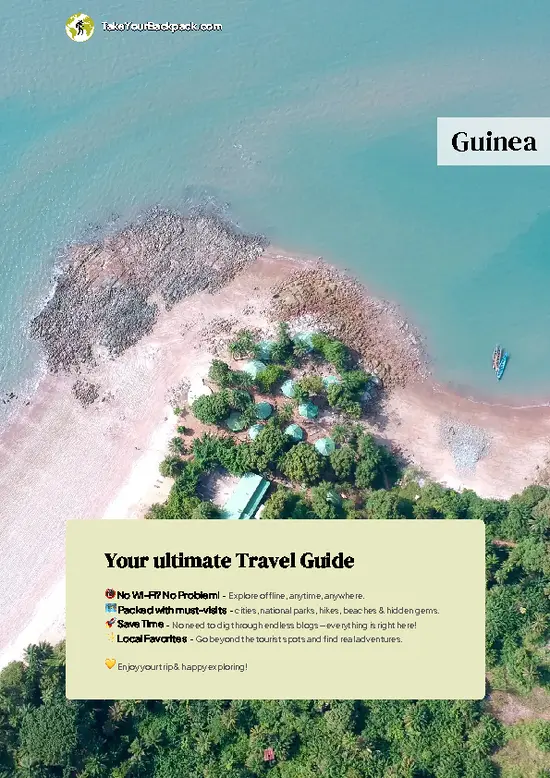
example page 0 from our offline Travel Guide for Guinea
example page 1 from our offline Travel Guide for Guinea
example page 2 from our offline Travel Guide for Guinea
example page 3 from our offline Travel Guide for Guinea
example page 4 from our offline Travel Guide for Guinea
example page 5 from our offline Travel Guide for Guinea
example page 6 from our offline Travel Guide for Guinea
example page 7 from our offline Travel Guide for Guinea
The digital guide (282 pages) contains:
67 highlights, ranked by travel appeal
Optimized 5, 10 & 15-day travel routes
Cities, national parks, landmarks, beaches
How to get around
Offline-friendly for travel without Wi-Fi
👉 Click to see all 30+ guide features

📅 Plan smarter in minutes, not weeks
Month by month travel advice
Festivals & national holidays
Budget expectations

🗺️ Go to the right places, skip the overrated ones
Honest pros & cons of destinations
Top hikes, parks & viewpoints
Lesser-known places most travelers miss
Clear “worth it vs skip it” guidance

🛏️ Travel smoothly without rookie mistakes
Best areas to stay
Transport systems explained simply
Common scams & safety advice
SIM cards, money & practical tips

🌍 Understand the country, not just visit it
Culture & traditions
52 Essential phrases & customs
Festivals worth planning around
Traveler-friendly historical context
Insights that make places more meaningful

📱 Built for real travel conditions
Fully downloadable PDF
Works completely offline
Optimized for phone use
Useful in remote areas & buses
Everything in one place
Save weeks of stressful planning
Get instant access to your full guide. 30‑day money-back guarantee.


By proceeding you agree to our terms.
Sent to your inbox immediately after payment • 100% Secure Checkout
Best Backpacking Travel Advisor 2025 tourism awardBest Backpacking
Travel Advisor
2025
What others say about Take Your Backpack Guides:
⭐⭐⭐⭐⭐
Fantastic, amazing amount of information!
⭐⭐⭐⭐⭐
My goodness this is amazing, it's what I've been looking for hats off too you!
⭐⭐⭐⭐⭐
I think this is absolutely BRILLIANT
⭐⭐⭐⭐
Very complete and informative. It's still missing places, but I gotta to commend you
⭐⭐⭐⭐⭐
This is truly amazing, thank you, can't wait to explore it with my kids!
⭐⭐⭐⭐⭐
Awesome resource, thank you!
⭐⭐⭐⭐⭐
This is amazing! Can't wait to explore the ones I haven't seen
⭐⭐⭐⭐
I love this! Well done, great idea.
⭐⭐⭐⭐⭐
Thanks for taking the time to make this gem!
⭐⭐⭐⭐⭐
This might be the best website I've ever seen.
⭐⭐⭐⭐⭐
Congratulations, and thank you so much for your work; it's incredibly valuable.
⭐⭐⭐⭐
In all seriousness I think you did a great job pointing out the important spots
⭐⭐⭐⭐⭐
10/10 very good
⭐⭐⭐⭐⭐
As someone who's only just starting to visit regularly this is awesome, thank you.
⭐⭐⭐⭐
Thank you very much! I'm going to visit my dad, it's going to be very useful!
⭐⭐⭐⭐⭐
This is really cool! We'll be travelling for the first time and this definitely come in handy.
⭐⭐⭐⭐⭐
You are now our minister of culture, congratulations 👨‍💼
⭐⭐⭐⭐⭐
Just wanted to tell you that this is a pearl! Going to follow your recommendations.
⭐⭐⭐⭐⭐
This is so cool. I'll definitely be using the resource for my travels soon.
⭐⭐⭐⭐⭐
This is very impressive! Good work.
⭐⭐⭐⭐⭐
This is an amazing and informative site. Very well done!

🛏️ Where to stay?Best areas to stay in Guinea

In the heart of Fouta Djallon, you’ll find a few standout spots that cater to backpackers like a warm hug after a long trek.

Labé is your go-to hub. It’s bustling yet manageable, with a vibrant market scene that’s perfect for mingling. Grab a local meal and chat with vendors; they’re often eager to share stories. The town’s central location makes it a strategic base for exploring the surrounding waterfalls and hiking trails.

Then there’s Dalaba, a quieter alternative. It’s nestled in the mountains, offering stunning views and a chill vibe. The locals are friendly, and you’ll find plenty of … read more 👉
In the heart of Fouta Djallon, you’ll find a few standout spots that cater to backpackers like a warm hug after a long trek.

Labé is your go-to hub. It’s bustling yet manageable, with a vibrant market scene that’s perfect for mingling. Grab a local meal and chat with vendors; they’re often eager to share stories. The town’s central location makes it a strategic base for exploring the surrounding waterfalls and hiking trails.

Then there’s Dalaba, a quieter alternative. It’s nestled in the mountains, offering stunning views and a chill vibe. The locals are friendly, and you’ll find plenty of opportunities to connect with fellow travelers. It’s a great spot for those looking to unwind after a day of hiking.

Don’t overlook Faranah, either. This town has a laid-back atmosphere and is known for its welcoming spirit. It’s less touristy, which means you can experience authentic Guinean life. Plus, it’s a good launching point for exploring nearby natural wonders.

Each of these places offers a unique flavor of Fouta Djallon. Choose wisely based on your priorities—whether it’s socializing, comfort, or adventure. You’ll find that each decision shapes your experience, so lean into what feels right for you.

🚌 Getting aroundGetting around like a local

Fouta Djallon is a world where time dances to its own rhythm. Schedules? They’re more like suggestions here, where the landscape is as unpredictable as the weather. You’ll find yourself in a vibrant tapestry of rolling hills, cascading waterfalls, and bustling markets, all woven together by a network of transport options that range from the reliable to the downright adventurous. This isn’t a place for the rigid planner; it’s for those who embrace the chaos and let the journey unfold. Whether you’re hopping on a shared taxi or navigating a winding road in a bush taxi, every ride is an opportunity to connect with locals and soak in the stunning scenery.


  • Shared Taxis: These are your go-to for quick hops between towns. Expect to pay around 5,000 to 10,000 GNF for a ride, depending on distance.
read more 👉
Fouta Djallon is a world where time dances to its own rhythm. Schedules? They’re more like suggestions here, where the landscape is as unpredictable as the weather. You’ll find yourself in a vibrant tapestry of rolling hills, cascading waterfalls, and bustling markets, all woven together by a network of transport options that range from the reliable to the downright adventurous. This isn’t a place for the rigid planner; it’s for those who embrace the chaos and let the journey unfold. Whether you’re hopping on a shared taxi or navigating a winding road in a bush taxi, every ride is an opportunity to connect with locals and soak in the stunning scenery.


  • Shared Taxis: These are your go-to for quick hops between towns. Expect to pay around 5,000 to 10,000 GNF for a ride, depending on distance. They usually run from dawn until dusk, but don’t be surprised if they leave when full, which can mean waiting a bit. Comfort varies, but you’ll get to chat with locals and maybe even share some snacks.


  • Bush Taxis: A bit more adventurous, these are the backbone of Fouta Djallon transport. Prices range from 10,000 to 20,000 GNF, and they can take you to more remote areas. They leave when full, which can mean a wait, but the ride is often filled with laughter and stories. Just brace yourself for a bumpy ride; it’s all part of the experience.


  • Motorbike Taxis (Zemidjans): For those who crave speed and a bit of wind in their hair, these are a fun option. Fares are typically around 2,000 to 5,000 GNF for short distances. They’re quick and can navigate through tight spots, but hold on tight! It’s a thrilling way to see the landscape up close.


  • Walking: Don’t underestimate the power of your own two feet. Many of the best views and experiences are just a hike away. It’s free, and you’ll get to interact with locals in a way that no taxi can offer. Just make sure to wear sturdy shoes and carry plenty of water.


For a master tactical tip: always ask locals about the best times to travel. They know the rhythms of the region better than any guidebook. Early mornings often mean fewer crowds and cooler temperatures, while late afternoons can bring stunning sunsets. Embrace the flow, and let Fouta Djallon reveal its secrets to you.

🍲 FoodLocal Cuisine & Drinks

In the heart of Fouta Djallon, food is a celebration of local culture. You can’t miss the fufu, a starchy staple made from cassava or yam, often served with a rich, spicy sauce. Pair it with soupou kandja, a palm nut soup that’s both hearty and comforting. The flavors are bold, and the aromas waft through the air, inviting you to dig in.

Street food is where the magic happens. Vendors line the bustling markets, grilling brochettes of marinated meat that sizzle and smoke, their savory scent mingling with the sweetness of fried plantains. Grab a plate and enjoy it with a side of attieke, a fermented cassava dish that adds a tangy twist.

For drinks, try the local ginger beer—it’s refreshing and packs a spicy kick. You’ll find it in casual cafés or served from colorful stalls. Don’t shy away … read more 👉
In the heart of Fouta Djallon, food is a celebration of local culture. You can’t miss the fufu, a starchy staple made from cassava or yam, often served with a rich, spicy sauce. Pair it with soupou kandja, a palm nut soup that’s both hearty and comforting. The flavors are bold, and the aromas waft through the air, inviting you to dig in.

Street food is where the magic happens. Vendors line the bustling markets, grilling brochettes of marinated meat that sizzle and smoke, their savory scent mingling with the sweetness of fried plantains. Grab a plate and enjoy it with a side of attieke, a fermented cassava dish that adds a tangy twist.

For drinks, try the local ginger beer—it’s refreshing and packs a spicy kick. You’ll find it in casual cafés or served from colorful stalls. Don’t shy away from palm wine, either; it’s a communal drink, often shared among friends, and offers a taste of the region’s traditions.

Dining here is relaxed. Expect to share meals, and don’t be surprised if you’re invited to join a group. Just remember to eat with your right hand—it’s a sign of respect. Embrace the flavors and the warmth of the people; it’s all part of the experience.

Other destinations worth considering

Fouta Djallon isn’t the only highlight in Guinea. Explore all what Guinea has to offer.
Country photo of Guinea

We 💚 feedbackIs it worth it?

Fouta Djallon is a breath of fresh air—literally and figuratively. The lush landscapes and cool mountain breezes are a welcome escape from the heat of the coast. Don’t miss the local markets; they’re vibrant with life and flavors that’ll surprise you. Just a heads-up: the roads can be rough, so pack your patience. But trust me, the warmth of the people and the stunning waterfalls make every bump worth it. You’ll leave feeling like you’ve discovered a piece of Guinea that few outsiders ever see.

✍️ Help improve this page!
The information on this page is based on in-depth research, insights shared by experienced travelers, and feedback from the local travel community in Guinea. While every effort is made to keep the information accurate and current, conditions can change — so if you spot anything incorrect or outdated, please get in touch.


🙋‍♂️ Give feedback

👋 Meet the founderWho’s Behind Take Your Backpack?

Johan, backpacker and founder of TakeYourBackpackHi, I’m Johan (Netherlands 🇳🇱), the creator of TakeYourBackpack. Over the past decade, I’ve backpacked through 80+ countries across six continents, gaining extensive experience with independent travel, long-term trips, and overland routes.

This site is built on a combination of firsthand travel experience and carefully curated insights from other backpackers. Many guides are based on places I’ve personally visited, while others bring together tips, observations, and practical advice shared by trusted travelers I’ve met along the way.

The goal is to provide realistic, experience-driven guidance — not generic itineraries — so you can explore destinations with better context, clearer expectations, and more confidence.

Get full Guinea guide •
Instant download • 67 highlights • Full Offline guide