
×

Guyana🇬🇾 | hikesRupununi Savannahsopen grasslands, scattered wetlands, distant mountains | things to do and best time to go

Explore Emancipation DayExplore Turtle Mountain Trail

Backpacking in Rupununi Savannahs
By Johan Kruseman 🇳🇱 | Updated October 15, 2026

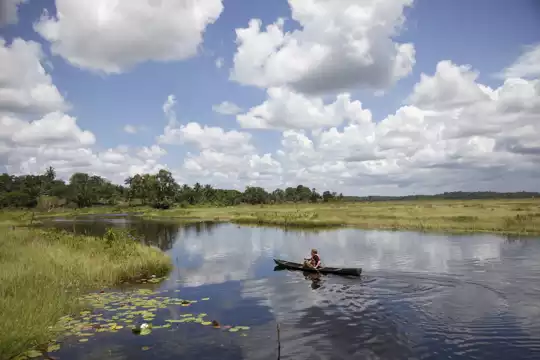
Most people picture the Rupununi Savannahs as empty, flat grassland you just drive across, not something you actually hike. That’s wrong; this southern Guyana region, stretching south of Lethem toward the Brazilian border, is a huge, living landscape you move through slowly, on foot, feeling every kilometer. Hiking here means long, hot, exposed days over rolling savannah, termite mounds, gallery forest, and scattered Amerindian villages, with sudden river crossings and low ridges that give you wide, cinematic views at sunset. The payoff is big sky, wildlife, and raw remoteness, but the heat, distance, and lack of shade make it punishing if you’re not conditioned. There’s no neat trailhead; you usually reach starting points by rough 4x4 or shared minibus, not straightforward public buses, so logistics bite harder than on coastal or Kaieteur-area hikes. Compared to Guyana’s jungle treks, Rupununi is less steep, more mental, and far more exposed.

Discover everything you want to know in the 📖 Guyana Travel Guide.
Best time to go: August - April
Duration: 4 to 7 days
Distance: 50 kilometers
Total ascent: 500 meters


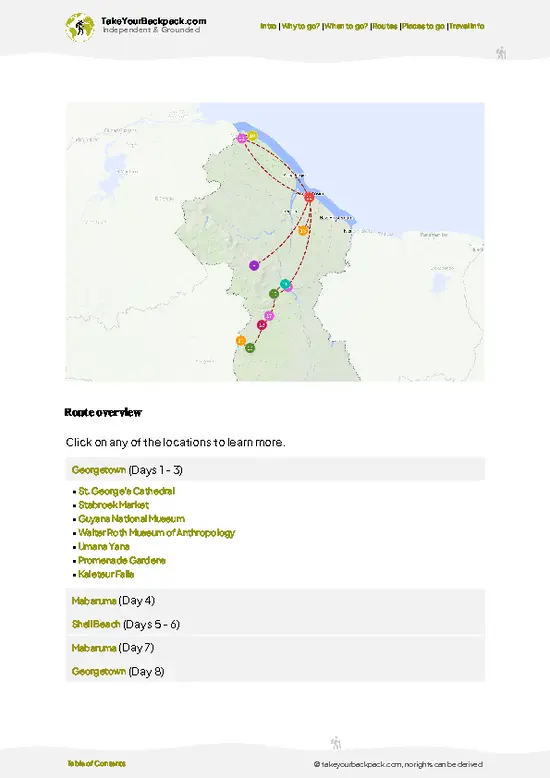
example page 0 from our offline Travel Guide for Guyana
example page 1 from our offline Travel Guide for Guyana
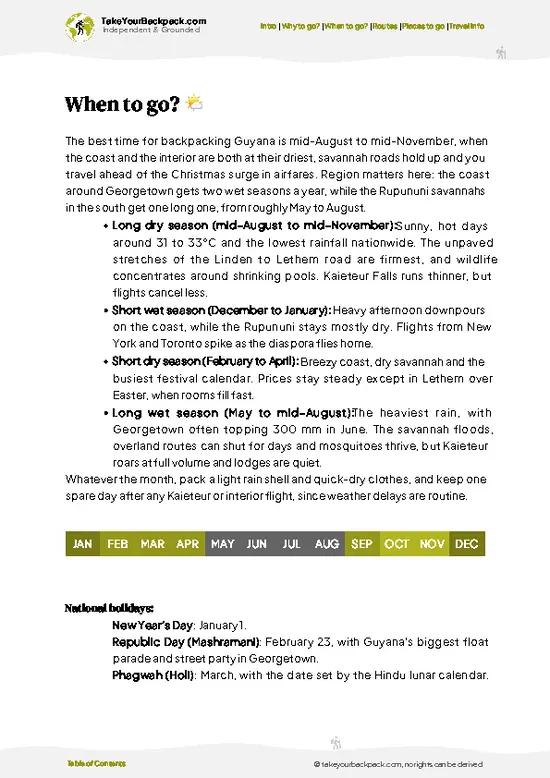
example page 2 from our offline Travel Guide for Guyana
example page 3 from our offline Travel Guide for Guyana
example page 4 from our offline Travel Guide for Guyana
example page 5 from our offline Travel Guide for Guyana
example page 6 from our offline Travel Guide for Guyana
example page 7 from our offline Travel Guide for Guyana
Loading the map 🌍
CLICK TO FILTER
cities
towns
villages
landmarks
national parks
hikes
beaches
attractions
festivals
regions
SHOW COUNTRY’S BESTSHOW ALL

✨ Why go?
Ranked #99 hike in Guyana
What sets this place apart

The Rupununi Savannahs in Guyana pull backpackers in with a magnetic blend of effort and reward. You’ll find yourself striding through vast, open landscapes where the horizon stretches endlessly, and the air buzzes with life. The scenery-to-effort ratio here is unbeatable; you can tackle trails that range from easy strolls to more challenging treks, all while soaking in the sights of unique wildlife and stunning sunsets.

Getting there is a breeze. Public transport options are available, making it easy to hop on a bus or shared taxi from nearby towns. Plus, the low cost of both transport and accommodation means you can stretch your budget without sacrificing experience.

This hike fits seamlessly into a longer backpacking route through Guyana, allowing you to explore the rich culture and … read more 👉
The Rupununi Savannahs in Guyana pull backpackers in with a magnetic blend of effort and reward. You’ll find yourself striding through vast, open landscapes where the horizon stretches endlessly, and the air buzzes with life. The scenery-to-effort ratio here is unbeatable; you can tackle trails that range from easy strolls to more challenging treks, all while soaking in the sights of unique wildlife and stunning sunsets.

Getting there is a breeze. Public transport options are available, making it easy to hop on a bus or shared taxi from nearby towns. Plus, the low cost of both transport and accommodation means you can stretch your budget without sacrificing experience.

This hike fits seamlessly into a longer backpacking route through Guyana, allowing you to explore the rich culture and diverse ecosystems of the region. After a day of hiking, the first cold beer at a local bar tastes like victory. The burn in your legs transforms into a sense of accomplishment as you take in the breathtaking views, reminding you why you ventured out in the first place.

💡 HighlightsEssential experiences to have while hiking the Rupununi Savannahs

  • Kanuku Mountains viewpoints — low granite ridges that rise out of the flat savannah, giving wide, easy-to-reach lookout points. Hikes here feel airy and open (not claustrophobic rainforest), with panoramic sunrise/sunset views and a real edge habitat where forest species meet savannah birds and mammals — great for spotting macaws, toucans and monkeys against a huge sky.
  • Endless savannah panoramas & sunsets — the Rupununi’s big win: uninterrupted horizons and a cathedral-sized sky. Walking across the grasslands at golden hour is a different sort of hike — long vistas, sun-soaked grasses, and dramatic cloudscapes that photographers and slow walkers love. The sense of remoteness and silence sets it apart from denser jungle trails.
  • Orinduik Falls (Ireng River) — a chunk of granite rapids and
… read more 👉
  • Kanuku Mountains viewpoints — low granite ridges that rise out of the flat savannah, giving wide, easy-to-reach lookout points. Hikes here feel airy and open (not claustrophobic rainforest), with panoramic sunrise/sunset views and a real edge habitat where forest species meet savannah birds and mammals — great for spotting macaws, toucans and monkeys against a huge sky.
  • Endless savannah panoramas & sunsets — the Rupununi’s big win: uninterrupted horizons and a cathedral-sized sky. Walking across the grasslands at golden hour is a different sort of hike — long vistas, sun-soaked grasses, and dramatic cloudscapes that photographers and slow walkers love. The sense of remoteness and silence sets it apart from denser jungle trails.
  • Orinduik Falls (Ireng River) — a chunk of granite rapids and pools on the Brazil border that’s often part of multi-day treks. It’s unexpectedly rugged and swimmable, with sculpted rock, clear pools and the sound of rushing water — a nice change from flat savannah hiking and an awesome place to cool off after a long walk.
  • Riverbank wildlife encounters — small river hikes and dawn paddles along Rupununi tributaries bring close-up views of capybaras, caiman, giant river otters and (occasionally) jaguar sign. The savannah-river interface concentrates wildlife, so a short detour to the waterline often yields far more and different animals than a jungle trail.
  • Community-led village trails (Surama, Rewa, Karanambu) — guided walks with Makushi or Wapishana trackers who read animal trails, point out medicinal plants and set up authentic homestay stops. These hikes are cultural and practical: local knowledge massively ups your chances of seeing wildlife and gives context to the landscape — not something most commercial rainforest hikes offer.
Spotted a mistake or missing something? Contact us.

Things to do near Rupununi Savannahs

Ratings based on Tripadvisor reviews. When you book through this link, you support our work at no extra cost to you.

🌤️ When to go?Seasonal considerations and timing

  • Weather: The dry season from August to November is your best bet. Trails firm up, rivers drop to manageable levels, and the relentless rain that turns the savannah into a muddy slog eases off. Avoid the wet season (May to July) unless you’re ready to wrestle with torrential downpours and flooded paths.
  • Temperature: Expect highs around 30-33°C (86-91°F) during the day, with nights cooling to a comfortable 20-22°C (68-72°F). The dry season offers more stable temps, making long hikes less punishing and nights perfect for campfire stories.
  • Daylight Hours: Roughly 11 to 12 hours of daylight year-round, but the dry season’s clearer skies mean you’ll get more usable light for trekking and photography. Early mornings and late afternoons are golden hours for both views and avoiding the midday heat.
… read more 👉
  • Weather: The dry season from August to November is your best bet. Trails firm up, rivers drop to manageable levels, and the relentless rain that turns the savannah into a muddy slog eases off. Avoid the wet season (May to July) unless you’re ready to wrestle with torrential downpours and flooded paths.
  • Temperature: Expect highs around 30-33°C (86-91°F) during the day, with nights cooling to a comfortable 20-22°C (68-72°F). The dry season offers more stable temps, making long hikes less punishing and nights perfect for campfire stories.
  • Daylight Hours: Roughly 11 to 12 hours of daylight year-round, but the dry season’s clearer skies mean you’ll get more usable light for trekking and photography. Early mornings and late afternoons are golden hours for both views and avoiding the midday heat.
  • Crowds: The Rupununi remains off the beaten path, so crowds are minimal year-round. The dry season sees a slight uptick in eco-tourists and birdwatchers, but you’ll still have vast stretches of wilderness largely to yourself.
  • Seasonal Activities: Dry months coincide with wildlife spotting peaks—giant river otters, capybaras, and exotic birds become more visible. Local ranches open their gates for cultural tours and horseback rides, adding layers to your adventure.
  • Price Fluctuations: Expect higher rates during the dry season due to demand, especially for guided tours and lodges. Booking ahead can lock in better deals, but the payoff is worth it when the weather cooperates.
Pro-tip: Time your trip for late August to early October—dry trails, active wildlife, and fewer tourists combine for a Rupununi experience that rewards every step with raw, untamed beauty.


source: climatestotravel.comJANJanuary: good for travelingFEBFebruary: good for travelingMARMarch: good for travelingAPRApril: good for travelingMAYMay: fair for travelingJUNJune: fair for travelingJULJuly: fair for travelingAUGAugust: excellent for travelingSEPSeptember: excellent for travelingOCTOctober: excellent for travelingNOVNovember: highly recommended for travelingDECDecember: good for traveling
when-to-go

✈️ The backpacker research shortcutGuyana Travel Guide

An offline-friendly backpacking guide with optimized travel routes, ranked highlights, transport advice, and the best areas to stay.
example page 0 from our offline Travel Guide for Guyana
example page 1 from our offline Travel Guide for Guyana
example page 2 from our offline Travel Guide for Guyana
example page 3 from our offline Travel Guide for Guyana
example page 4 from our offline Travel Guide for Guyana
example page 5 from our offline Travel Guide for Guyana
example page 6 from our offline Travel Guide for Guyana
example page 7 from our offline Travel Guide for Guyana
The digital guide (161 pages) contains:
✅ 43 highlights, ranked by travel appeal
✅ Optimized 5, 10 & 15-day travel routes
✅ Cities, national parks, landmarks, beaches
✅ How to get around
✅ Offline-friendly for travel without Wi-Fi
👉 Click to see all 30+ guide features

📅 Plan smarter in minutes, not weeks
✅ Month by month travel advice
✅ Festivals & national holidays
✅ Budget expectations

🗺️ Go to the right places, skip the overrated ones
✅ Honest pros & cons of destinations
✅ Top hikes, parks & viewpoints
✅ Lesser-known places most travelers miss
✅ Clear “worth it vs skip it” guidance

🛏️ Travel smoothly without rookie mistakes
✅ Best areas to stay
✅ Transport systems explained simply
✅ Common scams & safety advice
✅ SIM cards, money & practical tips

🌍 Understand the country, not just visit it
✅ Culture & traditions
✅ Local customs
✅ Festivals worth planning around
✅ Traveler-friendly historical context
✅ Insights that make places more meaningful

📱 Built for real travel conditions
✅ Fully downloadable PDF
✅ Works completely offline
✅ Optimized for phone use
✅ Useful in remote areas & buses
✅ Everything in one place
Stop searching, start planning
Get instant access to your full guide. 30‑day money-back guarantee.
+ Add another guide for just

By proceeding you agree to our terms.
Sent to your inbox immediately after payment • 100% Secure Checkout
Best Backpacking Travel Advisor 2025 tourism awardBest Backpacking
Travel Advisor
2025
What others say about Take Your Backpack Guides:
⭐⭐⭐⭐⭐
Fantastic, amazing amount of information!
⭐⭐⭐⭐⭐
My goodness this is amazing, it's what I've been looking for hats off too you!
⭐⭐⭐⭐⭐
I think this is absolutely BRILLIANT
⭐⭐⭐⭐
Very complete and informative. It's still missing places, but I gotta to commend you
⭐⭐⭐⭐⭐
This is truly amazing, thank you, can't wait to explore it with my kids!
⭐⭐⭐⭐⭐
Awesome resource, thank you!
⭐⭐⭐⭐⭐
This is amazing! Can't wait to explore the ones I haven't seen
⭐⭐⭐⭐
I love this! Well done, great idea.
⭐⭐⭐⭐⭐
Thanks for taking the time to make this gem!
⭐⭐⭐⭐⭐
This might be the best website I've ever seen.
⭐⭐⭐⭐⭐
Congratulations, and thank you so much for your work; it's incredibly valuable.
⭐⭐⭐⭐
In all seriousness I think you did a great job pointing out the important spots
⭐⭐⭐⭐⭐
10/10 very good
⭐⭐⭐⭐⭐
As someone who's only just starting to visit regularly this is awesome, thank you.
⭐⭐⭐⭐
Thank you very much! I'm going to visit my dad, it's going to be very useful!
⭐⭐⭐⭐⭐
This is really cool! We'll be travelling for the first time and this definitely come in handy.
⭐⭐⭐⭐⭐
You are now our minister of culture, congratulations 👨‍💼
⭐⭐⭐⭐⭐
Just wanted to tell you that this is a pearl! Going to follow your recommendations.
⭐⭐⭐⭐⭐
This is so cool. I'll definitely be using the resource for my travels soon.
⭐⭐⭐⭐⭐
This is very impressive! Good work.
⭐⭐⭐⭐⭐
This is an amazing and informative site. Very well done!

🛏️ Where to stay?Best areas and accommodation options

If you enjoy meeting fellow travelers, consider choosing hostels with high ratings for atmosphere. On the other hand, if you prefer having your own space, a hotel might be a better option.

🥾 Hike detailsEverything you need to know before hiking Rupununi Savannahs

Total Distance: Approximately 30 kilometers (about 18.6 miles) round trip.

Estimated Duration: Expect to spend around 10 to 12 hours on the trail, depending on your pace and how often you stop to enjoy the scenery.

Difficulty Level: Moderate to challenging. The trail has some uneven terrain and can get quite hot, so be prepared for a workout.

Starting Point: The trail typically starts near the village of Lethem. You can reach Lethem by taking a bus or minibus from Georgetown. The journey will take around 12 to 16 hours, so pack snacks and maybe a good book for the ride.

Major Landmarks Along … read more 👉
Total Distance: Approximately 30 kilometers (about 18.6 miles) round trip.

Estimated Duration: Expect to spend around 10 to 12 hours on the trail, depending on your pace and how often you stop to enjoy the scenery.

Difficulty Level: Moderate to challenging. The trail has some uneven terrain and can get quite hot, so be prepared for a workout.

Starting Point: The trail typically starts near the village of Lethem. You can reach Lethem by taking a bus or minibus from Georgetown. The journey will take around 12 to 16 hours, so pack snacks and maybe a good book for the ride.

Major Landmarks Along the Route:
  • Rupununi River: A picturesque spot where you can take a break and enjoy the view.
  • Rock formations: Unique geological features that make for great photo ops.
  • Local villages: You might pass through a few small communities, where you can interact with locals and learn about their culture.

Type of Terrain and Scenery: The trail features a mix of grassy savannah, rocky outcrops, and occasional forested areas. You’ll be treated to wide-open spaces, rolling hills, and stunning views of the Rupununi landscape.

Typical Vegetation and Wildlife:
  • Vegetation: Expect to see tall grasses, scattered trees, and shrubs typical of savannah ecosystems.
  • Wildlife: Keep an eye out for capybaras, various bird species (like macaws and toucans), and possibly even jaguars if you’re lucky. Don’t forget to watch for snakes, too!

Pack plenty of water, wear sturdy shoes, and bring a good hat—you’re going to need it! The trail is beautiful, but it can be tough, so take your time and enjoy the adventure.
⚠️ Hiking info can sometimes be outdated or inaccurate. Before you hit the trail, check the latest conditions with locals. If you do spot anything that's off, I'd love to hear from you, so I can update it for fellow travelers.

🛡️ SafetyStaying Safe: What Travelers Should Know

The Rupununi Savannahs offer a dynamic hiking experience that rewards your effort with sweeping vistas and the thrill of untamed nature. Expect weather shifts; the sun can blaze, then clouds roll in, so pack a lightweight rain jacket. The terrain is generally manageable, but watch for uneven footing and the occasional muddy patch.

Stay alert for wildlife—capybaras and caimans are common, but they usually keep their distance. If you spot a jaguar, admire from afar; respect their space.

Timing is key. Early mornings are cooler and the wildlife is more active. Carry enough water and snacks to keep your energy up. Trail etiquette matters; stick to paths and leave no trace.

With the right preparation, you’ll find the journey through the savannahs is as rewarding as the destination. Embrace … read more 👉
The Rupununi Savannahs offer a dynamic hiking experience that rewards your effort with sweeping vistas and the thrill of untamed nature. Expect weather shifts; the sun can blaze, then clouds roll in, so pack a lightweight rain jacket. The terrain is generally manageable, but watch for uneven footing and the occasional muddy patch.

Stay alert for wildlife—capybaras and caimans are common, but they usually keep their distance. If you spot a jaguar, admire from afar; respect their space.

Timing is key. Early mornings are cooler and the wildlife is more active. Carry enough water and snacks to keep your energy up. Trail etiquette matters; stick to paths and leave no trace.

With the right preparation, you’ll find the journey through the savannahs is as rewarding as the destination. Embrace the grit of the trail, and you’ll be rewarded with the raw beauty of Guyana’s wild heart.

FAQCommon questions from travelers

The Rupununi Savannahs hike typically takes 3 to 5 days depending on the route and pace. Distances covered can range from 40 to 70 kilometers. Weather and terrain conditions can affect the duration significantly.
The hike is moderately difficult due to uneven terrain, potential river crossings, and tropical weather conditions. It requires good physical fitness and experience with multi-day hikes in remote areas. Expect heat, humidity, and occasional rain.
Yes, a local guide is highly recommended for navigation and safety, as the area is remote and trails are not well-marked. A permit is usually required, which can be arranged through local tour operators or the Rupununi district office. Costs vary but expect around $20 to $50 USD for permits.
⚠️ Things can change over time, so always validate details locally before you go.

Ideas for continuing your journey

Rupununi Savannahs isn’t the only highlight in Guyana. Explore all what Guyana has to offer.
Country photo of Guyana

We 💚 feedbackFinal thoughts on hiking the Rupununi Savannahs

The Rupununi Savannahs pulse with life. You’ll feel the heat on your skin as you trek through the tall grasses, and the vibrant sounds of wildlife will keep you company. The best surprise? Stumbling upon a local village where the warmth of the people rivals the sun. But beware: the trails can be rough, and the weather unpredictable. Pack your patience and an open heart. The reward? A sunset that paints the sky like a masterpiece, leaving you breathless and grateful.

✍️ Help improve this page!
The information on this page is based on in-depth research, insights shared by experienced travelers, and feedback from the local travel community in Guyana. While every effort is made to keep the information accurate and current, conditions can change — so if you spot anything incorrect or outdated, please get in touch.


🙋‍♂️ Give feedback

👋 Meet the founderWho’s Behind Take Your Backpack?

Johan, backpacker and founder of TakeYourBackpackHi, I’m Johan (Netherlands 🇳🇱), the creator of TakeYourBackpack. Over the past 3 decades, I’ve backpacked through 90+ countries across six continents, gaining extensive experience with independent travel, long-term trips, and overland routes.

This site is built on a combination of firsthand travel experience and carefully curated insights from other backpackers. Many guides are based on places I’ve personally visited, while others bring together tips, observations, and practical advice shared by trusted travelers I’ve met along the way.

The goal is to provide realistic, experience-driven guidance — not generic itineraries — so you can explore destinations with better context, clearer expectations, and more confidence.