


×

Guyana🇬🇾 | festivalsPhagwahAbir powder, Holika bonfire, chowtal singing, spring full moon | things to do and best time to go

Explore MashramaniExplore Rupununi Rodeo

Backpacking in Phagwah
🌟 Highlightfestival ranked #3
By Johan Kruseman 🇳🇱 | Updated October 19, 2026

Phagwah is the Hindu spring festival of color in Guyana, and by mid-morning the roads of the coastal belt are smeared magenta, yellow and green. Crowds in white clothes (soon to be anything but) hurl abir, a fine red powder, and squirt scented water at anyone in range. Phagwah falls on the March full moon and is a public holiday, so offices close and the celebrations run through villages and towns along the coast, from Georgetown east into Berbice and west across the Essequibo. The soundtrack is chowtal, folk singing driven by dholak drums and brass cymbals, drifting out of temple yards and street corners. Expect powder in your teeth, sticky hands and strangers pressing sweet mithai into your palm. The mood is warm and loud, with plenty of laughter at your expense. Wear old white or light cotton you can throw away, and wrap your phone and camera in sealed plastic bags before you head out.

Discover everything you want to know in the 📖 Guyana Travel Guide.


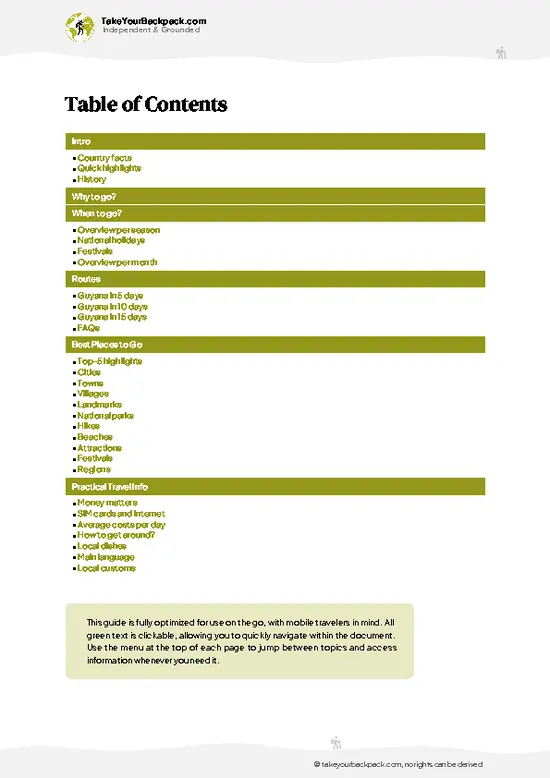
example page 0 from our offline Travel Guide for Guyana
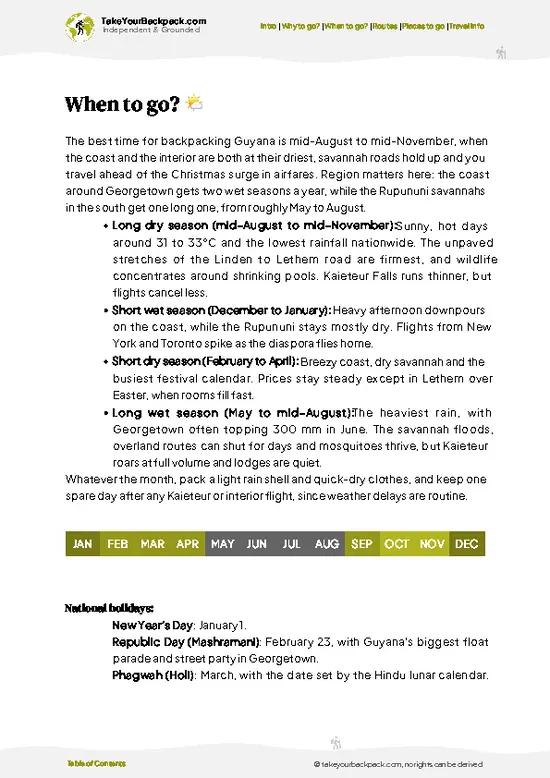
example page 1 from our offline Travel Guide for Guyana
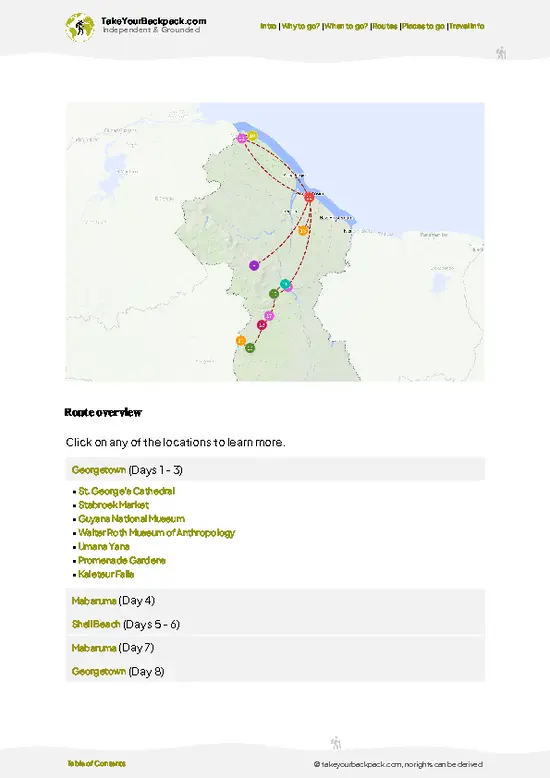
example page 2 from our offline Travel Guide for Guyana
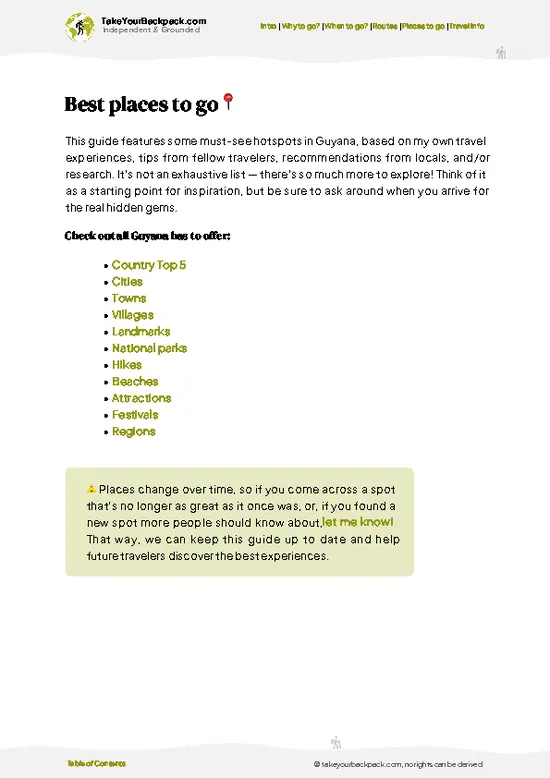
example page 3 from our offline Travel Guide for Guyana
example page 4 from our offline Travel Guide for Guyana
example page 5 from our offline Travel Guide for Guyana
example page 6 from our offline Travel Guide for Guyana
example page 7 from our offline Travel Guide for Guyana
Loading the map 🌍
CLICK TO FILTER
cities
towns
villages
landmarks
national parks
hikes
beaches
attractions
festivals
regions
SHOW COUNTRY’S BESTSHOW ALL

✨ Why go?
Ranked #3 festival in Guyana
Why Phagwah should be on your travel list

Phagwah gives a backpacker something most festivals can’t: an invitation into a family celebration with almost no barrier to entry. Guyana’s Indo-Guyanese community has kept this tradition alive since the indentureship era, and a stranger with a bag of abir is welcomed rather than watched. Within an hour you’re being smeared with powder by people who will then insist you eat at their table. That quick, easy warmth is why travelers shape a March route around it.

The timing is also practical. The March full moon sits in the dry stretch before the long rains, which makes it simple to combine with the interior, such as the Rupununi savannah or Kaieteur Falls. Many people spend the days before in Georgetown, then head to the Corentyne coast in Berbice, where village celebrations feel more local … read more 👉
Phagwah gives a backpacker something most festivals can’t: an invitation into a family celebration with almost no barrier to entry. Guyana’s Indo-Guyanese community has kept this tradition alive since the indentureship era, and a stranger with a bag of abir is welcomed rather than watched. Within an hour you’re being smeared with powder by people who will then insist you eat at their table. That quick, easy warmth is why travelers shape a March route around it.

The timing is also practical. The March full moon sits in the dry stretch before the long rains, which makes it simple to combine with the interior, such as the Rupununi savannah or Kaieteur Falls. Many people spend the days before in Georgetown, then head to the Corentyne coast in Berbice, where village celebrations feel more local and less staged. Since the festival is a community event rather than a ticketed one, entry costs nothing, and you spend only on food, transport and a change of clothes. Few festivals in South America give you this much cultural depth so freely.

💡 HighlightsTop highlights of Phagwah

  1. Abir (colored powder) throwing in the streets: This is what Phagwah is known for. Crowds smear each other with magenta, green and yellow powder and squirt colored water, and by midday the hair, shirts and sidewalks of the neighborhood are all stained. Dress in clothes you will never wear again and keep sunglasses on.
  2. Holika bonfire the night before: Families gather around a pyre built from branches and dry brush, which is lit to mark the burning of Holika. Heat on your face, smoke in your hair, and the chanting around the flames make it the most solemn part of the festival, and the best place to just stand and watch before the color starts.
  3. Mandir (temple) morning prayers and bhajans: Hindu temples in Georgetown and along the coast hold morning prayers with devotional songs, and worshippers
… read more 👉
  1. Abir (colored powder) throwing in the streets: This is what Phagwah is known for. Crowds smear each other with magenta, green and yellow powder and squirt colored water, and by midday the hair, shirts and sidewalks of the neighborhood are all stained. Dress in clothes you will never wear again and keep sunglasses on.
  2. Holika bonfire the night before: Families gather around a pyre built from branches and dry brush, which is lit to mark the burning of Holika. Heat on your face, smoke in your hair, and the chanting around the flames make it the most solemn part of the festival, and the best place to just stand and watch before the color starts.
  3. Mandir (temple) morning prayers and bhajans: Hindu temples in Georgetown and along the coast hold morning prayers with devotional songs, and worshippers arrive in white before the color begins. The harmonium and dholak drive the singing. Visitors are welcome to sit quietly at the back, and shoes come off at the door.
  4. Chowtal singing: Chowtal is a loud folk style in Guyana’s Indo-Guyanese communities, sung in groups with hand cymbals (jhaal) and dholak drums, in Bhojpuri-rooted verses about Krishna and spring. The call-and-response builds to a pitch that you feel in your chest. Catch it at temple compounds and community gatherings in the weeks around Phagwah.
  5. Public Phagwah melas in and around Georgetown: The main public gatherings in the capital include cultural stages with dancers, singers and food stalls. Expect sticky heat, powder in your teeth and queues for fried snacks. Try phulourie (split-pea fritters) with tamarind sauce, and sweet gulab jamun, the standard festival treats.
The item easiest to overlook is the chowtal singing, which happens in temple yards and village halls rather than on the main parade routes, so ask at a local mandir for where a group is gathering.
Spotted a mistake or missing something? Contact us.

🌤️ When to go?When is the celebration of Phagwah?

Phagwah (Holi) falls on the full moon of the Hindu month of Phalguna, usually in March, with the main day of color-throwing in Georgetown and the Hindu villages of Berbice, Essequibo and Demerara, and festivities often running a few days.
  • Best day: Phagwah Day itself, when the Hindu community plays with abir (colored powder) and water from mid-morning. Public events at the National Stadium at Providence and Hindu temple grounds often have chowtal singing on the preceding evenings, with Holikā bonfires the night before.
  • Weather: Expect 27 to 31°C (81 to 88°F), humid, with the odd shower. Bring a white shirt you will never wear again, a zip bag for your phone, sunscreen and sandals that can get soaked.
  • Booking: Reserve a bed two to four weeks ahead. Georgetown rooms can rise 10 to 30 percent around
… read more 👉
Phagwah (Holi) falls on the full moon of the Hindu month of Phalguna, usually in March, with the main day of color-throwing in Georgetown and the Hindu villages of Berbice, Essequibo and Demerara, and festivities often running a few days.
  • Best day: Phagwah Day itself, when the Hindu community plays with abir (colored powder) and water from mid-morning. Public events at the National Stadium at Providence and Hindu temple grounds often have chowtal singing on the preceding evenings, with Holikā bonfires the night before.
  • Weather: Expect 27 to 31°C (81 to 88°F), humid, with the odd shower. Bring a white shirt you will never wear again, a zip bag for your phone, sunscreen and sandals that can get soaked.
  • Booking: Reserve a bed two to four weeks ahead. Georgetown rooms can rise 10 to 30 percent around the holiday. Entry to the events is free.
  • Crowds: Move early. Roads around the main venues and villages clog by midday, and minibuses thin out in the evening.
Arrive the day before, so you can watch the bonfire and be in color by morning.


source: climatestotravel.comJANJanuary: not recommended for travelingFEBFebruary: not recommended for travelingMARMarch: excellent for travelingAPRApril: not recommended for travelingMAYMay: not recommended for travelingJUNJune: not recommended for travelingJULJuly: not recommended for travelingAUGAugust: not recommended for travelingSEPSeptember: not recommended for travelingOCTOctober: not recommended for travelingNOVNovember: not recommended for travelingDECDecember: not recommended for traveling

✈️ The backpacker research shortcutGuyana Travel Guide

An offline-friendly backpacking guide with optimized travel routes, ranked highlights, transport advice, and the best areas to stay.
example page 0 from our offline Travel Guide for Guyana
example page 1 from our offline Travel Guide for Guyana
example page 2 from our offline Travel Guide for Guyana
example page 3 from our offline Travel Guide for Guyana
example page 4 from our offline Travel Guide for Guyana
example page 5 from our offline Travel Guide for Guyana
example page 6 from our offline Travel Guide for Guyana
example page 7 from our offline Travel Guide for Guyana
The digital guide (161 pages) contains:
✅ 43 highlights, ranked by travel appeal
✅ Optimized 5, 10 & 15-day travel routes
✅ Cities, national parks, landmarks, beaches
✅ How to get around
✅ Offline-friendly for travel without Wi-Fi
👉 Click to see all 30+ guide features

📅 Plan smarter in minutes, not weeks
✅ Month by month travel advice
✅ Festivals & national holidays
✅ Budget expectations

🗺️ Go to the right places, skip the overrated ones
✅ Honest pros & cons of destinations
✅ Top hikes, parks & viewpoints
✅ Lesser-known places most travelers miss
✅ Clear “worth it vs skip it” guidance

🛏️ Travel smoothly without rookie mistakes
✅ Best areas to stay
✅ Transport systems explained simply
✅ Common scams & safety advice
✅ SIM cards, money & practical tips

🌍 Understand the country, not just visit it
✅ Culture & traditions
✅ Local customs
✅ Festivals worth planning around
✅ Traveler-friendly historical context
✅ Insights that make places more meaningful

📱 Built for real travel conditions
✅ Fully downloadable PDF
✅ Works completely offline
✅ Optimized for phone use
✅ Useful in remote areas & buses
✅ Everything in one place
Stop searching, start planning
Get instant access to your full guide. 30‑day money-back guarantee.
+ Add another guide for just

By proceeding you agree to our terms.
Sent to your inbox immediately after payment • 100% Secure Checkout
Best Backpacking Travel Advisor 2025 tourism awardBest Backpacking
Travel Advisor
2025
What others say about Take Your Backpack Guides:
⭐⭐⭐⭐⭐
Fantastic, amazing amount of information!
⭐⭐⭐⭐⭐
My goodness this is amazing, it's what I've been looking for hats off too you!
⭐⭐⭐⭐⭐
I think this is absolutely BRILLIANT
⭐⭐⭐⭐
Very complete and informative. It's still missing places, but I gotta to commend you
⭐⭐⭐⭐⭐
This is truly amazing, thank you, can't wait to explore it with my kids!
⭐⭐⭐⭐⭐
Awesome resource, thank you!
⭐⭐⭐⭐⭐
This is amazing! Can't wait to explore the ones I haven't seen
⭐⭐⭐⭐
I love this! Well done, great idea.
⭐⭐⭐⭐⭐
Thanks for taking the time to make this gem!
⭐⭐⭐⭐⭐
This might be the best website I've ever seen.
⭐⭐⭐⭐⭐
Congratulations, and thank you so much for your work; it's incredibly valuable.
⭐⭐⭐⭐
In all seriousness I think you did a great job pointing out the important spots
⭐⭐⭐⭐⭐
10/10 very good
⭐⭐⭐⭐⭐
As someone who's only just starting to visit regularly this is awesome, thank you.
⭐⭐⭐⭐
Thank you very much! I'm going to visit my dad, it's going to be very useful!
⭐⭐⭐⭐⭐
This is really cool! We'll be travelling for the first time and this definitely come in handy.
⭐⭐⭐⭐⭐
You are now our minister of culture, congratulations 👨‍💼
⭐⭐⭐⭐⭐
Just wanted to tell you that this is a pearl! Going to follow your recommendations.
⭐⭐⭐⭐⭐
This is so cool. I'll definitely be using the resource for my travels soon.
⭐⭐⭐⭐⭐
This is very impressive! Good work.
⭐⭐⭐⭐⭐
This is an amazing and informative site. Very well done!

🛏️ Where to stay?Choosing the right base

Georgetown is the base for most backpackers, since the biggest public Phagwah events and the best transport links are here. The central areas of Cummingsburg and Alberttown put you within a short walk or cheap taxi ride of the Stabroek Market area and the main minibus routes. They have the widest mix of guesthouses, a few social budget stays with common areas and the easiest chance of meeting other travelers. Taxi rides after dark are safer than walking, so use a driver recommended by your accommodation, and keep valuables out of sight, especially around Stabroek and Regent Street, where petty … read more 👉
Georgetown is the base for most backpackers, since the biggest public Phagwah events and the best transport links are here. The central areas of Cummingsburg and Alberttown put you within a short walk or cheap taxi ride of the Stabroek Market area and the main minibus routes. They have the widest mix of guesthouses, a few social budget stays with common areas and the easiest chance of meeting other travelers. Taxi rides after dark are safer than walking, so use a driver recommended by your accommodation, and keep valuables out of sight, especially around Stabroek and Regent Street, where petty theft happens.
Kitty and Subryanville are quieter residential areas with an easy-going feel and good food nearby, a decent choice if you want sleep after a color-soaked day. They are a short taxi ride from the festivities, typically US$3 to 6.
For a more traditional celebration, consider Berbice. Staying in New Amsterdam or Corriverton puts you close to village temples and community gatherings, though budget beds are fewer, so book early and plan on a taxi or minibus to reach events.

👛 Costs (as of 19 October 2026)What things cost and how to budget

Expect to spend around US$45 to 83 per day at Phagwah if you stay in budget guesthouses in Georgetown, with most public events free to attend.
CategoryBudget RangeLocal Reality
Festival ticketsUS$0 to 5Public celebrations and temple gatherings are free. Some concerts or private events charge a small entry fee.
AccommodationUS$25 to 40 (high season)Georgetown guesthouses and basic rooms fill and rise 10 to 30 percent around the holiday. Off-season rooms run US$20 to 30.
Local transportUS$5 to 10Shared minibuses cost under US$1 per ride, and taxis within Georgetown are US$3 to 6. Expect fewer buses late in the day.
Food & drinksUS$10 to 18Street snacks and temple meals are US$2 to 5 a plate. Restaurant meals cost US$6 to 12, and a beer about US$2 to 3.
Miscellaneous expensesUS$5 to 10Colored powder,
… read more 👉
Expect to spend around US$45 to 83 per day at Phagwah if you stay in budget guesthouses in Georgetown, with most public events free to attend.
CategoryBudget RangeLocal Reality
Festival ticketsUS$0 to 5Public celebrations and temple gatherings are free. Some concerts or private events charge a small entry fee.
AccommodationUS$25 to 40 (high season)Georgetown guesthouses and basic rooms fill and rise 10 to 30 percent around the holiday. Off-season rooms run US$20 to 30.
Local transportUS$5 to 10Shared minibuses cost under US$1 per ride, and taxis within Georgetown are US$3 to 6. Expect fewer buses late in the day.
Food & drinksUS$10 to 18Street snacks and temple meals are US$2 to 5 a plate. Restaurant meals cost US$6 to 12, and a beer about US$2 to 3.
Miscellaneous expensesUS$5 to 10Colored powder, a spare white shirt, a waterproof phone pouch and small donations at temples.
Total Daily BudgetUS$45 to 83About US$55 to 70 for most independent travelers.
⚠️ Prices can change and everyone travels differently, so take this as a rough guide. Hope it helps you plan your adventure!

🍲 FoodEating & Drinking in Phagwah

Phagwah is a feast of Indo-Guyanese home cooking, and the best plates come from temple grounds, family yards and roadside stalls. Look for puri with curry channa and aloo, dhal puri, pholourie (fried split-pea balls) with tamarind or mango chutney, and gulab jamun and barfi for sweets. Many Hindu hosts serve vegetarian food, so expect pumpkin, bhaji and seasoned rice rather than meat at temple gatherings.
For drinks, sweet milk-based sherbets, coconut water straight from the nut and cold sorrel or mauby are common. Beer from Banks and local rum like El Dorado show up at private lime sessions, though many religious events stay alcohol-free.
Try mithai and savory snacks that families hand out to visitors. Accept with your right hand, and if offered a plate, take it, because refusing can feel awkward. … read more 👉
Phagwah is a feast of Indo-Guyanese home cooking, and the best plates come from temple grounds, family yards and roadside stalls. Look for puri with curry channa and aloo, dhal puri, pholourie (fried split-pea balls) with tamarind or mango chutney, and gulab jamun and barfi for sweets. Many Hindu hosts serve vegetarian food, so expect pumpkin, bhaji and seasoned rice rather than meat at temple gatherings.
For drinks, sweet milk-based sherbets, coconut water straight from the nut and cold sorrel or mauby are common. Beer from Banks and local rum like El Dorado show up at private lime sessions, though many religious events stay alcohol-free.
Try mithai and savory snacks that families hand out to visitors. Accept with your right hand, and if offered a plate, take it, because refusing can feel awkward. Servings are generous, so a snack or two covers lunch.
Bring cash in small bills, as stalls rarely take cards. Lines move quickly but get long around midday. Wear clothes you do not mind staining, since sweets, curry and colored powder will all find your shirt. A plate costs about US$2 to 5.

FAQTraveler FAQ

Phagwah takes place on the full moon of the Hindu month of Phalguna, usually in March. The main day of color-throwing is a public holiday in Guyana, and celebrations often begin the evening before with a bonfire and chowtal singing. The National Stadium at Providence and Hindu villages in Berbice and Essequibo are the busiest spots.
Attending Phagwah is mostly free, as public celebrations and temple events do not charge entry. A realistic budget is US$55 to 70 per day, covering a guesthouse bed at US$25 to 40, food at US$10 to 18 and local transport at US$5 to 10. Some concerts may charge a small fee, usually under US$5.
No advance tickets are needed for Phagwah, since the street and temple celebrations are open to everyone. What you should book ahead is a bed, ideally two to four weeks before, because Georgetown guesthouses fill and prices rise 10 to 30 percent. Arrive the day before the main day to avoid road congestion.
⚠️ Things can change over time, so always validate details locally before you go.

Other Guyanese festivals near Phagwah

Explore more nearby:

  • Mashramani—Republic Day, judged road parade, calypso contests, steelpan
  • Guyana Carnival—Saturday road parade, Vlissengen Road, soca and chutney, ten days of fetes, mas bands
  • Bartica Regatta—Essequibo speedboat races, stelling crowds, Easter weekend, riverbank limes

💡 Not sure where to go next?
Create a personalized itinerary for Guyana including Phagwah and the places that fit your trip.

Generate my itinerary

👉 Discover all festivals

Or checkout all Guyana has to offer (think cities, towns, villages, national parks, hikes, beaches, festivals)
Country photo of Guyana

We 💚 feedbackSumming up the experience

Phagwah is best on the morning of the full moon, when the first powder hits the air and people are still fresh and generous with it. I would be out the door by eight, then retreat around midday when the sun and the crowd both peak. Bring a spare shirt, a plastic bag for your phone, and a towel for the ride home.

✍️ Help improve this page!
The information on this page is based on in-depth research, insights shared by experienced travelers, and feedback from the local travel community in Guyana. While every effort is made to keep the information accurate and current, conditions can change — so if you spot anything incorrect or outdated, please get in touch.


🙋‍♂️ Give feedback

👋 Meet the founderWho’s Behind Take Your Backpack?

Johan, backpacker and founder of TakeYourBackpackHi, I’m Johan (Netherlands 🇳🇱), the creator of TakeYourBackpack. Over the past 3 decades, I’ve backpacked through 90+ countries across six continents, gaining extensive experience with independent travel, long-term trips, and overland routes.

This site is built on a combination of firsthand travel experience and carefully curated insights from other backpackers. Many guides are based on places I’ve personally visited, while others bring together tips, observations, and practical advice shared by trusted travelers I’ve met along the way.

The goal is to provide realistic, experience-driven guidance — not generic itineraries — so you can explore destinations with better context, clearer expectations, and more confidence.