×

Guyana🇬🇾 | best festivalsExplore the 7 Best festivals in Guyana

Festivals in Guyana pulse with the vibrant heart of its diverse culture, showcasing a blend of Indigenous, African, Indian, and European traditions. Each region offers a unique flavor, from the lively Mashramani celebrations in Georgetown, marking the nation’s Republic Day, to the Diwali lights illuminating the streets of Berbice. Timing is crucial; festivals often align with seasonal rhythms, impacting crowds and travel ease. Choosing the right festival can transform your experience—affecting your budget, safety, and cultural immersion. Whether you’re navigating the bustling streets during Carnival or enjoying the intimate atmosphere of local fairs, each event reveals a different layer of Guyanese life, perfect for the independent traveler.

By Johan Kruseman 🇳🇱 | Updated September 5, 2026
Explore the best regions in Guyana

Why go?What Makes Them Special

Festivals in Guyana pulse with a unique energy, rooted in a rich tapestry of cultural diversity. This country is a melting pot of Indigenous, African, Indian, and European influences, making its celebrations vibrant and multifaceted. Unlike many other nations, Guyana’s festivals often reflect a blend of traditions, showcasing the historical narratives that shape its identity.

Timing is crucial; many festivals align with the seasonal rhythms of the tropics. The dry season, from late December to April, is particularly popular, drawing larger crowds and offering a lively atmosphere. However, this also means higher costs and more tourists, which can dilute the immersive experience. For those seeking authenticity, attending during the shoulder seasons may provide a more intimate connection with … read more 👉
Festivals in Guyana pulse with a unique energy, rooted in a rich tapestry of cultural diversity. This country is a melting pot of Indigenous, African, Indian, and European influences, making its celebrations vibrant and multifaceted. Unlike many other nations, Guyana’s festivals often reflect a blend of traditions, showcasing the historical narratives that shape its identity.

Timing is crucial; many festivals align with the seasonal rhythms of the tropics. The dry season, from late December to April, is particularly popular, drawing larger crowds and offering a lively atmosphere. However, this also means higher costs and more tourists, which can dilute the immersive experience. For those seeking authenticity, attending during the shoulder seasons may provide a more intimate connection with local culture, albeit with the trade-off of less predictable weather.

Geographically, Guyana’s infrastructure can be a challenge. Remote locations may require significant travel time, which can limit access to some festivals. Yet, this isolation often enhances the experience, allowing for deeper exploration of local customs and traditions. The climatic conditions can also be intense, with heat and humidity testing endurance, but the reward is often a breathtaking view or a shared moment with locals that feels hard-earned. Understanding these dynamics is essential for travelers aiming to fully appreciate the essence of Guyana’s festivals.
How the List Was Created
The list of best festivals in Guyana is created based on energy, traditions, crowd experience, activities, and overall excitement. If you feel a festival is missing in this list, please let us know.

When to go?Optimal Periods for Travel

Guyana’s festival calendar is deeply intertwined with its tropical climate, which features a wet season and a dry season. The dry season, typically from late November to early April, is when most major festivals occur. This period offers warm, sunny days and cooler nights, creating an inviting atmosphere for outdoor celebrations.

Peak festival times can draw large crowds, especially during events like Mashramani, which celebrates Guyana’s Republic Day. The energy is palpable, with vibrant parades and lively music filling the streets. However, this also means higher costs for accommodations and travel, as demand spikes.

Shoulder seasons—the months just before and after the peak—can provide a different experience. While the weather may still be warm, the crowds thin out, allowing for a more … read more 👉
Guyana’s festival calendar is deeply intertwined with its tropical climate, which features a wet season and a dry season. The dry season, typically from late November to early April, is when most major festivals occur. This period offers warm, sunny days and cooler nights, creating an inviting atmosphere for outdoor celebrations.

Peak festival times can draw large crowds, especially during events like Mashramani, which celebrates Guyana’s Republic Day. The energy is palpable, with vibrant parades and lively music filling the streets. However, this also means higher costs for accommodations and travel, as demand spikes.

Shoulder seasons—the months just before and after the peak—can provide a different experience. While the weather may still be warm, the crowds thin out, allowing for a more intimate connection with local culture. This is when smaller, community-driven festivals often take place, offering a glimpse into the heart of Guyanese traditions without the overwhelming hustle of larger events.

Considerations for visiting during the wet season, from May to November, include the potential for heavy rains, which can disrupt travel plans and limit outdoor activities. However, this time can also reveal a quieter, more authentic side of Guyana, where the lush landscape thrives and local life unfolds at a slower pace. Balancing the thrill of peak festivities with the charm of quieter moments is key to experiencing the true essence of Guyana’s vibrant culture.

festival hoppingHow to Combine festivals Into One Trip

Traveling through Guyana’s festivals requires a strategic approach to maximize experiences while minimizing fatigue. Start in the capital, Georgetown, where the Mashramani Festival kicks off in February. This vibrant celebration of Guyanese culture is a perfect launchpad. From Georgetown, head south to the Essequibo region for the Rupununi Rodeo in May. The journey offers a chance to soak in the lush landscapes, but be prepared for bumpy roads and limited accommodations.

Timing is crucial. Allocate at least two days for each festival to fully immerse in the atmosphere. This pacing allows for recovery and exploration of surrounding areas. Avoid the common mistake of cramming too many events into a short timeframe; the energy of each festival deserves attention.

Consider the trade-offs. Speed … read more 👉
Traveling through Guyana’s festivals requires a strategic approach to maximize experiences while minimizing fatigue. Start in the capital, Georgetown, where the Mashramani Festival kicks off in February. This vibrant celebration of Guyanese culture is a perfect launchpad. From Georgetown, head south to the Essequibo region for the Rupununi Rodeo in May. The journey offers a chance to soak in the lush landscapes, but be prepared for bumpy roads and limited accommodations.

Timing is crucial. Allocate at least two days for each festival to fully immerse in the atmosphere. This pacing allows for recovery and exploration of surrounding areas. Avoid the common mistake of cramming too many events into a short timeframe; the energy of each festival deserves attention.

Consider the trade-offs. Speed may get you to more festivals, but depth of experience often yields richer memories. Budget for local transport options, which can vary in comfort and reliability.

Flexibility is key. Weather can shift plans, and local events may change dates. Stay adaptable to seize spontaneous opportunities. By clustering festivals regionally and allowing for downtime, the journey through Guyana’s cultural tapestry becomes a rewarding adventure, filled with authentic moments and connections.

The ListThe Best festivals of Guyana

1 Mashramani

costume competitions, national pride, floats

Celebrate Guyana’s republic anniversary with elaborate floats, creative costumes, and a city-wide display of cultural unity.

2 Guyana Carnival

costume bands, street parades, soca music

Immerse yourself in days of costumed revelry, pulsating music, and energetic processions through Georgetown’s main streets.

3 Phagwah

colored powders, spring rituals, open-air gatherings

Take part in joyful outdoor festivities as crowds throw colored powders and mark the arrival of spring with music and laughter.

4 Bartica Regatta

river sports, boat races, riverside crowds

Experience a weekend of speedboat competitions and lively riverside events that draw locals and visitors to the Essequibo.

5 Rupununi Rodeo

cattle ranching, bull riding, savannah arena

Watch skilled cowboys compete in rodeo events set against the open grasslands, blending Amerindian and ranching traditions.

6 Diwali

nighttime lamps, Hindu temples, family rituals

Witness homes and temples illuminated by thousands of diyas as families gather for prayers, sweets, and a sense of renewal.

7 Emancipation Day Celebrations

African heritage, traditional dress, drumming circles

Join communities honoring freedom with ancestral music, vibrant attire, and public gatherings that highlight Guyana’s African roots.

Loading the map 🌍

Expert viewInsights from Locals and Experts

Energy
Guyana’s festival scene pulses with a raw, infectious energy that reflects its diverse cultural tapestry. From the vibrant rhythms of the Mashramani celebration to the solemnity of Phagwah, each festival offers a unique glimpse into the heart of this nation. Expect to be swept up in the excitement, but be prepared for the crowds. Major festivals can draw thousands, making it essential to plan your visit strategically. Arriving early can help you snag a good spot, especially for parades or performances.

Seasonal Timing
Timing is everything. Festivals often align with the country’s wet and dry seasons, impacting accessibility and comfort. The dry season, from September to April, is ideal for outdoor events, while the wet season can turn roads into muddy challenges. Mashramani, celebrated … read more 👉
Energy
Guyana’s festival scene pulses with a raw, infectious energy that reflects its diverse cultural tapestry. From the vibrant rhythms of the Mashramani celebration to the solemnity of Phagwah, each festival offers a unique glimpse into the heart of this nation. Expect to be swept up in the excitement, but be prepared for the crowds. Major festivals can draw thousands, making it essential to plan your visit strategically. Arriving early can help you snag a good spot, especially for parades or performances.

Seasonal Timing
Timing is everything. Festivals often align with the country’s wet and dry seasons, impacting accessibility and comfort. The dry season, from September to April, is ideal for outdoor events, while the wet season can turn roads into muddy challenges. Mashramani, celebrated in February, is a must-see, but be ready for the heat and humidity. If you’re not a fan of sweltering conditions, consider attending the quieter, cooler festivals like Phagwah in March, where the atmosphere is still electric but the crowds are more manageable.

Cultural Context
Understanding the cultural significance of each festival enhances the experience. Mashramani celebrates Guyana’s Republic Day with parades, music, and colorful costumes, showcasing the country’s rich heritage. Phagwah, the Hindu festival of colors, invites everyone to join in the fun of throwing colored powders. Each festival is a window into the local way of life, so take the time to engage with the community. This isn’t just about spectating; it’s about participating.

Crowd Management
Navigating the crowds can be a challenge, especially during major events. Expect a mix of locals and tourists, and be prepared for some chaos. Arrive early to secure a good viewing spot, and consider using public transport or rideshare options to avoid parking headaches. If you’re looking for a more intimate experience, smaller festivals, like the Emancipation Day celebrations in August, offer a chance to connect with locals without the overwhelming throngs.

Budget and Comfort Considerations
Festivals can range from free street parties to ticketed events with varying price points. While many activities are accessible, food and drink prices can spike during festivals. Street food is often the best way to experience local flavors without breaking the bank, but be cautious about hygiene. Bring cash, as not all vendors accept cards. If you’re looking for comfort, consider accommodations that offer festival packages, which can include meals and transport, but book early to avoid inflated prices.

Safety and Cultural Considerations
Safety is paramount. While Guyana is generally welcoming, large gatherings can attract pickpockets. Keep your belongings secure and stay aware of your surroundings. Respect local customs, especially during religious festivals. Engaging with locals can provide insights into appropriate behavior, enhancing your experience.

Festival Prioritization
Aim to experience at least three to four festivals during your visit. This allows you to appreciate the variety without feeling rushed. Prioritize based on your interests—whether it’s music, food, or cultural heritage. Each festival has its own vibe, so choose those that resonate with you.

Guyana’s festivals are not just events; they are immersive experiences that invite you to dive deep into the culture. Embrace the grit, the noise, and the joy, and you’ll leave with memories that linger long after the last drumbeat fades.

✈️ The backpacker research shortcutGuyana Travel Guide

An offline-friendly backpacking guide with optimized travel routes, ranked highlights, transport advice, and the best areas to stay.
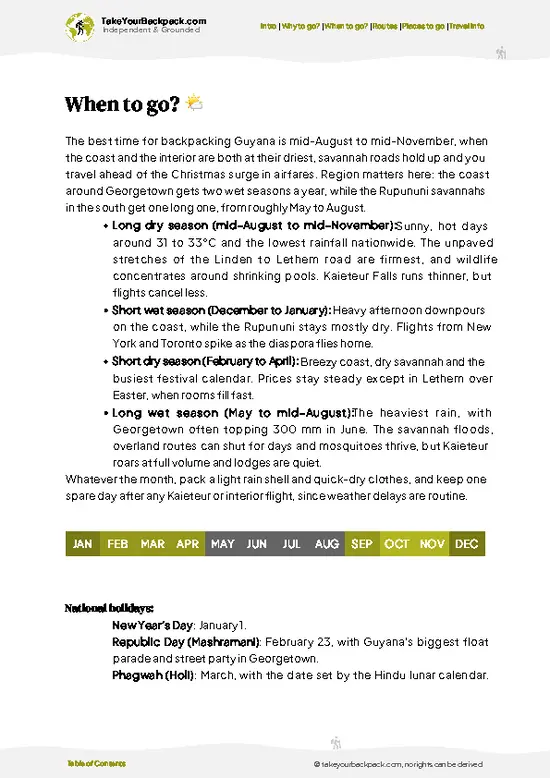
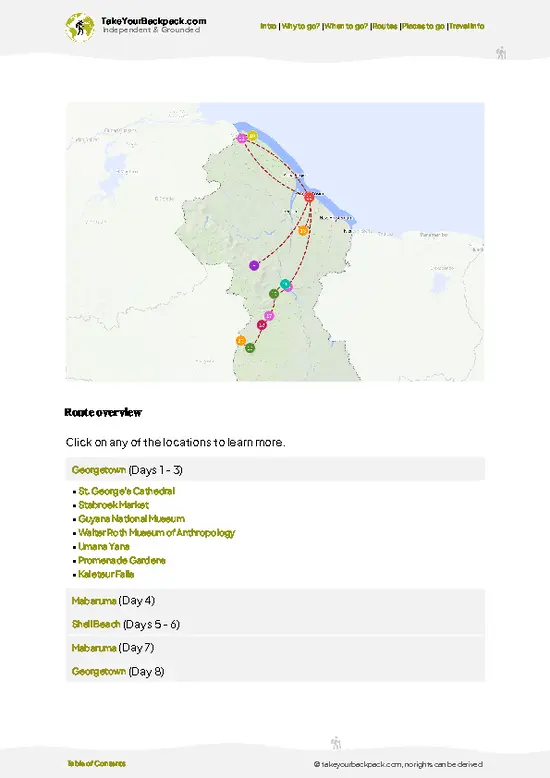
example page 0 from our offline Travel Guide for Guyana
example page 1 from our offline Travel Guide for Guyana
example page 2 from our offline Travel Guide for Guyana
example page 3 from our offline Travel Guide for Guyana
example page 4 from our offline Travel Guide for Guyana
example page 5 from our offline Travel Guide for Guyana
example page 6 from our offline Travel Guide for Guyana
example page 7 from our offline Travel Guide for Guyana
The digital guide (205 pages) contains:
46 highlights, ranked by travel appeal
Optimized 5, 10 & 15-day travel routes
Cities, national parks, landmarks, beaches
How to get around
Offline-friendly for travel without Wi-Fi
👉 Click to see all 30+ guide features

📅 Plan smarter in minutes, not weeks
Month by month travel advice
Festivals & national holidays
Budget expectations

🗺️ Go to the right places, skip the overrated ones
Honest pros & cons of destinations
Top hikes, parks & viewpoints
Lesser-known places most travelers miss
Clear “worth it vs skip it” guidance

🛏️ Travel smoothly without rookie mistakes
Best areas to stay
Transport systems explained simply
Common scams & safety advice
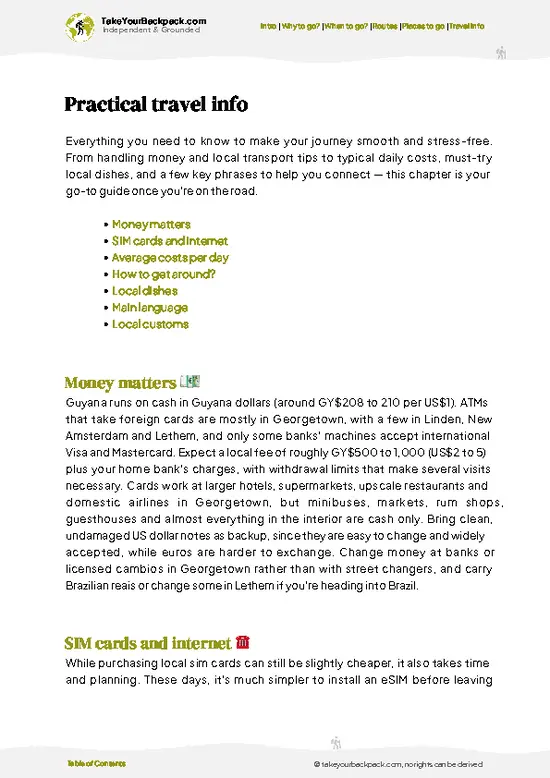
SIM cards, money & practical tips

🌍 Understand the country, not just visit it
Culture & traditions
Local customs
Festivals worth planning around
Traveler-friendly historical context
Insights that make places more meaningful

📱 Built for real travel conditions
Fully downloadable PDF
Works completely offline
Optimized for phone use
Useful in remote areas & buses
Everything in one place
Save weeks of stressful planning
Get instant access to your full guide. 30‑day money-back guarantee.
+ Add another guide for just US$7.80

By proceeding you agree to our terms.
Sent to your inbox immediately after payment • 100% Secure Checkout
Best Backpacking Travel Advisor 2025 tourism awardBest Backpacking
Travel Advisor
2025
What others say about Take Your Backpack Guides:
⭐⭐⭐⭐⭐
Fantastic, amazing amount of information!
⭐⭐⭐⭐⭐
My goodness this is amazing, it's what I've been looking for hats off too you!
⭐⭐⭐⭐⭐
I think this is absolutely BRILLIANT
⭐⭐⭐⭐
Very complete and informative. It's still missing places, but I gotta to commend you
⭐⭐⭐⭐⭐
This is truly amazing, thank you, can't wait to explore it with my kids!
⭐⭐⭐⭐⭐
Awesome resource, thank you!
⭐⭐⭐⭐⭐
This is amazing! Can't wait to explore the ones I haven't seen
⭐⭐⭐⭐
I love this! Well done, great idea.
⭐⭐⭐⭐⭐
Thanks for taking the time to make this gem!
⭐⭐⭐⭐⭐
This might be the best website I've ever seen.
⭐⭐⭐⭐⭐
Congratulations, and thank you so much for your work; it's incredibly valuable.
⭐⭐⭐⭐
In all seriousness I think you did a great job pointing out the important spots
⭐⭐⭐⭐⭐
10/10 very good
⭐⭐⭐⭐⭐
As someone who's only just starting to visit regularly this is awesome, thank you.
⭐⭐⭐⭐
Thank you very much! I'm going to visit my dad, it's going to be very useful!
⭐⭐⭐⭐⭐
This is really cool! We'll be travelling for the first time and this definitely come in handy.
⭐⭐⭐⭐⭐
You are now our minister of culture, congratulations 👨‍💼
⭐⭐⭐⭐⭐
Just wanted to tell you that this is a pearl! Going to follow your recommendations.
⭐⭐⭐⭐⭐
This is so cool. I'll definitely be using the resource for my travels soon.
⭐⭐⭐⭐⭐
This is very impressive! Good work.
⭐⭐⭐⭐⭐
This is an amazing and informative site. Very well done!

🛏️ Where to stay?Best Places to Stay in Guyana

Yes, budget hostels and guesthouses exist in Guyana, but they are concentrated in a few towns rather than spread across the country.
Most options are in Georgetown—especially the city center (Stabroek) and nearby residential pockets (Queenstown/Bourda): Stabroek puts you by markets, transport and the limited nightlife but is noisy and less safe after dark; Queenstown/Bourda are quieter and closer to Botanic Gardens and museums, though they have fewer beds and higher demand.
Regional hubs like Lethem (Rupununi), Bartica and New Amsterdam offer simple guesthouses and ranch-style stays—Lethem is the practical base for savannah trips with rustic amenities and scarce services, Bartica is the … read more 👉
Yes, budget hostels and guesthouses exist in Guyana, but they are concentrated in a few towns rather than spread across the country.
Most options are in Georgetown—especially the city center (Stabroek) and nearby residential pockets (Queenstown/Bourda): Stabroek puts you by markets, transport and the limited nightlife but is noisy and less safe after dark; Queenstown/Bourda are quieter and closer to Botanic Gardens and museums, though they have fewer beds and higher demand.
Regional hubs like Lethem (Rupununi), Bartica and New Amsterdam offer simple guesthouses and ranch-style stays—Lethem is the practical base for savannah trips with rustic amenities and scarce services, Bartica is the river/boat gateway with quiet nights and seasonal supply constraints, and New Amsterdam provides a few budget options near ferry links but overall limited choice.

If you enjoy meeting fellow travelers, consider choosing hostels with high ratings for atmosphere. On the other hand, if you prefer having your own space, a hotel might be a better option.

GuyanaExplore Guyana

👋 Meet the founderWho’s Behind Take Your Backpack?

Johan, backpacker and founder of TakeYourBackpackHi, I’m Johan (Netherlands 🇳🇱), the creator of TakeYourBackpack. Over the past decade, I’ve backpacked through 80+ countries across six continents, gaining extensive experience with independent travel, long-term trips, and overland routes.

This site is built on a combination of firsthand travel experience and carefully curated insights from other backpackers. Many guides are based on places I’ve personally visited, while others bring together tips, observations, and practical advice shared by trusted travelers I’ve met along the way.

The goal is to provide realistic, experience-driven guidance — not generic itineraries — so you can explore destinations with better context, clearer expectations, and more confidence.

Get full Guyana guide •
Instant download • 46 highlights • Full Offline guide