×

Guyana🇬🇾 | national parksRupununi Savannahopen grasslands, scattered Amerindian villages, seasonal wetlands | things to do and best time to go

Explore Kanuku MountainsExplore Kanashen Community Owned Conservation Area

Backpacking in Rupununi Savannah
👍 Recommendednational park ranked #5
By Johan Kruseman 🇳🇱 | Updated September 4, 2026

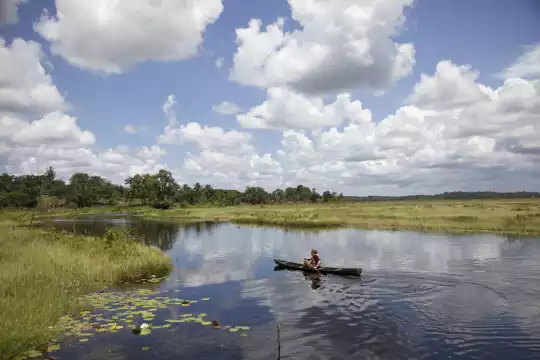
Most online blurbs sell the Rupununi Savannah as endless empty grassland, but what surprises backpackers is how many small Indigenous villages, working ranches, and patchy gallery forests break up that “big sky” stereotype. The Rupununi sits in southwestern Guyana, stretching south of Lethem toward the Brazilian border. As a backpacker destination, it’s raw: huge horizons, scattered low ridges to hike, riverbanks to wander, and serious wildlife potential if you link up with a local guide, but almost no formal trails, signage, or public transport. Access is costly and slow, entrance fees are usually bundled into lodge or community-tour packages, and true shoestring camping is tricky outside organized stays. Compared with Kaieteur or Iwokrama, which feel more like classic rainforest parks, Rupununi is drier, more open, less regulated, and more about quiet cultural immersion than big-ticket viewpoints.

Discover everything you want to know in the 📖 Guyana Travel Guide.


Get your Guyana guide
46 ranked highlights, routes & tips, works offline (205 pages)
Loading the map 🌍
CLICK TO FILTER
cities
towns
villages
landmarks
national parks
hikes
beaches
attractions
festivals
regions
SHOW COUNTRY’S BESTSHOW ALL

✨ Why go?
Ranked #5 national park in Guyana
Why visitors keep coming back

Backpackers flock to Rupununi Savannah in Guyana for its blend of independent exploration and affordable accommodations. The park offers a range of budget camping options and hostels nearby, making it easy to stretch your dollars while soaking in the wild beauty.

The trail variety is a major draw. You can hike through savannahs, wetlands, and forests, each offering unique wildlife and scenery. This diversity caters to different skill levels, so whether you’re a seasoned trekker or a curious novice, there’s something for you.

What sets Rupununi apart is its suitability for self-guided travelers. While guided tours are available, many paths are well-marked, allowing you to set your own pace and discover hidden spots without a crowd. Just be mindful of the weather and local wildlife; preparation … read more 👉
Backpackers flock to Rupununi Savannah in Guyana for its blend of independent exploration and affordable accommodations. The park offers a range of budget camping options and hostels nearby, making it easy to stretch your dollars while soaking in the wild beauty.

The trail variety is a major draw. You can hike through savannahs, wetlands, and forests, each offering unique wildlife and scenery. This diversity caters to different skill levels, so whether you’re a seasoned trekker or a curious novice, there’s something for you.

What sets Rupununi apart is its suitability for self-guided travelers. While guided tours are available, many paths are well-marked, allowing you to set your own pace and discover hidden spots without a crowd. Just be mindful of the weather and local wildlife; preparation is key.

By choosing Rupununi, you’re not just visiting a national park; you’re engaging with a landscape that rewards those willing to explore on their own terms.
Want to include Rupununi Savannah in your Guyana route?
Create a personalized Guyana itinerary that includes Rupununi Savannah and the places that fit your trip — based on your travel style, budget, and available time. Get your route in seconds.

Generate my trip

💡 HighlightsWhat this place is best known for

  • Rupununi Savannah plains — Wide open grasslands punctuated by palm islands and seasonal marshes. The scale is what grabs you: endless horizons, big skies and a landscape that changes dramatically between dry and wet seasons.
  • Kanuku Mountains edge — Where savannah meets forested highlands. Short hikes here drop you into thicker rainforest, waterfalls and viewpoints that show the savannah mosaic from above — great for both birding and a cool break from the heat.
  • Rupununi River and tributaries — The water routes are wildlife magnets. Boat trips or simple canoeing put you close to giant river otters, caiman, freckled riverbanks and dozens of waterbirds without having to bushwhack for hours.
  • Big-mammal sightings — Capybaras, giant anteaters and other large mammals are common; jaguars are possible
read more 👉
  • Rupununi Savannah plains — Wide open grasslands punctuated by palm islands and seasonal marshes. The scale is what grabs you: endless horizons, big skies and a landscape that changes dramatically between dry and wet seasons.
  • Kanuku Mountains edge — Where savannah meets forested highlands. Short hikes here drop you into thicker rainforest, waterfalls and viewpoints that show the savannah mosaic from above — great for both birding and a cool break from the heat.
  • Rupununi River and tributaries — The water routes are wildlife magnets. Boat trips or simple canoeing put you close to giant river otters, caiman, freckled riverbanks and dozens of waterbirds without having to bushwhack for hours.
  • Big-mammal sightings — Capybaras, giant anteaters and other large mammals are common; jaguars are possible (but shy). The mix of wetlands and dry savannah supports surprising mammals you don’t expect to see in such open country.
  • Birdwatching hotspots — Hundreds of species use the Rupununi: macaws and parrots that scream over the palms, jabiru and herons in the marshes, plus kingfishers, sunbitterns and raptors. It’s a must for serious and casual birders alike.
  • Termite mounds, palm islands and sandbanks — These sculpted features give the landscape personality and are important breeding and feeding sites for wildlife. They also make for dramatic photography at low light.
  • Sunsets, sandbanks and night skies — Remote camps and river sandbanks deliver unforgettable sunsets and practically unhindered stargazing. Perfect for slow evenings after a day of hiking or boating.
Spotted a mistake or missing something? Contact us.

Things to do near Rupununi Savannah

Ratings based on Tripadvisor reviews. When you book through this link, you support our work at no extra cost to you.

🌤️ When to go?Best time to explore Rupununi Savannah


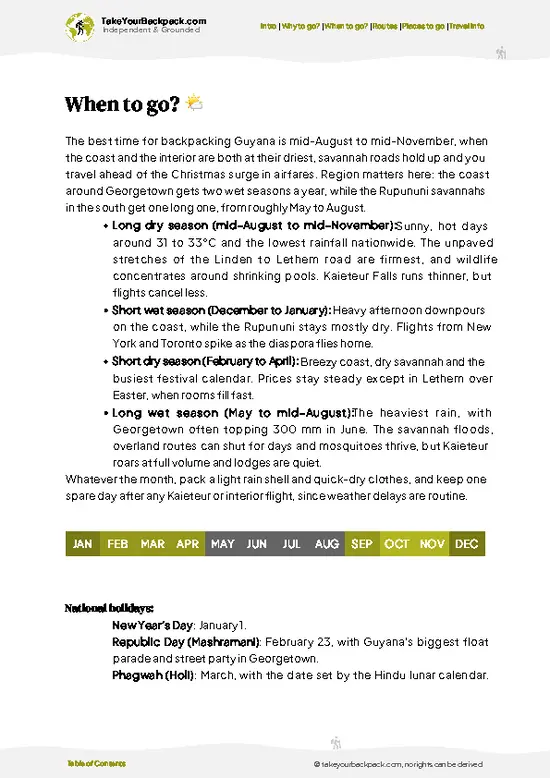
  • Topic: Weather – The dry season from February to April is your best bet. Rainfall drops significantly, making trails less muddy and river crossings safer. The wet season (May to August) brings heavy rains that can flood paths and disrupt plans.

  • Topic: Temperature – Expect daytime highs around 30–33°C (86–91°F) and cooler nights near 20°C (68°F) during the dry season. The wet season can feel hotter and more humid, pushing temps above 35°C (95°F) with sticky nights.

  • Topic: Daylight Hours – Roughly 11 to 12 hours of daylight year-round, but the dry season offers clearer skies, so you get more usable daylight for hiking and wildlife spotting.

  • Topic: Crowds – The Rupununi Savannah is remote, so crowds are minimal year-round. However, the dry season attracts slightly more eco-tourists and
read more 👉

  • Topic: Weather – The dry season from February to April is your best bet. Rainfall drops significantly, making trails less muddy and river crossings safer. The wet season (May to August) brings heavy rains that can flood paths and disrupt plans.

  • Topic: Temperature – Expect daytime highs around 30–33°C (86–91°F) and cooler nights near 20°C (68°F) during the dry season. The wet season can feel hotter and more humid, pushing temps above 35°C (95°F) with sticky nights.

  • Topic: Daylight Hours – Roughly 11 to 12 hours of daylight year-round, but the dry season offers clearer skies, so you get more usable daylight for hiking and wildlife spotting.

  • Topic: Crowds – The Rupununi Savannah is remote, so crowds are minimal year-round. However, the dry season attracts slightly more eco-tourists and birdwatchers, so book accommodations early.

  • Topic: Seasonal Activities – Dry months are prime for wildlife viewing, fishing, and cultural visits to indigenous communities. Wet months limit access and activities due to flooding and slippery terrain.

  • Topic: Price Fluctuations – Prices for lodges and tours peak in the dry season. The wet season offers lower rates but comes with the risk of disrupted plans and less wildlife visibility.


Pro-tip: Prioritize the dry season for reliable conditions and wildlife encounters, but book early to lock in rates and secure your spot in this off-the-beaten-path destination.


source: climatestotravel.comJANJanuary: good for travelingFEBFebruary: excellent for travelingMARMarch: excellent for travelingAPRApril: excellent for travelingMAYMay: fair for travelingJUNJune: fair for travelingJULJuly: fair for travelingAUGAugust: fair for travelingSEPSeptember: good for travelingOCTOctober: good for travelingNOVNovember: good for travelingDECDecember: good for traveling
when-to-go

✈️ The backpacker research shortcutGuyana Travel Guide

An offline-friendly backpacking guide with optimized travel routes, ranked highlights, transport advice, and the best areas to stay.
example page 0 from our offline Travel Guide for Guyana
example page 1 from our offline Travel Guide for Guyana
example page 2 from our offline Travel Guide for Guyana
example page 3 from our offline Travel Guide for Guyana
example page 4 from our offline Travel Guide for Guyana
example page 5 from our offline Travel Guide for Guyana
example page 6 from our offline Travel Guide for Guyana
example page 7 from our offline Travel Guide for Guyana
The digital guide (205 pages) contains:
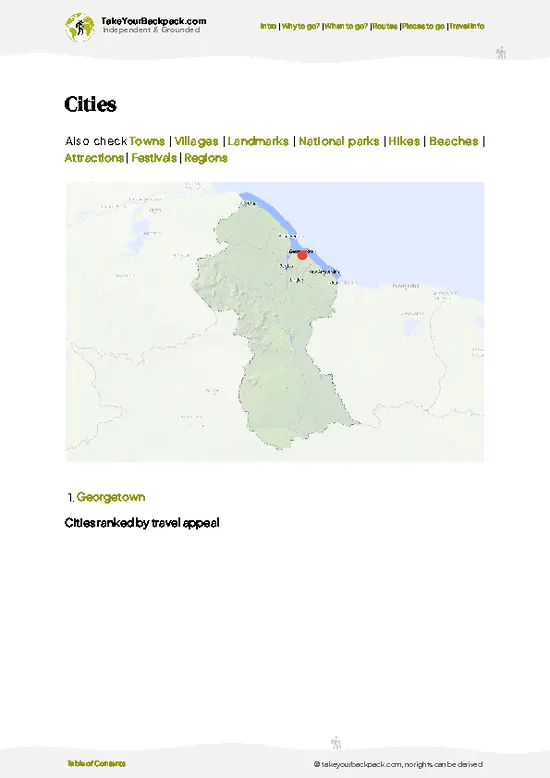
46 highlights, ranked by travel appeal
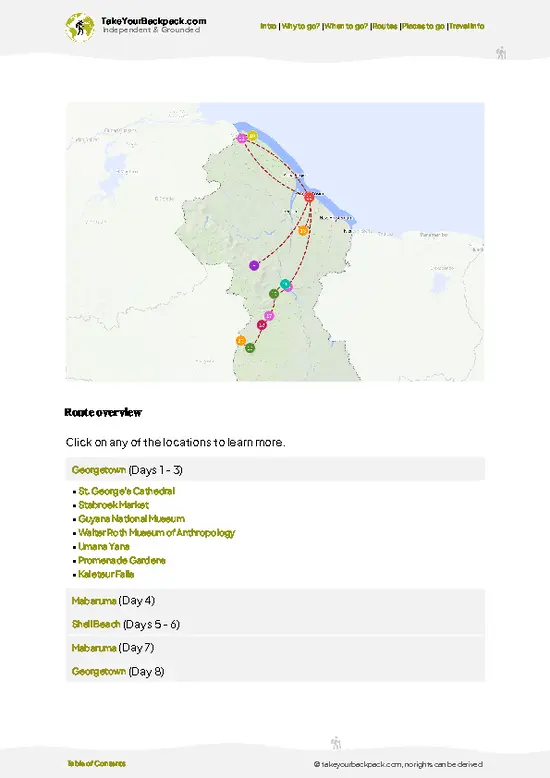
Optimized 5, 10 & 15-day travel routes
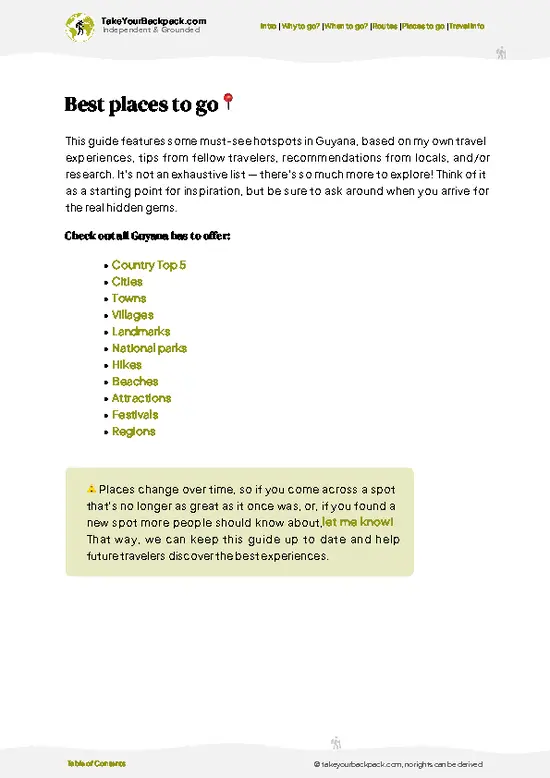
Cities, national parks, landmarks, beaches
How to get around
Offline-friendly for travel without Wi-Fi
👉 Click to see all 30+ guide features

📅 Plan smarter in minutes, not weeks
Month by month travel advice
Festivals & national holidays
Budget expectations

🗺️ Go to the right places, skip the overrated ones
Honest pros & cons of destinations
Top hikes, parks & viewpoints
Lesser-known places most travelers miss
Clear “worth it vs skip it” guidance

🛏️ Travel smoothly without rookie mistakes
Best areas to stay
Transport systems explained simply
Common scams & safety advice
SIM cards, money & practical tips

🌍 Understand the country, not just visit it
Culture & traditions
Local customs
Festivals worth planning around
Traveler-friendly historical context
Insights that make places more meaningful

📱 Built for real travel conditions
Fully downloadable PDF
Works completely offline
Optimized for phone use
Useful in remote areas & buses
Everything in one place
Save weeks of stressful planning
Get instant access to your full guide. 30‑day money-back guarantee.
+ Add another guide for just US$7.80

By proceeding you agree to our terms.
Sent to your inbox immediately after payment • 100% Secure Checkout
Best Backpacking Travel Advisor 2025 tourism awardBest Backpacking
Travel Advisor
2025
What others say about Take Your Backpack Guides:
⭐⭐⭐⭐⭐
Fantastic, amazing amount of information!
⭐⭐⭐⭐⭐
My goodness this is amazing, it's what I've been looking for hats off too you!
⭐⭐⭐⭐⭐
I think this is absolutely BRILLIANT
⭐⭐⭐⭐
Very complete and informative. It's still missing places, but I gotta to commend you
⭐⭐⭐⭐⭐
This is truly amazing, thank you, can't wait to explore it with my kids!
⭐⭐⭐⭐⭐
Awesome resource, thank you!
⭐⭐⭐⭐⭐
This is amazing! Can't wait to explore the ones I haven't seen
⭐⭐⭐⭐
I love this! Well done, great idea.
⭐⭐⭐⭐⭐
Thanks for taking the time to make this gem!
⭐⭐⭐⭐⭐
This might be the best website I've ever seen.
⭐⭐⭐⭐⭐
Congratulations, and thank you so much for your work; it's incredibly valuable.
⭐⭐⭐⭐
In all seriousness I think you did a great job pointing out the important spots
⭐⭐⭐⭐⭐
10/10 very good
⭐⭐⭐⭐⭐
As someone who's only just starting to visit regularly this is awesome, thank you.
⭐⭐⭐⭐
Thank you very much! I'm going to visit my dad, it's going to be very useful!
⭐⭐⭐⭐⭐
This is really cool! We'll be travelling for the first time and this definitely come in handy.
⭐⭐⭐⭐⭐
You are now our minister of culture, congratulations 👨‍💼
⭐⭐⭐⭐⭐
Just wanted to tell you that this is a pearl! Going to follow your recommendations.
⭐⭐⭐⭐⭐
This is so cool. I'll definitely be using the resource for my travels soon.
⭐⭐⭐⭐⭐
This is very impressive! Good work.
⭐⭐⭐⭐⭐
This is an amazing and informative site. Very well done!

🛏️ Where to stay?Where staying makes the most sense

When exploring the Rupununi Savannah in Guyana, your choice of accommodation can significantly shape your experience. Inside the national park, options are limited but authentic. The Karanambu Lodge is a standout. It’s run by a local family and offers a genuine connection to the land and its wildlife. Expect rustic charm and a chance to engage with the local culture.

If you prefer a bit more infrastructure, head to Lethem, a nearby town that serves as a gateway to the savannah. Here, you’ll find budget-friendly guesthouses like The Rupununi Lodge. It’s basic but clean, and you’ll have access … read more 👉
When exploring the Rupununi Savannah in Guyana, your choice of accommodation can significantly shape your experience. Inside the national park, options are limited but authentic. The Karanambu Lodge is a standout. It’s run by a local family and offers a genuine connection to the land and its wildlife. Expect rustic charm and a chance to engage with the local culture.

If you prefer a bit more infrastructure, head to Lethem, a nearby town that serves as a gateway to the savannah. Here, you’ll find budget-friendly guesthouses like The Rupununi Lodge. It’s basic but clean, and you’ll have access to local eateries where you can sample traditional dishes without breaking the bank.

Be aware that transportation can be tricky. Roads may be rough, and public transport schedules are often unreliable. Factor in extra time for travel, and don’t hesitate to negotiate prices for rides.

Lastly, always check for hidden fees at lodges, especially for activities or meals. These can add up quickly. By staying informed and planning ahead, you’ll preserve your energy and budget for the moments that truly matter in this stunning landscape.

👛 Costs (as of 4 September 2026)What things cost and how to budget

Visiting Rupununi Savannah in Guyana can be a rewarding experience, but it’s essential to be aware of potential costs to avoid surprises.

Entry fees for the national park typically range from $10 to $20 USD per person. This fee helps maintain the park and its facilities.

Accommodation options vary widely. Budget travelers can find basic lodges or camping sites for around $15 to $30 USD per night. Mid-range options, like eco-lodges, usually cost between $50 and $100 USD. Luxury lodges can go up to $300 USD or more, depending on the amenities and services offered.

Transportation is another factor. If you’re flying into the region, expect to pay around $100 to $200 USD for a domestic flight from Georgetown to Lethem. Ground transportation, like taxis or shared rides, can add another $20 to … read more 👉
Visiting Rupununi Savannah in Guyana can be a rewarding experience, but it’s essential to be aware of potential costs to avoid surprises.

Entry fees for the national park typically range from $10 to $20 USD per person. This fee helps maintain the park and its facilities.

Accommodation options vary widely. Budget travelers can find basic lodges or camping sites for around $15 to $30 USD per night. Mid-range options, like eco-lodges, usually cost between $50 and $100 USD. Luxury lodges can go up to $300 USD or more, depending on the amenities and services offered.

Transportation is another factor. If you’re flying into the region, expect to pay around $100 to $200 USD for a domestic flight from Georgetown to Lethem. Ground transportation, like taxis or shared rides, can add another $20 to $50 USD, depending on your destination within the savannah.

Guided tours are highly recommended to fully appreciate the area. Prices for these tours can range from $50 to $150 USD per day, depending on the length and inclusions. Some tours may cover meals and activities, while others may charge extra for those.

Food costs can also add up. If you’re dining at local eateries, budget around $5 to $15 USD per meal. In more upscale places, expect to pay $20 USD or more.

Keep in mind that cash is king in this region. ATMs are limited, so having enough cash on hand is crucial.

By planning for these costs, you can focus your energy and budget on the experiences that truly matter in Rupununi Savannah.


source: guyanatourism.com
⚠️ Prices can change and everyone travels differently, so take this as a rough guide. Hope it helps you plan your adventure!

🥾 TrailsExploring Rupununi Savannah: trails, terrain, and views

The Rupununi Savannah in Guyana is a hidden gem for hikers, offering a unique blend of savannah, wetlands, and forest. The terrain is generally flat with occasional hills, making it accessible for most hikers, though some areas can get a bit muddy during the rainy season. Wildlife is abundant; keep your eyes peeled for capybaras, giant river otters, and an array of bird species, including the stunning scarlet macaw.

One of the standout hikes is the Rupununi Trail. Here are the details:
  • Length: 10 km
  • Estimated Duration: 4-5 hours
  • Difficulty Level: Moderate
  • Key Features: Scenic views of the savannah,
read more 👉
The Rupununi Savannah in Guyana is a hidden gem for hikers, offering a unique blend of savannah, wetlands, and forest. The terrain is generally flat with occasional hills, making it accessible for most hikers, though some areas can get a bit muddy during the rainy season. Wildlife is abundant; keep your eyes peeled for capybaras, giant river otters, and an array of bird species, including the stunning scarlet macaw.

One of the standout hikes is the Rupununi Trail. Here are the details:
  • Length: 10 km
  • Estimated Duration: 4-5 hours
  • Difficulty Level: Moderate
  • Key Features: Scenic views of the savannah, opportunities for birdwatching, and encounters with local wildlife
  • Terrain: Mostly flat with some muddy stretches and occasional rocky patches

Getting to the park is relatively straightforward. You can catch a bus or hire a taxi from Georgetown to Lethem, which takes about 12 hours. From Lethem, it’s a short ride to the park entrance. It’s not overly crowded, so you can enjoy the serenity, but weekends can see a few more locals around. There’s usually a small entrance fee, so be sure to have some cash on you. Overall, it’s a fantastic spot for those looking to experience nature without the usual tourist hustle.
⚠️ Hiking info can sometimes be outdated or inaccurate. Before you hit the trail, check the latest conditions with locals. If you do spot anything that's off, I'd love to hear from you, so I can update it for fellow travelers.

🛡️ SafetySafety Tips and Common Scams in Rupununi Savannah

Rupununi Savannah is generally welcoming for backpackers, but a few realities can help you navigate it smoothly. Weather can shift quickly; afternoon rains are common, so pack a reliable rain jacket and quick-dry gear. The terrain is mostly flat, but expect some muddy patches and occasional river crossings. Waterproof footwear is a must.

Wildlife encounters are part of the experience. Keep a respectful distance from animals, especially larger ones like jaguars or caimans. They’re more afraid of you than you are of them, but a calm approach is key.

Navigation is straightforward, with marked trails, but a good map and compass can save you from unnecessary detours. Timing your hikes for early morning or late afternoon not only avoids the heat but also enhances your chances of spotting wildlife. … read more 👉
Rupununi Savannah is generally welcoming for backpackers, but a few realities can help you navigate it smoothly. Weather can shift quickly; afternoon rains are common, so pack a reliable rain jacket and quick-dry gear. The terrain is mostly flat, but expect some muddy patches and occasional river crossings. Waterproof footwear is a must.

Wildlife encounters are part of the experience. Keep a respectful distance from animals, especially larger ones like jaguars or caimans. They’re more afraid of you than you are of them, but a calm approach is key.

Navigation is straightforward, with marked trails, but a good map and compass can save you from unnecessary detours. Timing your hikes for early morning or late afternoon not only avoids the heat but also enhances your chances of spotting wildlife.

Stay aware, respect the environment, and you’ll preserve your energy and budget for the moments that truly matter.

FAQFrequently asked questions about Rupununi Savannah

3 to 5 days are recommended to explore Rupununi Savannah thoroughly, allowing time for wildlife viewing, cultural visits, and hiking. The area is vast, so plan for travel time between sites. Peak wildlife viewing is best from July to December.
No, visiting Rupununi Savannah without a car is challenging due to limited public transport and vast distances. Most travelers hire 4x4 vehicles or join guided tours for access. Some lodges offer transfers from Lethem, the nearest town.
Yes, an entrance permit is required for Rupununi Savannah, typically costing around 20 to 30 USD. Permits are obtained through local tour operators or park authorities. Fees support conservation and community projects in the area.
⚠️ Things can change over time, so always validate details locally before you go.

Other Guyanese national parks near Rupununi Savannah

Explore more nearby:


💡 Not sure where to go next?
Create a personalized itinerary for Guyana including Rupununi Savannah and the places that fit your trip.

Generate my itinerary

👉 Discover all national parks

Or checkout all Guyana has to offer (think cities, towns, villages, national parks, hikes, beaches, festivals)
Country photo of Guyana

We 💚 feedbackKey takeaways before you go

Rupununi Savannah is a world apart, where the pace slows and nature takes center stage. Expect to be surprised by the warmth of the locals; their stories are as rich as the landscape. But don’t underestimate the heat—hydrate and take breaks. The wildlife is incredible, but spotting it requires patience. Plan your excursions wisely to avoid overspending on guided tours that don’t deliver. Embrace the simplicity here; it’s where you’ll find the real magic.

✍️ Help improve this page!
The information on this page is based on in-depth research, insights shared by experienced travelers, and feedback from the local travel community in Guyana. While every effort is made to keep the information accurate and current, conditions can change — so if you spot anything incorrect or outdated, please get in touch.


🙋‍♂️ Give feedback

👋 Meet the founderWho’s Behind Take Your Backpack?

Johan, backpacker and founder of TakeYourBackpackHi, I’m Johan (Netherlands 🇳🇱), the creator of TakeYourBackpack. Over the past decade, I’ve backpacked through 80+ countries across six continents, gaining extensive experience with independent travel, long-term trips, and overland routes.

This site is built on a combination of firsthand travel experience and carefully curated insights from other backpackers. Many guides are based on places I’ve personally visited, while others bring together tips, observations, and practical advice shared by trusted travelers I’ve met along the way.

The goal is to provide realistic, experience-driven guidance — not generic itineraries — so you can explore destinations with better context, clearer expectations, and more confidence.

Get full Guyana guide •
Instant download • 46 highlights • Full Offline guide