×

Guyana🇬🇾 | regionsCuyuni-Mazaruni RegionBartica waterfront, Mazaruni falls, river islands, upper Mazaruni flights | things to do and best time to go

Explore Kanashen Community Owned Conservation AreaExplore Rupununi Savannah

Backpacking in Cuyuni-Mazaruni Region
🏆 Top pickregion ranked #1
By Johan Kruseman 🇳🇱 | Updated October 19, 2026

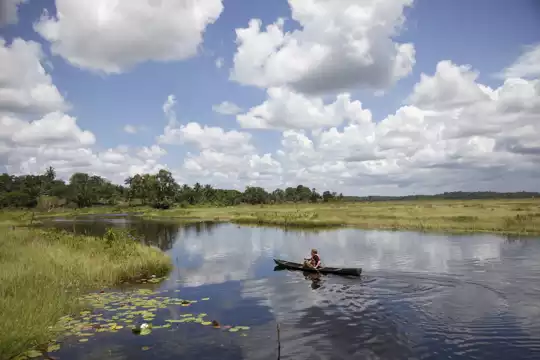
The choice that shapes a trip here is whether to stay on the lower rivers around Bartica or fly deep into the upper Mazaruni. The lower rivers are far easier, and that is why most people stay there. The interior needs a charter flight or a long, rough river haul, so experienced travelers pick one and skip trying to do both. Cuyuni-Mazaruni Region sits in the north of Guyana, inland and west of Georgetown, where the Essequibo, Mazaruni and Cuyuni rivers meet. Expect speedboat spray, diesel fumes, red mud on your sandals and the clank of dredges in gold country. Bartica has rum shops, loud music and a lively stelling, but few formal sights. The falls and river islands nearby are lovely and rarely crowded. Wet-season trails turn to slick clay, so wear boots with grip. It suits adaptable, unhurried travelers who like river life. If you need set schedules and polished lodges, you will find it frustrating.

Discover everything you want to know in the 📖 Guyana Travel Guide.


example page 0 from our offline Travel Guide for Guyana
example page 1 from our offline Travel Guide for Guyana
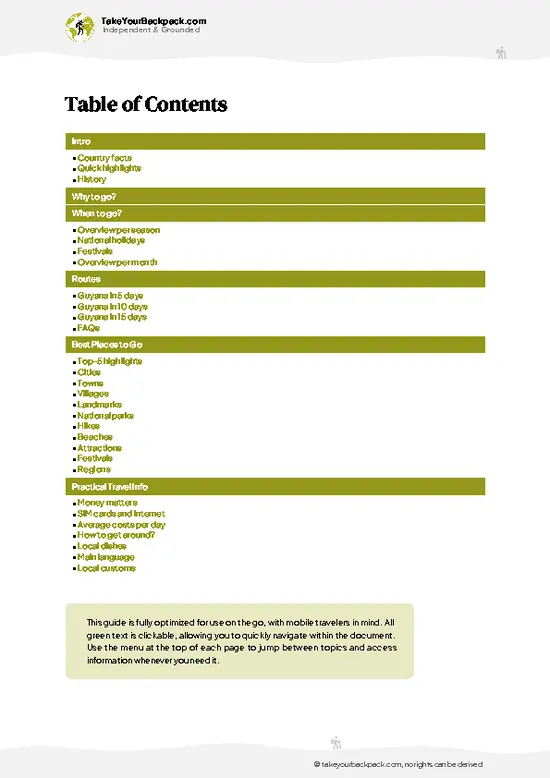
example page 2 from our offline Travel Guide for Guyana
example page 3 from our offline Travel Guide for Guyana
example page 4 from our offline Travel Guide for Guyana
example page 5 from our offline Travel Guide for Guyana
example page 6 from our offline Travel Guide for Guyana
example page 7 from our offline Travel Guide for Guyana
Loading the map 🌍
CLICK TO FILTER
cities
towns
villages
landmarks
national parks
hikes
beaches
attractions
festivals
regions
SHOW COUNTRY’S BESTSHOW ALL

✨ Why go?
Ranked #1 region in Guyana
What makes this region worth visiting

Cuyuni-Mazaruni Region lets you string together river, rainforest and mining-town culture without repacking much. From Bartica, a single base covers rapids, waterfalls and island stays by day boat, so you keep one bed and a light daypack. The three big rivers are the highways, and hiring a boatman with a local who knows the channels turns a vague idea into a proper day out. Settlement life changes quickly as you move upriver. Bartica is Creole and mixed, with a loud, friendly waterfront. Further up, Akawaio and Arecuna communities around Kamarang and Imbaimadai run on small airstrips, farm plots and river travel. Slow travel suits this layout because rivers dictate the schedule anyway. The Easter Bartica Regatta is the one date worth planning around, with boat races, crowded beaches and sound … read more 👉
Cuyuni-Mazaruni Region lets you string together river, rainforest and mining-town culture without repacking much. From Bartica, a single base covers rapids, waterfalls and island stays by day boat, so you keep one bed and a light daypack. The three big rivers are the highways, and hiring a boatman with a local who knows the channels turns a vague idea into a proper day out. Settlement life changes quickly as you move upriver. Bartica is Creole and mixed, with a loud, friendly waterfront. Further up, Akawaio and Arecuna communities around Kamarang and Imbaimadai run on small airstrips, farm plots and river travel. Slow travel suits this layout because rivers dictate the schedule anyway. The Easter Bartica Regatta is the one date worth planning around, with boat races, crowded beaches and sound systems loud enough to rattle the stelling. Outside it, you will often have the water and trails to yourself.

💡 HighlightsMust-see experiences and standout moments

  1. Bartica Stelling and Waterfront: The town’s front door, where speedboats from Parika unload crates, passengers and gold miners. Watch the river traffic from the seawall with a cold drink.
  2. Marshall Falls: A broad cascade on the Mazaruni, reached by boat and a short forest walk. The rock pools are good for swimming when the water is not running high.
  3. Kartabo Point: The confluence of the Cuyuni and Mazaruni, with old ruins from an early twentieth-century research station and rainforest trails. Few travelers bother with it.
  4. Baganara Island: A forested island in the Essequibo with sandy beaches and calm swimming. It works well for a day trip or overnight.
  5. Kaow Island: A river island known for its kilometers of untouched forest, birdlife and quiet creeks. Locals use it for weekend picnics, and visitors
… read more 👉
  1. Bartica Stelling and Waterfront: The town’s front door, where speedboats from Parika unload crates, passengers and gold miners. Watch the river traffic from the seawall with a cold drink.
  2. Marshall Falls: A broad cascade on the Mazaruni, reached by boat and a short forest walk. The rock pools are good for swimming when the water is not running high.
  3. Kartabo Point: The confluence of the Cuyuni and Mazaruni, with old ruins from an early twentieth-century research station and rainforest trails. Few travelers bother with it.
  4. Baganara Island: A forested island in the Essequibo with sandy beaches and calm swimming. It works well for a day trip or overnight.
  5. Kaow Island: A river island known for its kilometers of untouched forest, birdlife and quiet creeks. Locals use it for weekend picnics, and visitors rarely do.
  6. Sloth Island: A small wooded island where you can paddle or float and spot wildlife from the boat. It is an easy add-on to any river day.
  7. Bartica Easter Regatta: The annual festival with speedboat races, beach parties and live music. Book transport and beds early.
  8. Kamarang and Imbaimadai: Upper Mazaruni Amerindian communities beneath the Merume Mountains, reached by small plane. This is the region’s true frontier, with farm plots, river life and sharp ridgelines.
Start at the Bartica waterfront, because the stelling is where you find boatmen, check river conditions and sort out the rest of your plans.
Spotted a mistake or missing something? Contact us.

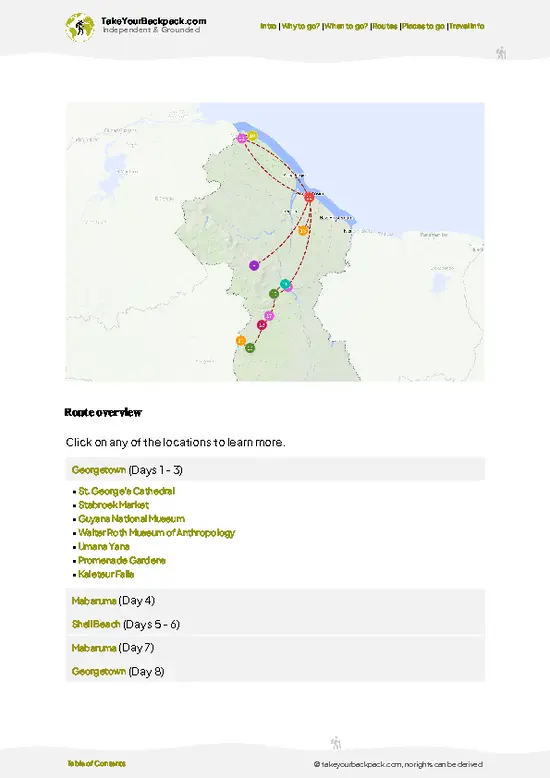
⌛️ 5 daysA smart one-week plan

Day 1: Bartica: This is a river-and-market morning. Boats from Parika dock early, and the stelling is at its most chaotic, which makes it the best time to find a reliable boatman for the next few days. Walk the waterfront, eat something fried and local, and agree on prices before you load anything. The whole region runs on water taxis and charters, so your pace depends on when boats leave and what the river is doing, not on a timetable.
Day 2: Marshall Falls: Take the boat up the Mazaruni and walk in through the forest. Going early means calmer water, cooler air and cleaner light on the rocks. Swim, eat on the shore and return before the afternoon rain, which can turn the landing slick. Doing falls on separate days keeps rivers and paths manageable.
Day 3: Rest day in Bartica: Keep this day … read more 👉
Day 1: Bartica: This is a river-and-market morning. Boats from Parika dock early, and the stelling is at its most chaotic, which makes it the best time to find a reliable boatman for the next few days. Walk the waterfront, eat something fried and local, and agree on prices before you load anything. The whole region runs on water taxis and charters, so your pace depends on when boats leave and what the river is doing, not on a timetable.
Day 2: Marshall Falls: Take the boat up the Mazaruni and walk in through the forest. Going early means calmer water, cooler air and cleaner light on the rocks. Swim, eat on the shore and return before the afternoon rain, which can turn the landing slick. Doing falls on separate days keeps rivers and paths manageable.
Day 3: Rest day in Bartica: Keep this day loose. It is a good day to rest your legs and wander back through Bartica at dusk, when the rum shops fill and the music starts.
Day 4: Baganara Island: Switch from forest to sand. A boat out to the Essequibo gets you a beach day with warm water and a hammock. Because boats run on demand, an island day is easy to slot in and keeps everything on one base.
Day 5: Kartabo Point: Make this the detour. The confluence of the Cuyuni and Mazaruni, with its forest paths and old research-station ruins, adds history without changing your base, and the boat returns in time for the evening run home.

If you can only do one day, make it Marshall Falls. It combines the boat ride, the forest and a proper swim, and it shows the Mazaruni at its best.

🌤️ When to go?Best time to visit Cuyuni-Mazaruni Region

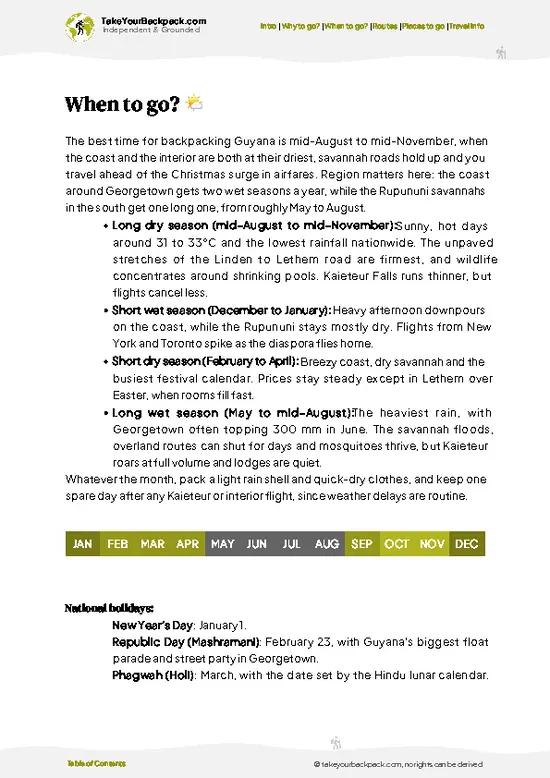
Late August to mid-November is the most dependable window for Cuyuni-Mazaruni, when river levels drop and mining tracks stay passable. Here is how the year breaks down.
  • Long Dry Season (September to November): Days reach 29 to 33°C (84 to 91°F), nights fall to about 22°C (72°F). Roads like the Bartica to Mahdia track and river landings are at their firmest. Daylight runs close to 12 hours all year. Bartica fills up around Easter and Christmas, but outside those the region stays quiet.
  • Main Wet Season (May to mid-August): Heavy downpours turn red clay roads to grease and swell the Mazaruni and Cuyuni rivers. Rapids run high, boat trips are slower and some trails flood. Rooms and boat charters are easy to bargain for, and waterfalls look their fullest.
  • Short Wet Season (December to January): Showers
… read more 👉
Late August to mid-November is the most dependable window for Cuyuni-Mazaruni, when river levels drop and mining tracks stay passable. Here is how the year breaks down.
  • Long Dry Season (September to November): Days reach 29 to 33°C (84 to 91°F), nights fall to about 22°C (72°F). Roads like the Bartica to Mahdia track and river landings are at their firmest. Daylight runs close to 12 hours all year. Bartica fills up around Easter and Christmas, but outside those the region stays quiet.
  • Main Wet Season (May to mid-August): Heavy downpours turn red clay roads to grease and swell the Mazaruni and Cuyuni rivers. Rapids run high, boat trips are slower and some trails flood. Rooms and boat charters are easy to bargain for, and waterfalls look their fullest.
  • Short Wet Season (December to January): Showers come in bursts, often at night, with 26 to 31°C (79 to 88°F) days. Holiday visitors arrive in Bartica, and boat and room prices climb a little.
  • Short Dry Spell (February to April): Mostly clear skies, hot afternoons around 32°C (90°F) and firm tracks. Good for river trips before the rains build again.
Book river transfers a day ahead in September, because dry-season boat captains fill up quickly.


source: climatestotravel.comJANJanuary: fair for travelingFEBFebruary: fair for travelingMARMarch: fair for travelingAPRApril: fair for travelingMAYMay: fair for travelingJUNJune: fair for travelingJULJuly: fair for travelingAUGAugust: highly recommended for travelingSEPSeptember: excellent for travelingOCTOctober: excellent for travelingNOVNovember: highly recommended for travelingDECDecember: fair for traveling
when-to-go

✈️ The backpacker research shortcutGuyana Travel Guide

An offline-friendly backpacking guide with optimized travel routes, ranked highlights, transport advice, and the best areas to stay.
example page 0 from our offline Travel Guide for Guyana
example page 1 from our offline Travel Guide for Guyana
example page 2 from our offline Travel Guide for Guyana
example page 3 from our offline Travel Guide for Guyana
example page 4 from our offline Travel Guide for Guyana
example page 5 from our offline Travel Guide for Guyana
example page 6 from our offline Travel Guide for Guyana
example page 7 from our offline Travel Guide for Guyana
The digital guide (161 pages) contains:
✅ 43 highlights, ranked by travel appeal
✅ Optimized 5, 10 & 15-day travel routes
✅ Cities, national parks, landmarks, beaches
✅ How to get around
✅ Offline-friendly for travel without Wi-Fi
👉 Click to see all 30+ guide features

📅 Plan smarter in minutes, not weeks
✅ Month by month travel advice
✅ Festivals & national holidays
✅ Budget expectations

🗺️ Go to the right places, skip the overrated ones
✅ Honest pros & cons of destinations
✅ Top hikes, parks & viewpoints
✅ Lesser-known places most travelers miss
✅ Clear “worth it vs skip it” guidance

🛏️ Travel smoothly without rookie mistakes
✅ Best areas to stay
✅ Transport systems explained simply
✅ Common scams & safety advice
✅ SIM cards, money & practical tips

🌍 Understand the country, not just visit it
✅ Culture & traditions
✅ Local customs
✅ Festivals worth planning around
✅ Traveler-friendly historical context
✅ Insights that make places more meaningful

📱 Built for real travel conditions
✅ Fully downloadable PDF
✅ Works completely offline
✅ Optimized for phone use
✅ Useful in remote areas & buses
✅ Everything in one place
Stop searching, start planning
Get instant access to your full guide. 30‑day money-back guarantee.
+ Add another guide for just

By proceeding you agree to our terms.
Sent to your inbox immediately after payment • 100% Secure Checkout
Best Backpacking Travel Advisor 2025 tourism awardBest Backpacking
Travel Advisor
2025
What others say about Take Your Backpack Guides:
⭐⭐⭐⭐⭐
Fantastic, amazing amount of information!
⭐⭐⭐⭐⭐
My goodness this is amazing, it's what I've been looking for hats off too you!
⭐⭐⭐⭐⭐
I think this is absolutely BRILLIANT
⭐⭐⭐⭐
Very complete and informative. It's still missing places, but I gotta to commend you
⭐⭐⭐⭐⭐
This is truly amazing, thank you, can't wait to explore it with my kids!
⭐⭐⭐⭐⭐
Awesome resource, thank you!
⭐⭐⭐⭐⭐
This is amazing! Can't wait to explore the ones I haven't seen
⭐⭐⭐⭐
I love this! Well done, great idea.
⭐⭐⭐⭐⭐
Thanks for taking the time to make this gem!
⭐⭐⭐⭐⭐
This might be the best website I've ever seen.
⭐⭐⭐⭐⭐
Congratulations, and thank you so much for your work; it's incredibly valuable.
⭐⭐⭐⭐
In all seriousness I think you did a great job pointing out the important spots
⭐⭐⭐⭐⭐
10/10 very good
⭐⭐⭐⭐⭐
As someone who's only just starting to visit regularly this is awesome, thank you.
⭐⭐⭐⭐
Thank you very much! I'm going to visit my dad, it's going to be very useful!
⭐⭐⭐⭐⭐
This is really cool! We'll be travelling for the first time and this definitely come in handy.
⭐⭐⭐⭐⭐
You are now our minister of culture, congratulations 👨‍💼
⭐⭐⭐⭐⭐
Just wanted to tell you that this is a pearl! Going to follow your recommendations.
⭐⭐⭐⭐⭐
This is so cool. I'll definitely be using the resource for my travels soon.
⭐⭐⭐⭐⭐
This is very impressive! Good work.
⭐⭐⭐⭐⭐
This is an amazing and informative site. Very well done!

🛏️ Where to stay?Best areas and accommodation options

Bartica is the best base in Cuyuni-Mazaruni, with guesthouse beds from about US$15 to 40 a night and the only real social scene in the region. It sits where three rivers meet, so the waterfront stays lively with boat traffic, small bars and travelers swapping plans. Almost every river trip, from Marshall Falls to the Penitence sandbars, starts here, and you can arrange a boat captain on foot in an afternoon.
Staying in the town center, near the stelling (the main boat dock) and market, puts you within a short walk of food, ATMs and transport. It also feels safer after dark, since people are out … read more 👉
Bartica is the best base in Cuyuni-Mazaruni, with guesthouse beds from about US$15 to 40 a night and the only real social scene in the region. It sits where three rivers meet, so the waterfront stays lively with boat traffic, small bars and travelers swapping plans. Almost every river trip, from Marshall Falls to the Penitence sandbars, starts here, and you can arrange a boat captain on foot in an afternoon.
Staying in the town center, near the stelling (the main boat dock) and market, puts you within a short walk of food, ATMs and transport. It also feels safer after dark, since people are out until late, though you should still use a taxi for the outskirts at night.
Further inland, Kamarang and, across the border in Potaro-Siparuni, Mahdia serve miners and Indigenous communities and have only basic rooms, often US$20 to 50. They suit travelers heading to remote trails, not those after company. Many Amerindian villages along the Mazaruni welcome visitors through community arrangements, and a village homestay costs roughly US$20 to 40 with meals. Arrange these ahead through a tour operator or the village council. Bring cash, a mosquito net if you have one and a flexible schedule.

🚌 Getting aroundHow to get from A to B

Bartica, the region’s gateway town, can be crossed on foot in about 15 minutes, but walking stops making sense the moment you head for the interior, where distances stretch across river and red clay.
Most backpackers reach the region by speedboat from Parika, then continue by minibus, shared 4x4 or boat. Roads inland are rough and schedules are loose, so reliability depends on weather and river level.
  • Speedboat from Parika to Bartica: The ride takes about 60 to 75 minutes and costs around US$10 to 15. Boats leave when full, with engines roaring, spray flying and a diesel smell hanging over the benches. Seats up front bounce hardest, so experienced travelers sit in the middle and bring a rain jacket or dry bag.
  • Minibuses and taxis in Bartica: Shared rides around town cost roughly US$1 to 3. They
… read more 👉
Bartica, the region’s gateway town, can be crossed on foot in about 15 minutes, but walking stops making sense the moment you head for the interior, where distances stretch across river and red clay.
Most backpackers reach the region by speedboat from Parika, then continue by minibus, shared 4x4 or boat. Roads inland are rough and schedules are loose, so reliability depends on weather and river level.
  • Speedboat from Parika to Bartica: The ride takes about 60 to 75 minutes and costs around US$10 to 15. Boats leave when full, with engines roaring, spray flying and a diesel smell hanging over the benches. Seats up front bounce hardest, so experienced travelers sit in the middle and bring a rain jacket or dry bag.
  • Minibuses and taxis in Bartica: Shared rides around town cost roughly US$1 to 3. They do not run to a timetable, so wave one down near the market and ask the fare first. Locals simply ask the driver, so do the same.
  • Shared 4x4 or truck toward Mahdia and the mining areas: Trips can take 8 to 12 hours or more in the wet months and cost about US$40 to 80. Dust or mud coats everything. Drivers wait for a full load, so book the night before and sit away from the tailgate.
  • River boats and charters: Boats up the Mazaruni or Cuyuni to places like Marshall Falls usually cost US$80 to 250 per boat. Split the fare with other travelers, since the price is per boat and not per person.
  • Small plane flights: Charter flights from Georgetown serve airstrips such as Kamarang and Imbaimadai for roughly US$150 to 300 one way. They skip days of mud and are the better choice when time is short.
Carry small bills in local currency, a waterproof bag and extra water, since fuel stops and shops are far apart. Leave early, because mornings are cooler and the afternoon rain usually arrives after lunch.

🍲 FoodWhat to Eat & Drink

The flavors here come from the river and the mining camps: pepperpot, a dark, cinnamon-scented stew of beef or pork simmered with cassava juice, is the dish to try, usually served with thick plait bread for mopping. Along the Essequibo and Mazaruni, fresh river fish such as hassa and lukunani turns up fried or in a peppery broth, often with cassava bread flat and crisp from the griddle. Expect curry and roti, chow mein and fry rice as well, a nod to Guyana’s Indian and Chinese roots.
In Bartica, eat at the market stalls and simple cookshops by the waterfront, where plates of rice, stewed chicken and provision (boiled root vegetables) cost about US$4 to 8. Evening street vendors sell fried chicken, cook-up rice and pholourie (spiced split-pea fritters) with sweet-sour tamarind sauce, sticky … read more 👉
The flavors here come from the river and the mining camps: pepperpot, a dark, cinnamon-scented stew of beef or pork simmered with cassava juice, is the dish to try, usually served with thick plait bread for mopping. Along the Essequibo and Mazaruni, fresh river fish such as hassa and lukunani turns up fried or in a peppery broth, often with cassava bread flat and crisp from the griddle. Expect curry and roti, chow mein and fry rice as well, a nod to Guyana’s Indian and Chinese roots.
In Bartica, eat at the market stalls and simple cookshops by the waterfront, where plates of rice, stewed chicken and provision (boiled root vegetables) cost about US$4 to 8. Evening street vendors sell fried chicken, cook-up rice and pholourie (spiced split-pea fritters) with sweet-sour tamarind sauce, sticky with heat and smoke. Cold coconut water from a hacked-open nut costs about US$1 to 2, and El Dorado rum is the local drink, poured at small bars with the sound of soca spilling onto the street.
Order at the counter in many cookshops, and expect that lunch runs out by mid-afternoon. Pepper sauce comes on the side, and it is hotter than it looks. Tipping is modest, and sharing a table with strangers is normal.

FAQFrequently asked questions about Cuyuni-Mazaruni Region

Three to five days covers the main sights of Cuyuni-Mazaruni Region without rushing. Spend a day around Bartica and its river beaches, one day on a boat trip to Marshall Falls or the Penitence sandbars, and add two or more days if you head inland toward Mahdia or Kamarang, where roads or charter flights take most of a day each way.
Without a car, travelers use speedboats, minibuses and shared 4x4s in Cuyuni-Mazaruni Region. The speedboat from Parika to Bartica takes about 60 to 75 minutes and costs around US$10 to 15, and local minibuses in town are roughly US$1 to 3. Further inland, shared trucks to Mahdia cost about US$40 to 80, and charter flights to Kamarang run about US$150 to 300 one way.
Cuyuni-Mazaruni Region is known for its rivers, rainforest and gold and diamond mining. Bartica, the gateway town at the meeting of the Essequibo, Mazaruni and Cuyuni, hosts the boisterous Bartica Regatta at Easter. The Mazaruni basin holds waterfalls and rapids, such as Marshall Falls, and Indigenous Amerindian villages, and the region reaches toward the Pakaraima highlands.
⚠️ Things can change over time, so always validate details locally before you go.

Where to go next

Cuyuni-Mazaruni Region isn’t the only highlight in Guyana. Explore all what Guyana has to offer.
Country photo of Guyana

We 💚 feedbackFinal thoughts on visiting Cuyuni-Mazaruni Region

Cuyuni-Mazaruni Region rewards anyone who looks past the dredges and checks the river color. Brown, high water after rain makes falls and landings dangerous, while clear, lower water makes swimming easy. Most first-timers focus on Bartica’s nightlife and miss how much the river level controls everything. I would ask your boatman about conditions before committing to any trip, and carry a dry bag for your phone.

✍️ Help improve this page!
The information on this page is based on in-depth research, insights shared by experienced travelers, and feedback from the local travel community in Guyana. While every effort is made to keep the information accurate and current, conditions can change — so if you spot anything incorrect or outdated, please get in touch.


🙋‍♂️ Give feedback

👋 Meet the founderWho’s Behind Take Your Backpack?

Johan, backpacker and founder of TakeYourBackpackHi, I’m Johan (Netherlands 🇳🇱), the creator of TakeYourBackpack. Over the past 3 decades, I’ve backpacked through 90+ countries across six continents, gaining extensive experience with independent travel, long-term trips, and overland routes.

This site is built on a combination of firsthand travel experience and carefully curated insights from other backpackers. Many guides are based on places I’ve personally visited, while others bring together tips, observations, and practical advice shared by trusted travelers I’ve met along the way.

The goal is to provide realistic, experience-driven guidance — not generic itineraries — so you can explore destinations with better context, clearer expectations, and more confidence.