×

Haiti🇭🇹 | townsDame-MarieFar west tip, sloop landing, Grand’Anse coast, road’s end | things to do and best time to go

Explore AquinExplore Marigot

Backpacking in Dame-Marie
🌟 Highlighttown ranked #8
By Johan Kruseman 🇳🇱 | Updated October 20, 2026

Dame-Marie is known for its remote western tip of the Grand’Anse, where the road runs out and the Caribbean is quiet. Just as useful is the writer-friendly pace: people talk, and you will not be handed a tour. It sits in the far southwest of Haiti, near the end of the Tiburon peninsula, west of Jérémie. It is not worth the time if you want sights, nightlife or a hostel scene. It is worth the time for empty beaches, fish at the waterfront and a place almost no travelers reach. Reaching it is slow because roads are rough and public transport is thin, so experienced travelers go by moto-taxi or shared truck from Jérémie and stay with locals or a small guesthouse. Bring cash in advance, since banks are scarce, and ask about road conditions the day before.

Discover everything you want to know in the 📖 Haiti Travel Guide.
Safety warning

The current risk level for Haiti is high. Check the advice before going.


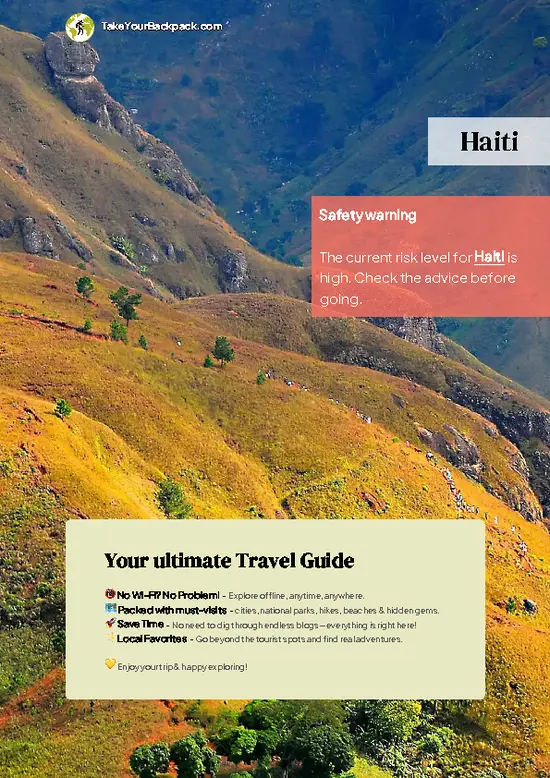
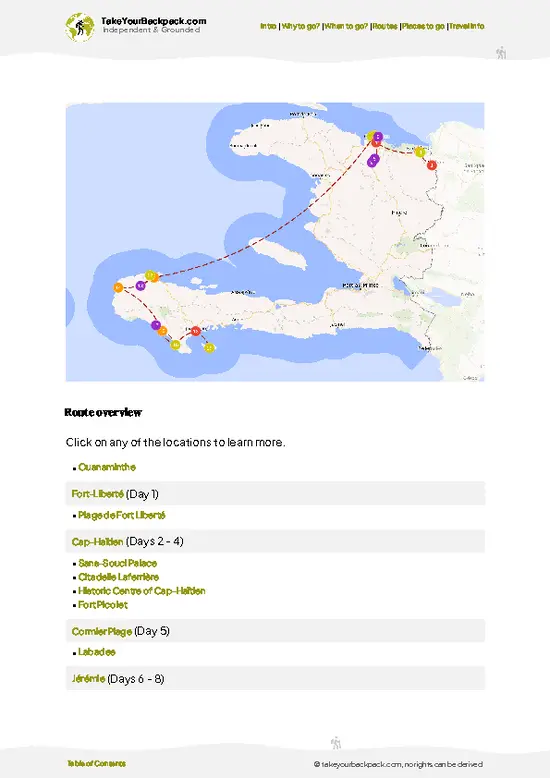
example page 0 from our offline Travel Guide for Haiti
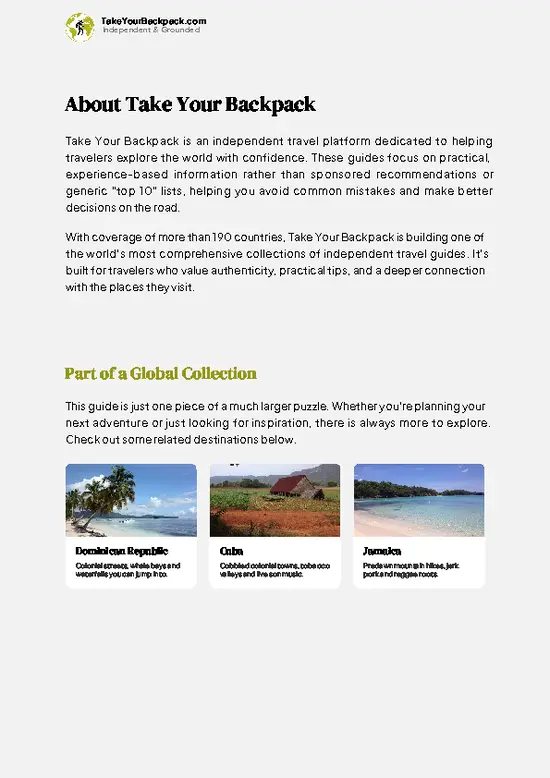
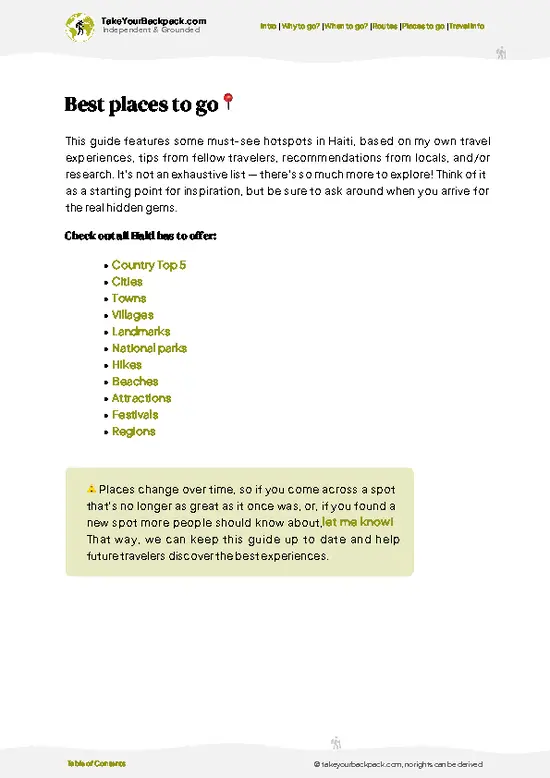
example page 1 from our offline Travel Guide for Haiti
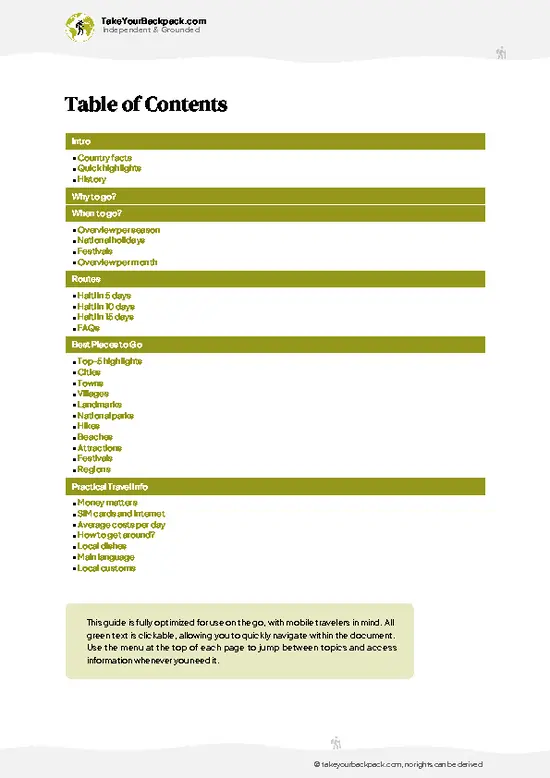
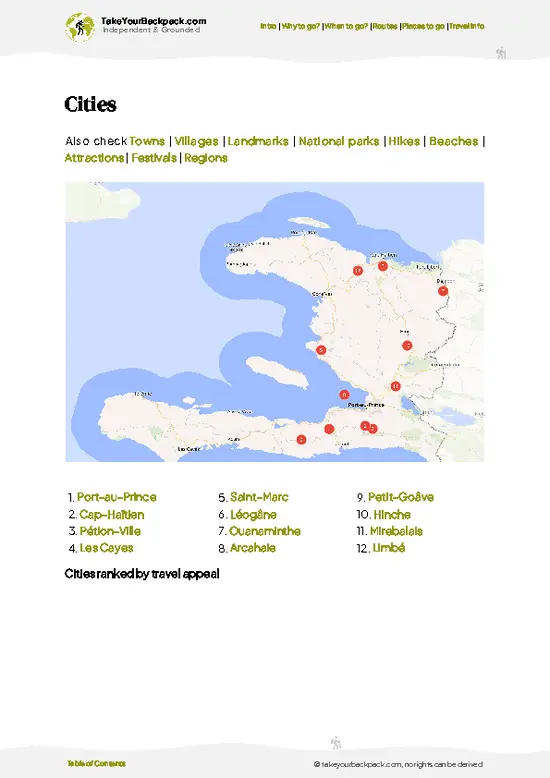
example page 2 from our offline Travel Guide for Haiti
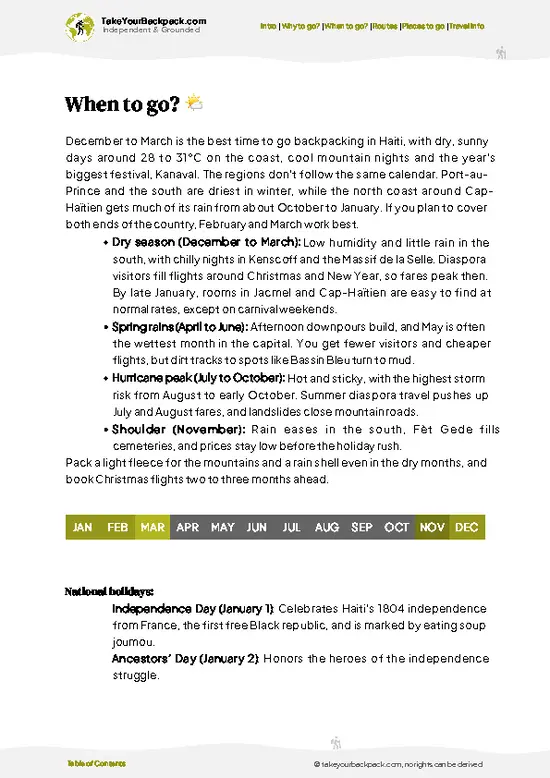
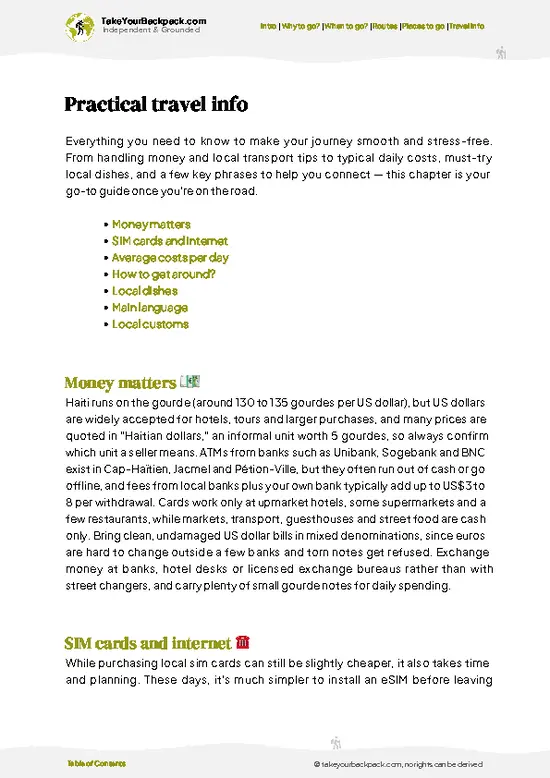
example page 3 from our offline Travel Guide for Haiti
example page 4 from our offline Travel Guide for Haiti
example page 5 from our offline Travel Guide for Haiti
example page 6 from our offline Travel Guide for Haiti
example page 7 from our offline Travel Guide for Haiti
Loading the map 🌍
CLICK TO FILTER
cities
towns
villages
landmarks
national parks
hikes
beaches
attractions
festivals
regions
SHOW COUNTRY’S BESTSHOW ALL

✨ Why go?
Ranked #8 town in Haiti
What sets this place apart

Dame-Marie suits the traveler who wants Haiti without any other backpackers in sight. The draw is the end-of-the-road feel: a small coastal town where fishing boats land in the morning, the market fills the main streets, and a walk in any direction ends in coconut groves or on quiet sand. You will stand out, so people will greet you and ask where you are headed, which makes it easy to talk your way into a boat ride or a village visit. Most people stay two or three nights, mainly because getting here eats a day. It works for slow travelers, Creole speakers and anyone comfortable with basic lodging and improvising. Solo travelers do fine thanks to the friendliness, but there is no backpacker circuit and no nightlife beyond a rum shop and music at dusk. If you need convenience, treat it as a skip.

💡 HighlightsDon't-miss highlights and experiences

  1. Dame-Marie Waterfront and Fishing Beach: The landing beach on the Grand’Anse coast is where the town’s fishing boats come in, mostly wooden sloops, and where you can watch the catch being sorted and sold. Go early in the morning when boats return. Free, 1 hour.
  2. Cathédrale/Église Saint-Louis-style parish church area: placeholder
Spotted a mistake or missing something? Contact us.

🏘️ NeighborhoodsUnderstanding the local layout

Dame-Marie is small enough that the areas below blur into each other, so pick by what you want to do, not by distance. Roads are rough and shade is scarce, which is why most people stick to one or two zones a day.
  • Town center and market: The grid around the main square and the Grand'Anse market is where the town earns its time. Morning is the point, because vendors sell produce, fish and charcoal before the heat builds. Eat cooked meals from market stalls (rice and beans, fried plantain) rather than hunting for restaurants, which are few. Fully walkable.
  • Waterfront and beach edge: Fishing boats and nets line the shore, and this is where the catch comes in. Swimming is fine, but the beach is working space, not a resort strip, so expect no loungers. Go late afternoon when it cools. Walkable from
… read more 👉
Dame-Marie is small enough that the areas below blur into each other, so pick by what you want to do, not by distance. Roads are rough and shade is scarce, which is why most people stick to one or two zones a day.
  • Town center and market: The grid around the main square and the Grand'Anse market is where the town earns its time. Morning is the point, because vendors sell produce, fish and charcoal before the heat builds. Eat cooked meals from market stalls (rice and beans, fried plantain) rather than hunting for restaurants, which are few. Fully walkable.
  • Waterfront and beach edge: Fishing boats and nets line the shore, and this is where the catch comes in. Swimming is fine, but the beach is working space, not a resort strip, so expect no loungers. Go late afternoon when it cools. Walkable from the center.
  • Coastal outskirts toward Anse-d'Hainault and Les Irois: Villages, mango groves and open sea views. Nothing here is a sight to tick off, so skip it unless you have a moto driver and a free morning. Distances are too long and sun too hard for walking.
Nights are quiet. A few bars play music, but electricity is unreliable, so plan to be done after dark.

⌛️ 1 daySeeing the highlights in 24 hours

6:00 AM, Waterfront fish landing: Do not skip this. Boats come in as the light rises, and you can watch crews unload snapper and lobster while buyers bargain on the sand. Buy a coffee nearby, then walk into town.
8:00 AM, Dame-Marie market: Wander the stalls for produce, bread and charcoal. Try fried plantain and fresh fruit for breakfast. Keep small bills ready and ask before taking photos.
10:00 AM, Central square and church: Stroll the quiet streets and sit in the shade. It is a gentle way to see daily life and start conversations.
12:00 PM, Lunch: Eat fish with rice at a local spot near the waterfront. Rest during the hottest hours.
2:30 PM, Coconut grove walk: Follow a track inland through coconut groves and farm plots, ideally with a local who knows the paths. This is the stop few visitors … read more 👉
6:00 AM, Waterfront fish landing: Do not skip this. Boats come in as the light rises, and you can watch crews unload snapper and lobster while buyers bargain on the sand. Buy a coffee nearby, then walk into town.
8:00 AM, Dame-Marie market: Wander the stalls for produce, bread and charcoal. Try fried plantain and fresh fruit for breakfast. Keep small bills ready and ask before taking photos.
10:00 AM, Central square and church: Stroll the quiet streets and sit in the shade. It is a gentle way to see daily life and start conversations.
12:00 PM, Lunch: Eat fish with rice at a local spot near the waterfront. Rest during the hottest hours.
2:30 PM, Coconut grove walk: Follow a track inland through coconut groves and farm plots, ideally with a local who knows the paths. This is the stop few visitors ever see, and it gives you a sense of the rural edge of town.
4:30 PM, Town beach: Walk back to the sand for a swim and watch the light fall.
6:30 PM, Evening on the waterfront: Find a rum shop or simply sit with locals as music plays and the fishing boats are pulled up.

🌤️ When to go?When to go for the best experience

Dame-Marie is hot all year, with highs around 29 to 33°C (84 to 91°F) and nights near 22 to 24°C (72 to 75°F).
  • December to March: Driest and least humid stretch, with highs near 29 to 31°C (84 to 88°F). Roads are firmest, sea is calmer, and this is the easiest window for moving around the peninsula.
  • April to June: Rains return, mainly as afternoon downpours. Heat builds to 32 to 33°C (90 to 91°F), and mud can slow dirt roads.
  • July and August: Hottest and sticky, with ripe mango season. Daylight is longest, about 13 hours.
  • September to November: Peak hurricane risk and heaviest rain. Floods can cut roads, though prices for anything local stay flat and crowds are essentially nil.
  • Festivals: Carnival season (February) and the town’s patron saint celebrations bring music and a bit more lodging demand.
… read more 👉
Dame-Marie is hot all year, with highs around 29 to 33°C (84 to 91°F) and nights near 22 to 24°C (72 to 75°F).
  • December to March: Driest and least humid stretch, with highs near 29 to 31°C (84 to 88°F). Roads are firmest, sea is calmer, and this is the easiest window for moving around the peninsula.
  • April to June: Rains return, mainly as afternoon downpours. Heat builds to 32 to 33°C (90 to 91°F), and mud can slow dirt roads.
  • July and August: Hottest and sticky, with ripe mango season. Daylight is longest, about 13 hours.
  • September to November: Peak hurricane risk and heaviest rain. Floods can cut roads, though prices for anything local stay flat and crowds are essentially nil.
  • Festivals: Carnival season (February) and the town’s patron saint celebrations bring music and a bit more lodging demand.
Check road and weather conditions the day before any long ride.


source: climatestotravel.comJANJanuary: excellent for travelingFEBFebruary: excellent for travelingMARMarch: highly recommended for travelingAPRApril: fair for travelingMAYMay: below average for travelingJUNJune: below average for travelingJULJuly: below average for travelingAUGAugust: below average for travelingSEPSeptember: below average for travelingOCTOctober: fair for travelingNOVNovember: highly recommended for travelingDECDecember: excellent for traveling
when-to-go

✈️ The backpacker research shortcutHaiti Travel Guide

An offline-friendly backpacking guide with optimized travel routes, ranked highlights, transport advice, and the best areas to stay.
example page 0 from our offline Travel Guide for Haiti
example page 1 from our offline Travel Guide for Haiti
example page 2 from our offline Travel Guide for Haiti
example page 3 from our offline Travel Guide for Haiti
example page 4 from our offline Travel Guide for Haiti
example page 5 from our offline Travel Guide for Haiti
example page 6 from our offline Travel Guide for Haiti
example page 7 from our offline Travel Guide for Haiti
The digital guide (332 pages) contains:
✅ 89 highlights, ranked by travel appeal
✅ Optimized 5, 10 & 15-day travel routes
✅ Cities, national parks, landmarks, beaches
✅ How to get around
✅ Offline-friendly for travel without Wi-Fi
👉 Click to see all 30+ guide features

📅 Plan smarter in minutes, not weeks
✅ Month by month travel advice
✅ Festivals & national holidays
✅ Budget expectations

🗺️ Go to the right places, skip the overrated ones
✅ Honest pros & cons of destinations
✅ Top hikes, parks & viewpoints
✅ Lesser-known places most travelers miss
✅ Clear “worth it vs skip it” guidance

🛏️ Travel smoothly without rookie mistakes
✅ Best areas to stay
✅ Transport systems explained simply
✅ Common scams & safety advice
✅ SIM cards, money & practical tips

🌍 Understand the country, not just visit it
✅ Culture & traditions
✅ 52 Essential phrases & customs
✅ Festivals worth planning around
✅ Traveler-friendly historical context
✅ Insights that make places more meaningful

📱 Built for real travel conditions
✅ Fully downloadable PDF
✅ Works completely offline
✅ Optimized for phone use
✅ Useful in remote areas & buses
✅ Everything in one place
Stop searching, start planning
Get instant access to your full guide. 30‑day money-back guarantee.
+ Add another guide for just

By proceeding you agree to our terms.
Sent to your inbox immediately after payment • 100% Secure Checkout
Best Backpacking Travel Advisor 2025 tourism awardBest Backpacking
Travel Advisor
2025
What others say about Take Your Backpack Guides:
⭐⭐⭐⭐⭐
Fantastic, amazing amount of information!
⭐⭐⭐⭐⭐
My goodness this is amazing, it's what I've been looking for hats off too you!
⭐⭐⭐⭐⭐
I think this is absolutely BRILLIANT
⭐⭐⭐⭐
Very complete and informative. It's still missing places, but I gotta to commend you
⭐⭐⭐⭐⭐
This is truly amazing, thank you, can't wait to explore it with my kids!
⭐⭐⭐⭐⭐
Awesome resource, thank you!
⭐⭐⭐⭐⭐
This is amazing! Can't wait to explore the ones I haven't seen
⭐⭐⭐⭐
I love this! Well done, great idea.
⭐⭐⭐⭐⭐
Thanks for taking the time to make this gem!
⭐⭐⭐⭐⭐
This might be the best website I've ever seen.
⭐⭐⭐⭐⭐
Congratulations, and thank you so much for your work; it's incredibly valuable.
⭐⭐⭐⭐
In all seriousness I think you did a great job pointing out the important spots
⭐⭐⭐⭐⭐
10/10 very good
⭐⭐⭐⭐⭐
As someone who's only just starting to visit regularly this is awesome, thank you.
⭐⭐⭐⭐
Thank you very much! I'm going to visit my dad, it's going to be very useful!
⭐⭐⭐⭐⭐
This is really cool! We'll be travelling for the first time and this definitely come in handy.
⭐⭐⭐⭐⭐
You are now our minister of culture, congratulations 👨‍💼
⭐⭐⭐⭐⭐
Just wanted to tell you that this is a pearl! Going to follow your recommendations.
⭐⭐⭐⭐⭐
This is so cool. I'll definitely be using the resource for my travels soon.
⭐⭐⭐⭐⭐
This is very impressive! Good work.
⭐⭐⭐⭐⭐
This is an amazing and informative site. Very well done!

🛏️ Where to stay?How to pick the right area

The center near the main square and market is the best area for a budget stay in Dame-Marie. Options are guesthouses and simple family-run rooms, not hostels, so expect private rooms at roughly US$15 to 35 a night and no dorm beds. Being central puts food, moto drivers and the morning departures for other towns within a few minutes’ walk.
The waterfront edge is the second choice. It is breezier and quieter at night, with sea sounds instead of motorbike engines, but fewer places and a longer walk back along unlit streets after dark.
Safety at night is manageable in both areas if you stay in familiar … read more 👉
The center near the main square and market is the best area for a budget stay in Dame-Marie. Options are guesthouses and simple family-run rooms, not hostels, so expect private rooms at roughly US$15 to 35 a night and no dorm beds. Being central puts food, moto drivers and the morning departures for other towns within a few minutes’ walk.
The waterfront edge is the second choice. It is breezier and quieter at night, with sea sounds instead of motorbike engines, but fewer places and a longer walk back along unlit streets after dark.
Safety at night is manageable in both areas if you stay in familiar lanes. Noise in the center starts early with market activity, so earplugs help. Power is patchy, so pick a place with a generator or inverter, and carry a power bank and headlamp. Reserve ahead by phone through a contact, since walk-up availability is uncertain and signage is minimal.

🚌 Getting aroundMoving around without the hassle

The center of Dame-Marie is a few streets around the market and the waterfront, and you can cross it on foot in 15 to 20 minutes. Walking stops making sense once you head for the beaches, the villages in the hills or the road toward Jérémie, because distances stretch, the sun is fierce by midday and the road surface is rough. Public transport here is informal, so plan around vehicles that leave when full, not on a timetable.
  • Walking: Free, and the right choice inside town, since the streets are short and everything sits close together. Go early morning or late afternoon, when the heat eases and the market is busiest.
  • Moto-taxi: The default way to cover short distances, usually US$1 to 3 for a ride within town or to nearby beaches and villages. Motorcycles are everywhere because the roads are
… read more 👉
The center of Dame-Marie is a few streets around the market and the waterfront, and you can cross it on foot in 15 to 20 minutes. Walking stops making sense once you head for the beaches, the villages in the hills or the road toward Jérémie, because distances stretch, the sun is fierce by midday and the road surface is rough. Public transport here is informal, so plan around vehicles that leave when full, not on a timetable.
  • Walking: Free, and the right choice inside town, since the streets are short and everything sits close together. Go early morning or late afternoon, when the heat eases and the market is busiest.
  • Moto-taxi: The default way to cover short distances, usually US$1 to 3 for a ride within town or to nearby beaches and villages. Motorcycles are everywhere because the roads are too broken for most cars. Agree the price before climbing on, and ask for a helmet, which is not always offered. Skip riding after dark on the rough roads.
  • Shared pickup trucks and tap-taps: These run toward Jérémie and surrounding communities, roughly US$3 to 8 depending on distance, and leave only when full, so a morning departure saves you a long wait. Expect 2 to 4 hours to Jérémie on bad roads, and more after rain. They are cramped, yet far cheaper than a private car. Sit up front if you get motion sickness.
  • Private hire (car or 4x4 with driver): Costs about US$60 to 120 per day, and it is the smarter pick for the rough coastal and mountain tracks, where ordinary vehicles struggle. Split it with other travelers and fix the route, hours and fuel in advance. Ask your guesthouse host for a driver they trust, since they know who is reliable.
  • Domestic flights: Small planes serve Jérémie and Port-au-Prince at times, but schedules change often. Confirm locally before you rely on one, and keep a road plan in reserve.

👛 Costs (as of 20 October 2026)How expensive it really is

Dame-Marie costs a backpacker about US$50 to 75 a day, and US$62 once you count a mid-range guesthouse room in high season.
CategoryBudget RangeLocal Reality
Dorm accommodationUS$15 to 25No true dorms, so a simple private room in a guesthouse is the norm. Figure US$20 in high season.
MealsUS$10 to 20Market stalls and home-style plates of rice, beans and fish. Figure US$15.
Local transportUS$3 to 10Moto-taxis for short hops, shared pickups for longer trips. Figure US$7.
Basic activities/entry feesUS$0 to 10Beach and market are free, with guide or boat costs if you want one. Figure US$5.
Miscellaneous expensesUS$10 to 20Water, phone credit, power charging and tips. Figure US$15.
Total Daily BudgetUS$62Per person, per day, in high season.
Buy fruit and fried snacks at the market and eat your main meal … read more 👉
Dame-Marie costs a backpacker about US$50 to 75 a day, and US$62 once you count a mid-range guesthouse room in high season.
CategoryBudget RangeLocal Reality
Dorm accommodationUS$15 to 25No true dorms, so a simple private room in a guesthouse is the norm. Figure US$20 in high season.
MealsUS$10 to 20Market stalls and home-style plates of rice, beans and fish. Figure US$15.
Local transportUS$3 to 10Moto-taxis for short hops, shared pickups for longer trips. Figure US$7.
Basic activities/entry feesUS$0 to 10Beach and market are free, with guide or boat costs if you want one. Figure US$5.
Miscellaneous expensesUS$10 to 20Water, phone credit, power charging and tips. Figure US$15.
Total Daily BudgetUS$62Per person, per day, in high season.
Buy fruit and fried snacks at the market and eat your main meal at midday, when plates cost less than evening ones. Carry small US dollar bills, and pay in gourdes where possible.
⚠️ Prices can change and everyone travels differently, so take this as a rough guide. Hope it helps you plan your adventure!

🚌 Day tripsExploring the surroundings

Dame-Marie works as a base for short coastal outings, but transport is slow and informal, so choose one trip per day and start early.
Anse-d'Hainault:
A neighboring coastal town reached by moto or shared pickup in roughly 45 minutes to 1.5 hours each way, depending on the road. Budget US$6 to 15 round trip. Go for the market and shoreline, and leave by early afternoon so you are not hunting a ride back.

Les Irois:
The road west toward the tip of the peninsula ends at this fishing village. Expect 1.5 to 2.5 hours each way and US$10 to 25 return by moto. Dry months are far easier, and first-timers often underestimate how slow the track is.

Jérémie:
The regional capital has a bigger market, services and a historic center. The ride takes about 3 to 5 hours one way by shared vehicle, so it is … read more 👉
Dame-Marie works as a base for short coastal outings, but transport is slow and informal, so choose one trip per day and start early.
Anse-d'Hainault:
A neighboring coastal town reached by moto or shared pickup in roughly 45 minutes to 1.5 hours each way, depending on the road. Budget US$6 to 15 round trip. Go for the market and shoreline, and leave by early afternoon so you are not hunting a ride back.

Les Irois:
The road west toward the tip of the peninsula ends at this fishing village. Expect 1.5 to 2.5 hours each way and US$10 to 25 return by moto. Dry months are far easier, and first-timers often underestimate how slow the track is.

Jérémie:
The regional capital has a bigger market, services and a historic center. The ride takes about 3 to 5 hours one way by shared vehicle, so it is a long day at US$10 to 20 return. Only do it if you need a bank, supplies or onward connections.
👉 Explore Jérémie

🛡️ SafetyStaying Safe: What Travelers Should Know

Dame-Marie is a small, close-knit town where visitors are conspicuous but rarely hassled. Daytime in the market and along the waterfront is relaxed, and people usually respond well to a greeting in Creole. After dark, streets are poorly lit and power cuts are common, so carry a headlamp, stay on familiar routes and take a moto instead of walking far. Solo travelers can manage fine with a local host who knows your plans. Fix prices before moto rides or any service, since foreigners are often quoted high, and keep cash split between pockets. Photograph people only after asking. The bigger risks are road conditions and flooding in rainy months, along with limited medical care, so bring a basic first-aid kit and any medication. Check with locals about conditions on the road ahead before traveling between towns.

FAQTraveler FAQ

Dame-Marie is worth the trip if you want an unhurried, little-visited stretch of Haiti’s far western coast, not a quick stopover. You get quiet beaches, a working fishing waterfront and a market where almost nobody is selling to tourists. Roads here are slow, so reaching it takes real effort, often 2 to 4 hours from Jérémie.
Plan on 2 to 3 days in Dame-Marie. One day covers the market, the waterfront and a walk through town, and a second lets you reach beaches or hill villages by moto-taxi at roughly US$1 to 3 a ride. Add a third day if rain or poor roads slow your movements.
Dame-Marie is a poor candidate for a day trip from a nearby city. Jérémie is the closest larger town, and the rough road takes 2 to 4 hours each way, which leaves little time on the ground. Stay at least one night so you are not racing the last shared truck back.
⚠️ Things can change over time, so always validate details locally before you go.

Other Haitian towns near Dame-Marie

Explore more nearby:

  • Jérémie—Gingerbread houses, City of Poets, Dumas square, dawn boats| 33 km away
  • Côteaux—Dark sand, hauled boats, Tiburon coast, river mouth| 56 km away
  • Chantal—Farm market, parish church, green hills, banana plots| 69 km away

💡 Not sure where to go next?
Create a personalized itinerary for Haiti including Dame-Marie and the places that fit your trip.

Generate my itinerary

👉 Discover all towns

Or checkout all Haiti has to offer (think cities, towns, villages, national parks, hikes, beaches, festivals)
Country photo of Haiti

We 💚 feedbackParting advice and final tips

Dame-Marie pairs well with Jérémie on a route through the Grand’Anse, using it as the quiet final stretch after more lively days. I would bring cash, a flashlight and patience, and plan a spare day so a rough road does not wreck the schedule.

✍️ Help improve this page!
The information on this page is based on in-depth research, insights shared by experienced travelers, and feedback from the local travel community in Haiti. While every effort is made to keep the information accurate and current, conditions can change — so if you spot anything incorrect or outdated, please get in touch.


🙋‍♂️ Give feedback

👋 Meet the founderWho’s Behind Take Your Backpack?

Johan, backpacker and founder of TakeYourBackpackHi, I’m Johan (Netherlands 🇳🇱), the creator of TakeYourBackpack. Over the past 3 decades, I’ve backpacked through 90+ countries across six continents, gaining extensive experience with independent travel, long-term trips, and overland routes.

This site is built on a combination of firsthand travel experience and carefully curated insights from other backpackers. Many guides are based on places I’ve personally visited, while others bring together tips, observations, and practical advice shared by trusted travelers I’ve met along the way.

The goal is to provide realistic, experience-driven guidance — not generic itineraries — so you can explore destinations with better context, clearer expectations, and more confidence.