×

Haiti🇭🇹 | best townsExplore the 10 Best towns in Haiti

Towns in Haiti are small, loud, coastal and mostly cut off from one another by poor roads. The north around Cap-Haïtien is the calmest base for independent travel, with flights in and a compact colonial core. The south coast has the best beaches and lower prices, but reaching it overland means crossing areas where armed gangs control the road. Central and inland towns are cheaper still and rarely visited, yet they offer little beyond markets. Skip any plan that relies on Port-au-Prince as a hub. Backpacking here works only with local contacts, flexible plans and patience for delays.

By Johan Kruseman 🇳🇱 | Updated October 20, 2026
Explore the best villages in Haiti

Why go?Why These town Stand Out

Haiti suits towns that are lived in rather than staged. Spanish, French and then Haitian-era history left colonial grids, fortified hills and gingerbread houses, and the first Black republic’s story is physically present in forts and market squares. Creole, Vodou, painting, metalwork and rara bands are everyday culture here, not museum material.

The geography explains the isolation. Steep mountains run down the middle of the country and push most towns onto the coast, so each one is its own pocket, linked by narrow roads that wash out in heavy rain. Tourism infrastructure is thin: few hotels, no hostel circuit, little signage, and unreliable electricity that makes generators and bottled water part of daily life.

Security is the deciding factor. Gang control around Port-au-Prince has disrupted … read more 👉
Haiti suits towns that are lived in rather than staged. Spanish, French and then Haitian-era history left colonial grids, fortified hills and gingerbread houses, and the first Black republic’s story is physically present in forts and market squares. Creole, Vodou, painting, metalwork and rara bands are everyday culture here, not museum material.

The geography explains the isolation. Steep mountains run down the middle of the country and push most towns onto the coast, so each one is its own pocket, linked by narrow roads that wash out in heavy rain. Tourism infrastructure is thin: few hotels, no hostel circuit, little signage, and unreliable electricity that makes generators and bottled water part of daily life.

Security is the deciding factor. Gang control around Port-au-Prince has disrupted the main highways and, at times, the capital’s airport, and most governments advise against travel. Haiti is not worth choosing for a loose, hop-on-hop-off trip. It is worth choosing if you have local contacts, a trusted driver, up-to-date advice and a plan built around towns you can reach by air or short, familiar roads. Expect to pay more than neighboring countries for far less comfort, and plan for last-minute changes.
Behind the Scenes of Selection
The list of best towns in Haiti is created based on charm, local culture, atmosphere, hidden gems, and visitor appeal. If you feel a town is missing in this list, please let us know.

When to go?When to Plan Your Trip

Best months and weather: The best months for towns in Haiti are December to March, when the dry season brings the least rain, lower humidity and coastal highs of about 28 to 31°C, with cooler nights in the hills. These months also give the most reliable roads, the fewest washouts and the best chance that flights and boats run on schedule.

Shoulder seasons and rain: April to June and October to November are shoulder months. Rain arrives in two stretches, roughly April to June and again from August to October, with heavy afternoon downpours that turn dirt tracks to mud and can close river crossings. Temperatures climb to 32 to 35°C on the coast between June and September, which makes walking around midday unpleasant. Not worth the time: July to October, when heat, humidity and storm risk stack … read more 👉
Best months and weather: The best months for towns in Haiti are December to March, when the dry season brings the least rain, lower humidity and coastal highs of about 28 to 31°C, with cooler nights in the hills. These months also give the most reliable roads, the fewest washouts and the best chance that flights and boats run on schedule.

Shoulder seasons and rain: April to June and October to November are shoulder months. Rain arrives in two stretches, roughly April to June and again from August to October, with heavy afternoon downpours that turn dirt tracks to mud and can close river crossings. Temperatures climb to 32 to 35°C on the coast between June and September, which makes walking around midday unpleasant. Not worth the time: July to October, when heat, humidity and storm risk stack up.

Hurricanes, Carnival and prices: Hurricane season runs June to November, with the greatest risk from August to October, and the south and southwest coasts take the worst of it. The north is slightly drier than the south in the early months of the year. Carnival in February (pre-Lent) fills towns, pushes guesthouse prices up by roughly 20 to 50 percent and makes transport scarce, so book rooms and drivers well ahead or avoid those dates. Outside Carnival and the Christmas week, prices stay flat all year, so there is no cheap season to chase. Choose the dry months for comfort and accept that the rest of the year costs you time, not money.

town hoppingPlanning Your Route Efficiently

How long and in what order: A trip combining several towns in Haiti needs 7 to 12 days, mostly because transfers are slow and plans shift. Group stops by region: the north around Cap-Haïtien, and the south coast between Jacmel, Les Cayes and the beach strip beyond. Treat them as two separate trips, not one loop. Starting in the north is the practical direction, since international flights have most reliably reached Cap-Haïtien, and the south is then a deliberate second leg by domestic flight.

Time per stop and transfers: Give each town 2 to 3 nights. One night is not enough once you count the late starts, the wait for a driver and the roads. Within a region, hops are short: about 30 to 90 minutes by moto-taxi, tap-tap or private car along the coast, though a 50 km stretch can take two hours … read more 👉
How long and in what order: A trip combining several towns in Haiti needs 7 to 12 days, mostly because transfers are slow and plans shift. Group stops by region: the north around Cap-Haïtien, and the south coast between Jacmel, Les Cayes and the beach strip beyond. Treat them as two separate trips, not one loop. Starting in the north is the practical direction, since international flights have most reliably reached Cap-Haïtien, and the south is then a deliberate second leg by domestic flight.

Time per stop and transfers: Give each town 2 to 3 nights. One night is not enough once you count the late starts, the wait for a driver and the roads. Within a region, hops are short: about 30 to 90 minutes by moto-taxi, tap-tap or private car along the coast, though a 50 km stretch can take two hours on bad surface. Between regions, overland by road is a poor idea because the route crosses Port-au-Prince and the gang-affected corridors around it. Small domestic flights, typically 45 to 75 minutes, are the better option, at a much higher price.

Planning mistakes: The most common error is packing in too many stops and assuming roads are open. Instead, confirm each leg with your host the day before. Another is booking tight connections to an international flight. Leave a buffer of at least one full day at the end, because cancelled flights and blocked roads are routine. Do not travel after dark between towns, and do not rely on ride apps or fixed bus timetables, which barely exist.

The ListTop towns of Haiti

1 Jacmel

Carnival masks, Creole mansions, iron market hall, dark-sand beach

Visit papier-mâché studios, stroll balconied coffee-era houses and end the day with grilled fish at Raymond-les-Bains.

haiti-city-jacmel
© Google | Hans Hertzler

2 Jérémie

Gingerbread houses, City of Poets, Dumas square, dawn boats

Wander fretwork mansions and the Dumas memorial, then catch the morning catch being haggled over at the waterfront.

3 Môle-Saint-Nicolas

Columbus landing, Fort Saint-Charles, rocky headland, Windward Passage

Trace stone fort ruins above the bay, visit the landing marker and walk the empty headland tracks.

4 Montrouis

Calm bays, resort day passes, sunset sand, highway market

Swim in shallow west-coast water, buy a resort day pass and walk the shore between beach bars at sunset.

5 Saut-d’Eau

Sacred falls, pilgrim pools, Ville-Bonheur, July crowds

Descend to limestone cascades where pilgrims bathe and leave offerings, then visit the nearby shrine church and village stalls.

6 Kenscoff

Mountain terraces, Furcy pines, cool air, vegetable market

Climb past hand-worked carrot and cabbage slopes to pine ridges, a birding reserve and long views toward Port-au-Prince.

haiti-city-kenscoff
© Google | Martial Jahson

7 Fort-Liberté

Fort Dauphin, calm bay, colonial grid, mangrove boats

Climb the old French fortress for bay views, cross the water by fishing boat and finish with grilled fish at the shore.

8 Dame-Marie

Far west tip, sloop landing, Grand’Anse coast, road’s end

Reach the end of the road to watch wooden sloops land their catch, sorted and sold on the beach.

9 Grand-Goâve

Coast road, river pools, fish landing, pebbly beaches

Pair a market morning with a swim along the shore, a trip to cool river pools and grilled fish bought at dusk.

10 Aquin

Fish landing, moto taxis, southern shore, roadside plates

Watch wooden boats unload at the shoreline, then browse the produce and charcoal market and finish with fried fish and plantains.

11 Saint-Louis-du-Sud

Patron feast, Place d’Armes, kompa nights, fish landing

Time a visit for the late-August feast with drumming, or catch dawn boats, market crowds and weekend kompa.

12 Belladère

Border market, porters, dry ridges, moto loops

Walk the loud trading strip at the Dominican frontier, then ride a motorcycle loop through dry hills and small farms.

13 Cabaret

Duvalierville grid, highway stalls, national road, bay shore

Walk the wide planned avenues of a 1960s model town, then snack on grilled corn and plantain where the buses stop.

14 Lascahobas

Plateau crossroads, Saturday market, river paths, green valleys

Browse the big market for grain and charcoal, then follow a guide to river country and hillside viewpoints.

15 Marigot

Painted boats, red snapper, town beach, southeast coast

Spend a morning among mended nets and hauled boats, swim beside them and eat grilled snapper with plantain.

16 Pilate

Highland farms, village market, river crossing, Citadelle region

Walk lanes of banana and bean plots, watch villagers fetch water at the stream and eat plantain at roadside stalls.

17 Côteaux

Dark sand, hauled boats, Tiburon coast, river mouth

Meet fishermen sorting the morning catch, sit through a sung Sunday Mass and stroll the coast road toward Port-à-Piment.

18 Borgne

Northern waterfront, hill farms, banana groves, quiet coast

Catch the nets coming in at the shore, browse the produce market, then climb footpaths for wide views over the coast.

haiti-city-borgne
© Google |

19 Chantal

Farm market, parish church, green hills, banana plots

Spend a morning among farmers at the central market, then follow garden paths through hill plots with a local guide.

20 Thomonde

Plateau lanes, market days, rooftop sunsets, charcoal smoke

Bargain among sacks of produce on market day, follow rural tracks past corn and beans, and watch the sun set over rooftops.

21 Thomazeau

Cul-de-Sac plain, brackish lake, cane fields, goat market

Visit the market early, then head toward the shores of Étang Saumâtre, with local contacts and a return before dusk.

22 Terrier-Rouge

Border-zone market, Place Publique, griot stalls, cassava edges

Push through the crowded main market, share the square at late afternoon and walk out to banana and cassava plots.

Think you know Haiti?

Prove you’re a true local — uncover 12 lesser-known towns in Haiti that locals tend to keep to themselves.
Loading the map 🌍

Expert viewExpert Commentary on towns

How many towns: Visit two or three towns, in one region, on a single trip. Transfers are slow, flights are limited and conditions change by the day, so every additional stop multiplies your exposure to delays and security problems. Two towns in the same area give you time to settle in, find a trustworthy driver and adjust when a road closes. Four or five towns in ten days means spending most of it in vehicles.

Which kind to prioritize: For a first trip, choose a northern or southern coastal town with a working guesthouse and an airstrip or short, known road. They offer the easiest access, steady food supply and local people who can arrange transport. Travelers focused on art, music and Vodou-influenced festivals should time a visit for Carnival and accept the crowds and higher prices. Beach … read more 👉
How many towns: Visit two or three towns, in one region, on a single trip. Transfers are slow, flights are limited and conditions change by the day, so every additional stop multiplies your exposure to delays and security problems. Two towns in the same area give you time to settle in, find a trustworthy driver and adjust when a road closes. Four or five towns in ten days means spending most of it in vehicles.

Which kind to prioritize: For a first trip, choose a northern or southern coastal town with a working guesthouse and an airstrip or short, known road. They offer the easiest access, steady food supply and local people who can arrange transport. Travelers focused on art, music and Vodou-influenced festivals should time a visit for Carnival and accept the crowds and higher prices. Beach seekers should pick the southern coast in the dry months. Skip inland and central towns unless a local contact vouches for the route. They are cheaper but offer little to see and the roads are the least predictable.

What it costs: Haiti is expensive for what you get. Budget roughly US$60 to 110 a day, with guesthouses at US$30 to 80 a night, meals at US$5 to 15, bottled water at around US$1 a liter, and local transport at US$1 to 5 a ride by moto-taxi or tap-tap. A private driver with a car is US$60 to 120 a day, and a local guide costs about US$25 to 50 a day. Entry fees to forts and sites are modest, usually US$5 to 20 each. Domestic flights run about US$120 to 250 one way. Bring small US dollar bills, since many hotels quote in dollars but cash machines are unreliable and card use is rare.

Safety and culture: Hire a vetted local driver or guide instead of moving independently, and share your plans with your host. Never travel between towns at night, avoid demonstrations, and stay out of any area your host calls unsafe, however quiet it looks. Roadblocks and fuel shortages can appear without warning. Register with your embassy and carry travel insurance that covers medical evacuation, since hospitals outside the main towns are poorly equipped.

Ask before photographing people, especially at market stalls and ceremonies, and expect to negotiate a small payment. Greet people before asking for anything. A “bonjou” opens doors. Dress modestly in towns, and treat Vodou ceremonies as religious events, not shows.

Costs and mistakes that catch travelers out: Three problems recur. Fuel shortages and blocked roads can add a night or two, so keep one spare day and some cash reserves. Unpriced services, from drivers to guides to boat rides, get inflated for outsiders, so agree the total in writing or by message beforehand. And power cuts are routine, so confirm your guesthouse has a generator and carry a charged power bank. Do not spend money on organized day trips from resorts when your own driver costs less and gives you more control.

✈️ The backpacker research shortcutHaiti Travel Guide

An offline-friendly backpacking guide with optimized travel routes, ranked highlights, transport advice, and the best areas to stay.
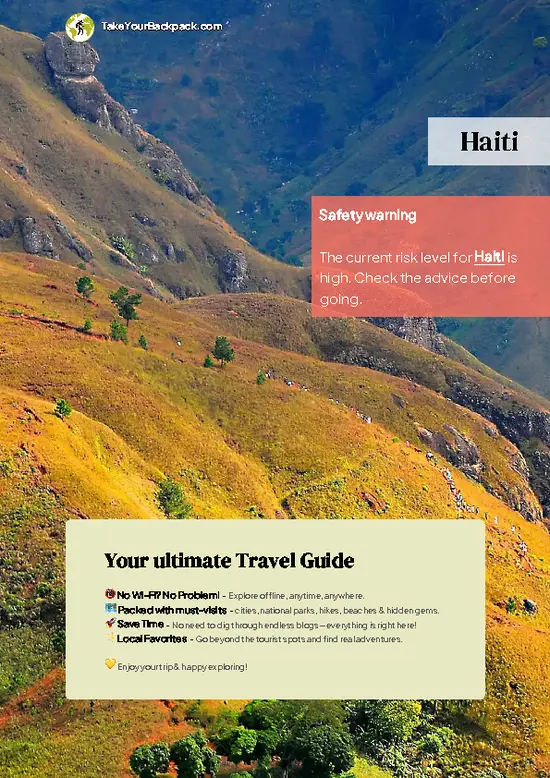
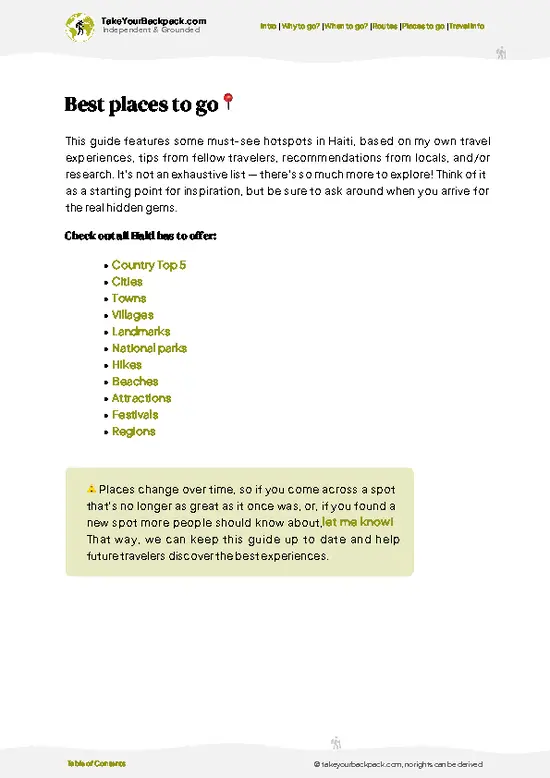
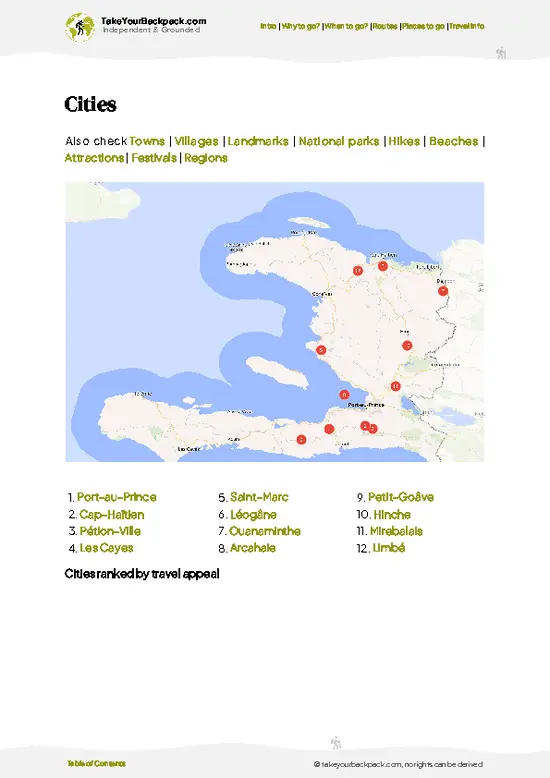
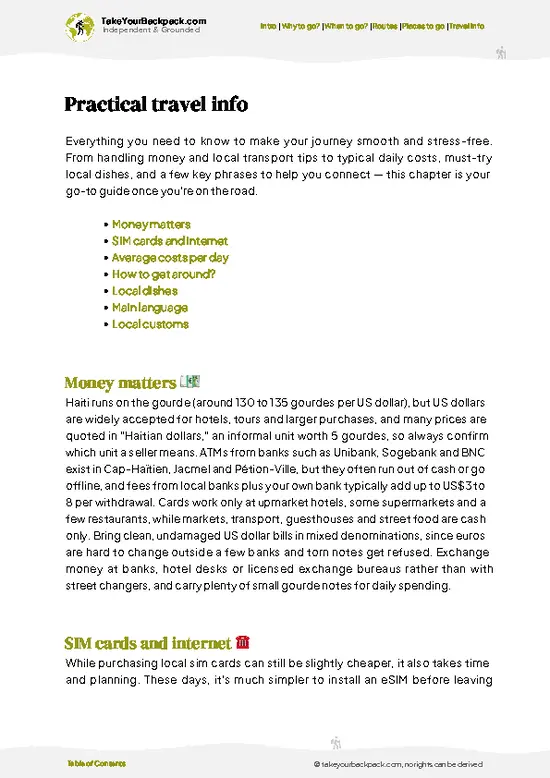
example page 0 from our offline Travel Guide for Haiti
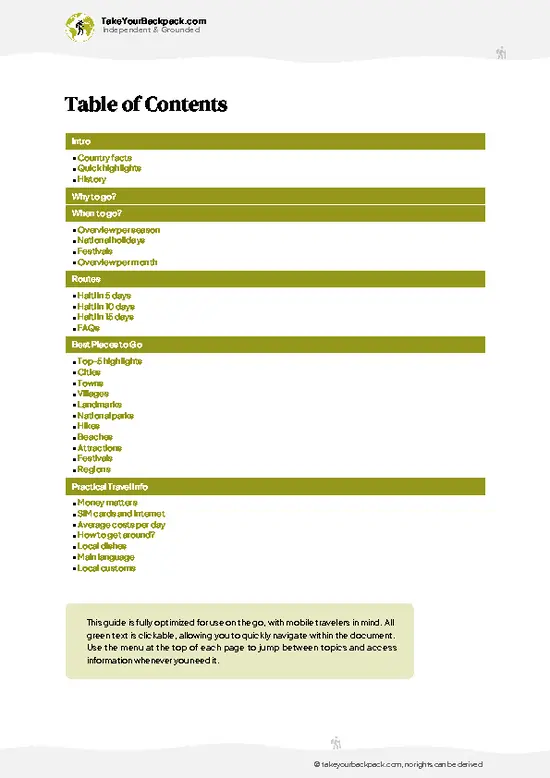
example page 1 from our offline Travel Guide for Haiti
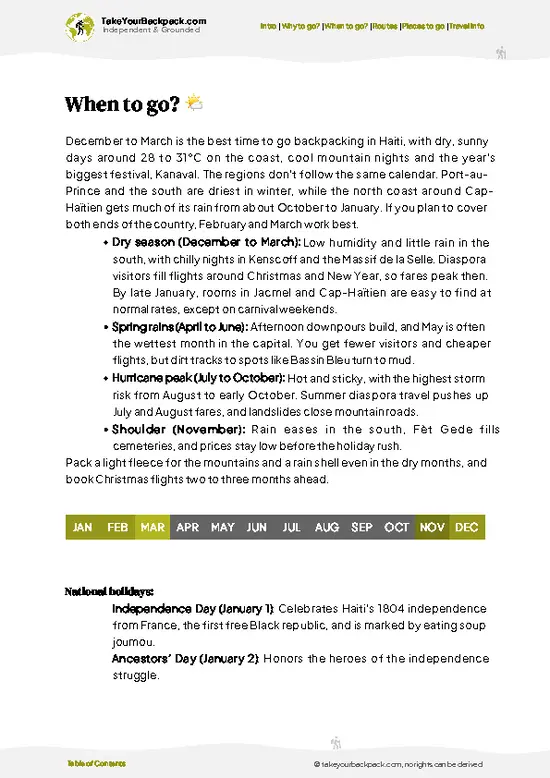
example page 2 from our offline Travel Guide for Haiti
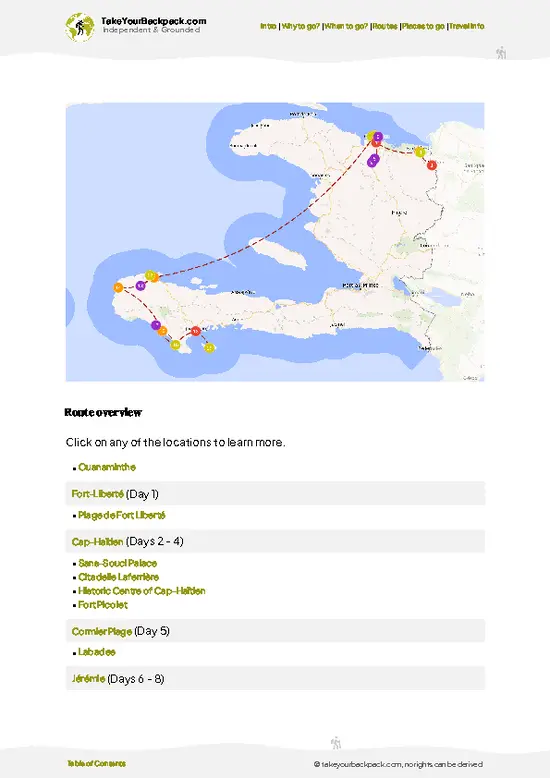
example page 3 from our offline Travel Guide for Haiti
example page 4 from our offline Travel Guide for Haiti
example page 5 from our offline Travel Guide for Haiti
example page 6 from our offline Travel Guide for Haiti
example page 7 from our offline Travel Guide for Haiti
The digital guide (332 pages) contains:
✅ 89 highlights, ranked by travel appeal
✅ Optimized 5, 10 & 15-day travel routes
✅ Cities, national parks, landmarks, beaches
✅ How to get around
✅ Offline-friendly for travel without Wi-Fi
👉 Click to see all 30+ guide features

📅 Plan smarter in minutes, not weeks
✅ Month by month travel advice
✅ Festivals & national holidays
✅ Budget expectations

🗺️ Go to the right places, skip the overrated ones
✅ Honest pros & cons of destinations
✅ Top hikes, parks & viewpoints
✅ Lesser-known places most travelers miss
✅ Clear “worth it vs skip it” guidance

🛏️ Travel smoothly without rookie mistakes
✅ Best areas to stay
✅ Transport systems explained simply
✅ Common scams & safety advice
✅ SIM cards, money & practical tips

🌍 Understand the country, not just visit it
✅ Culture & traditions
✅ 52 Essential phrases & customs
✅ Festivals worth planning around
✅ Traveler-friendly historical context
✅ Insights that make places more meaningful

📱 Built for real travel conditions
✅ Fully downloadable PDF
✅ Works completely offline
✅ Optimized for phone use
✅ Useful in remote areas & buses
✅ Everything in one place
Stop searching, start planning
Get instant access to your full guide. 30‑day money-back guarantee.
+ Add another guide for just

By proceeding you agree to our terms.
Sent to your inbox immediately after payment • 100% Secure Checkout
Best Backpacking Travel Advisor 2025 tourism awardBest Backpacking
Travel Advisor
2025
What others say about Take Your Backpack Guides:
⭐⭐⭐⭐⭐
Fantastic, amazing amount of information!
⭐⭐⭐⭐⭐
My goodness this is amazing, it's what I've been looking for hats off too you!
⭐⭐⭐⭐⭐
I think this is absolutely BRILLIANT
⭐⭐⭐⭐
Very complete and informative. It's still missing places, but I gotta to commend you
⭐⭐⭐⭐⭐
This is truly amazing, thank you, can't wait to explore it with my kids!
⭐⭐⭐⭐⭐
Awesome resource, thank you!
⭐⭐⭐⭐⭐
This is amazing! Can't wait to explore the ones I haven't seen
⭐⭐⭐⭐
I love this! Well done, great idea.
⭐⭐⭐⭐⭐
Thanks for taking the time to make this gem!
⭐⭐⭐⭐⭐
This might be the best website I've ever seen.
⭐⭐⭐⭐⭐
Congratulations, and thank you so much for your work; it's incredibly valuable.
⭐⭐⭐⭐
In all seriousness I think you did a great job pointing out the important spots
⭐⭐⭐⭐⭐
10/10 very good
⭐⭐⭐⭐⭐
As someone who's only just starting to visit regularly this is awesome, thank you.
⭐⭐⭐⭐
Thank you very much! I'm going to visit my dad, it's going to be very useful!
⭐⭐⭐⭐⭐
This is really cool! We'll be travelling for the first time and this definitely come in handy.
⭐⭐⭐⭐⭐
You are now our minister of culture, congratulations 👨‍💼
⭐⭐⭐⭐⭐
Just wanted to tell you that this is a pearl! Going to follow your recommendations.
⭐⭐⭐⭐⭐
This is so cool. I'll definitely be using the resource for my travels soon.
⭐⭐⭐⭐⭐
This is very impressive! Good work.
⭐⭐⭐⭐⭐
This is an amazing and informative site. Very well done!

🛏️ Where to stay?Where to Stay in Haiti

Haiti has almost no hostels in the dorm-bed sense, so budget travel here means family-run guesthouses and small hotels, typically around 4,000 to 8,000 HTG (US$30 to 60) a night. In Cap-Haïtien, the grid-street Centre-Ville keeps you close to the waterfront boulevard and to transport for the Citadelle, with the calmest evenings in the country, while the beach strip at Cormier west of town is quieter but needs a car or moto to get anywhere; in Jacmel, the walkable historic center among the old iron-balconied mansions has the easiest low-key bar scene. Pétion-Ville in Port-au-Prince has the capital’s widest choice of rooms and restaurants, but gang violence affects much of the city and the roads … read more 👉
Haiti has almost no hostels in the dorm-bed sense, so budget travel here means family-run guesthouses and small hotels, typically around 4,000 to 8,000 HTG (US$30 to 60) a night. In Cap-Haïtien, the grid-street Centre-Ville keeps you close to the waterfront boulevard and to transport for the Citadelle, with the calmest evenings in the country, while the beach strip at Cormier west of town is quieter but needs a car or moto to get anywhere; in Jacmel, the walkable historic center among the old iron-balconied mansions has the easiest low-key bar scene. Pétion-Ville in Port-au-Prince has the capital’s widest choice of rooms and restaurants, but gang violence affects much of the city and the roads in and out, so stay there only with a current security briefing and pre-arranged transport.

If you enjoy meeting fellow travelers, consider choosing hostels with high ratings for atmosphere. On the other hand, if you prefer having your own space, a hotel might be a better option.

HaitiMore of Haiti

👋 Meet the founderWho’s Behind Take Your Backpack?

Johan, backpacker and founder of TakeYourBackpackHi, I’m Johan (Netherlands 🇳🇱), the creator of TakeYourBackpack. Over the past 3 decades, I’ve backpacked through 90+ countries across six continents, gaining extensive experience with independent travel, long-term trips, and overland routes.

This site is built on a combination of firsthand travel experience and carefully curated insights from other backpackers. Many guides are based on places I’ve personally visited, while others bring together tips, observations, and practical advice shared by trusted travelers I’ve met along the way.

The goal is to provide realistic, experience-driven guidance — not generic itineraries — so you can explore destinations with better context, clearer expectations, and more confidence.