×

Haiti🇭🇹 | landmarksHabitation Dioncolonial estate, sugar mill remains, plantation grounds | things to do and best time to go

Explore Ruine Fort ValliereExplore Seguin Waterfall

Backpacking in Habitation Dion
👀 For curious travelersunique site ranked #11
By Johan Kruseman 🇳🇱 | Updated June 6, 2026

Most people hear “Habitation Dion” and picture some polished resort or a big-ticket UNESCO circus; it’s not that. It’s a historic estate site in southern Haiti, near Les Cayes on the Tiburon Peninsula, and it feels more like a time capsule than a theme park. As a backpacker, you come for the raw story: colonial-era architecture, echoes of plantation history, and a quiet, slightly eerie beauty. The wow-factor is subtle, not fireworks. Crowds are usually light, costs are low, and access can be awkward, with rough roads and minimal signage. It’s photogenic in a moody, textured way, but you trade convenience and comfort for atmosphere and context.

Discover everything you want to know in the 📖 Haiti Travel Guide.
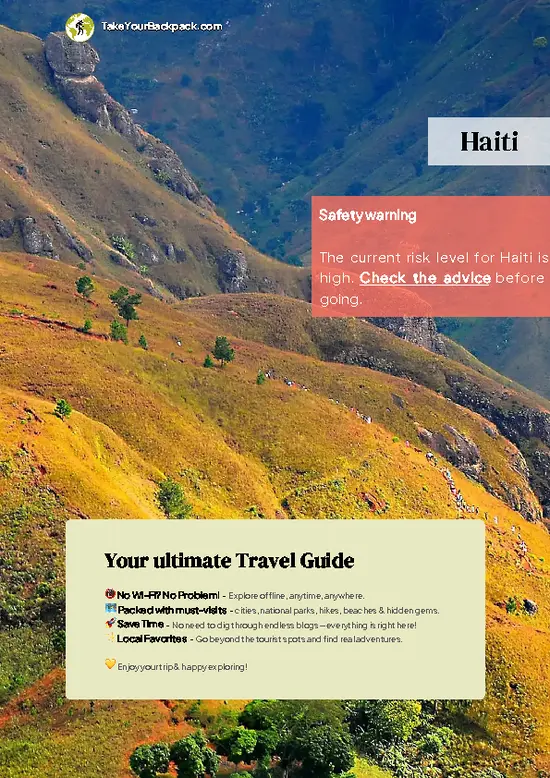
Safety warning

The current risk level for Haiti is high. Check the advice before going.


Get your Haiti guide
99 ranked highlights, routes & tips, works offline (371 pages)
Loading the map 🌍
CLICK TO FILTER
cities
towns
villages
landmarks
national parks
hikes
beaches
attractions
festivals
SHOW COUNTRY’S BESTSHOW ALL

✨ Why go?
Ranked #11 unique site in Haiti
Why Habitation Dion should be on your travel list

Habitation Dion in Haiti is a must-stop for backpackers seeking the real story behind the island’s history. Forget the glossy Instagram shots; this place is about authenticity. Yes, it can get crowded, especially during peak tourist season, but the rich cultural experience is worth the hustle.

Entry fees are low, making it accessible for all budgets. You’ll wander through restored colonial buildings and learn about the sugar plantation era, which is a stark contrast to the postcard-perfect beaches.

What really sets Habitation Dion apart is its location. It fits seamlessly into a broader route through Haiti, allowing you to explore nearby towns and natural wonders without feeling rushed. Pair it with a visit to the Citadelle Laferrière or the Sans-Souci Palace for a day packed with history … read more 👉
Habitation Dion in Haiti is a must-stop for backpackers seeking the real story behind the island’s history. Forget the glossy Instagram shots; this place is about authenticity. Yes, it can get crowded, especially during peak tourist season, but the rich cultural experience is worth the hustle.

Entry fees are low, making it accessible for all budgets. You’ll wander through restored colonial buildings and learn about the sugar plantation era, which is a stark contrast to the postcard-perfect beaches.

What really sets Habitation Dion apart is its location. It fits seamlessly into a broader route through Haiti, allowing you to explore nearby towns and natural wonders without feeling rushed. Pair it with a visit to the Citadelle Laferrière or the Sans-Souci Palace for a day packed with history and breathtaking views. This isn’t just a stop; it’s a chance to connect with Haiti’s soul.
Want to include Habitation Dion in your Haiti route?
Create a personalized Haiti itinerary that includes Habitation Dion and the places that fit your trip — based on your travel style, budget, and available time. Get your route in seconds.

Generate my trip

💡 HighlightsDon't-miss highlights and experiences

  • Colonial manor house — The heart of Habitation Dion is its old plantation house: thick stone walls, wide veranda and original architectural details that give a real sense of colonial-era building techniques and everyday life on the estate.
  • Stone sugar-mill ruins — You can walk among the massive masonry millwork and engine foundations. The scale and craftsmanship of the remains make clear how important sugar (and later coffee) processing once was here.
  • Workers’ quarters and memorial spaces — Small cabins, yards and burial spots still mark where laborers lived and were laid to rest. It’s a sobering, powerful place to reflect on the human stories behind the site.
  • Drying patios and agricultural terraces — Wide, flat patios and stepped terraces show traditional post-harvest processing and
read more 👉
  • Colonial manor house — The heart of Habitation Dion is its old plantation house: thick stone walls, wide veranda and original architectural details that give a real sense of colonial-era building techniques and everyday life on the estate.
  • Stone sugar-mill ruins — You can walk among the massive masonry millwork and engine foundations. The scale and craftsmanship of the remains make clear how important sugar (and later coffee) processing once was here.
  • Workers’ quarters and memorial spaces — Small cabins, yards and burial spots still mark where laborers lived and were laid to rest. It’s a sobering, powerful place to reflect on the human stories behind the site.
  • Drying patios and agricultural terraces — Wide, flat patios and stepped terraces show traditional post-harvest processing and hillside cultivation; they’re photogenic and great for understanding how the landscape was worked.
  • Botanical grounds and lookout points — Mature trees, fruiting plants and low stone walls create quiet walking corridors, and several viewpoints give panoramic scans of the surrounding valley and hills — perfect for a slow, shady break.
  • Artifacts and interpretive stories — Scattered pottery shards, tools and onsite panels (plus local guides when available) stitch together the site’s layered past: colonial commerce, local craft, and community memory.
  • Local-guided cultural experiences — Small-group tours, storytelling by neighbors, and occasional coffee or rum tastings offer a hands-on way to connect with the place. These interactions are often the most memorable — ask a guide to point out everyday objects and oral histories you won’t read on a plaque.
Spotted a mistake or missing something? Contact us.
🌤️ When to go?Seasonal considerations and timing


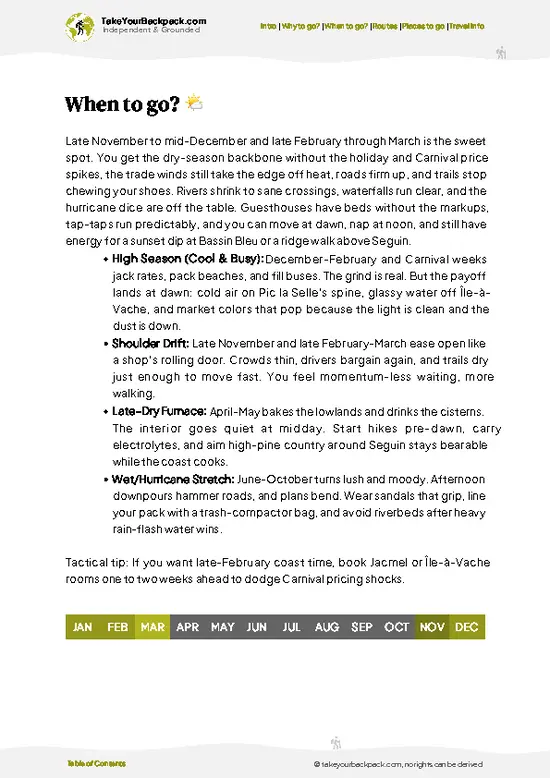
  • Weather: Haiti’s tropical climate means hot, humid days year-round, but the dry season from November to March offers the most comfortable conditions for exploring Habitation Dion without being drenched in sweat or rain.

  • Temperature: Expect highs around 28-31°C (82-88°F) during the dry season, dropping to a cooler 22-24°C (72-75°F) at night—perfect for hiking and lingering outdoors without overheating.

  • Daylight Hours: Daylight is fairly consistent, roughly 11-12 hours daily, giving you plenty of time to soak in the site’s atmosphere without rushing.

  • Crowds: Don’t expect a tourist-free zone, but the dry season sees more visitors. If you want solitude, aim for shoulder months like late October or early April when the weather is still decent but fewer people show up.

  • Seasonal Activities:
read more 👉

  • Weather: Haiti’s tropical climate means hot, humid days year-round, but the dry season from November to March offers the most comfortable conditions for exploring Habitation Dion without being drenched in sweat or rain.

  • Temperature: Expect highs around 28-31°C (82-88°F) during the dry season, dropping to a cooler 22-24°C (72-75°F) at night—perfect for hiking and lingering outdoors without overheating.

  • Daylight Hours: Daylight is fairly consistent, roughly 11-12 hours daily, giving you plenty of time to soak in the site’s atmosphere without rushing.

  • Crowds: Don’t expect a tourist-free zone, but the dry season sees more visitors. If you want solitude, aim for shoulder months like late October or early April when the weather is still decent but fewer people show up.

  • Seasonal Activities: The dry season aligns with local festivals and cultural events, adding layers to your visit beyond just the ruins. The rainy season can wash out these experiences and make trails slippery.

  • Price Fluctuations: Accommodation and local guides hike prices during peak dry months. Visiting just before or after this window can save you a decent chunk without sacrificing much on comfort or experience.


Pro-tip: For the best blend of weather, fewer crowds, and wallet-friendly rates, target late November or early April—when Habitation Dion feels like a secret worth sharing, not a tourist trap.


source: climatestotravel.comJANJanuary: excellent for travelingFEBFebruary: excellent for travelingMARMarch: excellent for travelingAPRApril: highly recommended for travelingMAYMay: fair for travelingJUNJune: fair for travelingJULJuly: fair for travelingAUGAugust: fair for travelingSEPSeptember: below average for travelingOCTOctober: good for travelingNOVNovember: highly recommended for travelingDECDecember: excellent for traveling
when-to-go

✈️ The backpacker research shortcutHaiti Travel Guide

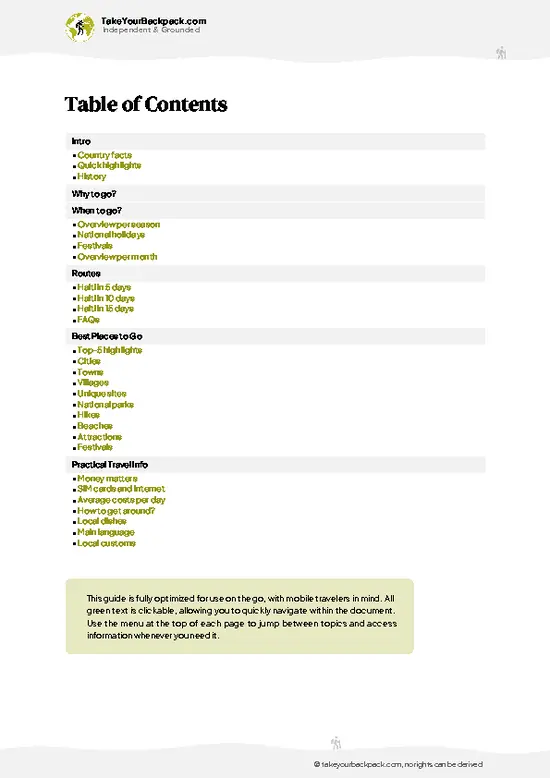
An offline-friendly backpacking guide with optimized travel routes, ranked highlights, transport advice, and the best areas to stay.
example page 0 from our offline Travel Guide for Haiti
example page 1 from our offline Travel Guide for Haiti
example page 2 from our offline Travel Guide for Haiti
example page 3 from our offline Travel Guide for Haiti
example page 4 from our offline Travel Guide for Haiti
example page 5 from our offline Travel Guide for Haiti
example page 6 from our offline Travel Guide for Haiti
example page 7 from our offline Travel Guide for Haiti
The digital guide (371 pages) contains:
99 highlights, ranked by travel appeal
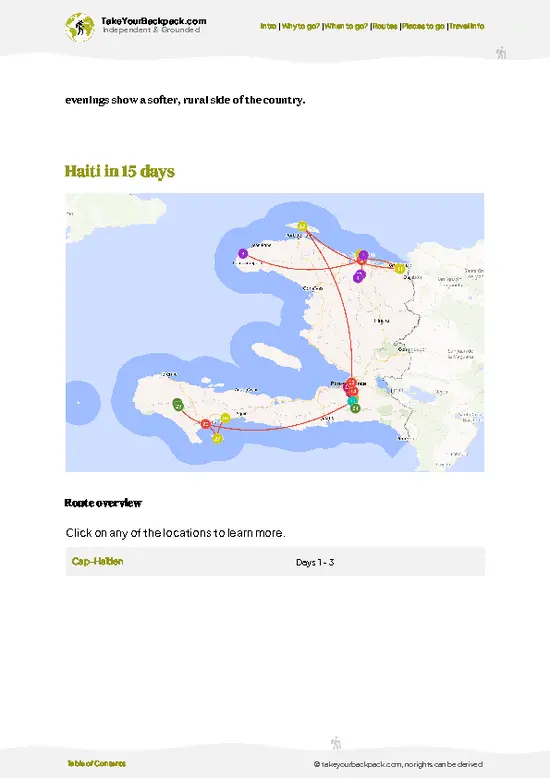
Optimized 5, 10 & 15-day travel routes
Cities, national parks, landmarks, beaches
How to get around
Offline-friendly for travel without Wi-Fi
👉 Click to see all 30+ guide features

📅 Plan smarter in minutes, not weeks
Month by month travel advice
Festivals & national holidays
Budget expectations

🗺️ Go to the right places, skip the overrated ones
Honest pros & cons of destinations
Top hikes, parks & viewpoints
Lesser-known places most travelers miss
Clear “worth it vs skip it” guidance

🛏️ Travel smoothly without rookie mistakes
Best areas to stay
Transport systems explained simply
Common scams & safety advice
SIM cards, money & practical tips

🌍 Understand the country, not just visit it
Culture & traditions
52 Essential phrases & customs
Festivals worth planning around
Traveler-friendly historical context
Insights that make places more meaningful

📱 Built for real travel conditions
Fully downloadable PDF
Works completely offline
Optimized for phone use
Useful in remote areas & buses
Everything in one place
Save weeks of stressful planning
Get instant access to your full guide. 30‑day money-back guarantee.


By proceeding you agree to our terms.
Sent to your inbox immediately after payment • 100% Secure Checkout
Best Backpacking Travel Advisor 2025 tourism awardBest Backpacking
Travel Advisor
2025
What others say about Take Your Backpack Guides:
⭐⭐⭐⭐⭐
Fantastic, amazing amount of information!
⭐⭐⭐⭐⭐
My goodness this is amazing, it's what I've been looking for hats off too you!
⭐⭐⭐⭐⭐
I think this is absolutely BRILLIANT
⭐⭐⭐⭐
Very complete and informative. It's still missing places, but I gotta to commend you
⭐⭐⭐⭐⭐
This is truly amazing, thank you, can't wait to explore it with my kids!
⭐⭐⭐⭐⭐
Awesome resource, thank you!
⭐⭐⭐⭐⭐
This is amazing! Can't wait to explore the ones I haven't seen
⭐⭐⭐⭐
I love this! Well done, great idea.
⭐⭐⭐⭐⭐
Thanks for taking the time to make this gem!
⭐⭐⭐⭐⭐
This might be the best website I've ever seen.
⭐⭐⭐⭐⭐
Congratulations, and thank you so much for your work; it's incredibly valuable.
⭐⭐⭐⭐
In all seriousness I think you did a great job pointing out the important spots
⭐⭐⭐⭐⭐
10/10 very good
⭐⭐⭐⭐⭐
As someone who's only just starting to visit regularly this is awesome, thank you.
⭐⭐⭐⭐
Thank you very much! I'm going to visit my dad, it's going to be very useful!
⭐⭐⭐⭐⭐
This is really cool! We'll be travelling for the first time and this definitely come in handy.
⭐⭐⭐⭐⭐
You are now our minister of culture, congratulations 👨‍💼
⭐⭐⭐⭐⭐
Just wanted to tell you that this is a pearl! Going to follow your recommendations.
⭐⭐⭐⭐⭐
This is so cool. I'll definitely be using the resource for my travels soon.
⭐⭐⭐⭐⭐
This is very impressive! Good work.
⭐⭐⭐⭐⭐
This is an amazing and informative site. Very well done!

🛏️ Where to stay?Where staying makes the most sense

Staying near Habitation Dion in Haiti? Let’s cut through the fluff. The area around Jacmel is your best bet. It’s got a laid-back vibe, perfect for backpackers. You’ll find a mix of guesthouses and budget-friendly spots that cater to solo travelers.

The streets are alive with local culture, and you can easily connect with fellow adventurers. Safety is decent, especially if you stick to well-trodden paths. Just keep your wits about you, like anywhere else.

Another option is the coastal area near Cayes-Jacmel. It’s quieter, with stunning views and a more relaxed atmosphere. You can find places … read more 👉
Staying near Habitation Dion in Haiti? Let’s cut through the fluff. The area around Jacmel is your best bet. It’s got a laid-back vibe, perfect for backpackers. You’ll find a mix of guesthouses and budget-friendly spots that cater to solo travelers.

The streets are alive with local culture, and you can easily connect with fellow adventurers. Safety is decent, especially if you stick to well-trodden paths. Just keep your wits about you, like anywhere else.

Another option is the coastal area near Cayes-Jacmel. It’s quieter, with stunning views and a more relaxed atmosphere. You can find places that offer communal spaces, making it easy to meet people.

Both areas give you access to local markets and eateries where you can savor authentic Haitian cuisine without breaking the bank. The real magic lies in the conversations you’ll have and the stories you’ll share, not just the sights you’ll see.

👛 Costs (as of 19 January 2026)What things cost and how to budget

Visiting Habitation Dion in Haiti can be a rewarding experience, but it’s essential to know what you’re getting into financially.
  • Entrance Fee: Expect to pay around $5 to $10 USD. This fee grants you access to the site and its historical significance. It’s a small price for a glimpse into Haiti’s rich past.
  • Guided Tours: If you want a deeper understanding, consider a guided tour. Prices typically range from $20 to $50 USD per person. This often includes a knowledgeable guide who can share stories and insights that you won’t find in brochures.
  • Transportation: Getting to Habitation Dion can be tricky. If you’re taking a taxi or hiring a driver, budget around $30 to $60 USD for a round trip from Port-au-Prince. Public transport is cheaper but less reliable, so plan accordingly.
  • Food and Drink: There
read more 👉
Visiting Habitation Dion in Haiti can be a rewarding experience, but it’s essential to know what you’re getting into financially.
  • Entrance Fee: Expect to pay around $5 to $10 USD. This fee grants you access to the site and its historical significance. It’s a small price for a glimpse into Haiti’s rich past.
  • Guided Tours: If you want a deeper understanding, consider a guided tour. Prices typically range from $20 to $50 USD per person. This often includes a knowledgeable guide who can share stories and insights that you won’t find in brochures.
  • Transportation: Getting to Habitation Dion can be tricky. If you’re taking a taxi or hiring a driver, budget around $30 to $60 USD for a round trip from Port-au-Prince. Public transport is cheaper but less reliable, so plan accordingly.
  • Food and Drink: There are limited options nearby, so pack snacks or plan to spend about $10 to $20 USD for a meal at a local eatery. Authentic Haitian food is worth trying, but be prepared for varying quality.
  • Souvenirs: If you want to take a piece of Haiti home, set aside $5 to $30 USD for local crafts. Support local artisans, but don’t feel pressured to buy everything you see.

Understanding these costs will help you budget wisely and enjoy the real magic of Habitation Dion without the Instagram filter.
⚠️ Prices can change and everyone travels differently, so take this as a rough guide. Hope it helps you plan your adventure!

Other Haitian landmarks near Habitation Dion

Explore more nearby:


💡 Not sure where to go next?
Create a personalized itinerary for Haiti including Habitation Dion and the places that fit your trip.

Generate my itinerary

👉 Discover all landmarks

Or checkout all Haiti has to offer (think cities, towns, villages, national parks, hikes, beaches, festivals)
Country photo of Haiti

We 💚 feedbackFinal thoughts on visiting Habitation Dion

Habitation Dion isn’t just another tourist stop; it’s a slice of Haiti’s soul. Expect crowds, especially during peak season, but don’t let that deter you. The real magic lies in the local vibe—engage with the staff, who are genuinely passionate about their heritage. The best surprise? The homemade rum—smooth and rich, it’s a taste of the island’s heart. Just be ready for a bumpy road to get there; it’s part of the adventure.

✍️ Help improve this page!
The information on this page is based on in-depth research, insights shared by experienced travelers, and feedback from the local travel community in Haiti. While every effort is made to keep the information accurate and current, conditions can change — so if you spot anything incorrect or outdated, please get in touch.


🙋‍♂️ Give feedback

👋 Meet the founderWho’s Behind Take Your Backpack?

Johan, backpacker and founder of TakeYourBackpackHi, I’m Johan (Netherlands 🇳🇱), the creator of TakeYourBackpack. Over the past decade, I’ve backpacked through 80+ countries across six continents, gaining extensive experience with independent travel, long-term trips, and overland routes.

This site is built on a combination of firsthand travel experience and carefully curated insights from other backpackers. Many guides are based on places I’ve personally visited, while others bring together tips, observations, and practical advice shared by trusted travelers I’ve met along the way.

The goal is to provide realistic, experience-driven guidance — not generic itineraries — so you can explore destinations with better context, clearer expectations, and more confidence.

Get full Haiti guide •
Instant download • 99 highlights • Full Offline guide