×

Honduras🇭🇳 | national parksCusuco National ParkAmphibian night walks, Cantiles camp, Buenos Aires coffee, Merendón ridges | things to do and best time to go

Explore Cerro Azul Meámbar National ParkExplore Jeannette Kawas National Park

Backpacking in Cusuco
👍 Recommendednational park ranked #7
By Johan Kruseman 🇳🇱 | Updated October 23, 2026

Cusuco National Park is a cloud forest where the fungus that has devastated amphibians elsewhere is a real conservation concern. It sits in the northwest of Honduras, in the Merendón range above San Pedro Sula. Getting there, I rode a chicken-bus-style pickup up the rutted road from Buenos Aires village, and a farmer wedged a sack of coffee cherries against my knee the whole way, so the cab smelled sweetly fermented. Skip it if you want paved, signposted trails. Go for quetzals, mossy ridgelines and almost no other hikers, which is worth the rough road. Unlike Pico Bonito near La Ceiba, which has lodges and easier access, Cusuco is rawer, steeper and far quieter.

Discover everything you want to know in the 📖 Honduras Travel Guide.


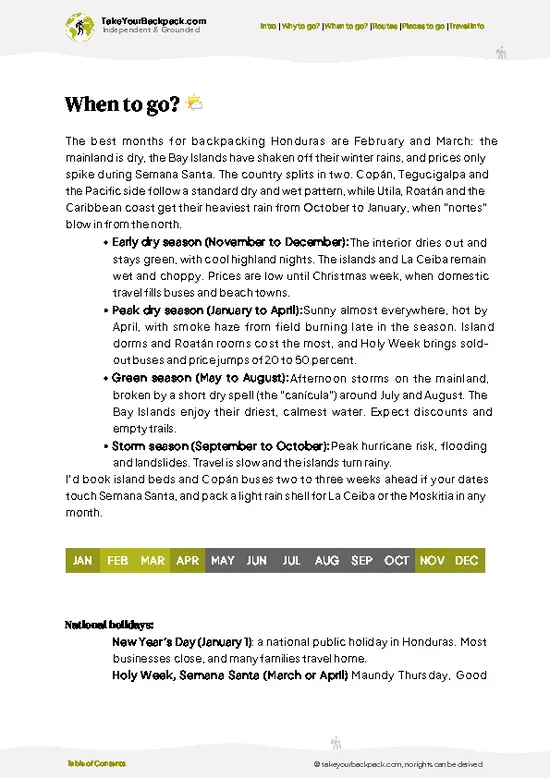
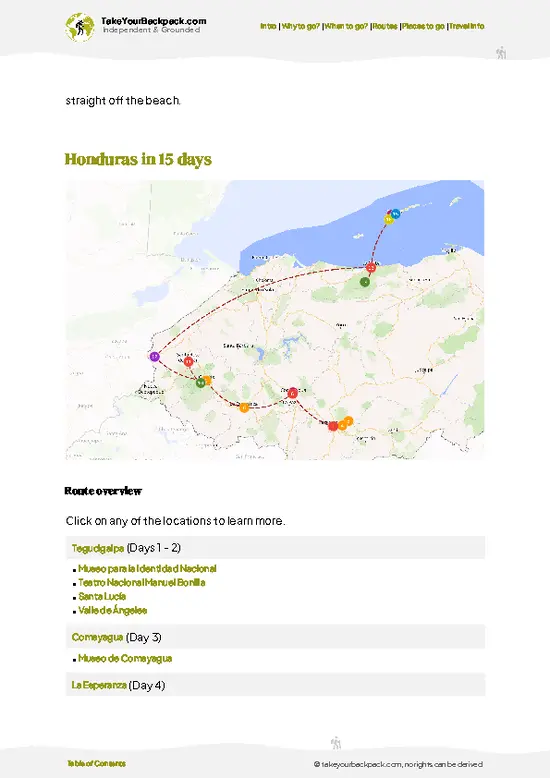
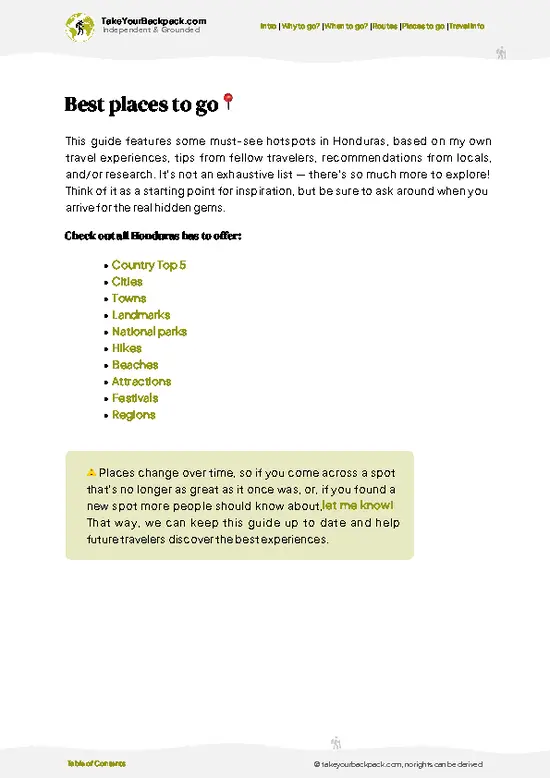
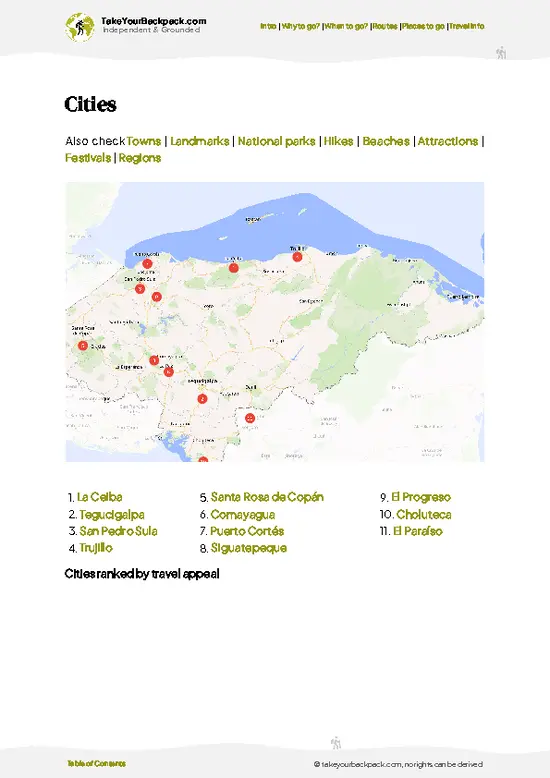
example page 0 from our offline Travel Guide for Honduras
example page 1 from our offline Travel Guide for Honduras
example page 2 from our offline Travel Guide for Honduras
example page 3 from our offline Travel Guide for Honduras
example page 4 from our offline Travel Guide for Honduras
example page 5 from our offline Travel Guide for Honduras
example page 6 from our offline Travel Guide for Honduras
example page 7 from our offline Travel Guide for Honduras
Loading the map 🌍
CLICK TO FILTER
cities
towns
landmarks
national parks
hikes
beaches
attractions
festivals
regions
SHOW COUNTRY’S BESTSHOW ALL

✨ Why go?
Ranked #7 national park in Honduras
What sets this place apart

Cusuco National Park suits backpackers who want a real cloud forest without a tour bus in sight. You can base yourself at the Cusuco basecamps run with Operation Wallacea research teams or simply hike in from a village. Independent travel works here because the trail network is small, and a local guide is required for most routes anyway, so you hire one on the spot rather than book a package. The wildlife is the draw: resplendent quetzals nest in the high forest, and you may hear howler monkeys, spot tapirs' tracks, and see salamanders under logs. Camping is simple and cheap, and the quiet at night is complete. If you like self-guided freedom, you get it on the approach and in planning; inside the park, the guide is part of the deal, and that helps the community directly.

💡 HighlightsDon't-miss highlights and experiences

  1. Resplendent quetzal habitat: The high cloud forest around the upper camps shelters one of Central America's most prized birds. Nesting season in spring gives the best odds, with iridescent green males and long tail streamers.
  2. Cloud forest summit ridges: Mossy trunks, tree ferns and orchids line the climbs toward the park's high points, which reach well above 2,000 meters. Views open between clouds over the Merendón range.
  3. Campamento Base Cantiles: A basic camp deep in the forest where the night chorus of frogs and insects is the entertainment. It is a practical base for dawn bird walks.
  4. Amphibian and reptile spotting: Night walks with a guide turn up salamanders, tree frogs and sometimes snakes. The park's amphibian diversity is the reason scientists work here.
  5. Howler monkey routes: Lower trails
… read more 👉
  1. Resplendent quetzal habitat: The high cloud forest around the upper camps shelters one of Central America's most prized birds. Nesting season in spring gives the best odds, with iridescent green males and long tail streamers.
  2. Cloud forest summit ridges: Mossy trunks, tree ferns and orchids line the climbs toward the park's high points, which reach well above 2,000 meters. Views open between clouds over the Merendón range.
  3. Campamento Base Cantiles: A basic camp deep in the forest where the night chorus of frogs and insects is the entertainment. It is a practical base for dawn bird walks.
  4. Amphibian and reptile spotting: Night walks with a guide turn up salamanders, tree frogs and sometimes snakes. The park's amphibian diversity is the reason scientists work here.
  5. Howler monkey routes: Lower trails pass fruiting trees where troops feed in the morning. Listen for the roar before you see anything.
  6. Buenos Aires village and coffee farms: The trailhead community grows shade coffee, and you can see drying beds and sample a cup with local families.
  7. Waterfalls and streams: Small cascades and cold creek crossings break up the longer hikes and make good rest stops.
Plan on two to three days to cover all of it at a steady hiking pace.
Spotted a mistake or missing something? Contact us.

Things to do near Cusuco National Park

Ratings based on Tripadvisor reviews. When you book through this link, you support our work at no extra cost to you.

🌤️ When to go?When to go for the best experience

March to May is the most comfortable window for hiking Cusuco, with dry trails and clear mornings in the cloud forest.
  • Dry Season (March to May): Trails firm up and views open. Camps sit at 1,800 to 2,200 m (5,900 to 7,200 ft), so nights fall to 8 to 12°C (46 to 54°F) and days reach 18 to 24°C (64 to 75°F). Expect the most visitors and the occasional university research group.
  • Wet Season (June to October): Rain and fog arrive most afternoons, trails turn to mud, and streams rise. Days run 16 to 22°C (61 to 72°F). Crowds vanish, though the Cantiles trail slows considerably.
  • Northern Fronts (November to February): Cold drizzle and wind can linger for days. Nights can drop to 5 to 9°C (41 to 48°F). Quetzal sightings are best from roughly March to June.
  • Daylight and Prices: Daylight stays close to
… read more 👉
March to May is the most comfortable window for hiking Cusuco, with dry trails and clear mornings in the cloud forest.
  • Dry Season (March to May): Trails firm up and views open. Camps sit at 1,800 to 2,200 m (5,900 to 7,200 ft), so nights fall to 8 to 12°C (46 to 54°F) and days reach 18 to 24°C (64 to 75°F). Expect the most visitors and the occasional university research group.
  • Wet Season (June to October): Rain and fog arrive most afternoons, trails turn to mud, and streams rise. Days run 16 to 22°C (61 to 72°F). Crowds vanish, though the Cantiles trail slows considerably.
  • Northern Fronts (November to February): Cold drizzle and wind can linger for days. Nights can drop to 5 to 9°C (41 to 48°F). Quetzal sightings are best from roughly March to June.
  • Daylight and Prices: Daylight stays close to 11 to 13 hours all year. Guide and lodging prices barely move, even at peak.
Book your guide a week ahead for March to April, and start hikes early so you finish before afternoon cloud rolls in.


source: climatestotravel.comJANJanuary: excellent for travelingFEBFebruary: excellent for travelingMARMarch: excellent for travelingAPRApril: highly recommended for travelingMAYMay: fair for travelingJUNJune: fair for travelingJULJuly: fair for travelingAUGAugust: fair for travelingSEPSeptember: fair for travelingOCTOctober: good for travelingNOVNovember: highly recommended for travelingDECDecember: excellent for traveling
when-to-go

✈️ The backpacker research shortcutHonduras Travel Guide

An offline-friendly backpacking guide with optimized travel routes, ranked highlights, transport advice, and the best areas to stay.
example page 0 from our offline Travel Guide for Honduras
example page 1 from our offline Travel Guide for Honduras
example page 2 from our offline Travel Guide for Honduras
example page 3 from our offline Travel Guide for Honduras
example page 4 from our offline Travel Guide for Honduras
example page 5 from our offline Travel Guide for Honduras
example page 6 from our offline Travel Guide for Honduras
example page 7 from our offline Travel Guide for Honduras
The digital guide (255 pages) contains:
✅ 70 highlights, ranked by travel appeal
✅ Optimized 5, 10 & 15-day travel routes
✅ Cities, national parks, landmarks, beaches
✅ How to get around
✅ Offline-friendly for travel without Wi-Fi
👉 Click to see all 30+ guide features

📅 Plan smarter in minutes, not weeks
✅ Month by month travel advice
✅ Festivals & national holidays
✅ Budget expectations

🗺️ Go to the right places, skip the overrated ones
✅ Honest pros & cons of destinations
✅ Top hikes, parks & viewpoints
✅ Lesser-known places most travelers miss
✅ Clear “worth it vs skip it” guidance

🛏️ Travel smoothly without rookie mistakes
✅ Best areas to stay
✅ Transport systems explained simply
✅ Common scams & safety advice
✅ SIM cards, money & practical tips

🌍 Understand the country, not just visit it
✅ Culture & traditions
✅ 52 Essential phrases & customs
✅ Festivals worth planning around
✅ Traveler-friendly historical context
✅ Insights that make places more meaningful

📱 Built for real travel conditions
✅ Fully downloadable PDF
✅ Works completely offline
✅ Optimized for phone use
✅ Useful in remote areas & buses
✅ Everything in one place
Stop searching, start planning
Get instant access to your full guide. 30‑day money-back guarantee.
+ Add another guide for just

By proceeding you agree to our terms.
Sent to your inbox immediately after payment • 100% Secure Checkout
Best Backpacking Travel Advisor 2025 tourism awardBest Backpacking
Travel Advisor
2025
What others say about Take Your Backpack Guides:
⭐⭐⭐⭐⭐
Fantastic, amazing amount of information!
⭐⭐⭐⭐⭐
My goodness this is amazing, it's what I've been looking for hats off too you!
⭐⭐⭐⭐⭐
I think this is absolutely BRILLIANT
⭐⭐⭐⭐
Very complete and informative. It's still missing places, but I gotta to commend you
⭐⭐⭐⭐⭐
This is truly amazing, thank you, can't wait to explore it with my kids!
⭐⭐⭐⭐⭐
Awesome resource, thank you!
⭐⭐⭐⭐⭐
This is amazing! Can't wait to explore the ones I haven't seen
⭐⭐⭐⭐
I love this! Well done, great idea.
⭐⭐⭐⭐⭐
Thanks for taking the time to make this gem!
⭐⭐⭐⭐⭐
This might be the best website I've ever seen.
⭐⭐⭐⭐⭐
Congratulations, and thank you so much for your work; it's incredibly valuable.
⭐⭐⭐⭐
In all seriousness I think you did a great job pointing out the important spots
⭐⭐⭐⭐⭐
10/10 very good
⭐⭐⭐⭐⭐
As someone who's only just starting to visit regularly this is awesome, thank you.
⭐⭐⭐⭐
Thank you very much! I'm going to visit my dad, it's going to be very useful!
⭐⭐⭐⭐⭐
This is really cool! We'll be travelling for the first time and this definitely come in handy.
⭐⭐⭐⭐⭐
You are now our minister of culture, congratulations 👨‍💼
⭐⭐⭐⭐⭐
Just wanted to tell you that this is a pearl! Going to follow your recommendations.
⭐⭐⭐⭐⭐
This is so cool. I'll definitely be using the resource for my travels soon.
⭐⭐⭐⭐⭐
This is very impressive! Good work.
⭐⭐⭐⭐⭐
This is an amazing and informative site. Very well done!

🛏️ Where to stay?Choosing the right base

Most backpackers sleep in San Pedro Sula, then move to the park’s basic camps or a village guesthouse for the hike itself.
Inside the park there are simple camps run with local communities, such as Base Camp near Buenos Aires and the higher Cantiles camp. Expect platforms or cabins with bunks, shared latrines, and cold water. Bring a sleeping bag rated to about 5°C (41°F), because the nights are damp. Tents can usually be pitched at the camps for a lower rate.
The villages at the park edge, including Buenos Aires, offer a few rustic rooms and family-run homestays for roughly US$8 to 15 a night. … read more 👉
Most backpackers sleep in San Pedro Sula, then move to the park’s basic camps or a village guesthouse for the hike itself.
Inside the park there are simple camps run with local communities, such as Base Camp near Buenos Aires and the higher Cantiles camp. Expect platforms or cabins with bunks, shared latrines, and cold water. Bring a sleeping bag rated to about 5°C (41°F), because the nights are damp. Tents can usually be pitched at the camps for a lower rate.
The villages at the park edge, including Buenos Aires, offer a few rustic rooms and family-run homestays for roughly US$8 to 15 a night. Cofradía, the town closest to the main entrances, has the easiest access for starting at dawn.
San Pedro Sula has the widest choice, from hostels at about US$12 to 20 a dorm bed to mid-range hotels near US$40 to 70. Stay there the night before your trek if you arrive by air or bus, since early transport out to the park is simplest from the city.

👛 Costs (as of 23 October 2026)How expensive it really is

Cusuco National Park costs most backpackers about US$45 to 95 a day, with a guide and camp stay making up the bulk of it.
CategoryBudget RangeLocal Reality
Entrance FeeUS$10 to 15Charged per visitor at the park gate; foreign visitors pay more than Hondurans.
GuideUS$15 to 25A guide is required for most routes. Cost per group is often shared, so it drops with more people.
AccommodationUS$5 to 20Camp bunks or tent pitches are at the low end. Village homestays and cabins cost more.
Local TransportUS$5 to 15Buses from San Pedro Sula to Cofradía are cheap, and a pickup or taxi covers the last stretch.
Food and SuppliesUS$10 to 20Meals at camps or homestays run about US$3 to 6. Bring trail snacks from San Pedro Sula.
Total Daily BudgetUS$45 to 95Roughly US$65 for a typical day with a shared guide and camp
… read more 👉
Cusuco National Park costs most backpackers about US$45 to 95 a day, with a guide and camp stay making up the bulk of it.
CategoryBudget RangeLocal Reality
Entrance FeeUS$10 to 15Charged per visitor at the park gate; foreign visitors pay more than Hondurans.
GuideUS$15 to 25A guide is required for most routes. Cost per group is often shared, so it drops with more people.
AccommodationUS$5 to 20Camp bunks or tent pitches are at the low end. Village homestays and cabins cost more.
Local TransportUS$5 to 15Buses from San Pedro Sula to Cofradía are cheap, and a pickup or taxi covers the last stretch.
Food and SuppliesUS$10 to 20Meals at camps or homestays run about US$3 to 6. Bring trail snacks from San Pedro Sula.
Total Daily BudgetUS$45 to 95Roughly US$65 for a typical day with a shared guide and camp bunk.
Pay in lempiras, and carry small bills because there are no ATMs near the park.
⚠️ Prices can change and everyone travels differently, so take this as a rough guide. Hope it helps you plan your adventure!

🥾 TrailsPlan your hike in Cusuco: routes, terrain, and sights

Cusuco National Park is a steep, muddy, guide-led hiking area where most walks start from the Buenos Aires entrance or the research camps higher up.
  • Short forest loops: Half-day walks from the entrance area on narrow dirt paths, easy to moderate, through shade coffee and then lower cloud forest. Expect two to three hours with good bird and monkey chances.
  • Ridge climbs to the upper camps: A full day of sustained uphill on slick, rooty trails, rated moderate to hard. The reward is mossy summit forest and quetzal territory.
  • Multi-day treks: Overnight routes link the basecamps, with camping at simple
… read more 👉
Cusuco National Park is a steep, muddy, guide-led hiking area where most walks start from the Buenos Aires entrance or the research camps higher up.
  • Short forest loops: Half-day walks from the entrance area on narrow dirt paths, easy to moderate, through shade coffee and then lower cloud forest. Expect two to three hours with good bird and monkey chances.
  • Ridge climbs to the upper camps: A full day of sustained uphill on slick, rooty trails, rated moderate to hard. The reward is mossy summit forest and quetzal territory.
  • Multi-day treks: Overnight routes link the basecamps, with camping at simple platforms and cold streams for water. Hard going, best with a guide who knows the ridges.
  • Night walks: Short, flat to gently sloping loops near camp, easy but wet, for frogs, salamanders and insects.
Terrain is steep, with heavy mud after rain and plenty of fallen logs, so waterproof boots and trekking poles help a lot. Wildlife includes quetzals, toucans, monkeys and many amphibians, and you will hear more than you see in the thick forest.
Getting to the park by public transport means a bus from San Pedro Sula to Cofradía, then a pickup or rented ride up the unpaved road to Buenos Aires; the final stretch is rough and slower in rain. The park is rarely crowded, and you may be alone for hours. An entrance fee and a compulsory local guide apply, both paid on arrival, so carry small bills in lempiras.
⚠️ Hiking info can sometimes be outdated or inaccurate. Before you hit the trail, check the latest conditions with locals. If you do spot anything that's off, I'd love to hear from you, so I can update it for fellow travelers.

🛡️ SafetyScams, Hazards, and Annoyances

Cusuco is a manageable park for fit hikers, provided you go with a local guide and respect the weather. Trails climb steeply through cloud forest, and roots and clay turn slick after rain, so wear boots with real grip and take trekking poles for the descents. Fog shortens visibility quickly, and some junctions are poorly marked, which is the main reason guides are expected. Temperatures drop sharply at the high camps, so pack a warm layer and waterproof shell even in the dry months. Wildlife is mostly birds, monkeys, and the odd snake, so watch where you place your hands and feet and keep your distance from anything you spot. Carry more water and snacks than you think you need, since there are no shops on the trails. Ask park staff about current road conditions on the approach, and arrange transport before dark.

FAQFrequently asked questions about Cusuco

Two to three days is the practical amount for Cusuco National Park. A one-night trip to the Cantiles camp covers the main cloud forest trails, while three days lets you reach higher camps and spend more time birdwatching. Add a day in San Pedro Sula for transport.
Yes, Cusuco National Park can be reached without a car. Take a bus from San Pedro Sula to Cofradía, roughly 45 minutes to an hour, then a pickup or taxi up the rough road to Buenos Aires, the main entrance village. Arrange a driver in advance if you plan an early start.
Yes, Cusuco National Park charges an entrance fee, around US$10 to 15 for foreign visitors, and most routes require a local guide at roughly US$15 to 25 a day. Camp fees are separate. Book through the park’s community operators or the San Pedro Sula contacts ahead of time, especially in March to April.
⚠️ Things can change over time, so always validate details locally before you go.

Other Honduran national parks near Cusuco

Explore more nearby:


💡 Not sure where to go next?
Create a personalized itinerary for Honduras including Cusuco and the places that fit your trip.

Generate my itinerary

👉 Discover all national parks

Or checkout all Honduras has to offer (think cities, towns, villages, national parks, hikes, beaches, festivals)
Country photo of Honduras

We 💚 feedbackFinal thoughts on exploring Cusuco

Cusuco National Park punishes travelers who show up with city shoes and no plan for the last rough stretch of road. Arrange your pickup and guide in advance, pack boots with real grip, and start walking early before the clouds close in. Do that and the climb feels earned.

✈️ When did I visit Honduras?
Honduras I visited during my half year trip through South and Central America back in 2003

✍️ Help improve this page!
The information on this page is based on my own backpacking experience in Honduras, supplemented with up-to-date research and feedback from other travelers. Travel details can change, so if you notice anything outdated or incomplete, feel free to let me know.


🙋‍♂️ Give feedback

👋 Meet the founderWho’s Behind Take Your Backpack?

Johan, backpacker and founder of TakeYourBackpackHi, I’m Johan (Netherlands 🇳🇱), the creator of TakeYourBackpack. Over the past 3 decades, I’ve backpacked through 90+ countries across six continents, gaining extensive experience with independent travel, long-term trips, and overland routes.

This site is built on a combination of firsthand travel experience and carefully curated insights from other backpackers. Many guides are based on places I’ve personally visited, while others bring together tips, observations, and practical advice shared by trusted travelers I’ve met along the way.

The goal is to provide realistic, experience-driven guidance — not generic itineraries — so you can explore destinations with better context, clearer expectations, and more confidence.