×

Honduras🇭🇳 | attractionsMuseo Histórico de la RepúblicaPresidential residence, state rooms, independence documents | things to do and best time to go

Explore Museo de Antropología e Historia de San Pedro SulaExplore Museo Colonial de Arte Religioso

Backpacking in Museo Histórico de la República
👀 For curious travelersattraction ranked #14
By Johan Kruseman 🇳🇱 | Updated October 23, 2026

The guard at the gate glanced at my bag, waved me toward a heavy wooden door, and the first thing I noticed was the smell of old varnish and cool stone. Museo Histórico de la República sits in Tegucigalpa, the capital of Honduras, in the old presidential residence near La Leona. The rooms are small, so it takes under two hours, and that is why guided groups move fast. Read the Spanish labels yourself and skip the rush. It is no spectacle, so skip it if you want adrenaline. A first day works well with the museum in the morning, then a walk through La Leona.

Discover everything you want to know in the 📖 Honduras Travel Guide.


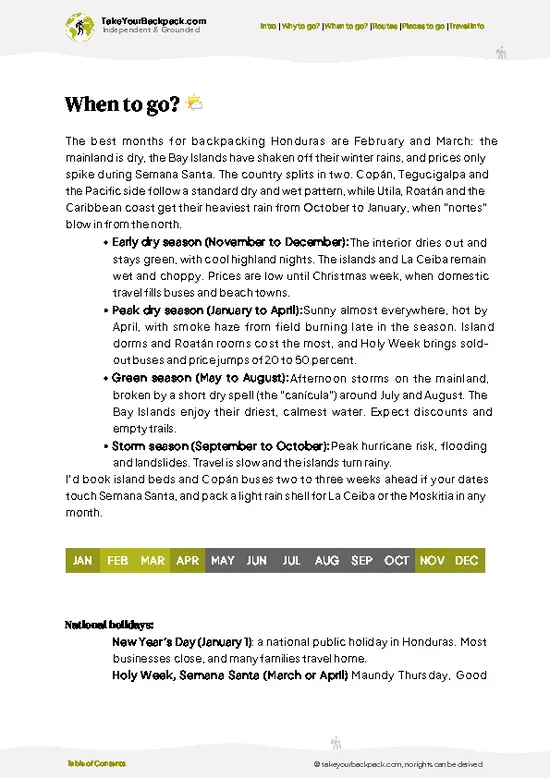
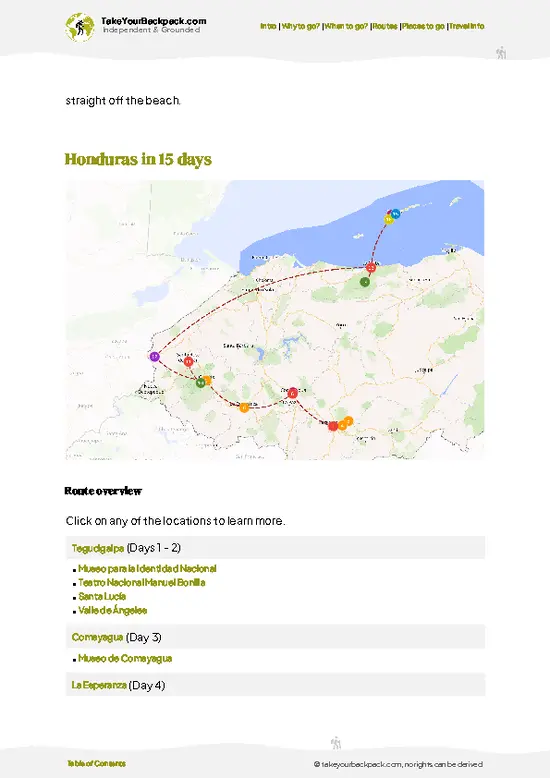
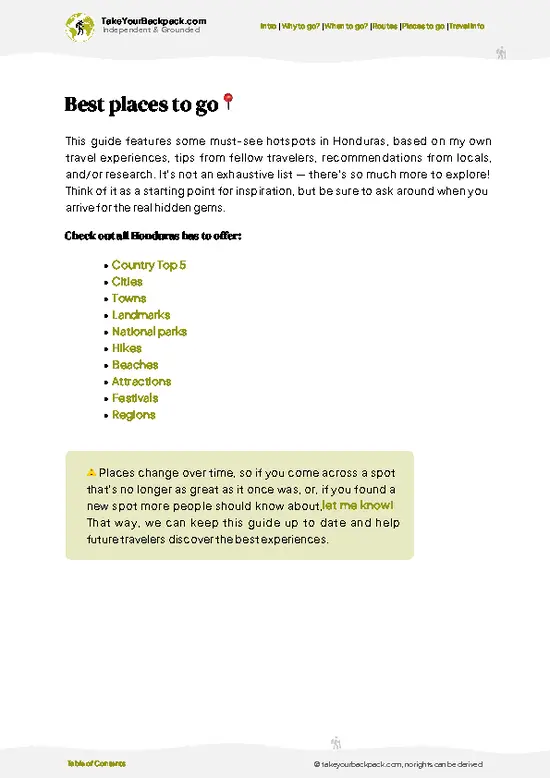
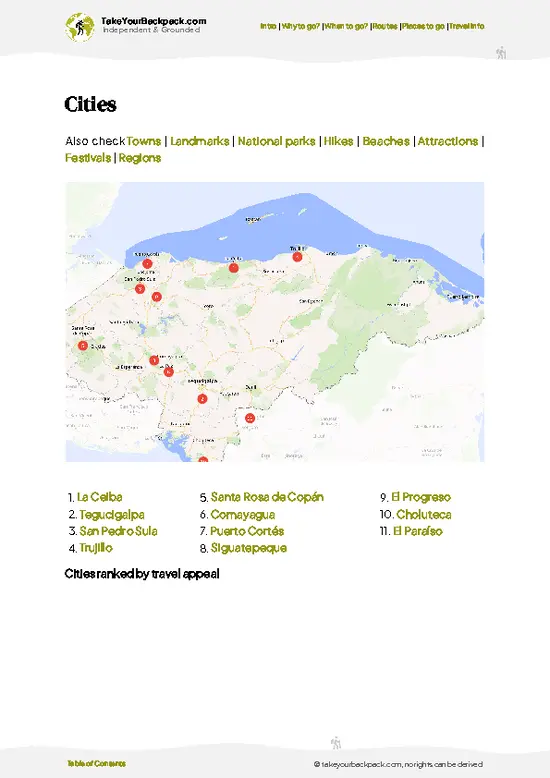
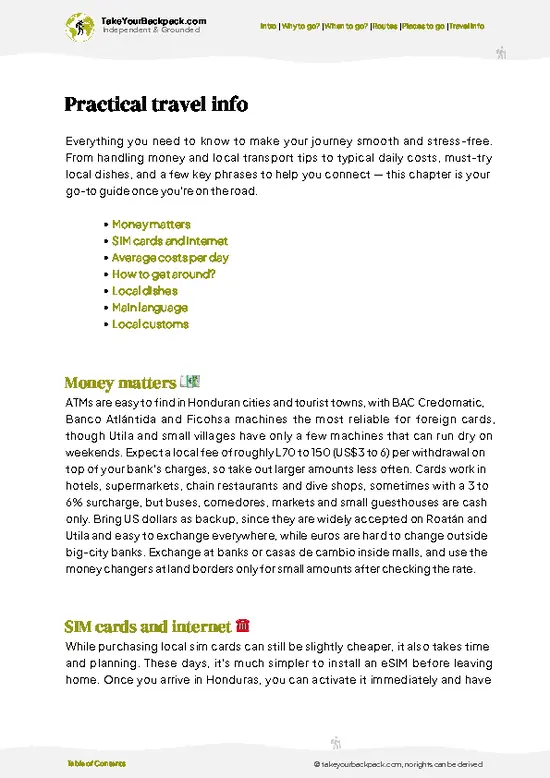
example page 0 from our offline Travel Guide for Honduras
example page 1 from our offline Travel Guide for Honduras
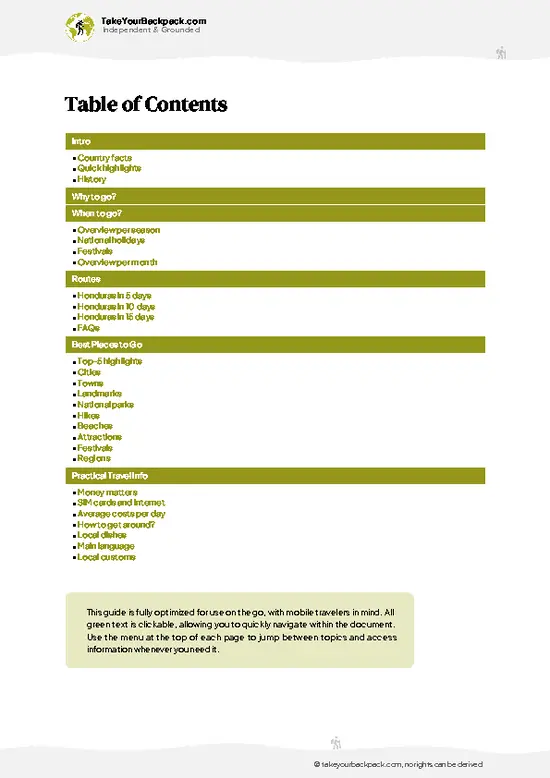
example page 2 from our offline Travel Guide for Honduras
example page 3 from our offline Travel Guide for Honduras
example page 4 from our offline Travel Guide for Honduras
example page 5 from our offline Travel Guide for Honduras
example page 6 from our offline Travel Guide for Honduras
example page 7 from our offline Travel Guide for Honduras
Loading the map 🌍
CLICK TO FILTER
cities
towns
landmarks
national parks
hikes
beaches
attractions
festivals
regions
SHOW COUNTRY’S BESTSHOW ALL

✨ Why go?
Ranked #14 attraction in Honduras
What sets this place apart

Museo Histórico de la República is the place in Tegucigalpa where Honduras’s political story is told inside the very rooms where it was made. If you have been through the colonial towns and Maya ruins, this fills the missing century: independence, the Central American federation, and the presidents who followed. Its setting in a former presidential residence gives the exhibits a weight that a purpose-built gallery lacks. It also sits close to Barrio La Leona, so one walk covers the museum, viewpoints and old streets of the capital. Go for context that makes the rest of the country’s politics make sense, not for a long day out.

💡 HighlightsWhat this place is best known for

  1. The former presidential residence: the building itself is the main exhibit, a formal early twentieth-century house where Honduran leaders once lived and governed.
  2. Presidential portraits: lined along the rooms, they let you trace the country’s leaders and their changing styles over time.
  3. Period furniture and state rooms: ceremonial chairs, desks and reception spaces show how power was staged.
  4. Independence-era displays: documents and objects tied to the break from Spain and the federation years put the early republic in order.
  5. The courtyard and terraces: a quiet place to sit between rooms, away from street noise.
  6. Parque La Leona: a short walk away, a small hillside park with lookouts over the city and its red-roofed neighborhoods.
Museo Histórico de la República is best started with the portraits … read more 👉
  1. The former presidential residence: the building itself is the main exhibit, a formal early twentieth-century house where Honduran leaders once lived and governed.
  2. Presidential portraits: lined along the rooms, they let you trace the country’s leaders and their changing styles over time.
  3. Period furniture and state rooms: ceremonial chairs, desks and reception spaces show how power was staged.
  4. Independence-era displays: documents and objects tied to the break from Spain and the federation years put the early republic in order.
  5. The courtyard and terraces: a quiet place to sit between rooms, away from street noise.
  6. Parque La Leona: a short walk away, a small hillside park with lookouts over the city and its red-roofed neighborhoods.
Museo Histórico de la República is best started with the portraits and state rooms, since they give the clearest thread through everything else.
Spotted a mistake or missing something? Contact us.

Things to do around Museo Histórico de la República

Ratings based on Tripadvisor reviews. When you book through this link, you support our work at no extra cost to you.

🌤️ When to go?Best time to visit Museo Histórico de la República

  • Dry Season (November to April): Tegucigalpa sits at about 950 meters, so days run 24 to 30°C (75 to 86°F) with cool nights near 15°C (59°F). Rain is rare, and the museum's garden grounds and city viewpoints are pleasant to walk. Daylight lasts roughly 11 to 12 hours.
  • Rainy Season (May to October): Afternoon downpours are common, with highs of 26 to 29°C (79 to 84°F). Mornings are usually dry, which suits an indoor museum. Prices barely change.
  • Holy Week and Independence Month: Late March or April and September bring school groups and holiday closures.
Go on a weekday morning, when the galleries are quiet and the hillside is cool.

source: climatestotravel.comJANJanuary: highly recommended for travelingFEBFebruary: highly recommended for travelingMARMarch: highly recommended for travelingAPRApril: highly recommended for travelingMAYMay: fair for travelingJUNJune: fair for travelingJULJuly: fair for travelingAUGAugust: fair for travelingSEPSeptember: fair for travelingOCTOctober: fair for travelingNOVNovember: highly recommended for travelingDECDecember: highly recommended for traveling
when-to-go

✈️ The backpacker research shortcutHonduras Travel Guide

An offline-friendly backpacking guide with optimized travel routes, ranked highlights, transport advice, and the best areas to stay.
example page 0 from our offline Travel Guide for Honduras
example page 1 from our offline Travel Guide for Honduras
example page 2 from our offline Travel Guide for Honduras
example page 3 from our offline Travel Guide for Honduras
example page 4 from our offline Travel Guide for Honduras
example page 5 from our offline Travel Guide for Honduras
example page 6 from our offline Travel Guide for Honduras
example page 7 from our offline Travel Guide for Honduras
The digital guide (255 pages) contains:
✅ 70 highlights, ranked by travel appeal
✅ Optimized 5, 10 & 15-day travel routes
✅ Cities, national parks, landmarks, beaches
✅ How to get around
✅ Offline-friendly for travel without Wi-Fi
👉 Click to see all 30+ guide features

📅 Plan smarter in minutes, not weeks
✅ Month by month travel advice
✅ Festivals & national holidays
✅ Budget expectations

🗺️ Go to the right places, skip the overrated ones
✅ Honest pros & cons of destinations
✅ Top hikes, parks & viewpoints
✅ Lesser-known places most travelers miss
✅ Clear “worth it vs skip it” guidance

🛏️ Travel smoothly without rookie mistakes
✅ Best areas to stay
✅ Transport systems explained simply
✅ Common scams & safety advice
✅ SIM cards, money & practical tips

🌍 Understand the country, not just visit it
✅ Culture & traditions
✅ 52 Essential phrases & customs
✅ Festivals worth planning around
✅ Traveler-friendly historical context
✅ Insights that make places more meaningful

📱 Built for real travel conditions
✅ Fully downloadable PDF
✅ Works completely offline
✅ Optimized for phone use
✅ Useful in remote areas & buses
✅ Everything in one place
Stop searching, start planning
Get instant access to your full guide. 30‑day money-back guarantee.
+ Add another guide for just

By proceeding you agree to our terms.
Sent to your inbox immediately after payment • 100% Secure Checkout
Best Backpacking Travel Advisor 2025 tourism awardBest Backpacking
Travel Advisor
2025
What others say about Take Your Backpack Guides:
⭐⭐⭐⭐⭐
Fantastic, amazing amount of information!
⭐⭐⭐⭐⭐
My goodness this is amazing, it's what I've been looking for hats off too you!
⭐⭐⭐⭐⭐
I think this is absolutely BRILLIANT
⭐⭐⭐⭐
Very complete and informative. It's still missing places, but I gotta to commend you
⭐⭐⭐⭐⭐
This is truly amazing, thank you, can't wait to explore it with my kids!
⭐⭐⭐⭐⭐
Awesome resource, thank you!
⭐⭐⭐⭐⭐
This is amazing! Can't wait to explore the ones I haven't seen
⭐⭐⭐⭐
I love this! Well done, great idea.
⭐⭐⭐⭐⭐
Thanks for taking the time to make this gem!
⭐⭐⭐⭐⭐
This might be the best website I've ever seen.
⭐⭐⭐⭐⭐
Congratulations, and thank you so much for your work; it's incredibly valuable.
⭐⭐⭐⭐
In all seriousness I think you did a great job pointing out the important spots
⭐⭐⭐⭐⭐
10/10 very good
⭐⭐⭐⭐⭐
As someone who's only just starting to visit regularly this is awesome, thank you.
⭐⭐⭐⭐
Thank you very much! I'm going to visit my dad, it's going to be very useful!
⭐⭐⭐⭐⭐
This is really cool! We'll be travelling for the first time and this definitely come in handy.
⭐⭐⭐⭐⭐
You are now our minister of culture, congratulations 👨‍💼
⭐⭐⭐⭐⭐
Just wanted to tell you that this is a pearl! Going to follow your recommendations.
⭐⭐⭐⭐⭐
This is so cool. I'll definitely be using the resource for my travels soon.
⭐⭐⭐⭐⭐
This is very impressive! Good work.
⭐⭐⭐⭐⭐
This is an amazing and informative site. Very well done!

🛏️ Where to stay?Choosing the right base

Colonia Palmira is the best base, a calm, safer neighborhood of embassies and cafes a short taxi ride from the museum, with the most hostels and guesthouses aimed at budget travelers. Colonia San Carlos and the area around Boulevard Morazán also have mid-range rooms and plenty of restaurants, and they suit solo travelers who want food and nightlife within walking distance. Centro Histórico, close to Parque Central and the cathedral, is the cheapest option and the easiest for sightseeing on foot. It empties out and gets rougher after dark, so use taxis at night. Dorm beds in the city run about … read more 👉
Colonia Palmira is the best base, a calm, safer neighborhood of embassies and cafes a short taxi ride from the museum, with the most hostels and guesthouses aimed at budget travelers. Colonia San Carlos and the area around Boulevard Morazán also have mid-range rooms and plenty of restaurants, and they suit solo travelers who want food and nightlife within walking distance. Centro Histórico, close to Parque Central and the cathedral, is the cheapest option and the easiest for sightseeing on foot. It empties out and gets rougher after dark, so use taxis at night. Dorm beds in the city run about US$10 to 15, private rooms US$25 to 45. Book a place with a locked gate and a staffed front desk, and use app-based or hotel-called taxis between neighborhoods.

👛 Costs (as of 23 October 2026)Money, prices, and spending tips

Budget about US$38 to 60 a day for Museo Histórico de la República, including the entry fee, local transport and food, with a high-season total of US$50. Travelers pay in lempiras, and cards are not accepted everywhere.
CategoryBudget RangeLocal Reality
Entrance FeeUS$2 to 4Foreign visitors pay slightly more than Hondurans.
Guide or ExtrasUS$0 to 5Tips for a guide are welcome but optional.
Local TransportUS$4 to 10Taxis cost US$3 to 6 per ride, and app rides are safer and often cheaper.
FoodUS$8 to 15Set lunches at local comedores cost US$3 to 5.
Accommodation (High Season)US$10 to 25Dorm beds in Palmira or the center; low season is a few dollars less.
Total Daily BudgetUS$50Per person, per day, in high season.
⚠️ Prices can change and everyone travels differently, so take this as a rough guide. Hope it helps you plan your adventure!

FAQFrequently asked questions about Museo Histórico de la República

Plan 1.5 to 2 hours at Museo Histórico de la República. That covers the exhibits on Honduran history housed in the former presidential building and a stroll around the grounds. Add another hour if you also visit nearby Parque La Leona viewpoint in Tegucigalpa.
Yes, Museo Histórico de la República is worth the roughly US$2 to 4 entry fee if you want context on Honduras beyond the beaches and ruins. It is inexpensive, compact and easy to fit into a half day of city sightseeing. Go on a weekday to have the rooms mostly to yourself.
Museo Histórico de la República is in Tegucigalpa, reached by taxi from Centro Histórico or Colonia Palmira in about 10 to 20 minutes, for US$3 to 6. Ride-hailing apps are the safest option. From the airport, count on 30 to 45 minutes by taxi, and from the city bus terminals, about 20 to 30 minutes.
⚠️ Things can change over time, so always validate details locally before you go.

Other Honduran attractions near Museo Histórico de la República

Explore more nearby:


💡 Not sure where to go next?
Create a personalized itinerary for Honduras including Museo Histórico de la República and the places that fit your trip.

Generate my itinerary

👉 Discover all attractions

Or checkout all Honduras has to offer (think cities, towns, villages, national parks, hikes, beaches, festivals)
Country photo of Honduras

We 💚 feedbackFinal thoughts on visiting Museo Histórico de la República

Museo Histórico de la República rewards people who look up and around, since the ceilings, doorways and room layouts say as much about old power as the labels do. I would read the building first, then the text, and finish with a slow loop around La Leona.

✈️ When did I visit Honduras?
Honduras I visited during my half year trip through South and Central America back in 2003

✍️ Help improve this page!
The information on this page is based on my own backpacking experience in Honduras, supplemented with up-to-date research and feedback from other travelers. Travel details can change, so if you notice anything outdated or incomplete, feel free to let me know.


🙋‍♂️ Give feedback

👋 Meet the founderWho’s Behind Take Your Backpack?

Johan, backpacker and founder of TakeYourBackpackHi, I’m Johan (Netherlands 🇳🇱), the creator of TakeYourBackpack. Over the past 3 decades, I’ve backpacked through 90+ countries across six continents, gaining extensive experience with independent travel, long-term trips, and overland routes.

This site is built on a combination of firsthand travel experience and carefully curated insights from other backpackers. Many guides are based on places I’ve personally visited, while others bring together tips, observations, and practical advice shared by trusted travelers I’ve met along the way.

The goal is to provide realistic, experience-driven guidance — not generic itineraries — so you can explore destinations with better context, clearer expectations, and more confidence.