
×

Hong Kong🇭🇰 | townsMui WoSilvermine Bay, ferry pier, rural trails | things to do and best time to go

Explore Discovery BayExplore Peng Chau

Backpacking in Mui Wo
🌟 Highlighttown ranked #10
By Johan Kruseman 🇳🇱 | Updated July 24, 2026

Years ago Mui Wo felt like a sleepy ferry village: dim pier lights, a couple of cha chaan tengs closing early, cows wandering the road and almost no one staying the night. Today it’s still low-key by Hong Kong standards, but weekends bring hikers, cyclists, and beach families. On eastern Lantau Island, a short ferry from Central, it works best as a base for nature: Silvermine Bay Beach, waterfalls, and the Lantau Trail all start practically from your guesthouse door. The “town” is a loose cluster of low-rise buildings, a small supermarket, a few local eateries and simple cafés; it’s walkable, but buses fan out to Chi Ma Wan, Pui O, and Tung Chung, so you can treat Mui Wo as a quiet hub between city and wilderness. Compared with Central or Tsim Sha Tsui it feels slower, softer, and more humidly real: dogs sleeping under plastic stools, the smell of soy sauce and seaweed at low tide, cicadas screaming at dusk. Nightlife is minimal, so you trade bar-hopping for beers by the waterfront and early starts on the trails; that also means meeting other backpackers is possible but not automatic, usually around the small hostels or beach bars rather than in big social hostels. Costs sit in the “Hong Kong but gentler” range: cheaper than Hong Kong Island for food and rooms, but still not Southeast Asia prices, and wild camping or basic guesthouses help if you’re watching every dollar. Safety is solid, and buses plus ferries are straightforward, which makes Mui Wo a smart, calm staging point for Lantau adventures rather than a headline destination on its own.

Discover everything you want to know in the 📖 Hong Kong Travel Guide.
Loading the map 🌍
CLICK TO FILTER
towns
landmarks
national parks
hikes
beaches
attractions
festivals
regions
SHOW COUNTRY’S BESTSHOW ALL

✨ Why go?
Ranked #10 town in Hong Kong
What sets this place apart

Mui Wo draws backpackers for its convenience as a launchpad to nearby hikes and beaches. The walkable streets create a laid-back vibe, perfect for solo travelers or small groups looking to unwind. You’ll find small-scale hostels and guesthouses that foster a friendly social atmosphere, making it easy to connect with fellow adventurers. Local food stalls serve up authentic dishes, adding to the experience. Many travelers stay a few days to soak in the tranquility and explore the surrounding nature, while others might just stop by on their way to more bustling areas. It’s a place for those who appreciate the journey as much as the destination.
Want to include Mui Wo in your Hong Kong route?
Create a personalized Hong Kong itinerary that includes Mui Wo and the places that fit your trip — based on your travel style, budget, and available time. Get your route in seconds.

Generate my trip

💡 HighlightsEssential experiences to have while visiting Mui Wo

  • Silvermine Bay Beach (Mui Wo Beach) — The town’s long sandy beach is the obvious draw: swimming, sunset stretches, and an easy, low-key place to picnic or rent a lounger. Bring insect repellent at dusk.
  • Mui Wo Ferry Pier (Silvermine Bay Pier) — Arrival point and the social hub: watching ferries, fishermen, and the steady flow of locals and day-trippers gives you a real feel for the place. Great photo ops and the fastest way in and out.
  • Tin Hau Temple (Silvermine Bay Tin Hau Temple) — A small, authentic coastal temple dedicated to the sea goddess. It’s a living piece of Mui Wo’s fishing-village culture and worth a quiet look inside for the incense, plaques, and local offerings.
  • Old silver-mine remains — The town is named for the 19th-century silver workings nearby; you can still find surface
read more 👉
  • Silvermine Bay Beach (Mui Wo Beach) — The town’s long sandy beach is the obvious draw: swimming, sunset stretches, and an easy, low-key place to picnic or rent a lounger. Bring insect repellent at dusk.
  • Mui Wo Ferry Pier (Silvermine Bay Pier) — Arrival point and the social hub: watching ferries, fishermen, and the steady flow of locals and day-trippers gives you a real feel for the place. Great photo ops and the fastest way in and out.
  • Tin Hau Temple (Silvermine Bay Tin Hau Temple) — A small, authentic coastal temple dedicated to the sea goddess. It’s a living piece of Mui Wo’s fishing-village culture and worth a quiet look inside for the incense, plaques, and local offerings.
  • Old silver-mine remains — The town is named for the 19th-century silver workings nearby; you can still find surface relics and old adits on short walks off the main road. It’s a tangible link to Mui Wo’s surprising mining past.
  • Silvermine Bay promenade & waterfront — The stretch along the pier and beach is where people stroll, snack, and watch the tide. Benches, seaside eateries, and open views make it an easy place to soak up local life without straying far.
  • Mui Wo Main Street & market stalls — A compact cluster of bakeries, cafés, convenience shops and small seafood vendors — perfect for grabbing breakfast, tropical fruit, egg tarts, or cheap, honest meals from hole-in-the-wall spots.
  • Mangroves and mudflats at Silvermine Bay — The shallow flats around low tide are surprisingly rich for birdwatching and fiddler-crab spotting. It’s a small natural patch that reveals a quieter side of coastal Hong Kong.
  • Trailheads and short walks from town — Mui Wo is a practical base for short nature walks (coastal paths toward Pui O and the lower approaches to the Lantau Trail). You don’t need a full trekking day to get into proper countryside from the town center.
  • Waterfront seafood eateries — Simple, family-run restaurants along the bay serve fresh catch at reasonable prices. Eating by the water is an undeniably Mui Wo experience — show up hungry and flexible on the menu.
  • Village lanes, small parks and local shrines — Wander the backstreets to find quiet ancestral halls, little roadside shrines and neighborhood parks; these small, everyday places are where the town’s character lives away from the tourist spots.
A few great day trips just outside Mui Wo: the Ngong Ping Big Buddha/Tian Tan Buddha and Ngong Ping village, the stilt-house fishing village of Tai O, and the higher trails and viewpoints around Lantau Peak and Sunset Peak (plus Pui O and Cheung Sha beaches) are all easily reached from Mui Wo.
Spotted a mistake or missing something? Contact us.

🏘️ NeighborhoodsKey areas and districts to know

Mui Wo is a charming escape from the hustle of Hong Kong, offering a laid-back vibe perfect for backpackers. Here’s how to navigate its neighborhoods:

Mui Wo Town: This is the heart of the area. You’ll find local eateries and shops, making it easy to grab a bite without breaking the bank. The walkability is superb, with everything within a short stroll. Nightlife is low-key, ideal for those who prefer a quiet evening after a day of exploring. It’s great for short stays, but longer visits can feel repetitive.

Silvermine Bay: Known for its beach, this area is perfect for sunbathers and swimmers. The atmosphere is relaxed, with a few bars and cafes lining the shore. It’s slightly more touristy, but still affordable. Transport access is straightforward, with ferries connecting you to the city. … read more 👉
Mui Wo is a charming escape from the hustle of Hong Kong, offering a laid-back vibe perfect for backpackers. Here’s how to navigate its neighborhoods:

Mui Wo Town: This is the heart of the area. You’ll find local eateries and shops, making it easy to grab a bite without breaking the bank. The walkability is superb, with everything within a short stroll. Nightlife is low-key, ideal for those who prefer a quiet evening after a day of exploring. It’s great for short stays, but longer visits can feel repetitive.

Silvermine Bay: Known for its beach, this area is perfect for sunbathers and swimmers. The atmosphere is relaxed, with a few bars and cafes lining the shore. It’s slightly more touristy, but still affordable. Transport access is straightforward, with ferries connecting you to the city. Perfect for both short and longer stays, especially if you crave beach time.

Ngong Ping: A bit further out, this area offers stunning hikes and the famous Big Buddha. It’s less about nightlife and more about nature. The trails are rewarding, but you’ll need to plan your transport carefully. Best for those looking to immerse themselves in the outdoors for a few days.

⌛️ 1 daySeeing the highlights in 24 hours

Mui Wo, a charming village on Lantau Island, offers a refreshing escape from Hong Kong’s frenetic pace. The air here carries a hint of salt and wildflowers, inviting you to explore its laid-back vibe.

Start your morning with a stroll along Silvermine Bay. The soft sound of waves lapping against the shore sets a tranquil tone. Grab a coffee at one of the local cafés, where the aroma of freshly baked pastries mingles with the sea breeze. After your caffeine fix, head to the nearby Silvermine Waterfall. The hike is short but rewarding, with the cool mist from the falls invigorating your senses.

In the afternoon, wander through Mui Wo’s quaint streets, dotted with traditional shops and eateries. Don’t miss the chance to visit the lesser-known Lantau Trail, which offers stunning views of the … read more 👉
Mui Wo, a charming village on Lantau Island, offers a refreshing escape from Hong Kong’s frenetic pace. The air here carries a hint of salt and wildflowers, inviting you to explore its laid-back vibe.

Start your morning with a stroll along Silvermine Bay. The soft sound of waves lapping against the shore sets a tranquil tone. Grab a coffee at one of the local cafés, where the aroma of freshly baked pastries mingles with the sea breeze. After your caffeine fix, head to the nearby Silvermine Waterfall. The hike is short but rewarding, with the cool mist from the falls invigorating your senses.

In the afternoon, wander through Mui Wo’s quaint streets, dotted with traditional shops and eateries. Don’t miss the chance to visit the lesser-known Lantau Trail, which offers stunning views of the surrounding hills and coastline. It’s a perfect spot for a picnic—grab some local snacks from a nearby market.

As evening approaches, settle in at a waterfront restaurant for dinner. The sunset paints the sky in hues of orange and pink, making your meal feel like a celebration. Savor the local seafood while listening to the gentle hum of the waves. This day in Mui Wo isn’t just a visit; it’s a refreshing embrace of nature and community.
Turn your Mui Wo visit into an Hong Kong adventure
Build a complete Hong Kong route with Mui Wo, hidden gems, must-see destinations, and realistic travel times included.

Generate my trip

🌤️ When to go?Weather, crowds, and seasonal trade-offs


  • Weather: Mui Wo’s subtropical climate means hot, humid summers with frequent rain, especially June to August. Winters (December to February) are mild and dry, perfect for hiking and beach time without the sticky sweat.

  • Temperature: Summer highs hit 30–33°C (86–91°F), while winter dips to a comfortable 14–18°C (57–64°F), making outdoor activities more pleasant and less draining.

  • Daylight Hours: Longer days from April to September offer up to 13–14 hours of light, ideal for exploring trails and beaches without rushing.

  • Crowds: Weekends and public holidays swell the ferry and beaches with locals escaping the city. Visiting on weekdays or off-peak seasons means quieter trails and more space to breathe.

  • Seasonal Activities: Autumn (October-November) brings clear skies and local festivals,
read more 👉

  • Weather: Mui Wo’s subtropical climate means hot, humid summers with frequent rain, especially June to August. Winters (December to February) are mild and dry, perfect for hiking and beach time without the sticky sweat.

  • Temperature: Summer highs hit 30–33°C (86–91°F), while winter dips to a comfortable 14–18°C (57–64°F), making outdoor activities more pleasant and less draining.

  • Daylight Hours: Longer days from April to September offer up to 13–14 hours of light, ideal for exploring trails and beaches without rushing.

  • Crowds: Weekends and public holidays swell the ferry and beaches with locals escaping the city. Visiting on weekdays or off-peak seasons means quieter trails and more space to breathe.

  • Seasonal Activities: Autumn (October-November) brings clear skies and local festivals, adding cultural flavor without the summer heat or winter chill.

  • Price Fluctuations: Accommodation and ferry prices spike during Chinese New Year and summer holidays; off-season visits offer better deals and more flexible bookings.


Pro-tip: Aim for late autumn or winter weekdays—cool air, fewer crowds, and longer daylight make Mui Wo feel like your own secret slice of Hong Kong’s wild side.


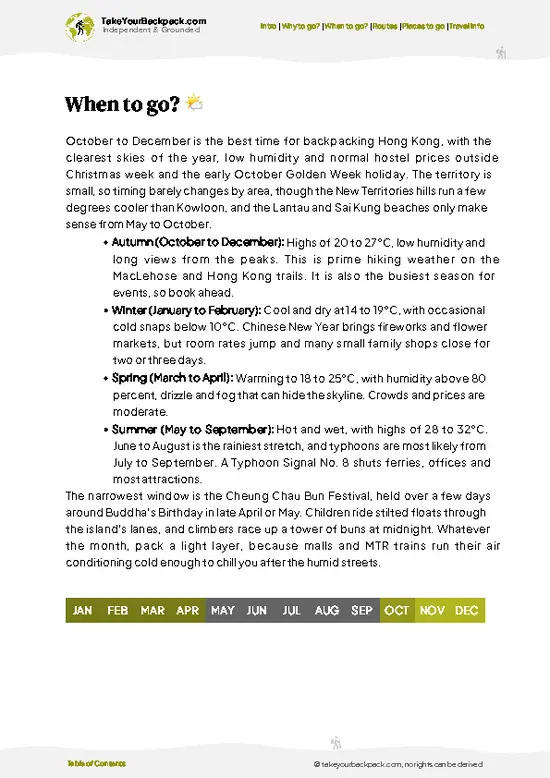
source: climatestotravel.comJANJanuary: excellent for travelingFEBFebruary: excellent for travelingMARMarch: highly recommended for travelingAPRApril: highly recommended for travelingMAYMay: good for travelingJUNJune: fair for travelingJULJuly: fair for travelingAUGAugust: fair for travelingSEPSeptember: good for travelingOCTOctober: excellent for travelingNOVNovember: excellent for travelingDECDecember: excellent for traveling
when-to-go

✈️ The backpacker research shortcutHong Kong Travel Guide

An offline-friendly backpacking guide with optimized travel routes, ranked highlights, transport advice, and the best areas to stay.
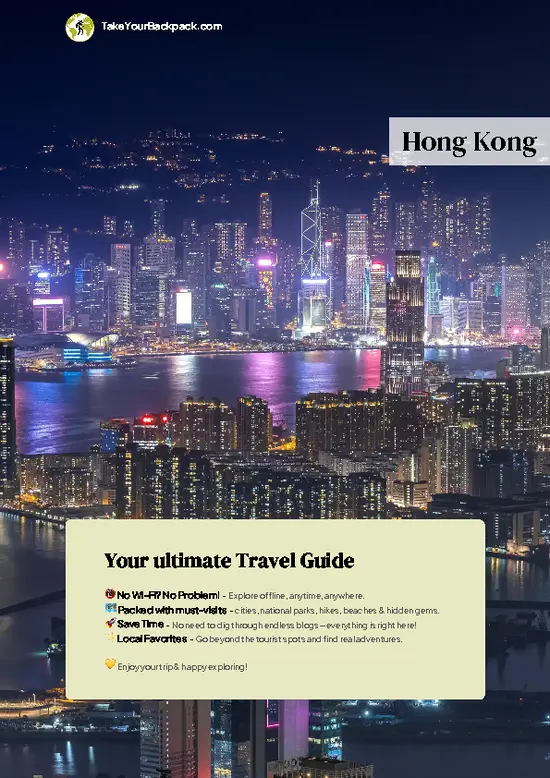
example page 0 from our offline Travel Guide for Hong Kong
example page 1 from our offline Travel Guide for Hong Kong
example page 2 from our offline Travel Guide for Hong Kong
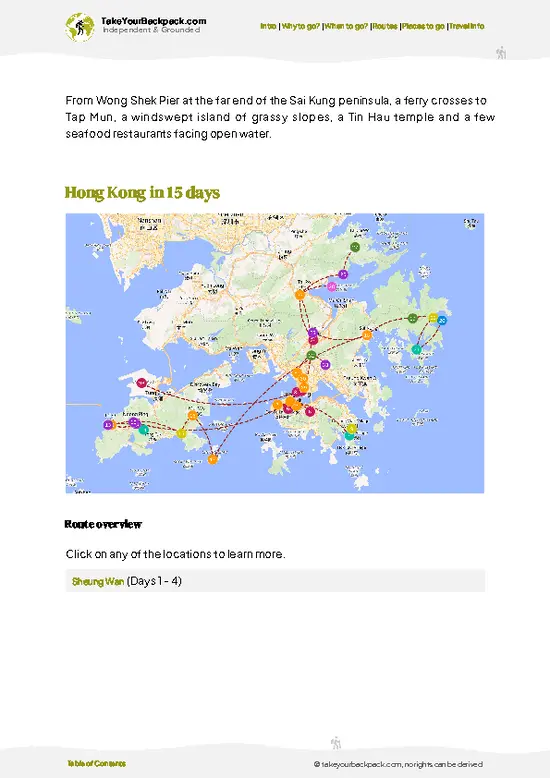
example page 3 from our offline Travel Guide for Hong Kong
example page 4 from our offline Travel Guide for Hong Kong
example page 5 from our offline Travel Guide for Hong Kong
example page 6 from our offline Travel Guide for Hong Kong
example page 7 from our offline Travel Guide for Hong Kong
The digital guide (357 pages) contains:
98 highlights, ranked by travel appeal
Optimized 5, 10 & 15-day travel routes
Cities, national parks, landmarks, beaches
How to get around
Offline-friendly for travel without Wi-Fi
👉 Click to see all 30+ guide features

📅 Plan smarter in minutes, not weeks
Month by month travel advice
Festivals & national holidays
Budget expectations

🗺️ Go to the right places, skip the overrated ones
Honest pros & cons of destinations
Top hikes, parks & viewpoints
Lesser-known places most travelers miss
Clear “worth it vs skip it” guidance

🛏️ Travel smoothly without rookie mistakes
Best areas to stay
Transport systems explained simply
Common scams & safety advice
SIM cards, money & practical tips

🌍 Understand the country, not just visit it
Culture & traditions
52 Essential phrases & customs
Festivals worth planning around
Traveler-friendly historical context
Insights that make places more meaningful

📱 Built for real travel conditions
Fully downloadable PDF
Works completely offline
Optimized for phone use
Useful in remote areas & buses
Everything in one place
Save weeks of stressful planning
Get instant access to your full guide. 30‑day money-back guarantee.


By proceeding you agree to our terms.
Sent to your inbox immediately after payment • 100% Secure Checkout
Best Backpacking Travel Advisor 2025 tourism awardBest Backpacking
Travel Advisor
2025
What others say about Take Your Backpack Guides:
⭐⭐⭐⭐⭐
Fantastic, amazing amount of information!
⭐⭐⭐⭐⭐
My goodness this is amazing, it's what I've been looking for hats off too you!
⭐⭐⭐⭐⭐
I think this is absolutely BRILLIANT
⭐⭐⭐⭐
Very complete and informative. It's still missing places, but I gotta to commend you
⭐⭐⭐⭐⭐
This is truly amazing, thank you, can't wait to explore it with my kids!
⭐⭐⭐⭐⭐
Awesome resource, thank you!
⭐⭐⭐⭐⭐
This is amazing! Can't wait to explore the ones I haven't seen
⭐⭐⭐⭐
I love this! Well done, great idea.
⭐⭐⭐⭐⭐
Thanks for taking the time to make this gem!
⭐⭐⭐⭐⭐
This might be the best website I've ever seen.
⭐⭐⭐⭐⭐
Congratulations, and thank you so much for your work; it's incredibly valuable.
⭐⭐⭐⭐
In all seriousness I think you did a great job pointing out the important spots
⭐⭐⭐⭐⭐
10/10 very good
⭐⭐⭐⭐⭐
As someone who's only just starting to visit regularly this is awesome, thank you.
⭐⭐⭐⭐
Thank you very much! I'm going to visit my dad, it's going to be very useful!
⭐⭐⭐⭐⭐
This is really cool! We'll be travelling for the first time and this definitely come in handy.
⭐⭐⭐⭐⭐
You are now our minister of culture, congratulations 👨‍💼
⭐⭐⭐⭐⭐
Just wanted to tell you that this is a pearl! Going to follow your recommendations.
⭐⭐⭐⭐⭐
This is so cool. I'll definitely be using the resource for my travels soon.
⭐⭐⭐⭐⭐
This is very impressive! Good work.
⭐⭐⭐⭐⭐
This is an amazing and informative site. Very well done!

🛏️ Where to stay?How to pick the right area

Mui Wo’s heart is where the ferry docks meet the village center—a compact stretch where backpackers naturally gravitate. This area hums with a laid-back rhythm, far from Hong Kong’s urban rush, making it a safe and welcoming spot for solo travelers. The streets here are lined with budget-friendly guesthouses and hostels, offering simple digs that encourage socializing over shared meals or sunset chats by the waterfront. Staying close to the pier means easy access to local markets and eateries, where the scent of fresh seafood mingles with salty sea air. Compared to the quieter outskirts, this … read more 👉
Mui Wo’s heart is where the ferry docks meet the village center—a compact stretch where backpackers naturally gravitate. This area hums with a laid-back rhythm, far from Hong Kong’s urban rush, making it a safe and welcoming spot for solo travelers. The streets here are lined with budget-friendly guesthouses and hostels, offering simple digs that encourage socializing over shared meals or sunset chats by the waterfront. Staying close to the pier means easy access to local markets and eateries, where the scent of fresh seafood mingles with salty sea air. Compared to the quieter outskirts, this zone balances convenience with a genuine village vibe, perfect for those who want to connect without losing their sense of adventure.

🚌 Getting aroundHow to get around Mui Wo

Mui Wo moves at the pace of the tide—steady, unhurried, and shaped by the ferry schedules that stitch it to Hong Kong Island. The town’s rhythm is neither frantic nor lax; it’s a blend of deliberate calm and bursts of local bustle, especially around the pier where commuters and tourists converge. The air carries a faint saltiness mixed with the earthy scent of nearby hills, grounding you in a place where time feels measured by the ferry horn rather than a clock. Here, your best moves come from syncing with this flow, not fighting it.


  • Ferry to Central: Runs roughly every 30 minutes from early morning (around 6:30 AM) until late evening (about 11 PM). Tickets hover around HKD 17-20. It’s the fastest, most scenic route to the city, offering a cool breeze and panoramic harbor views—perfect
read more 👉
Mui Wo moves at the pace of the tide—steady, unhurried, and shaped by the ferry schedules that stitch it to Hong Kong Island. The town’s rhythm is neither frantic nor lax; it’s a blend of deliberate calm and bursts of local bustle, especially around the pier where commuters and tourists converge. The air carries a faint saltiness mixed with the earthy scent of nearby hills, grounding you in a place where time feels measured by the ferry horn rather than a clock. Here, your best moves come from syncing with this flow, not fighting it.


  • Ferry to Central: Runs roughly every 30 minutes from early morning (around 6:30 AM) until late evening (about 11 PM). Tickets hover around HKD 17-20. It’s the fastest, most scenic route to the city, offering a cool breeze and panoramic harbor views—perfect for resetting your senses after the island’s quiet.

  • Bus 1: Connects Mui Wo with Silvermine Bay and the airport, running every 15-20 minutes from 6 AM to 11 PM. It’s cheap (under HKD 10) and reliable, though expect a slower pace as it winds through village roads and hills.

  • Walking: Mui Wo is compact enough to explore on foot. Trails to Silvermine Bay or the nearby waterfalls reward you with fresh air and lush greenery, making the effort feel like a natural extension of the town’s laid-back vibe.

  • Taxi: Available but pricey compared to buses and ferries. Useful if you’re hauling gear or traveling late when other options thin out. Expect fares to start around HKD 50 within the island.

👛 Costs (as of 13 March 2026)How expensive it really is

Backpacking in Mui Wo, Hong Kong, offers a slower pace compared to the city’s frantic energy, but the costs reflect its unique blend of rural charm and proximity to urban convenience.
  • Dorm Accommodation: Expect to pay around $15 to $30 USD per night for a bed in a basic guesthouse or hostel dorm. Mui Wo’s options are limited and simple, often family-run, so prices are modest but don’t expect luxury—think clean, no-frills rooms with shared bathrooms.
  • Meals: Local eateries serve up hearty, affordable meals. A typical breakfast or lunch from a dai pai dong (street food stall) will cost about $3 to $6 USD. Dinner at a casual restaurant might run $7 to $12 USD. Fresh seafood and local specialties are highlights but can push the price slightly higher.
  • Local Transport: Mui Wo is small, and most
read more 👉
Backpacking in Mui Wo, Hong Kong, offers a slower pace compared to the city’s frantic energy, but the costs reflect its unique blend of rural charm and proximity to urban convenience.
  • Dorm Accommodation: Expect to pay around $15 to $30 USD per night for a bed in a basic guesthouse or hostel dorm. Mui Wo’s options are limited and simple, often family-run, so prices are modest but don’t expect luxury—think clean, no-frills rooms with shared bathrooms.
  • Meals: Local eateries serve up hearty, affordable meals. A typical breakfast or lunch from a dai pai dong (street food stall) will cost about $3 to $6 USD. Dinner at a casual restaurant might run $7 to $12 USD. Fresh seafood and local specialties are highlights but can push the price slightly higher.
  • Local Transport: Mui Wo is small, and most places are reachable on foot, but if you hop on the local bus or ferry, budget around $1 to $3 USD per trip. The ferry to Central Hong Kong costs about $4 to $6 USD one way, a scenic and practical connection to the city.
  • Basic Activities/Entry Fees: Many natural attractions like beaches and hiking trails are free. If you visit cultural spots or rent a bike, expect to spend $2 to $8 USD. Organized tours or boat trips will be pricier, around $20 to $40 USD, but these are optional extras.
  • Miscellaneous Expenses: Snacks, bottled water, or occasional coffee add up to about $2 to $5 USD daily. Wi-Fi is often free at guesthouses, but topping up a local SIM card or charging devices might cost a few dollars here and there.

Mui Wo’s daily budget for a backpacker comfortably ranges from about $25 to $55 USD. This covers basic needs without cutting corners, letting you soak in the laid-back island vibe without the city’s price tag. The trade-off is simplicity—Mui Wo rewards patience and a willingness to embrace its slower rhythm.
⚠️ Prices can change and everyone travels differently, so take this as a rough guide. Hope it helps you plan your adventure!

🚌 Day tripsShort trips worth adding

Mui Wo is a perfect launchpad for exploring the quieter side of Hong Kong. With its laid-back vibe and easy access to stunning landscapes, you can dive into adventures that feel both rewarding and manageable.

1. Lantau Peak
This hike is a must for those craving a challenge. The trail winds through lush greenery, and as you ascend, the air gets cooler and the views more breathtaking. Aim for an early morning start to catch the sunrise; it’s a magical sight. The round trip takes about 4-5 hours, and you’ll spend around HKD 50 on transport. Just remember, the path can get slippery after rain, so sturdy shoes are essential.
👉 Explore Lantau Peak

2. Ngong Ping Village
A short ferry ride and bus trip lead you to this cultural hub. The village is home to the impressive Tian Tan Buddha and … read more 👉
Mui Wo is a perfect launchpad for exploring the quieter side of Hong Kong. With its laid-back vibe and easy access to stunning landscapes, you can dive into adventures that feel both rewarding and manageable.

1. Lantau Peak
This hike is a must for those craving a challenge. The trail winds through lush greenery, and as you ascend, the air gets cooler and the views more breathtaking. Aim for an early morning start to catch the sunrise; it’s a magical sight. The round trip takes about 4-5 hours, and you’ll spend around HKD 50 on transport. Just remember, the path can get slippery after rain, so sturdy shoes are essential.
👉 Explore Lantau Peak

2. Ngong Ping Village
A short ferry ride and bus trip lead you to this cultural hub. The village is home to the impressive Tian Tan Buddha and offers a glimpse into local traditions. Spend a few hours wandering the shops and sampling street food. The total journey takes about 2-3 hours, costing around HKD 70. Many first-timers rush through; take your time to soak in the atmosphere.


3. Tai O Fishing Village
Experience a slice of traditional life in this stilted village. The boat rides through the mangroves are a highlight, often revealing playful pink dolphins. The trip takes about an hour and costs around HKD 60. Best visited on weekdays to avoid crowds, this spot offers a refreshing contrast to the urban hustle.


4. Cheung Sha Beach
For a chill day, head to Cheung Sha Beach. The soft sand and gentle waves create a perfect escape. It’s about a 30-minute bus ride from Mui Wo, costing around HKD 30. Bring snacks and a towel; many overlook the need for sun protection. Enjoy the local vibe and maybe even catch a sunset.
Want to know what more Hong Kong offers?
The Hong Kong Travel Guide describes 98 highlights, from cities to national parks, from beaches to hikes

Get the Travel Guide -

🛡️ SafetyStaying Safe: What Travelers Should Know

Mui Wo is generally safe, but a few practical tips can enhance your experience. Stay aware near the ferry terminal, especially during busy times when distractions abound. If you’re solo, the evenings can feel quiet; stick to well-lit areas and consider dining at local eateries where the atmosphere is lively.

Scams are rare, but be cautious of overly friendly strangers offering unsolicited help. Everyday annoyances might include the occasional stray dog or a lack of English signage. Carry a local map or download offline resources to navigate smoothly. Embrace the charm of Mui Wo, and let the little quirks add to your adventure.

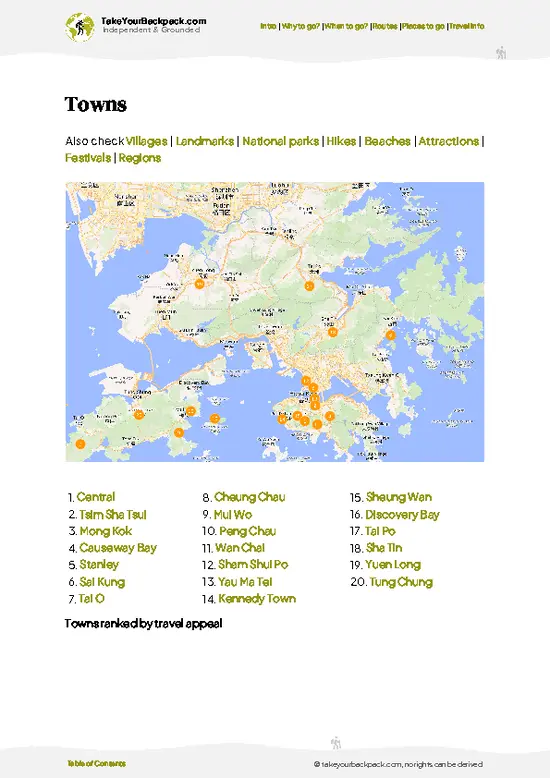
Other Hong Kongese towns near Mui Wo

Explore more nearby:

  • Discovery Bay—Car-free zone, marina, expat community| 3 km away
  • Peng Chau—Tiny island, old temples, quiet beaches| 5 km away
  • Tung Chung—Cable car, outlet shopping, airport access| 6 km away

💡 Not sure where to go next?
Create a personalized itinerary for Hong Kong including Mui Wo and the places that fit your trip.

Generate my itinerary

👉 Discover all towns

Or checkout all Hong Kong has to offer (think cities, towns, villages, national parks, hikes, beaches, festivals)
Country photo of Hong Kong

We 💚 feedbackParting advice and final tips

Mui Wo has a laid-back charm that feels like a breath of fresh air after the city’s chaos. Don’t miss the local bakery; their pineapple buns are a game-changer. Just be ready for the ferry ride—sometimes it’s a bit rocky. Embrace it; the views are worth every wave.

✍️ Help improve this page!
The information on this page is based on in-depth research, insights shared by experienced travelers, and feedback from the local travel community in Hong Kong. While every effort is made to keep the information accurate and current, conditions can change — so if you spot anything incorrect or outdated, please get in touch.


🙋‍♂️ Give feedback

👋 Meet the founderWho’s Behind Take Your Backpack?

Johan, backpacker and founder of TakeYourBackpackHi, I’m Johan (Netherlands 🇳🇱), the creator of TakeYourBackpack. Over the past decade, I’ve backpacked through 80+ countries across six continents, gaining extensive experience with independent travel, long-term trips, and overland routes.

This site is built on a combination of firsthand travel experience and carefully curated insights from other backpackers. Many guides are based on places I’ve personally visited, while others bring together tips, observations, and practical advice shared by trusted travelers I’ve met along the way.

The goal is to provide realistic, experience-driven guidance — not generic itineraries — so you can explore destinations with better context, clearer expectations, and more confidence.

Get full Hong Kong guide •
Instant download • 98 highlights • Full Offline guide