×

Hong Kong🇭🇰 | townsSheung ShuiBorder town, local markets, suburban estates | things to do and best time to go

Explore FanlingExplore Discovery Bay

Backpacking in Sheung Shui
👀 For curious travelerstown ranked #24
By Johan Kruseman 🇳🇱 | Updated July 19, 2026

Most people only know Sheung Shui for the cross‑border shopping chaos, but for a backpacker, what matters more is how it slows Hong Kong down to a human pace. Up in the New Territories, near the Shenzhen border, it’s a practical, slightly scruffy town that works best as a cheap, local-feeling base between city days and green escapes. Trains make it easy: 40–50 minutes from Central, then you’re in a walkable grid of old shops, wet markets, cha chaan tengs, and low-rise housing blocks where evenings are quiet and social life is more about plastic stools and milk tea than bars or hostels. It’s safer and cheaper than staying in Tsim Sha Tsui, but far less social; you’ll meet commuters and aunties, not a crowd of backpackers. Use it if you want quick access to northern New Territories hikes and villages, or a calm overnight before crossing to or from mainland China, not if you’re chasing nightlife or big-city drama. Compared with Tai Po or Sha Tin, Sheung Shui feels more functional than scenic, but that’s the appeal: it’s Hong Kong with its work clothes on.

Discover everything you want to know in the 📖 Hong Kong Travel Guide.
Loading the map 🌍
CLICK TO FILTER
towns
landmarks
national parks
hikes
beaches
attractions
festivals
regions
SHOW COUNTRY’S BESTSHOW ALL

✨ Why go?
Ranked #24 town in Hong Kong
Reasons people choose to visit here

Backpackers flock to Sheung Shui for its convenience as a gateway to nearby hikes and cultural sites. The walkable streets invite exploration, while small-scale hostels and guesthouses offer a cozy, friendly atmosphere. You can savor local food experiences that feel authentic, not touristy. Many travelers stay briefly, using it as a launchpad for adventures, but those who linger appreciate the slower pace. It’s ideal for solo travelers and small groups seeking a break from the hustle. The vibe is relaxed, making it a perfect pit stop or a quiet base for exploration.
Want to include Sheung Shui in your Hong Kong route?
Create a personalized Hong Kong itinerary that includes Sheung Shui and the places that fit your trip — based on your travel style, budget, and available time. Get your route in seconds.

Generate my trip

💡 HighlightsDon't-miss highlights and experiences

  • Shek Wu Hui (Shek Wu Market) — The old market quarter where narrow streets, fresh-food stalls and century-old shopfronts still set the pace; great for watching everyday commerce and grabbing cheap Cantonese snacks.
  • Sheung Shui Wai (the old walled village) — A compact cluster of traditional village houses and an ancestral-hall feel that gives a sense of the area’s rural past tucked inside the modern town.
  • Landmark North — The town’s main mall and meeting point: lots of local chain restaurants, casual cafes and small shops where you can observe the cross-border shopper crowd and try quick, affordable eats.
  • Sheung Shui Park — A surprisingly pleasant pocket of greenery with ponds, benches and a children’s area; nice for a slow walk, people-watching and seeing local leisure life away from
read more 👉
  • Shek Wu Hui (Shek Wu Market) — The old market quarter where narrow streets, fresh-food stalls and century-old shopfronts still set the pace; great for watching everyday commerce and grabbing cheap Cantonese snacks.
  • Sheung Shui Wai (the old walled village) — A compact cluster of traditional village houses and an ancestral-hall feel that gives a sense of the area’s rural past tucked inside the modern town.
  • Landmark North — The town’s main mall and meeting point: lots of local chain restaurants, casual cafes and small shops where you can observe the cross-border shopper crowd and try quick, affordable eats.
  • Sheung Shui Park — A surprisingly pleasant pocket of greenery with ponds, benches and a children’s area; nice for a slow walk, people-watching and seeing local leisure life away from the malls.
  • Tin Hau Temple (Shek Wu Hui) — A compact temple near the market that still hosts small offerings and local rituals; visiting gives a straightforward look at folk religion woven into daily market life.
  • Sheung Shui MTR and Market Streets — The area around the station buzzes with street vendors, budget eateries and shops catering to both locals and cross-border visitors—good for late-afternoon street food runs and observing commuter rhythms.
  • Ng Tung River riverside paths — Easy, flat riverside walks where you can watch local anglers, see migratory birds in season and escape the built-up parts of town without going far.
  • North District Town Hall / Sheung Shui Public Library — The civic complex hosts small exhibitions, community performances and occasional Cantonese operas or talks—useful for catching local culture on the cheap.
  • Sheung Shui Wet Market (town centre wet market) — Raw, noisy and colourful: fish tanks, butchers, vegetable stalls and quick-serve hawker stands. It’s the most honest way to taste and smell the town.
  • Cluster of nearby village shrines and ancestral halls — Walk a few streets beyond the centre to find small ancestral halls, village gates and shrines tucked between newer buildings; they’re quiet, photogenic and reveal Sheung Shui’s village roots.
A few easy day trips nearby: the Mai Po Nature Reserve (birdwatching), Fanling’s Lung Yeuk Tau/Tang Clan walled-village area and Fung Ying Seen Koon (temple complex), and just across the border the shopping hubs in Shenzhen (Luohu/Dongmen) are all close and visitable from Sheung Shui.
Spotted a mistake or missing something? Contact us.

🏘️ NeighborhoodsHow different areas shape the experience

Sheung Shui offers a unique blend of local culture and accessibility, making it a compelling stop for backpackers.

Sheung Shui Town Center: This bustling hub is where you’ll find local markets and eateries. The vibe is lively, with a mix of street food and shops. It’s walkable, and you can easily hop on the MTR for quick access to other parts of Hong Kong. Perfect for short stays, but longer-term visitors will appreciate the local flavor.

Fanling: Just a short bus ride away, Fanling feels quieter and more residential. It’s great for those seeking a slower pace. The area is less touristy, offering a genuine slice of life. Ideal for longer stays, with parks and local cafes to explore.

Pak Shek Kok: This area is more modern and spacious, with waterfront views. It’s a bit pricier but offers … read more 👉
Sheung Shui offers a unique blend of local culture and accessibility, making it a compelling stop for backpackers.

Sheung Shui Town Center: This bustling hub is where you’ll find local markets and eateries. The vibe is lively, with a mix of street food and shops. It’s walkable, and you can easily hop on the MTR for quick access to other parts of Hong Kong. Perfect for short stays, but longer-term visitors will appreciate the local flavor.

Fanling: Just a short bus ride away, Fanling feels quieter and more residential. It’s great for those seeking a slower pace. The area is less touristy, offering a genuine slice of life. Ideal for longer stays, with parks and local cafes to explore.

Pak Shek Kok: This area is more modern and spacious, with waterfront views. It’s a bit pricier but offers a serene atmosphere. Good for those who want a mix of nature and urban life. Transport links are solid, making it easy to venture out.

⌛️ 1 dayWhat you can realistically do in a day

Sheung Shui, a lesser-known corner of Hong Kong, offers a blend of local culture and natural beauty. Start your day with a stroll through the bustling streets of the town center, where the aroma of freshly baked pineapple buns fills the air. Grab one from a local bakery and enjoy it while wandering towards the Sheung Shui Wetland Park. The park is a peaceful escape, with birdwatching opportunities that reveal the area’s rich biodiversity.

In the afternoon, head to the nearby Fanling neighborhood. Explore the vibrant markets, where you can find everything from traditional Chinese herbs to handmade crafts. Don’t miss the historic Tang Chung Ling Ancestral Hall, a hidden treasure that showcases local heritage.

As evening approaches, make your way to the scenic shores of the Shenzhen River. … read more 👉
Sheung Shui, a lesser-known corner of Hong Kong, offers a blend of local culture and natural beauty. Start your day with a stroll through the bustling streets of the town center, where the aroma of freshly baked pineapple buns fills the air. Grab one from a local bakery and enjoy it while wandering towards the Sheung Shui Wetland Park. The park is a peaceful escape, with birdwatching opportunities that reveal the area’s rich biodiversity.

In the afternoon, head to the nearby Fanling neighborhood. Explore the vibrant markets, where you can find everything from traditional Chinese herbs to handmade crafts. Don’t miss the historic Tang Chung Ling Ancestral Hall, a hidden treasure that showcases local heritage.

As evening approaches, make your way to the scenic shores of the Shenzhen River. The sunset casts a warm glow over the water, creating a perfect backdrop for reflection. Grab dinner at a local eatery, savoring dishes like clay pot rice, and soak in the authentic atmosphere. This day in Sheung Shui is a tapestry of flavors, sights, and experiences that truly captures the essence of Hong Kong.
Turn your Sheung Shui visit into an Hong Kong adventure
Build a complete Hong Kong route with Sheung Shui, hidden gems, must-see destinations, and realistic travel times included.

Generate my trip

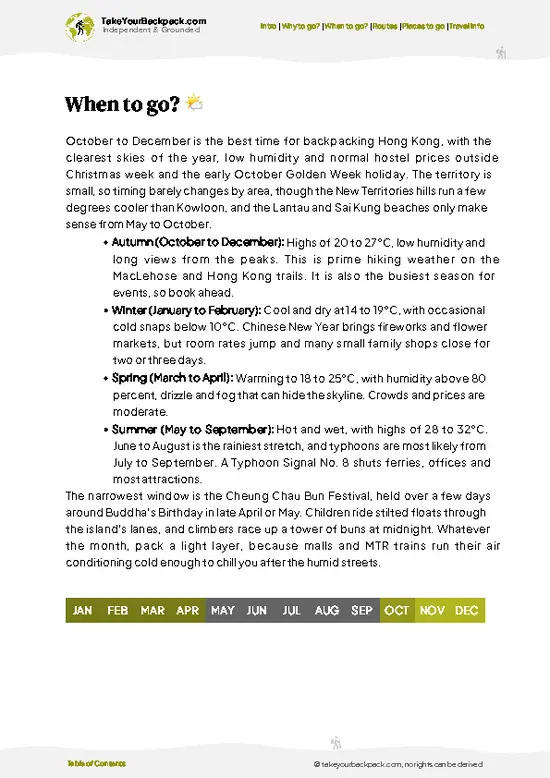
🌤️ When to go?Choosing the right time of year


  • Weather: Spring (March to May) offers mild, pleasant days around 18-25°C (64-77°F), avoiding the oppressive summer humidity and typhoon season that hits June to September.

  • Temperature: Winters are cool but rarely freezing, hovering between 12-18°C (54-64°F), making it comfortable for long walks without overheating or shivering.

  • Daylight Hours: Longer daylight in spring and autumn means more time to explore markets and trails before dusk, with sunsets around 6-7 pm.

  • Crowds: Avoid Chinese New Year and National Day holidays when locals flood border towns like Sheung Shui, turning streets into a crush of shoppers and tourists.

  • Seasonal Activities: Autumn brings local festivals and fresh produce markets, adding authentic flavor to your visit beyond the usual sights.

  • Price Fluctuations:
read more 👉

  • Weather: Spring (March to May) offers mild, pleasant days around 18-25°C (64-77°F), avoiding the oppressive summer humidity and typhoon season that hits June to September.

  • Temperature: Winters are cool but rarely freezing, hovering between 12-18°C (54-64°F), making it comfortable for long walks without overheating or shivering.

  • Daylight Hours: Longer daylight in spring and autumn means more time to explore markets and trails before dusk, with sunsets around 6-7 pm.

  • Crowds: Avoid Chinese New Year and National Day holidays when locals flood border towns like Sheung Shui, turning streets into a crush of shoppers and tourists.

  • Seasonal Activities: Autumn brings local festivals and fresh produce markets, adding authentic flavor to your visit beyond the usual sights.

  • Price Fluctuations: Accommodation and transport costs spike during peak holidays; off-peak spring and autumn offer better deals and quieter streets.


Pro-tip: Aim for late March or early November—cool air, fewer crowds, and the scent of blooming flowers or crisp leaves make every step feel earned.


source: climatestotravel.comJANJanuary: good for travelingFEBFebruary: fair for travelingMARMarch: highly recommended for travelingAPRApril: excellent for travelingMAYMay: excellent for travelingJUNJune: fair for travelingJULJuly: below average for travelingAUGAugust: below average for travelingSEPSeptember: fair for travelingOCTOctober: highly recommended for travelingNOVNovember: excellent for travelingDECDecember: good for traveling
when-to-go

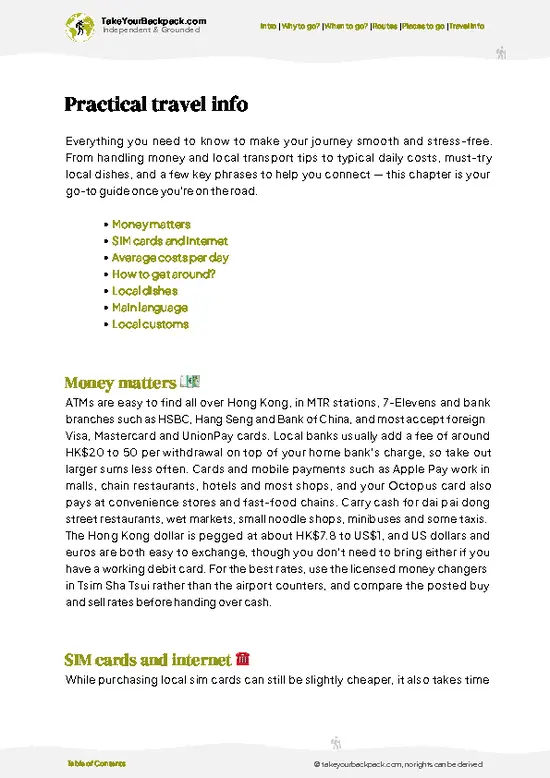
✈️ The backpacker research shortcutHong Kong Travel Guide

An offline-friendly backpacking guide with optimized travel routes, ranked highlights, transport advice, and the best areas to stay.
example page 0 from our offline Travel Guide for Hong Kong
example page 1 from our offline Travel Guide for Hong Kong
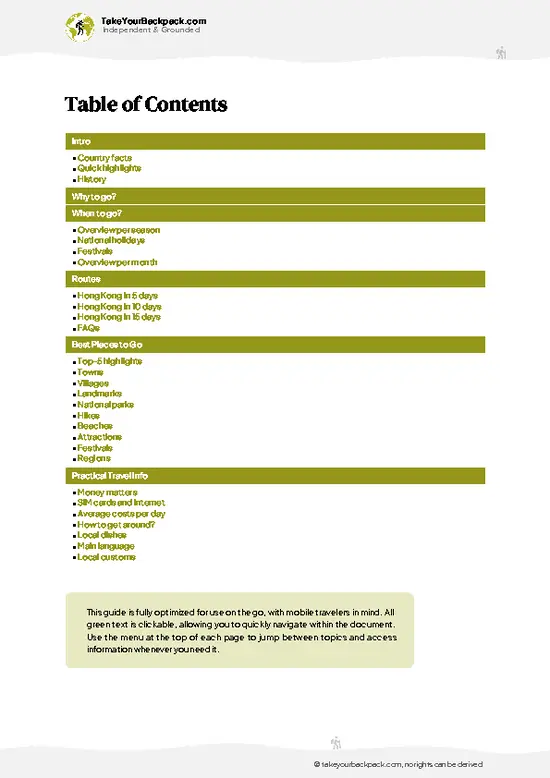
example page 2 from our offline Travel Guide for Hong Kong
example page 3 from our offline Travel Guide for Hong Kong
example page 4 from our offline Travel Guide for Hong Kong
example page 5 from our offline Travel Guide for Hong Kong
example page 6 from our offline Travel Guide for Hong Kong
example page 7 from our offline Travel Guide for Hong Kong
The digital guide (357 pages) contains:
98 highlights, ranked by travel appeal
Optimized 5, 10 & 15-day travel routes
Cities, national parks, landmarks, beaches
How to get around
Offline-friendly for travel without Wi-Fi
👉 Click to see all 30+ guide features

📅 Plan smarter in minutes, not weeks
Month by month travel advice
Festivals & national holidays
Budget expectations

🗺️ Go to the right places, skip the overrated ones
Honest pros & cons of destinations
Top hikes, parks & viewpoints
Lesser-known places most travelers miss
Clear “worth it vs skip it” guidance

🛏️ Travel smoothly without rookie mistakes
Best areas to stay
Transport systems explained simply
Common scams & safety advice
SIM cards, money & practical tips

🌍 Understand the country, not just visit it
Culture & traditions
52 Essential phrases & customs
Festivals worth planning around
Traveler-friendly historical context
Insights that make places more meaningful

📱 Built for real travel conditions
Fully downloadable PDF
Works completely offline
Optimized for phone use
Useful in remote areas & buses
Everything in one place
Save weeks of stressful planning
Get instant access to your full guide. 30‑day money-back guarantee.


By proceeding you agree to our terms.
Sent to your inbox immediately after payment • 100% Secure Checkout
Best Backpacking Travel Advisor 2025 tourism awardBest Backpacking
Travel Advisor
2025
What others say about Take Your Backpack Guides:
⭐⭐⭐⭐⭐
Fantastic, amazing amount of information!
⭐⭐⭐⭐⭐
My goodness this is amazing, it's what I've been looking for hats off too you!
⭐⭐⭐⭐⭐
I think this is absolutely BRILLIANT
⭐⭐⭐⭐
Very complete and informative. It's still missing places, but I gotta to commend you
⭐⭐⭐⭐⭐
This is truly amazing, thank you, can't wait to explore it with my kids!
⭐⭐⭐⭐⭐
Awesome resource, thank you!
⭐⭐⭐⭐⭐
This is amazing! Can't wait to explore the ones I haven't seen
⭐⭐⭐⭐
I love this! Well done, great idea.
⭐⭐⭐⭐⭐
Thanks for taking the time to make this gem!
⭐⭐⭐⭐⭐
This might be the best website I've ever seen.
⭐⭐⭐⭐⭐
Congratulations, and thank you so much for your work; it's incredibly valuable.
⭐⭐⭐⭐
In all seriousness I think you did a great job pointing out the important spots
⭐⭐⭐⭐⭐
10/10 very good
⭐⭐⭐⭐⭐
As someone who's only just starting to visit regularly this is awesome, thank you.
⭐⭐⭐⭐
Thank you very much! I'm going to visit my dad, it's going to be very useful!
⭐⭐⭐⭐⭐
This is really cool! We'll be travelling for the first time and this definitely come in handy.
⭐⭐⭐⭐⭐
You are now our minister of culture, congratulations 👨‍💼
⭐⭐⭐⭐⭐
Just wanted to tell you that this is a pearl! Going to follow your recommendations.
⭐⭐⭐⭐⭐
This is so cool. I'll definitely be using the resource for my travels soon.
⭐⭐⭐⭐⭐
This is very impressive! Good work.
⭐⭐⭐⭐⭐
This is an amazing and informative site. Very well done!

🛏️ Where to stay?Choosing the right base

Sheung Shui’s heart for backpackers beats strongest near the town center, where the streets hum with local markets and the scent of street food—think fresh soy milk and fried dough—drifts through the air. This area is safe, with a steady flow of commuters and shoppers, making solo travelers feel grounded rather than isolated. Hostels cluster here, offering simple, clean beds without the touristy price tag. Staying closer to the MTR station means easy access to Hong Kong’s urban pulse and the border to Shenzhen, perfect for day trips. Compared to quieter outskirts, this spot balances social buzz … read more 👉
Sheung Shui’s heart for backpackers beats strongest near the town center, where the streets hum with local markets and the scent of street food—think fresh soy milk and fried dough—drifts through the air. This area is safe, with a steady flow of commuters and shoppers, making solo travelers feel grounded rather than isolated. Hostels cluster here, offering simple, clean beds without the touristy price tag. Staying closer to the MTR station means easy access to Hong Kong’s urban pulse and the border to Shenzhen, perfect for day trips. Compared to quieter outskirts, this spot balances social buzz with budget practicality, turning your stay into a lived-in experience, not just a pit stop.

🚌 Getting aroundGetting around like a local

Sheung Shui hums with a rhythm that’s part commuter’s precision, part market-day spontaneity. The streets pulse with the scent of fresh produce and the sharp tang of incense from nearby temples. It’s a place where the flow isn’t dictated by rigid timetables alone but by the ebb and swell of daily life—locals weaving through crowds, vendors calling out deals, and trains arriving just often enough to keep the pace brisk without feeling rushed. You’ll find that moving through Sheung Shui is less about strict schedules and more about syncing with its natural pulse—catching the right moment to hop on a bus or stroll through the bustling streets before the afternoon heat sets in.


  • MTR East Rail Line: Runs from early morning (around 5:30 AM) until just past midnight, with trains every 10-15 minutes
read more 👉
Sheung Shui hums with a rhythm that’s part commuter’s precision, part market-day spontaneity. The streets pulse with the scent of fresh produce and the sharp tang of incense from nearby temples. It’s a place where the flow isn’t dictated by rigid timetables alone but by the ebb and swell of daily life—locals weaving through crowds, vendors calling out deals, and trains arriving just often enough to keep the pace brisk without feeling rushed. You’ll find that moving through Sheung Shui is less about strict schedules and more about syncing with its natural pulse—catching the right moment to hop on a bus or stroll through the bustling streets before the afternoon heat sets in.


  • MTR East Rail Line: Runs from early morning (around 5:30 AM) until just past midnight, with trains every 10-15 minutes during peak hours. It’s the fastest way to reach central Hong Kong or cross into mainland China, costing about HKD 15-30 depending on distance.

  • Green Minibuses: These dart through Sheung Shui and nearby villages on flexible schedules, often filling up quickly. Fares hover around HKD 5-10, and while they’re cramped, they’re perfect for short hops and catching local flavor.

  • Public Buses (KMB and Long Win): Operating roughly from 6 AM to midnight, these buses cover broader routes at a budget-friendly HKD 4-12. They’re slower but offer a comfortable ride with air conditioning, ideal for those who want to see more of the area without breaking the bank.

  • Walking: Sheung Shui’s compact town center invites exploration on foot. The streets are lined with shops, markets, and eateries, all within a 10-15 minute stroll. Walking lets you soak in the smells, sounds, and textures that no vehicle can deliver.

👛 Costs (as of 8 March 2026)What things cost and how to budget

Backpacking in Sheung Shui, Hong Kong, offers a unique blend of urban edge and proximity to nature, but it comes with a price tag that reflects Hong Kong’s overall cost level. Here’s a breakdown of what you can expect to spend daily as an independent traveler.
  • Dorm Accommodation: Hostels in Sheung Shui are limited compared to central Hong Kong, but you can find dorm beds ranging from about $20 to $35 USD per night. These places are basic but clean, often with shared bathrooms and minimal extras. The quieter, less touristy vibe means fewer frills but also fewer crowds.
  • Meals: Eating locally is your best bet. Street food stalls and small eateries offer meals for $3 to $7 USD. Think simple noodle bowls, rice plates, or dim sum snacks. If you opt for a casual restaurant, expect to pay closer
read more 👉
Backpacking in Sheung Shui, Hong Kong, offers a unique blend of urban edge and proximity to nature, but it comes with a price tag that reflects Hong Kong’s overall cost level. Here’s a breakdown of what you can expect to spend daily as an independent traveler.
  • Dorm Accommodation: Hostels in Sheung Shui are limited compared to central Hong Kong, but you can find dorm beds ranging from about $20 to $35 USD per night. These places are basic but clean, often with shared bathrooms and minimal extras. The quieter, less touristy vibe means fewer frills but also fewer crowds.
  • Meals: Eating locally is your best bet. Street food stalls and small eateries offer meals for $3 to $7 USD. Think simple noodle bowls, rice plates, or dim sum snacks. If you opt for a casual restaurant, expect to pay closer to $8-$12 USD per meal. Avoiding tourist traps here means savoring authentic flavors without the inflated prices.
  • Local Transport: Sheung Shui is well connected by the MTR (Mass Transit Railway), with single rides typically costing around $1.50 to $2.50 USD depending on distance. Buses and minibuses are slightly cheaper but less predictable. A daily transport budget of $5 to $8 USD covers multiple trips comfortably.
  • Basic Activities/Entry Fees: Most attractions around Sheung Shui, like hiking trails or local temples, are free or have minimal entry fees under $5 USD. If you want to explore nearby spots like the Hong Kong Wetland Park, expect an entry fee around $5 to $7 USD. This area’s charm lies in its natural and cultural sites that don’t demand heavy spending.
  • Miscellaneous Expenses: This includes bottled water, snacks, occasional coffee, or small souvenirs. Budget around $3 to $7 USD daily. Convenience stores are everywhere but tend to be pricier than local markets, so plan accordingly.

Altogether, a realistic daily budget for backpacking in Sheung Shui ranges from about $35 to $60 USD. This covers basic comfort without cutting corners, letting you experience the local rhythm without the hassle of constant money juggling. The slightly higher cost compared to other parts of Asia is balanced by the smooth public transport and authentic local eats that make every dollar feel earned.


source: discoverhongkong.com
⚠️ Prices can change and everyone travels differently, so take this as a rough guide. Hope it helps you plan your adventure!

🚌 Day tripsExploring the surroundings

Sheung Shui is a fantastic launchpad for exploring the diverse landscapes and cultures of Hong Kong. The town’s proximity to the border and efficient transport links make it a backpacker’s dream.

Tai Po Market
Just a 30-minute MTR ride away, Tai Po Market is a feast for the senses. The vibrant stalls overflow with fresh produce, local snacks, and handmade crafts. Grab a bowl of wonton noodles from a street vendor, and soak in the lively atmosphere. Avoid weekends if you can; the crowds can be overwhelming. Expect to spend around HKD 50 for a meal and a few snacks.


Lantau Island
A bit further afield, Lantau Island offers stunning hiking trails and the iconic Big Buddha. The ferry ride from Sheung Shui to Tung Chung takes about an hour, and the hike to the statue is rewarding. Bring … read more 👉
Sheung Shui is a fantastic launchpad for exploring the diverse landscapes and cultures of Hong Kong. The town’s proximity to the border and efficient transport links make it a backpacker’s dream.

Tai Po Market
Just a 30-minute MTR ride away, Tai Po Market is a feast for the senses. The vibrant stalls overflow with fresh produce, local snacks, and handmade crafts. Grab a bowl of wonton noodles from a street vendor, and soak in the lively atmosphere. Avoid weekends if you can; the crowds can be overwhelming. Expect to spend around HKD 50 for a meal and a few snacks.


Lantau Island
A bit further afield, Lantau Island offers stunning hiking trails and the iconic Big Buddha. The ferry ride from Sheung Shui to Tung Chung takes about an hour, and the hike to the statue is rewarding. Bring water and snacks; the trail can be steep. Budget around HKD 100 for transport and a meal. Aim for early morning to beat the heat and the crowds.
👉 Explore Lantau Island

Sai Kung
Known for its breathtaking coastline, Sai Kung is a 90-minute trip by bus. The fishing village vibe is palpable, with seafood restaurants lining the waterfront. Rent a kayak or take a boat tour to explore the nearby islands. A day here can cost around HKD 200, including transport and lunch. Don’t miss the chance to try the local fish balls!
👉 Explore Sai Kung
Want to know what more Hong Kong offers?
The Hong Kong Travel Guide describes 98 highlights, from cities to national parks, from beaches to hikes

Get the Travel Guide -

🛡️ SafetyStaying Safe: What Travelers Should Know

Sheung Shui is generally safe, but a few simple strategies can enhance your experience. Stay alert in crowded markets, especially near the MTR station, where pickpockets might lurk. If you’re solo at night, stick to well-lit areas and main streets; the vibe is relaxed, but it’s wise to trust your instincts.

Watch for common scams, like overly friendly locals offering unsolicited help. A polite decline usually suffices. Carry yourself confidently, and you’ll blend in seamlessly, enjoying the rich local culture without unnecessary hassle.

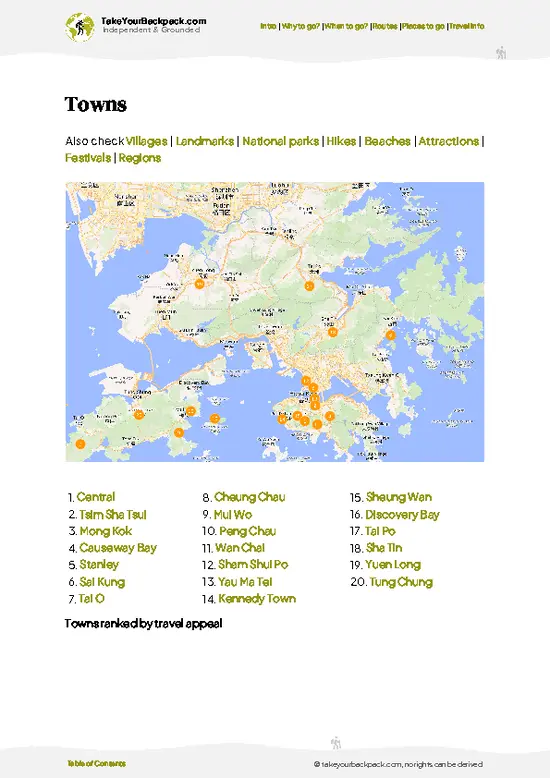
Other Hong Kongese towns near Sheung Shui

Explore more nearby:

  • Fanling—Walled villages, ancestral halls, rural outskirts| 3 km away
  • Tai Po—Seafood market, cycling hub, waterfront promenade| 9 km away
  • Yuen Long—Wetlands, village lanes, open-air markets| 13 km away

💡 Not sure where to go next?
Create a personalized itinerary for Hong Kong including Sheung Shui and the places that fit your trip.

Generate my itinerary

👉 Discover all towns

Or checkout all Hong Kong has to offer (think cities, towns, villages, national parks, hikes, beaches, festivals)
Country photo of Hong Kong

We 💚 feedbackIs it worth it?

Sheung Shui pulses with a unique blend of urban grit and rural charm. The best surprise? The local markets bursting with flavors and scents that tell stories. Just a heads-up: the MTR can get crowded during rush hour, so plan your adventures wisely.

✍️ Help improve this page!
The information on this page is based on in-depth research, insights shared by experienced travelers, and feedback from the local travel community in Hong Kong. While every effort is made to keep the information accurate and current, conditions can change — so if you spot anything incorrect or outdated, please get in touch.


🙋‍♂️ Give feedback

👋 Meet the founderWho’s Behind Take Your Backpack?

Johan, backpacker and founder of TakeYourBackpackHi, I’m Johan (Netherlands 🇳🇱), the creator of TakeYourBackpack. Over the past decade, I’ve backpacked through 80+ countries across six continents, gaining extensive experience with independent travel, long-term trips, and overland routes.

This site is built on a combination of firsthand travel experience and carefully curated insights from other backpackers. Many guides are based on places I’ve personally visited, while others bring together tips, observations, and practical advice shared by trusted travelers I’ve met along the way.

The goal is to provide realistic, experience-driven guidance — not generic itineraries — so you can explore destinations with better context, clearer expectations, and more confidence.

Get full Hong Kong guide •
Instant download • 98 highlights • Full Offline guide