×

India🇮🇳 | hikesZanskar Valley Trekremote gorges, Buddhist villages, arid plateaus | things to do and best time to go

Explore Dzongri TrekExplore Bandhavgarh National Park

Backpacking in Zanskar Valley Trek
By Johan Kruseman 🇳🇱 | Updated September 23, 2026

Your first real fork in the road with the Zanskar Valley Trek is this: do you commit to a long, committing traverse with sketchy logistics, or play it safe with a shorter Ladakh trek that’s easier to bail from? That choice matters, because once you’re deep in Zanskar, you’re in it. Zanskar sits in the remote corner of Ladakh, northern India, a hard-to-reach side valley off the Kargil-Padum axis. The trek itself is raw: high passes, cold rivers, stone villages, and monasteries clinging to cliffs. It’s long, tough, and the altitude hits early. Public transport to trailheads is slow and unreliable compared with Markha or Sham Valley, and that’s the downside. The upside is simple: far fewer trekkers, bigger silence, and a sense of old Himalayan life that hasn’t been smoothed out for you.

Discover everything you want to know in the 📖 India Travel Guide.
Best time to go: May - October
Duration: 15 days
Distance: 120 kilometers
Total ascent: 4,500 meters


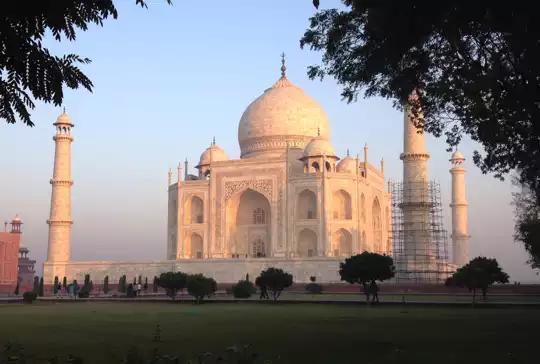
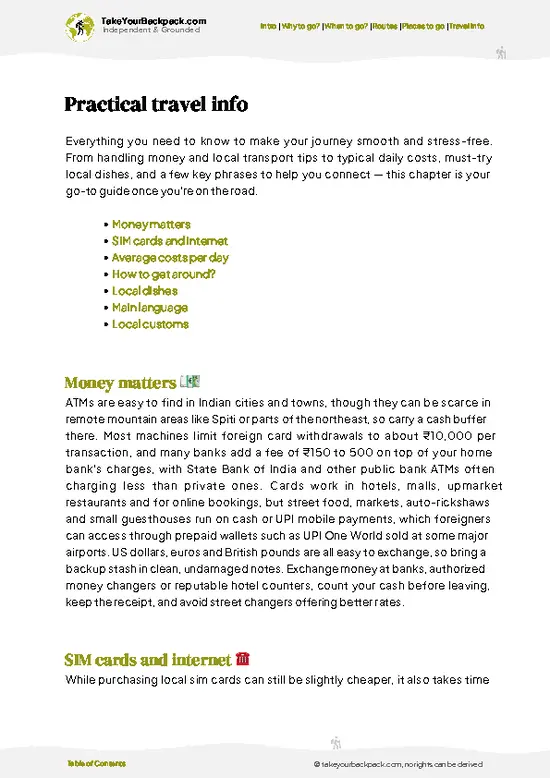
example page 0 from our offline Travel Guide for India
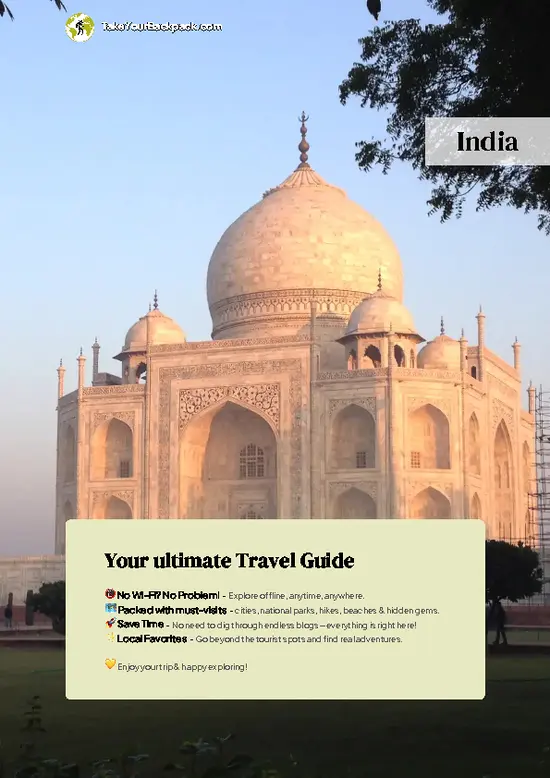
example page 1 from our offline Travel Guide for India
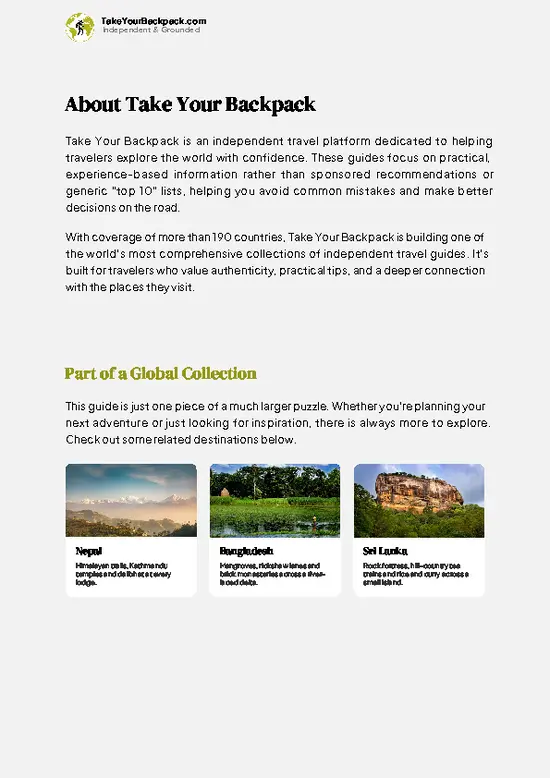
example page 2 from our offline Travel Guide for India
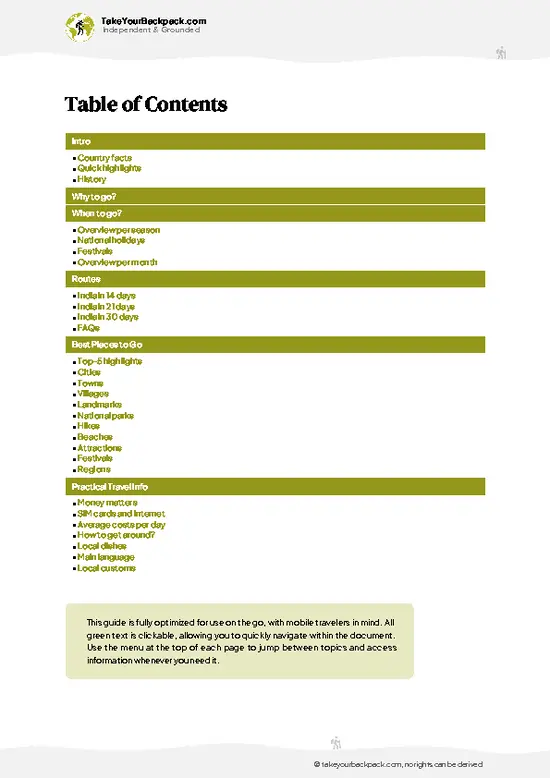
example page 3 from our offline Travel Guide for India
example page 4 from our offline Travel Guide for India
example page 5 from our offline Travel Guide for India
example page 6 from our offline Travel Guide for India
example page 7 from our offline Travel Guide for India
Loading the map 🌍
CLICK TO FILTER
cities
towns
villages
landmarks
national parks
hikes
beaches
attractions
festivals
regions
SHOW COUNTRY’S BESTSHOW ALL

✨ Why go?
Ranked #99 hike in India
Why visitors keep coming back

The Zanskar Valley Trek pulls backpackers in like a magnet. It’s a gritty adventure where the scenery-to-effort ratio is off the charts. You’ll traverse rugged trails that lead to jaw-dropping vistas, making every uphill push worth it. Public transport access is a breeze, with buses and shared taxis whisking you to the trailhead without breaking the bank. Costs are low, allowing you to stretch your budget while soaking in the raw beauty of the Himalayas. Plus, the trek offers flexible distances, letting you tailor your journey. It seamlessly fits into a longer backpacking route, making it a must-do.

💡 HighlightsDon't-miss highlights and experiences

  1. Phuktal Gompa — A monastery literally built into a cliff cave: prayer halls, tiny chapels and a living village all clinging to the rock face. It feels impossibly remote — the walk in gives you one of those “how did they build this?” moments and real contact with Zanskari monastic life. (Personal favorite.)
  2. Zanskar Gorge and the Chadar (winter) — Towering limestone walls cut by the Zanskar River; in winter the river freezes into the famous Chadar ice-sheet so you actually hike on the river. No other trek in India offers that combination of claustrophobic canyon hiking and a frozen-river trailscape.
  3. Pensi La pass — A high, windswept pass that opens up panoramic views of glaciated ridges and the Zanskar snowfields. The switch from barren descent to lush valley below is dramatic, and the pass’s
… read more 👉
  1. Phuktal Gompa — A monastery literally built into a cliff cave: prayer halls, tiny chapels and a living village all clinging to the rock face. It feels impossibly remote — the walk in gives you one of those “how did they build this?” moments and real contact with Zanskari monastic life. (Personal favorite.)
  2. Zanskar Gorge and the Chadar (winter) — Towering limestone walls cut by the Zanskar River; in winter the river freezes into the famous Chadar ice-sheet so you actually hike on the river. No other trek in India offers that combination of claustrophobic canyon hiking and a frozen-river trailscape.
  3. Pensi La pass — A high, windswept pass that opens up panoramic views of glaciated ridges and the Zanskar snowfields. The switch from barren descent to lush valley below is dramatic, and the pass’s stark, alpine feel makes the approach uniquely Himalayan compared with lower-altitude treks.
  4. Padum, Karsha and village life — Padum is the main hub; nearby Karsha Gompa and the stone villages show traditional Zanskari architecture, gompa festivals, and real homestay hospitality. It’s where trekking meets living culture — not just views but people, yak caravans, barley terraces and guest-tea invites.
  5. Alpine meadows, wildlife and night skies — Between passes and villages you get surprisingly lush summer meadows, marmots and bharal (blue sheep), and raptors like lammergeiers. With almost no light pollution the stars are ridiculous — a big sky that turns any campsite into a show.
Spotted a mistake or missing something? Contact us.

🌤️ When to go?Seasonal considerations and timing

  • Weather: The trek is best tackled between June and September when the snow has melted, and trails are clear. Outside this window, temperatures plunge, and heavy snow blocks paths.
  • Temperature: Daytime highs hover around 15-20°C (59-68°F) in summer, but nights can dip to freezing or below. Winter temperatures can drop to -20°C (-4°F) or lower, making trekking dangerous.
  • Daylight Hours: Summer offers long days with up to 14 hours of light, giving you ample time to cover ground and soak in the views without rushing.
  • Crowds: The peak season sees a handful of trekkers, but the valley remains remote and quiet compared to popular Himalayan routes. Off-season, expect near solitude but harsher conditions.
  • Seasonal Activities: Summer brings blooming wildflowers and vibrant local festivals, adding
… read more 👉
  • Weather: The trek is best tackled between June and September when the snow has melted, and trails are clear. Outside this window, temperatures plunge, and heavy snow blocks paths.
  • Temperature: Daytime highs hover around 15-20°C (59-68°F) in summer, but nights can dip to freezing or below. Winter temperatures can drop to -20°C (-4°F) or lower, making trekking dangerous.
  • Daylight Hours: Summer offers long days with up to 14 hours of light, giving you ample time to cover ground and soak in the views without rushing.
  • Crowds: The peak season sees a handful of trekkers, but the valley remains remote and quiet compared to popular Himalayan routes. Off-season, expect near solitude but harsher conditions.
  • Seasonal Activities: Summer brings blooming wildflowers and vibrant local festivals, adding cultural layers to your trek. Winter shuts down most activity due to snow.
  • Price Fluctuations: Costs for guides, permits, and accommodation spike during peak months. Off-season rates drop but come with the risk of trail closures and extreme cold.
Pro-tip: Aim for early June to catch the valley waking up from winter—trails clear, crowds thin, and the landscape bursts with fresh life before the monsoon hits.


source: climatestotravel.comJANJanuary: below average for travelingFEBFebruary: below average for travelingMARMarch: below average for travelingAPRApril: fair for travelingMAYMay: good for travelingJUNJune: excellent for travelingJULJuly: excellent for travelingAUGAugust: excellent for travelingSEPSeptember: excellent for travelingOCTOctober: good for travelingNOVNovember: fair for travelingDECDecember: below average for traveling
when-to-go

✈️ The backpacker research shortcutIndia Travel Guide

An offline-friendly backpacking guide with optimized travel routes, ranked highlights, transport advice, and the best areas to stay.
example page 0 from our offline Travel Guide for India
example page 1 from our offline Travel Guide for India
example page 2 from our offline Travel Guide for India
example page 3 from our offline Travel Guide for India
example page 4 from our offline Travel Guide for India
example page 5 from our offline Travel Guide for India
example page 6 from our offline Travel Guide for India
example page 7 from our offline Travel Guide for India
The digital guide (483 pages) contains:
✅ 157 highlights, ranked by travel appeal
✅ Optimized 14, 21 & 30-day travel routes
✅ Cities, national parks, landmarks, beaches
✅ How to get around
✅ Offline-friendly for travel without Wi-Fi
👉 Click to see all 30+ guide features

📅 Plan smarter in minutes, not weeks
✅ Month by month travel advice
✅ Festivals & national holidays
✅ Budget expectations

🗺️ Go to the right places, skip the overrated ones
✅ Honest pros & cons of destinations
✅ Top hikes, parks & viewpoints
✅ Lesser-known places most travelers miss
✅ Clear “worth it vs skip it” guidance

🛏️ Travel smoothly without rookie mistakes
✅ Best areas to stay
✅ Transport systems explained simply
✅ Common scams & safety advice
✅ SIM cards, money & practical tips

🌍 Understand the country, not just visit it
✅ Culture & traditions
✅ 52 Essential phrases & customs
✅ Festivals worth planning around
✅ Traveler-friendly historical context
✅ Insights that make places more meaningful

📱 Built for real travel conditions
✅ Fully downloadable PDF
✅ Works completely offline
✅ Optimized for phone use
✅ Useful in remote areas & buses
✅ Everything in one place
Stop searching, start planning
Get instant access to your full guide. 30‑day money-back guarantee.
+ Add another guide for just

By proceeding you agree to our terms.
Sent to your inbox immediately after payment • 100% Secure Checkout
Best Backpacking Travel Advisor 2025 tourism awardBest Backpacking
Travel Advisor
2025
What others say about Take Your Backpack Guides:
⭐⭐⭐⭐⭐
Fantastic, amazing amount of information!
⭐⭐⭐⭐⭐
My goodness this is amazing, it's what I've been looking for hats off too you!
⭐⭐⭐⭐⭐
I think this is absolutely BRILLIANT
⭐⭐⭐⭐
Very complete and informative. It's still missing places, but I gotta to commend you
⭐⭐⭐⭐⭐
This is truly amazing, thank you, can't wait to explore it with my kids!
⭐⭐⭐⭐⭐
Awesome resource, thank you!
⭐⭐⭐⭐⭐
This is amazing! Can't wait to explore the ones I haven't seen
⭐⭐⭐⭐
I love this! Well done, great idea.
⭐⭐⭐⭐⭐
Thanks for taking the time to make this gem!
⭐⭐⭐⭐⭐
This might be the best website I've ever seen.
⭐⭐⭐⭐⭐
Congratulations, and thank you so much for your work; it's incredibly valuable.
⭐⭐⭐⭐
In all seriousness I think you did a great job pointing out the important spots
⭐⭐⭐⭐⭐
10/10 very good
⭐⭐⭐⭐⭐
As someone who's only just starting to visit regularly this is awesome, thank you.
⭐⭐⭐⭐
Thank you very much! I'm going to visit my dad, it's going to be very useful!
⭐⭐⭐⭐⭐
This is really cool! We'll be travelling for the first time and this definitely come in handy.
⭐⭐⭐⭐⭐
You are now our minister of culture, congratulations 👨‍💼
⭐⭐⭐⭐⭐
Just wanted to tell you that this is a pearl! Going to follow your recommendations.
⭐⭐⭐⭐⭐
This is so cool. I'll definitely be using the resource for my travels soon.
⭐⭐⭐⭐⭐
This is very impressive! Good work.
⭐⭐⭐⭐⭐
This is an amazing and informative site. Very well done!

🛏️ Where to stay?Choosing the right base

If you enjoy meeting fellow travelers, consider choosing hostels with high ratings for atmosphere. On the other hand, if you prefer having your own space, a hotel might be a better option.

🥾 Hike detailsKey facts about the Zanskar Valley Trek hike

Total Distance: The Zanskar Valley Trek spans approximately 120 kilometers (about 75 miles) from the starting point at Padum to the endpoint at Leh.

Estimated Duration: Most trekkers take around 10 to 15 days to complete the trek, depending on their pace and how much time they spend exploring the stunning landscapes and local villages along the way.

Difficulty Level: This trek is generally considered moderate to challenging. It involves high-altitude trekking, with some passes reaching over 5,000 meters (16,404 feet), so a good level of fitness is essential.

Starting Point: The trek kicks off … read more 👉
Total Distance: The Zanskar Valley Trek spans approximately 120 kilometers (about 75 miles) from the starting point at Padum to the endpoint at Leh.

Estimated Duration: Most trekkers take around 10 to 15 days to complete the trek, depending on their pace and how much time they spend exploring the stunning landscapes and local villages along the way.

Difficulty Level: This trek is generally considered moderate to challenging. It involves high-altitude trekking, with some passes reaching over 5,000 meters (16,404 feet), so a good level of fitness is essential.

Starting Point: The trek kicks off in Padum, which is accessible via public transport. You can take a bus or shared taxi from Leh to Kargil, and then catch another bus or taxi to Padum. The journey can take around 12-14 hours, so be prepared for a long ride.

Major Landmarks Along the Route:
  • Padum: The main town in Zanskar, where you can stock up on supplies and enjoy local culture.
  • Zongkul Monastery: A beautiful monastery perched on a cliff, offering stunning views and a peek into local spirituality.
  • Sani Monastery: One of the oldest monasteries in the region, known for its unique architecture and serene atmosphere.
  • Phugtal Monastery: A remarkable monastery built into a cliff, accessible via a side trek that’s well worth the effort.

Type of Terrain and Scenery: The terrain varies quite a bit. Expect rocky trails, river crossings, and steep ascents. The scenery is breathtaking, with towering mountains, deep gorges, and lush valleys. You’ll also cross high-altitude passes that offer panoramic views of the surrounding landscape.

Typical Vegetation and Wildlife: The vegetation changes with elevation. Lower areas are dotted with willows and wildflowers, while higher altitudes are more barren. Wildlife includes the elusive snow leopard, Himalayan blue sheep, and various bird species. Keep your eyes peeled, as spotting wildlife can be one of the trek’s highlights!
⚠️ Hiking info can sometimes be outdated or inaccurate. Before you hit the trail, check the latest conditions with locals. If you do spot anything that's off, I'd love to hear from you, so I can update it for fellow travelers.

🛡️ SafetyTraveler Safety Guide

The Zanskar Valley Trek is a thrilling challenge, but it’s manageable with the right mindset. Expect weather shifts; layers are your best friends. The altitude can catch you off guard, so pace yourself and hydrate. The terrain varies—some sections are steep and rocky, while river crossings require careful footing. Keep your eyes peeled for wildlife; respect their space and don’t feed them. Preparation is key—know your route and carry a reliable map. Embrace the grind; the breathtaking views and the cold beer at the end are worth every step.

FAQFrequently asked questions about Zanskar Valley Trek

The Zanskar Valley Trek typically takes 10 to 14 days to complete, covering around 120 to 150 kilometers depending on the route. The trek is usually done between June and September when the weather is most favorable.
The trek is considered difficult due to high altitude, rugged terrain, and remote conditions. It involves crossing multiple high passes above 5,000 meters, requiring good physical fitness and acclimatization.
Yes, a guide is highly recommended for safety and navigation due to the remote and challenging terrain. A permit is required as the trek passes through restricted border areas; these can be obtained through local tour operators or government offices in Leh.
⚠️ Things can change over time, so always validate details locally before you go.

Other Indian hikes near Zanskar Valley Trek

Explore more nearby:

  • Chadar Trek—frozen river, Ladakh winter, ice caves| 27 km away
  • Markha Valley—Ladakh villages, river crossings, barren mountains| 54 km away
  • Hampta Pass—crossover pass, contrasting valleys, river crossings| 148 km away

💡 Not sure where to go next?
Create a personalized itinerary for India including Zanskar Valley Trek and the places that fit your trip.

Generate my itinerary

👉 Discover all hikes

Or checkout all India has to offer (think cities, towns, villages, national parks, hikes, beaches, festivals)
Country photo of India

We 💚 feedbackWhat to keep in mind

The Zanskar Valley Trek is a pulse-quickening adventure, where the raw beauty of jagged peaks and rushing rivers makes every step worthwhile. But be ready for altitude sickness; it can hit hard. Embrace the challenge, and the breathtaking views will reward your grit like nothing else.

✈️ When did I visit India?
As part of my 1.5 year travel around the world trip, I visited India in December 2015.

✍️ Help improve this page!
The information on this page is based on my own backpacking experience in India, supplemented with up-to-date research and feedback from other travelers. Travel details can change, so if you notice anything outdated or incomplete, feel free to let me know.


🙋‍♂️ Give feedback

👋 Meet the founderWho’s Behind Take Your Backpack?

Johan, backpacker and founder of TakeYourBackpackHi, I’m Johan (Netherlands 🇳🇱), the creator of TakeYourBackpack. Over the past 3 decades, I’ve backpacked through 90+ countries across six continents, gaining extensive experience with independent travel, long-term trips, and overland routes.

This site is built on a combination of firsthand travel experience and carefully curated insights from other backpackers. Many guides are based on places I’ve personally visited, while others bring together tips, observations, and practical advice shared by trusted travelers I’ve met along the way.

The goal is to provide realistic, experience-driven guidance — not generic itineraries — so you can explore destinations with better context, clearer expectations, and more confidence.