
×

India🇮🇳 | hikesChadar Trekfrozen river, Ladakh winter, ice caves | things to do and best time to go

Explore Nagaur FairExplore Hampta Pass

Backpacking in Chadar Trek
🏆 Top pickhike ranked #1
By Johan Kruseman 🇳🇱 | Updated September 4, 2026

Most people realize too late that the real perk of the Chadar Trek is this: once you’ve done it, every other “winter trek” in India feels like a long weekend stroll. The Chadar runs along the frozen Zanskar River in Ladakh, high in the far north of India, and it earns its reputation fast. You’re walking on ice that cracks, shifts, and soaks your boots if you misjudge a step, but the canyon walls glow gold and rust-red in the low sun, and the silence hits like a physical thing. It’s long and demanding, with cold that chews through bad gear and altitude that punishes anyone who rushed acclimatization. Getting to Leh is straightforward by flight, then it’s road to the trailhead, but compared with other Indian treks—like Kashmir’s lakes or Himachal’s passes—Chadar is harsher, less green, more lunar, and far more mental than scenic-comfortable.

Discover everything you want to know in the 📖 India Travel Guide.
Best time to go: December - February
Duration: 9 to 10 days
Distance: 105 kilometers
Total ascent: 2,000 meters


Get your India guide
162 ranked highlights, routes & tips, works offline (498 pages)
Loading the map 🌍
CLICK TO FILTER
cities
towns
villages
landmarks
national parks
hikes
beaches
attractions
festivals
regions
SHOW COUNTRY’S BESTSHOW ALL

✨ Why go?
Ranked #1 hike in India
Reasons people choose to hike the here

The Chadar Trek is a rite of passage for backpackers craving adventure. Imagine trekking on a frozen river, surrounded by towering cliffs and the stark beauty of the Himalayas. The scenery-to-effort ratio is off the charts; every step on that ice rewards you with breathtaking views that make your heart race.

Getting there is a breeze. Public transport access is straightforward, with buses and shared taxis whisking you to Leh, the gateway to this icy wonderland. Once you’re there, the trek is low cost—perfect for budget travelers. You can choose your own pace, with flexible distances that let you soak in the experience without feeling rushed.

What’s more, the Chadar Trek fits seamlessly into a longer backpacking route through India. You can easily hop from Leh to other stunning destinations … read more 👉
The Chadar Trek is a rite of passage for backpackers craving adventure. Imagine trekking on a frozen river, surrounded by towering cliffs and the stark beauty of the Himalayas. The scenery-to-effort ratio is off the charts; every step on that ice rewards you with breathtaking views that make your heart race.

Getting there is a breeze. Public transport access is straightforward, with buses and shared taxis whisking you to Leh, the gateway to this icy wonderland. Once you’re there, the trek is low cost—perfect for budget travelers. You can choose your own pace, with flexible distances that let you soak in the experience without feeling rushed.

What’s more, the Chadar Trek fits seamlessly into a longer backpacking route through India. You can easily hop from Leh to other stunning destinations like Nubra Valley or Pangong Lake. The thrill of walking on ice, the chill in the air, and the camaraderie with fellow trekkers create a tapestry of memories that linger long after the trek ends. This isn’t just a hike; it’s an exhilarating journey that challenges you and rewards you in equal measure.
Want to include Chadar Trek in your India route?
Create a personalized India itinerary that includes Chadar Trek and the places that fit your trip — based on your travel style, budget, and available time. Get your route in seconds.

Generate my trip

💡 HighlightsDon't-miss highlights and experiences

  • The Chadar sheet — walking on a frozen river — You’re not on a ridge or a forest path, you’re literally walking on a river that’s turned into a moving patchwork of ice. The surface changes every few meters (slabs, slick glass, snow-packed stretches), the canyon amplifies sound, and the trail feels ephemeral — fragile and alive in a way mountain trails usually aren’t.
  • Frozen waterfalls and ice curtains (Nerak) — Vertical sheets of ice hanging off cliff faces, some the size of multi-storey buildings. Nerak waterfall is the classic moment: a giant cascade frozen mid-fall, blue and translucent in places, and often the most photogenic — and dramatic — scene on the whole trek. (Personal favorite.)
  • Zanskar Gorge and towering ochre cliffs — Narrow, high canyon walls flank you the whole way, sheer
read more 👉
  • The Chadar sheet — walking on a frozen river — You’re not on a ridge or a forest path, you’re literally walking on a river that’s turned into a moving patchwork of ice. The surface changes every few meters (slabs, slick glass, snow-packed stretches), the canyon amplifies sound, and the trail feels ephemeral — fragile and alive in a way mountain trails usually aren’t.
  • Frozen waterfalls and ice curtains (Nerak) — Vertical sheets of ice hanging off cliff faces, some the size of multi-storey buildings. Nerak waterfall is the classic moment: a giant cascade frozen mid-fall, blue and translucent in places, and often the most photogenic — and dramatic — scene on the whole trek. (Personal favorite.)
  • Zanskar Gorge and towering ochre cliffs — Narrow, high canyon walls flank you the whole way, sheer red and brown rock rising straight up from the river. The scale and colors are constant reminders you’re threading through geology rather than just hiking scenery — the light on those cliffs at dawn and dusk is unique to this place.
  • Small Zanskari settlements and camp life — The trek is also a cultural route: small hamlets, villagers who still winter here, tinned-ghee tea and barley bread at camps, and mule trains. The mix of harsh living conditions and warm hospitality gives you a glimpse of life adapted to extreme cold — not a tourist village tour, but real people making a living on the river.
  • Ice formations, tunnels and micro-landscapes — Up close there’s an astonishing variety: blue ice domes, cavernous overhangs, icicle forests, and little clear pools. You’ll keep stopping to poke, photograph, and pick apart the textures — the micro-details on the Chadar are what make it feel like a different planet compared with ordinary mountain trails.
Spotted a mistake or missing something? Contact us.

Things to do around Chadar Trek

Ratings based on Tripadvisor reviews. When you book through this link, you support our work at no extra cost to you.

🌤️ When to go?Choosing the right time of year


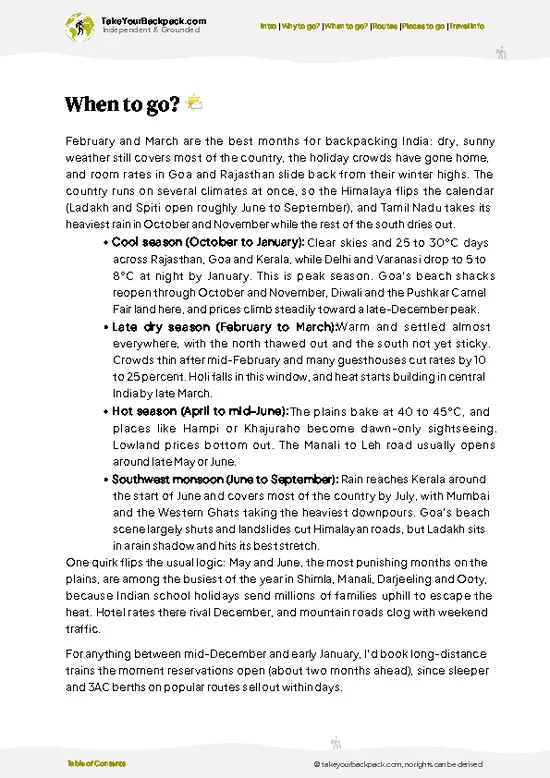
  • Weather: The Chadar Trek runs over the frozen Zanskar River, so timing hinges on solid ice. Late December through February is prime, when temperatures plunge and the river freezes thick enough to walk safely.

  • Temperature: Expect brutal cold—daytime highs hover around -5°C to -10°C (23°F to 14°F), while nights can dive to -20°C (-4°F) or lower. This isn’t a stroll; it’s a test of grit against the freeze.

  • Daylight Hours: Short winter days mean roughly 8 to 10 hours of light. Start early and move fast to maximize trekking time before the sun dips behind the Himalayas.

  • Crowds: The trek is remote and tough, so crowds are minimal. Peak season still sees a steady trickle of adventurers, but you won’t be elbow-to-elbow. Expect solitude with occasional fellow trekkers.

  • Seasonal Activities:
read more 👉

  • Weather: The Chadar Trek runs over the frozen Zanskar River, so timing hinges on solid ice. Late December through February is prime, when temperatures plunge and the river freezes thick enough to walk safely.

  • Temperature: Expect brutal cold—daytime highs hover around -5°C to -10°C (23°F to 14°F), while nights can dive to -20°C (-4°F) or lower. This isn’t a stroll; it’s a test of grit against the freeze.

  • Daylight Hours: Short winter days mean roughly 8 to 10 hours of light. Start early and move fast to maximize trekking time before the sun dips behind the Himalayas.

  • Crowds: The trek is remote and tough, so crowds are minimal. Peak season still sees a steady trickle of adventurers, but you won’t be elbow-to-elbow. Expect solitude with occasional fellow trekkers.

  • Seasonal Activities: The frozen river itself is the main event—no alternate routes or summer trails here. The ice transforms the landscape into a surreal, otherworldly corridor that disappears come spring.

  • Price Fluctuations: Costs spike during peak winter months due to demand and logistical challenges. Booking early can lock in better rates, but expect to pay a premium for guides, permits, and gear rentals.


Pro-tip: Aim for mid-January when the ice is thickest and the cold is steady—this is when the Chadar reveals its raw, unfiltered magic without the early or late-season risks of thin ice or thaw.


source: climatestotravel.comJANJanuary: excellent for travelingFEBFebruary: excellent for travelingMARMarch: fair for travelingAPRApril: below average for travelingMAYMay: below average for travelingJUNJune: below average for travelingJULJuly: below average for travelingAUGAugust: below average for travelingSEPSeptember: below average for travelingOCTOctober: below average for travelingNOVNovember: fair for travelingDECDecember: highly recommended for traveling
when-to-go

✈️ The backpacker research shortcutIndia Travel Guide

An offline-friendly backpacking guide with optimized travel routes, ranked highlights, transport advice, and the best areas to stay.
example page 0 from our offline Travel Guide for India
example page 1 from our offline Travel Guide for India
example page 2 from our offline Travel Guide for India
example page 3 from our offline Travel Guide for India
example page 4 from our offline Travel Guide for India
example page 5 from our offline Travel Guide for India
example page 6 from our offline Travel Guide for India
example page 7 from our offline Travel Guide for India
The digital guide (498 pages) contains:
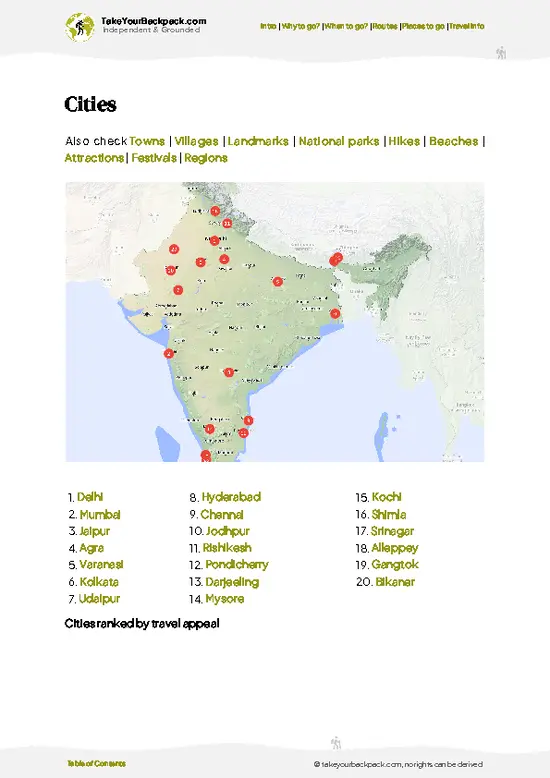
162 highlights, ranked by travel appeal
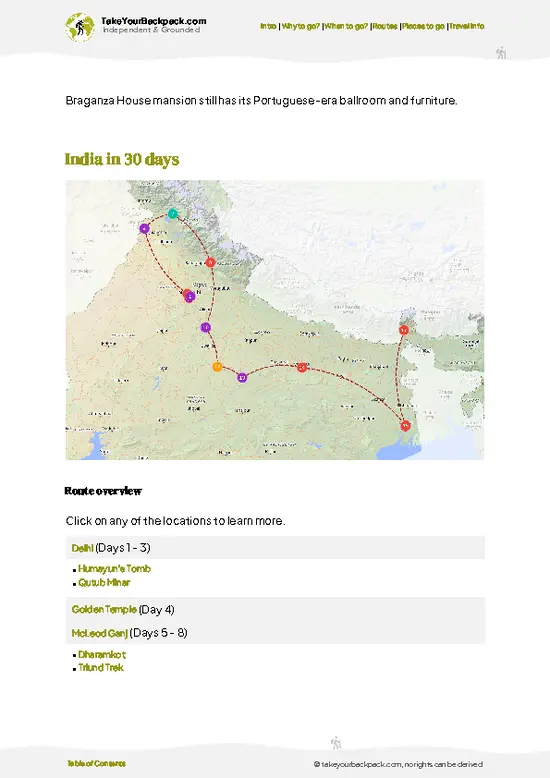
Optimized 14, 21 & 30-day travel routes
Cities, national parks, landmarks, beaches
How to get around
Offline-friendly for travel without Wi-Fi
👉 Click to see all 30+ guide features

📅 Plan smarter in minutes, not weeks
Month by month travel advice
Festivals & national holidays
Budget expectations

🗺️ Go to the right places, skip the overrated ones
Honest pros & cons of destinations
Top hikes, parks & viewpoints
Lesser-known places most travelers miss
Clear “worth it vs skip it” guidance

🛏️ Travel smoothly without rookie mistakes
Best areas to stay
Transport systems explained simply
Common scams & safety advice
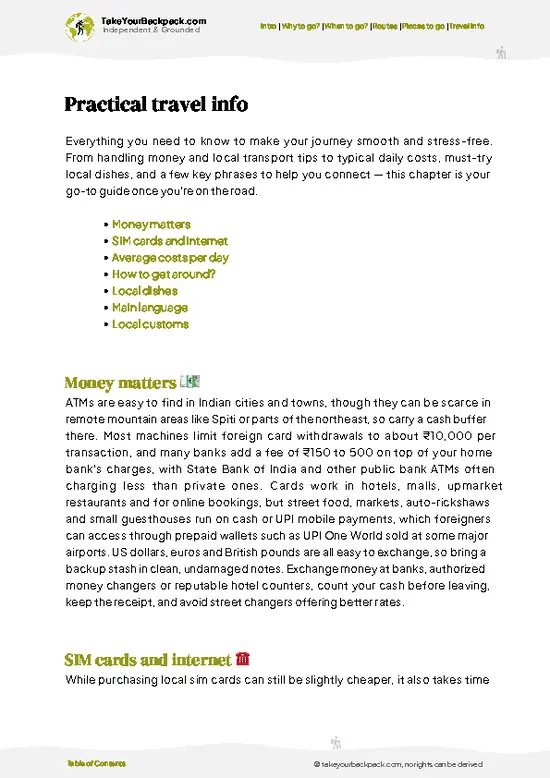
SIM cards, money & practical tips

🌍 Understand the country, not just visit it
Culture & traditions
52 Essential phrases & customs
Festivals worth planning around
Traveler-friendly historical context
Insights that make places more meaningful

📱 Built for real travel conditions
Fully downloadable PDF
Works completely offline
Optimized for phone use
Useful in remote areas & buses
Everything in one place
Save weeks of stressful planning
Get instant access to your full guide. 30‑day money-back guarantee.
+ Add another guide for just US$7.80

By proceeding you agree to our terms.
Sent to your inbox immediately after payment • 100% Secure Checkout
Best Backpacking Travel Advisor 2025 tourism awardBest Backpacking
Travel Advisor
2025
What others say about Take Your Backpack Guides:
⭐⭐⭐⭐⭐
Fantastic, amazing amount of information!
⭐⭐⭐⭐⭐
My goodness this is amazing, it's what I've been looking for hats off too you!
⭐⭐⭐⭐⭐
I think this is absolutely BRILLIANT
⭐⭐⭐⭐
Very complete and informative. It's still missing places, but I gotta to commend you
⭐⭐⭐⭐⭐
This is truly amazing, thank you, can't wait to explore it with my kids!
⭐⭐⭐⭐⭐
Awesome resource, thank you!
⭐⭐⭐⭐⭐
This is amazing! Can't wait to explore the ones I haven't seen
⭐⭐⭐⭐
I love this! Well done, great idea.
⭐⭐⭐⭐⭐
Thanks for taking the time to make this gem!
⭐⭐⭐⭐⭐
This might be the best website I've ever seen.
⭐⭐⭐⭐⭐
Congratulations, and thank you so much for your work; it's incredibly valuable.
⭐⭐⭐⭐
In all seriousness I think you did a great job pointing out the important spots
⭐⭐⭐⭐⭐
10/10 very good
⭐⭐⭐⭐⭐
As someone who's only just starting to visit regularly this is awesome, thank you.
⭐⭐⭐⭐
Thank you very much! I'm going to visit my dad, it's going to be very useful!
⭐⭐⭐⭐⭐
This is really cool! We'll be travelling for the first time and this definitely come in handy.
⭐⭐⭐⭐⭐
You are now our minister of culture, congratulations 👨‍💼
⭐⭐⭐⭐⭐
Just wanted to tell you that this is a pearl! Going to follow your recommendations.
⭐⭐⭐⭐⭐
This is so cool. I'll definitely be using the resource for my travels soon.
⭐⭐⭐⭐⭐
This is very impressive! Good work.
⭐⭐⭐⭐⭐
This is an amazing and informative site. Very well done!

🛏️ Where to stay?Where staying makes the most sense

If you enjoy meeting fellow travelers, consider choosing hostels with high ratings for atmosphere. On the other hand, if you prefer having your own space, a hotel might be a better option.

🥾 Hike detailsEverything you need to know before hiking Chadar Trek

Total Distance: The Chadar Trek spans approximately 105 kilometers (about 65 miles) along the frozen Zanskar River.

Estimated Duration: Most trekkers take around 9 to 10 days to complete the trek, allowing for acclimatization and exploration of the stunning surroundings.

Difficulty Level: This trek is considered challenging. It requires good physical fitness and previous trekking experience, especially in cold conditions. The icy terrain can be slippery and unpredictable.

Starting Point: The trek begins in Leh, the capital of Ladakh.
  • Public Transport: You can reach Leh by taking a flight from
read more 👉
Total Distance: The Chadar Trek spans approximately 105 kilometers (about 65 miles) along the frozen Zanskar River.

Estimated Duration: Most trekkers take around 9 to 10 days to complete the trek, allowing for acclimatization and exploration of the stunning surroundings.

Difficulty Level: This trek is considered challenging. It requires good physical fitness and previous trekking experience, especially in cold conditions. The icy terrain can be slippery and unpredictable.

Starting Point: The trek begins in Leh, the capital of Ladakh.
  • Public Transport: You can reach Leh by taking a flight from major Indian cities like Delhi or by taking a long-distance bus from Manali or Srinagar. Once in Leh, local taxis or shared cabs can take you to the starting point of the trek, which is usually at Chilling.

Major Landmarks Along the Route:
  • Chilling: The starting point of the trek, a small village known for its warm hospitality.
  • Tilad Do: A scenic campsite where you can catch your breath and enjoy the views.
  • Nirang: A beautiful spot to rest, with stunning cliffs and the river’s icy expanse.
  • Shingra Koma: A picturesque campsite surrounded by towering cliffs.
  • Hanumil: A small settlement where you can experience local culture.
  • Footprints of the Zanskar River: Unique patterns in the ice that add to the trek’s surreal beauty.

Type of Terrain and Scenery: The terrain is primarily a mix of ice and snow, with rocky patches. Expect a combination of narrow paths along the river, steep slopes, and some flat stretches. The scenery is nothing short of breathtaking, showcasing towering cliffs, deep gorges, and the stark beauty of the Himalayas under a blanket of snow.

Typical Vegetation and Wildlife:
  • Vegetation: Due to the extreme cold, vegetation is sparse. You might spot hardy shrubs and some grasses in lower elevations, but it’s mostly a barren landscape.
  • Wildlife: Keep an eye out for snow leopards, Himalayan ibex, and various bird species like the chukar partridge. However, wildlife sightings can be rare due to the harsh conditions.

This trek is a unique experience, but be prepared for the cold and the challenges it brings. Pack wisely, stay hydrated, and enjoy the adventure!
⚠️ Hiking info can sometimes be outdated or inaccurate. Before you hit the trail, check the latest conditions with locals. If you do spot anything that's off, I'd love to hear from you, so I can update it for fellow travelers.

🛡️ SafetyTraveler Safety Guide

The Chadar Trek is a wild ride, but it’s manageable with the right mindset and preparation. Expect weather swings; temperatures can plummet at night, so pack layers that you can shed or add as needed. The trail itself is a mix of solid ice and rocky patches, demanding careful footing. You’ll navigate river crossings, where the ice can be deceptive, so take your time and test your steps.

Altitude can sneak up on you, so hydrate and ascend gradually. Wildlife encounters are rare but not impossible; if you spot a snow leopard or a Himalayan goat, keep your distance and enjoy the moment quietly.

First-timers often underestimate the cold, so invest in quality gear—think insulated boots and gloves. Pace yourself; this trek isn’t a race. Embrace the rhythm of the trail, and when you finally reach … read more 👉
The Chadar Trek is a wild ride, but it’s manageable with the right mindset and preparation. Expect weather swings; temperatures can plummet at night, so pack layers that you can shed or add as needed. The trail itself is a mix of solid ice and rocky patches, demanding careful footing. You’ll navigate river crossings, where the ice can be deceptive, so take your time and test your steps.

Altitude can sneak up on you, so hydrate and ascend gradually. Wildlife encounters are rare but not impossible; if you spot a snow leopard or a Himalayan goat, keep your distance and enjoy the moment quietly.

First-timers often underestimate the cold, so invest in quality gear—think insulated boots and gloves. Pace yourself; this trek isn’t a race. Embrace the rhythm of the trail, and when you finally reach that breathtaking view of the frozen river, the effort will feel like a victory worth celebrating.

FAQTraveler FAQ

The Chadar Trek typically takes 7 to 9 days to complete, covering around 105 kilometers on the frozen Zanskar River. The trek is usually done in January and February when the river is frozen solid.
The Chadar Trek is considered very difficult due to extreme cold temperatures often dropping below -20°C, slippery ice surfaces, and high altitude conditions. It requires good physical fitness, acclimatization, and experience with winter trekking.
Yes, a guide is mandatory for the Chadar Trek, and permits are required as it is in a restricted area of Ladakh. Permits are issued by the local administration and must be arranged through registered tour operators.
⚠️ Things can change over time, so always validate details locally before you go.

Other Indian hikes near Chadar Trek

Explore more nearby:

  • Markha Valley—Ladakh villages, river crossings, barren mountains| 88 km away
  • Zanskar Valley Trek—remote gorges, Buddhist villages, arid plateaus| 89 km away
  • Hampta Pass—crossover pass, contrasting valleys, river crossings| 215 km away

💡 Not sure where to go next?
Create a personalized itinerary for India including Chadar Trek and the places that fit your trip.

Generate my itinerary

👉 Discover all hikes

Or checkout all India has to offer (think cities, towns, villages, national parks, hikes, beaches, festivals)
Country photo of India

We 💚 feedbackKey takeaways before you go

The Chadar Trek is a wild ride, where you walk on a frozen river beneath towering cliffs, and every step feels like an adventure. That moment when you finally reach the stunning Zanskar Valley? Pure magic. But be ready for the cold—it bites hard, and altitude can mess with your head. Embrace the grit, and you’ll find the reward is worth every shiver. Just pack those thermals!

✈️ When did I visit India?
As part of my 1.5 year travel around the world trip, I visited India in December 2015.

✍️ Help improve this page!
The information on this page is based on my own backpacking experience in India, supplemented with up-to-date research and feedback from other travelers. Travel details can change, so if you notice anything outdated or incomplete, feel free to let me know.


🙋‍♂️ Give feedback

👋 Meet the founderWho’s Behind Take Your Backpack?

Johan, backpacker and founder of TakeYourBackpackHi, I’m Johan (Netherlands 🇳🇱), the creator of TakeYourBackpack. Over the past decade, I’ve backpacked through 80+ countries across six continents, gaining extensive experience with independent travel, long-term trips, and overland routes.

This site is built on a combination of firsthand travel experience and carefully curated insights from other backpackers. Many guides are based on places I’ve personally visited, while others bring together tips, observations, and practical advice shared by trusted travelers I’ve met along the way.

The goal is to provide realistic, experience-driven guidance — not generic itineraries — so you can explore destinations with better context, clearer expectations, and more confidence.

Get full India guide •
Instant download • 162 highlights • Full Offline guide